





— Blogs —
—Products—
 Consumer hotline +8618073152920
 WhatsApp:+8615367865107
Address:Room 102, District D, Houhu Industrial Park, Yuelu District, Changsha City, Hunan Province, China
Product knowledge
Time:2026-02-04 15:41:40 Popularity:649
A photovoltaic dust detector measures a local optical response to deposits on its sensing surfaces. Its value to a PV plant depends on whether that reading reaches the monitoring system with the correct meaning, location and cleaning history. Photovoltaic dust detector integration should therefore establish two things before a cleaning alarm is enabled: what each transmitted value represents, and which part of the array the detector can reasonably represent.
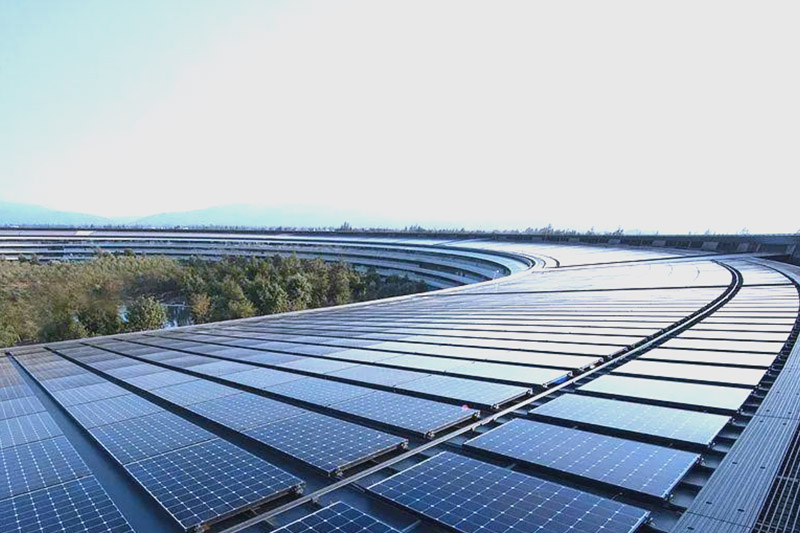
The NiuBoL NBL-W-PSS uses blue-light optical measurement and provides two cleanliness readings through RS485. These are not airborne dust concentrations in mg/m3. A high cleanliness reading is not a high pollution reading, even when a dashboard labels the channel simply as "SR." Name the two channels explicitly and retain their percentage units.
Plant output also changes with sunlight, module temperature, shading, inverter availability and curtailment. A falling power curve alone cannot identify soiling. Compare the detector with time-aligned irradiance, module temperature and electrical operating data. Exclude shutdown and curtailment periods from any comparison intended to estimate recoverable cleaning losses.
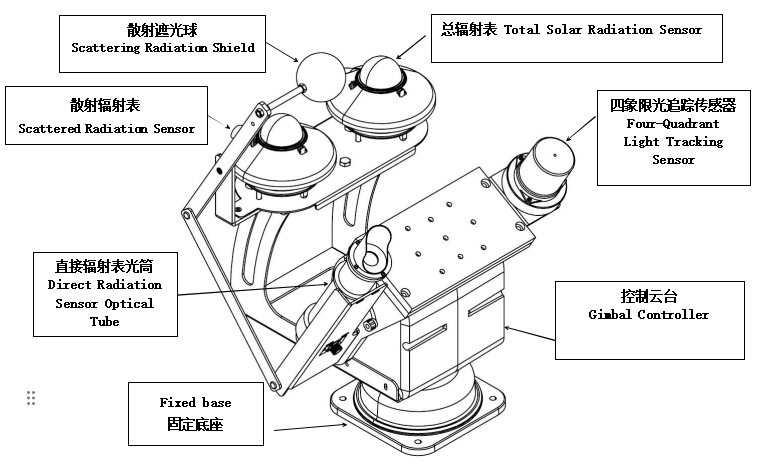
A solar tracking radiation instrument measures a different part of this problem: the incoming solar resource. It does not replace a soiling detector. Where the project already has a suitable plane-of-array irradiance channel, use that channel for the relevant performance comparison instead of assuming that another radiation instrument is automatically necessary.
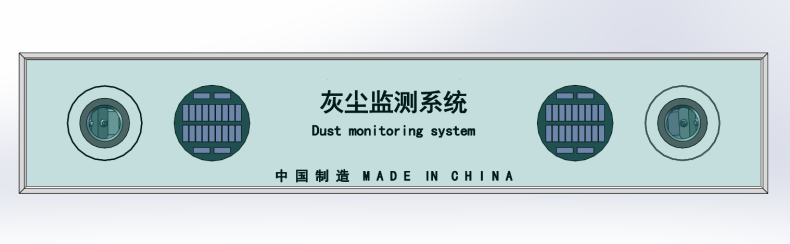
The NBL-W-PSS soiling sensor is a field instrument, not a cellular modem or a complete plant analytics package. Its electrical and optical limits determine the local connection; the data logger and plant software determine storage, remote transfer and the cleaning workflow.
| Parameter | NBL-W-PSS configuration |
|---|---|
| Supply | DC 12 V |
| Average instrument power | 1 W; excludes logger, modem and conversion losses |
| Interface | RS485, Modbus communication with RTU read frames |
| Serial settings | 9600 bps, 8 data bits, no parity; match the supplied device's stop-bit setting |
| Polling interval | More than 1000 ms between communications |
| Cleanliness channels | Two sensor values, 50-100% |
| Optical accuracy bands | 90-100% range: +/-1%; 80-90%: +/-3%; 50-80%: +/-5%. Define the acceptance interpretation for the selected version before comparing errors. |
| Optional temperature channel | -50 to +100 C; +/-0.5 C at 25 C. This is a measurement range, not the complete instrument's ambient rating. |
For continuously energized operation, the detector alone uses approximately 1 W x 24 h = 24 Wh per day. A solar supply calculation must add the gateway's operating and transmit demand. Establish enclosure protection, ambient temperature limits and cable jacket suitability for the installation separately; these cannot be inferred from the optional temperature measurement range.
Connect the detector to an RS485 data logger, PLC or RTU. A compatible gateway can then send the acquired data to the plant server over its supported network. MQTT, Ethernet or cellular access belongs to that gateway configuration; an RS485 sensor is not directly connected to an Internet platform merely because the platform supports telemetry.
For the NBL-W-PSS read format, function 03 retrieves measurement registers. A cleanliness word of 0x03C5 equals decimal 965 and represents 96.5%, not 965%. The second example word 0x03C8 represents 96.8%. An optional temperature word 0x00EB represents 23.5 C in the positive-temperature example. Verify negative-temperature encoding with the device-specific register definition before commissioning a cold-climate installation.
Test both channels independently. A dashboard that displays the same register twice may appear plausible in clean conditions and conceal a mapping error. Keep the raw words in the commissioning record, compare them with the engineering values, and confirm the instrument address before adding other devices to the bus. Address-setting commands need their own check; do not assume that every device configuration command is a generic Modbus register write.
Store acquisition time, device identity, cleanliness 1, cleanliness 2 and the available temperature value. Add a data-age field at the logger or server. If the cable is disconnected, the dashboard should identify the missing update rather than continue displaying the last percentage as a live observation.
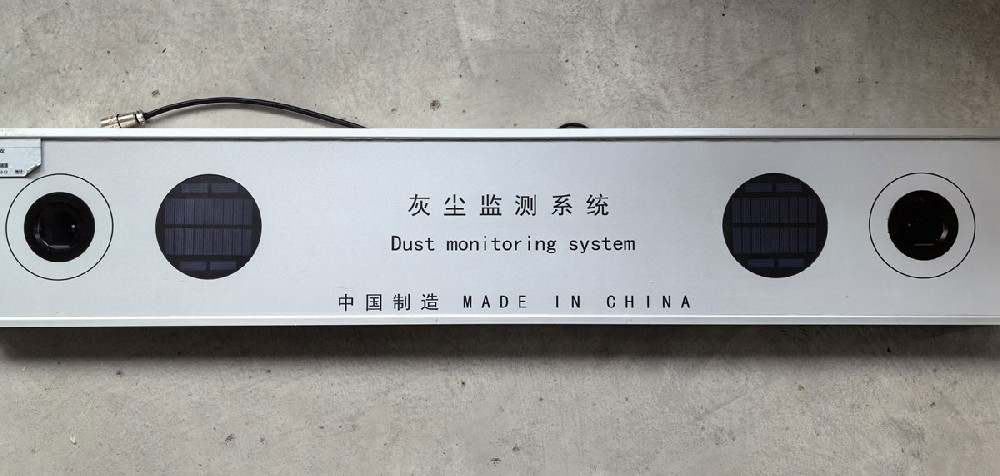
Install the detector in the plane of the modules it represents. "Same plane" means the same intended tilt and orientation, not necessarily horizontal to the ground. A horizontal detector beside an inclined array can accumulate and shed deposits differently. Keep clamps and nearby structures from casting avoidable shadows across the sensing surfaces.
Frame attachment must suit the module and mounting system. Obtain approval for any drilling or frame modification before installation, especially where module warranties or structural loading requirements apply. Support the instrument and route cables without pulling on the connector, trapping water at joints or obstructing module cleaning equipment.
Map monitoring zones by exposure: prevailing dust sources, access roads, adjacent construction, array orientation and cleaning routes. A detector beside a dusty service road may be useful for that edge zone but unrepresentative of interior rows. Do not set a universal number of detectors per MW. Begin with the site's differing conditions and confirm whether readings from each proposed zone diverge enough to justify separate decisions.
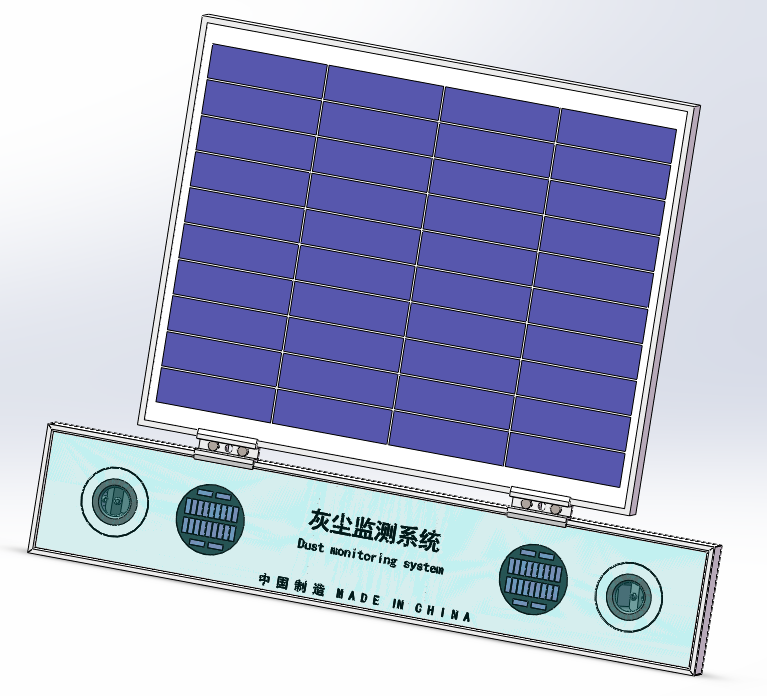
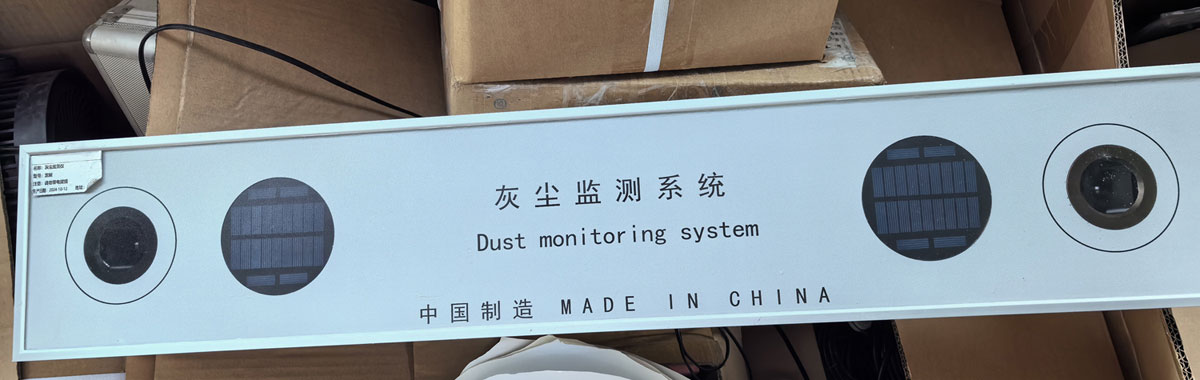
Initial calibration requires clean optical surfaces and suitable sunny conditions. For the NBL-W-PSS procedure, clean the sensor surfaces and hold the calibration button for 10 seconds during the specified sunny midday period. Record the time and the cleanliness of the represented modules. The button operation establishes an instrument baseline; it does not independently validate annual energy-loss estimates.
After commissioning, clean both probes whenever the represented module group is cleaned. If technicians clean only the detector while leaving the modules dirty, mark that intervention in the data. Otherwise the system may report an apparent improvement that did not occur across the array. Do not repeatedly recalibrate a dirty detector to make its reading return to a preferred value.
Inspect the channels again after the surfaces are dry. Water droplets, condensation, a localized deposit or partial shading can produce a reading that does not describe dry dust accumulation. A persistent difference between the two channels calls for an inspection of the sensing surfaces and their exposure before changing the cleaning schedule.
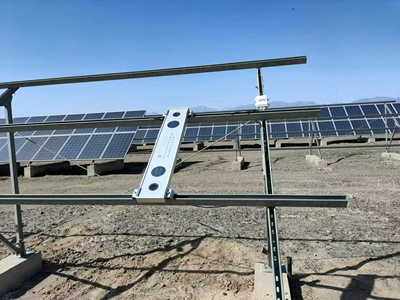
Use a repeatable comparison period with valid measurements, similar operating conditions and no known inverter limitation. Review how each zone behaves before and after an actual cleaning event. A useful first trial is one cleaning block with a representative detector, an identifiable electrical data stream and a recorded cleaning time. It tests whether the local optical trend helps explain that block's performance.
For an illustrative calculation, suppose a block would otherwise produce 100 MWh over a defined planning period, and site validation supports a recoverable soiling loss of 2%. The energy at stake is 2 MWh. Its financial value depends on the applicable energy value, while the cleaning cost includes labor, access, water or equipment and operational disruption. Neither the 2% assumption nor the resulting 2 MWh is a guaranteed NBL-W-PSS result.
A fixed cleanliness threshold such as 80% is not a universal cleaning rule. The accuracy band, uncertainty in the optical-to-electrical relationship and cost of waiting all matter. An alarm set inside ordinary measurement variation can generate unnecessary work orders. Use persistence and review criteria appropriate to the site, and keep contamination alerts separate from communication faults.
Rainfall is also a reason to review the trend, not proof that the array has been cleaned. A short shower may wet deposits without removing them uniformly. Compare dry post-rain readings and representative module observations before cancelling planned work. For geographically separated sites, a common reporting format is useful, but their cleaning thresholds need not be identical.
For a configuration request, provide module layout, fixed or tracking mounting, dust exposure, cleaning method and the logger's available interfaces. Include the intended number of independent cleaning zones rather than only total plant capacity. This information determines bracket requirements, cable routing and how many distinct observations the monitoring system needs.
No. It is a detector cleanliness reading. Translating it into recoverable plant energy requires a validated relationship to module performance, irradiance and operating conditions. It cannot explain curtailment, inverter outages or all forms of nonuniform shading.
Keep the two values separately during commissioning and routine diagnosis. Their difference can reveal uneven deposits or an installation issue. Any later averaging rule should retain the original channels and exclude periods with an identified surface problem.
It can be evaluated for that duty if it supports the device's serial settings and function-03 read format. Confirm register count, scaling, polling interval and address configuration with a bench read. A compatible connector alone does not establish correct interpretation.
Not necessarily. A site with representative, time-aligned module temperature measurements may already have the information needed for performance comparison. Specify the optional channel when its physical measurement location and integration purpose are useful, rather than assuming air temperature is interchangeable with module temperature.
Check abrupt channel disagreement, values stuck after communication loss, and changes following rain or local maintenance. Inspect for droplets, concentrated deposits and shadowing. A sustained, validated soiling trend is a stronger basis for a cleaning decision than one isolated reading.
The detector count, mounting arrangements, cable routes, power conversion, gateway and software integration work all affect cost. Separate a detector-only price from a commissioned monitoring point. Provide the pilot acceptance tasks so that configuration and integration services can be quoted on the same basis.
Reliable photovoltaic dust detector integration starts with correctly decoded cleanliness channels and representative exposure. Cleaning history and electrical operating data then determine how those readings can support maintenance. Send NiuBoL the array layout and logger requirements to discuss an NBL-W-PSS configuration for the zones that require independent monitoring.
 NBL-W-PSS Soiling Sensor Photovoltaic Dust Monitoring Instrument Data Sheet.pdf
Prev:Construction Site Dust Monitoring Cost: Compare the Installed Scope
Next:PV Weather Station Retrofit: Reuse Sensors and Verify SCADA
Related recommendations
Sensors & Weather Stations Catalog
Agriculture Sensors and Weather Stations Catalog-NiuBoL.pdf
Weather Stations Catalog-NiuBoL.pdf
Agriculture Sensors Catalog-NiuBoL.pdf
Water Quality Sensor Catalog-NiuBoL.pdf
Related products
 Combined air temperature and relative humidity sensor
 TDR Soil Moisture & Temperature Sensor for irrigation| RS485 |4-20mA| NBL-S-THR
 Soil pH sensor RS485 soil Testing instrument soil ph meter for agriculture |NBL-S-PH
 Wind Speed sensor Output Modbus/RS485/Analog/0-5V/4-20mA
 Tipping bucket rain gauge for weather monitoring auto rainfall sensor RS485/Outdoor/stainless steel
 Pyranometer Solar Radiation Sensor 4-20mA/RS485

Screenshot, WhatsApp to identify the QR code
WhatsApp number:+8615367865107
(Click on WhatsApp to copy and add friends)

