





— Blogs —
—Products—
 Consumer hotline +8618073152920
 WhatsApp:+8615367865107
Address:Room 102, District D, Houhu Industrial Park, Yuelu District, Changsha City, Hunan Province, China
Product knowledge
Time:2026-02-04 15:48:22 Popularity:605
A PV weather station retrofit should preserve useful measurements while correcting gaps in exposure, acquisition or data delivery. Replacing every instrument is not automatically necessary, and retaining every existing component is not automatically economical. For an operating solar plant, a NiuBoL retrofit proposal should identify what stays, what changes and how the new records will remain distinguishable from the historical series.

A plant may have a working irradiance sensor whose logger no longer communicates, a functioning station with an unsuitable measurement plane, or an outdated platform while the field instruments remain serviceable. These are different failures. Record the symptom and trace it through sensor, wiring, acquisition and receiving system before selecting replacement hardware. A cloud chart that has stopped does not establish that the field sensor has failed.
First export the current equipment list, point table, supply settings, calibration information and mounting photographs. Keep a copy of the available historical data and its variable definitions. Note which records are measured, estimated or missing. A retrofit can improve future monitoring, but it cannot turn an undocumented historical channel into a traceable measurement after the fact.
| Existing item | Evidence for reuse | Reason to modify or replace |
|---|---|---|
| Irradiance instrument | Identity, output, calibration and suitable exposure are known | Wrong plane, damaged optics, failed comparison or unsupported interface |
| Module temperature channel | Known probe version, firm thermal contact and correct scaling | Detached probe, wrong range or unsuitable location |
| Mount and enclosure | Sound structure, approved fixing and service access | Corrosion, shading, water ingress or inadequate cable protection |
| Logger and power | Suitable inputs, supply capacity and required recording functions | Incompatible signal type, insufficient load capacity or unavailable records |
| SCADA connection | Documented tags, timestamps and functioning data route | Unsupported driver, wrong units, stale values or missing ownership of configuration |
Separate mandatory repair from optional expansion. A temperature or soiling channel can add context, but it will not repair a bad irradiance reference. A larger station package can still produce the wrong comparison if the radiation instrument remains shaded or measures horizontal irradiance where the application needs plane-of-array data.
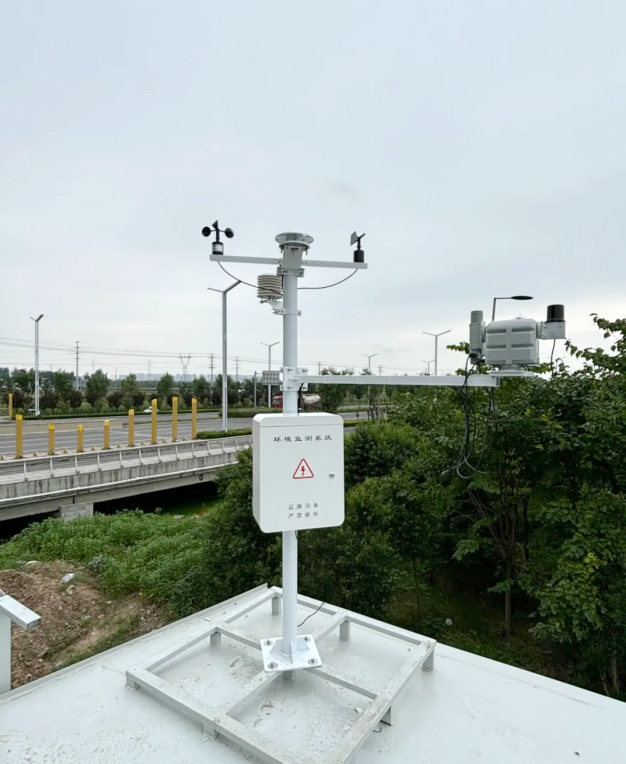
A raw thermopile output, amplified voltage, current loop and RS485 instrument require different inputs. For a retained pyranometer, read its identification and calibration sensitivity rather than assuming the logger's old scaling is correct. A new sensor of the same general type can have a different sensitivity, output span or wiring. Preserve the old coefficient with the old instrument record.
The NiuBoL NBL-W-HPRS pyranometer provides a useful example of why output versions matter. A raw signal with an illustrative individual sensitivity of 10 microvolts per W/m2 would produce 5 mV at 500 W/m2. That signal cannot be connected to a 0-5 V channel and interpreted using the same span as an amplified transmitter. Confirm the actual sensitivity and receiver resolution.
| HPRS characteristic | Model information | Retrofit implication |
|---|---|---|
| Measurement range | 0-2000 W/m2 | Check units and the receiving span |
| Spectral range | 0.3-3 micrometers | Do not treat a different detector method as identical without review |
| Response | Up to 35 s to 99% | Do not infer instantaneous response from fast logger polling |
| Outputs | Selected voltage, current or optional RS485 configuration | Order the version the available acquisition hardware can read |
| Supply | 5 V, 12 V or 24 V options according to configuration | Match the particular instrument rather than applying one station voltage |
| Operating temperature | -40 to +50 C | Assess the complete station separately |
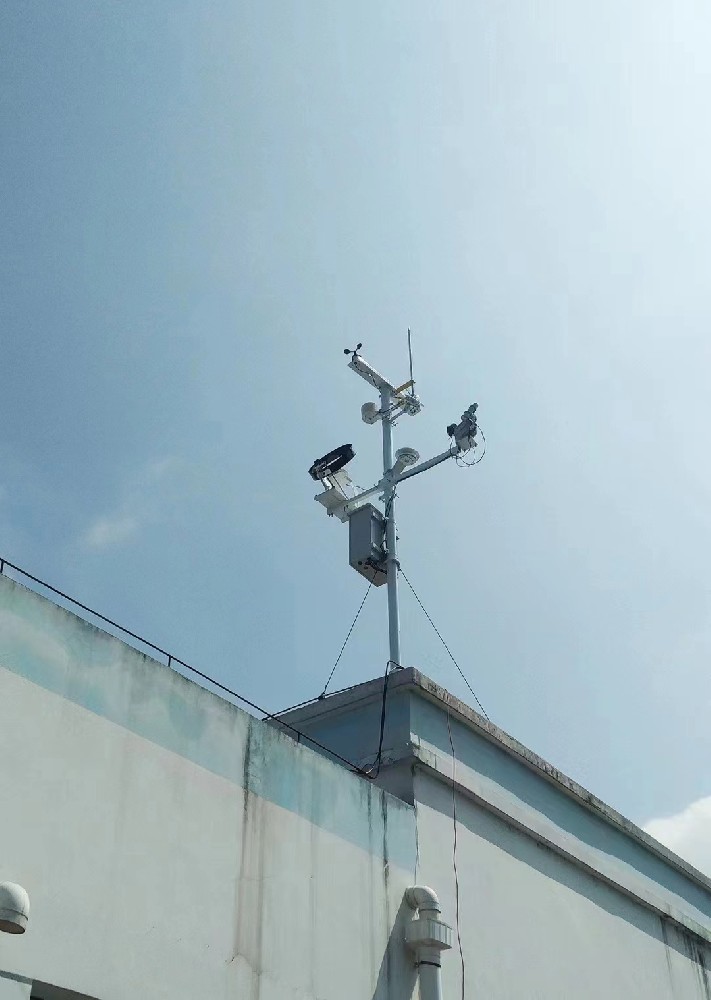
The NBL-W-PPT surface-temperature transmitter uses a thermistor sensing element in the documented version; it should not be described as a PT100 by default. Available ranges include -50 to +100 C and -20 to +50 C, with +/-0.5 C stated accuracy. Output configurations include current, voltage or RS485. Match the actual ordered range to the existing receiver.
For the -50 to +100 C version with 4-20 mA output, T = (I - 4) x 150 / 16 - 50. A 12 mA signal represents 25 C. The same 12 mA mapped to -20 to +50 C represents 15 C. An apparently plausible ten-degree difference can therefore be a scaling error rather than a physical change at the module. Test a known input before interpreting a change in the plant trend.
Inspect the attachment as well. A loose sensor can track air or its own exposed surface instead of the intended backsheet location. Keep contact method and location compatible with module requirements, and protect the cable from strain. A backsheet temperature is not automatically cell-junction temperature; use any required conversion only as a separately defined model.
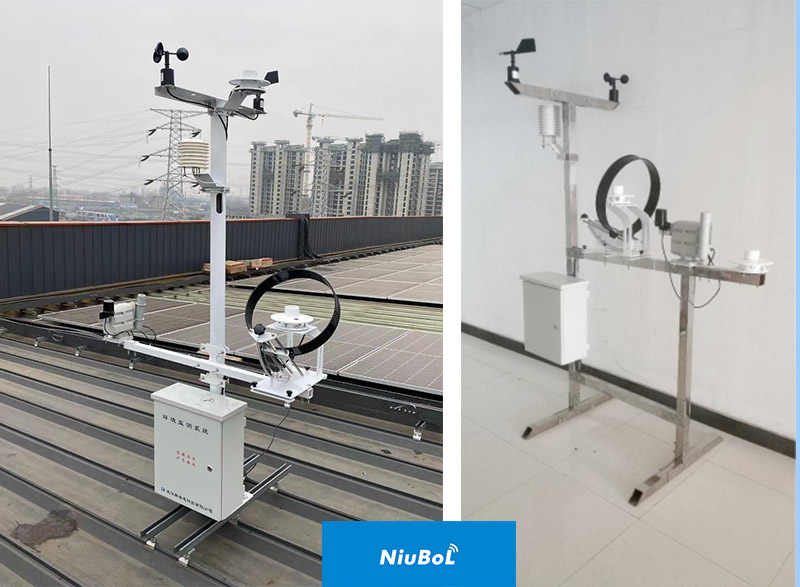
Check whether new modules, fences, cable trays or roof equipment now shade the radiation instrument. Compare its tilt and azimuth with the relevant array plane. For trackers, identify actual row angle and the intended moving reference. A horizontal sensor does not become a POA reference when the software tag is renamed. Resolve physical exposure before fitting a correction to the data.
Wind, temperature and humidity instruments need their own locations. Do not align a wind-direction sensor to the panel azimuth instead of its specified directional reference. When NBL-W-SS and NBL-W-DS are used, specify IP65 for those instruments. A station cannot acquire one blanket IP rating merely by combining several independently rated parts.
If an optical PSS soiling instrument is added, preserve its identity as a cleanliness measurement. It is not a direct full-plant energy-loss percentage or a replacement for a POA pyranometer. Establish how the site will use its observations and whether its sensing surface represents the relevant cleaning zone. Expansion should answer an identified question rather than increase a channel count.
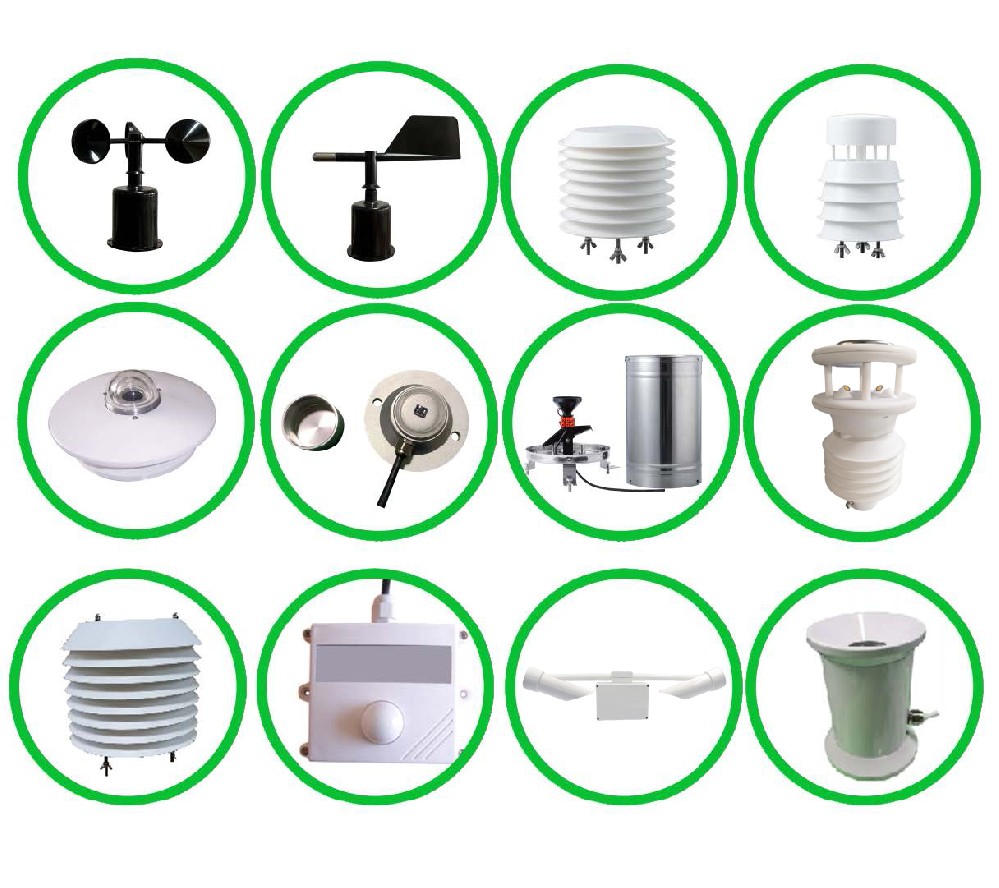
For RS485 Modbus RTU, confirm sensor addresses, serial format, register offsets, data types and scale. A working port is not proof that the tags are correct. At the logger-to-SCADA side, specify the actual available protocol, driver and responsible party. Modbus TCP, a web interface and MQTT are not interchangeable labels, and their availability depends on the selected acquisition equipment.
Do not assume automatic compatibility with a named inverter platform or existing EMS. Test the agreed data exchange with the plant's actual receiver. A retained gateway may already provide the required interface; alternatively, a new driver or converter may be needed. Itemize that work rather than promising that no adaptation will ever be necessary.
Record units, measurement plane, instrument ID, calibration version and observation time with each point. Distinguish a missing sensor value from a failed uplink. A remote timestamp showing the last server update can conceal a logger that is repeatedly forwarding an old measurement. Test disconnection and reconnection before the revised tags are accepted for operations.
Where practical, run old and new channels together before the final changeover. Their exposure and timing must be comparable; two sensors at different planes cannot be expected to agree throughout the day. Include clear and variable conditions, inspect time offsets and compare residual patterns rather than considering only one midday value. Do not recalibrate a new instrument simply to force agreement with an unverified old one.
A gradual difference related to sun angle suggests a different investigation from a fixed scale error or a sudden step when a software setting changes. Keep the old and new series distinguishable and record the changeover date. If the old system cannot run concurrently, use suitable reference checks and state the resulting limitation in continuity instead of drawing one apparently uniform historical line.
Acceptance should demonstrate the selected channels, physical exposure, power and data route. Verify loss of communications, power recovery and any included local storage. Neither an added analog signal nor a second network path is a proven backup until its failure and recovery behavior have been tested. Avoid treating a completed retrofit as an automatic increase in generation or reduction in failures.
For a NiuBoL retrofit quotation, provide existing models, output versions, calibration records, mounting photographs, logger inputs and SCADA interface requirements. Identify access constraints and which installation work belongs to the site contractor. Separate new equipment, retained items, configuration work, reference checks and service obligations so the proposal can be compared with the cost of maintaining the present arrangement.
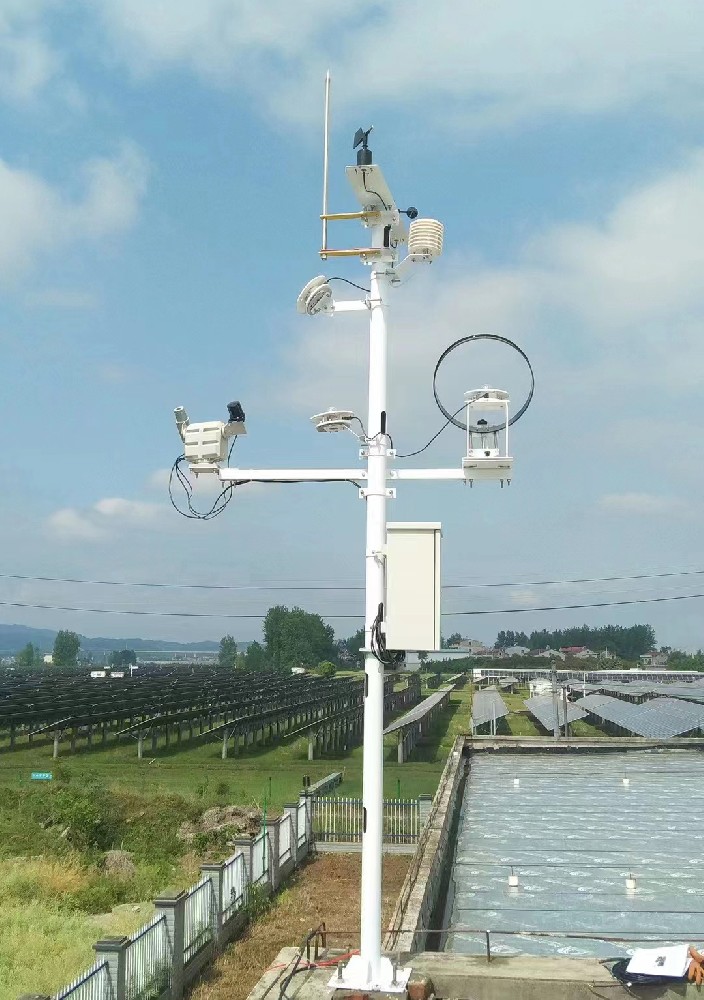
No. Retain a component when its condition, calibration, exposure and interface remain suitable. A failed reporting link may require acquisition or gateway work rather than new field instruments. Test each part against the actual cause of the retrofit.
Only if that coefficient is applicable to the actual instrument and output arrangement. Individual thermopile sensitivities can differ. Record the replacement's calibration information and verify receiver scaling before comparing historical irradiance.
Only after matching sensor range and output. The same current value can represent different temperatures for different configured spans. Verify electrical interpretation and thermal attachment separately.
No. It identifies the physical device interface. Modbus mapping, acquisition hardware and the upstream SCADA protocol still need to match. Demonstrate the actual point values, units and timestamps in the receiving system.
Preserve the original series and identify the instrument, exposure and configuration change. Use a suitable overlap or reference comparison where possible. Do not silently rewrite old records to make a changeover appear continuous.
No fixed saving follows from adding monitoring hardware. The benefit depends on the fault resolved, decisions made and site response. Price the defined scope and assess its value against the specific operational problem.
A PV weather station retrofit is a component-by-component engineering decision. Reuse equipment with known performance and suitable exposure, correct the actual interface or measurement gap, and keep the changeover traceable. This gives the plant a defensible new data series without unnecessary replacement or unsupported claims about future generation.
 NBL-W-SRS-Solar-radiation-sensor-instruction-manual-V4.0.pdf
NBL-W-HPRS-Solar-Radiation-Sensor-Instruction-Manual-V3.0.pdf
NBL-W-PSS Soiling Sensor Photovoltaic Dust Monitoring Instrument Data Sheet.pdf
Prev:Photovoltaic Dust Detector Integration: Readings and Cleaning Records
Next:PV Performance Ratio Calculation: Match Energy and POA Irradiation
Related recommendations
Sensors & Weather Stations Catalog
Agriculture Sensors and Weather Stations Catalog-NiuBoL.pdf
Weather Stations Catalog-NiuBoL.pdf
Agriculture Sensors Catalog-NiuBoL.pdf
Water Quality Sensor Catalog-NiuBoL.pdf
Related products
 Combined air temperature and relative humidity sensor
 TDR Soil Moisture & Temperature Sensor for irrigation| RS485 |4-20mA| NBL-S-THR
 Soil pH sensor RS485 soil Testing instrument soil ph meter for agriculture |NBL-S-PH
 Wind Speed sensor Output Modbus/RS485/Analog/0-5V/4-20mA
 Tipping bucket rain gauge for weather monitoring auto rainfall sensor RS485/Outdoor/stainless steel
 Pyranometer Solar Radiation Sensor 4-20mA/RS485

Screenshot, WhatsApp to identify the QR code
WhatsApp number:+8615367865107
(Click on WhatsApp to copy and add friends)

