





— Blogs —
—Products—
 Consumer hotline +8618073152920
WhatsApp:+8615367865107
Address:Room 102, District D, Houhu Industrial Park, Yuelu District, Changsha City, Hunan Province, China
Product knowledge
Time:2026-02-27 21:51:10 Popularity:575
Tea garden insect lamps can support a crop-protection programme when the target insect and the exposed life stage respond to light attraction. They cannot replace inspection of the shoots that will be harvested. For a commercial tea estate, relate identified night catches to block-level shoot observations and harvest dates before deciding whether lamp operation is useful.

Identify the damaging organism, its life stage and the part of the crop affected. A chewing larva, a sap-feeding insect and a disease symptom require different investigations. A night-flying adult found in a collection box does not establish that every visible symptom on nearby tea bushes has the same cause.
Ask the estate's crop specialist which target could reasonably be observed or intercepted with a light-based device. Do not assume equal response across a list of tea pests. If the damaging stage remains inside plant tissue or is not exposed to the attraction mechanism, lamp catches need careful interpretation and other observations remain necessary.
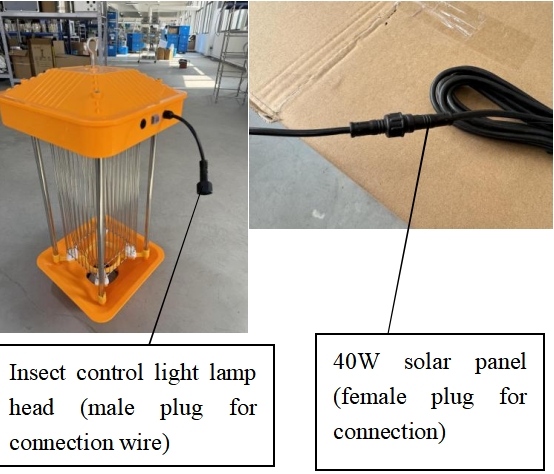
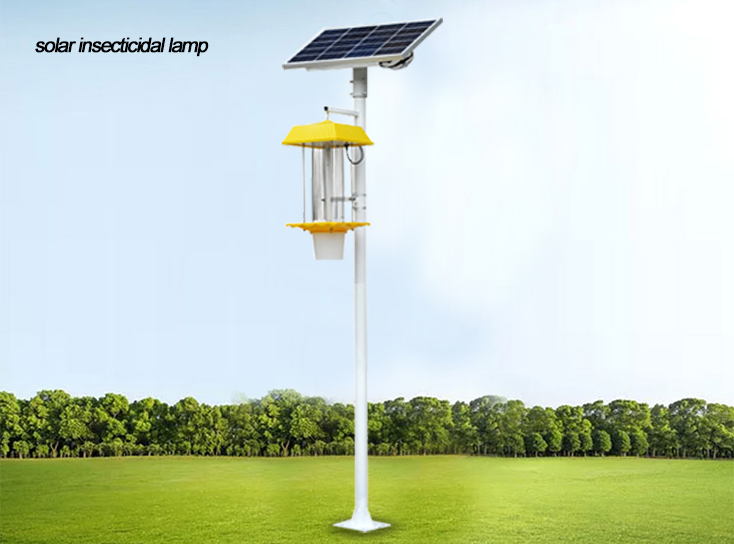
The NiuBoL frequency vibration solar insect lamp uses an attracting light and an electric grid. It provides physical trapping and killing of responsive insects. It is not, by itself, a species-identification system or a measurement of tea-shoot damage.
Have relevant catches reviewed when species identity matters. Keep non-target insects and uncertain identifications separate from confirmed target records. A rise in the total collection may be caused by insects that do not explain the current crop problem.
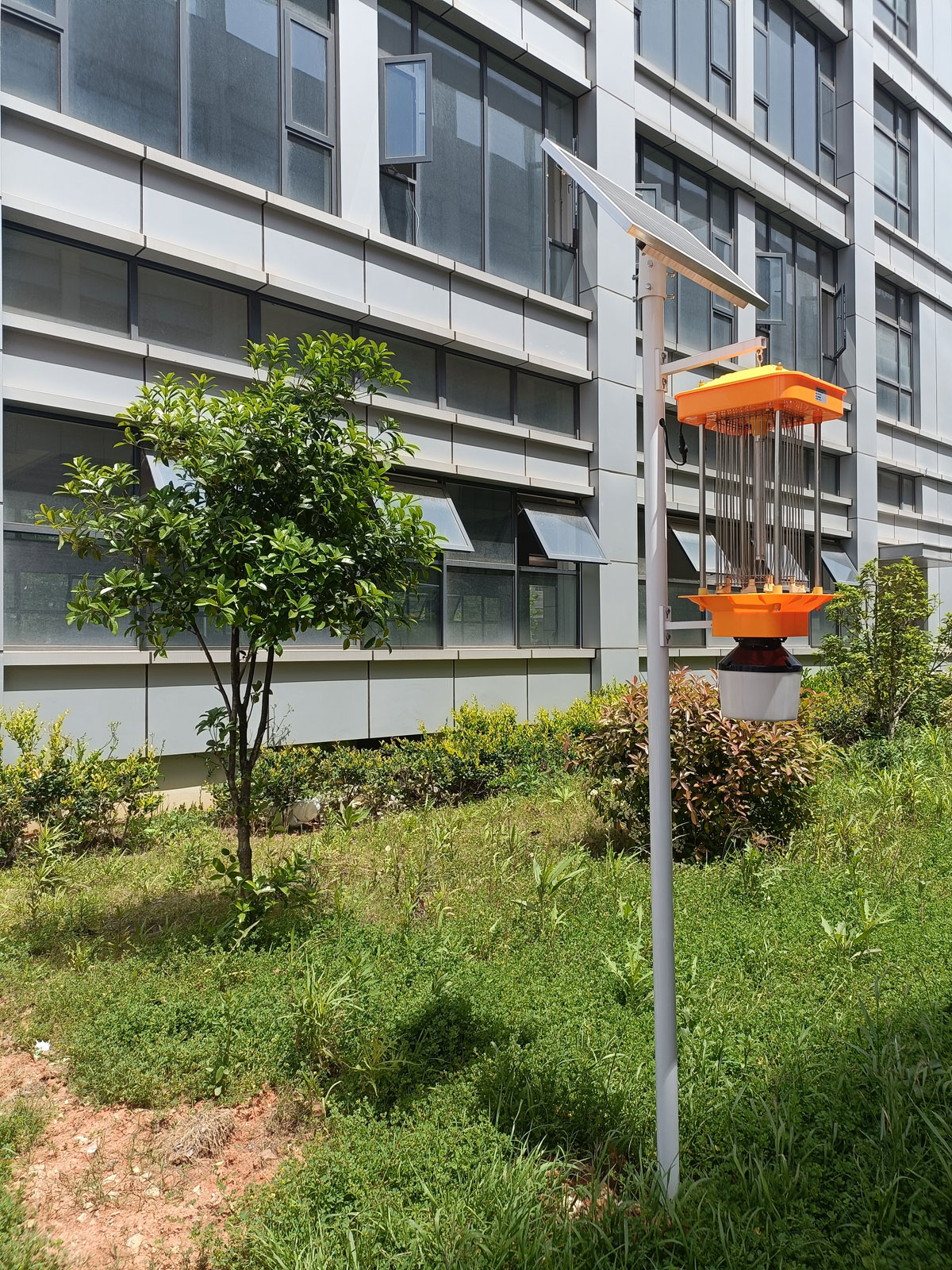
Record the block, cultivar where relevant, shoot condition, recent plucking and the observation date. Removing shoots during harvest changes the material available for inspection. A lower count after plucking is not automatically evidence of reduced pest activity.
Define the observation unit with the crop specialist, such as a specified shoot or leaf stage, and keep the selection method consistent. Record the number examined as well as the number affected. Avoid switching between shoots, leaves and bushes while retaining one generic percentage heading.
For illustration, if nine of 120 examined shoots meet a defined damage criterion, the observed shoot incidence is 7.5%. That is not a measurement of 7.5% yield loss, and it does not describe how much of each affected shoot is damaged. This arithmetic is a survey example, not a reported result from a NiuBoL project.
| Record | What to retain | Decision it can support |
|---|---|---|
| Identified lamp catch | Target identity, sample period and valid operation | Whether relevant adult activity warrants a field check |
| Shoot inspection | Defined shoot stage, number examined and number affected | Whether the current harvested material shows the specified symptom |
| Plucking record | Date, block and relevant changes in shoot availability | Whether before-and-after surveys remain comparable |
| Other intervention | Timing and the treatment actually applied | Whether a change can be attributed to lamp operation alone |
| Non-target observation | Relevant non-target groups and review notes | Whether operation or placement needs reassessment |
These records need not be elaborate, but they must describe the same block and relevant period. Linking a catch from one slope to shoot observations from another can create a misleading relationship even when both observations are correct.
| Lamp component | Configuration information | Tea-project implication |
|---|---|---|
| Energy storage | 12.8 V, 12 Ah LiFePO4 configuration | Assess the actual nightly schedule and charging conditions |
| Solar panel | Monocrystalline; at least 40 Wp | Review shading from mature bushes, shelter trees and terrain |
| Support | 3 m overall pole configuration | Check collection-box access and clearance from plucking operations |
| Protection | IP65 | Not a guarantee of flood or salt-spray suitability |
| Operating functions | Light, time and moisture-protection controls | Confirm the offered controller and local operating logic |
Do not describe local automatic operation as verified remote data access. If a tea-estate platform needs lamp status or commands, specify the controller option and interface separately. A connector for solar power does not establish a communications protocol.
A dedicated NiuBoL remote insect monitoring system captures insect images for review and related records. Its role differs from a grid-type lamp. Consider it when the estate needs reviewable image observations, rather than assuming a control lamp automatically supplies identified pest counts.
Likewise, a weather mast in a tea block observes its fitted environmental channels. Weather can provide context for insect activity, but temperature or humidity alone does not identify the insect responsible for shoot damage. Treat these as supporting records, not as a substitute for specimen or crop inspection.
If both trapping and image monitoring are ordered, identify who will inspect collected material, review uncertain images and carry out shoot surveys. Automated collection does not remove these responsibilities. Set a review interval that lets the estate investigate relevant catches while the crop condition can still be checked.
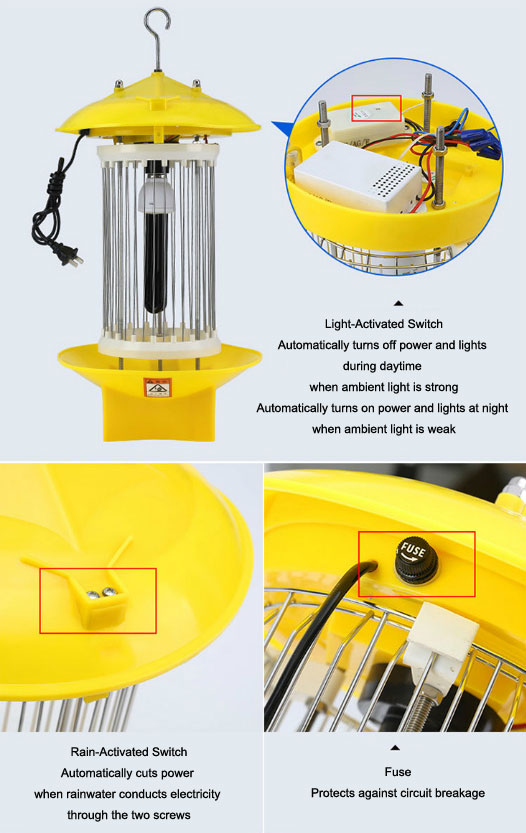
Choose an operating window with the local crop specialist. Running through every dark hour is not automatically more useful than a target-relevant period, and may increase energy demand and non-target catches. Keep the operating schedule with the catch record.
During peak plucking, consider worker routes, temporary lighting and access to the collection box. A lamp beside a path must not expose workers to the energized grid. Provide the required isolation and qualified maintenance arrangements rather than relying on the equipment's low-voltage battery supply as evidence of touch safety.
Review the selected period after seasonal changes in target activity. Do not infer that a protection-related stopped period is an ordinary night of zero catch. Verify local operation before using the collection to explain changes in the crop.
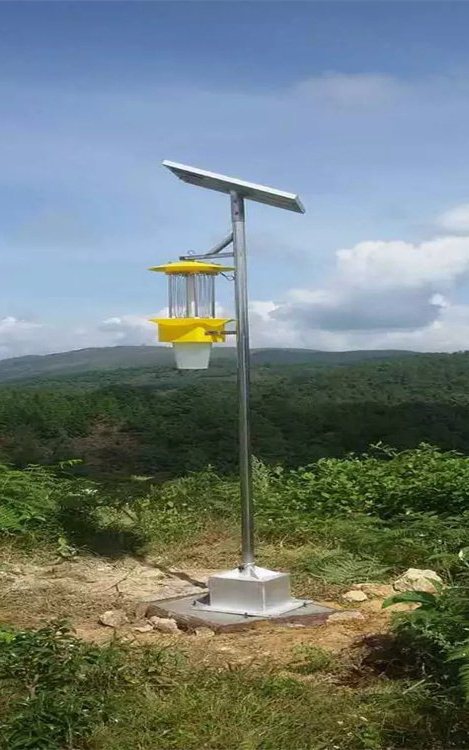
If the project seeks a control effect, establish an evaluation plan with suitable comparison blocks or another defensible design. Record changes in plucking, weather, other treatments and target pressure. Avoid attributing an observed improvement to lamps when several interventions changed together.
Catch, shoot damage, yield and residue results are separate outcomes. A residue-compliance claim requires appropriate evidence for the harvested product and its requirements. Installing a physical trapping device does not establish export eligibility or organic certification.
Where the main problem is not effectively addressed by light attraction, revise the crop-protection approach rather than adding lamps solely because their nominal reference area appears sufficient. Equipment selection should follow the biology and the estate's evidence.
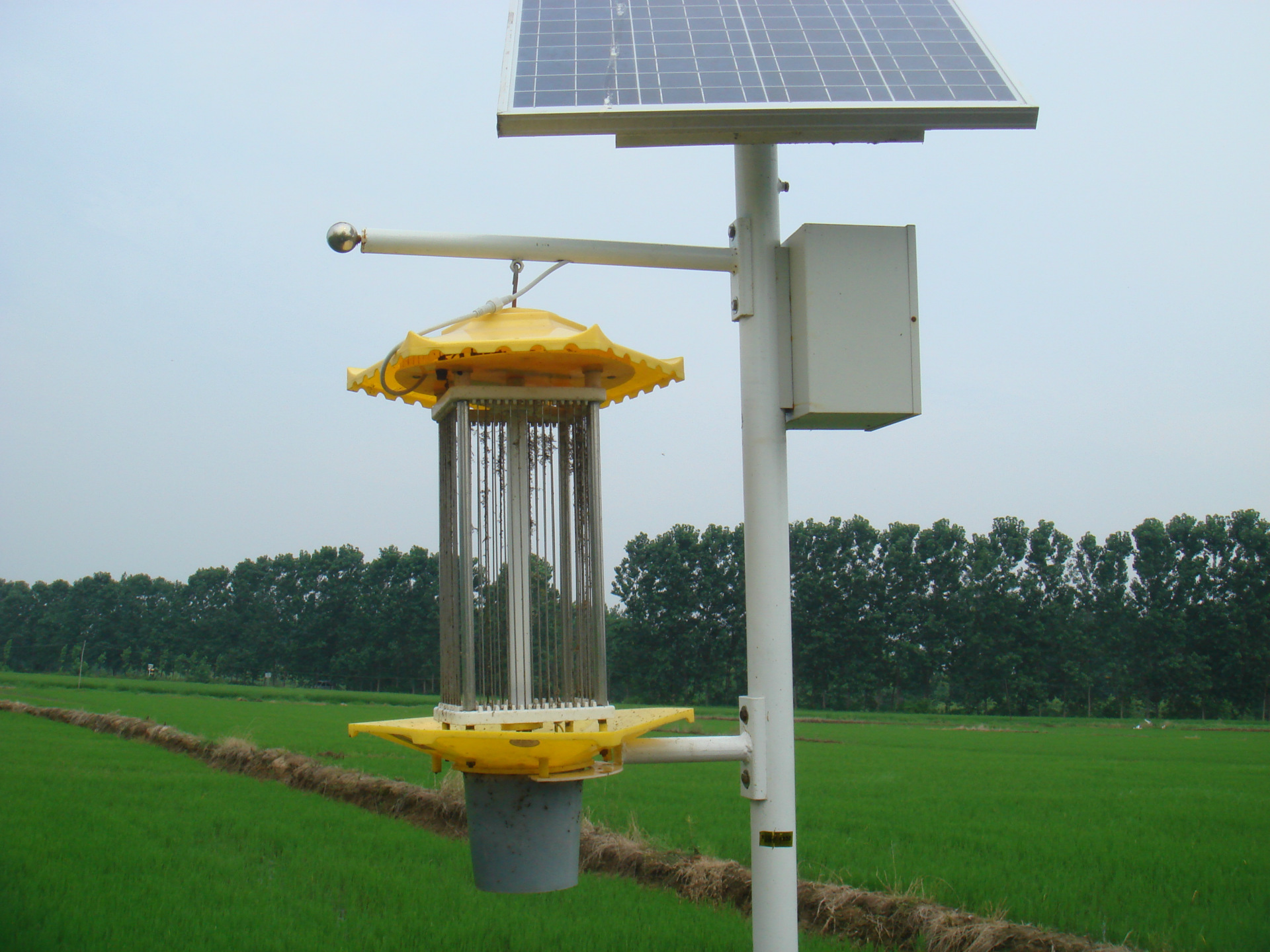
Provide NiuBoL with the target or identification status, affected shoot or leaf stage, block plan, mature canopy, plucking calendar and intended operating period. State whether the requirement is physical trapping, image-based observation or both.
Include power exposure, maintenance access and any remote-interface requirement. Ask for configuration-specific components and replacement parts rather than a fixed pesticide-saving or universal service-life promise. Large order quantities do not remove the need to establish which function the estate will actually use.
No. Suitability depends on the target insect, exposed life stage and local activity. Diagnose the crop problem first and check whether light attraction addresses a relevant part of its biology.
It can justify a targeted field check, but it is not a universal treatment threshold. Confirm identity, sample validity and the crop's condition using the locally appropriate decision method.
Plucking changes the shoots available for inspection and can change observed damage counts. Without that context, a before-and-after comparison can confuse crop removal with a change in pest pressure.
Not by itself. Image acquisition and identification require the relevant monitoring equipment and review process. Specify those separately if they are project requirements.
No. The outcome depends on the crop-protection programme and harvested-product testing. A lamp installation alone does not establish a particular residue level or certification status.
Evaluate target relevance, verified operation, non-target observations, representative shoot records and maintenance practicality. Use a suitable comparison method if the purpose is to measure a crop-control effect rather than simply observe catches.
Tea garden insect lamps are useful only when their role is connected to an identified crop problem. Relate reviewed catches to consistent shoot observations and the plucking calendar, and distinguish trapping from image monitoring and crop outcomes. This gives a tea estate a specific equipment decision instead of a general claim about green production.
 Frequency vibration solar insecticidal lamp User Manual.pdf
Wind-suction Solar Insect Trap Light User Manual.pdf
Intelligent Remote Insect Monitoring and Reporting System(Insect Monitoring Device) Data Sheet.pdf
Prev:IoT Pest Monitoring and Solar Insect Control Systems
Next:Pest Monitoring Statistics: Separate Trap Counts, Incidence and Severity
Related recommendations
Sensors & Weather Stations Catalog
Agriculture Sensors and Weather Stations Catalog-NiuBoL.pdf
Weather Stations Catalog-NiuBoL.pdf
Agriculture Sensors Catalog-NiuBoL.pdf
Water Quality Sensor Catalog-NiuBoL.pdf
Related products
 Combined air temperature and relative humidity sensor
 TDR Soil Moisture & Temperature Sensor for irrigation| RS485 |4-20mA| NBL-S-THR
 Soil pH sensor RS485 soil Testing instrument soil ph meter for agriculture |NBL-S-PH
 Wind Speed sensor Output Modbus/RS485/Analog/0-5V/4-20mA
 Tipping bucket rain gauge for weather monitoring auto rainfall sensor RS485/Outdoor/stainless steel
 Pyranometer Solar Radiation Sensor 4-20mA/RS485


Screenshot, WhatsApp to identify the QR code
WhatsApp number:+8615367865107
(Click on WhatsApp to copy and add friends)

