





— Blogs —
—Products—
 Consumer hotline +8618073152920
 WhatsApp:+8615367865107
Address:Room 102, District D, Houhu Industrial Park, Yuelu District, Changsha City, Hunan Province, China
Product knowledge
Time:2026-02-27 21:43:51 Popularity:653
Quick Answer: IoT pest monitoring records insect captures and images so agronomists can decide where to inspect and when to intervene. Solar insect traps perform a different task: attracting and physically collecting susceptible flying insects. A combined project needs both a reliable observation process and a locally appropriate control strategy; a high trap count alone does not demonstrate successful crop protection.
An orchard manager may need to identify the start of an adult flight period. A crop protection team may need comparable nightly records from separated fields. A contractor may instead be asked to install solar insect traps where electrical distribution is unavailable. These projects can share equipment locations, but their outputs are not interchangeable.
For remote insect monitoring, the useful deliverable is a dated, reviewable observation tied to a station, collection interval and operating condition. For physical trapping, the deliverable is a functioning attraction-and-capture device with a service plan. Neither directly measures larvae inside fruit, root-feeding pests or the percentage of damaged plants. Field inspection remains necessary when those are the management targets.
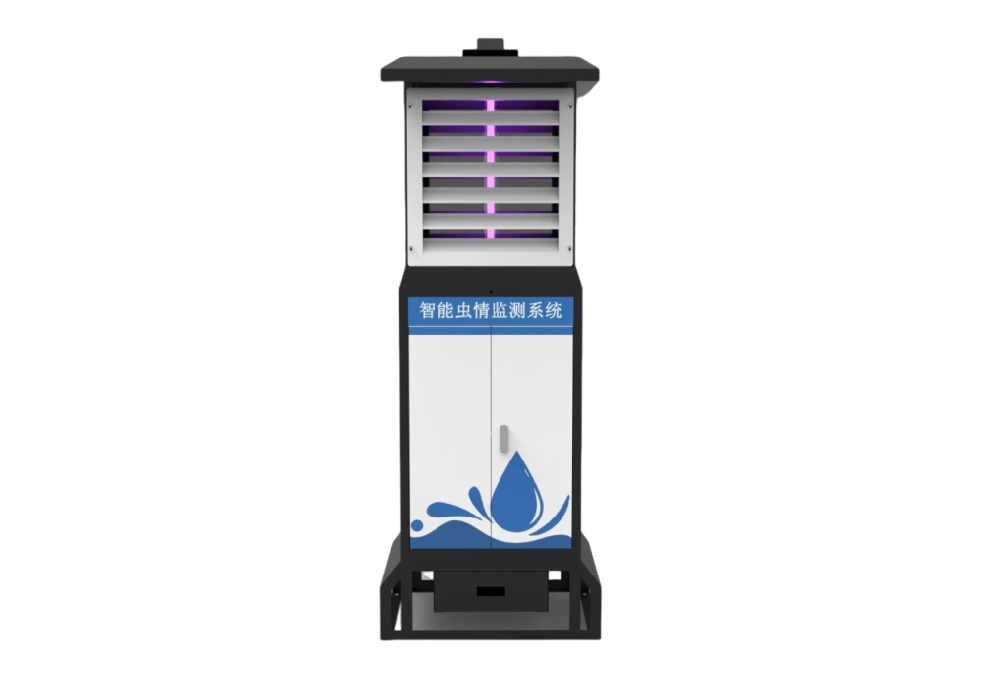
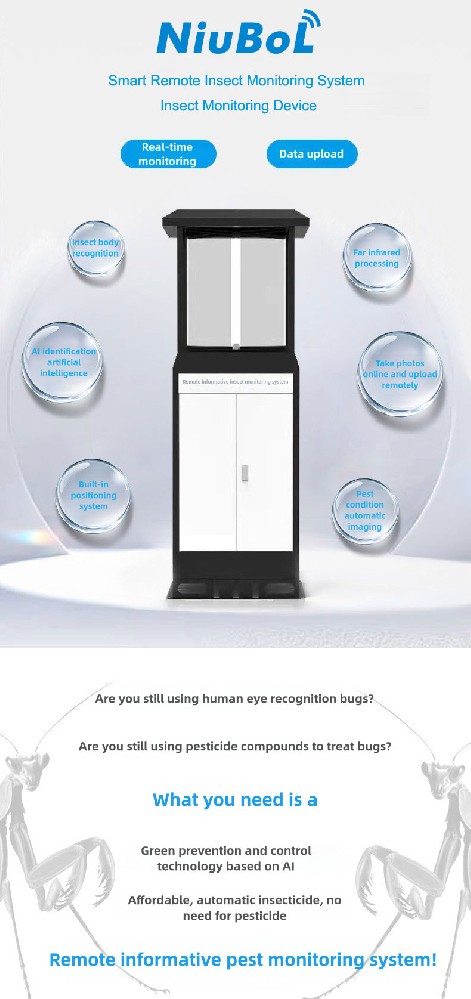
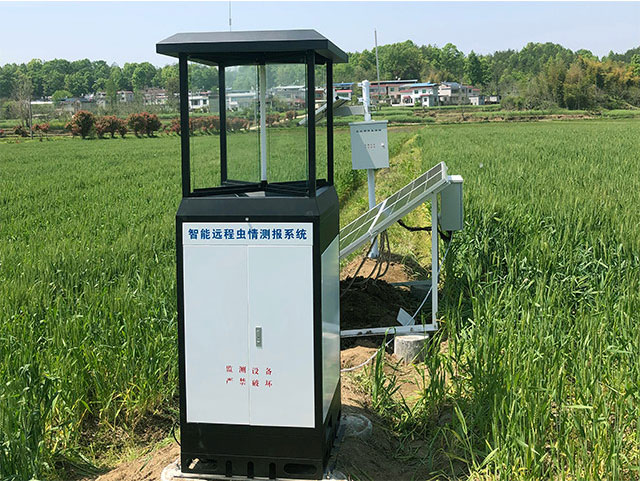
The NiuBoL NBL-IoT-SRPMS combines attraction, specimen handling, photography and remote transmission. Its role is to reduce repeated travel for observation and make records available for review. It should not be purchased as an automatic pesticide prescription system or as a substitute for every crop scouting method.
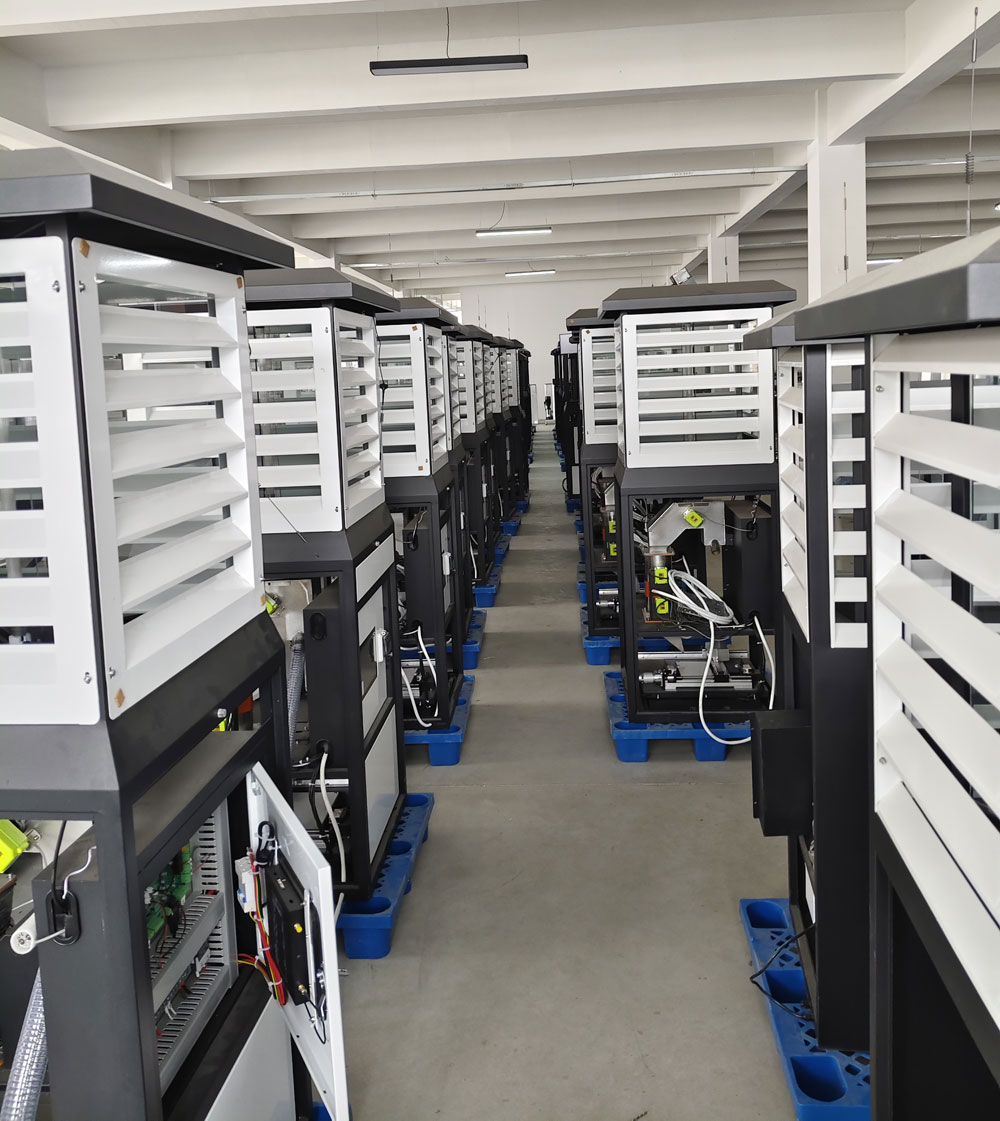
The pipeline-vibration configuration moves captured insects through infrared treatment and drying, then presents specimens for photography. Drying can help separate specimens for imaging, but overlapping wings, debris, damaged insects and a dirty viewing surface can still affect interpretation. The image is therefore part of the record, not merely decoration beside a total.
| NBL-IoT-SRPMS item | Configuration detail | Operational significance |
|---|---|---|
| Attracting lamp | 18 W | Lamp consumption is not the complete cabinet load. |
| Infrared drying | 85 +/-5 degrees C; drying time adjustable | Specimen preparation takes time and needs checking for the target insects. |
| Working / standby power | Up to 225 W / up to 15 W | Use the actual duty cycle when sizing power. |
| Local operation | 10-inch Android touchscreen | Allows on-site configuration and inspection. |
| Remote connection | 4G and Ethernet | Network service and platform access must match the deployment. |
| Serial provision | Reserved RS485 / RS232 interfaces | A reserved port does not establish an implemented integration protocol. |
| Power arrangements | AC 220 V option; solar option with 400 W panel and 200 Ah battery | Confirm the delivered electrical configuration and battery voltage separately. |
The collection drawer still needs manual emptying. A camera, automated cycle and mobile connection do not eliminate specimen removal, lens inspection or obstruction checks. Determine service frequency from initial catch volume and debris, then shorten it during heavy flight periods rather than keeping the same interval throughout the season.
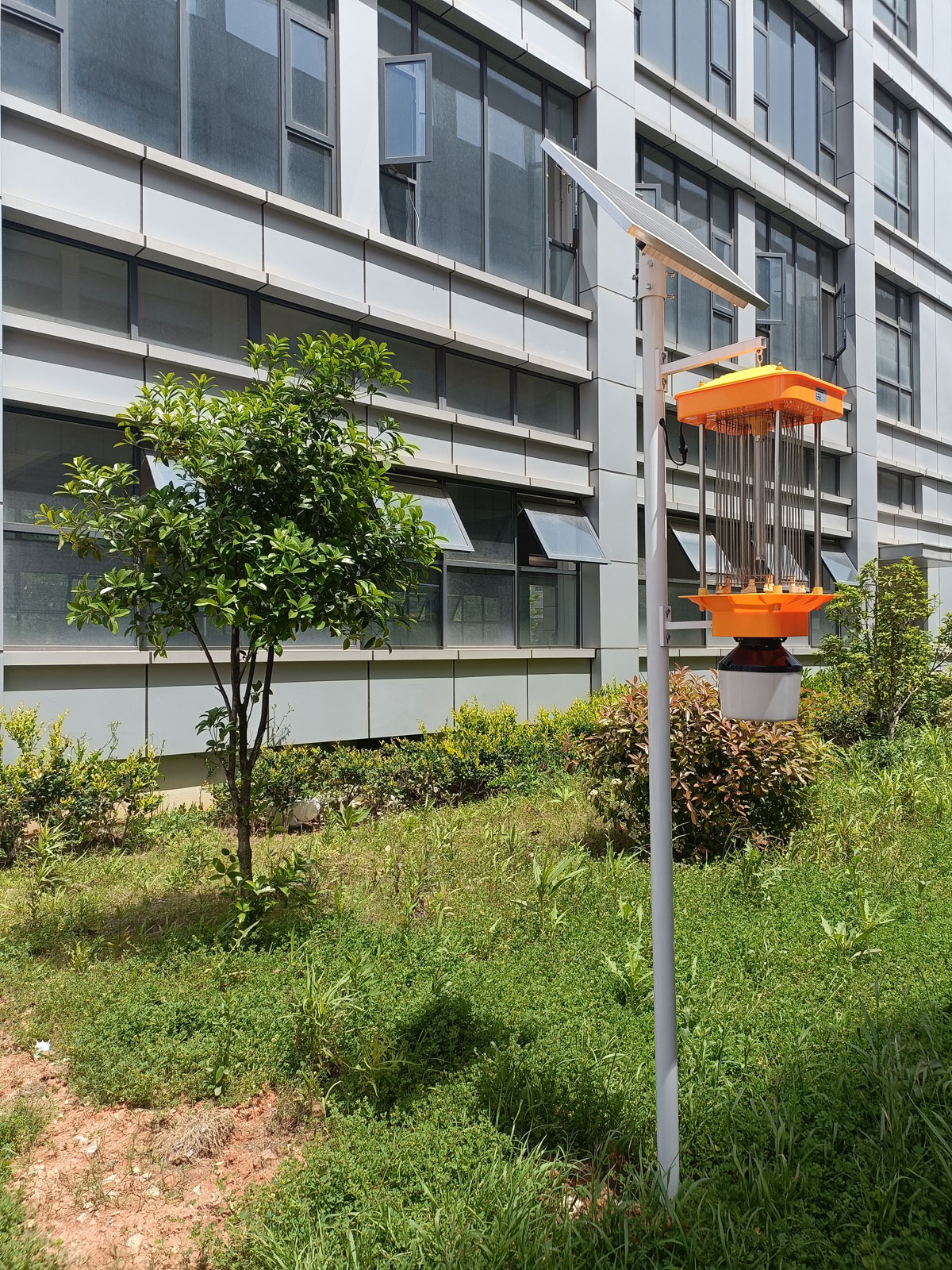
A wind-suction insect trap draws light-attracted insects into a collection device using a fan. An electric-grid lamp uses a different killing mechanism. Identify the mechanism in the ordered specification: the cleaning procedure, power demand and exposure precautions differ. Check whether the quotation includes a fan and collection chamber or an energized grid before comparing maintenance requirements.
| Equipment | Useful output | What it does not establish |
|---|---|---|
| Remote insect monitoring cabinet | Images and associated observation records | Crop injury, pesticide need or universally accurate species classification |
| Solar wind-suction trap | Physical capture using an attracting light and airflow | Remote reporting unless the selected package includes it |
| Solar grid lamp | Physical control using an electrical grid | The same service procedure or power profile as a suction model |
The NiuBoL wind-suction trap includes solar charging and a collection chamber. Fan and lamp variants have different loads. Specify the exact variant rather than merging a low-power model's endurance with a higher-power model's fan rating.
Insect monitoring data depend on attraction as well as insect activity. Nearby lighting, canopy growth, rainfall, temperature, wind, lamp condition and operating duration can change catches. A low count after a wet night could reflect interrupted attraction, not reduced pest pressure. A larger catch after moving a station may reflect a better location rather than a worsening infestation.
Record lamp operating periods, interruptions, cleaning dates and location changes with each series. Separate a confirmed zero catch from no image, an unemptied collection chamber or a failed cycle. For orchard pest monitoring, compare adult catches with crop-stage observations and a suitable scouting method before acting on a trend.
Light attraction is not exclusive to pests. Inspect non-target insects in the catch and review the operating schedule with the crop adviser. A fixed shutdown time should not be treated as proof that beneficial insects are protected at every location.
Do not combine unlike traps into one continuous trend without marking the equipment change. A different wavelength, mechanism or location changes the observation method. Where automatic classification is included, assess the insects important to that crop: check false positives, missed target insects and unclassified specimens, and retain access to the images used for those judgments.
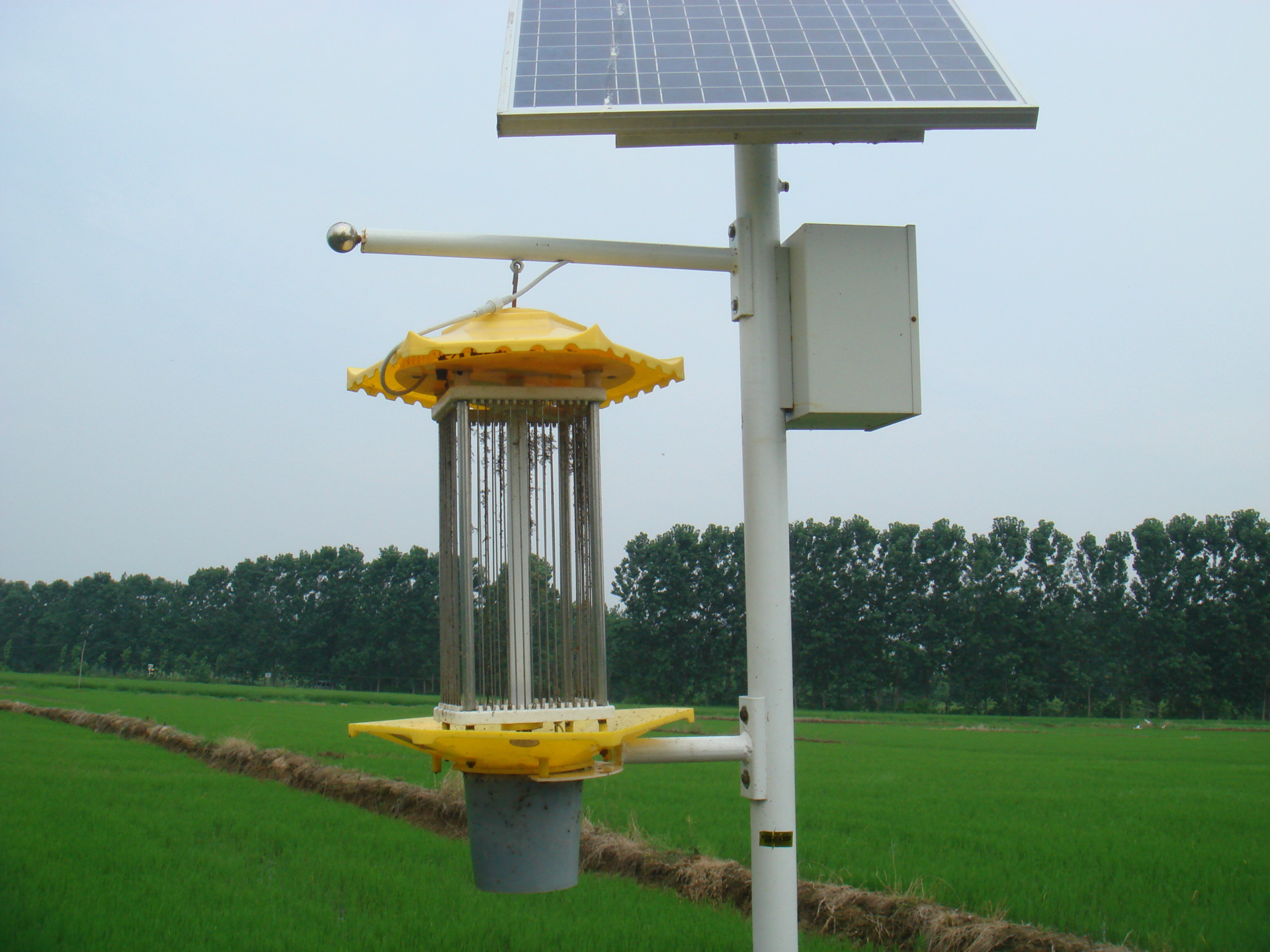
One wind-suction configuration uses a 12.8 V, 12 Ah lithium iron phosphate battery and a solar panel rated at least 40 Wp. Its nominal battery energy is 12.8 x 12 = 153.6 Wh. This is nameplate energy, not energy guaranteed at the load after discharge limits, temperature effects, aging and conversion losses.
As an illustrative upper-load check, 30 W for six hours requires 180 Wh. That exceeds the nominal energy of this battery before losses. It does not mean every trap runs continuously at 30 W; it means a six-hour runtime cannot be justified merely by quoting the battery capacity. Obtain the selected lamp-and-fan duty cycle and controller cutoff settings.
The larger monitoring cabinet has a different energy profile because preparation, imaging and transmission operate in cycles. A 400 W panel rating is not 400 Wh of daily harvest, and a 200 Ah battery cannot be converted to stored Wh without its voltage. Ask for the working sequence, standby duration, site solar resource and required cloudy-weather reserve before accepting a power package.
IoT pest monitoring usually produces two data types: relatively small observation summaries and much larger image files. A weather data logger reading RS485 / Modbus RTU registers does not automatically receive either from the monitoring cabinet. Reserved serial terminals are not evidence of a published register map or image-transfer service.
For integration, request a sample export containing station identity, collection interval, image reference, classification result if available, and device status. Determine whether the destination platform receives files, accesses them through an authenticated service, or only displays the supplier's portal. Test access from the customer's actual network before scaling.
Keep the collection time distinct from upload time. During a network interruption, a late-arriving observation must not appear as a new insect flight. Verify whether images are retained locally, what happens when storage fills, and whether interrupted uploads resume. Agree on account access and image retrieval for the project term rather than assuming that a dashboard login includes unrestricted export.
Orchards: uneven canopy and different fruit stages complicate comparison. Keep observation sites representative of the management blocks and record canopy changes. Use adult-flight observations to target inspection, then assess fruit or leaf damage with the crop team's method. A station outside the canopy does not automatically describe every block.
Field crop protection: large blocks may have different planting dates, surrounding vegetation and water conditions. Start with representative observation locations, not one universal acreage-per-lamp rule. Separate the locations chosen for comparable monitoring from those chosen for physical trapping; placing control lamps beside a monitoring point can alter the catch series.
Research and advisory services: method consistency matters more than a high total. Keep station identity, trap type, operating schedule and specimen-review decisions in the dataset. Export original images as well as classifications where the service supports this. Otherwise, later taxonomic review may be impossible even though the dashboard preserves a count.
For a field trial, compare monitored and reference blocks using the same crop observations, sampling effort and treatment records. Weather and insect movement can affect both. Do not promise a fixed pesticide reduction, yield increase or payback period from the number of devices installed.
Run a complete specimen-handling cycle and inspect the image, not just the illuminated lamp. Check the drawer, rain diversion, fan or grid as applicable, and the ability to service the unit without damaging cables. For powered components, isolate the supply before cleaning and follow the configuration's electrical safety procedure.
Then interrupt the network and restore it. Confirm what the operator sees, which observations return and how duplicate uploads are handled. A quotation should distinguish monitoring cabinets, physical-control lamps, foundations, solar equipment, cellular service, platform charges and installation. Send NiuBoL the crop, target insects, site layout and image-access requirements so the proposed package answers those specific needs.

It captures insects as part of observation, but its monitoring record does not establish an area-wide control effect. Specify any additional trapping arrangement separately and evaluate crop injury, not just cabinet catches.
No. Canopy, terrain, competing light, pest behavior and operating hours affect attraction. Establish a layout through a site assessment and trial; a quoted area is not a universal protection boundary.
Not safely from a generic count alone. Species, crop stage, local action thresholds and field observations are needed. Use alerts to prompt review unless a crop-specific decision process has been validated.
Only if the selected equipment exposes the required data through an implemented, documented interface. RS485 availability alone does not establish Modbus compatibility, and image access needs its own integration method.
Ask which target species are supported, how uncertain identifications are handled, whether originals remain accessible and how results were checked under similar conditions. Do not substitute one overall accuracy percentage for target-species testing.
Monitoring and control functions, solar reserve, foundation work, access, connectivity and software scope all matter. Compare itemized packages for the same operating schedule and data access; no single lamp price represents the whole project.
Specimen emptying, optical cleaning, checking obstructions, inspecting solar surfaces and checking the capture mechanism remain physical tasks. Start with short inspections and adjust the interval to observed loading.
IoT pest monitoring is most useful when a field team can interpret and act on consistent records. Select monitoring cabinets for reviewable observations, choose solar insect traps for an appropriate physical-control task, and test power, service access and data retrieval before expanding the installation.
 Frequency vibration solar insecticidal lamp User Manual.pdf
Wind-suction Solar Insect Trap Light User Manual.pdf
Intelligent Remote Insect Monitoring and Reporting System(Insect Monitoring Device) Data Sheet.pdf
Prev:Solar Insect Killer Lamp Controls: Verify Local Operation Before IoT Connection
Next:Tea Garden Insect Lamps: Relate Night Catches to Shoot Inspection
Related recommendations
Sensors & Weather Stations Catalog
Agriculture Sensors and Weather Stations Catalog-NiuBoL.pdf
Weather Stations Catalog-NiuBoL.pdf
Agriculture Sensors Catalog-NiuBoL.pdf
Water Quality Sensor Catalog-NiuBoL.pdf
Related products
 Combined air temperature and relative humidity sensor
 TDR Soil Moisture & Temperature Sensor for irrigation| RS485 |4-20mA| NBL-S-THR
 Soil pH sensor RS485 soil Testing instrument soil ph meter for agriculture |NBL-S-PH
 Wind Speed sensor Output Modbus/RS485/Analog/0-5V/4-20mA
 Tipping bucket rain gauge for weather monitoring auto rainfall sensor RS485/Outdoor/stainless steel
 Pyranometer Solar Radiation Sensor 4-20mA/RS485

Screenshot, WhatsApp to identify the QR code
WhatsApp number:+8615367865107
(Click on WhatsApp to copy and add friends)

