





— Blogs —
—Products—
 Consumer hotline +8618073152920
 WhatsApp:+8615367865107
Address:Room 102, District D, Houhu Industrial Park, Yuelu District, Changsha City, Hunan Province, China
Product knowledge
Time:2026-02-04 15:29:07 Popularity:663
Ultrasonic weather station heating changes both the winter power budget and the conditions under which wind observations can be trusted. Removing cups and bearings avoids their mechanical wear, but it does not make an acoustic measurement path immune to snow, ice or contamination. For a remote NiuBoL station, confirm the actual heater option, its control arrangement and power demand before promising winter data continuity.
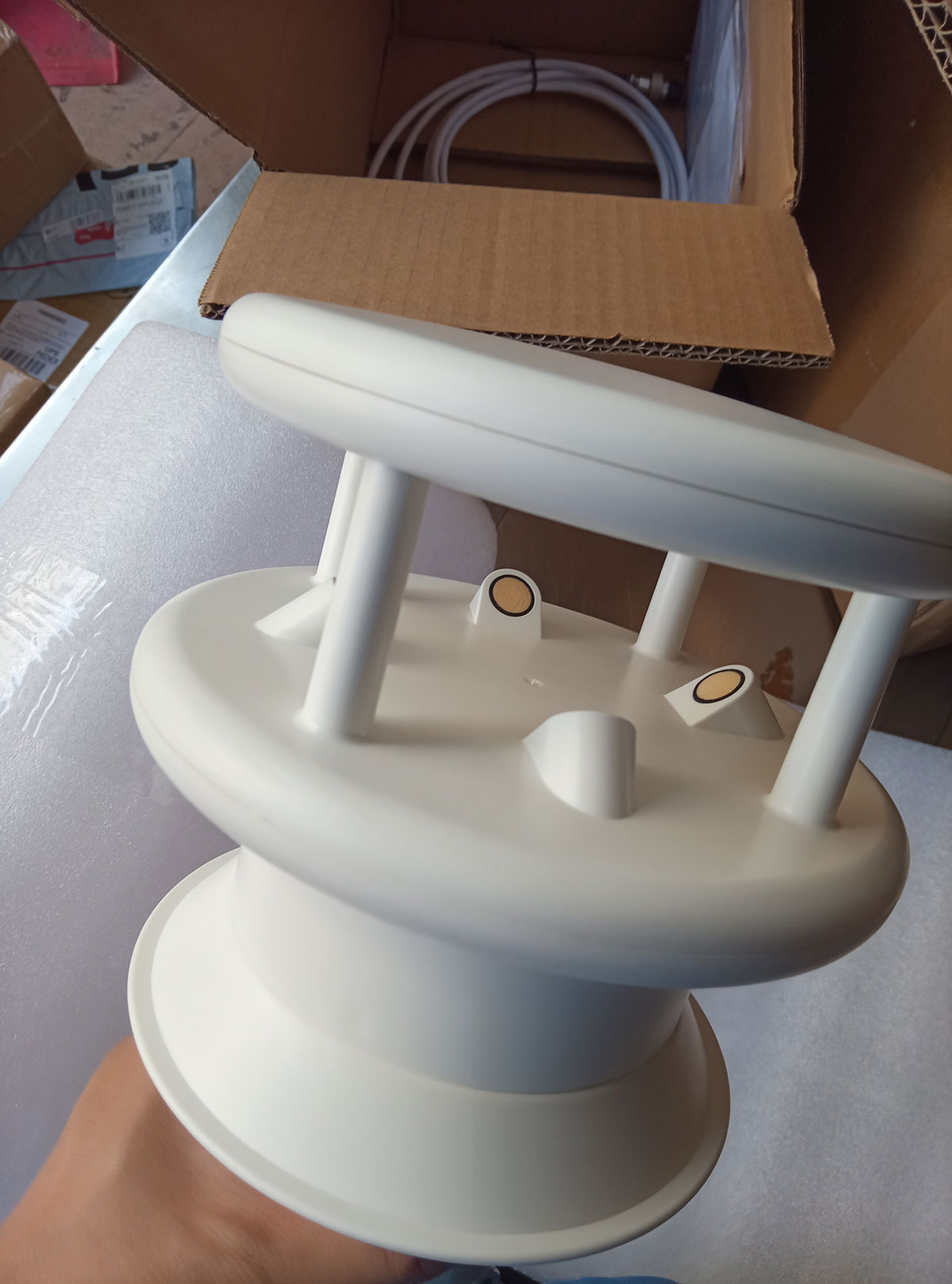
An ultrasonic wind instrument compares sound travel times along measurement paths to determine wind. In the NBL-W-21GUWS arrangement, the documented paths provide horizontal wind speed and direction. It is not a three-axis wind instrument merely because it has several transducers. Temperature, humidity, pressure, rain and radiation in an integrated weather assembly use their own sensing methods.
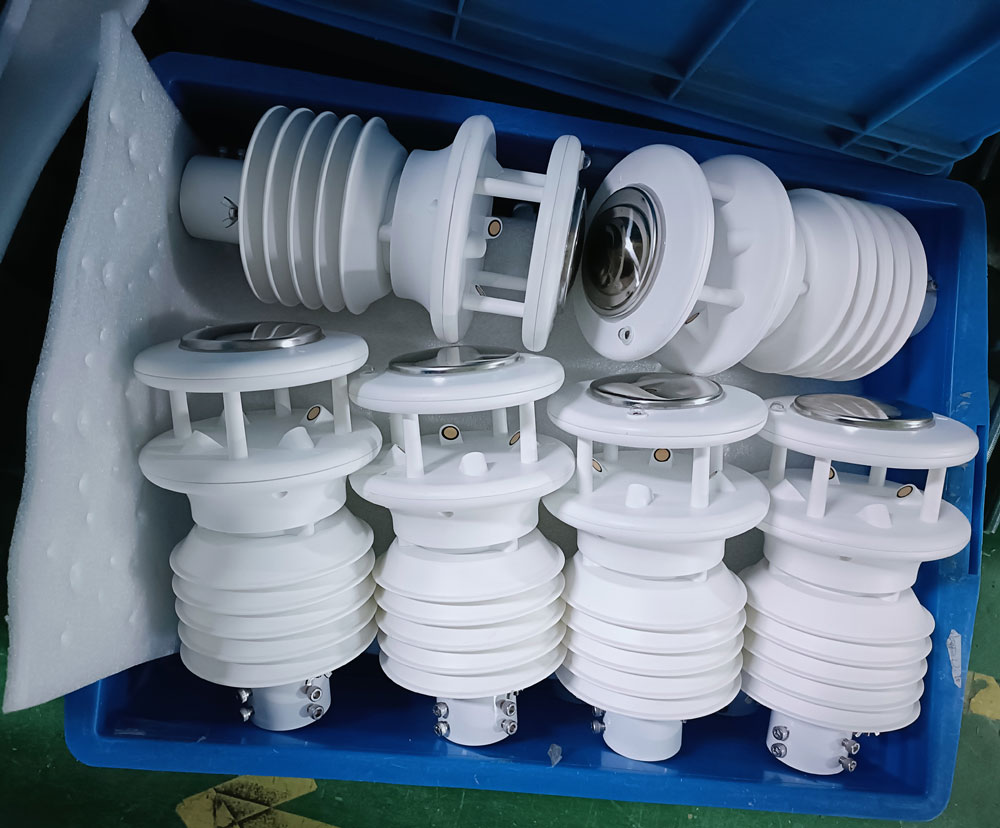
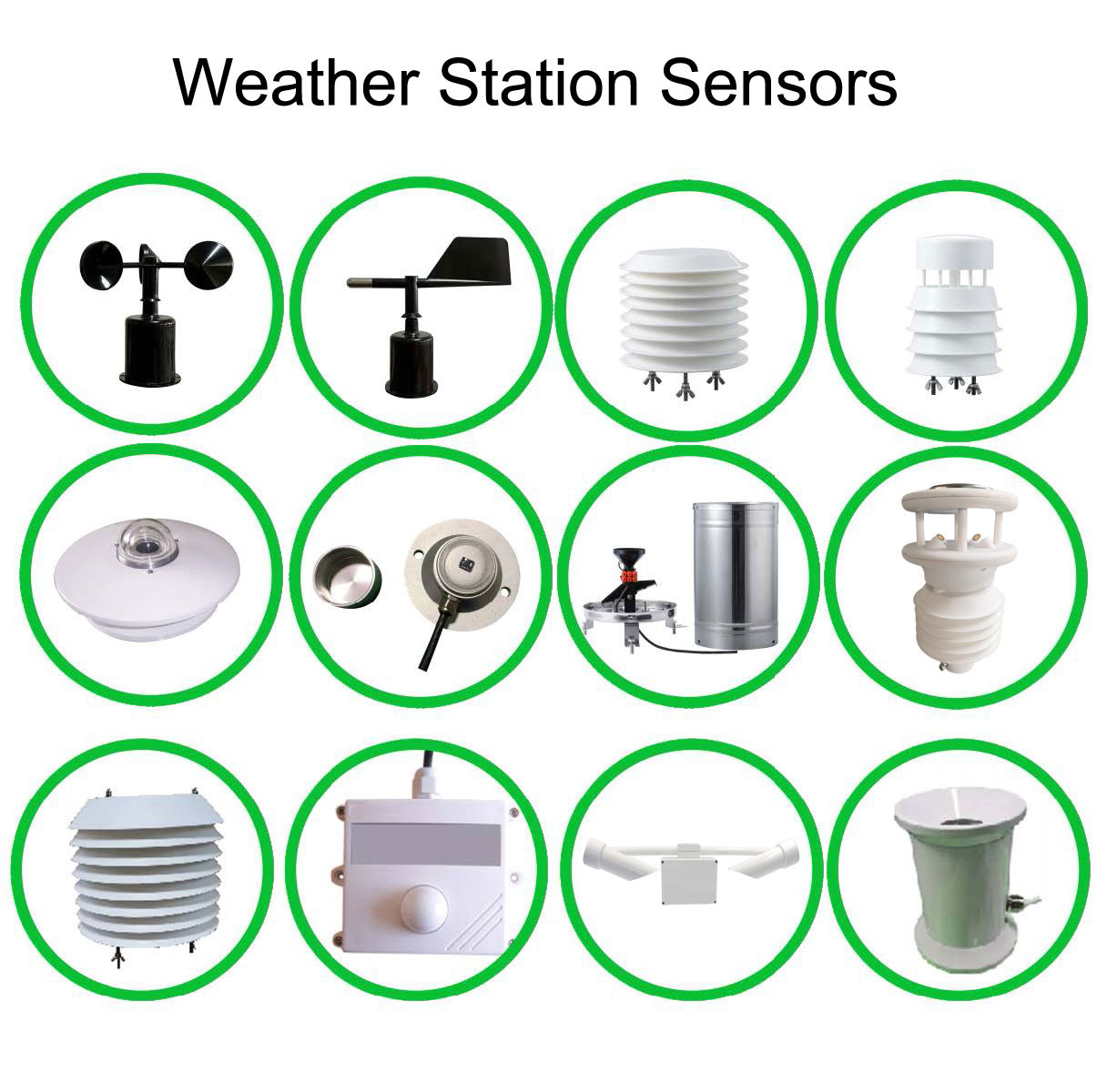
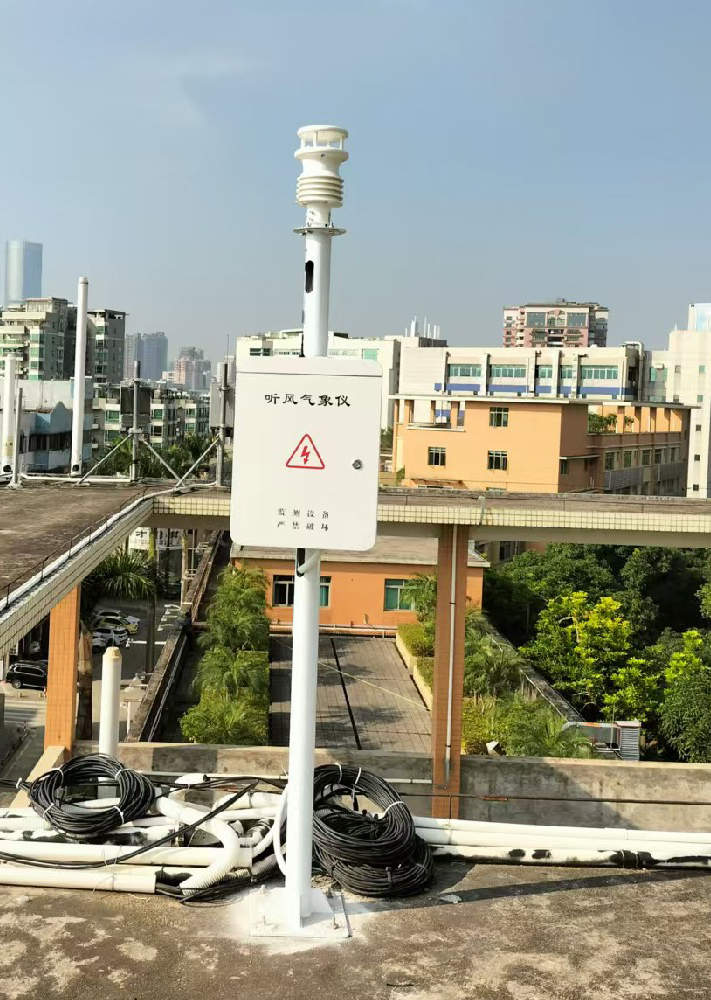
Several station bodies are illustrated here, including two-channel wind instruments and integrated environmental assemblies. Their optional elements, dimensions and power requirements are not interchangeable. A specification labeled five-in-one or nine-in-one must identify the included channels. Do not add the power or winter rating of one body to another just because both have RS485 output.
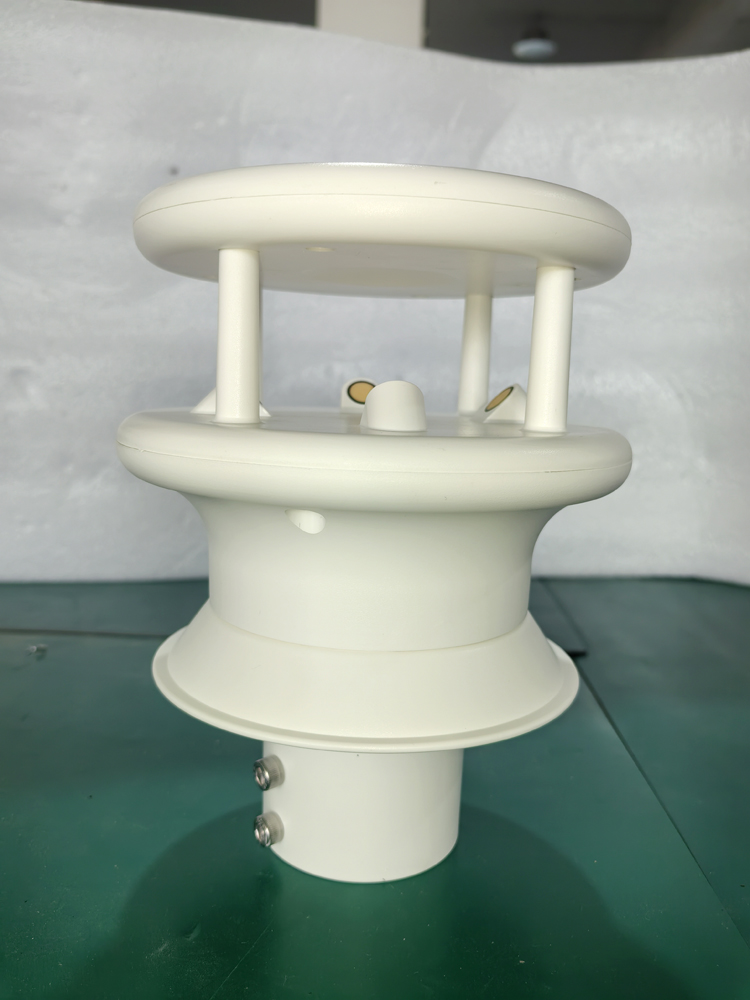
The NBL-W-21GUWS ultrasonic wind speed and direction sensor has a documented optional 3 W heating function. Confirm whether it is present on the offered unit, which parts it heats and how it is controlled. A winter project needs those details explicitly. Neither an outdoor enclosure nor the absence of rotating parts establishes that a heater is installed.
| 21GUWS item | Model information | Winter design check |
|---|---|---|
| Supply | 12-24 V DC | Check voltage at the sensor when heating is active |
| Optional heating | 3 W | Confirm heater presence, control and total operating demand |
| Wind speed | 0-60 m/s; 0.01 m/s resolution | Inspect invalid or frozen-looking data during weather events |
| Wind direction | 0-359 degrees; +/-3 degrees accuracy; 1 degree resolution | Separate calm-wind interpretation from a failed measurement path |
| Protection | IP65 | Ingress protection is not an anti-icing performance test |
| Documented operating temperature | -20 to +80 C | Confirm the ordered revision; do not assume a colder limit |
| Interface | RS485, Modbus RTU; 9600 bps | Check the actual map, timing and unavailable-data behavior |
The wind-speed accuracy expression for this documented version is +/-(0.5 m/s + 3% FS). Do not replace it with a different family's expression or interpret full scale as percent of the instantaneous reading. More importantly, a nominal error statement does not describe measurements made with an obstructed acoustic path. Ask for evidence appropriate to the expected cold-weather conditions instead of inferring it from the temperature range alone.

A 3 W heater operating for 12 hours uses 36 Wh; operating for 24 hours uses 72 Wh. That is additional to the unheated instrument, logger, modem and conversion losses unless the supplier's stated total explicitly includes it. A quoted low average instrument power does not justify ignoring the heater during a long cold event.
For a hypothetical station whose remaining equipment uses 2 W continuously, the daily base load is 48 Wh. With 12 hours of 3 W heating, total load is 84 Wh per day. With continuous heating, it becomes 120 Wh per day. These are sizing examples, not measured NiuBoL station loads. Determine the actual duty cycle and complete load from the ordered assembly and site requirements.
| Illustrative heater use | Heater energy | Total with the example base load |
|---|---|---|
| No heating during that day | 0 Wh | 48 Wh/day |
| 12 hours at 3 W | 36 Wh | 84 Wh/day |
| 24 hours at 3 W | 72 Wh | 120 Wh/day |
A nominal 12 V, 20 Ah battery contains 240 Wh by simple nameplate multiplication. If an illustrative design permits 50% usable capacity and assumes 85% delivery efficiency, only 102 Wh reaches the load before any additional cold-capacity allowance. That exceeds the example 84 Wh day but not the 120 Wh day. It is not evidence for several days of autonomy, and real battery performance must be assessed at the intended temperature and discharge conditions.
Winter solar input can be low at the same time that heater demand is high. Assess the design month, shading and snow coverage on the panel. Daily energy balance must include the energy needed to restore a depleted battery, not only to run equipment during a favorable day. A panel's rated watts cannot be multiplied by 24 hours to obtain credible daily energy production.
Check the complete load when heater and communications equipment operate together. Cable resistance, connectors, fuses and the converter can cause a voltage drop or restart that was absent during an unheated bench test. Test at the sensor terminals under the lowest intended supply condition. A larger battery does not correct an undersized cable or incompatible voltage regulator.
If the proposed heater is controlled externally, define who supplies the switching device, input measurement and control settings. If control is internal, establish what status is available to the logger. Use only controls supported by the ordered configuration; automatic detection and clearing of every icing event cannot be assumed. The exact behavior needs to be demonstrated for the offered configuration.
A sensor can remain powered while an acoustic path is obstructed. Depending on the implementation, the receiver may see a diagnostic indication, missing data or an implausible repeated value. Establish the actual behavior through suitable tests and configuration information. An unchanged zero should not automatically be accepted as calm wind during a snow event.
Keep a measurement's last valid time and status separate from the number. At very low wind speed, direction can be unstable or have limited physical meaning even without a fault. Do not convert an invalid bearing into north, or hold an old direction indefinitely as a fresh observation. For operational alarms, define how unavailable wind is handled by the responsible system designer.
Inspect the mount, cable strain relief and drainage around the sensor. Clear airflow and suitable orientation remain necessary in winter. A heater cannot correct a mast wake or an incorrectly aligned direction reference. It also does not heat every rain collector, radiation dome, battery or water-containing component of a larger station.
For an integrated assembly, check temperature and humidity channels separately from wind. Heating can be relevant to local exposure, so follow the approved placement and assess the actual assembly rather than improvising an external heater beside a temperature element. Rain and particulate options have different moisture and freezing limitations. A valid wind channel does not certify all companion measurements.
Test loss and restoration of supply under a controlled procedure. Verify that the logger identifies gaps and that later uploads preserve observation times. If heating is unavailable because of low energy, record that condition where the equipment supports it. Do not hide an energy-saving shutdown by filling wind gaps with zero or a smooth interpolation.
Acceptance evidence should identify the unit and heater configuration, tested temperature and weather conditions, load measurements, restart behavior and limits not yet demonstrated. A successful indoor power test is useful electrical evidence, but it is not an icing test. Record any icing condition in which reliable wind was not demonstrated, together with the required inspection or service response.
It depends on the expected icing conditions, required data availability and selected instrument. Specify the cold-weather task and obtain the configuration's applicable evidence. Heating is an option to assess, not a substitute for a site-specific operating envelope.
No universal guarantee follows from power alone. Heated surfaces, wind, precipitation, temperature and control behavior matter. Confirm the offered design's demonstrated conditions and establish how the system reports data when those conditions are exceeded.
No. Include heater duty and other simultaneous loads in both daily energy and supply-capacity checks. A 3 W load over a full day adds 72 Wh, which can dominate a small remote station's winter budget.
No. IP65 concerns ingress protection. Operating temperature, anti-icing behavior and measurement performance are separate characteristics. Review them separately for the actual supplied revision.
No. Ultrasonic sensing normally describes the wind measurement in these assemblies. Temperature, humidity, pressure, rain and radiation use their own methods. Confirm which channels and winter provisions are actually included.
Provide minimum temperature, icing and snow exposure, required observations, site access, existing supply and communications equipment. Include the intended autonomy and unavailable-data response so heater, power and monitoring functions can be assessed together.
Ultrasonic weather station heating needs an explicit configuration, a realistic winter energy budget and verified data-validity behavior. The NBL-W-21GUWS optional heater is a defined load, not proof of unlimited anti-icing performance. Select and accept the complete station for the conditions that matter, while preserving gaps and limitations honestly in the weather record.
 NBL-W-21GUWS-Ultrasonic-Wind-speed-and-direction-Sensor.pdf
NBL-W-61MUWS-Ultrasonic-Weather-Station-Instruction-Manual.pdf
NBL-W-71MUWS-Micrometeorological-Sensor-Operating-Instructions.pdf
Prev:Hydropower Ecological Flow Monitoring: Radar or Doppler Site Choice
Next:Construction Site Dust Monitoring Cost: Compare the Installed Scope
Related recommendations
Sensors & Weather Stations Catalog
Agriculture Sensors and Weather Stations Catalog-NiuBoL.pdf
Weather Stations Catalog-NiuBoL.pdf
Agriculture Sensors Catalog-NiuBoL.pdf
Water Quality Sensor Catalog-NiuBoL.pdf
Related products
 Combined air temperature and relative humidity sensor
 TDR Soil Moisture & Temperature Sensor for irrigation| RS485 |4-20mA| NBL-S-THR
 Soil pH sensor RS485 soil Testing instrument soil ph meter for agriculture |NBL-S-PH
 Wind Speed sensor Output Modbus/RS485/Analog/0-5V/4-20mA
 Tipping bucket rain gauge for weather monitoring auto rainfall sensor RS485/Outdoor/stainless steel
 Pyranometer Solar Radiation Sensor 4-20mA/RS485

Screenshot, WhatsApp to identify the QR code
WhatsApp number:+8615367865107
(Click on WhatsApp to copy and add friends)

