





— Blogs —
—Products—
 Consumer hotline +8618073152920
WhatsApp:+8615367865107
Address:Room 102, District D, Houhu Industrial Park, Yuelu District, Changsha City, Hunan Province, China
Product knowledge
Time:2025-11-22 15:53:37 Popularity:803
Quick Answer: Ultrasonic compact weather station selection starts with the required measurements and their exposure, not the largest channel count. A compact head can reduce separate brackets and field connections, but all fitted channels share one installation location. Confirm the exact model, rainfall method, light measurement, environmental limits and receiving interface before choosing an integrated unit over separate instruments.
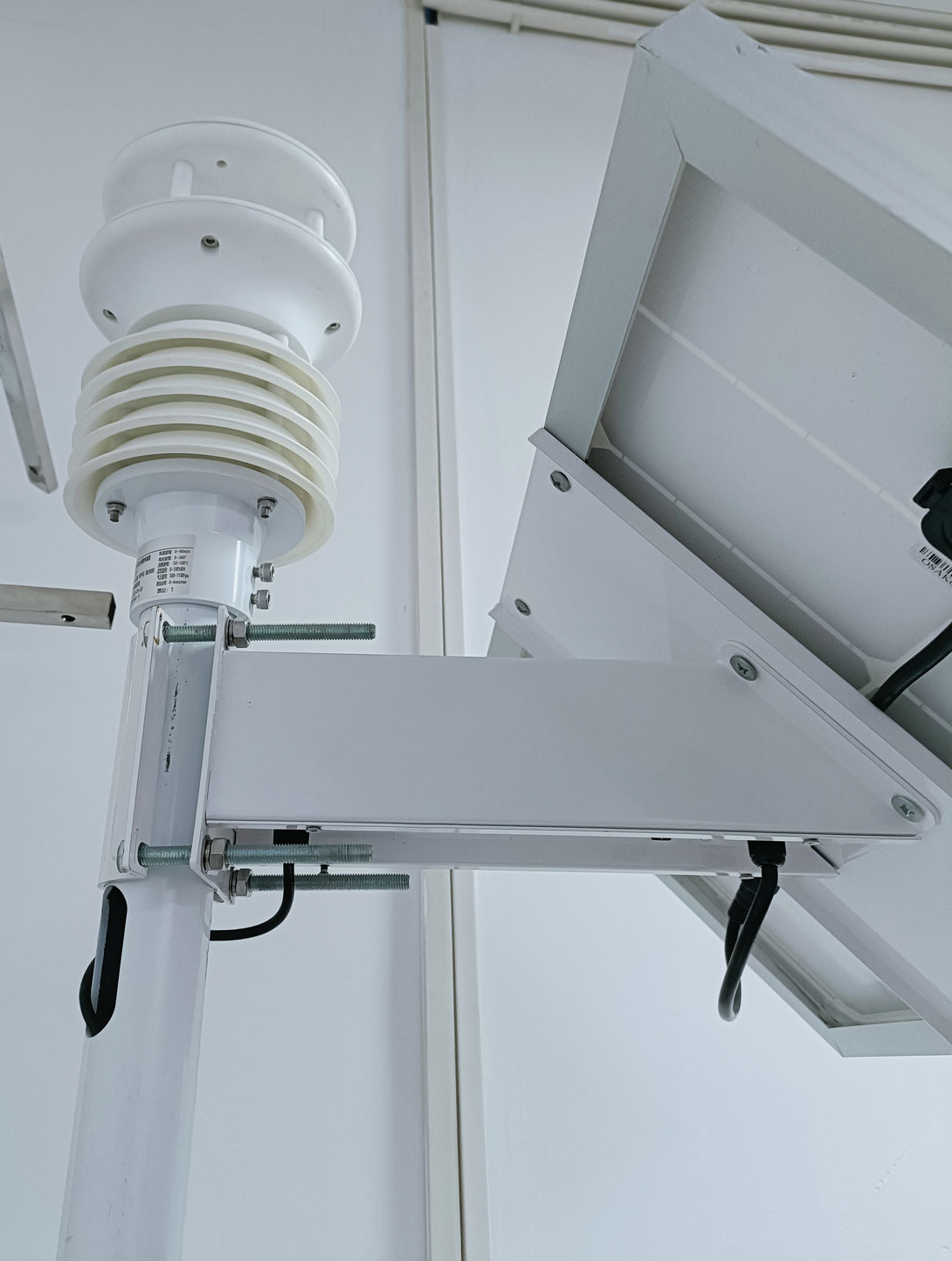
An integrated weather sensor configuration is a defined combination, not a promise that every available measurement is inside the housing. Wind speed and direction, air temperature, humidity and pressure form a common group. Rainfall, light, particles and noise require the appropriate additional configuration or separate instruments.
The NBL-W-71GUWS seven-parameter option, for example, includes rainfall and either solar irradiance or illuminance as its light channel. It does not imply simultaneous irradiance, illuminance, PM2.5, PM10 and noise measurements. State the delivered quantities and units rather than accepting a channel-count description alone.
| Required observation | What to specify | Frequent selection mistake |
|---|---|---|
| Wind and basic weather | Speed, direction, temperature, RH and pressure | Assuming rainfall is included in every compact head |
| Rainfall | Measurement method, range and reported quantities | Applying a tipping-bucket pulse factor to a piezoelectric instrument |
| Solar or light observation | Irradiance in W/m2, illuminance in lux, or a separate PAR requirement | Treating these quantities as interchangeable |
| Particles or sound | Named channels and the required measurement performance | Assuming a weather enclosure establishes regulatory acceptance |
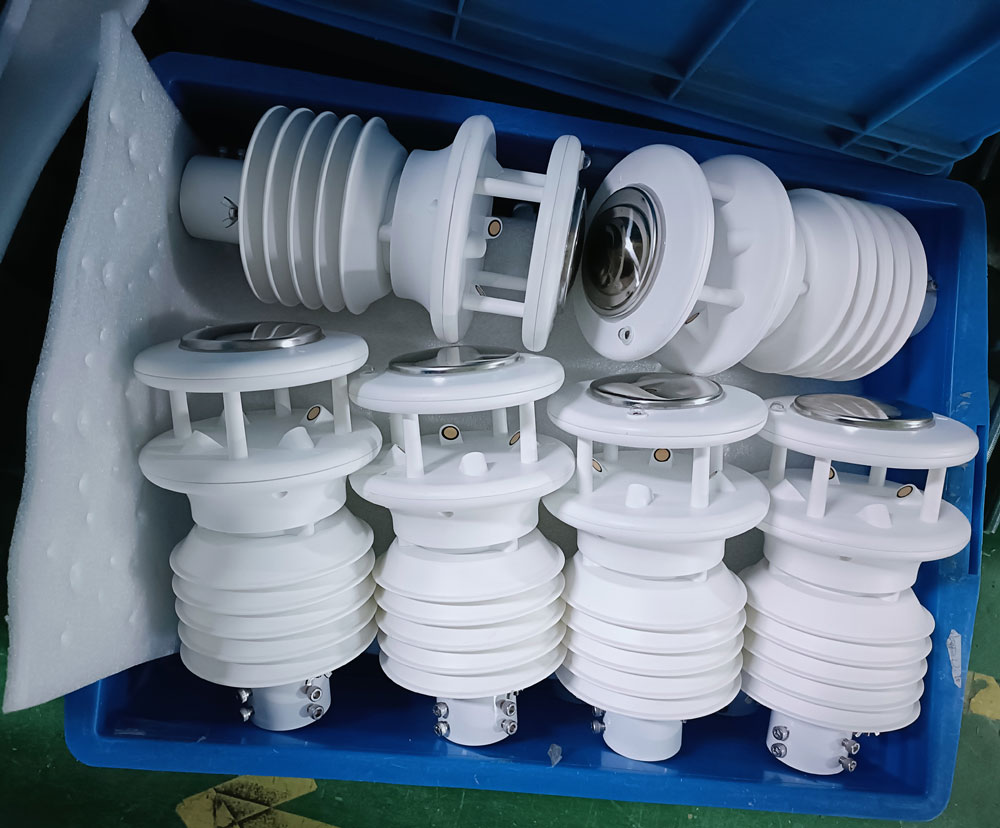
The wind measurement compares acoustic travel in different directions across the sensing paths. Air movement changes the relative transit times, allowing the instrument to calculate wind speed and direction. The absence of a rotating cup or vane removes those particular moving parts; it does not remove exposure effects, electronic faults or the need to inspect the acoustic paths.
Choose it where the specified response, mounting and service arrangement fit the task. Rain droplets, ice, contamination, nearby structures or vibration can still affect operation. A compact head should not be accepted as maintenance-free or immune to dust and snow merely because its wind measurement is non-rotating. Check heater availability and cold-weather performance as separate requirements.
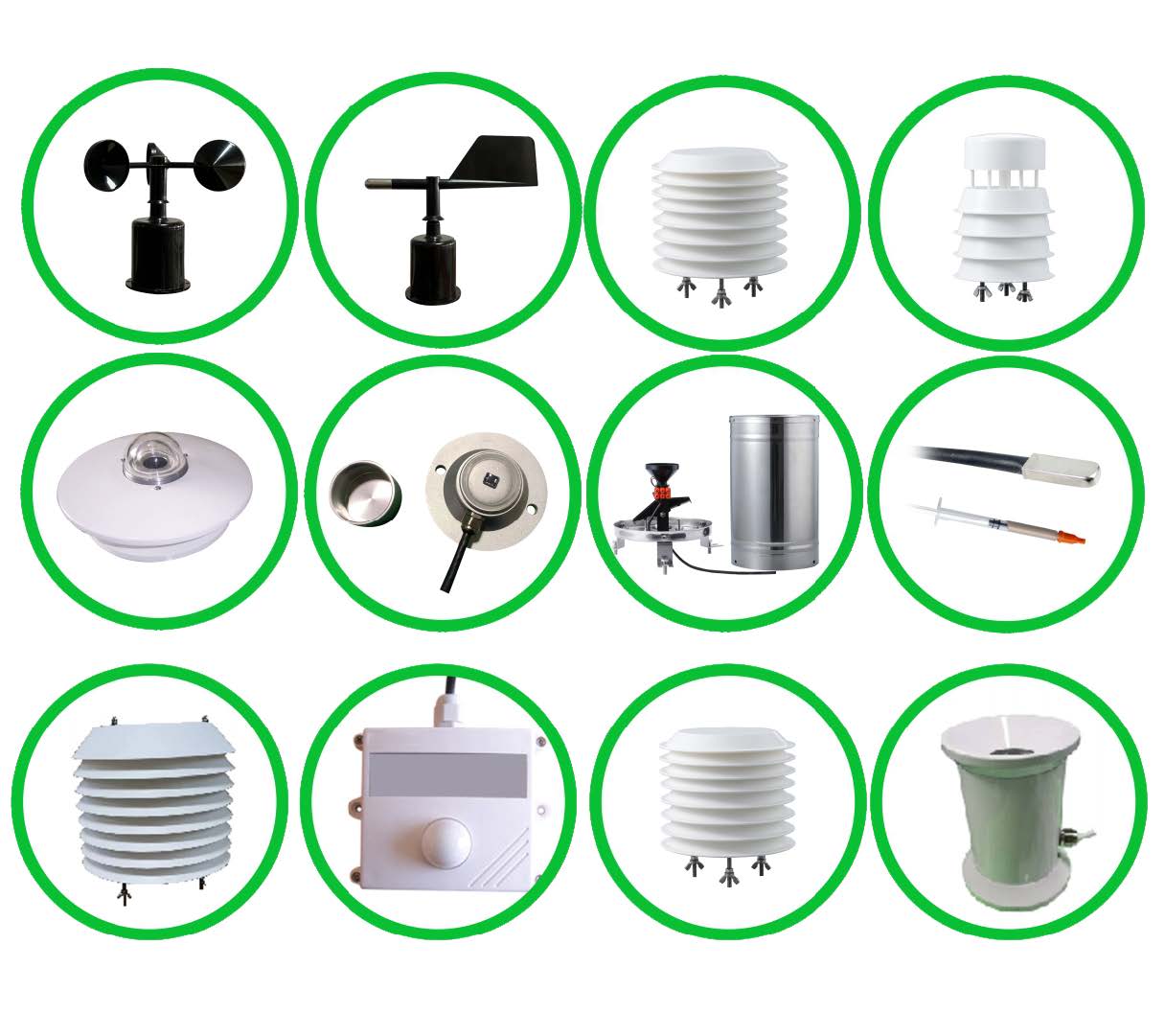
Separate instruments allow different sensing positions. A compact head places its channels together, which is useful only where that common location answers the monitoring question. Wind needs representative airflow, temperature needs suitable shielding and ventilation, and a rain or irradiance channel needs the relevant unobstructed exposure. A convenient pole beside a wall may satisfy none of those requirements.
Compare the compact arrangement with a modular station before procurement. If a project needs one temperature exposure near a crop, a higher wind reference and a separately located rain collector, a single head cannot occupy all three positions. Keep a separate instrument where its location or measurement method is important to the project.

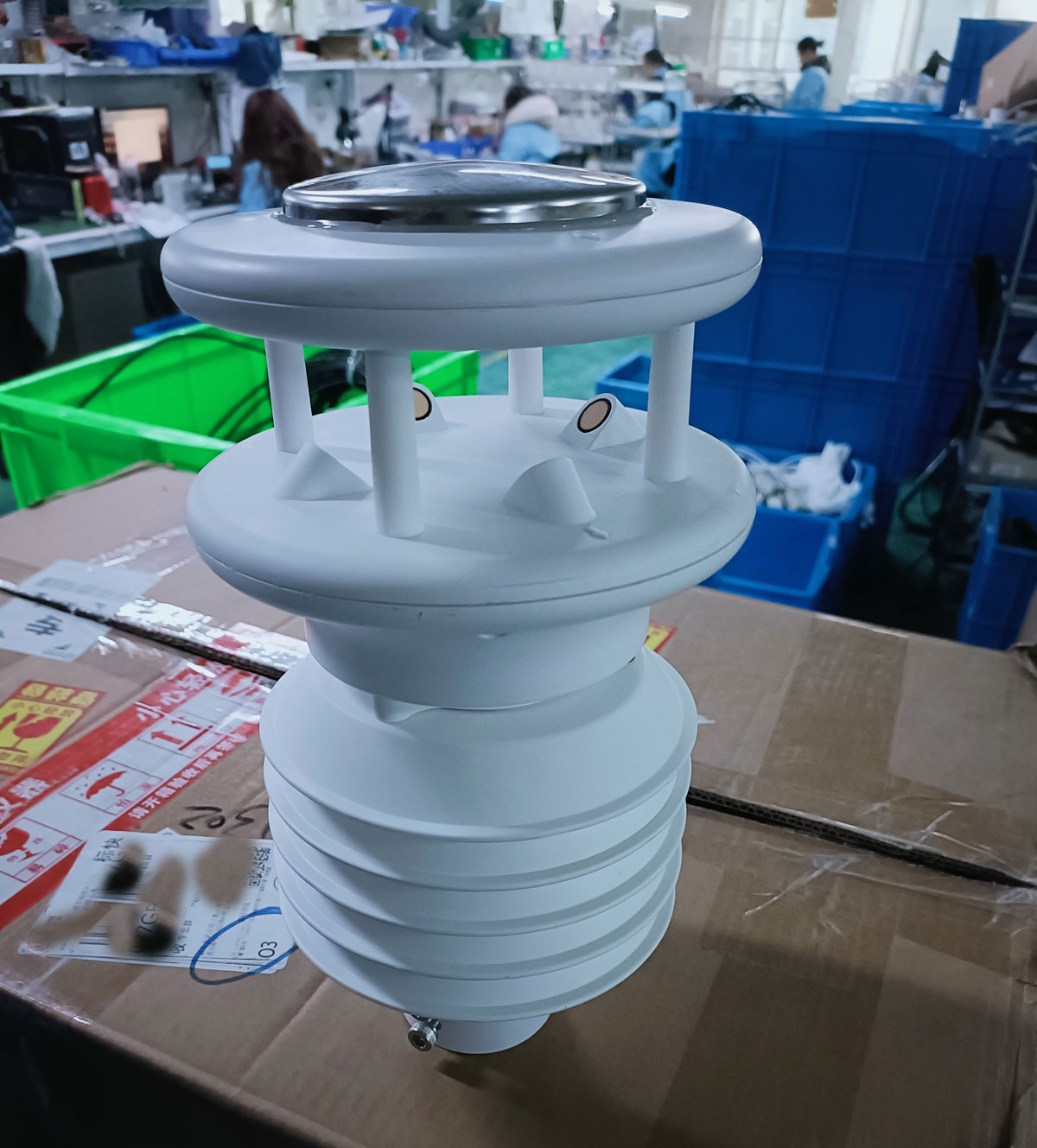
The NiuBoL NBL-W-61MUWS is a six-parameter example with ultrasonic wind, temperature, humidity, pressure and piezoelectric rainfall measurement. Its figures below belong to this MUWS configuration, not every GUWS or higher-channel model. The rain measurement responds to impact; it is not a tipping bucket and should not be described as optical rainfall detection.
| Item | NBL-W-61MUWS example | Selection meaning |
|---|---|---|
| Wind speed | 0-40 m/s; accuracy +/-0.5 m/s plus 2% FS; 0.01 m/s resolution | Keep the full-scale error term in the comparison |
| Wind direction | 0-359 degrees; +/-3 degrees; 1 degree resolution | Establish the installation direction reference |
| Air temperature | -40 to +80 degrees C measurement range; +/-0.5 degrees C | A channel range is not the whole-unit operating range |
| Relative humidity | 0-100% RH; +/-5% RH; 0.1% RH resolution | Check condensation and exposure separately |
| Pressure | 10-1100 hPa; +/-1.5 hPa; 0.1 hPa resolution | Keep measured station pressure distinct from a corrected value |
| Rainfall | 0-8 mm/min; stated accuracy +/-4%; 0.01 mm resolution | Agree the method and acceptance conditions for rainfall records |
| Power and interface | DC 12-24 V; average 0.35 W; RS485 Modbus, default 9600 bps | Allow separately for acquisition, backhaul and other loads |
| Unit environment | -20 to +50 degrees C; operating humidity 0-95% RH; IP65 | Do not select for -30 degrees C from the temperature channel range |
| Cable and construction | 2.5 m standard cable; confirm delivered housing and cable jacket | Specify outdoor exposure and the extension route |
At a 40 m/s full scale, the 2% FS wind term is 0.8 m/s before adding the fixed 0.5 m/s term. That is not a 2% of reading specification. Likewise, a 0.01 mm rainfall display increment does not mean the device contains a 0.01 mm tipping mechanism. Compare the actual performance expression, not only the finest displayed digit.
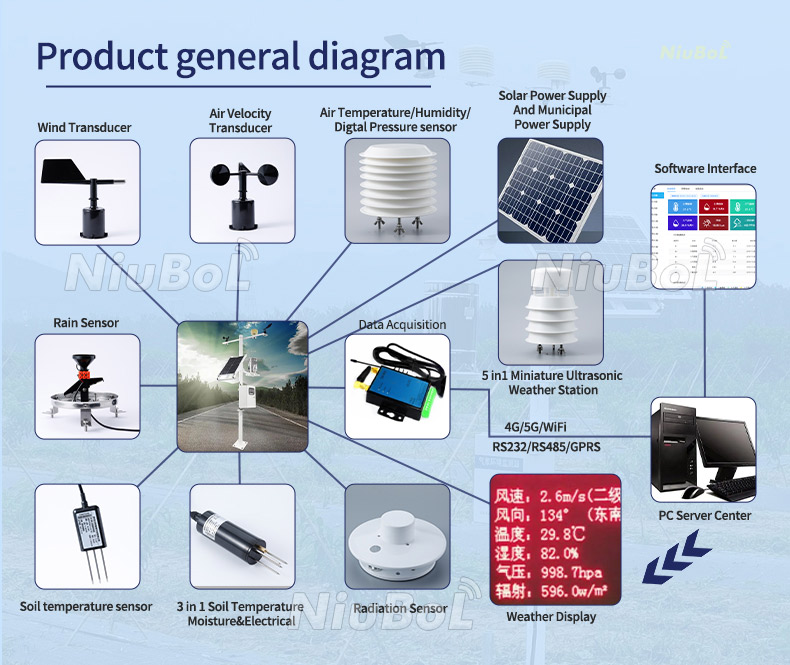
RS485 Modbus RTU provides the selected head's serial data path. A PLC, RTU, data logger or compatible gateway still needs to poll and interpret the measurements. A complete remote station also needs its power system, communications service and receiving application. A sensor diagram showing several components does not mean all are built into the compact head.
Confirm the register list, units, scaling and valid-data behavior of the ordered firmware. Do not assume identical registers across five-, six-, seven- and higher-parameter versions. A logger must also preserve the intended measurement and reporting intervals; a screen refreshing quickly does not prove the wind channel supplies the required gust statistic.
Serial distance depends on the complete physical network, including cable, topology, loading, protection and speed. Avoid a blanket 1000 m compatibility claim. Cellular or other wireless backhaul is a separate choice provided by suitable acquisition or communications equipment, not an automatic feature of an RS485 weather sensor.
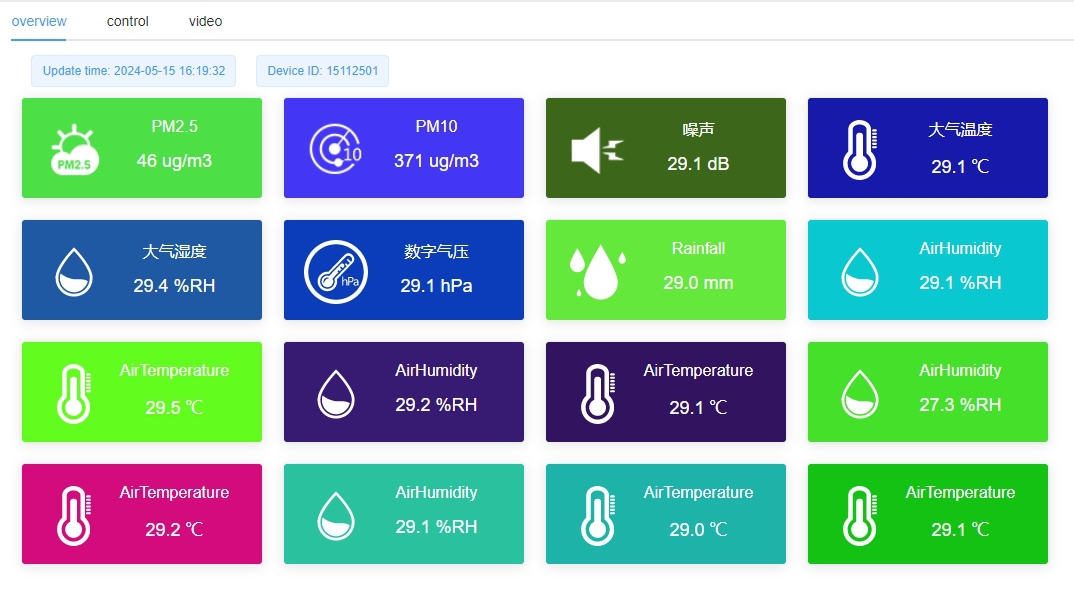
A farm may need wind for a defined field operation, air conditions for a crop model and rainfall for an irrigation review. Verify which inputs the model actually uses. An illuminance channel cannot replace PAR in a model requiring photon flux, and outdoor rain does not establish how much water reached a covered greenhouse root zone.
If an observation should represent the crop area rather than a building roof, select exposure accordingly. Soil measurements remain separate instruments. A compact weather head does not measure root-zone moisture because a dashboard happens to display that field beside air temperature. Keep the acquisition roles clear when comparing a head-only offer with a complete agricultural station.
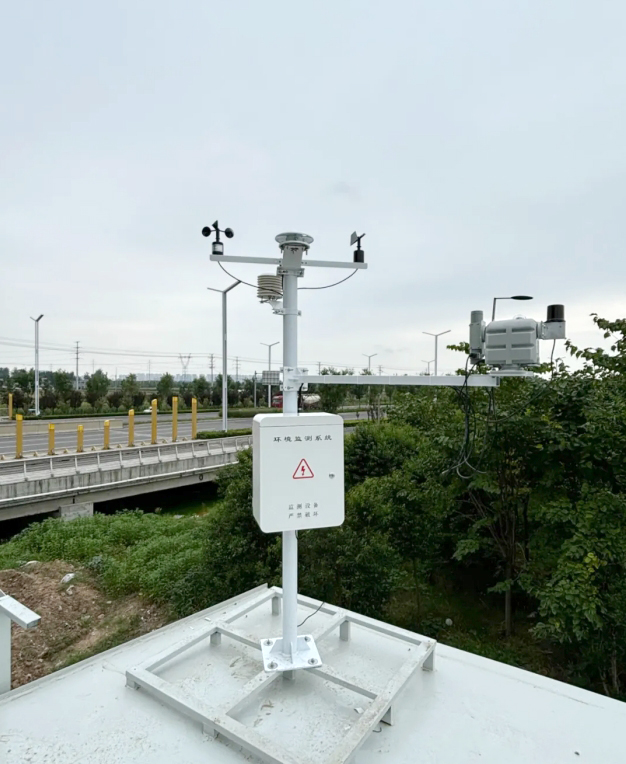
A PV project may need irradiance in a defined plane and module temperature as well as weather. Confirm the irradiance method, orientation and performance required by the plant specification. Lux is a visible-light quantity and is not a universal substitute for W/m2. A shared light channel at the weather-head position may not provide the panel-plane observation the project needs.
Use a separate irradiance instrument or module-temperature point where required. Avoid shading the radiation sensor with the weather head, mast or communications equipment. The decision is whether the chosen layout supplies the plant's required observations, not whether the enclosure has the largest sensor count. Additional measurements should have their own locations and acceptance checks.
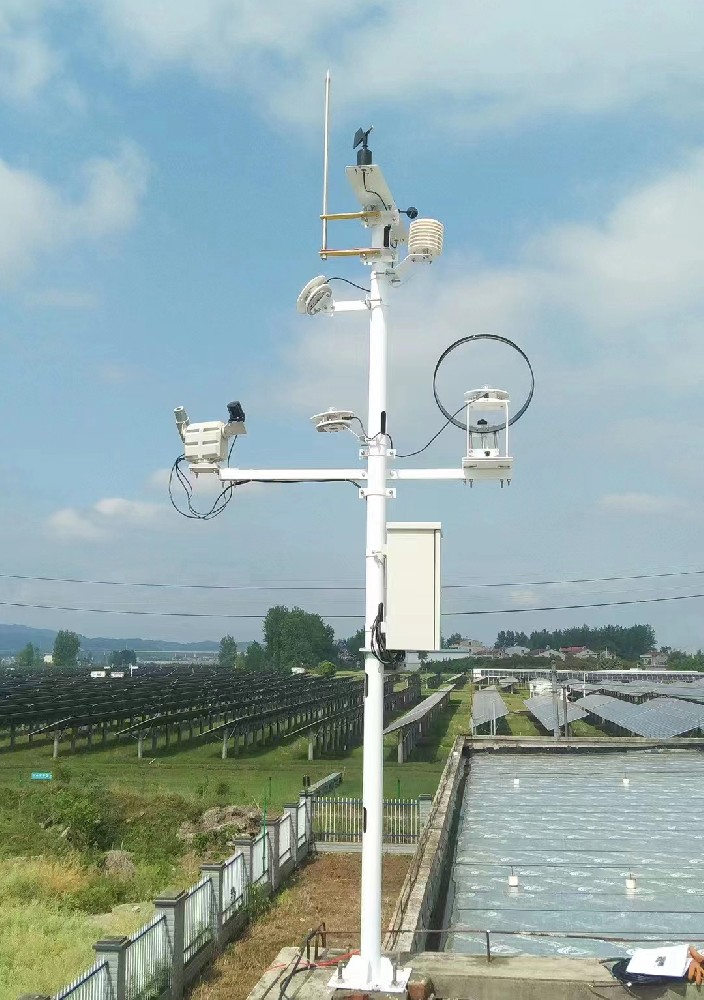
On a fixed installation, use a stable, level mount and establish the direction reference before final tightening. Do not assume every compact model includes an electronic compass. For a fitted compass option, verify its reference and calibration requirements near the actual support and electrical equipment. Heading compensation is a specified function, not a reason to ignore installation checks.
Mobile wind measurement adds another issue: motion of the platform changes the airflow relative to the instrument. A compass can describe heading without removing the platform's velocity from the measured wind. A vehicle or vessel project therefore needs an appropriate motion and coordinate treatment if true wind is required. Do not qualify a moving application from enclosure shape or a stationary demonstration alone.
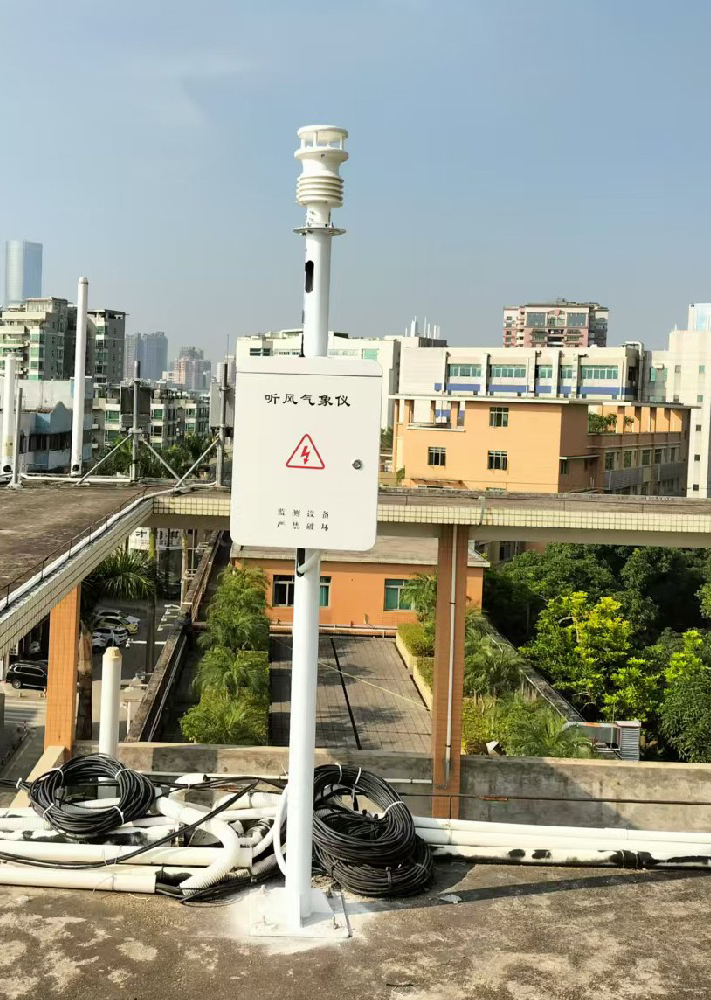
Include the head, required separate sensors, logger, power, backhaul and mounting in the quotation comparison. Check how a failed integrated unit is serviced: replacing the head may interrupt several measurements together. A modular arrangement can offer different replacement options. Neither architecture has a universal lifecycle cost advantage without the site's access and service conditions.
For acceptance, check the complete channel list against the delivered unit, verify direction after mounting and compare relevant measurements using suitable references. Exercise a power interruption and a missing serial response. Confirm that one invalid channel does not silently become a zero or an apparently current weather value.
A useful NiuBoL inquiry identifies the application, required quantities, exposure, temperature extremes, direction requirement and receiving system. Include rainfall method and light quantity explicitly. That allows ultrasonic compact weather station selection to focus on a workable configuration instead of an all-in-one description with unstated assumptions.
No. Read the actual configuration. For the NBL-W-71GUWS, the light choice is irradiance or illuminance; particle, noise and PAR requirements need their own selection.
No. They remove rotating wind components, but still need suitable exposure, clean sensing paths and condition checks. Ice or deposits can affect operation.
No. This configuration's whole-unit operating interval is -20 to +50 degrees C. Select another suitable configuration if the site exceeds it.
No. It uses impact response rather than a calibrated bucket tip. Apply the correct output interpretation and reference procedure for the instrument.
There is no universal conversion that qualifies those measurements. Select the quantity and sensing method required by the application.
Only a delivered system with the required communications equipment can do so. An RS485 sensor needs a compatible acquisition or gateway path and a separate backhaul arrangement.
Not necessarily. Review airflow, shielding, rain exposure and light orientation. Use separate instruments when a common head location cannot provide the intended observations.
Not by itself. Heading information and compensation for platform motion are different requirements. Specify the needed motion inputs and processing.
Only after checking model, firmware, channel list and scaling. Verify all required measurements before returning the station to service.
Choose a compact ultrasonic station where a shared location and the delivered measurement methods suit the task. Keep environmental limits, rainfall method, light quantity and direction treatment explicit. A smaller correctly specified NiuBoL configuration, supplemented by separate instruments where needed, is more useful than a channel count that does not match the site's decisions.
 NBL-W-21GUWS-Ultrasonic-Wind-speed-and-direction-Sensor.pdf
NBL-W-61MUWS-Ultrasonic-Weather-Station-Instruction-Manual.pdf
NBL-W-71MUWS-Micrometeorological-Sensor-Operating-Instructions.pdf
Related recommendations
Sensors & Weather Stations Catalog
Agriculture Sensors and Weather Stations Catalog-NiuBoL.pdf
Weather Stations Catalog-NiuBoL.pdf
Agriculture Sensors Catalog-NiuBoL.pdf
Water Quality Sensor Catalog-NiuBoL.pdf
Related products
 Combined air temperature and relative humidity sensor
 TDR Soil Moisture & Temperature Sensor for irrigation| RS485 |4-20mA| NBL-S-THR
 Soil pH sensor RS485 soil Testing instrument soil ph meter for agriculture |NBL-S-PH
 Wind Speed sensor Output Modbus/RS485/Analog/0-5V/4-20mA
 Tipping bucket rain gauge for weather monitoring auto rainfall sensor RS485/Outdoor/stainless steel
 Pyranometer Solar Radiation Sensor 4-20mA/RS485


Screenshot, WhatsApp to identify the QR code
WhatsApp number:+8615367865107
(Click on WhatsApp to copy and add friends)

