





— Blogs —
—Products—
 Consumer hotline +8618073152920
 WhatsApp:+8615367865107
Address:Room 102, District D, Houhu Industrial Park, Yuelu District, Changsha City, Hunan Province, China
Product knowledge
Time:2026-06-22 10:12:28 Popularity:196
Specialty agriculture depends on stable local environmental data. Fruit, vegetables, tea, flowers, greenhouse crops and regional branded crops can be affected by frost, drought, waterlogging, strong wind, excessive rainfall, high radiation and soil moisture stress. An agricultural weather station gives growers and project managers real-time field data rather than relying only on regional forecasts that may not represent a specific farm plot.
NiuBoL agricultural weather stations are designed for continuous monitoring of crop growth environments. A typical system includes a monitoring platform, data acquisition system, communication system, sensor system, power supply, visual monitoring option and mechanical installation structure. It can measure air temperature and humidity, wind direction, wind speed, rainfall, soil temperature, soil moisture, light intensity, atmospheric pressure and other agricultural weather factors according to the project scope.
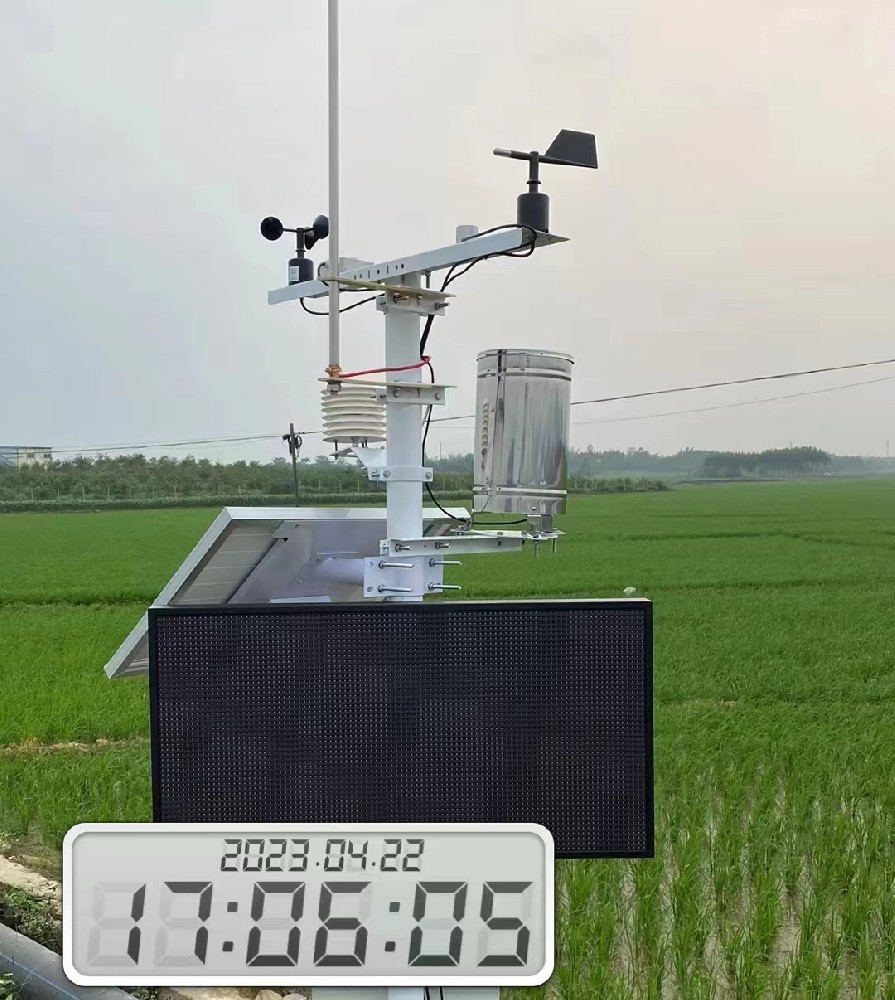
In traditional farming, many decisions depend on experience and periodic field visits. That approach becomes weak when weather events change quickly. Frost, spring cold, drought, flood and waterlogging can reduce yield and quality before the grower has enough warning. For specialty agriculture, quality stability is often as important as yield, so field-level weather monitoring becomes a production management tool.
From an integrator perspective, the buyer usually needs more than sensors. The project requires field power, data transmission, platform display, historical query, alarm rules and possibly camera or LED display support. The station should help the farm decide when to irrigate, ventilate, protect against frost, adjust spraying or review crop phenology.
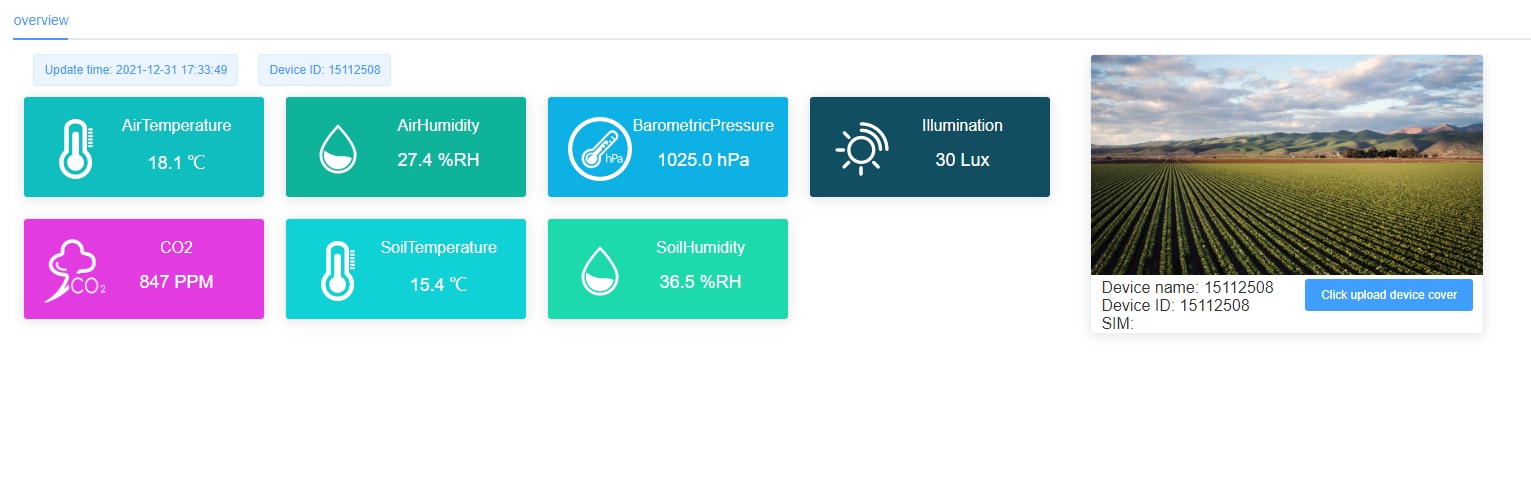
The agricultural weather station is the field data node in a wider farm management system. Sensors collect microclimate and soil data. The collector records and transmits the values. The cloud or local platform stores data, creates charts and supports alarms. When combined with crop observation and farm operation records, the station becomes part of a decision loop rather than a passive display device.
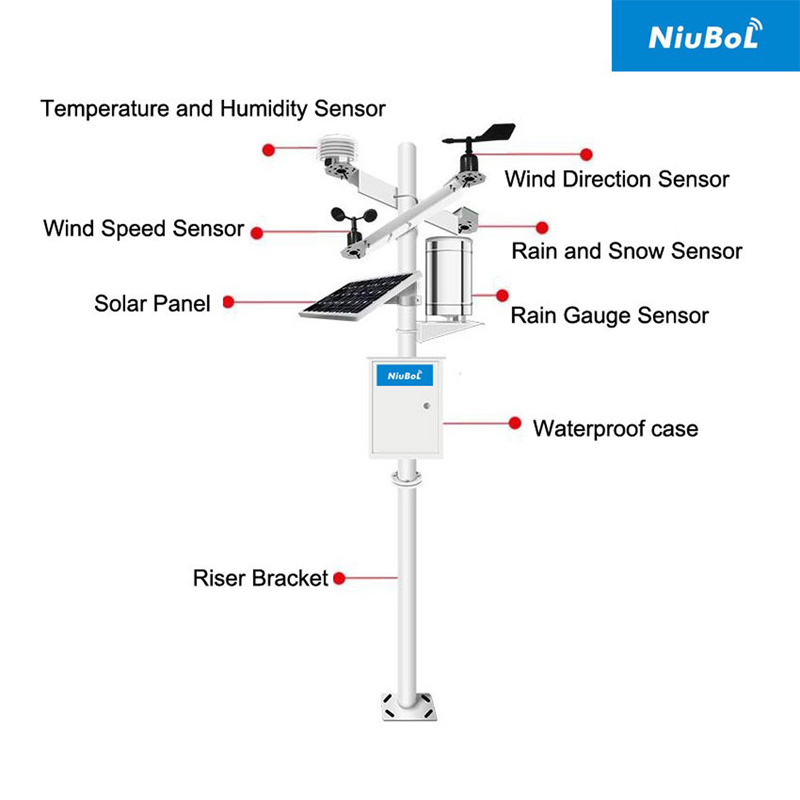
Many agricultural sensors can be integrated through RS485 / Modbus at field level, while the station host can upload data through GPRS, 4G, 5G, Ethernet or other project networks. Buyers should confirm sensor interface, channel capacity, polling interval, platform protocol, data export format and whether the station can be expanded later with soil pH, soil EC, CO2 or pest-related modules.
| Item | Engineering Reference | Project Note |
|---|---|---|
| Measured elements | Temperature, relative humidity, wind speed, wind direction, rainfall, atmospheric pressure, solar radiation or light intensity; soil temperature and soil moisture when configured | Select elements according to the management decision, not only by sensor quantity |
| Data acquisition | Industrial data collector or station host collects sensor signals | Confirm channel capacity and expansion reserve |
| Communication | RS485 / Modbus for many field sensors; GPRS / 4G / 5G or Ethernet for platform upload depending on station configuration | Confirm protocol documents before platform integration |
| Power supply | Solar panel with battery, mains power, or mixed supply depending on site | Calculate autonomy for remote and unattended operation |
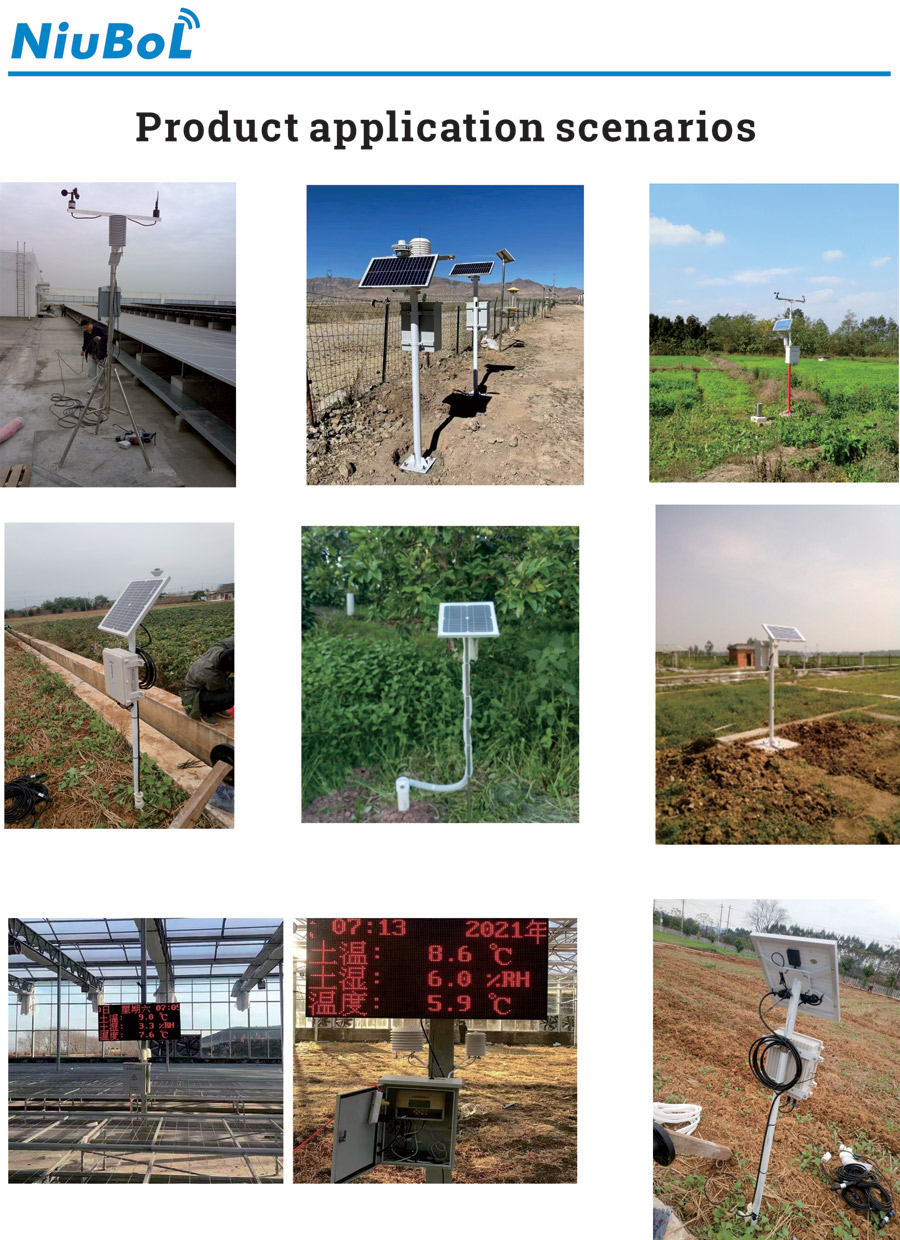
| Display and software | LED display, local terminal, web platform, mobile APP or data receiving software can be configured | Define who needs to view data and how reports are used |
| Mechanical system | Pole, bracket, protective box, sensor arms and grounding accessories | Installation quality directly affects data representativeness |
| Data functions | Real-time display, automatic recording, data query, statistics, charts, alarms and communication | Useful for management, research and acceptance |
| Installation site | Flat, open and representative area away from tall buildings, strong magnetic fields and major obstruction | Poor siting creates data error even with good sensors |
| Agricultural sensors | Soil temperature, soil moisture, light intensity, rainfall, wind, air temperature and humidity | Prioritize parameters linked to crop risk and irrigation decisions |
| Visual monitoring | Real-scene monitoring and LED display can be configured | Useful for demonstration farms and remote management |
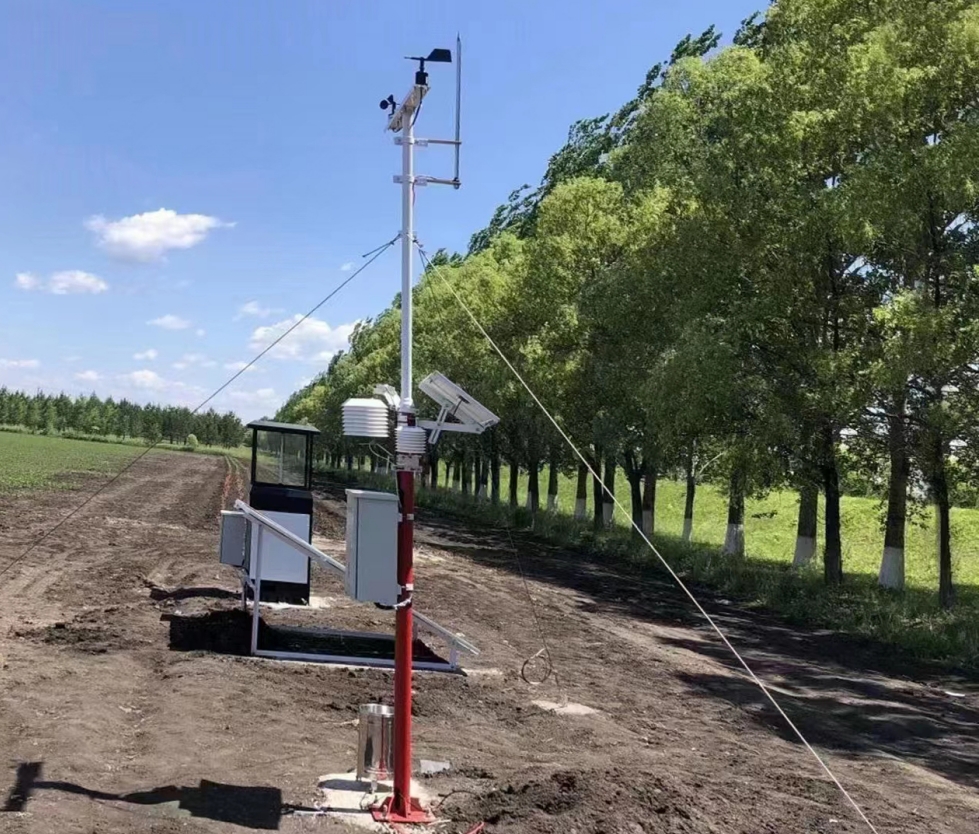
Site challenge: Frost, rain and wind affect flowering, fruit set and disease pressure.
System integration scheme: Install temperature, humidity, rainfall, wind and soil moisture sensors with platform alarms.
User value: Growers can plan frost protection, irrigation and spraying with field evidence.
Site challenge: Indoor and outdoor conditions change differently, and manual observation misses night changes.
System integration scheme: Use weather station data with soil or greenhouse sensors and remote platform display.
User value: Operators can compare indoor and outdoor trends and adjust ventilation or irrigation.
Site challenge: Product quality depends on light, humidity, rainfall and soil moisture stability.
System integration scheme: Build a station network across representative plots and record crop phenology.
User value: The farm gains data support for quality management and branded crop production.
Site challenge: Research projects need repeatable data and clear records.
System integration scheme: Configure multi-parameter stations with exportable historical data and chart functions.
User value: Researchers and visitors can see measured environmental conditions instead of general claims.
Start with the production decision. If irrigation is the main decision, soil moisture, rainfall and evapotranspiration-related weather data matter. If frost is the main risk, air temperature, humidity, wind and alarm functions matter. If disease pressure is the concern, leaf wetness, humidity, rainfall and temperature may be added. A station with many sensors is less useful than a station configured for actual management decisions.
For procurement, specify crop type, farm area, number of representative plots, required parameters, power condition, network signal, platform access, display requirement, installation service and maintenance responsibility. If the project is in a remote farm, solar power and battery autonomy should be calculated before purchase.
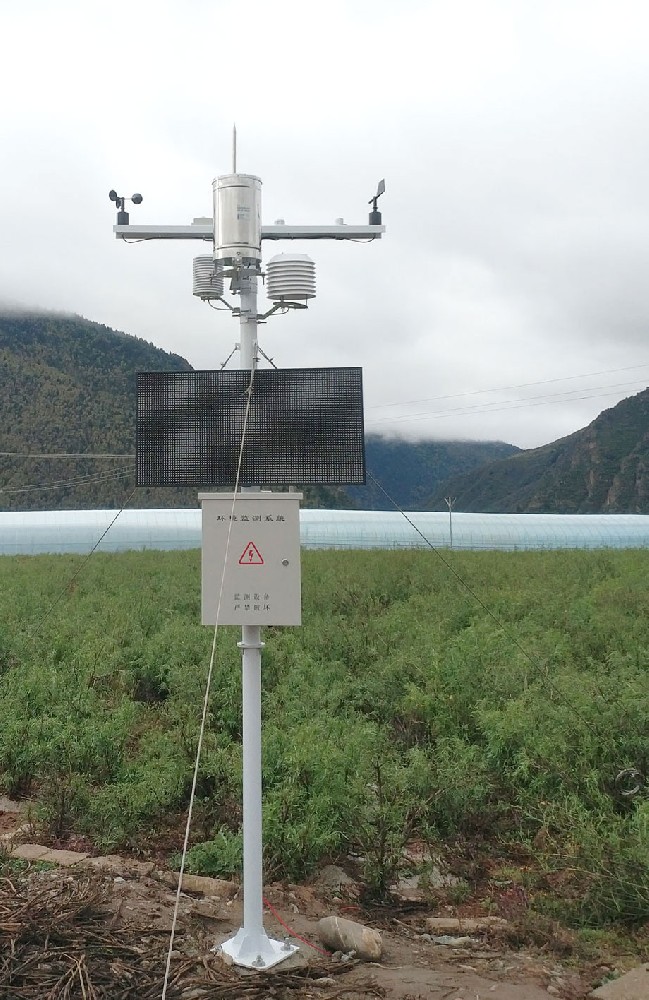
Install the station in a representative, open field position while avoiding buildings, trees, irrigation spray, strong magnetic fields and local obstructions. Soil sensors should be installed at depths and locations that represent root-zone management. Acceptance should check sensor readings, platform upload, alarm settings, historical charts, power stability, installation photos and user training records.
For specialty agriculture projects, the most important purchase decision is not how many sensors can be installed, but which data will change field operation. If irrigation decisions are made weekly, soil moisture and rainfall records need to be reliable. If frost risk is the main problem, air temperature, humidity, wind and alarm timing become more important. If the farm wants to improve crop quality, light intensity, soil moisture and phenology records may be more useful than adding unrelated parameters.
Buyers should also decide whether the station is for internal management, government demonstration, research, or visitor display. Internal management focuses on alarms and practical reports. Demonstration projects often require LED display and real-scene monitoring. Research projects need stable export formats and clear metadata. These differences should be written into the inquiry before the supplier prepares the quotation.
A common mistake is installing the station at the farm office rather than in a representative crop area. That location may be convenient for power and maintenance, but it may not represent field microclimate. Another mistake is selecting soil sensors without defining depth and crop root zone. Soil moisture data becomes much less useful when the sensor is placed at a depth unrelated to irrigation decisions.
Project owners should also avoid treating the platform as a visual accessory only. The value of an agricultural weather station is created by historical data, alarms, trend comparison and action records. If the platform cannot export records or display trends clearly, the station will be harder to use for crop management.
After deployment, the station should not be reviewed only when weather is abnormal. A practical workflow is to check daily curves, compare rainfall with irrigation records, review soil moisture before and after irrigation, and record crop stage changes with weather trends. This creates a local crop-environment database that becomes more valuable over multiple seasons.
For buyers managing several farms, consistent station names and parameter units are important. If one plot uses soil moisture percentage and another uses raw sensor values, the platform becomes harder to interpret. A standardized configuration makes cross-field comparison easier.
For agricultural projects, maintenance is seasonal. Before rainy season, check the rain gauge, solar panel, battery and waterproof cable joints. Before frost season, verify temperature and humidity readings and alarm thresholds. Before irrigation season, inspect soil sensor positions and compare readings with field observations. A simple maintenance calendar makes the station more useful over multiple crop cycles.
This article is most useful for farms, agricultural integrators and distributors that need a field weather station for crop decision support rather than a simple weather display. The configuration fits projects where irrigation timing, frost warning, soil moisture, rainfall, wind and crop microclimate directly affect yield or quality.
If the buyer only needs a portable inspection tool, a fixed agricultural weather station may be more than required. If the buyer needs farm-wide automation, the station should be specified together with irrigation controllers, field cameras, soil sensors and a platform workflow. This distinction helps purchasing teams avoid both under-specification and unnecessary configuration.
A: It provides local crop microclimate and soil data that regional forecasts cannot fully represent. Specialty crops often depend on small differences in frost risk, rainfall, humidity, soil moisture and radiation, so field-level monitoring supports higher-quality decisions.
A: Prioritize the data linked to immediate decisions: soil moisture and rainfall for irrigation, temperature and humidity for frost and disease risk, wind for spraying and storm safety, and radiation or light intensity for crop growth analysis.
A: Only if the farm is small and uniform. Farms with hills, different crop zones, greenhouses, orchards or separated plots usually need more than one representative monitoring point.
A: It gives earlier signals for frost, drought, heavy rainfall, strong wind and waterlogging risk. Growers can prepare irrigation, drainage, covering, ventilation or frost protection before damage is visible.
A: Crop type, farm size, target parameters, installation location, power condition, network signal, platform needs, alarm rules and whether soil sensors or camera monitoring are required.
A: It allows multiple sensors to connect reliably to a collector or gateway and supports expansion when additional soil or environmental sensors are added later.
A: Avoid installing the station near offices or obstacles only for convenience, selecting too many unrelated sensors, or failing to define soil sensor depth and maintenance responsibility.
A: Check live readings, data upload, alarm settings, historical charts, solar power status, installation photos, soil sensor depth and user training.
A: Yes. With LED display, real-scene monitoring and platform charts, the station can support demonstration farms, research bases and branded crop production.
A: Historical data, trend comparison, alarm records and management actions create value. The station should become part of farm decision-making, not only a display.
An agricultural weather station helps specialty farms manage local weather and soil risk with continuous data. For NiuBoL projects, the practical value comes from configurable sensors, IoT data transmission, platform analysis, solar power options and installation designed around crop decisions.
Related recommendations
Sensors & Weather Stations Catalog
 Agriculture Sensors and Weather Stations Catalog-NiuBoL.pdf
Weather Stations Catalog-NiuBoL.pdf
Agriculture Sensors Catalog-NiuBoL.pdf
Water Quality Sensor Catalog-NiuBoL.pdf
Related products
 Combined air temperature and relative humidity sensor
 TDR Soil Moisture & Temperature Sensor for irrigation| RS485 |4-20mA| NBL-S-THR
 Soil pH sensor RS485 soil Testing instrument soil ph meter for agriculture |NBL-S-PH
 Wind Speed sensor Output Modbus/RS485/Analog/0-5V/4-20mA
 Tipping bucket rain gauge for weather monitoring auto rainfall sensor RS485/Outdoor/stainless steel
 Pyranometer Solar Radiation Sensor 4-20mA/RS485

Screenshot, WhatsApp to identify the QR code
WhatsApp number:+8615367865107
(Click on WhatsApp to copy and add friends)

