





— Blogs —
—Products—
 Consumer hotline +8618073152920
 WhatsApp:+8615367865107
Address:Room 102, District D, Houhu Industrial Park, Yuelu District, Changsha City, Hunan Province, China
Product knowledge
Time:2026-06-11 11:24:33 Popularity:347
Aquaculture water quality is a production variable. Poor pH, nitrite, ammonia nitrogen, phosphate or dissolved oxygen can change feeding, disease risk and mortality before a farmer sees the problem by eye.
In project specifications, this subject is often described through terms such as aquaculture water quality monitoring, nitrite sensor for aquaculture, RS485 Modbus aquaculture sensors, DO pH ammonia monitoring, and application contexts including fish pond monitoring, shrimp farming, recirculating aquaculture.
Key aquaculture indicators include pH, nitrite, ammonia nitrogen, phosphate and dissolved oxygen. Low pH can increase disease sensitivity, high pH can damage gill tissue, nitrite affects respiration, ammonia nitrogen can poison aquatic animals, phosphate drives algae growth and DO controls the balance of aerobic decomposition.
For procurement teams, the useful question is not only which parameter can be measured, but where the sensor should sit, how the signal enters the control system, how the data is verified, and what decision the plant will make from the trend.
NiuBoL online sensors can be used in pond, tank and recirculating systems. DO and pH provide daily operating context, while ammonia nitrogen or nitrite sensors help identify nitrogen-cycle stress.
The field sensor is the first layer of the monitoring architecture. The cabinet or gateway handles power, isolation and communication, while SCADA or cloud software converts values into alarms, reports and maintenance tasks.
For B2B water quality projects, communication compatibility is part of the equipment value. RS485 and Modbus RTU allow field sensors to connect with PLCs, DCS, RTUs, SCADA servers, data acquisition units and IoT gateways. This keeps the measurement layer open enough for integrators and avoids locking the buyer into a display-only instrument.
RS485 Modbus RTU allows multiple ponds or tanks to be polled by one gateway and sent to a cloud platform or local control system.
For aquaculture water quality monitoring, the data path should be designed before the cabinet is assembled. The integrator should decide which values are displayed locally, which values are used for alarms, which values are uploaded to SCADA or cloud software, and which values need laboratory comparison records.
A practical architecture separates the field layer, cabinet layer and platform layer. The sensor produces the measured value, the cabinet handles power supply and communication protection, and the platform stores trends, alarms and reports. This separation is useful for distributors because it makes troubleshooting easier: a field fouling issue, a cabinet wiring issue and a platform mapping issue can be checked one by one instead of being treated as one vague instrument fault.
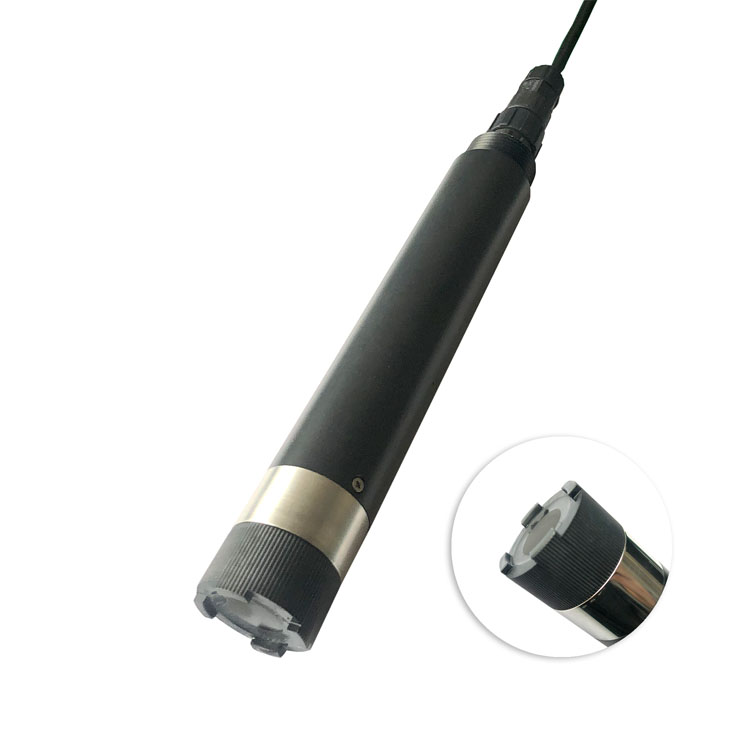
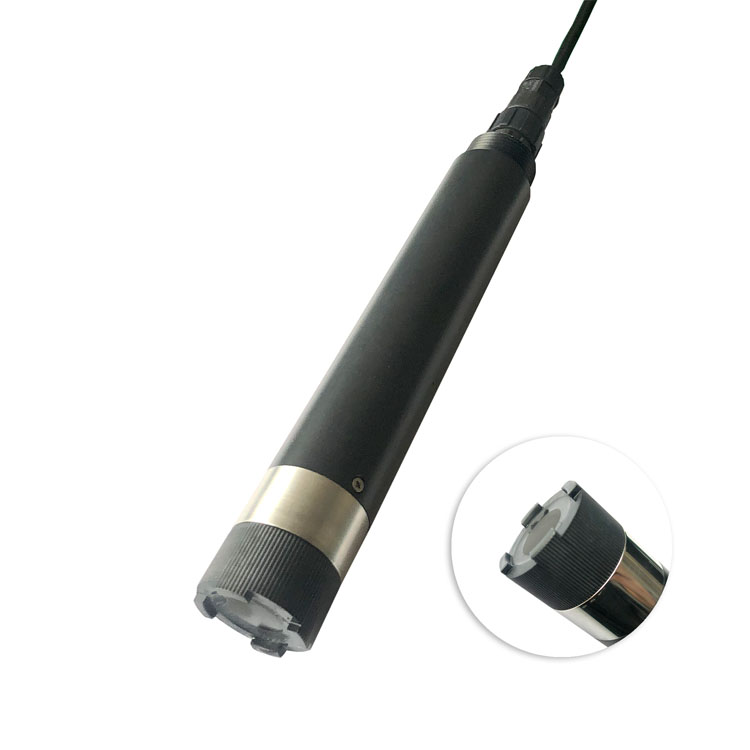
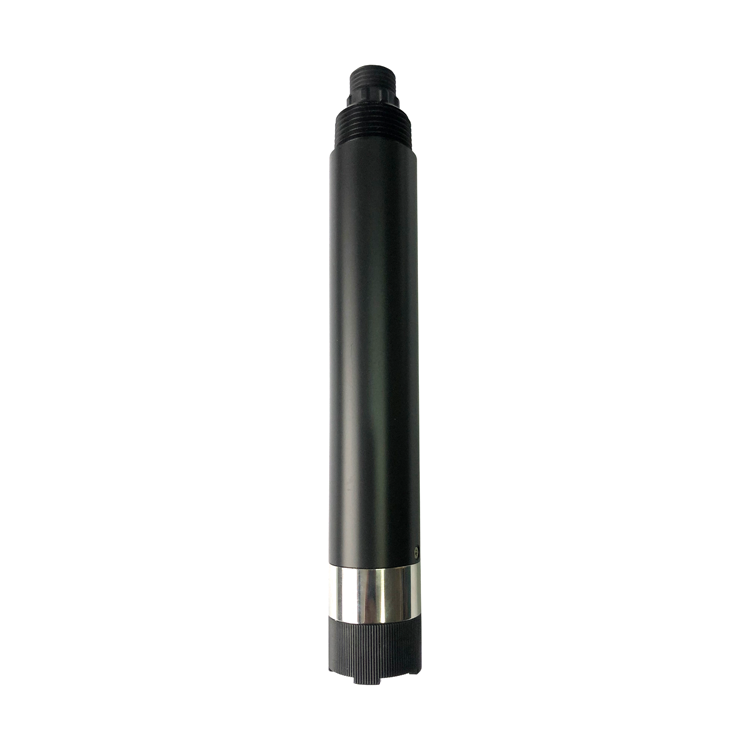
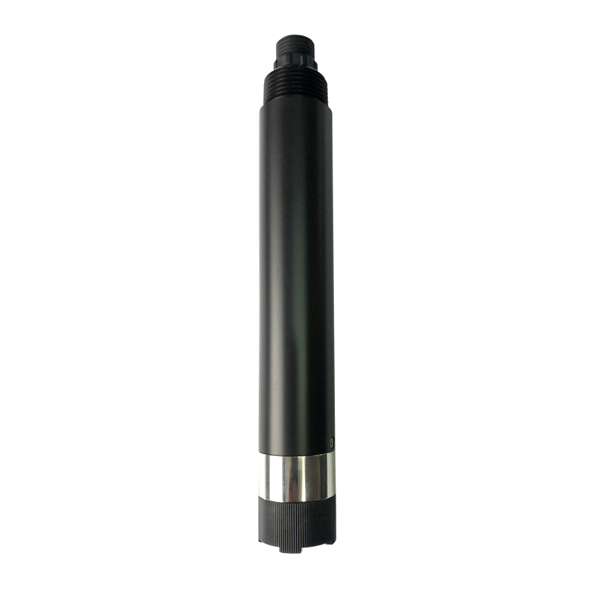
The table uses the NBL-WQ-NOO-4 online nitrite sensor as a reference because nitrite is a critical aquaculture risk parameter.
| Parameter | Specification |
|---|---|
| Model | NBL-WQ-NOO-4 |
| Measurement principle | Nitrite ion-selective electrode with automatic temperature compensation |
| Measurement range | 0 to 2.000 mg/L |
| Resolution | 0.001 mg/L |
| Measurement accuracy | +/-5%; temperature +/-0.3 degC |
| Calibration method | Two-point calibration |
| Power supply | 12 to 24 VDC |
| Output signal | RS485, Modbus RTU |
| Protection rating | IP68 |
| Installation | Immersion or pipe/tank installation, 3/4 NPT |
| System interface | PLC, DCS, industrial computer, controller, recorder or touch screen through Modbus RTU |
Aquaculture data becomes useful when it links to action: aeration, water exchange, feeding reduction, biofilter check or emergency alarm. One parameter rarely tells the whole story, so trends should be viewed together. For integrators, the practical design question is how many ponds can be supervised by one gateway, how alarms will be routed after working hours, and whether the farm has staff who can clean and calibrate probes on schedule. A useful aquaculture monitoring system should make those operating decisions easier, not only display numbers on a dashboard.
A useful sensor installation produces a trend that can be checked against flow, chemical dosing, pump status, treatment stage and laboratory verification. This is why the project should define alarm delay, register scaling, unit conversion, data storage interval and manual verification method during design, not after commissioning.
The main risk in a aquaculture water quality monitoring project is usually not one isolated specification line. It is the combination of sample representativeness, fouling, chemical interference, cable routing, power stability, platform mapping and operator maintenance discipline. A good procurement review therefore checks the whole measurement chain, from wetted materials and installation accessories to Modbus registers, cabinet labels and spare-part availability.
The safest project approach is to review the measurement point, communication route and maintenance route together. If the sample point is wrong, a perfect Modbus signal still carries poor process information. If the cable route is noisy, a good probe may look unstable. If the sensor cannot be removed for service, the owner may stop maintaining it after the first month. Treating these risks during design is usually less expensive than correcting them after installation.
Site environment challenge: DO and nitrogen compounds change with feeding and weather.
System integration scheme: Install DO, pH and nitrite or ammonia sensors at representative pond points.
User value delivered: Farm staff can react before visible stress appears.
Site environment challenge: High density increases sensitivity to nitrogen-cycle instability.
System integration scheme: Use continuous DO and nitrite monitoring with platform alarms.
User value delivered: The operator can adjust feeding and aeration more precisely.
Site environment challenge: Biofilter performance affects ammonia and nitrite levels.
System integration scheme: Place sensors before and after biofiltration stages.
User value delivered: Operators receive early warning of treatment imbalance.
Site environment challenge: Excess feed raises phosphate and nitrogen load.
System integration scheme: Use water quality trends to support feeding decisions.
User value delivered: The farm reduces waste and protects water stability.
Selection should start from the process objective, the water matrix and the required data use. A sensor for alarm only, a sensor for closed-loop control and a sensor for compliance evidence are not specified in exactly the same way.
Maintenance frequency should follow the water quality and the measurement principle. Clean water points may only need scheduled inspection, while wastewater, high-solids water, chlorinated water or aquaculture water may need more frequent cleaning and verification.
For project quotation, maintenance should be treated as part of the technical scope. The buyer should know whether the instrument needs buffer calibration, zero and slope calibration, optical-window cleaning, flow-cell inspection, reagent replacement, membrane or cap replacement, or laboratory cross-checking. When these items are clear before purchase, the site team can budget spare parts and avoid blaming the communication system for a normal sensor service requirement.
Most field problems come from sample representativeness, fouling, cabling or maintenance access rather than from the catalogue value alone.
For distributors, OEM cabinet builders and engineering contractors, the purchase file should include model, measured parameter, output signal, cable length, mounting accessory, wetted material, power requirement, Modbus address plan and expected maintenance parts. A short acceptance record with installation photos and initial readings helps the customer understand what has been delivered.
When several parameters are included in one project, a register table and wiring schedule should be prepared before cabinet assembly. This makes future expansion easier if the customer later adds another pH point, chlorine point, DO probe, turbidity probe, TSS sensor or data upload gateway.
Before ordering, it is useful to collect site photos, pipe or tank dimensions, expected cable route, available power supply, cabinet location and the name of the controller or gateway. These details often decide whether the project needs a simple probe, a flow cell, an analyzer cabinet or a complete monitoring station.
A reasonable acceptance test compares the online reading with a site reference method, checks Modbus polling over the expected cable route, confirms alarm behavior and records the first calibration or verification result.
Acceptance should include more than checking whether a number appears on the screen. The project team should verify sensor response, communication stability, unit scaling, alarm thresholds, trend storage, cabinet labeling, cable sealing and maintenance access. For remote projects, it is also useful to capture several hours of trend data before handover so that the owner can see that the measurement point is stable under real site operation.
Yes. The recommended integration path is RS485 with Modbus RTU, so sensors can be connected to PLC, RTU, DCS, SCADA or IoT gateways without a closed data interface.
Where the selected instrument supports optional 4-20 mA, analog output can be used for an existing controller while RS485 Modbus RTU is used for data logging and diagnostics.
Calibration should be written into the operation plan by parameter. pH, residual chlorine, DO, turbidity, TSS and reagent-based analyzers do not share the same cleaning or verification interval.
Nitrite can affect respiration and stress aquatic animals, especially when oxygen is low or stocking density is high.
Use a single sensor when one control variable is dominant. Use a station when several parameters must be interpreted together, such as pH with chlorine, DO with ammonia, or COD with flow.
Provide water type, expected range, temperature, pressure, installation point, cable length, output requirement, controller model and whether the project needs a flow cell, bracket or station cabinet.
Check IP rating, cable gland sealing, junction box protection, lightning protection, grounding and whether the probe can be removed for maintenance without stopping the process.
Yes, multiple RS485 sensors can report to one gateway when address, cable length and power design are correct.
NiuBoL can support datasheets, wiring information, product selection and integration notes for distributors, OEM cabinet builders and engineering contractors.
Delivery time is affected by sensor quantity, cable customization, cabinet configuration, accessories, calibration requirements and whether the project includes several parameters or only one field probe.
Aquaculture monitoring should connect sensor values with farm actions. NiuBoL DO, pH, ammonia nitrogen and nitrite RS485 Modbus RTU sensors can support pond, shrimp and recirculating systems where stable water quality affects production.
Prev:Common Water Quality Sensors: Check Shared Sampling Compatibility
Next:Ammonia Nitrogen Measurement Factors in Water Quality Monitoring Projects
Related recommendations
Sensors & Weather Stations Catalog
 Agriculture Sensors and Weather Stations Catalog-NiuBoL.pdf
Weather Stations Catalog-NiuBoL.pdf
Agriculture Sensors Catalog-NiuBoL.pdf
Water Quality Sensor Catalog-NiuBoL.pdf
Related products
 Combined air temperature and relative humidity sensor
 TDR Soil Moisture & Temperature Sensor for irrigation| RS485 |4-20mA| NBL-S-THR
 Soil pH sensor RS485 soil Testing instrument soil ph meter for agriculture |NBL-S-PH
 Wind Speed sensor Output Modbus/RS485/Analog/0-5V/4-20mA
 Tipping bucket rain gauge for weather monitoring auto rainfall sensor RS485/Outdoor/stainless steel
 Pyranometer Solar Radiation Sensor 4-20mA/RS485

Screenshot, WhatsApp to identify the QR code
WhatsApp number:+8615367865107
(Click on WhatsApp to copy and add friends)

