





— Blogs —
—Products—
 Consumer hotline +8618073152920
 WhatsApp:+8615367865107
Address:Room 102, District D, Houhu Industrial Park, Yuelu District, Changsha City, Hunan Province, China
Product knowledge
Time:2026-09-10 14:00:00 Popularity:195
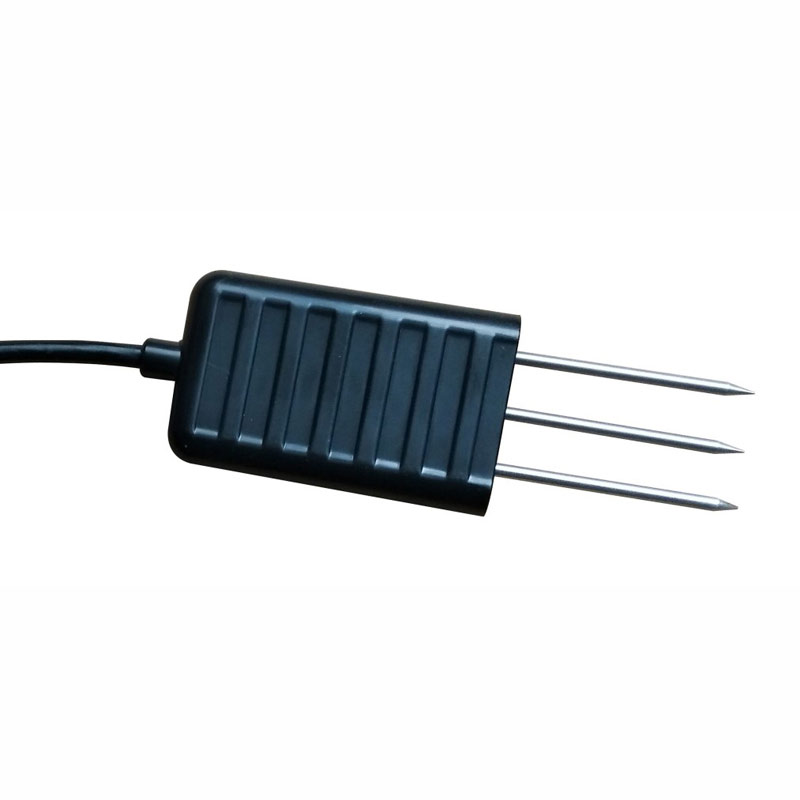
For Soil Temperature Monitoring, buyers should verify site fit, the signal path into the control or data system, routine maintenance responsibilities and the evidence required for accepting the first records. Depth and surface cover must be recorded because soil temperature changes sharply near the surface and cannot be compared across unknown installation depths.
| Decision field | Engineering requirement | Evidence for acceptance |
|---|---|---|
| Measurement purpose | State what action soil temperature monitoring should support | Approved monitoring objective |
| Location for soil temperature monitoring | Coordinates, depth or height, orientation and exposure | Drawing and installation photos |
| Data path for soil temperature monitoring | Sensor to logger, controller, gateway and platform | Online reading with correct unit and timestamp |
| Maintenance for soil temperature monitoring | Safe access and responsible person | Inspection and service record |
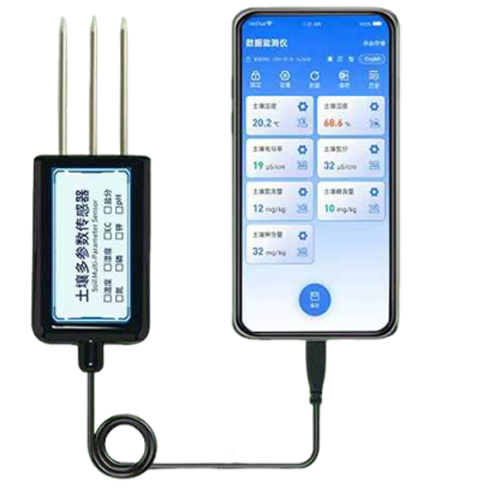
Measurement-point record for soil monitoring system: Document this data path before model approval: measurement point, cable, surge protection or junction, logger channel, communication network, database field and alarm destination. For soil temperature monitoring, a live number on a display is merely the first check. The soil temperature monitoring data path must preserve engineering unit, timestamp, Modbus address and status from sensor to host.
| Parameter | Reference requirement | Why it matters |
|---|---|---|
| Measurement range for soil temperature monitoring | Model-dependent; state normal, peak and required resolution | Do not select by parameter name alone |
| Measurement accuracy for soil temperature monitoring | Use the proposed model datasheet and define field acceptance separately | Catalogue accuracy is not the whole system uncertainty |
| Supply voltage for soil temperature monitoring | Confirm sensor, logger and remote power configuration | Check cable voltage drop and battery autonomy |
| Output signal for soil temperature monitoring | RS485 Modbus RTU supports multi-point digital networks; portable USB or handheld arrangements are better suited to surveys than unattended control | Request wiring and protocol documents before panel work |
| Power consumption for soil temperature monitoring | Use maximum current for power budgeting, not only typical draw | Include modem and heater duty where applicable |
| Protection and temperature for soil temperature monitoring | Match enclosure, probe and connector ratings to the site | The lowest-rated exposed part controls field suitability |
| Cable and wetted material for soil temperature monitoring | Specify length, sheath, connector and exposed material by medium | Confirm chemical, UV and mechanical compatibility |
A practical acceptance plan therefore separates instrument verification from site representativeness. Record the soil temperature monitoring mounting geometry, initial readings, comparison method, configuration and environmental conditions. If the station value later changes, those records let the owner distinguish a real field event from installation movement, fouling, configuration changes or communication loss.
| Application | Field challenge | System integration approach | User value |
|---|---|---|---|
| Irrigation Scheduling | Spatial variation and limited maintenance access | Deploy soil temperature monitoring at a representative point and document the location | Produces data that can support an operating decision |
| Saline-Soil Management for soil temperature monitoring | Existing PLC or RTU must accept the signal | Confirm output, register map, cable route and grounding before wiring | Reduces commissioning rework |
| Crop Research for soil temperature monitoring | Seasonal exposure changes the measurement condition | Use inspection records and seasonal comparison checks | Protects continuity and makes drift visible |
| Greenhouse And Orchard Monitoring for soil temperature monitoring | Procurement scope is split between supplier and contractor | Issue a bill of materials with explicit inclusions and exclusions | Makes quotations comparable and limits site additions |
Prior to purchase approval, describe soil temperature monitoring as a measuring point with an operating purpose. NiuBoL can confirm the soil temperature monitoring interface and documents after receiving the site conditions, expected range, cable distance and data destination. A defined soil temperature monitoring supply boundary is more useful than a general claim that the equipment is easy to install.
For soil temperature monitoring, communication compatibility must be checked at model level. The soil temperature monitoring architecture can use RS485 Modbus RTU for unattended multipoint monitoring and portable USB or handheld instruments for surveys. RS485 is merely the physical layer; the engineering file also needs to state Modbus RTU address, baud rate, parity, stop bits, function code, register address, data type, scaling and engineering unit.
| RFQ item | Information to provide | Cost or risk controlled |
|---|---|---|
| Application | Purpose and site for soil temperature monitoring | Prevents wrong product family |
| Measurement for soil temperature monitoring | Normal, alarm and peak range; required interval | Avoids under-range or needless overspecification |
| Integration for soil temperature monitoring | PLC/RTU/logger model, signal and protocol | Reduces panel rework |
| Mechanical for soil temperature monitoring | Mounting, depth or height, cable route and material exposure | Defines accessories and serviceability |
| Supply scope for soil temperature monitoring | Sensor only or complete station; documents and spares | Makes prices comparable |
| Commercial for soil temperature monitoring | Quantity, destination, delivery target and packing | Supports a realistic quotation |
The soil temperature monitoring model, power demand and output must be frozen early enough for the integrator to allocate terminals, protection, addresses and data fields. Where the soil temperature monitoring host has only analog inputs, confirm the exact 4-20 mA scaling for the selected model. For soil temperature monitoring, a protocol label alone does not establish plug-and-play interoperability.
For soil temperature monitoring, do not close acceptance with a screenshot alone.
A1: Before selecting soil temperature monitoring, document the operating decision, normal and peak conditions, installation point, data interval, required output, cable distance and acceptance method.
A2: The selected soil temperature monitoring device can connect when the selected product provides the required interface. Before commissioning Soil Temperature Monitoring, obtain the wiring definition, communication settings, register map, data type, scaling and engineering units.
A3: For soil temperature monitoring, Interpret soil temperature monitoring readings against soil texture, bulk density, stones, air gaps, salinity, installation disturbance and spatial variability. The soil temperature monitoring review should treat installation and field representativeness as measurement-quality factors beyond the sensor specification.
A4: When comparing soil temperature monitoring quotations, normalize the scope first: model, range, accuracy statement, output, cable, mounting, logger, gateway, platform, power, documents, spare parts, packing and delivery terms. For Soil Temperature Monitoring, compare a probe-only offer separately from a system price that includes mounting, power, logging, communication and commissioning.
A5: For the selected Soil Temperature Monitoring quotation, state the soil profile, parameter set, installation depth, cable lengths, power, output, logger or platform scope, accessories and delivery location.
A6: For soil temperature monitoring, check installation photos, mechanical stability, power, online reading, unit, timestamp, output signal, platform record and a defined comparison or functional test. Archive the Soil Temperature Monitoring configuration and first complete day of data with the handover file as the operating baseline.
A7: For the selected Soil Temperature Monitoring inquiry, send the application, site photos or drawing, expected range, required interface, controller model, cable length, power source, quantity, destination, documentation needs and whether the request covers only the sensor or the complete measuring point.
A8: The soil temperature monitoring handover file should assign inspection, cleaning, calibration or comparison, consumables, communications and data review. Also list the service interval as an initial plan that can then be adjusted from site evidence.
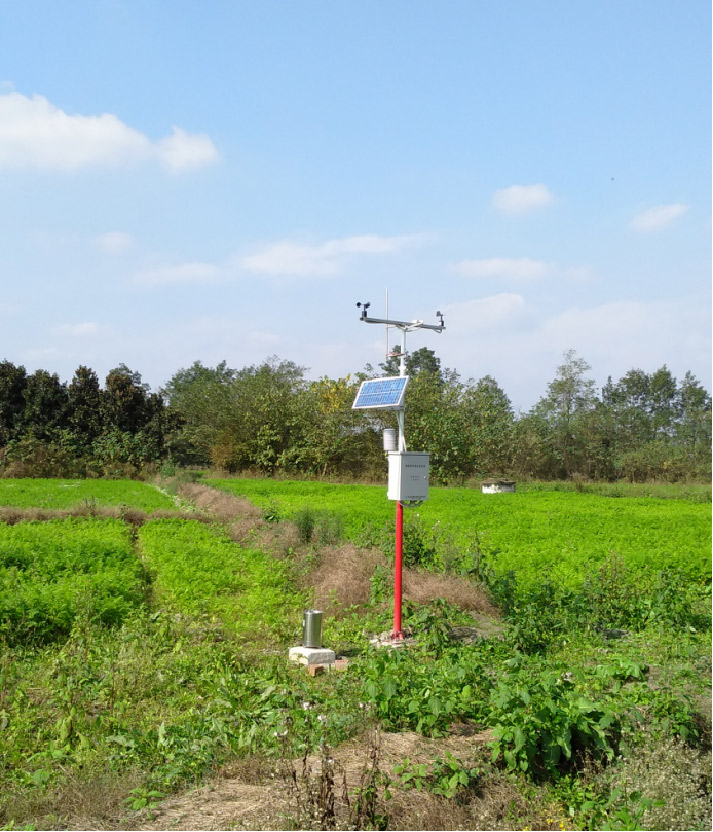
A practical soil temperature monitoring specification connects the installed environment, measurement principle, system interface, installation method, maintenance plan and acceptance evidence. Depth and surface cover must be recorded because soil temperature changes sharply near the surface and cannot be compared across unknown installation depths.
Prev:Soil Water Potential Sensor Principle and Maintenance
Next:Soil Temperature Moisture Salinity Sensor: Installation and Use
Related recommendations
Sensors & Weather Stations Catalog
 Agriculture Sensors and Weather Stations Catalog-NiuBoL.pdf
Weather Stations Catalog-NiuBoL.pdf
Agriculture Sensors Catalog-NiuBoL.pdf
Water Quality Sensor Catalog-NiuBoL.pdf
Related products
 Combined air temperature and relative humidity sensor
 TDR Soil Moisture & Temperature Sensor for irrigation| RS485 |4-20mA| NBL-S-THR
 Soil pH sensor RS485 soil Testing instrument soil ph meter for agriculture |NBL-S-PH
 Wind Speed sensor Output Modbus/RS485/Analog/0-5V/4-20mA
 Tipping bucket rain gauge for weather monitoring auto rainfall sensor RS485/Outdoor/stainless steel
 Pyranometer Solar Radiation Sensor 4-20mA/RS485

Screenshot, WhatsApp to identify the QR code
WhatsApp number:+8615367865107
(Click on WhatsApp to copy and add friends)

