





— Blogs —
—Products—
 Consumer hotline +8618073152920
 WhatsApp:+8615367865107
Address:Room 102, District D, Houhu Industrial Park, Yuelu District, Changsha City, Hunan Province, China
Product knowledge
Time:2026-07-20 13:29:04 Popularity:282
Continuous chlorine measurement fails most often because the sampling condition is wrong, not because the operator cannot read a digital chlorine meter. Flow, pH, bubbles, membrane condition, calibration and maintenance access all affect reliability. A chlorine sensor in water should be specified together with the sampling arrangement.
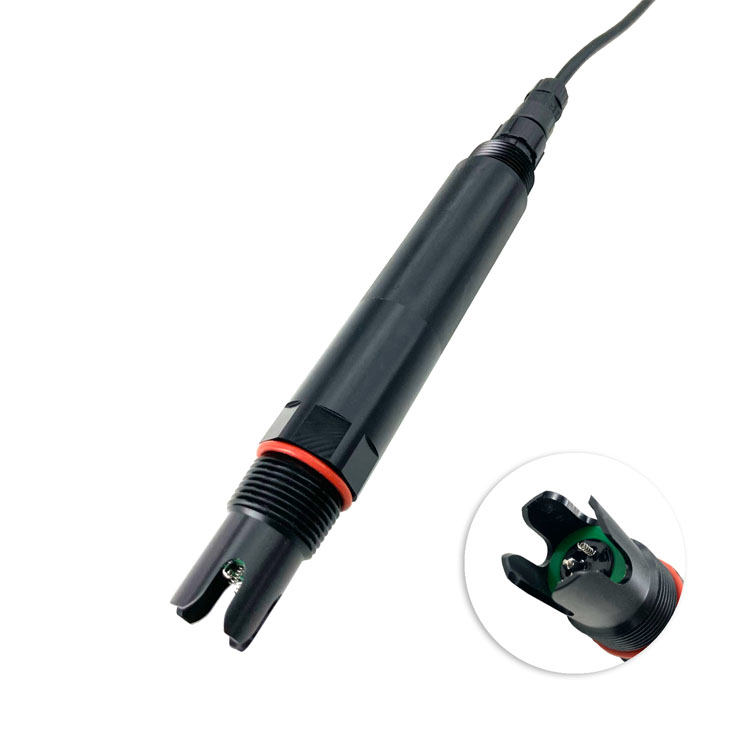
The sensor must receive water that represents the process. A stagnant branch line, dead zone or unfiltered dirty sample can make the reading unreliable. For NBL-WQ-CL, the manual specifies circulation pool installation and 30 to 60 L/h flow speed. That gives buyers a practical design point for sampling review.
| Parameter | Verified specification or buyer note |
|---|---|
| Model | NBL-WQ-CL / NBL-WQ-CL-4A / NBL-WQ-CL-4S |
| Method | Constant voltage method for HClO |
| Range options | 0 to 2.000 mg/L or 0 to 20.00 mg/L |
| Resolution | 0.001 mg/L or 0.01 mg/L by range |
| Accuracy | ±5% or ±0.05 mg/L, temperature typically ±0.3 to ±0.5°C |
| Medium pH | pH 4 to 9 |
| Installation | Flow tank or circulation pool, 30 to 60 L/h for NBL-WQ-CL |
| Output | RS485 Modbus RTU; 4-20 mA optional on 4-series |
Residual chlorine chemistry depends strongly on pH. The verified NiuBoL residual chlorine specification lists medium pH 4 to 9. Temperature affects response and compensation, while unstable flow affects how quickly the sensor sees a process change. These conditions should be included in the acceptance test, not left to the installer to discover later.
| Symptom | Likely cause | First check |
|---|---|---|
| Slow response | Low flow, fouled membrane or poor sampling line | Check flow rate and clean sensor. |
| High reading spikes | Bubbles, chemical slug or unstable dosing | Inspect sampling point and dosing sequence. |
| Low reading | No disinfectant, sensor drift or calibration issue | Verify with portable reagent test. |
| Platform mismatch | Wrong scaling or Modbus register | Check register map and units. |
| Frequent drift | pH outside range, dirty water or poor maintenance | Review installation and cleaning interval. |
For a complete monitoring point, buyers may need sensor, controller, terminal blocks, power supply, data logger, lightning protection, flow cell, sampling pump and drain. The quotation should show which items are included. A sensor-only price is not comparable with a complete online chlorine station.
Continuous chlorine readings should be compared with a portable or laboratory method during commissioning and periodic checks. The comparison should record time, sample point, pH, temperature and flow condition. Without this record, later disputes may be blamed on the sensor even when the sampling line changed.
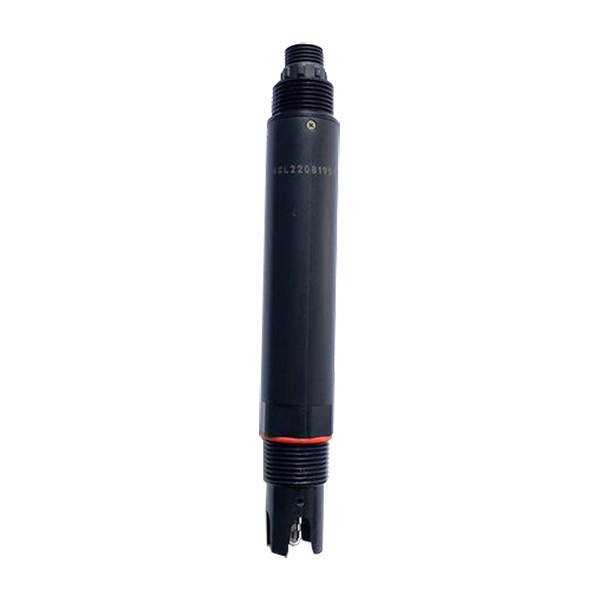
For an RFQ, send water type, expected concentration range, temperature, pressure, installation method, cable length, output preference, quantity and destination country. For NBL-WQ-CL continuous chlorine monitoring, include whether the point is for spot checking, closed-loop control, alarm evidence or long-term trend records.
For contractor projects, also define who supplies the cabinet, controller, sampling line, power supply, lightning protection, civil work and communication card. Clear supply boundaries prevent delays during commissioning and make quotations easier to compare.
A chlorine sensor installed directly in an unsuitable pipe branch may produce unstable values even if the sensor is correct. A good sampling assembly controls flow, reduces bubbles, allows cleaning and gives the operator a safe place to take comparison samples. The cost of this assembly should be considered part of the analyzer, not an optional accessory after problems appear.
For small systems, a simple circulation pool or flow cell may be enough. For wastewater or dirty water, the sampling line may need a filter, drain and cleaning access. If the line clogs often, the measurement point will fail even when the sensor has not failed.
| Design item | Risk if ignored | Practical check |
|---|---|---|
| Flow rate | Slow response or unstable data | Verify actual flow during acceptance. |
| Bubbles | False high or noisy readings | Avoid pump suction and turbulent points. |
| pH condition | Sensor response may not match chemistry | Check pH 4 to 9 condition for NiuBoL sensors. |
| Comparison sample | No way to verify alarms | Add sample valve near sensor. |
Commissioning should start with plumbing and flow. Then check power, wiring, Modbus or analog output, calibration and comparison with a portable method. Only after these steps should operators set alarm values. If alarms are set before the sample line is stable, the system may create false confidence or unnecessary site visits.
The commissioning record should include sensor model, range, pH, temperature, flow, output type and the reference method used for comparison. This record becomes important when the owner later asks why an alarm occurred or why a reading changed.
Low-range sensors are suitable when the expected residual is low and resolution is important. Higher range is useful when dosing events, industrial disinfection or shock treatment may create larger concentrations. Choosing a high range for a low residual process can reduce practical resolution; choosing a low range for a high process can cause saturation.
The buyer should send normal range, maximum possible range and alarm threshold to NiuBoL before ordering.
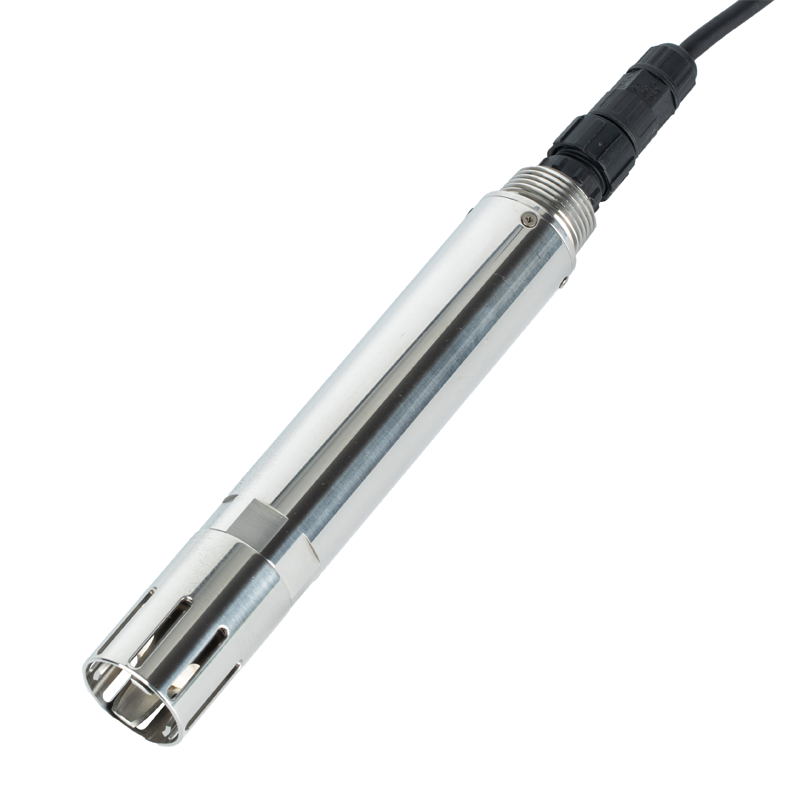
When a chlorine value changes, operators often ask whether the sensor is wrong. The answer requires a short diagnostic routine. Check dosing pump status, sample flow, pH, temperature, recent cleaning, bubbles and comparison test. If all site checks are normal, then inspect calibration and sensor condition. This routine should be part of the operating manual.
For plants with several chlorine points, compare upstream and downstream trends. If all points change together, the process likely changed. If only one point changes, inspect that sampling line or sensor. Trend comparison is one reason continuous monitoring is more useful than isolated manual tests.
| Check order | Item | Reason |
|---|---|---|
| 1 | Dosing and process status | Confirms whether chlorine really changed. |
| 2 | Sample flow and bubbles | Most installation errors appear here. |
| 3 | pH and temperature | Affects chlorine chemistry and compensation. |
| 4 | Reference test | Separates sensor drift from process change. |
| 5 | Communication scaling | Prevents false platform values. |
If the integrator supplies the controller and NiuBoL supplies the sensor, the quotation should define who provides the flow cell, pump, drain and calibration method. Without this boundary, both parties may assume the other side handles the sampling system.
Many chlorine sensor service calls are caused by flow, pH, bubbles or reference-test differences. A short training session can reduce these calls. Operators should know how to check sample flow, clean the sensor, compare with a portable method and identify whether the issue is process-related or instrument-related.
For distributors, provide a one-page handover checklist with each chlorine sensor package. Include flow requirement, pH condition, wiring, calibration method and troubleshooting order. This improves customer confidence and reduces repeated questions after installation.
| Training topic | Practical result |
|---|---|
| Flow check | Prevents slow-response complaints. |
| pH review | Explains chemistry-related reading changes. |
| Reference test | Verifies process value before replacing sensor. |
| Scaling check | Avoids PLC or platform display errors. |
Before ordering, sketch the sampling line from the main process to the sensor and back to drain or return. Mark pump, valve, filter, flow cell and sample valve if used. This drawing lets NiuBoL and the contractor see whether the sensor will receive representative water and whether the operator can maintain it safely.

The buyer should also define the comparison method. If the plant uses a DPD test or another reference method, write it into the commissioning plan. Continuous chlorine data will be trusted faster when operators see a clear relationship between the online value and their familiar field test.
For remote stations, add spare tubing, fittings and cleaning materials to the purchase package. A low-cost missing fitting can stop the entire chlorine monitoring point during installation.
At a disinfection outlet, the monitoring point should be downstream far enough to represent mixed water, but close enough to give operators time to respond. If the sensor is too close to the dosing point, chemical pulses may create noisy readings. If it is too far away, response may be too late for control.
This is why installation photos and process drawings are useful before quotation. NiuBoL can recommend the sensor, but the buyer and contractor must define a representative sampling point and safe maintenance access.
For final review, keep one document that lists the measured parameter, normal operating range, alarm range, installation point, output signal, maintenance owner and reference check method. This small document helps purchasing, engineering and site operators judge the same project with the same assumptions.
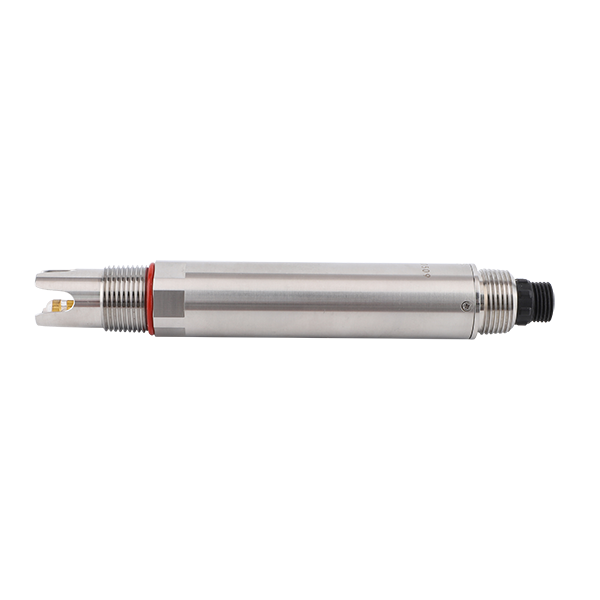
A: Use a higher range when the process may exceed low residual levels, such as certain disinfection or industrial water applications.
A: Common causes are unstable flow, bubbles, pH changes, membrane fouling, chemical dosing pulses and incorrect scaling in the host system.
A: The NBL-WQ-CL manual specifies 30 to 60 L/h for circulation pool installation. The project team should confirm the installation point, maintenance access, output interface and acceptance record before using the value for routine operation.
A: Yes. Chlorine chemistry and sensor response depend on pH. NiuBoL residual chlorine specifications list pH 4 to 9 for the medium.
A: Yes. NiuBoL chlorine sensors support RS485 Modbus RTU, and 4-series models can support optional 4-20 mA. The project team should confirm the installation point, maintenance access, output interface and acceptance record before using the value for routine operation.
A: Yes. It is useful for calibration checks, commissioning comparison and abnormal event investigation. The project team should confirm the installation point, maintenance access, output interface and acceptance record before using the value for routine operation.
A: Sensor, flow cell, controller, power, communication, mounting accessories, calibration items and documentation should be listed separately.
A: No disinfectant, wrong sample point, clogged line, pH problem, fouled sensor or calibration error can all cause low readings.
Ip68.
NBL-WQ-CL Water Quality Sensor Online Residual Chlorine Sensor.pdf
NBL-WQ-DO Online Fluorescence Dissolved Oxygen Sensor.pdf
NBL-WQ-NHN Ammonia Nitrogen Water Quality Sensor.pdf
NBL-WQ-COD Online Water Quality COD Sensor.pdf
NBL-WQ-PH Online pH Water Quality Sensor.pdf
NBL-WQ-EC water quality conductivity sensor.pdf
Prev:TDS Sensor vs Conductivity Sensor: What Is Actually Being Measured?
Next:Water Quality Analyzer Price: Single-Parameter vs Multiparameter Cost
Related recommendations
Sensors & Weather Stations Catalog
 Agriculture Sensors and Weather Stations Catalog-NiuBoL.pdf
Weather Stations Catalog-NiuBoL.pdf
Agriculture Sensors Catalog-NiuBoL.pdf
Water Quality Sensor Catalog-NiuBoL.pdf
Related products
 Combined air temperature and relative humidity sensor
 TDR Soil Moisture & Temperature Sensor for irrigation| RS485 |4-20mA| NBL-S-THR
 Soil pH sensor RS485 soil Testing instrument soil ph meter for agriculture |NBL-S-PH
 Wind Speed sensor Output Modbus/RS485/Analog/0-5V/4-20mA
 Tipping bucket rain gauge for weather monitoring auto rainfall sensor RS485/Outdoor/stainless steel
 Pyranometer Solar Radiation Sensor 4-20mA/RS485

Screenshot, WhatsApp to identify the QR code
WhatsApp number:+8615367865107
(Click on WhatsApp to copy and add friends)

