





— Blogs —
—Products—
 Consumer hotline +8618073152920
WhatsApp:+8615367865107
Address:Room 102, District D, Houhu Industrial Park, Yuelu District, Changsha City, Hunan Province, China
Product knowledge
Time:2026-09-08 12:16:20 Popularity:221
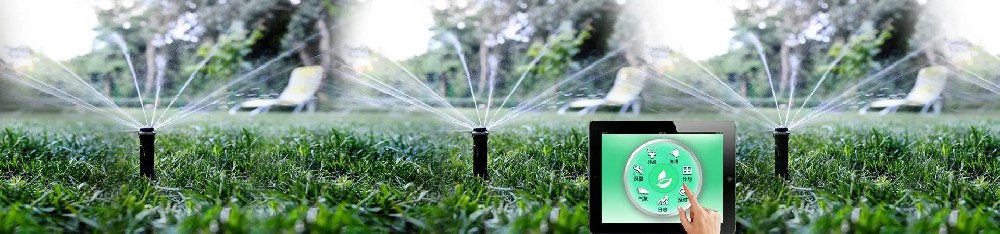
The purpose of an irrigation monitoring system is not simply to collect more data. The system should help decide when to irrigate, which zone needs water, whether water is available, whether the pump is operating correctly, and whether weather conditions justify delaying or stopping irrigation.
This requires combining several types of information rather than relying on one sensor value.
| Layer | Typical Sensors | Why It Matters |
|---|---|---|
| Soil | Moisture, temperature, EC, salinity, pH | Shows root-zone water and soil conditions. |
| Weather | Air temperature/humidity, pressure, rainfall, wind, solar radiation | Explains crop water demand and natural rainfall input. |
| Water source / irrigation | Tank/river level, flow, pressure, EC, pH | Confirms water availability, delivery and fertigation quality. |
| Equipment status | Pump run, mains power, battery voltage, valve position | Shows whether the irrigation system is actually operating. |
| Control | Relay/DO, PLC/valve controller | Turns monitoring results into pump or valve actions. |
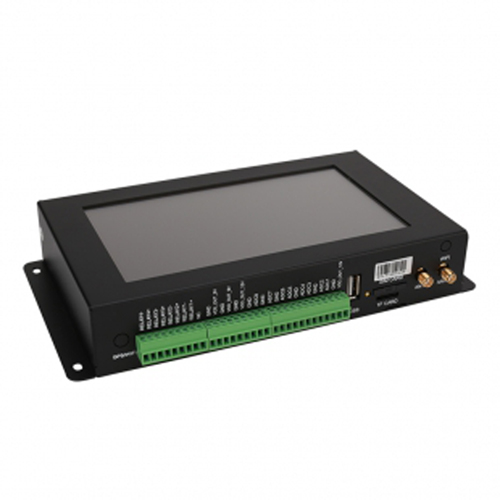
A practical architecture is: sensors connect through RS485 Modbus RTU, analog inputs or DI to a field gateway. The gateway uploads data through 4G/Ethernet to a cloud platform or provides Modbus TCP/OPC UA to PLC/SCADA. The control layer then uses relays, PLC outputs or valve controllers to operate irrigation equipment.
For off-grid farms, the gateway and sensors can be powered from a solar panel, charge controller and battery system. The power budget must include all sensors, gateway peak current, modem transmission peaks and control equipment.
A low soil-moisture reading may justify irrigation, but recent rainfall, forecasted rain, irrigation flow, water level or a failed pump can change the decision. A weather station provides context, while flow or pressure confirms that commanded irrigation actually occurred. This is the difference between a sensor alarm and a complete irrigation control system.
One field can contain different soil textures, slopes, crop ages and irrigation zones. Sensors should represent these management zones. For deeper-rooted crops, several depths can reveal whether water is only wetting the surface or reaching the active root zone. An automatic system built on poorly placed sensors can be consistently wrong even if every sensor is accurate.
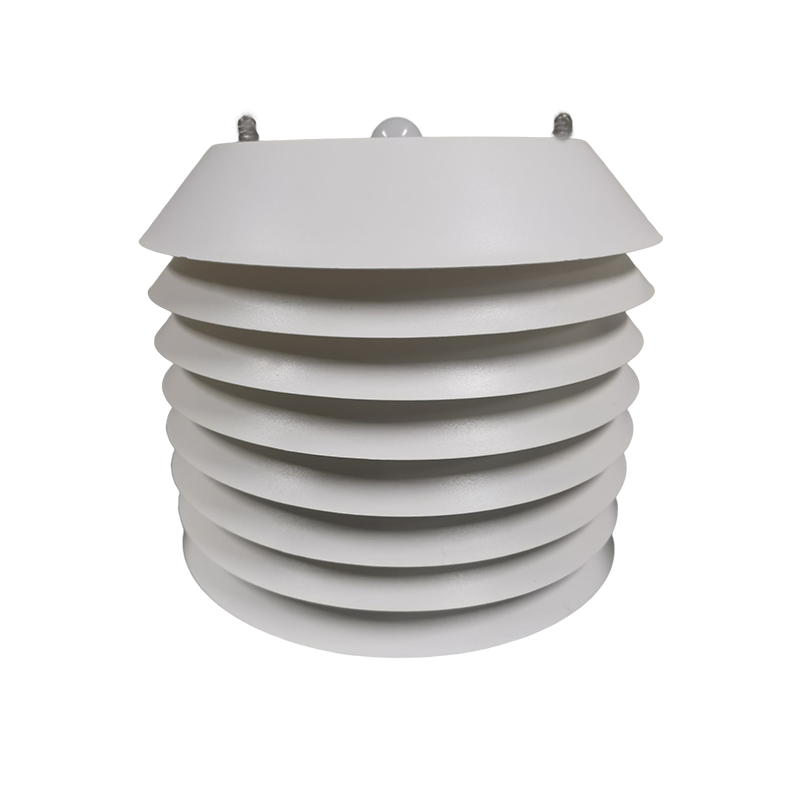
RS485 Modbus is useful because many sensors can share a communication bus. Give every device a unique Modbus address and use compatible serial settings. A weather sensor may provide several parameters under one address, while soil, level and water-quality probes use their own addresses. For longer networks, use appropriate bus wiring and evaluate voltage drop separately from communication distance.
A simple soil-and-weather site may only need an RS485 RTU plus 4G. A system that also reads 4–20mA pressure transmitters, pump status and battery voltage needs analog and DI channels. A research or remote project may require local storage. A PLC/SCADA project may require Modbus TCP or OPC UA. Select the gateway from the complete I/O and host-system list.
A gateway with relay or digital output can participate in pump or valve control. For example, a water-level or soil-moisture threshold can trigger a relay state. However, gateway relay contacts should be treated as control signals, not as direct power outputs for large motors. Pumps normally require contactors, motor protection and electrical interlocks designed for the load.
Critical irrigation systems should also include manual override and fail-safe logic. Cloud connectivity should not be the only way to stop a pump in an unsafe condition.
Monitoring platforms can use several thresholds for the same parameter. A water-level system can generate advisory, warning and critical states at different levels. Similar logic can be applied to soil moisture, pressure, EC or battery voltage. The exact threshold should be defined by the agronomist, operator or project engineer; the sensor manufacturer should not invent universal agronomic limits for every crop and soil.
Cloud platforms are convenient for maps, dashboards, email/app alarms, historical trends and multi-site management. A customer-owned server may prefer MQTT or HTTP JSON. Industrial farms or water utilities may already use PLC/SCADA and prefer Modbus TCP or OPC UA. The monitoring architecture should adapt to the customer system rather than forcing every project onto one cloud.
Agricultural communication links can be unreliable. The gateway should continue sampling when the mobile network or customer server is temporarily unavailable if the project requires data continuity. Store-and-forward allows missed records to be uploaded after communication recovers. Local automation that is safety- or crop-critical should not depend exclusively on a cloud round trip.
A representative field project may use soil moisture/temperature sensors at several depths, a weather station, rain gauge and irrigation pressure/flow measurement. A 4G gateway collects the data and uploads it to the platform. Irrigation zones are controlled according to root-zone moisture, recent rainfall and operational status. The platform records trends and alerts the operator when values or equipment status become abnormal.
A fertigation system may add EC and pH measurements near the pump or fertilizer injection point and another EC measurement at the far end of the drip line. Long cable runs must consider both RS485 communication and voltage drop. If the remote point has no local power, cable conductor size and supply voltage become part of the sensor design rather than a separate afterthought.
Where irrigation depends on a reservoir, river or tank, water level and flow can be integrated with weather and soil data. The same architecture can trigger multi-level water alarms, protect pumps from dry running and provide historical water-use records. Remote telemetry can be 4G, Ethernet or another project-specific communication method.
A sensor value becomes more useful when it can be compared with related measurements and operational events. Soil moisture can be compared with rainfall and irrigation flow; water EC can be compared between the pump and field end; a pump command can be compared with run status and pressure. This cross-checking improves fault detection and helps operators understand whether the system response actually matched the intended irrigation action.
An IoT environmental monitoring and automatic irrigation system needs two coordinated paths: a measurement path from field sensors through the logger or gateway to the data platform, and a control path from validated soil or weather conditions to valves and pumps. Keep local interlocks, manual override and a safe state independent of cloud availability, then document point IDs, units, thresholds, hysteresis and event records for acceptance.
A1: The minimum depends on the control goal, but common inputs include soil moisture, weather/rainfall and irrigation equipment status. Flow, pressure, water level, EC and pH can add important operational context.
A2: Yes. Multiple RS485 Modbus sensors can share one bus when addresses and serial settings are configured correctly. Project requirement for environmental monitoring system: Record the agreed range, alarm response, interface check and maintenance evidence in the commissioning or acceptance file.
A3: A gateway with relay/DO can provide a control signal, but large pumps normally require a contactor, protection and appropriate electrical control design.
A4: Yes. Multi-level thresholds are commonly implemented in the monitoring platform or control system. Acceptance check for environmental monitoring system: Record the agreed range, alarm response, interface check and maintenance evidence in the commissioning or acceptance file.
A5: Not universally. Thresholds depend on crop, soil, root depth, irrigation method and management goals and should be defined with agronomic/project expertise.
A6: The field gateway can continue local acquisition if designed for it, and local control can be implemented independently. Cloud dashboards obviously require communication to receive new data.
A7: MQTT/HTTP are common for cloud or customer servers; Modbus TCP/OPC UA are common for PLC/SCADA. Select according to the host system.
A8: Rainfall, temperature, humidity, wind and solar conditions provide context for crop water demand and help avoid decisions based on one soil reading alone.
For How to Build an IoT Environmental Monitoring and Automatic Irrigation, the project specification should connect site conditions, interface settings, commissioning checks and maintenance records. Measurement-point record for environmental monitoring system: Confirm those boundaries before model approval, then retain the measured acceptance evidence for later troubleshooting and system expansion.
Prev:Offline Data Logging and Store-and-Forward in Industrial IoT Gateways
Next:no more
Related recommendations
Sensors & Weather Stations Catalog
 Agriculture Sensors and Weather Stations Catalog-NiuBoL.pdf
Weather Stations Catalog-NiuBoL.pdf
Agriculture Sensors Catalog-NiuBoL.pdf
Water Quality Sensor Catalog-NiuBoL.pdf
Related products
 Combined air temperature and relative humidity sensor
 TDR Soil Moisture & Temperature Sensor for irrigation| RS485 |4-20mA| NBL-S-THR
 Soil pH sensor RS485 soil Testing instrument soil ph meter for agriculture |NBL-S-PH
 Wind Speed sensor Output Modbus/RS485/Analog/0-5V/4-20mA
 Tipping bucket rain gauge for weather monitoring auto rainfall sensor RS485/Outdoor/stainless steel
 Pyranometer Solar Radiation Sensor 4-20mA/RS485


Screenshot, WhatsApp to identify the QR code
WhatsApp number:+8615367865107
(Click on WhatsApp to copy and add friends)

