





— Blogs —
—Products—
 Consumer hotline +8618073152920
WhatsApp:+8615367865107
Address:Room 102, District D, Houhu Industrial Park, Yuelu District, Changsha City, Hunan Province, China
Product knowledge
Time:2026-09-08 12:16:20 Popularity:225
Quick Answer: Choose an industrial IoT gateway by the field interfaces, receiving system and functions that must continue without a network. A router, a serial converter and a data logger solve different problems. List the required acquisition, storage, protocol roles and local outputs before selecting a NiuBoL hardware and firmware configuration.
Environmental monitoring projects often combine weather sensors, soil sensors, water level instruments, water quality probes, flow meters, cameras, pumps or alarm signals. The gateway sits between the field layer and the application layer. Selecting it only because it has 4G or an RS485 port can create problems later when the project also needs analog inputs, local storage, PLC integration or remote maintenance.
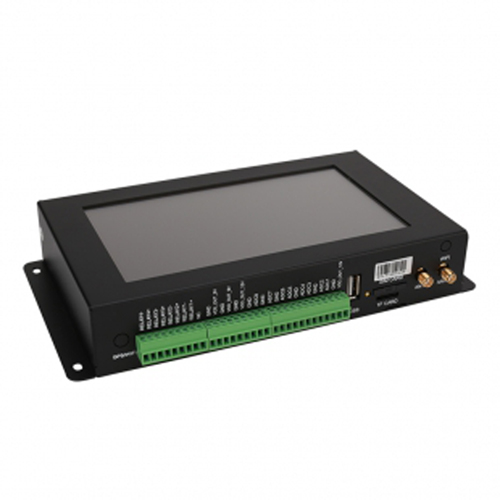
Document every signal and required data destination before choosing the hardware.
| Field Requirement | What to Check in the Gateway |
|---|---|
| RS485 Modbus RTU sensors | Number of RS485 ports, address capacity, polling rules and power outputs |
| RS232 device | Dedicated RS232 port and required serial mode |
| 4–20mA transmitter | ADC current input channels and resolution |
| 0–5V voltage signal | ADC voltage-input option and scaling |
| Pump / mains / door status | DI channels or external DI-to-RS485 module |
| Valve / relay / alarm output | Relay/DO capacity and whether external contactor is required |
| Ethernet PLC / camera / HMI | Number and role of LAN/WAN ports |
| Offline field project | Flash, TF or USB storage capability |
A gateway can have very different roles. It may only convert serial data to Ethernet, periodically upload JSON to a server, expose Modbus TCP to SCADA, act as an OPC UA server, buffer data during network outages, run Python logic, or control relays based on field values. These functions should be separated into must-have and optional requirements.
The following comparison distinguishes acquisition and networking roles. Confirm the interface option and implemented software on the ordered unit; a family name alone does not establish every protocol role or storage behavior.
| Gateway Family | Typical role | Interface configuration | Main Caution |
|---|---|---|---|
| TG501 class compact RTU | Simple RS485/RS232 monitoring and cellular telemetry | RS485, RS232, analog/DI/relay options; Modbus RTU/TCP; MQTT; history and reconnection functions | Interface counts can vary by option; verify overseas modem and analog configuration. |
| TR341 class industrial router | Routing, VPN, serial-to-network and remote sites | 4G/Ethernet/Wi-Fi, VPN, TCP/UDP, Modbus RTU/TCP; RS485 optional | Do not assume every unit includes RS485 or every firmware includes full MQTT/HTTP data-acquisition logic. |
| TG451 class IoT gateway | Ethernet-heavy projects, PLC/HMI remote access, RS485 acquisition | Multiple Ethernet ports, RS232/RS485, DI, relays, Modbus RTU/TCP, MQTT, USB backup | Standard page does not include ADC; HTTPS/TLS and local file format should be verified by firmware. |
| TG452 class edge gateway | Multiple RS485 ports, modest analog I/O and OPC UA | Serial and analog acquisition with edge functions according to the selected hardware and software | Obtain the ordered I/O schedule and exact OPC UA role before treating it as a configured function. |
| TG462 class edge/data-logging gateway | Analog-heavy monitoring, local storage and edge processing | 3 RS485, 8 ADC, 4 DI, 4 relay outputs; USB/Micro SD storage hardware; network functions depend on configuration | Verify record format, usable storage, TLS and application protocol roles in the supplied firmware. |
If the project contains a small number of RS485 Modbus sensors, needs cellular upload and does not require complex local processing, a compact RTU can be the most efficient choice. Typical examples are one water-level sensor plus a rain gauge, several soil sensors, or a small weather monitoring point. Avoid paying for unused analog channels, display screens or edge computing if the system does not need them.
If the main problem is network connectivity rather than sensor processing, an industrial router is more appropriate. A router is useful when remote PLCs, HMIs or Ethernet devices need 4G access, VPN connectivity or serial-to-network conversion. It should not automatically be treated as a full-featured data logger unless the selected firmware and hardware configuration explicitly support the required acquisition functions.
Projects become edge-gateway candidates when they combine several RS485 ports, analog inputs, OPC UA, local logic, USB/TF storage, relay outputs or a requirement to keep operating during internet outages. Water treatment plants, research stations and multi-parameter environmental sites are typical examples.
Many buyers focus on RS485 because modern digital sensors use Modbus. However, industrial projects still include 4–20mA pressure transmitters, level transmitters and legacy instruments. A gateway without ADC channels cannot directly acquire those signals. For example, a TG451-class gateway is appropriate for serial and Ethernet integration but is not the first choice for direct 4–20mA input. Compare the ordered current-input configuration. TG462/TG462S provides eight ADC channels; specify the required current or voltage conditioning.
A project with reliable always-on connectivity may only need short buffering. A remote hydrology or research site may need weeks or months of local history. Specify whether storage is needed for maintenance backup, continuous local logging, offline store-and-forward, or manual USB export. These are different requirements and may use different software paths even on the same hardware.
If the gateway must control a pump, valve or alarm, count relay/DO outputs and understand the electrical load. Gateway relays are normally control signals. Large pumps should be switched through a suitable contactor or intermediate relay rather than directly from the gateway relay contact. Place platform alarms where the available connectivity and delay are acceptable. Functions that must respond during a network outage need suitable local logic and an agreed failure response.
A device-management platform focuses on gateway health, configuration, remote diagnostics and firmware. A data platform focuses on sensor values, dashboards, maps, alarms, API access and reports. Large overseas deployments may need both. Define which system the customer actually needs before quoting a platform.
A farm has one multi-parameter weather sensor, four soil sensors and one rain gauge, all RS485 Modbus. Data must go to an MQTT cloud platform and there is stable 4G coverage. This is primarily a digital serial acquisition project; a compact RTU or IoT gateway can be sufficient if it has the required RS485 capacity and power budget.
A water site has two RS485 probes, three 4–20mA transmitters and needs Modbus TCP or OPC UA for SCADA plus local offline data. This project should prioritize an edge/data-logging gateway with enough ADC inputs, local storage and industrial host protocols rather than a simple router.
A1: An RTU emphasizes field acquisition and telemetry, a data logger emphasizes recording, a router emphasizes network connectivity, and an IoT/edge gateway can combine acquisition, protocol conversion, local logic and cloud connectivity.
A2: Choose based on sensor count, number of RS485 ports, polling load, power and upstream protocol. A compact RTU may be enough for simple projects.
A3: Use a model with sufficient ADC current inputs, such as a gateway class designed for analog acquisition. Do not assume an RS485 gateway also has analog inputs.
A4: OPC UA is commonly associated with more capable edge gateways. Confirm that the selected model and firmware expose OPC UA in the required client/server role.
A5: Sometimes, but not automatically. A router may provide serial conversion and networking without the full local logging, mapping or acquisition functions of a data logger.
A6: No. Interface types, data volume, response time, storage, control outputs and host protocols are usually more important than a single sensor-count number.
A7: Potentially yes, depending on firmware and protocol configuration. Multi-destination requirements should be included in the acceptance test.
A8: Confirm modem bands, SIM/APN needs, hardware options, firmware, certificates/TLS requirements, server parameters and the final sensor I/O list.
Select the gateway after the signal list and data path are clear. Check physical inputs, serial-bus ownership, protocol roles, persistent storage and control outputs as separate requirements. A short bench test with the intended sensors and receiving software can reveal an incompatible input or missing function before the equipment is shipped.
Prev:How to Choose Weather Sensors for Coastal, Marine and High-Humidity Environments
Next:Offline Data Logging and Store-and-Forward in Industrial IoT Gateways
Related recommendations
Sensors & Weather Stations Catalog
 Agriculture Sensors and Weather Stations Catalog-NiuBoL.pdf
Weather Stations Catalog-NiuBoL.pdf
Agriculture Sensors Catalog-NiuBoL.pdf
Water Quality Sensor Catalog-NiuBoL.pdf
Related products
 Combined air temperature and relative humidity sensor
 TDR Soil Moisture & Temperature Sensor for irrigation| RS485 |4-20mA| NBL-S-THR
 Soil pH sensor RS485 soil Testing instrument soil ph meter for agriculture |NBL-S-PH
 Wind Speed sensor Output Modbus/RS485/Analog/0-5V/4-20mA
 Tipping bucket rain gauge for weather monitoring auto rainfall sensor RS485/Outdoor/stainless steel
 Pyranometer Solar Radiation Sensor 4-20mA/RS485


Screenshot, WhatsApp to identify the QR code
WhatsApp number:+8615367865107
(Click on WhatsApp to copy and add friends)

