





— Blogs —
—Products—
 Consumer hotline +8618073152920
 WhatsApp:+8615367865107
Address:Room 102, District D, Houhu Industrial Park, Yuelu District, Changsha City, Hunan Province, China
Product knowledge
Time:2026-06-22 10:30:47 Popularity:282
A weather monitoring system automatically measures, records and transmits meteorological data from a specific location. A complete system normally includes weather sensors, a data logger or controller, communication equipment, a power supply, mounting hardware and a software platform or private server.
Depending on the application, the system can monitor air temperature, relative humidity, atmospheric pressure, wind speed, wind direction, rainfall, solar radiation and additional environmental or soil parameters.
For remote IoT applications, field sensors commonly connect to a data logger through RS485 Modbus. The logger or gateway can then transmit measurements through 4G, Ethernet, Wi-Fi, LoRaWAN or another suitable network to a cloud platform or private server.
Weather Sensors → RS485 / Analog / Pulse → Data Logger → 4G / Ethernet / LoRaWAN → MQTT / HTTP / TCP → Cloud or Private Server
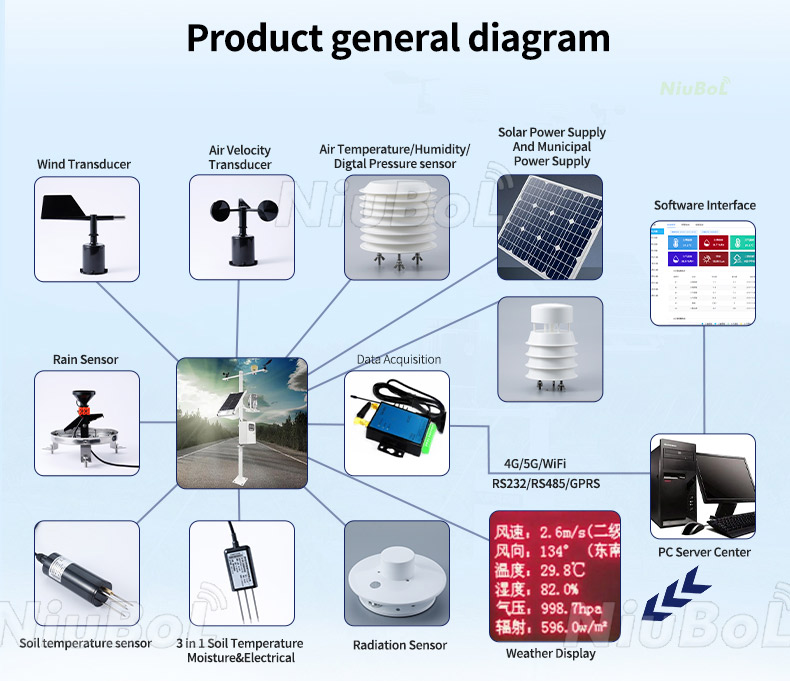
A weather monitoring system is a combination of sensing, data acquisition, communication and software equipment used to continuously observe local meteorological conditions.
Unlike a single weather sensor, a complete monitoring system can:
Measure multiple weather parameters
Collect data automatically
Add timestamps to measurements
Store historical records locally or remotely
Transmit data from unattended sites
Display real-time and historical information
Export data for analysis
Connect to cloud platforms or customer servers
Support alarm functions when configured
The correct configuration should be selected according to the decisions the data must support rather than simply maximizing the number of sensors.
| Component | Main Function |
|---|---|
| Weather Sensors | Measure temperature, humidity, wind, rainfall, pressure, radiation and other parameters |
| Data Logger / Controller | Reads, processes, timestamps and stores sensor data |
| Communication Module | Transfers data through cellular, Ethernet, Wi-Fi, LoRaWAN or another network |
| Power System | Provides mains, DC or solar and battery power |
| Mounting Structure | Supports sensors, enclosure, solar panel and accessories |
| Software / Server | Displays, stores, exports and manages monitoring data |
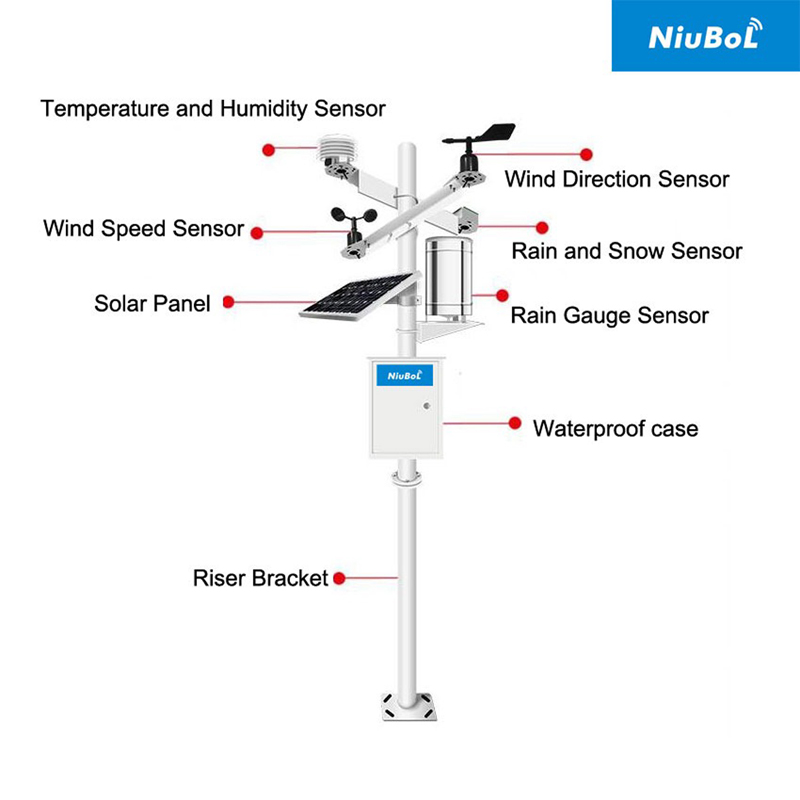
Sensors form the measurement layer of the system. The required sensor list depends on the application and environmental conditions.
| Parameter | Typical Sensor | Typical Application |
|---|---|---|
| Air Temperature | Temperature sensor | Weather, agriculture and environmental monitoring |
| Relative Humidity | Humidity sensor | Microclimate and environmental monitoring |
| Atmospheric Pressure | Barometric pressure sensor | Meteorological monitoring |
| Wind Speed | Cup or ultrasonic anemometer | Weather, energy and safety monitoring |
| Wind Direction | Wind vane or ultrasonic sensor | Weather and environmental projects |
| Rainfall | Tipping bucket or electronic rainfall sensor | Agriculture, hydrology and flood monitoring |
| Solar Radiation | Pyranometer | Agriculture, solar energy and research |
Optional sensors can include soil moisture, soil temperature, PAR, UV, CO₂, PM2.5, PM10, visibility and other environmental parameters when required.
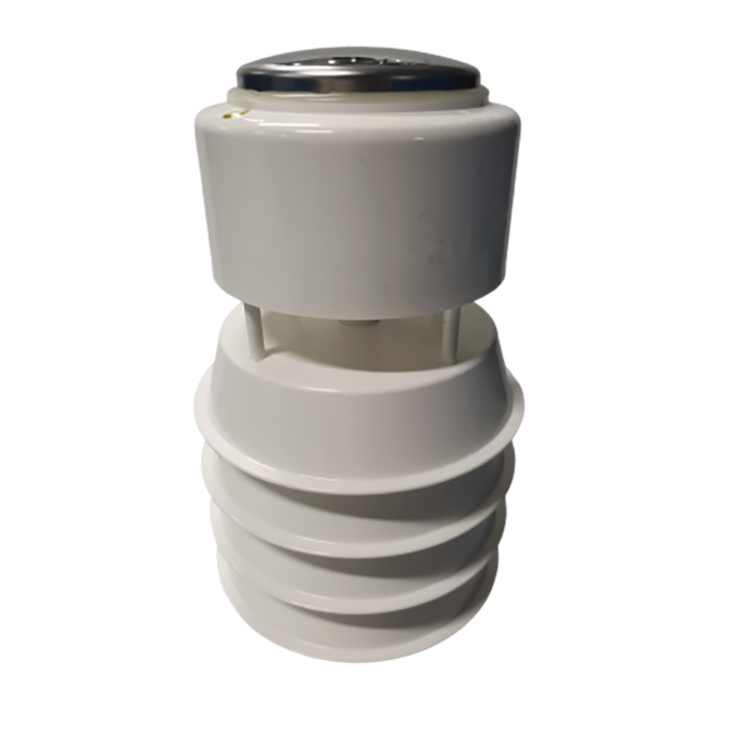
The data logger is the central data-acquisition device in a modular weather monitoring system.
Depending on the model and system configuration, it can:
Read multiple sensors
Poll RS485 Modbus devices
Receive analog or pulse signals
Convert raw values into engineering units
Add timestamps
Store measurements locally
Prepare records for remote transmission
Before selecting a logger, confirm the number of sensors, interfaces, Modbus addresses, sampling interval, upload interval and future expansion requirements.
View NiuBoL Data Loggers and Data Collectors →
RS485 Modbus RTU is commonly used between weather sensors and the station data logger. Several compatible sensors can share one RS485 bus when each device has a unique Modbus address.
Sensor 1 + Sensor 2 + Sensor 3 → RS485 Bus → Data Logger
Use a unique Modbus address for each device.
Connect RS485 A and B correctly.
Daisy-chain wiring is generally preferred.
Use twisted-pair cable for RS485 communication.
Consider DC voltage drop on long cable runs.
Use appropriate termination when required by the network length and conditions.
RS485 is the field communication interface. It is different from MQTT or HTTP, which are normally used between the gateway and server.
After measurements reach the data logger or gateway, they can be transferred to a remote server through an appropriate network.
| Communication | Typical Use |
|---|---|
| 4G Cellular | Remote farms, hydrology, environmental and distributed monitoring sites |
| Ethernet | Sites with stable wired network infrastructure |
| Wi-Fi | Campus, building and local-network installations |
| LoRaWAN | Low-power distributed sensor networks with a compatible gateway |
Network selection should consider site coverage, existing infrastructure, power consumption, data volume and whether the customer already operates a communication network.
Some monitoring projects use the manufacturer's cloud platform, while others require weather data to be delivered directly to the customer's own server, database, SCADA or IoT platform.
Depending on the selected data logger and gateway configuration, integration methods can include:
MQTT
HTTP
TCP
Platform API
Local data export
These requirements should be confirmed before ordering. Important information includes server address, protocol, authentication method, data format, parameter names and upload interval.
A monitoring platform provides centralized access to data from one or many weather stations.
Depending on the software configuration, functions may include:
Real-time data display
Historical data query
Trend charts
Data export
Station management
Device online/offline status
User accounts and permissions
Alarm or threshold settings
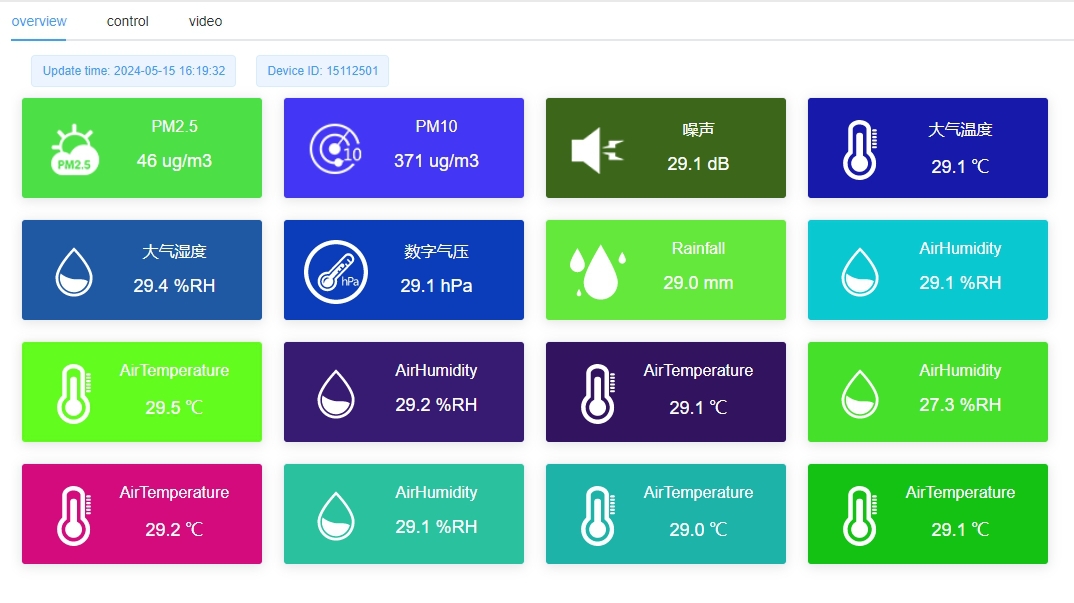
For larger systems, buyers should also confirm data retention, API access, export format, user permissions and what happens to measurements during temporary network outages.
Remote stations can use a solar panel, charge controller and rechargeable battery when mains power is unavailable.
Solar power sizing should consider:
Total sensor power consumption
Data logger and communication-module consumption
Sampling and upload frequency
Local solar radiation
Expected consecutive cloudy days
Battery usable capacity
Operating temperature
Required backup autonomy
MPPT or PWM controller selection
There is no single solar-panel and battery size suitable for every weather monitoring project.
| Layer | Equipment | Function |
|---|---|---|
| Sensing Layer | Weather and environmental sensors | Measure physical parameters |
| Acquisition Layer | Data logger / RTU | Collect, process and store measurements |
| Network Layer | 4G / Ethernet / Wi-Fi / LoRaWAN | Transfer field data |
| Protocol Layer | MQTT / HTTP / TCP / API | Exchange data with the application server |
| Application Layer | Cloud platform / private server / SCADA | Display, manage and analyse records |
| Automatic Weather Station | Weather Monitoring System |
|---|---|
| Usually refers mainly to the field station | Can include stations, communication, server and software |
| Sensors + logger + power + mounting | Sensors + acquisition + network + data platform |
| Often one independent observation point | Can manage multiple distributed stations |
| Focuses on field measurement | Focuses on the complete data workflow |
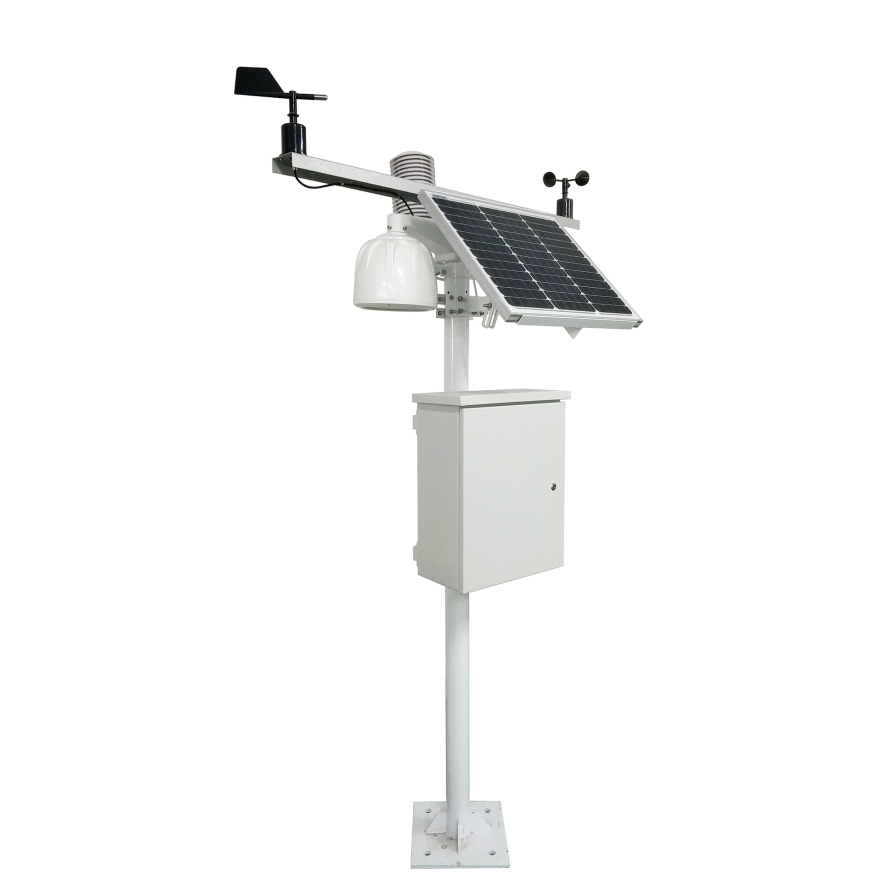
For a complete field station configuration, see the NiuBoL Automatic Weather Station.
Weather monitoring systems can be configured for many different industries. The sensor combination and data workflow should be adjusted for each application.
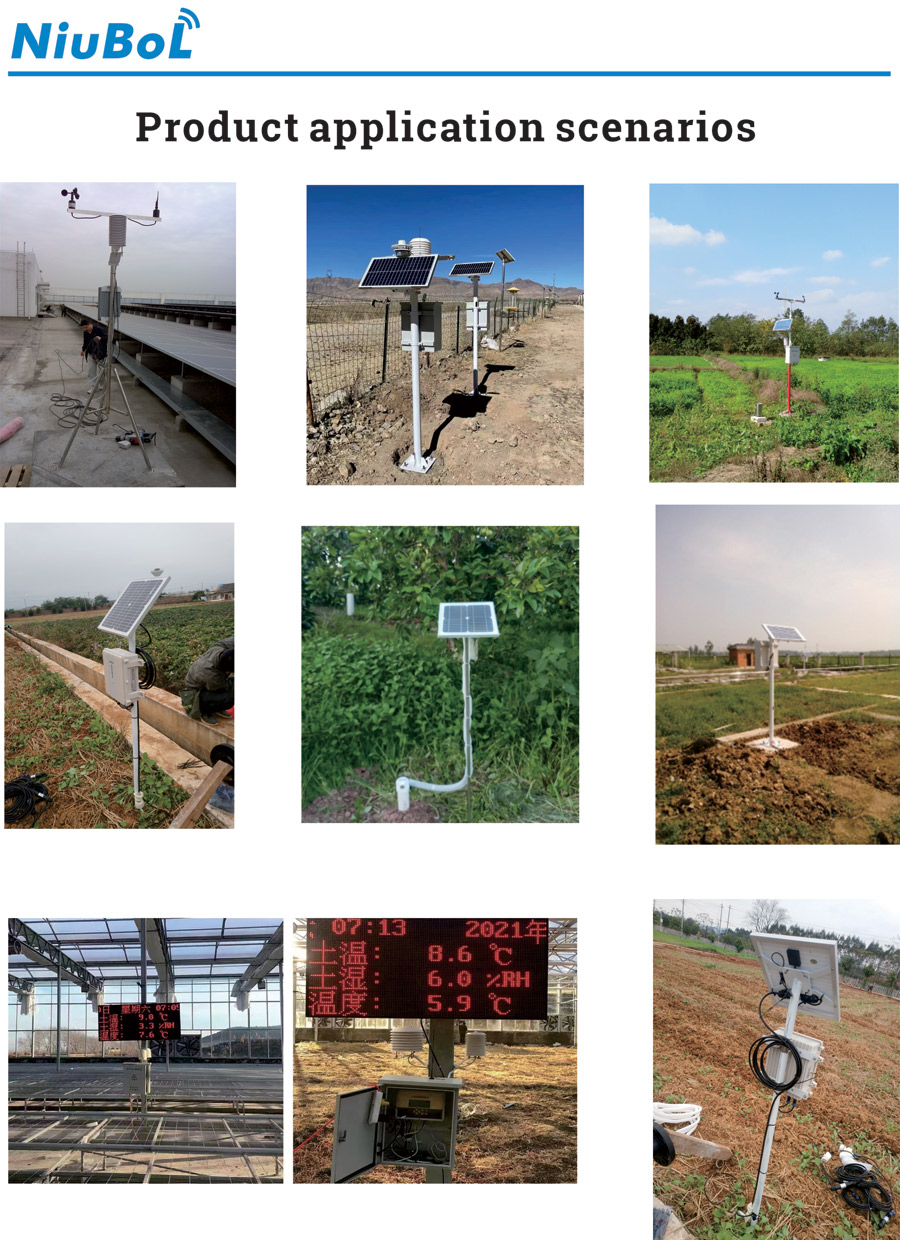
Agricultural monitoring can combine air temperature, humidity, wind, rainfall, solar radiation and soil measurements to provide local microclimate and root-zone information.
Hydrological systems can combine rainfall and weather measurements with river level, reservoir level or flow sensors.
Rainfall + Weather + Water Level / Flow → Data Logger → Remote Server
A weather station does not predict flooding by itself. Rainfall and water measurements must be interpreted with appropriate hydrological models, thresholds or warning logic.
Solar-energy monitoring can include solar irradiance, ambient temperature, module temperature, wind speed, wind direction, humidity and rainfall.
When solar radiation measurements are required, sensor orientation should match the project objective. GHI and POA are different measurement configurations and normally require different sensor orientations.
Wind speed, wind direction, temperature and humidity can provide meteorological context for PM, gas or other environmental measurements. Weather measurements can support analysis but do not by themselves identify the source of pollution.
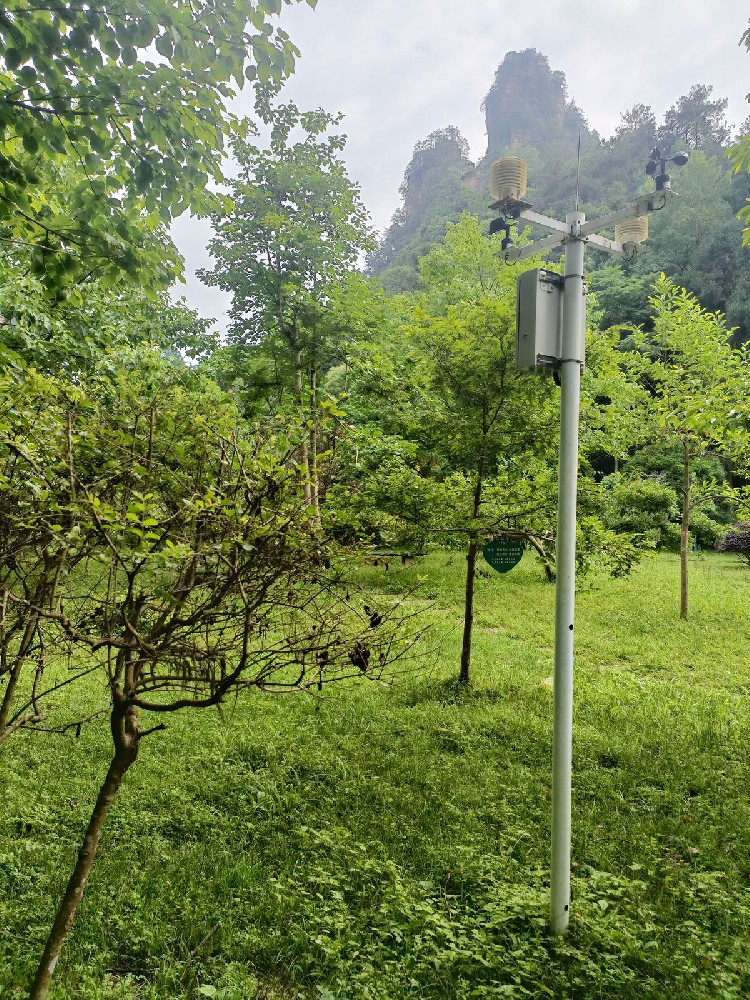
Remote weather stations can be installed in forests and ecological monitoring areas to record temperature, humidity, rainfall, wind and other parameters over long periods.
| Selection Item | Information to Confirm |
|---|---|
| Application | Agriculture, hydrology, energy, research, industry or environmental monitoring |
| Measured Parameters | Temperature, humidity, wind, rainfall, pressure, radiation and optional sensors |
| Station Quantity | One station or distributed monitoring network |
| Communication | 4G, Ethernet, Wi-Fi, LoRaWAN or local-only |
| Server | Supplier cloud, customer cloud or private server |
| Protocol | MQTT, HTTP, TCP or API requirements |
| Power Supply | Mains, DC or solar + battery |
| Data Interval | Sampling and upload frequency required by the project |
| Installation | Pole height, brackets, enclosure, cable and foundation |
Determine what the collected data will be used for. This defines which parameters and response times are necessary.
Confirm measurement ranges, accuracy requirements, interfaces and communication protocols.
Confirm mains or solar power, network coverage, communication technology and server requirements.
Install sensors at representative locations, complete wiring, configure Modbus addresses and check every measurement channel.
Verify that the value measured by each sensor arrives correctly at the data logger and final platform.
Sensor Value → Logger Record → Network Upload → Server Record → User Display
Select an open and representative monitoring location.
Avoid unnecessary obstruction from buildings and trees.
Install wind sensors in an appropriately exposed position.
Keep tipping bucket rain gauges level.
Use a suitable radiation shield for air temperature and humidity sensors.
Avoid unnecessary shadows on radiation sensors.
Secure field cables against wind and mechanical damage.
Provide grounding and surge protection when required.
Keep the enclosure accessible for maintenance.
| Item | Check |
|---|---|
| Sensor Values | All configured sensors provide plausible measurements |
| Units | Units match project requirements |
| Time | Timestamp and timezone are configured correctly |
| Upload Interval | Matches the specified reporting interval |
| Historical Data | Records can be queried or exported |
| Communication Recovery | Behavior after network or power interruption is tested |
| Server Integration | Required MQTT, HTTP or TCP data reaches the correct destination |
| Documentation | Station IDs, sensor addresses and communication settings are recorded |
Selecting hardware before defining the monitoring objective
Installing unnecessary sensors that do not support a project decision
Ignoring cellular or network coverage at remote sites
Choosing solar and battery capacity without calculating system consumption
Using duplicate Modbus addresses on one RS485 network
Installing sensors too close to buildings or trees
Ignoring local data storage during communication outages
Confirming hardware but not confirming server protocol and data format
Failing to plan maintenance access
Using inconsistent station names, parameter names or units across a network
A1. It is a system that combines weather sensors, data acquisition, communication and software to automatically measure, record and manage meteorological data.
A2. Common measurements include air temperature, relative humidity, atmospheric pressure, wind speed, wind direction, rainfall and solar radiation. Additional sensors can be added according to the application.
A3. A weather station normally refers to the field hardware. A weather monitoring system can also include communication networks, data servers, software and multiple stations.
A4. Yes. Many industrial weather sensors use RS485 Modbus RTU to communicate with data loggers, PLCs and RTUs.
A5. Yes. Compatible devices can share the same bus when each sensor uses a unique address and the wiring and power supply are correctly designed.
A6. Yes. A compatible data logger or gateway can upload weather measurements through a cellular network.
A7. Yes, when the selected logger or gateway supports the required integration. MQTT, HTTP, TCP, authentication and data-format requirements should be confirmed before ordering.
A8. Yes. Compatible sensors or RS485-to-LoRaWAN nodes can communicate through a LoRaWAN gateway. Frequency region, payload format and network-server compatibility should be confirmed before deployment.
A9. Yes. Solar-powered stations normally use a panel, charge controller and rechargeable battery. Capacity should be selected from the actual system power budget and local solar conditions.
A10. There is no universal upload interval. It should be selected according to the required response time, data volume, network cost and available power.
A11. Yes. Multiple stations can be managed centrally when station IDs, data formats, communication settings and platform functions are configured consistently.
A12. Provide the application, required parameters, station quantity, installation country, communication method, available power supply, pole requirements, data interval and whether data must be sent to a cloud platform or private server.
NiuBoL provides weather sensors, automatic weather stations, data loggers and IoT communication equipment for agriculture, hydrology, environmental monitoring, solar energy, industrial and research projects.
For an engineering quotation, provide the required sensor list, number of stations, installation country, distance between monitoring points, communication method, power supply, reporting interval and server-integration requirements.
Prev:Why Meteorological Monitoring Is Important for Agriculture, Industry, Research and Public Safety
Related recommendations
Sensors & Weather Stations Catalog
 Agriculture Sensors and Weather Stations Catalog-NiuBoL.pdf
Weather Stations Catalog-NiuBoL.pdf
Agriculture Sensors Catalog-NiuBoL.pdf
Water Quality Sensor Catalog-NiuBoL.pdf
Related products
 Combined air temperature and relative humidity sensor
 TDR Soil Moisture & Temperature Sensor for irrigation| RS485 |4-20mA| NBL-S-THR
 Soil pH sensor RS485 soil Testing instrument soil ph meter for agriculture |NBL-S-PH
 Wind Speed sensor Output Modbus/RS485/Analog/0-5V/4-20mA
 Tipping bucket rain gauge for weather monitoring auto rainfall sensor RS485/Outdoor/stainless steel
 Pyranometer Solar Radiation Sensor 4-20mA/RS485

Screenshot, WhatsApp to identify the QR code
WhatsApp number:+8615367865107
(Click on WhatsApp to copy and add friends)

