





— Blogs —
—Products—
 Consumer hotline +8618073152920
 WhatsApp:+8615367865107
Address:Room 102, District D, Houhu Industrial Park, Yuelu District, Changsha City, Hunan Province, China
Product knowledge
Time:2026-06-22 10:12:29 Popularity:180
Meteorological monitoring is important because weather conditions directly affect production, safety, resource planning and environmental decisions. Temperature, relative humidity, wind direction, wind speed, rainfall and light intensity influence agriculture, hydrology, industry, tourism, research and city operation. Automatic weather station equipment turns these changing conditions into continuous data that can be stored, analyzed and acted on.
Compared with manual observation, automatic monitoring covers more time, supports remote sites, reduces labor and provides a more scientific data basis. For agriculture in particular, weather changes can affect crop yield and quality. For industry and public safety, local weather data supports risk assessment, emergency warning and operational planning.
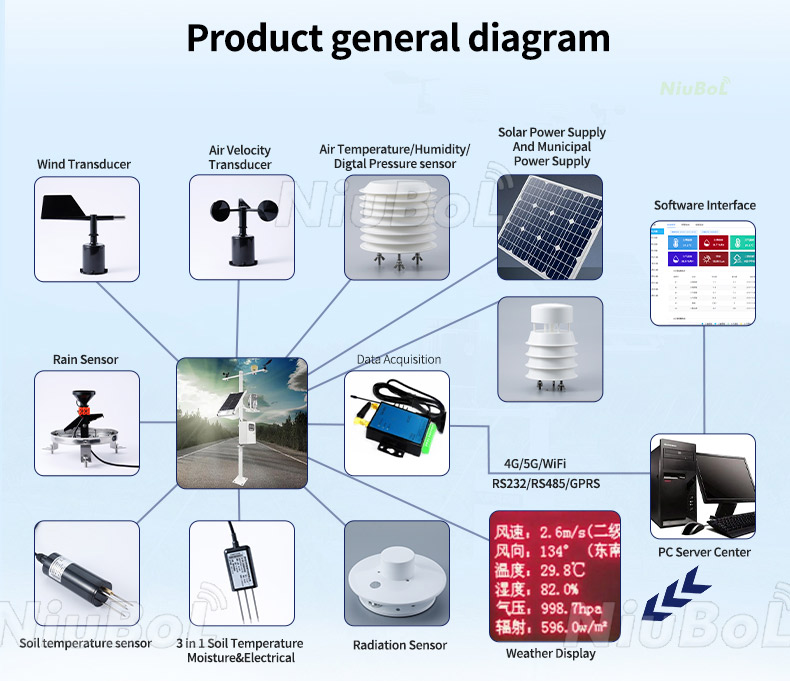
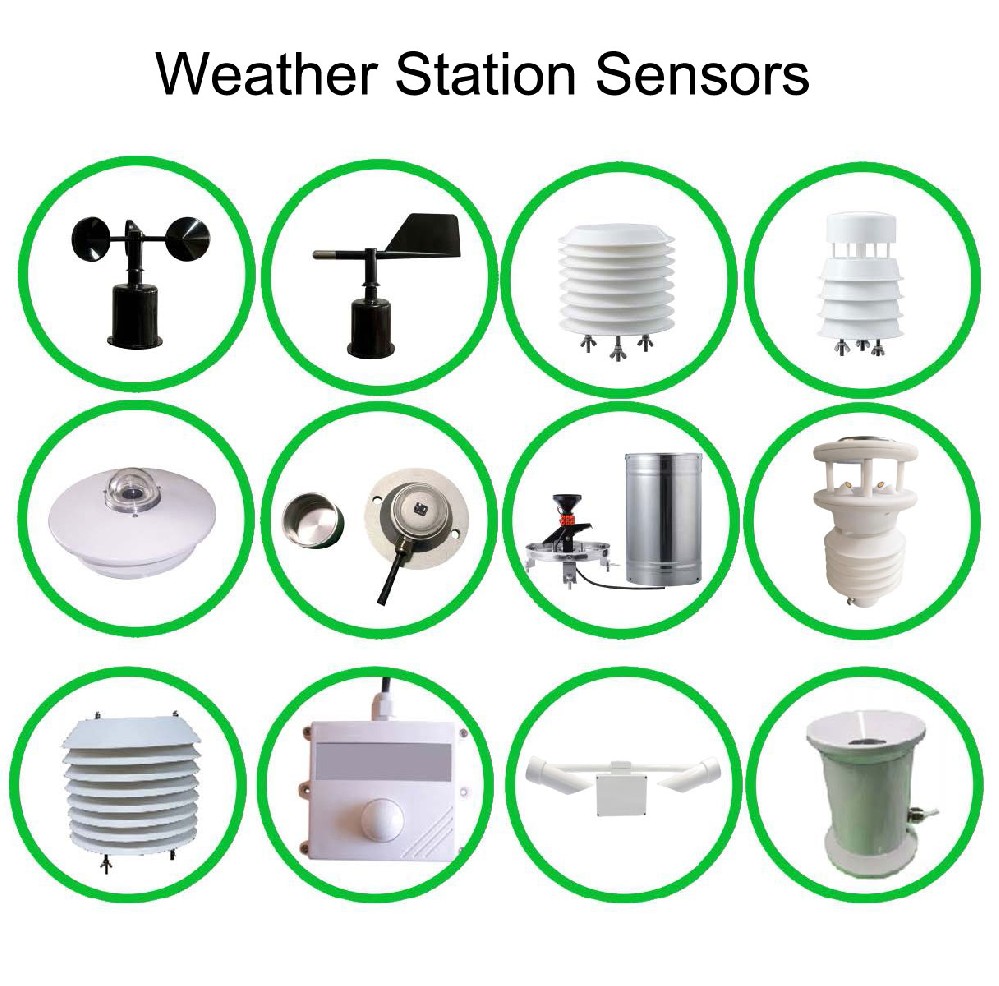
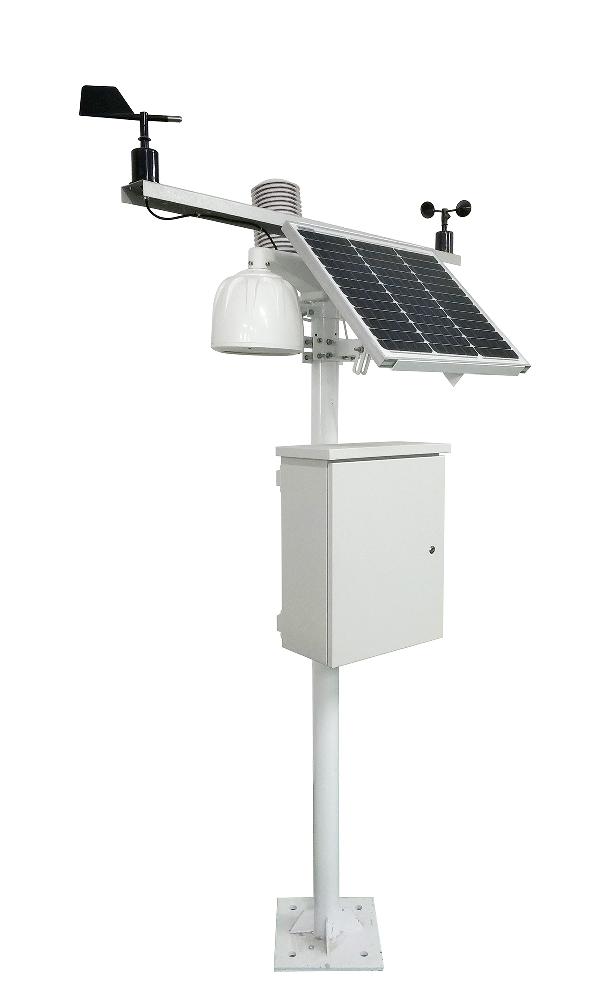
A weather station is usually composed of meteorological sensors, acquisition and transmission module, backend computer or platform, solar panel and battery, and support structure. Sensors monitor weather elements. The collector gathers the values and transmits them wirelessly or through a configured network. The backend displays data in numbers, curves and historical records so users can view, analyze and manage local weather conditions.
Manual observation can be accurate at a single time, but it cannot easily cover night, remote areas, sudden events or continuous trend changes. Automatic weather stations can operate unattended in harsh environments, record data automatically, communicate with platforms and send data to a central station. This is important for remote farmland, hydrology points, industrial areas, tourism sites and disaster-prone locations.
Modern weather stations can use APP settings, display terminals, data receiving platforms and mobile client software. Many sensors support RS485 / Modbus or station-level acquisition, while the host sends data through wireless or wired networks. A useful monitoring system should support automatic recording, threshold alarms, data communication, historical query, statistics and charts.
| Item | Engineering Reference | Project Note |
|---|---|---|
| Measured elements | Temperature, relative humidity, wind speed, wind direction, rainfall, atmospheric pressure, solar radiation or light intensity; soil temperature and soil moisture when configured | Select elements according to the management decision, not only by sensor quantity |
| Data acquisition | Industrial data collector or station host collects sensor signals | Confirm channel capacity and expansion reserve |
| Communication | RS485 / Modbus for many field sensors; GPRS / 4G / 5G or Ethernet for platform upload depending on station configuration | Confirm protocol documents before platform integration |
| Power supply | Solar panel with battery, mains power, or mixed supply depending on site | Calculate autonomy for remote and unattended operation |
| Display and software | LED display, local terminal, web platform, mobile APP or data receiving software can be configured | Define who needs to view data and how reports are used |
| Mechanical system | Pole, bracket, protective box, sensor arms and grounding accessories | Installation quality directly affects data representativeness |
| Data functions | Real-time display, automatic recording, data query, statistics, charts, alarms and communication | Useful for management, research and acceptance |
| Installation site | Flat, open and representative area away from tall buildings, strong magnetic fields and major obstruction | Poor siting creates data error even with good sensors |
| Automatic operation | Unattended operation with automatic recording and communication | Suitable for field and remote monitoring |
| Software | Data receiving platform and mobile client software | Supports query, statistics and chart review |
| Alarm capability | Threshold and communication functions can be configured | Useful for disaster warning and operation response |
Site challenge: Weather changes directly affect yield, quality, irrigation and disaster prevention.
System integration scheme: Deploy stations in representative fields with soil and weather sensors.
User value: Growers gain local data for irrigation, frost protection and field management.
Site challenge: Rainfall and wind events can change water level and drainage risk.
System integration scheme: Use rainfall and weather stations with remote transmission.
User value: Managers receive earlier evidence for flood or drainage response.
Site challenge: Wind, temperature and pressure affect dust, gas dispersion and outdoor operation.
System integration scheme: Install automatic weather stations near process areas or boundaries.
User value: Operators can interpret environmental events with local weather context.
Site challenge: Outdoor visitor safety and research data depend on accurate local weather.
System integration scheme: Use unattended stations with historical storage and charts.
User value: Managers and researchers obtain stable long-term datasets.
Buyers should select a station by the decision that weather data must support. Agriculture may require soil moisture, rainfall and temperature. Disaster warning may require rainfall, wind and remote alarms. Industrial sites may require wind direction, pressure and particulate integration. Research projects may require stable records, export formats and calibration documentation.
For a complete inquiry, list measured elements, installation environment, power source, communication method, software needs, alarm logic, report format and maintenance responsibility. This helps the supplier recommend a station rather than a generic sensor package.
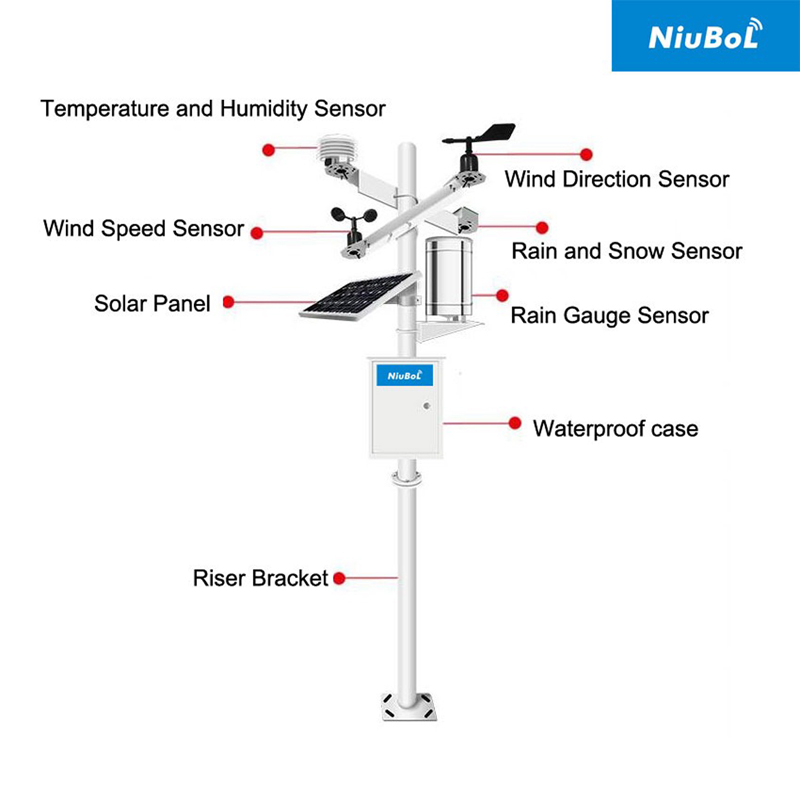
Install the station in a representative open area. Avoid tall buildings, large trees, strong magnetic fields and obstacles that affect wind, rainfall or radiation. Acceptance should check sensor readings, platform display, data storage, alarm rules, power supply, communication stability and installation photos.
Meteorological monitoring is valuable when data is connected to decisions. A rainfall alarm can trigger drainage inspection. A wind direction change can explain dust or odor movement. A temperature drop can trigger frost protection. A solar radiation trend can support energy or crop growth analysis. Without a decision path, weather data becomes a display; with a decision path, it becomes an operational tool.
For project owners, this means every monitored element should have a purpose. Temperature and humidity may support crop growth, equipment safety or comfort analysis. Rainfall may support drainage and hydrology. Wind may support gas dispersion, dust control, spraying safety or structural safety. Solar radiation may support agriculture and photovoltaic performance. The station should be designed around these uses.
Continuous monitoring reduces blind spots. Severe weather does not wait for a manual observation schedule. Remote stations can record night temperature, sudden rainfall, wind events and long-term seasonal changes. This is especially useful for unmanned fields, mountain areas, industrial boundaries and research points where manual inspection is costly or delayed.
Historical records also support review. After a crop loss, flood event or operational problem, recorded weather data helps determine whether weather was a contributing factor. This improves future planning and makes the investment in monitoring equipment easier to justify.
Knowing that meteorological monitoring is important is only the starting point. In procurement, the importance must be translated into a specification: which risks are monitored, which parameters represent those risks, where the station should be installed, who receives alarms and how records are reviewed. This prevents a project from buying equipment that looks complete but does not support a real decision.
For example, if rainfall warning is the main risk, rainfall accuracy, data interval and alarm reporting are critical. If crop management is the purpose, soil moisture and local temperature may be more important. If industrial environmental interpretation is the purpose, wind direction and wind speed become essential.
Different users read the same weather data differently. Farm managers look for irrigation, frost and crop risk signals. Environmental managers use wind and rainfall to interpret dust or pollution events. Industrial operators use weather data to support outdoor work safety. Researchers need historical datasets and stable measurement conditions. Procurement should consider these users before selecting the station.
When user roles are clear, the software can be configured better. Operators may need alarms. Researchers may need export files. Managers may need summary reports. Maintenance teams need device status and installation records. The station becomes more valuable when every user can access the part of the data that supports their work.
The return from meteorological monitoring is not only in avoiding losses. It also appears in better scheduling, fewer unnecessary site visits, stronger reports, improved emergency response and better explanation of environmental events. These benefits are easier to realize when the project defines data use before equipment purchase.
Because meteorological monitoring supports important decisions, acceptance should not stop at checking whether sensors power on. The project team should verify live values, upload interval, historical storage, chart display, alarm thresholds and export files. Installation position should be photographed and documented because later data interpretation depends on knowing the surrounding environment.
For procurement teams, this also means the value of a weather station should be measured by decision support, not only by sensor count. A well-configured station with clear data workflow can be more useful than a larger system with no alarm rules, no data review process and no maintenance plan.
For owners with limited budget, the first phase should cover the risks with the highest operational impact. Later phases can add more parameters after the team understands how the first dataset is used.
When these details are written into the procurement file, the monitoring project becomes easier to approve, install and maintain.
Many buyers search for why meteorological monitoring is important before they are ready to buy a station. The practical answer is that local weather data reduces uncertainty in decisions that depend on rainfall, wind, temperature, humidity and radiation. This article connects that general question to project decisions in agriculture, industry, research and public safety.
For procurement teams, the important next step is to convert the reason for monitoring into a sensor list and acceptance method. If the reason is crop risk, the station needs agricultural parameters. If the reason is disaster warning, rainfall and wind alarms matter. If the reason is industrial interpretation, wind and environmental context become central.
A: It provides continuous local evidence for decisions in agriculture, industry, hydrology, tourism, research and public safety. Local measured data is often more actionable than broad regional forecasts.
A: It helps growers manage irrigation, frost protection, disease risk, planting timing, spraying safety and crop quality by tracking local temperature, humidity, wind, rainfall and soil conditions.
A: Automatic systems record night, remote and sudden changes continuously, while manual observation only captures selected times and requires more labor.
A: Sensors, data collector, communication module, power system, platform software, support structure and protective enclosure work together to create a monitoring system.
A: Rainfall, wind, temperature and pressure changes can trigger alarms or early inspection, helping managers respond before risk becomes severe.
A: Yes. Wind direction, wind speed, temperature and pressure help interpret dust, odor, gas dispersion, outdoor safety and process-related environmental events.
A: Real-time display, automatic recording, historical query, charts, alarms, export and communication status are important for management.
A: In flat, open and representative locations away from tall structures, trees, strong magnetic fields and local interference.
A: Datasheets, sensor ranges, protocol documents, platform functions, installation guidance, power design and maintenance recommendations.
A: It supports review after crop loss, flood events, industrial incidents or research periods, helping improve future planning.
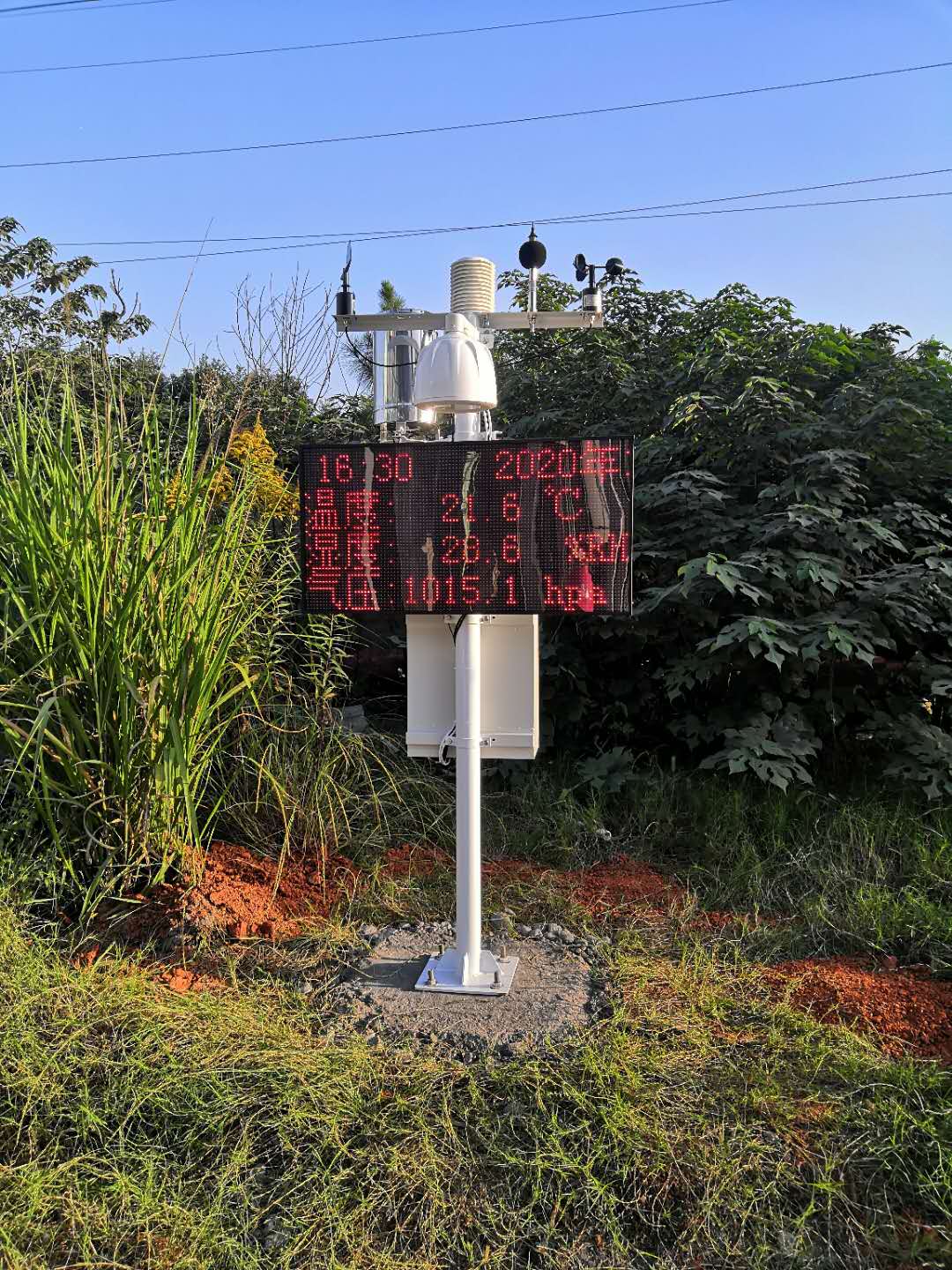
Meteorological monitoring is important because it connects local weather changes with practical decisions. NiuBoL automatic weather stations can support unattended monitoring, platform data management and multi-industry applications when configured around the project purpose.
Related recommendations
Sensors & Weather Stations Catalog
 Agriculture Sensors and Weather Stations Catalog-NiuBoL.pdf
Weather Stations Catalog-NiuBoL.pdf
Agriculture Sensors Catalog-NiuBoL.pdf
Water Quality Sensor Catalog-NiuBoL.pdf
Related products
 Combined air temperature and relative humidity sensor
 TDR Soil Moisture & Temperature Sensor for irrigation| RS485 |4-20mA| NBL-S-THR
 Soil pH sensor RS485 soil Testing instrument soil ph meter for agriculture |NBL-S-PH
 Wind Speed sensor Output Modbus/RS485/Analog/0-5V/4-20mA
 Tipping bucket rain gauge for weather monitoring auto rainfall sensor RS485/Outdoor/stainless steel
 Pyranometer Solar Radiation Sensor 4-20mA/RS485

Screenshot, WhatsApp to identify the QR code
WhatsApp number:+8615367865107
(Click on WhatsApp to copy and add friends)

