





— Blogs —
—Products—
 Consumer hotline +8618073152920
 WhatsApp:+8615367865107
Address:Room 102, District D, Houhu Industrial Park, Yuelu District, Changsha City, Hunan Province, China
Product knowledge
Time:2026-06-24 11:45:13 Popularity:240
A micro meteorological online monitoring device is designed for projects that need continuous weather and environmental data from a specific site. It can monitor wind, temperature, humidity, pressure, rainfall, light, radiation, particulate matter, noise and other parameters according to the configuration. For manufacturers, distributors and integrators, the product is often supplied as a modular station rather than a fixed single-purpose instrument.
NiuBoL micro meteorological monitoring devices are used in agriculture, hydrology, environmental monitoring, highways, airports, ports, flood control and research sites. The main procurement value is the ability to combine field sensors, a stable acquisition terminal, communication modules and a platform into one deployable system.
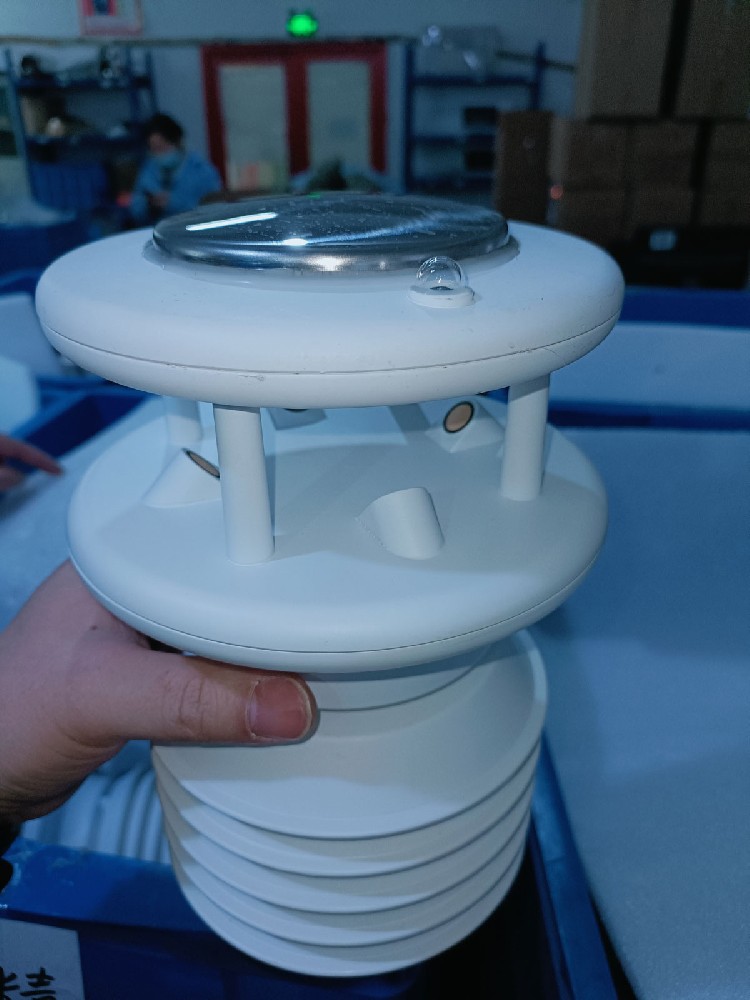
Many projects need weather information at the site level instead of city-level forecasts. A road maintenance team may need wind and rainfall at a highway section. A flood control project may need rainfall and water-related environmental data near a river. An airport, port or industrial park may need local wind, visibility-related parameters or environmental compliance data.
The device should therefore support modular expansion. A project may begin with basic temperature, humidity, wind and rainfall sensors, then add PM2.5, PM10, noise, radiation, soil moisture or water level later. This makes communication compatibility, power design and platform capacity important procurement points.
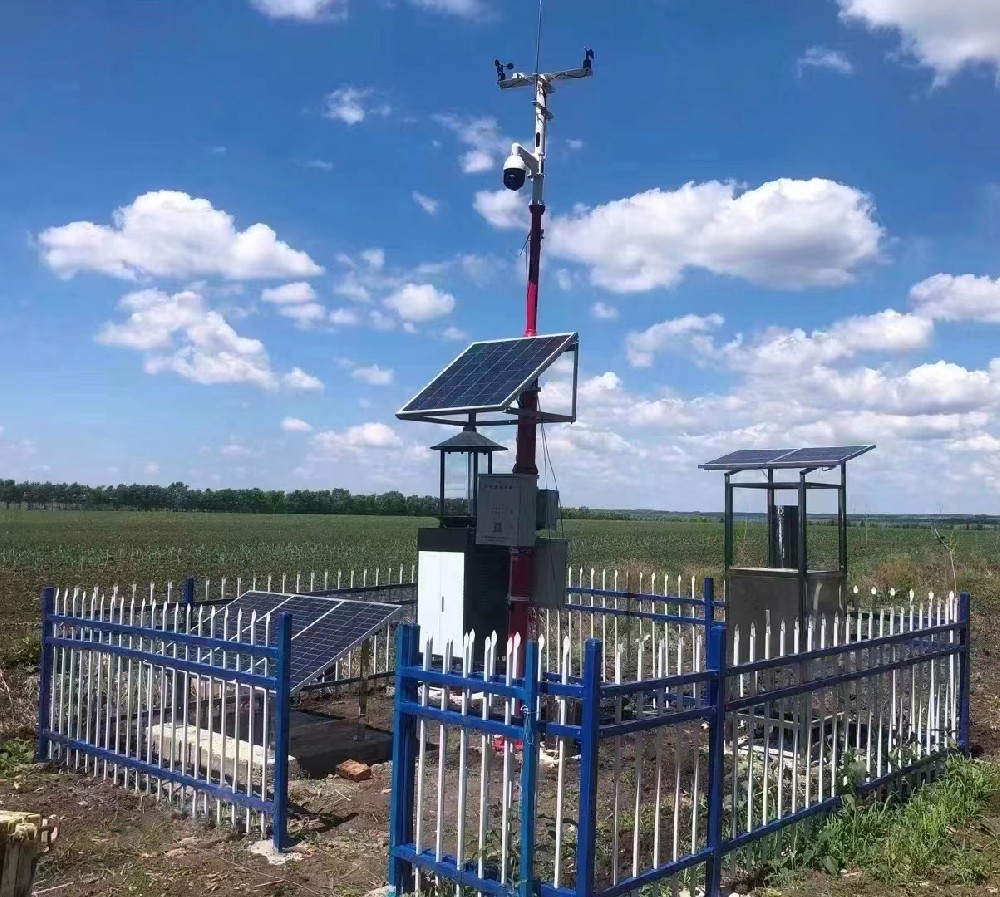
The micro meteorological device sits between field sensors and the monitoring platform. It collects sensor data, stores or transmits it, and presents it through local display, LED screen, GIS platform or cloud dashboard. Depending on the project, the station may use a 3 m or 5 m carbon steel bracket, AC power, DC power or solar power.
The same architecture can be configured for a simple weather station, an agricultural monitoring point, a dust and noise station or a hydrological support station. This flexibility is useful for system integrators who must respond to different tender documents with one consistent technical framework.
RS485 and standard Modbus protocol allow the sensor layer to connect to common acquisition terminals, gateways and industrial controllers. A typical communication setting is 9600 bps, but the final value should be confirmed with the supplied protocol document and project host device.
For remote data upload, GPRS, 4G, 5G, WiFi or Ethernet can be selected according to site infrastructure. For platform integration, buyers should confirm whether the supplier can provide data fields, API access, alarm rules, GIS display, historical curves and export functions.
| Parameter | Reference Value | Engineering Note |
|---|---|---|
| Supply voltage | DC 12-24V | Can be used with cabinet power or solar power systems |
| Communication interface | RS485 | Suitable for industrial field data acquisition |
| Protocol | Standard Modbus | Supports integration with compatible gateways and platforms |
| Baud rate | 9600 bps typical | Confirm final setting before commissioning |
| Average power consumption | About 0.4W without dust module; about 1W with dust module | Important for solar-powered sites |
| Working temperature | -40 to 80℃ | Suitable for outdoor environmental monitoring |
| Working humidity | 0 to 95%RH | Install in a way that protects electronics from water ingress |
| Protection level | IP65 | Outdoor enclosure and sensor protection should match site exposure |
| Wind speed | 0 to 60 m/s, accuracy ±0.3 m/s or ±3%FS, resolution 0.01 m/s | Used for meteorology, safety and environmental decisions |
| Wind direction | 0 to 359°, accuracy ±3°, resolution 1° | Supports weather and operational analysis |
| Temperature | -40 to 80℃, accuracy ±0.5℃, resolution 0.1℃ | Basic meteorological parameter |
| Humidity | 0 to 100%RH, accuracy ±5%RH, resolution 0.1%RH | Useful for weather, crop and comfort analysis |
| Pressure | 10 to 1100 hPa, accuracy ±1.5 hPa, resolution 0.1 hPa | Supports atmospheric trend records |
| PM2.5 / PM10 | PM2.5 0 to 1000 ug/m3; PM10 0 to 2000 ug/m3; accuracy ±10% | Optional for environmental air quality projects |
| Noise | 30 to 130 dB, accuracy ±5 dB, resolution 0.1 dB | Optional for urban, industrial or construction monitoring |
| Illuminance | 0 to 200000 Lux, accuracy ±7%, resolution 10 Lux | Optional for agriculture and solar exposure records |
| Rainfall | 0 to 8 mm/min, accuracy ±10%, resolution 0.01 mm | Used for hydrology, agriculture and disaster warning |
| Solar radiation | 0 to 1500 W/m2, accuracy ±10%, resolution 1 W/m2 | Optional for energy and crop environment projects |
Site challenge: Farms need local weather, soil and light data for irrigation, greenhouse operation and crop risk evaluation.
System integration scheme: Configure wind, rainfall, temperature, humidity, light and optional soil sensors with platform alarms.
User value: Farm managers can connect field conditions with irrigation, planting and disease prevention decisions.
Site challenge: Rainfall and local weather influence runoff, river level response and flood warning operations.
System integration scheme: Deploy rainfall, wind and optional water-related sensors with 4G upload and GIS display.
User value: Water management teams gain local records for warning and post-event review.
Site challenge: Wind, rain, fog-related humidity and road environment conditions affect safety and maintenance scheduling.
System integration scheme: Install micro meteorological stations along key road sections and connect them to a monitoring center.
User value: Operators can improve response to storms, strong wind and poor weather windows.
Site challenge: Parks may need weather, dust and noise data to support environmental management.
System integration scheme: Combine PM2.5, PM10, noise, wind and weather sensors in one online station.
User value: Managers can interpret pollution data together with wind direction and site conditions.
Site challenge: Universities and institutes need continuous, exportable weather datasets for analysis.
System integration scheme: Use standardized sensors, Modbus data and cloud records with clear units and sampling intervals.
User value: Researchers can build comparable site-level environmental datasets.
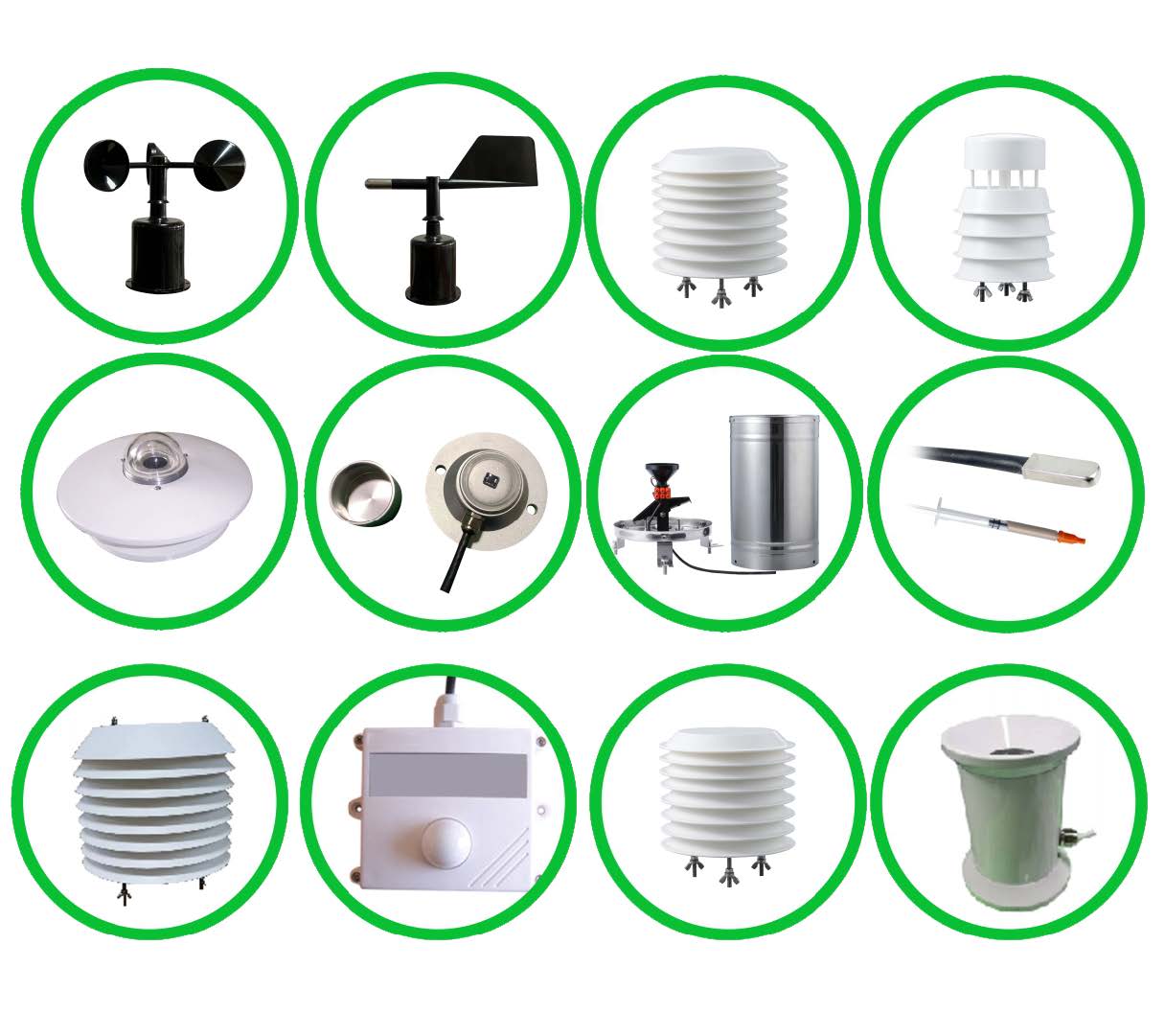
Check whether the manufacturer can configure sensor combinations rather than only one fixed model.
Confirm RS485, Modbus register documents, baud rate and data units.
Evaluate bracket height, mounting structure, enclosure protection and lightning protection.
Select power supply according to site conditions: AC, DC, solar or hybrid.
Confirm whether the platform supports alarms, GIS display, export and user management.
For dust and noise projects, check maintenance requirements and calibration expectations.
For remote stations, review communication stability and local data storage during network outages.
Request installation drawings, wiring diagrams and commissioning forms before shipment.
The device should be installed with enough clearance for representative wind and rainfall measurement. Avoid trees, buildings, exhaust outlets and strong reflected heat sources. For multi-parameter stations, each sensor should be mounted according to its measurement principle rather than forced into one visually compact position.
Platform data should use clear names, units and sensor locations. If the project includes multiple stations, naming conventions and map coordinates should be defined before commissioning to prevent later confusion.
When evaluating a micro meteorological online monitoring device manufacturer, buyers should ask whether the station can be configured by project type. Agriculture, highway, hydrology and industrial park monitoring do not require the same sensor list.
A serious quotation should explain bracket height, enclosure protection, power consumption, optional solar supply, communication method and platform functions. These items are often more important to project success than the appearance of the station.
For online monitoring, data continuity matters. The acquisition terminal should handle temporary network interruption, and the platform should make station status visible so the operator can distinguish a real environmental event from a device communication fault.
The original monitoring device scope includes 3 m or 5 m carbon steel supports, AC, DC or solar power, IP65 protection, lightning protection and several communication choices. These are not optional decorations. They determine whether the station can survive outdoor installation and whether the owner can keep using the data after the first storm season.
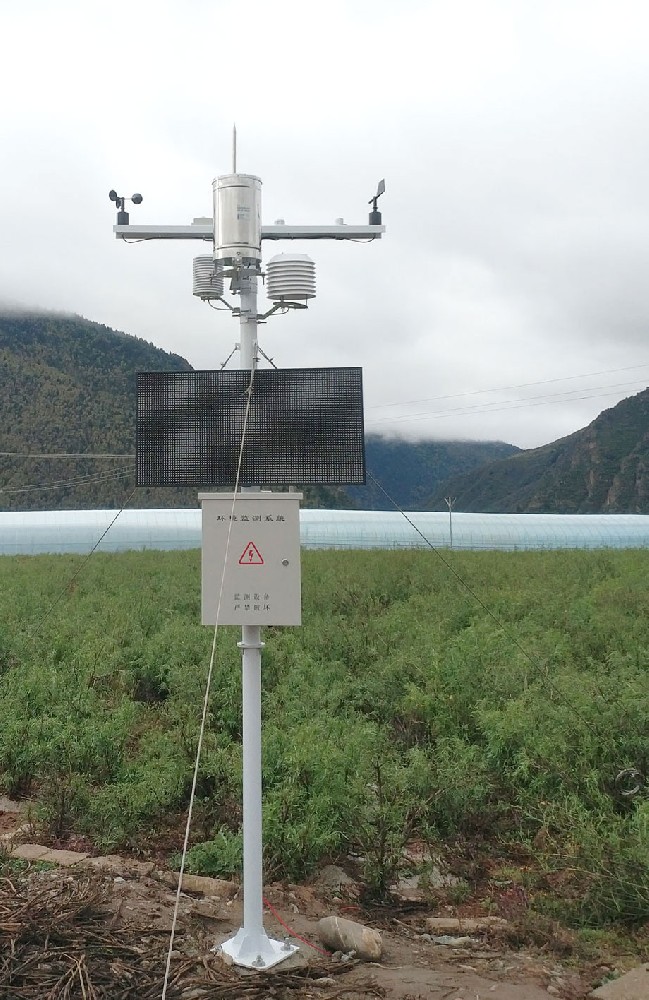
The sensor list matches the project objective instead of copying a generic station configuration.
RS485 address, Modbus registers, baud rate and units are provided in a protocol document.
Power consumption is checked against solar panel and battery design if the site is remote.
Bracket height, foundation method, grounding and lightning protection are included in the site plan.
Platform functions include station status, alarm history, trend curves and exportable records.
Spare parts and maintenance intervals are defined for rainfall, dust and noise modules where used.
Adding dust, noise or radiation modules without a decision or reporting requirement.
Choosing solar power before calculating power consumption and local sunlight conditions.
Ignoring station status data, which makes communication failure look like normal weather.
Buying hardware without confirming platform fields, alarms and export format.
A manufacturer review should include not only sensor specifications but also response to site drawings, installation constraints and after-sales documentation. These factors often determine whether the station can operate steadily after the first rainy or windy season.
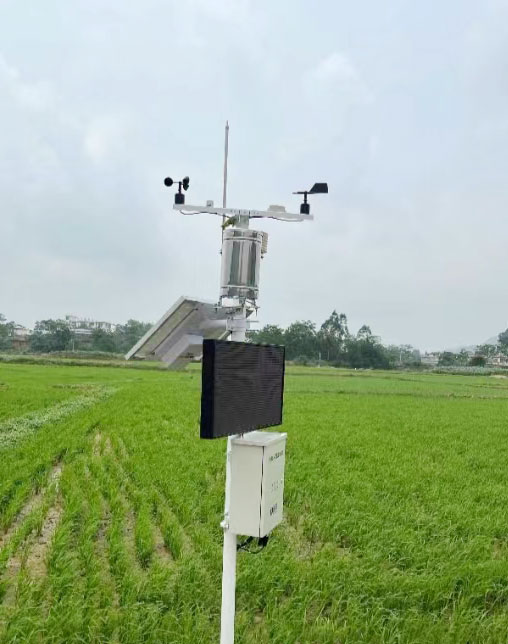
A: It is a modular station that collects local weather and environmental parameters and transmits them to a controller or monitoring platform.
A: Common parameters include wind speed, wind direction, temperature, humidity, pressure, rainfall, illuminance, radiation, PM2.5, PM10, noise and soil data depending on configuration.
A: Yes, RS485 and standard Modbus communication are available for integration with gateways, controllers and monitoring platforms.
A: Sites with stable power can use DC or AC cabinet supply. Remote sites often use solar power with battery backup after calculating power consumption.
A: Compare sensor range, protocol documentation, enclosure quality, platform capability, installation support, maintenance guidance and project references.
A: Yes, the modular architecture allows different sensor combinations for agriculture, hydrology, transport, industrial parks and research sites.
A: Bracket stability, lightning protection, cable protection, waterproof enclosure, representative sensor height and reliable communication are important.
A: Data can support alarms, trend analysis, reports, equipment control references and post-event review.
A: No. They should be included when the project has environmental air quality or noise monitoring requirements. Otherwise they add cost and maintenance work.
A: NiuBoL can provide configurable micro meteorological monitoring devices, sensors and platform-related options for different project applications.
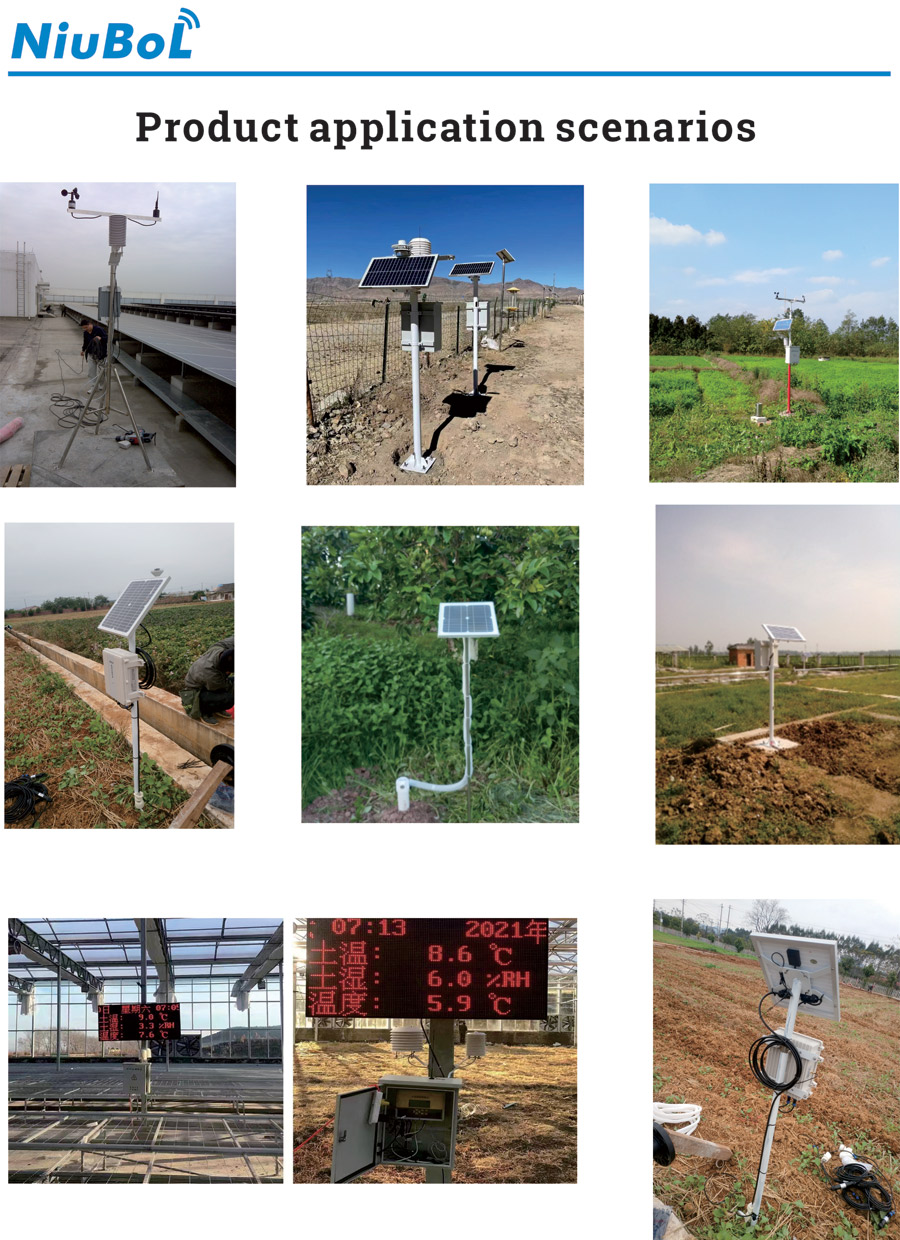
A micro meteorological online monitoring device should be selected as a system product: sensors, power, mounting, communication and platform must match the project environment. NiuBoL provides configurable monitoring equipment with RS485 and Modbus compatibility for agricultural, hydrological, environmental and industrial monitoring applications.
Prev:Agricultural Weather Station for Meteorological Disaster Preparedness and Farm Risk Decisions
Next:Water Environment Monitoring System Guide for Water Quality, Level, Flow and Platform Integration
Related recommendations
Sensors & Weather Stations Catalog
 Agriculture Sensors and Weather Stations Catalog-NiuBoL.pdf
Weather Stations Catalog-NiuBoL.pdf
Agriculture Sensors Catalog-NiuBoL.pdf
Water Quality Sensor Catalog-NiuBoL.pdf
Related products
 Combined air temperature and relative humidity sensor
 TDR Soil Moisture & Temperature Sensor for irrigation| RS485 |4-20mA| NBL-S-THR
 Soil pH sensor RS485 soil Testing instrument soil ph meter for agriculture |NBL-S-PH
 Wind Speed sensor Output Modbus/RS485/Analog/0-5V/4-20mA
 Tipping bucket rain gauge for weather monitoring auto rainfall sensor RS485/Outdoor/stainless steel
 Pyranometer Solar Radiation Sensor 4-20mA/RS485

Screenshot, WhatsApp to identify the QR code
WhatsApp number:+8615367865107
(Click on WhatsApp to copy and add friends)

