





— Blogs —
—Products—
 Consumer hotline +8618073152920
 WhatsApp:+8615367865107
Address:Room 102, District D, Houhu Industrial Park, Yuelu District, Changsha City, Hunan Province, China
Product knowledge
Time:2026-06-24 11:45:12 Popularity:207
Agricultural production still depends heavily on weather conditions. Heavy rain, flooding, long cloudy periods, drought and frost can change crop yield, greenhouse safety, irrigation demand and disease pressure. An agricultural weather station gives farms, cooperatives and agricultural service projects a continuous source of local weather data for early response.
The procurement value of a farm weather station is not limited to measuring wind speed or rainfall. Its value is in connecting meteorological data with irrigation scheduling, drainage preparation, greenhouse safety, disease risk assessment and field operation decisions. This is why project buyers should define the decision they want to improve before selecting sensor quantities.
Heavy rainfall can create waterlogging in low-lying farmland and damage aquaculture ponds or greenhouse structures. Long rainy and low-light periods can increase crop disease risk and keep soil too wet for field operations. Drought reduces soil moisture, reservoir storage and crop growth. Frost injury can damage autumn crops and sensitive growth stages when temperature falls below freezing.
An agricultural weather station supports early warning because it measures conditions at the field site rather than relying only on distant regional forecasts. Local rainfall, wind, air temperature, humidity and soil moisture can differ significantly over short distances. For large farms, this local data helps managers decide when to irrigate, drain, protect greenhouse structures or delay field work.
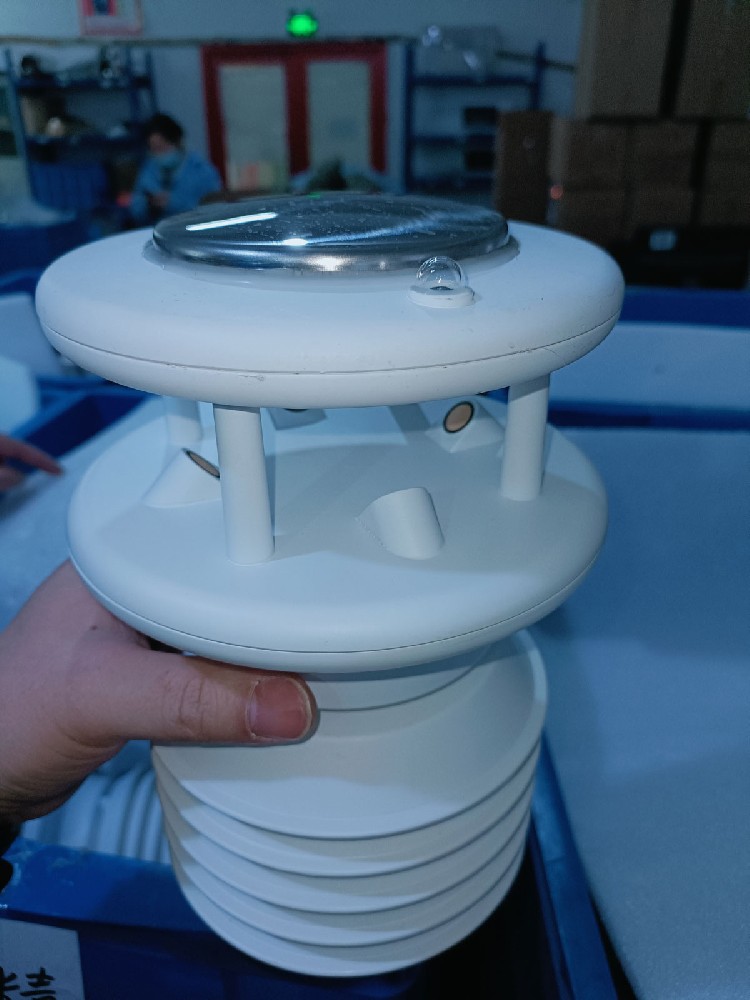
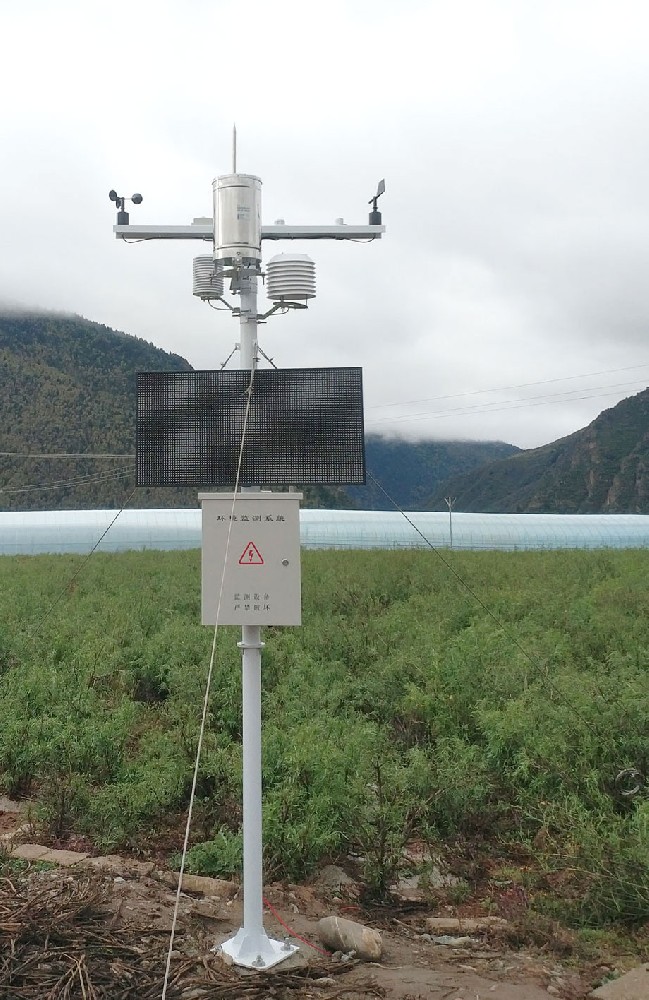
The agricultural weather station is the field sensing and data acquisition node. It normally includes weather sensors, a data logger or collector, power supply, mounting bracket and monitoring software. In a farm IoT architecture, the station can upload data to a cloud platform through 4G or connect to local controllers through RS485 or other interfaces.
Common sensors include wind direction, wind speed, air temperature, air humidity, barometric pressure, rainfall, soil temperature and soil moisture. For more complex projects, illumination, solar radiation, leaf wetness, CO2, evaporation, water level or video monitoring can also be added.
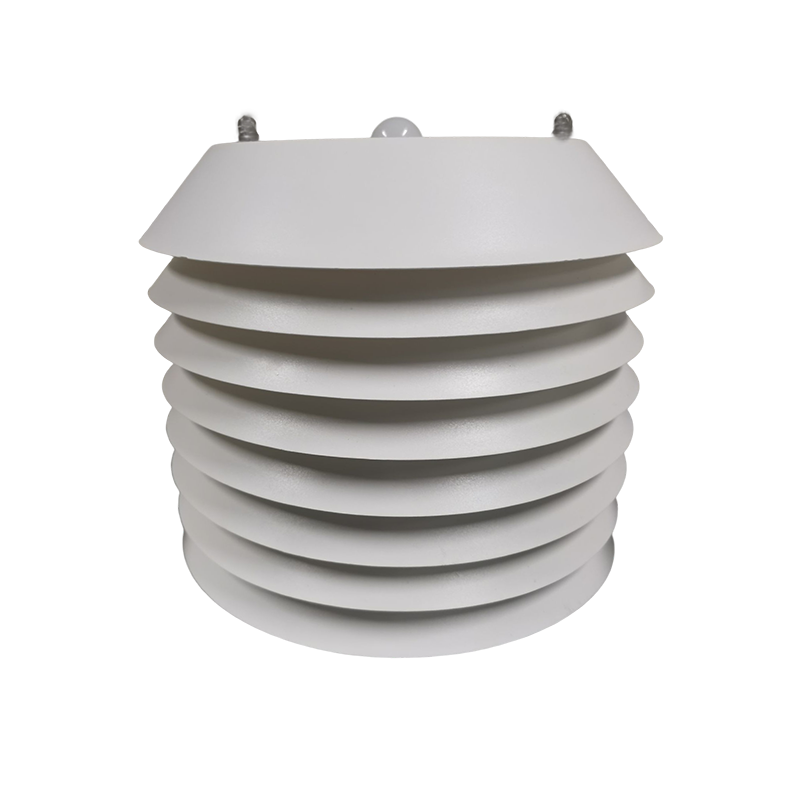
RS485 and Modbus RTU compatibility are important when the agricultural weather station is part of a larger farm monitoring system. A Modbus weather station can connect to irrigation controllers, gateways, PLCs or farm management platforms. This allows rainfall and soil moisture data to influence irrigation or warning logic.
For remote farms, 4G or other wireless upload may be required. For on-site cabinet integration, RS485 provides stable data transmission between the sensor suite and the data logger. Buyers should confirm update interval, storage capacity, communication method and platform access before purchase.
| Parameter | Reference Value | Engineering Note |
|---|---|---|
| Power supply | DC 12-24V, optional solar power system for remote sites | Select according to site power availability |
| Communication | RS485 / Modbus RTU, optional 4G upload through data logger | Supports local integration and remote platform monitoring |
| Wind speed | 0 to 60 m/s, typical accuracy ±0.3 m/s or ±3%FS | Used for storm warning, spraying decisions and greenhouse safety |
| Wind direction | 0 to 359° or 0 to 360° | Supports field operation and weather analysis |
| Air temperature | -40 to 80℃, typical accuracy ±0.5℃ | Used for frost, heat stress and crop growth analysis |
| Relative humidity | 0 to 100%RH, typical accuracy ±5%RH | Important for disease pressure and greenhouse climate assessment |
| Barometric pressure | 10 to 1100 hPa, typical accuracy ±1.5 hPa | Supports meteorological trend observation |
| Rainfall | Tipping bucket rain gauge, 0.2 mm or 0.01 mm resolution depending on model | Used for flood, drainage and irrigation planning |
| Soil temperature and moisture | Soil temperature typically -40 to 80℃; moisture 0 to 100% | Supports drought and waterlogging evaluation |
| Protection level | IP65 for outdoor station components; IP68 for buried soil probes | Select protection based on exposure and burial depth |
Site challenge: Heavy rainfall can flood low farmland and affect greenhouse foundations or aquaculture ponds.
System integration scheme: Use rainfall, soil moisture and optional water level monitoring with platform alarms.
User value: Managers can prepare drainage pumps, open channels or delay field operations earlier.
Site challenge: Long dry periods reduce soil moisture and crop growth while increasing irrigation pressure.
System integration scheme: Combine rainfall records, soil moisture probes and weather station data with irrigation scheduling.
User value: The farm can irrigate based on local deficit instead of a fixed calendar.
Site challenge: Sensitive crops may be damaged when temperatures fall below safe limits during critical growth stages.
System integration scheme: Configure air temperature alarms and record low-temperature duration.
User value: Growers can prepare frost protection, greenhouse heating or operation changes in time.
Site challenge: Continuous cloudy, rainy and high-humidity conditions can promote disease development.
System integration scheme: Use temperature, humidity, rainfall and leaf wetness references for disease pressure decisions.
User value: Agronomists can adjust inspection and spraying plans with better timing.
Site challenge: Strong wind and heavy rainfall can damage greenhouse structures and film.
System integration scheme: Install wind and rainfall monitoring near greenhouse parks and connect alarms to managers.
User value: The owner gains earlier warning for reinforcement, vent closure or emergency inspection.
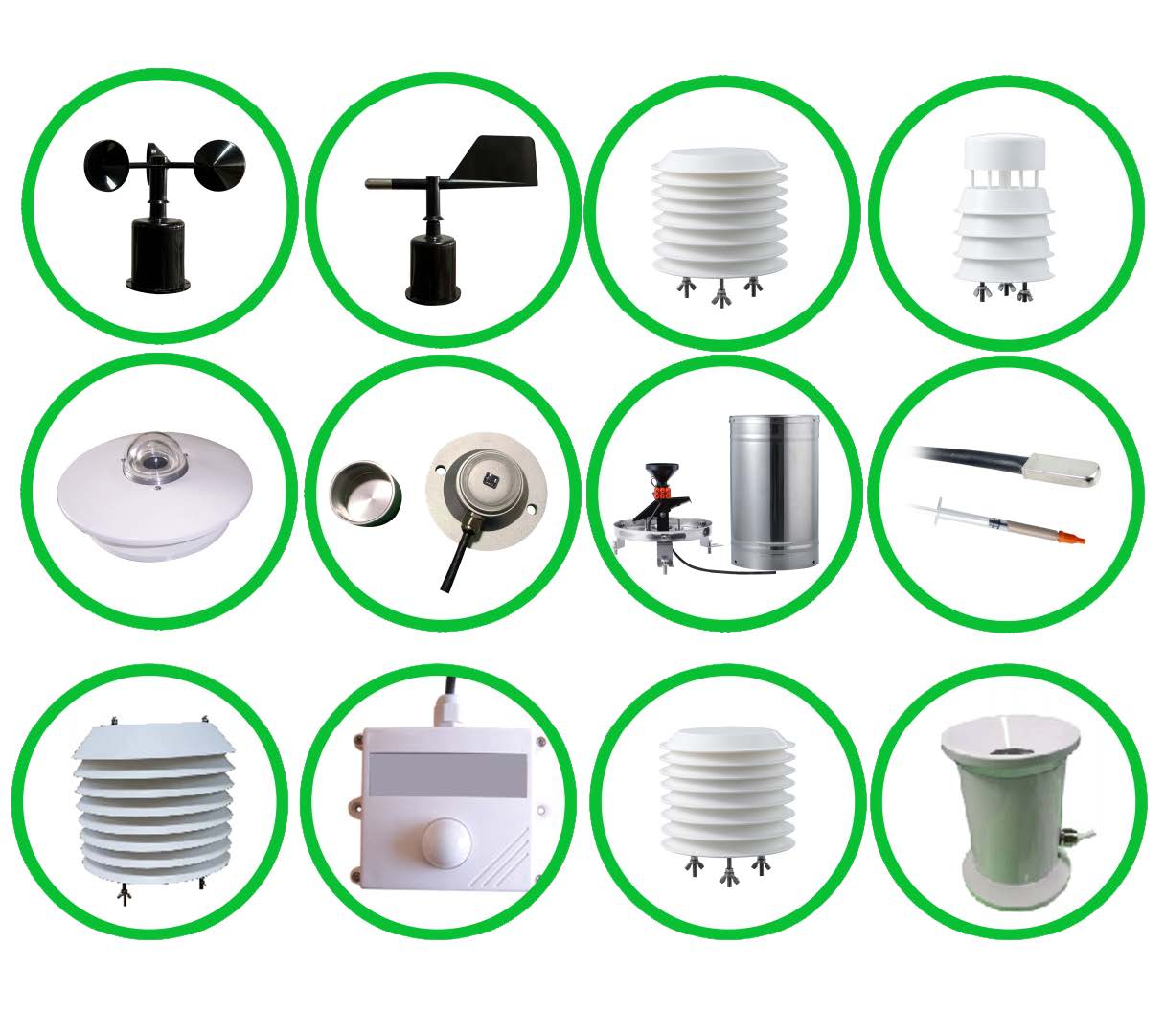
Define whether the station is for crop management, disaster warning, irrigation control or research data.
Select sensor elements according to the risk: rainfall for flooding, soil moisture for drought, temperature for frost.
Use RS485 Modbus when data must enter irrigation controllers or local gateways.
Use solar power and wireless upload when the station is far from a control room.
Confirm bracket height, foundation method and lightning protection for open-field installation.
Specify platform alarms, data export and user permissions in the project scope.
For large farms, consider multiple stations to represent different terrain and soil areas.
Request calibration and maintenance instructions for rainfall, wind and soil sensors.
Weather station data must be interpreted with site context. A station installed near a building, tree line or greenhouse wall may not represent open-field wind or rainfall. The installation point should avoid local obstructions and should be recorded with coordinates and photos.
For disaster preparedness, alarm thresholds should be practical and action-oriented. A useful alarm should tell the operator what to check or what decision to consider. Otherwise, frequent low-value alarms may be ignored during the season.
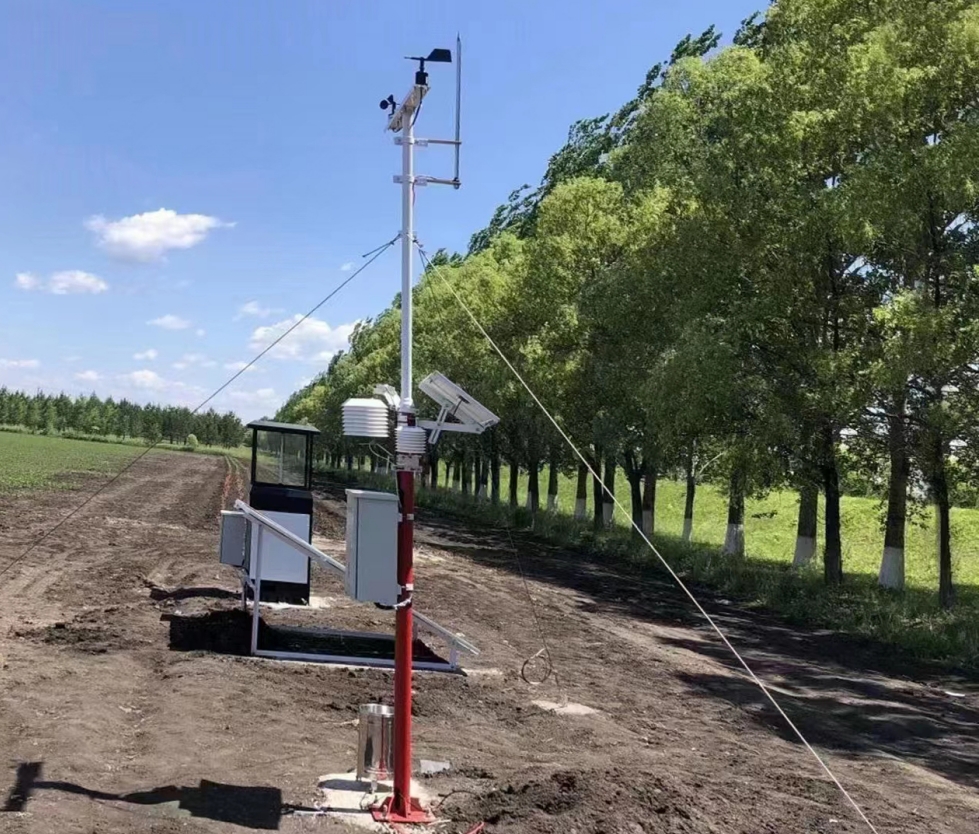
A farm weather station becomes valuable when its data is tied to clear response rules. Rainfall data should connect with drainage checks, wind speed with spraying and greenhouse safety, low temperature with frost protection, and soil moisture with irrigation planning.
The station should be installed in a representative field location rather than a convenient corner near buildings or trees. Installation photos, coordinates and sensor height should be saved because these details explain why one station may read differently from another site.
For disaster preparedness, alarm thresholds should avoid both extremes: too loose to be useful and too sensitive to be ignored. The owner should review thresholds after the first season and adjust them according to local crop risk.
Different disasters require different data combinations. Flood risk is not only rainfall; it also depends on drainage, water level and low-lying fields. Drought risk is not only high temperature; it depends on rainfall deficit and soil moisture. Frost risk is not only a daily minimum temperature; the duration of low temperature and crop stage also matter.
Rainfall alarms are connected with drainage, pump inspection or field access decisions.
Wind speed thresholds are linked to spraying safety, greenhouse vent position and structural inspection.
Low-temperature alarms are set according to crop stage rather than one universal frost value.
Soil moisture sensors are installed in representative root-zone depth and soil type.
Station position avoids buildings, trees, irrigation spray and local heat sources.
Seasonal review compares warning records with actual crop or facility damage.
Selecting only air sensors when the real risk is drought or soil waterlogging.
Installing the station near trees or buildings and then using the data as open-field reference.
Using default alarm thresholds that do not match local crop stages.
Forgetting data export, which weakens seasonal comparison and insurance or project reporting.
The most successful weather station projects usually begin with a short risk list. When the farm writes down the main risks such as frost, flood, drought or disease pressure, the sensor configuration and alarm plan become much easier to justify.
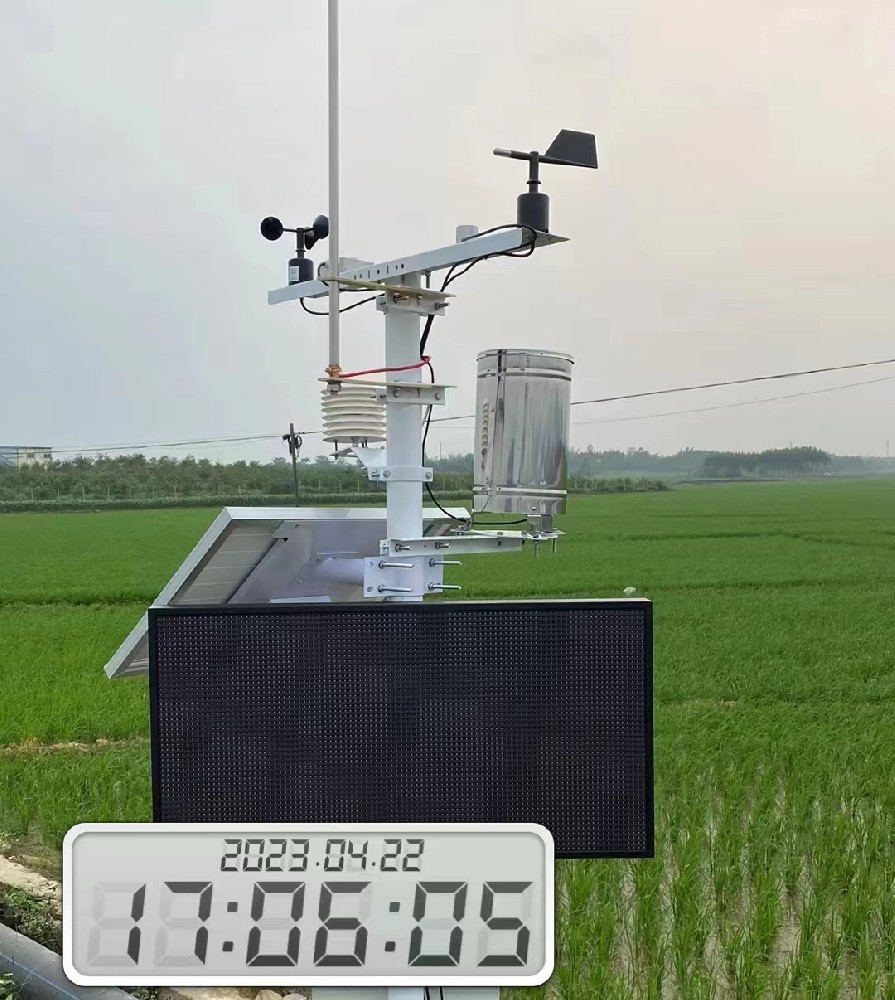
A: It is an automatic monitoring station that measures local weather and sometimes soil conditions for crop management, disaster warning and agricultural service decisions.
A: Rainfall, wind speed, wind direction, air temperature, humidity and soil moisture are the core sensors. Additional water level or leaf wetness sensors can be added for specific risks.
A: Public forecasts are regional, while farm risk decisions depend on local rainfall, wind, soil moisture and microclimate. A local station provides site-specific records.
A: Yes, RS485 or Modbus data can be read by compatible controllers or gateways. Integration logic should be designed before installation.
A: Quantity depends on farm size, terrain, crop distribution and risk zones. One station may not represent areas with different elevation, soil or exposure.
A: Remote farms often use solar power with 4G upload. Sites with local cabinets can use RS485 data acquisition.
A: Buyers should request parameter sheets, wiring diagrams, communication protocols, installation drawings, maintenance guidance and platform instructions.
A: It records local air temperature and alarm thresholds, helping operators prepare heating, covers or other protection measures during sensitive periods.
A: It combines rainfall records and soil moisture trends so irrigation decisions can reflect actual field conditions.
A: NiuBoL provides agricultural weather station components and monitoring solutions that can be configured for farm, greenhouse and disaster warning applications.
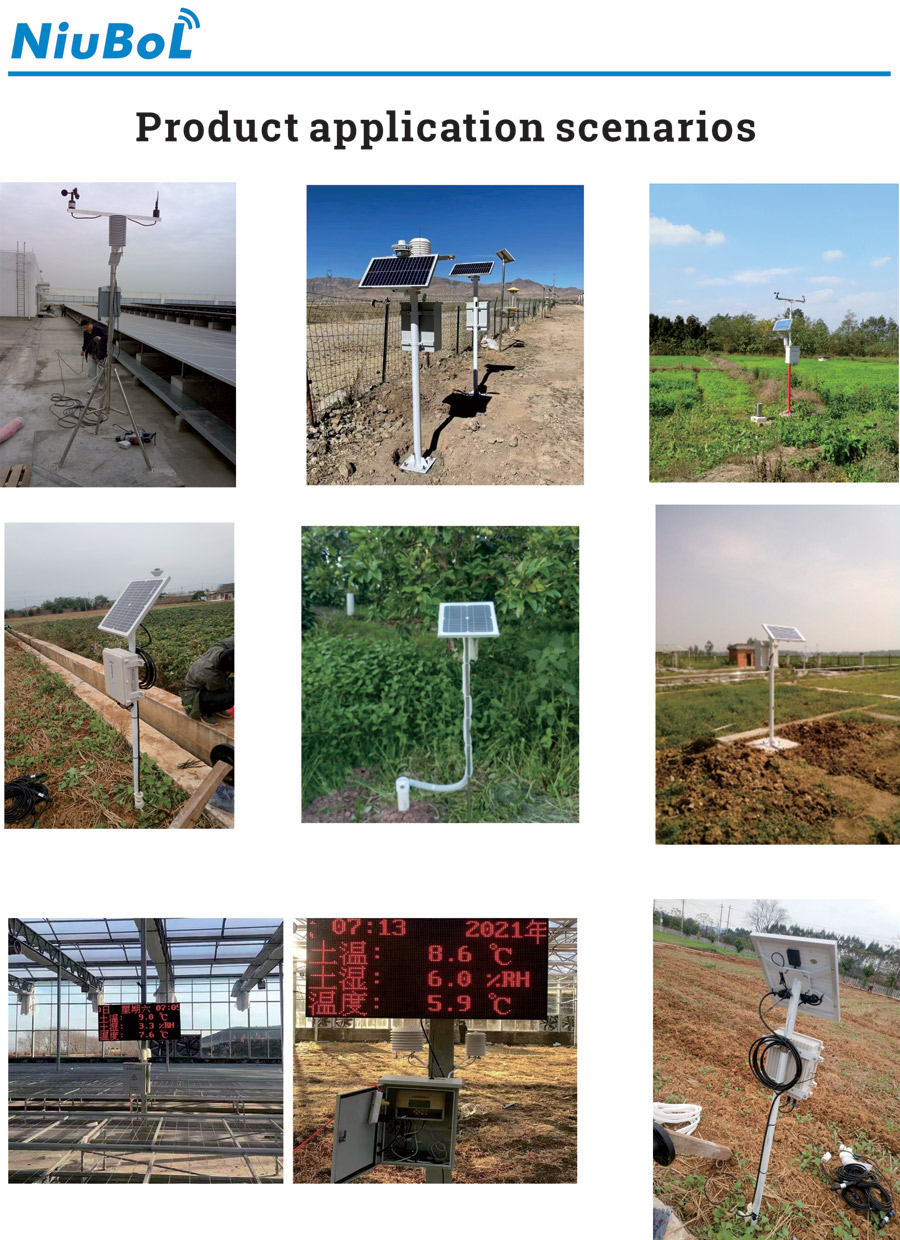
An agricultural weather station helps farms move from reactive weather response to measured field management. For buyers, the key is to select sensors according to actual risks, ensure communication compatibility and define useful alarm logic. NiuBoL weather station solutions can support crop risk management, irrigation planning and agricultural disaster preparedness with expandable sensor configurations.
Prev:Smart Multi-Span Greenhouse System Design Guide for Sensors, Control and Procurement
Next:Micro Meteorological Online Monitoring Device Manufacturer Guide for Modbus Weather Systems
Related recommendations
Sensors & Weather Stations Catalog
 Agriculture Sensors and Weather Stations Catalog-NiuBoL.pdf
Weather Stations Catalog-NiuBoL.pdf
Agriculture Sensors Catalog-NiuBoL.pdf
Water Quality Sensor Catalog-NiuBoL.pdf
Related products
 Combined air temperature and relative humidity sensor
 TDR Soil Moisture & Temperature Sensor for irrigation| RS485 |4-20mA| NBL-S-THR
 Soil pH sensor RS485 soil Testing instrument soil ph meter for agriculture |NBL-S-PH
 Wind Speed sensor Output Modbus/RS485/Analog/0-5V/4-20mA
 Tipping bucket rain gauge for weather monitoring auto rainfall sensor RS485/Outdoor/stainless steel
 Pyranometer Solar Radiation Sensor 4-20mA/RS485

Screenshot, WhatsApp to identify the QR code
WhatsApp number:+8615367865107
(Click on WhatsApp to copy and add friends)

