





— Blogs —
—Products—
 Consumer hotline +8618073152920
 WhatsApp:+8615367865107
Address:Room 102, District D, Houhu Industrial Park, Yuelu District, Changsha City, Hunan Province, China
Product knowledge
Time:2026-06-14 18:56:36 Popularity:269
An orchard smart irrigation system is an engineering solution that connects soil moisture sensing, weather monitoring, fertigation equipment, pipelines, valves, and a control platform. For contractors and agricultural IoT providers, the goal is not simply to turn water on and off; it is to deliver measurable water-saving performance while maintaining crop growth conditions through data-based scheduling.

Fruit trees have different water demands during leaf growth, flower bud differentiation, fruit expansion, and post-harvest recovery. Excess water during sensitive flowering stages can affect crop performance, while insufficient water during fruit expansion can restrict growth. A fixed timer cannot reflect soil, weather, and crop-stage variability.
By monitoring soil moisture and temperature, the irrigation system can determine whether the root zone requires water and how much irrigation should be applied. When weather data is added, the platform can adjust irrigation strategy according to rainfall, wind, humidity, temperature, and evapotranspiration conditions.
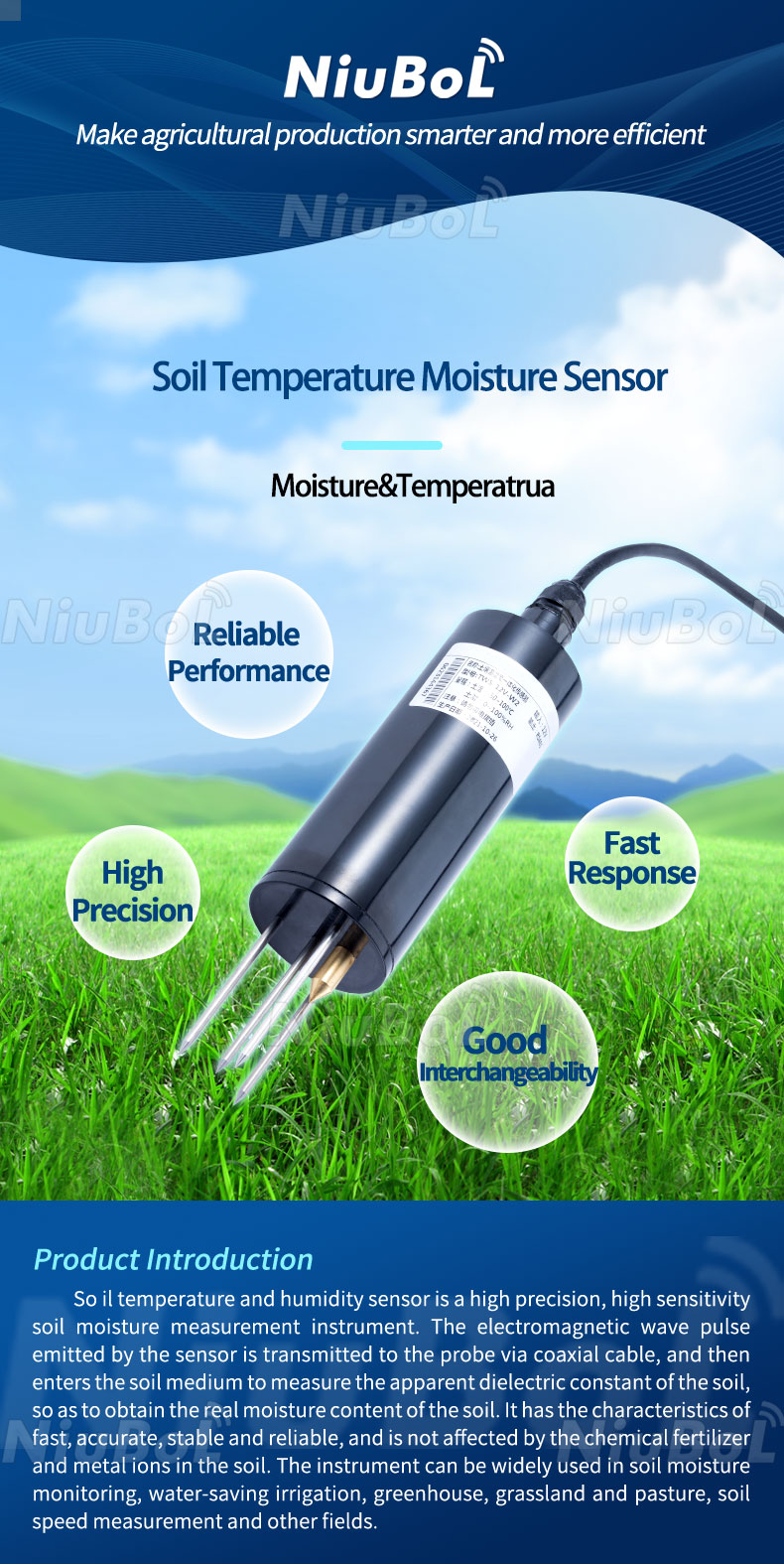
A typical orchard solution includes NiuBoL soil temperature and moisture sensors, a weather monitoring station, data collector, gateway, valve controller, pressure pipeline, fertigation unit, and cloud management platform. RS485 MODBUS sensors can be connected to field RTUs or smart controllers, while 4G or Ethernet communication enables remote management.
For larger orchards, zoning is important. Sensor points should represent slope, soil texture, irrigation block, tree age, and crop variety. Each irrigation valve group should be linked to the data that best represents its root-zone condition, avoiding over-irrigation in wet zones and under-irrigation in dry zones.
| Component | Function | Engineering Note |
|---|---|---|
| Soil Temperature Moisture Sensor | Root-zone water and temperature monitoring | Install by representative irrigation zones and crop root depth |
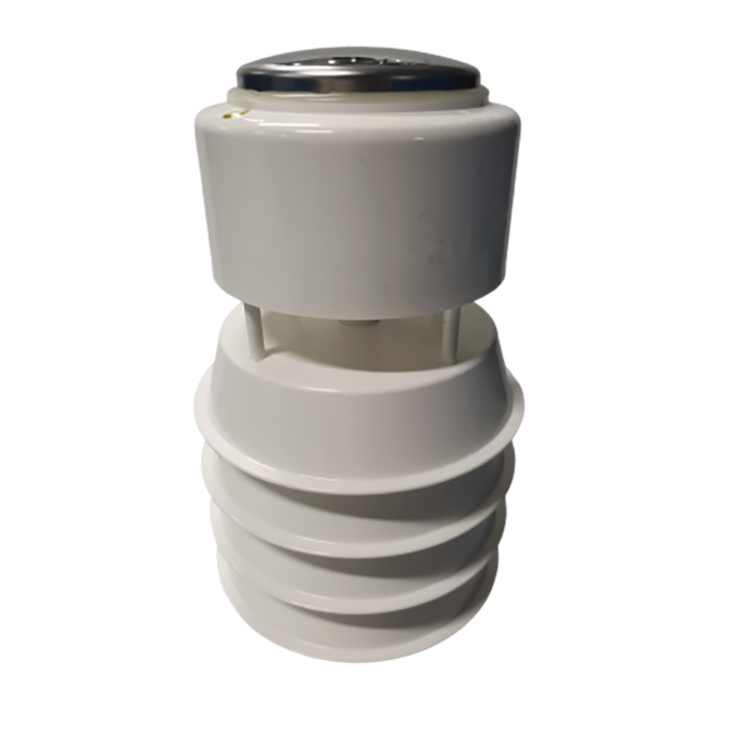
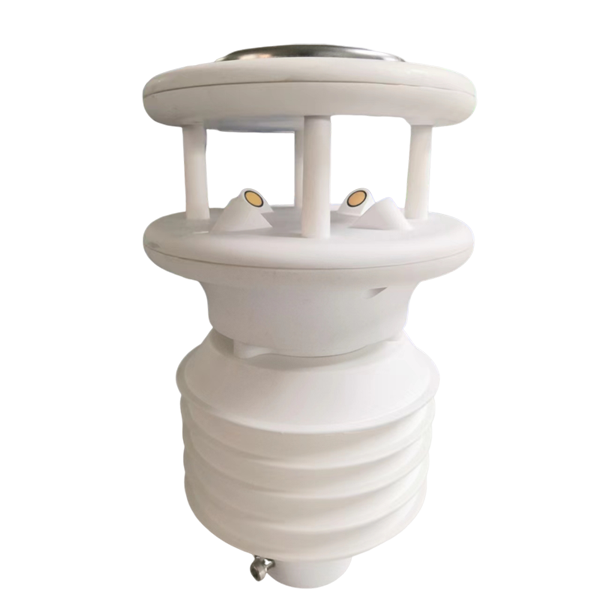
| Weather Station | Rainfall, wind, temperature, humidity, pressure, optional radiation | Supports irrigation adjustment and weather-risk analysis |
| RTU / Data Logger | Field acquisition and local logic | Confirm RS485 channels and MODBUS register capacity |
| Valve Controller | Automated valve operation | Match valve groups with irrigation zones |
| Fertigation Unit | Water and fertilizer delivery | Coordinate flow, pressure, and dosing safety |
| Cloud Platform | Remote monitoring and reports | Useful for operation, maintenance, and acceptance |
| Parameter | Specification | Use in Irrigation |
|---|---|---|
| Model | NBL-S-THR soil temperature moisture sensor | Soil moisture sensor for orchard smart irrigation system integration |
| Soil Moisture Range | 0-100%RH | Root-zone water status |
| Soil Temperature Range | -50 to 100℃ | Soil thermal condition for crop growth |
| Power Supply | DC 12-24V | Compatible with field control cabinets |
| Output | RS485, 4-20mA, 0-5V options | Supports different controller architectures |
| Power Consumption | Approx. 0.3W | Suitable for remote low-power deployment |
| Protection Class | IP68 | Designed for buried soil applications |
For high-standard farmland construction, the system can provide an automated water-saving irrigation layer with data records for management and acceptance. For orchard operators, it can reduce manual inspection workload, improve irrigation consistency, and help combine water and fertilizer delivery through pressure pipelines.
For IoT solution providers, orchard irrigation data can be integrated into crop dashboards, alarm systems, water-use reports, and farm operation records. This supports commercial service models such as remote operation, agronomic advisory, and maintenance contracts.
Select soil moisture sensors based on soil type, required accuracy, output interface, installation depth, and protection class. For orchard root-zone monitoring, multiple depths may be required if the project owner wants to understand vertical water movement after irrigation.
Select the weather station according to the irrigation model. Basic irrigation scheduling may need temperature, humidity, wind, rainfall, and pressure. More advanced evapotranspiration models may require solar radiation or illuminance. For remote orchards, confirm power supply, communication coverage, gateway capacity, and lightning protection.
The controller logic should avoid single-threshold decisions without hysteresis, delay, or rainfall override. Practical irrigation programs should define lower and upper moisture limits, crop-stage coefficients, valve open time, pump protection, pressure monitoring, and manual override.
Commissioning should include sensor calibration check, valve response test, data upload verification, irrigation-zone mapping, alarm test, and acceptance reporting. All sensor data should be stored with time stamps and engineering units so project owners can audit water-saving performance over the season.
An orchard irrigation project should be divided by valve group, root-zone condition, crop stage, and hydraulic layout. A soil moisture sensor does not control irrigation by itself; it provides the data that a controller uses together with rainfall, pump status, valve status, and agronomic thresholds.
NBL-S-THR soil temperature moisture sensor data can be used to define lower and upper moisture limits for each irrigation zone. The controller should include delay time, hysteresis, rainfall lockout, manual override, and pump protection so the system behaves reliably under changing field conditions.
For orchards with fertigation, the control logic should consider water volume, fertilizer injection, pressure stability, and flushing time. This prevents uneven delivery and keeps the root-zone data tied to actual irrigation actions.
A complete delivery package should include sensor layout, valve-zone map, controller wiring diagram, MODBUS register configuration, irrigation program settings, alarm rules, and seasonal adjustment instructions. These documents make the system easier to operate after handover.
During commissioning, engineers should test sensor readings before and after irrigation, verify valve response, check flow or pressure feedback if available, and confirm that data records match actual field operations.
In the early leaf growth stage, water demand can rise quickly as canopy area expands. During flower bud differentiation, excessive water may be undesirable for some orchard management strategies. During fruit expansion, high temperature and canopy development can increase water demand. A smart irrigation system should allow the owner to adjust thresholds by crop stage instead of using one fixed setting all year.
NBL-S-THR soil temperature moisture sensor data helps the controller understand the root-zone condition, while weather data provides rainfall, humidity, temperature, and wind context. Together, these records support irrigation timing, irrigation volume adjustment, and post-irrigation verification.
For commercial orchard projects, the system should record irrigation events. When sensor data and valve actions are stored together, the owner can review whether water delivery matched the crop stage and field condition.
A smart irrigation project depends on both data and hydraulics. Even if the sensor data is accurate, poor valve grouping, unstable pressure, blocked filters, or mismatched pump capacity can weaken the result. Contractors should coordinate sensor layout with pipeline layout and valve-zone design.
Electrical design is also important. Field controllers, gateways, solenoid valves, pumps, sensors, and communication modules should be protected from moisture, voltage fluctuation, and lightning risk. Cable routes should be labeled and documented for maintenance.
A practical irrigation rule can include a lower moisture threshold, an upper stop threshold, a minimum interval between irrigation events, rainfall delay, and manual override. This prevents repeated short cycles and gives managers a way to intervene during unusual weather or maintenance work.
The owner should also define alarm rules. Examples include very low soil moisture, no sensor data, valve command without expected moisture response, and long communication interruption. These alarms help the project move from passive monitoring to active management.
For long-term service, the system should be checked after seasonal changes, pruning, fertilization, and pipeline maintenance because orchard field conditions can change during the year.
Many orchard projects are not built from zero. A contractor may need to upgrade an existing pipeline and pump system with sensors, controllers, and a platform. In this case, the first step is to map current valve zones, pipe pressure, water source, filter condition, and manual operation habits.
After the survey, NBL-S-THR soil temperature moisture sensor points can be installed in representative root zones. Weather data can be added to adjust irrigation after rainfall or during high-temperature periods. The platform should record both sensor changes and irrigation events so the owner can evaluate whether the upgrade improves control.
A staged upgrade is often practical. The contractor can begin with one or two representative zones, verify thresholds and valve response, then expand to the rest of the orchard after the owner confirms the control logic.
Automated irrigation should never depend on a single condition without protection logic. Sensor failure, blocked filters, pump faults, communication interruption, or valve failure can all affect the result. The controller should therefore include manual override, maximum runtime, minimum interval, and fault alarm settings.
For orchards, the field environment changes as trees grow and canopy density increases. Sensor placement should be reviewed periodically to confirm that the selected point still represents the irrigation zone. If the orchard is expanded, the valve-zone map and sensor map should be updated together.
Operation records are also important. By comparing moisture curves with irrigation events, the owner can see whether water entered the root zone as expected and whether thresholds need adjustment during different crop stages.
Orchards often have differences in tree age, soil texture, slope, pipeline pressure, valve grouping, and crop stage. Zone-based control allows each area to follow its own moisture threshold and irrigation schedule. This avoids applying one uniform rule to blocks with different water demand or hydraulic conditions.
NBL-S-THR soil temperature moisture sensor provides root-zone data that helps the controller understand whether the soil is dry, wet, or recovering after irrigation. When combined with valve records and weather data, it supports more precise irrigation timing and helps verify whether water actually reached the root zone.
Thresholds should be adjusted according to crop stage, root depth, soil type, irrigation method, and management objective. Fruit expansion may require more active moisture control, while other stages may require more cautious irrigation. Contractors should support initial threshold setup and later seasonal adjustment based on field observation.
Yes. Rainfall can delay irrigation, high temperature can increase water demand, humidity can influence crop disease risk, and wind can affect field operations. Weather data should not replace soil data; it should provide context that helps the irrigation controller and farm manager make better decisions.
The contractor should survey valve zones, pump capacity, pipeline pressure, filter condition, water source, cable routes, controller cabinet space, and current manual operation habits. Sensor layout should be designed after understanding the hydraulic system, not before.
The system should include manual override, maximum runtime, minimum interval, communication fault alarm, sensor fault alarm, and valve response verification where possible. These protections reduce the risk of over-irrigation, under-irrigation, or uncontrolled operation if a sensor, valve, pump, or gateway fails.
Fertigation can be coordinated with irrigation events when pipeline pressure, injection timing, flushing time, and dosing safety are considered. Soil moisture data helps determine irrigation need, while operation records help the owner review whether water and fertilizer delivery matched the management plan.
Handover should include sensor layout, valve-zone map, controller wiring diagram, irrigation program settings, MODBUS configuration, alarm rules, maintenance notes, and seasonal adjustment guidance. These documents help the owner operate the system after installation.
A NiuBoL-based orchard smart irrigation system helps integrators combine soil sensing, weather monitoring, automated control, and data reporting into a practical water-saving solution. When sensor placement, control logic, communication, and acceptance data are planned correctly, the system supports precision irrigation, reduced labor, and scalable smart agriculture management.
Next:Ultrasonic Weather Station for Unattended Meteorological and Industrial IoT Monitoring Projects
Related recommendations
Sensors & Weather Stations Catalog
 Agriculture Sensors and Weather Stations Catalog-NiuBoL.pdf
Weather Stations Catalog-NiuBoL.pdf
Agriculture Sensors Catalog-NiuBoL.pdf
Water Quality Sensor Catalog-NiuBoL.pdf
Related products
 Combined air temperature and relative humidity sensor Soil Moisture Temperature sensor for irrigation|NBL-S-THR
 Soil pH sensor RS485 soil Testing instrument soil ph meter for agriculture |NBL-S-PH
 Wind Speed sensor Output Modbus/RS485/Analog/0-5V/4-20mA
 Tipping bucket rain gauge for weather monitoring auto rainfall sensor RS485/Outdoor/stainless steel
 Pyranometer Solar Radiation Sensor 4-20mA/RS485

Screenshot, WhatsApp to identify the QR code
WhatsApp number:+8615367865107
(Click on WhatsApp to copy and add friends)

