— Blogs —
—Products—
 Consumer hotline +8618073152920
 WhatsApp:+8615367865107
Address:Room 102, District D, Houhu Industrial Park, Yuelu District, Changsha City, Hunan Province, China
Product knowledge
Time:2026-07-16 10:08:09 Popularity:40
An outdoor automatic weather monitoring station is valuable only when its data remains continuous, accurate and usable. Maintenance, installation quality and system checks are therefore procurement issues, not afterthoughts.
Insufficient maintenance and installation problems can affect observation accuracy and cause abnormal data. For meteorological observation, outdoor monitoring stations support climate analysis, weather forecasting, weather services and research. This makes data quality part of the project's core value.
For buyers, the main question is not only what the station can measure. It is how the station will keep measuring correctly after storms, dust, leaves, insects, vibration, power interruptions and communication problems.
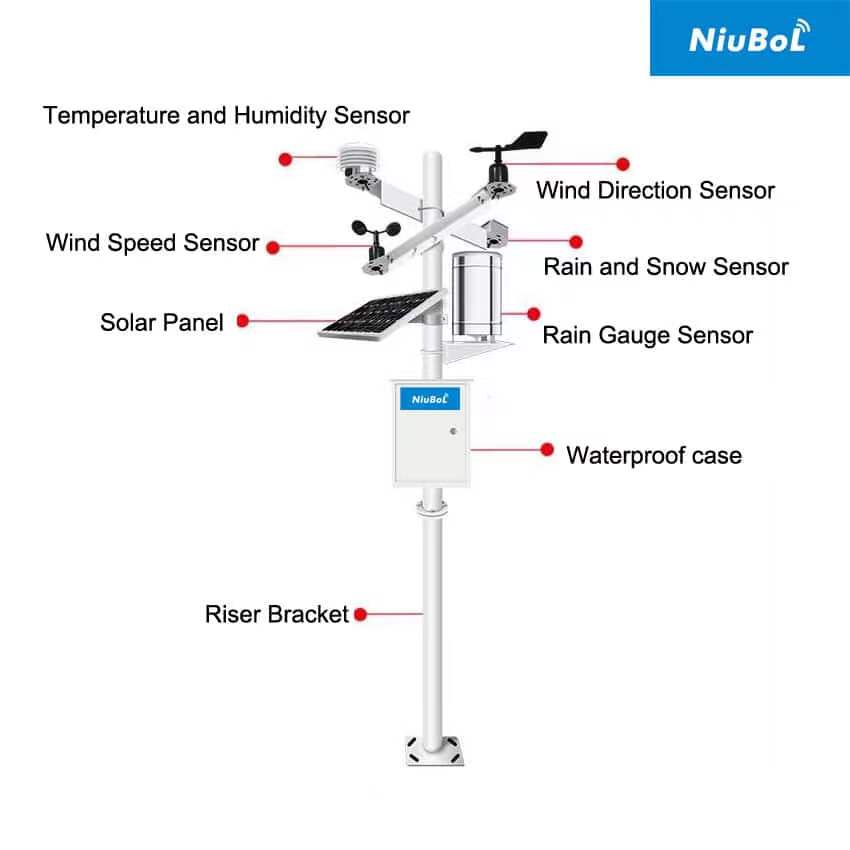
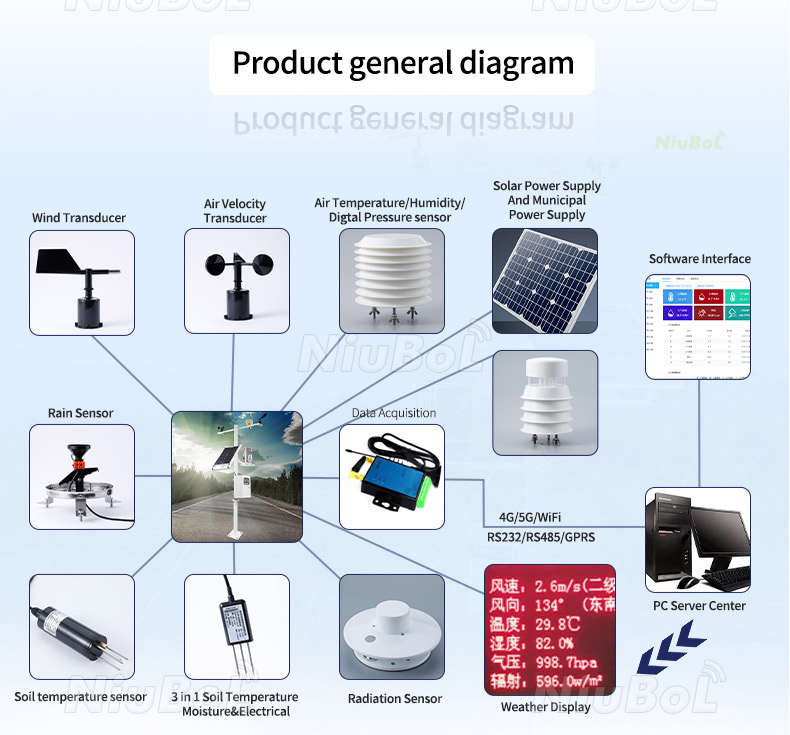
In a outdoor automatic weather monitoring station project, sensors are only the field layer. A complete system includes data acquisition, power supply, communication, platform software, alarm rules and maintenance responsibility. This matters because many failed projects have correct sensors but weak data handling, poor installation or no response workflow.
| Item | Common Configuration | Procurement Meaning |
|---|---|---|
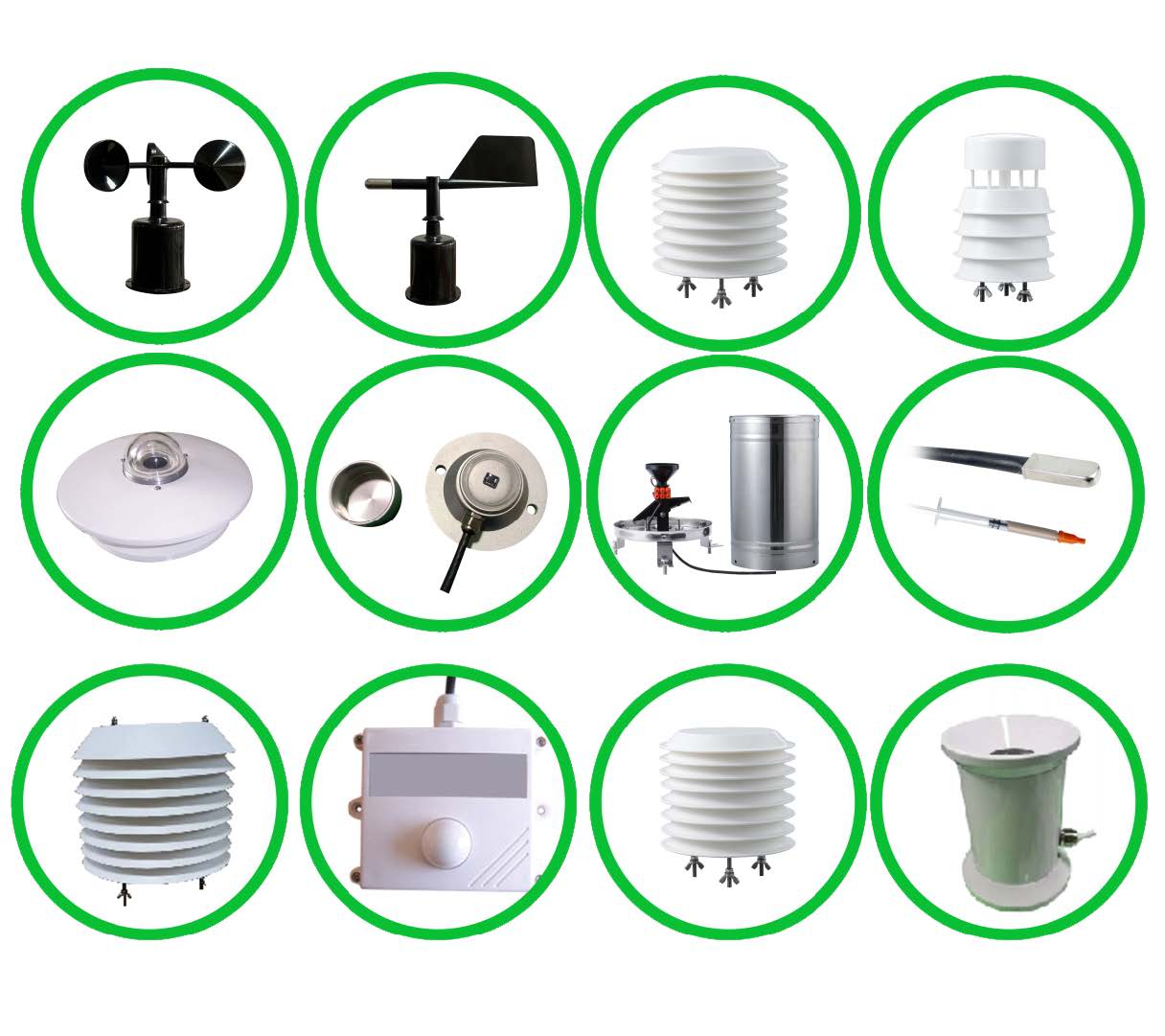
| Weather parameters | Air temperature, humidity, wind speed, wind direction, rainfall, pressure and solar radiation | Covers crop growth and disaster-risk decisions |
| Optional soil data | Soil temperature, soil moisture, soil pH and soil EC | Connects weather with root-zone conditions |
| Communication | RS485 / Modbus RTU at sensor layer; 4G, Ethernet or gateway upload at station layer | Supports integration with existing farm platforms |
| Power supply | Mains, solar battery or mixed power according to site | Determines uptime in remote farmland or outdoor observation points |
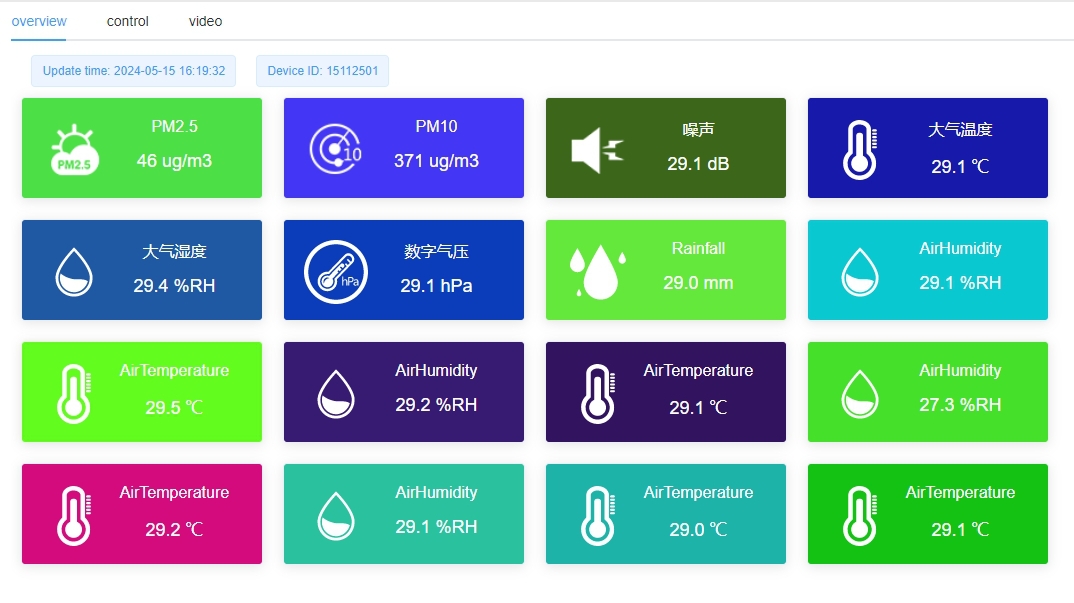
| Platform functions | Data query, statistics, charts, alarms and historical export | Turns sensor readings into usable service records |
| Housing and collector | Industrial processor, ASA or outdoor enclosure and lightning protection | Improves reliability under harsh agricultural conditions |
For sensor-layer integration, RS485 with Modbus RTU is usually the practical interface because it gives system integrators a defined address, register and polling structure. The station host or gateway can then upload data through 4G, Ethernet or another configured method. Before ordering, buyers should confirm baud rate, device address, register map, engineering units, cable length and whether the platform can store historical records.
For projects that include control actions, such as greenhouse irrigation or construction site spray linkage, the buyer should define alarm thresholds, delay time, manual override and failure behavior. A control output is useful only when the operating rule is clear.
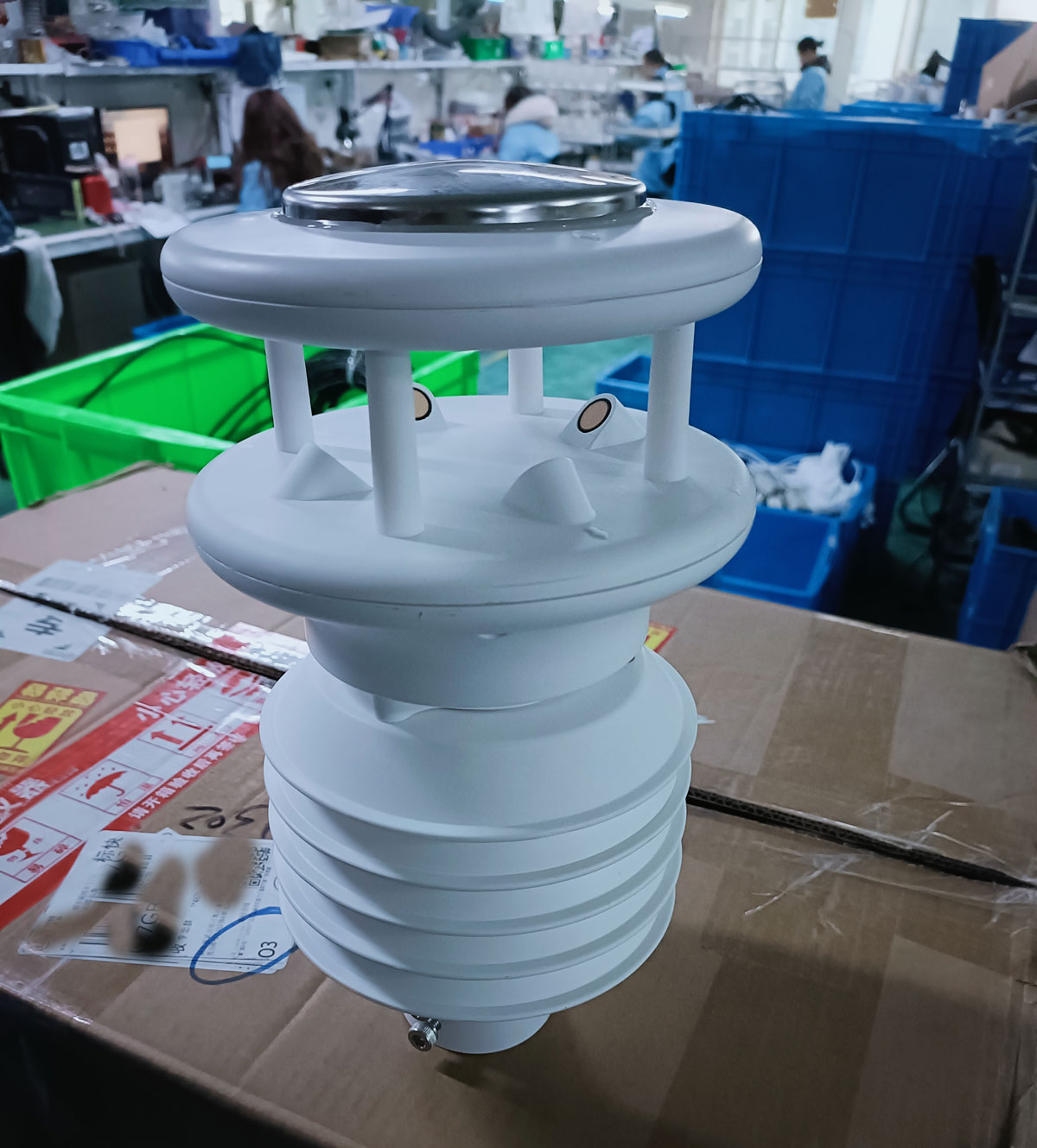
Outdoor stations are exposed to weather and site conditions every day. A rainfall sensor can be blocked by debris. A wind sensor can be affected by nearby buildings. A solar panel can lose charging efficiency when covered by dust. A communication module can lose signal after antenna movement. Each of these problems changes the usefulness of the data.
Technical support teams should inspect and clean observation equipment after major weather events. They should also test equipment performance regularly to confirm that sensors, power supply and communication remain normal.
| Maintenance Item | Inspection Method | Reason |
|---|---|---|
| Rainfall sensor | Remove debris and check level installation | Prevents false low rainfall values |
| Wind sensor | Check exposure, mounting and obstruction changes | Maintains representative wind data |
| Solar panel and battery | Clean panel and check charging status | Improves uptime at remote sites |
| Communication | Check upload interval, signal and missing data | Protects continuity of records |
| Platform data | Review abnormal spikes and flat lines | Finds sensor or wiring problems early |
Outdoor automatic weather monitoring stations work in rain, dust, sun, wind and seasonal temperature changes. The device may be industrial-grade, but data quality still depends on exposure and maintenance. A wind sensor blocked by nearby trees, a rain gauge filled with debris or a loose mast after a storm can produce data that looks normal in the platform while being physically wrong.
For contractors, this means maintenance must be included in the project scope. After severe weather, the station should be inspected for debris, tilted mounting, damaged cables, blocked inlets and abnormal power status. Scheduled performance checks should compare sensor values with expected site conditions and previous records. The goal is to catch abnormal drift before it affects reports or downstream decisions.
| Record | Minimum Content | Use in Project Management |
|---|---|---|
| Installation photo | Sensor height, open surroundings and cabinet position | Proves that exposure conditions were considered |
| Communication test | Upload interval, signal condition and platform display | Confirms the data path before handover |
| Power test | Solar panel, battery, mains or backup status | Reduces outage risk |
| Storm inspection | Mast, sensor housing, rain inlet and cable condition | Finds physical causes of abnormal data |
| Data review | Missing records, spikes and long flat lines | Identifies sensor or communication faults early |
A low-cost station without a maintenance plan may be acceptable for temporary observation, but it is weak for climate analysis, weather service support or research. Buyers who need long-term data continuity should budget for spare parts, cleaning access, calibration guidance and platform data export from the start.
Field challenge: Drought, frost, rainfall and wind events affect yield and field operation timing.
System scheme: Deploy agricultural weather stations with basic weather and optional soil sensors.
User value: Farm managers can plan irrigation, spraying and disaster prevention from local data.
Field challenge: Microclimate affects disease risk, flowering and harvest planning.
System scheme: Use temperature, humidity, rainfall, wind and light monitoring with historical curves.
User value: Growers can compare seasons and respond earlier to risk changes.
Field challenge: Manual records are difficult to keep continuous and comparable.
System scheme: Use stable stations with defined installation and maintenance procedures.
User value: Researchers obtain continuous records for analysis and reporting.
An agricultural weather station is suitable when local weather data changes irrigation, spraying, planting, harvest or disaster-prevention decisions. It is less useful when the farm has no one assigned to review alarms or when public regional weather data is enough for the intended decision.
A basic farm station can include temperature, humidity, wind, rainfall and pressure. Higher-value projects may add radiation, soil moisture, soil temperature, soil pH, soil EC, camera and platform reporting. The final list should follow the crop decision, not the desire to maximize sensor quantity.
Before quotation, buyers should provide application site, required parameters, number of monitoring points, power condition, communication method, platform requirement, installation photos, destination country and expected maintenance owner. Price is affected by sensor set, pole or bracket, power system, communication module, display, platform functions, cable length, camera, packaging and customization. For export projects, packaging, labels, manual language and spare-parts plan should also be confirmed.
Acceptance should include live values, platform upload, historical query, alarm threshold test, report export, image display if included, installation photos and one complete handover document. The document should record sensor model, station name, wiring, power supply, communication settings and maintenance schedule. This reduces future support cost for distributors and contractors.
Outdoor station buyers should request more than a sensor list. They should check enclosure protection, cable material, connector sealing, pole stability, grounding, lightning protection advice, power backup and platform storage. These details rarely look important in a short product quotation, but they determine whether the station keeps working after months of sun, rain, dust and wind.
If the project requires continuous historical data, ask how the station stores data during temporary communication loss. Some systems upload directly and lose records when the network is down. Others buffer data locally and upload later. The right choice depends on whether the project is for temporary site observation, long-term meteorological records, research support or public-service reporting.
Shipping and installation also need attention. Long poles, cabinets and sensors should be packed to prevent bending and vibration damage. At handover, the contractor should provide installation photos, wiring labels, station coordinates, sensor orientation, communication settings and a maintenance interval. Those records make future inspection faster and reduce arguments when abnormal data appears.
For outdoor station procurement, provide the monitoring purpose, expected service life, installation surface, mast height requirement, power plan, network availability and maintenance access. These details help decide whether the station should emphasize portability, long-term stability, research-grade continuity or public display.
Ask for the final sensor list, wiring notes, platform scope, packing list and acceptance checklist before ordering. These documents reduce commissioning delays and make later maintenance easier for the buyer and the local service team.
A: An outdoor automatic weather monitoring station needs maintenance because exposure changes data quality over time. Dust, leaves, insects, storms, cable movement, solar-panel dirt and unstable mounting can all create abnormal or biased data. Maintenance protects the value of the station after the first installation is complete.
A: After severe weather, check mast stability, sensor angle, rain-gauge blockage, cable joints, enclosure sealing, solar panel, battery status, communication status and data continuity. The goal is to find physical damage or drift before the platform records a long period of misleading values.
A: A station is suitable for long-term data when it has stable power, weatherproof wiring, representative exposure, data buffering or reliable upload, clear maintenance intervals and exportable historical records. A temporary low-cost station may be acceptable for short observation, but it is weak for climate analysis or research.
A: Common installation mistakes include placing sensors near buildings, trees, heat sources, reflective surfaces, blocked airflow or unstable structures. Wrong height and poor orientation can also distort values. The station should measure the local environment, not the influence of nearby objects.
A: RS485 / Modbus RTU supports maintenance by giving integrators structured device addresses, registers and communication checks. When a value disappears or becomes abnormal, the technician can separate sensor-side faults from gateway or platform issues more easily. This reduces troubleshooting time in field projects.
A: A maintenance plan should include cleaning, visual inspection, power checks, communication checks, rain-gauge inspection, cable review, platform data review and post-storm inspection. The plan should name the responsible person or service team. Without ownership, even good equipment can produce poor records.
A: Buyers should confirm enclosure protection, cable material, connector sealing, pole stability, grounding advice, power backup, local storage or upload behavior and platform export. These details are more important for long-term projects than small differences in sensor appearance.
A: Handover should include sensor list, wiring diagram, communication settings, platform account, station coordinates, installation photos, maintenance checklist and data export instructions. These records help future technicians understand the station without depending on the original installer.
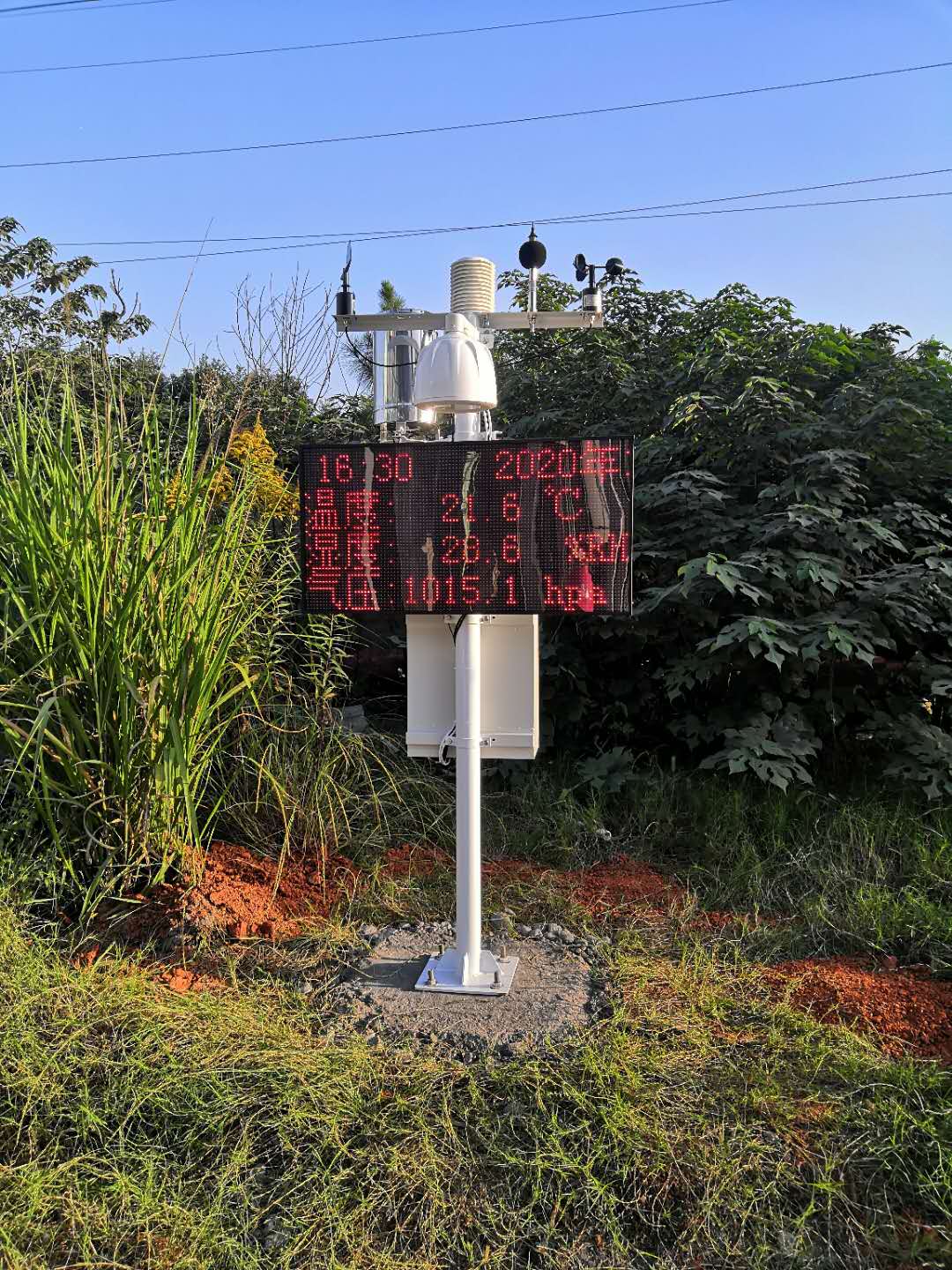
Outdoor automatic weather monitoring stations should be purchased with a data-quality plan. Sensors, installation exposure, power supply, communication and maintenance all affect whether the station provides reliable records for forecasting, research, climate analysis and operational services.
Prev:Agricultural Weather Station Monitoring Services for Grain Production and Farm Risk Control
Next:Construction Site Dust Pollution Monitoring System: Role, Architecture and Buyer Checks
Related recommendations
Sensors & Weather Stations Catalog
 Agriculture Sensors and Weather Stations Catalog-NiuBoL.pdf
Weather Stations Catalog-NiuBoL.pdf
Agriculture Sensors Catalog-NiuBoL.pdf
Water Quality Sensor Catalog-NiuBoL.pdf
Related products
 Combined air temperature and relative humidity sensor
 Soil Moisture Temperature sensor for irrigation|NBL-S-THR
 Soil pH sensor RS485 soil Testing instrument soil ph meter for agriculture |NBL-S-PH
 Wind Speed sensor Output Modbus/RS485/Analog/0-5V/4-20mA
 Tipping bucket rain gauge for weather monitoring auto rainfall sensor RS485/Outdoor/stainless steel
 Pyranometer Solar Radiation Sensor 4-20mA/RS485

Screenshot, WhatsApp to identify the QR code
WhatsApp number:+8615367865107
(Click on WhatsApp to copy and add friends)