— Blogs —
—Products—
 Consumer hotline +8618073152920
 WhatsApp:+8615367865107
Address:Room 102, District D, Houhu Industrial Park, Yuelu District, Changsha City, Hunan Province, China
Product knowledge
Time:2026-07-16 10:08:10 Popularity:29
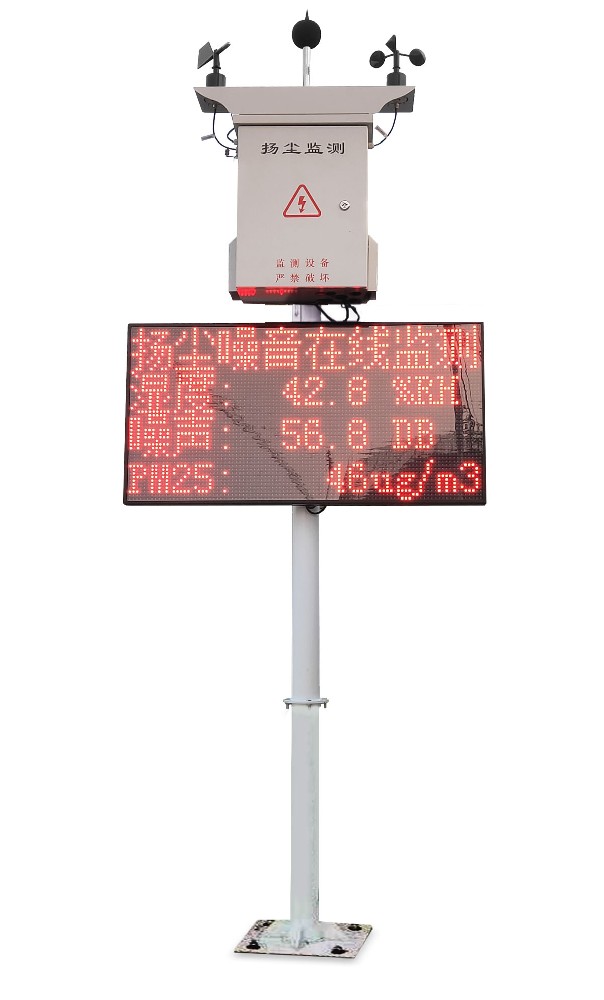
A construction site dust pollution monitoring system helps contractors supervise PM data, weather context, video evidence and alarms continuously. Its role is to turn dust control from manual inspection into measurable site management.
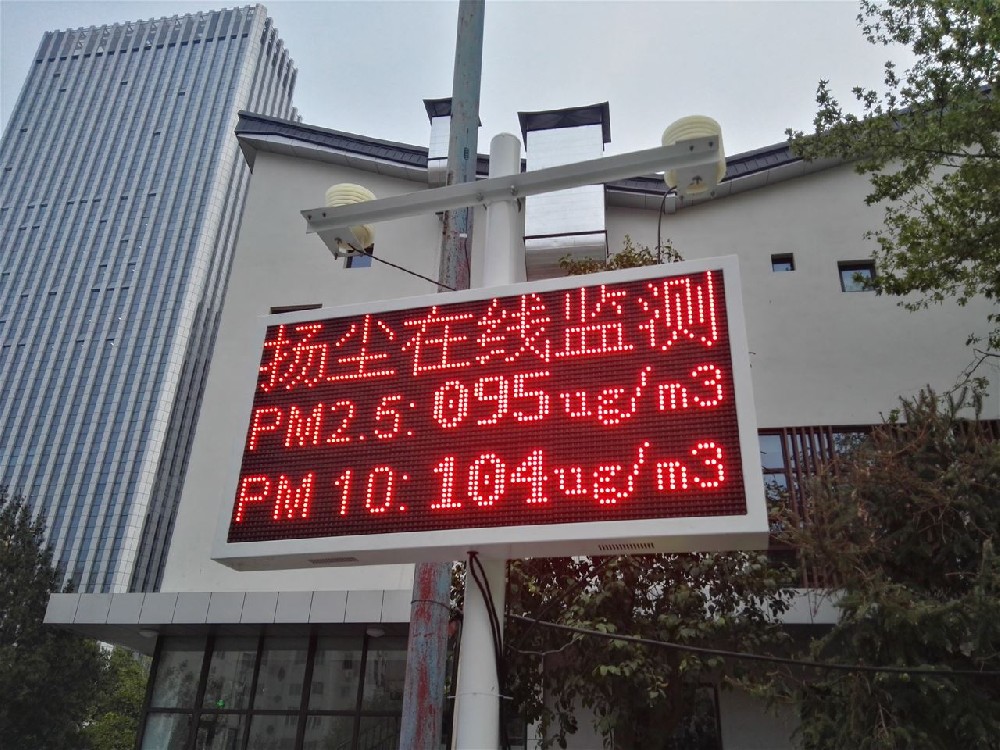
Construction dust governance is difficult because earthwork, transport and material storage change during the day. Online dust pollution monitoring systems are therefore used in smart construction projects. A complete system can work continuously, support fault prompts and alarms, and use Ethernet, GPRS, 3G, 4G or 5G communication depending on site conditions.
A practical system can detect PM2.5, PM10, noise, wind speed, wind direction, humidity and temperature. It can also expand to other environmental values when the project needs broader supervision.
In a construction site dust pollution monitoring system project, sensors are only the field layer. A complete system includes data acquisition, power supply, communication, platform software, alarm rules and maintenance responsibility. This matters because many failed projects have correct sensors but weak data handling, poor installation or no response workflow.
| Item | Common Configuration | Why It Matters |
|---|---|---|
| Measured dust | PM2.5, PM10 and TSP | Shows particulate concentration and supports dust control decisions |
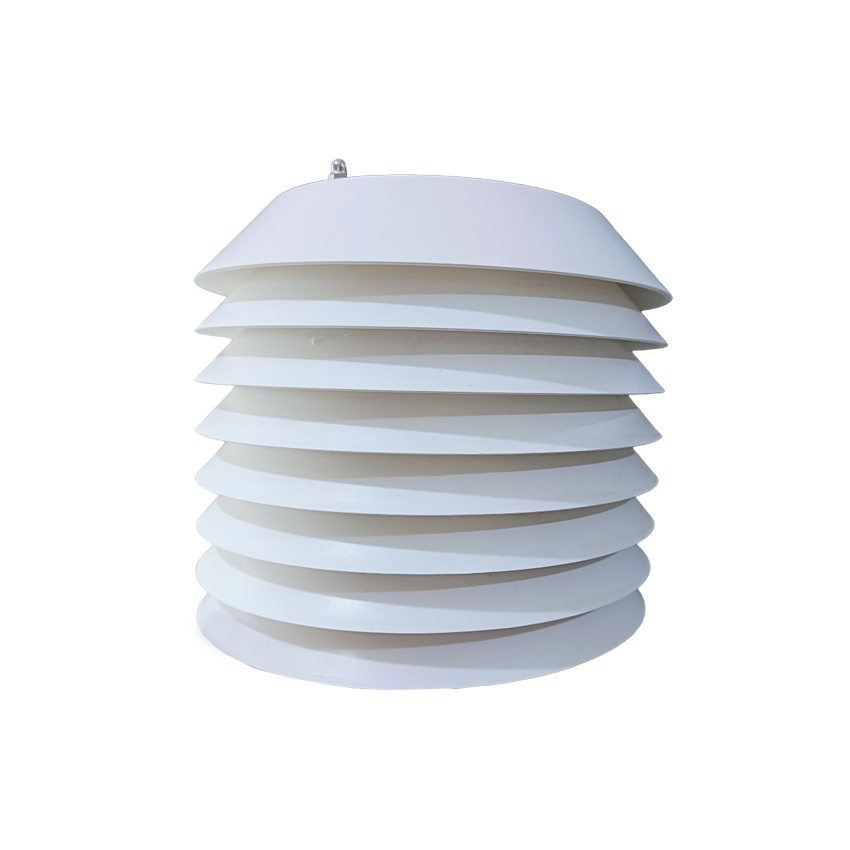
| Weather context | Wind speed, wind direction, temperature, humidity and pressure | Explains source direction and dust dispersion |
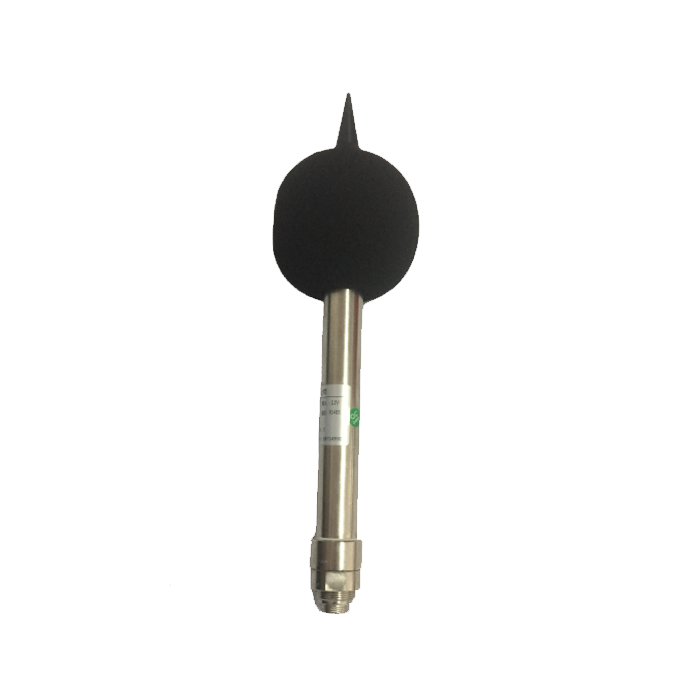
| Noise | RS485 environmental noise sensor | Adds construction disturbance records for supervision |
| Communication | Ethernet, GPRS, 3G, 4G or 5G depending on site network | Supports remote platform access and multi-site management |
| System parts | Monitoring terminal, camera, collector, server, platform and mobile access | Creates a complete smart construction monitoring workflow |
| Linkage | Relay or platform rule for spray/fog cannon control | Changes monitoring from passive display to active dust suppression |
For sensor-layer integration, RS485 with Modbus RTU is usually the practical interface because it gives system integrators a defined address, register and polling structure. The station host or gateway can then upload data through 4G, Ethernet or another configured method. Before ordering, buyers should confirm baud rate, device address, register map, engineering units, cable length and whether the platform can store historical records.
For projects that include control actions, such as greenhouse irrigation or construction site spray linkage, the buyer should define alarm thresholds, delay time, manual override and failure behavior. A control output is useful only when the operating rule is clear.
A dust pollution monitoring system is built from monitoring terminals, video collection terminals, data acquisition and transmission, server software, management platform and mobile access. It combines IoT, data processing and cloud platform functions to monitor particulate concentration remotely and automatically.
The system is useful for construction sites, bulk material yards, ports, concrete mixing plants, factories and other unorganized emission locations. It does not replace dust-control measures such as covering, washing, enclosure and watering, but it tells managers when those measures are not enough.
| System Part | Function | Buyer Check |
|---|---|---|
| PM monitoring terminal | Measures PM2.5, PM10 and TSP | Confirm range, principle and maintenance method |
| Weather sensors | Measure wind, humidity, temperature and pressure | Use data to interpret dust direction and dispersion |
| Video terminal | Records site condition or over-limit events | Check camera angle and storage rule |
| Communication | 3G, 4G, 5G, Ethernet or site network | Confirm signal and upload interval |
| Platform | Alarms, statistics, curves and mobile access | Check reports and user permission |
A construction site dust pollution monitoring system should normally include a monitoring terminal, particle sensors, weather sensors, optional noise monitoring, optional video, a communication unit, a platform and alarm rules. PM2.5 and PM10 data alone cannot explain why an event happened. Wind direction, wind speed and video context help managers judge whether the source is earthwork, vehicle movement, loading, exposed soil or dust from outside the site.
This is why the system should be evaluated as a management architecture. The data terminal collects values continuously. The platform stores records and displays trends. Alarms notify the responsible team when values exceed thresholds. If the project includes fog cannon or spray linkage, the system can connect over-limit events to a response action. The buyer should confirm whether linkage is required before selecting the cabinet and controller.
| Location | Purpose | Installation Note |
|---|---|---|
| Main entrance | Tracks vehicle dust and road cleaning effect | Avoid direct collision and blocked airflow |
| Material storage area | Captures loading and stockpile emissions | Place where dust can reach the sensor naturally |
| Downwind boundary | Checks impact leaving the site | Adjust according to dominant wind direction |
| Demolition or earthwork zone | Monitors high-risk operations | Use temporary relocation if the work face changes |
| Public display point | Shows compliance information | Keep screen visible while sensor remains representative |
For buyers, the evidence value is as important as the live value. Historical curves, alarm logs and video snapshots help explain whether control measures were applied. This supports internal management, project reporting and communication with supervisory teams.
Field challenge: Dust and noise affect nearby roads, communities and project inspections.
System scheme: Install PM, noise and weather monitoring with LED display and 4G upload.
User value: The contractor gets continuous evidence and faster response to over-limit events.
Field challenge: Dust peaks occur suddenly when work intensity changes.
System scheme: Use PM10/TSP, wind data and spray linkage rules.
User value: Managers can start suppression based on data instead of waiting for complaints.
Field challenge: Loading and vehicle movement create repeated particulate events.
System scheme: Use monitoring points at entrances, stockpiles and downwind boundary.
User value: The site can compare operations and improve cleaning schedules.
A construction dust monitoring system is suitable when the site needs continuous PM records, public display, platform reporting, complaint response or spray linkage. It is not enough when the buyer expects monitoring alone to solve dust pollution without road cleaning, covering, enclosure, washing and operation rules.
A low-cost system may include only PM values and a small display. A project-level system should include PM2.5, PM10, TSP, noise, weather data, platform upload, alarm records and optional camera or spray linkage. Buyers should compare the complete bill of materials, not only the sensor price.
Before quotation, buyers should provide application site, required parameters, number of monitoring points, power condition, communication method, platform requirement, installation photos, destination country and expected maintenance owner. Price is affected by sensor set, pole or bracket, power system, communication module, display, platform functions, cable length, camera, packaging and customization. For export projects, packaging, labels, manual language and spare-parts plan should also be confirmed.
Acceptance should include live values, platform upload, historical query, alarm threshold test, report export, image display if included, installation photos and one complete handover document. The document should record sensor model, station name, wiring, power supply, communication settings and maintenance schedule. This reduces future support cost for distributors and contractors.
Dust monitoring quotations can look different because suppliers may include different scopes. One quote may include only the monitoring host and sensors. Another may include pole, display screen, camera, 4G data card, cloud platform, alarm rules, installation support and spray linkage output. Buyers should compare the complete scope before deciding whether a price is high or low.
For construction contractors, delivery timing also matters. Monitoring equipment is often required before earthwork or major dusty activity begins. The buyer should confirm production lead time, shipment method, installation schedule and whether remote commissioning is available. If the site has no stable power or network, those issues should be solved before the equipment arrives.
After-sales support should include sensor cleaning guidance, communication troubleshooting, platform account management and alarm-rule adjustment. Dust sensors work in harsh environments; without cleaning and inspection, readings can drift or become unstable. A practical maintenance plan protects the credibility of the data.
For a construction dust monitoring quotation, send the site layout, entrances, material yards, dominant dust sources, desired display location, camera requirement, spray linkage need and network condition. This information affects monitoring point quantity, pole location, cabinet design and platform scope.
Ask for the final sensor list, wiring notes, platform scope, packing list and acceptance checklist before ordering. These documents reduce commissioning delays and make later maintenance easier for the buyer and the local service team.
A: A construction site dust pollution monitoring system should be treated as a site management tool, not only as a PM sensor. Its role is to measure dust, weather and optional noise or video continuously, upload records, trigger alarms and support corrective action when site activity creates over-limit conditions.
A: A practical system should include PM2.5, PM10, TSP, temperature, humidity, wind speed and wind direction. Noise, camera and spray linkage should be added when the project needs complaint handling, supervision evidence or automatic response. Parameter selection should match the site risk and reporting requirement.
A: Wind speed and wind direction help explain dust movement and source direction. PM data alone shows that dust increased, but wind data helps determine whether the source was earthwork, vehicle movement, material handling or outside influence. This makes alarm records more useful for management.
A: Monitoring points should be placed near boundaries, entrances, material yards, downwind risk areas or high-dust work zones. Avoid blocked airflow, direct spray impact, vehicle collision zones and locations hidden by temporary structures. The point should represent site impact, not a protected corner.
A: Yes, if power supply, enclosure protection, communication, platform upload and fault alarms are designed for continuous operation. Buyers should confirm device-status reporting, offline reminders and maintenance access. A system that only works when checked manually is not suitable for strict site management.
A: Video improves evidence by showing what happened when PM values increased, such as truck movement, loading, demolition, uncovered soil or road cleaning. It reduces guesswork and helps managers connect data with behavior. Video is especially useful when projects need reports or responsibility review.
A: Price depends on measured parameters, LED display, camera, pole, enclosure, power supply, communication, platform functions, installation work and spray linkage. Buyers should compare complete scope, because a cheaper quote may exclude platform service, camera, display or linkage outputs.
A: Buyers should provide site type, area, dust sources, number of entrances, monitoring-point idea, required parameters, display need, camera need, communication condition, platform requirement and dust-control linkage plan. This information determines system architecture and prevents mismatched equipment.
A construction site dust pollution monitoring system is most valuable when it connects PM data, weather context, video, alarms and response rules. Buyers should evaluate it as a full management system rather than a single dust sensor, and should define installation points, platform requirements and corrective actions before ordering.
Prev:Outdoor Automatic Weather Monitoring Station: Data Quality, Maintenance and Procurement Guide
Next:Construction Site Dust Monitoring System Functions: From PM Data to Spray Linkage
Related recommendations
Sensors & Weather Stations Catalog
 Agriculture Sensors and Weather Stations Catalog-NiuBoL.pdf
Weather Stations Catalog-NiuBoL.pdf
Agriculture Sensors Catalog-NiuBoL.pdf
Water Quality Sensor Catalog-NiuBoL.pdf
Related products
 Combined air temperature and relative humidity sensor
 Soil Moisture Temperature sensor for irrigation|NBL-S-THR
 Soil pH sensor RS485 soil Testing instrument soil ph meter for agriculture |NBL-S-PH
 Wind Speed sensor Output Modbus/RS485/Analog/0-5V/4-20mA
 Tipping bucket rain gauge for weather monitoring auto rainfall sensor RS485/Outdoor/stainless steel
 Pyranometer Solar Radiation Sensor 4-20mA/RS485

Screenshot, WhatsApp to identify the QR code
WhatsApp number:+8615367865107
(Click on WhatsApp to copy and add friends)