





— Blogs —
—Products—
 Consumer hotline +8618073152920
 WhatsApp:+8615367865107
Address:Room 102, District D, Houhu Industrial Park, Yuelu District, Changsha City, Hunan Province, China
Product knowledge
Time:2026-07-16 10:08:08 Popularity:26
An agricultural weather station helps farms monitor the environmental variables that directly affect crop growth and disaster prevention. For buyers, the important question is which functions change farm decisions and which extra parameters only increase cost.
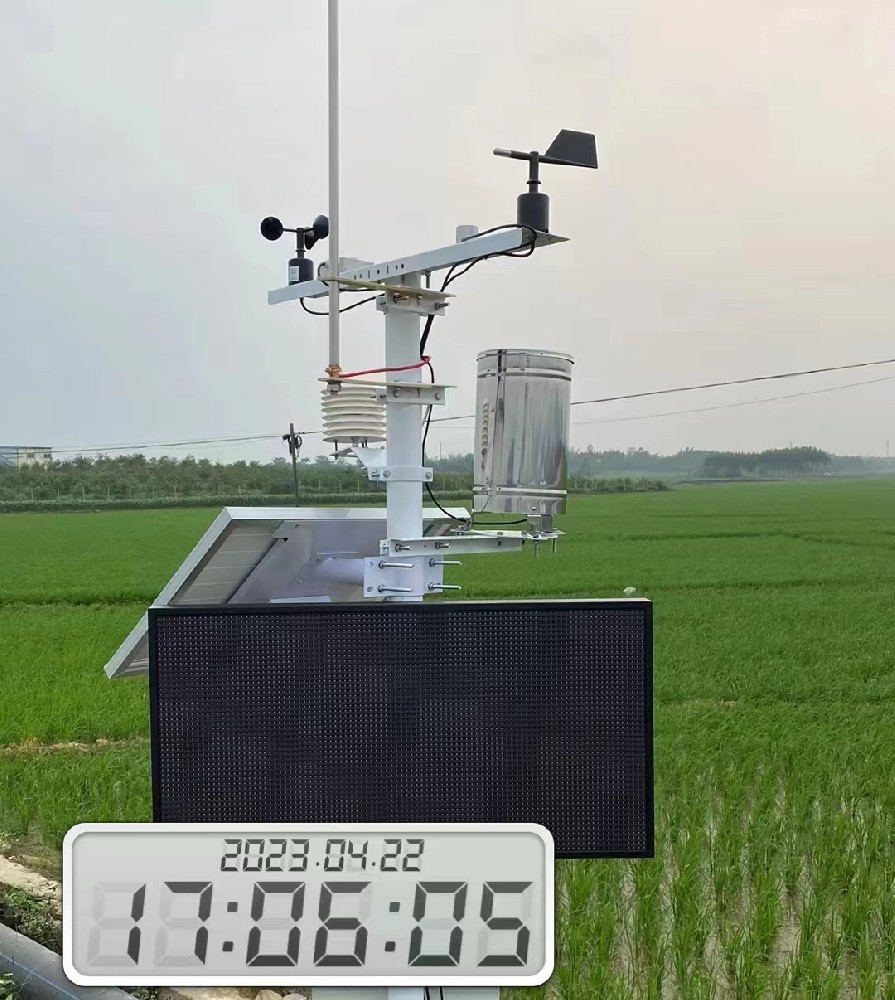
Agricultural weather stations are used for real-time monitoring of air temperature, humidity, wind speed, wind direction, rainfall, soil temperature, soil moisture, light intensity and atmospheric pressure. These values are not collected for display only. They help growers plan irrigation, spraying, field work and weather-risk response.
Agricultural production is affected by drought, frost, cold events, flood and waterlogging. Local data from a station gives farms a stronger basis for prevention than occasional manual observation or distant regional forecasts.
In a agricultural weather station project, sensors are only the field layer. A complete system includes data acquisition, power supply, communication, platform software, alarm rules and maintenance responsibility. This matters because many failed projects have correct sensors but weak data handling, poor installation or no response workflow.
| Item | Common Configuration | Procurement Meaning |
|---|---|---|
| Weather parameters | Air temperature, humidity, wind speed, wind direction, rainfall, pressure and solar radiation | Covers crop growth and disaster-risk decisions |
| Optional soil data | Soil temperature, soil moisture, soil pH and soil EC | Connects weather with root-zone conditions |
| Communication | RS485 / Modbus RTU at sensor layer; 4G, Ethernet or gateway upload at station layer | Supports integration with existing farm platforms |
| Power supply | Mains, solar battery or mixed power according to site | Determines uptime in remote farmland or outdoor observation points |
| Platform functions | Data query, statistics, charts, alarms and historical export | Turns sensor readings into usable service records |
| Housing and collector | Industrial processor, ASA or outdoor enclosure and lightning protection | Improves reliability under harsh agricultural conditions |
For sensor-layer integration, RS485 with Modbus RTU is usually the practical interface because it gives system integrators a defined address, register and polling structure. The station host or gateway can then upload data through 4G, Ethernet or another configured method. Before ordering, buyers should confirm baud rate, device address, register map, engineering units, cable length and whether the platform can store historical records.
For projects that include control actions, such as greenhouse irrigation or construction site spray linkage, the buyer should define alarm thresholds, delay time, manual override and failure behavior. A control output is useful only when the operating rule is clear.
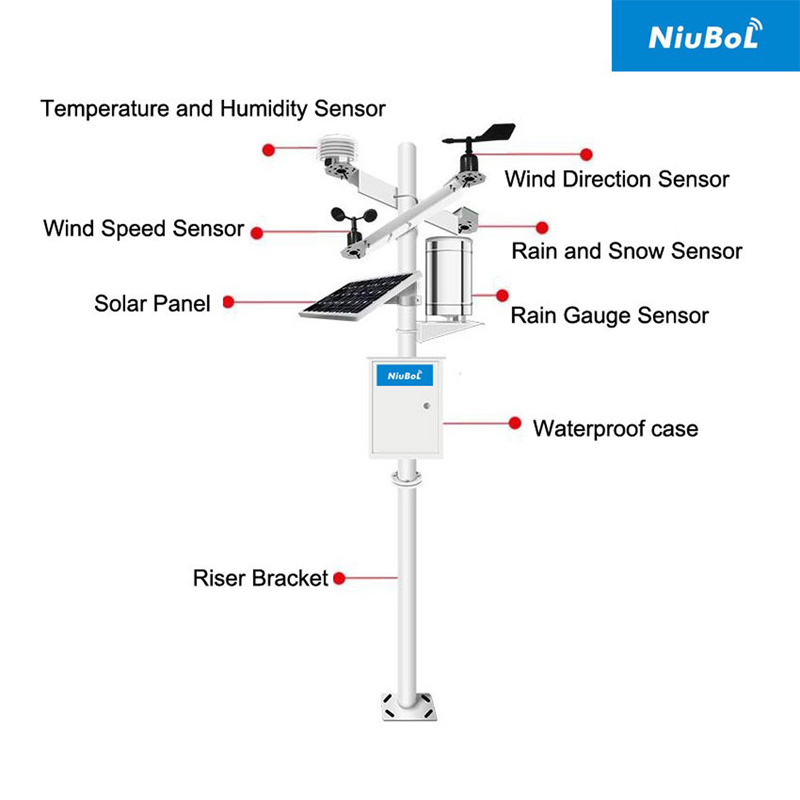
The station should help users answer practical questions: Is the field drying too quickly? Is wind too strong for spraying? Did rainfall already meet irrigation needs? Is humidity high enough to increase disease risk? Is soil temperature suitable for planting or germination? These questions turn sensor readings into management value.
The monitoring platform should support query, statistics, charts and historical export. Without historical review, the farm can see current values but cannot compare seasons or evaluate whether a decision improved yield or reduced risk.
| Function | Data Used | Decision Supported |
|---|---|---|
| Drought risk review | Rainfall, soil moisture, temperature and wind | Irrigation timing and water allocation |
| Spraying window | Wind speed, wind direction, humidity and rainfall forecast data if available | Whether pesticide or foliar fertilizer application is safe |
| Frost or cold event response | Temperature, humidity and trend alarms | Covering, heating or other protection measures |
| Disease-risk observation | Humidity, rainfall and leaf/greenhouse context if added | Inspection and prevention schedule |
| Production analysis | Historical weather and crop records | Season comparison and management improvement |
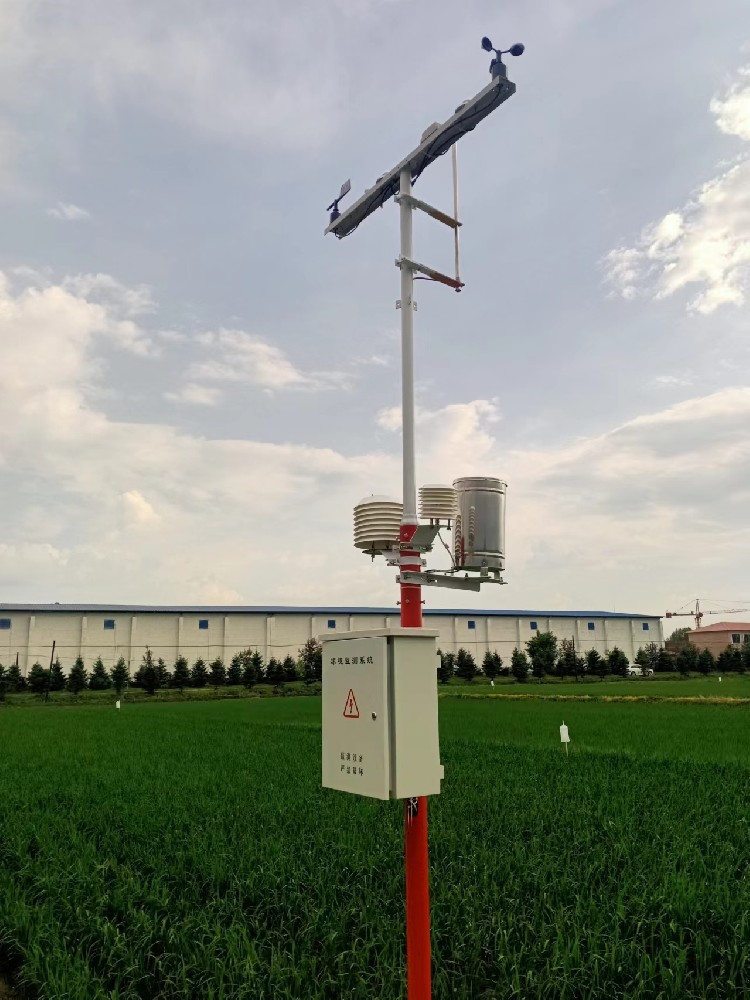
The functions of an agricultural weather station should be judged by decision value. Air temperature and humidity help evaluate heat stress, frost risk and disease pressure. Wind speed and wind direction affect spraying windows, pesticide drift and field work safety. Rainfall supports irrigation scheduling and drainage review. Soil temperature and soil moisture connect weather conditions with root-zone status, which is often the part growers cannot see from visual inspection.
Light intensity and solar radiation are useful for greenhouse crops, orchards and research fields where photosynthesis and shading decisions matter. Atmospheric pressure is less visible to farm operators, but it improves meteorological context and trend analysis. Video or real-scene monitoring can help confirm field conditions when a manager is not on site.
| Project Type | Functions to Prioritize | Functions Usually Optional |
|---|---|---|
| Open-field grain | Rainfall, wind, temperature, humidity, soil moisture | Camera, solar radiation, leaf wetness |
| Orchard or tea garden | Microclimate, rainfall, soil moisture, light, wind | CO2, advanced research sensors |
| Research plot | Full meteorological set, soil profile, high data continuity | Public display screen |
| Irrigation project | Rainfall, evapotranspiration-related data, soil moisture | Noise or air-quality sensors |
| Agricultural park display | Weather, soil, screen display and platform records | Deep technical sensors not used by operators |
For procurement, the buyer should ask how each value will be used after installation. If nobody will check soil moisture curves, the soil sensor may become decoration. If the farm regularly decides when to irrigate or spray, those parameters become operational tools. This is the difference between a station that is only visible and a station that is useful.
Field challenge: Drought, frost, rainfall and wind events affect yield and field operation timing.
System scheme: Deploy agricultural weather stations with basic weather and optional soil sensors.
User value: Farm managers can plan irrigation, spraying and disaster prevention from local data.
Field challenge: Microclimate affects disease risk, flowering and harvest planning.
System scheme: Use temperature, humidity, rainfall, wind and light monitoring with historical curves.
User value: Growers can compare seasons and respond earlier to risk changes.
Field challenge: Manual records are difficult to keep continuous and comparable.
System scheme: Use stable stations with defined installation and maintenance procedures.
User value: Researchers obtain continuous records for analysis and reporting.
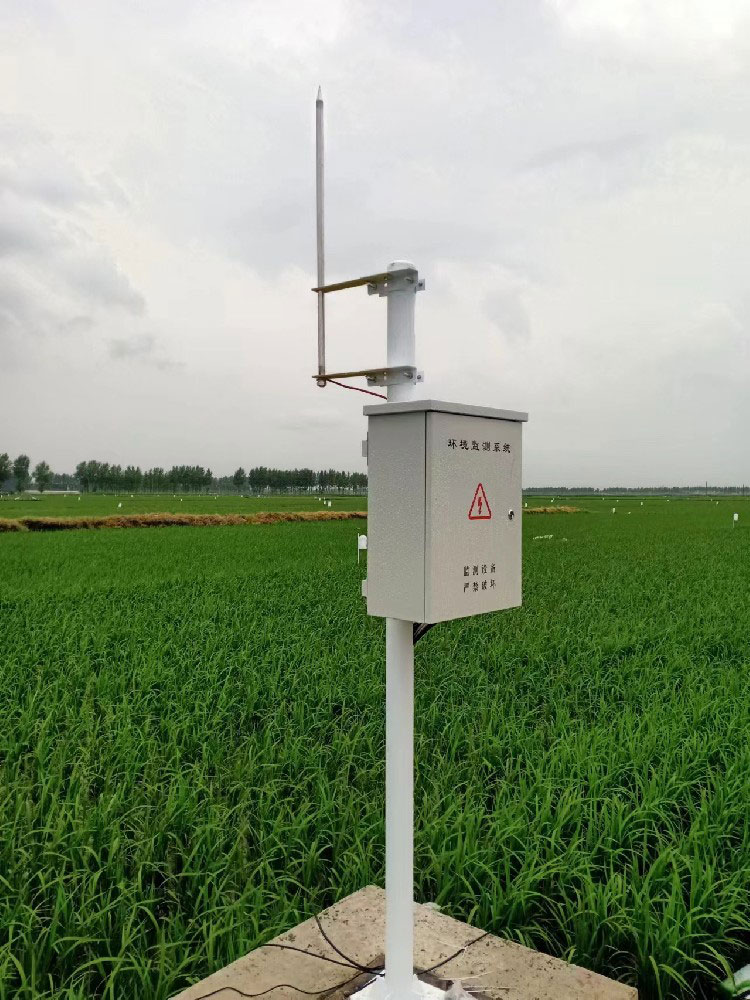
An agricultural weather station is suitable when local weather data changes irrigation, spraying, planting, harvest or disaster-prevention decisions. It is less useful when the farm has no one assigned to review alarms or when public regional weather data is enough for the intended decision.
A basic farm station can include temperature, humidity, wind, rainfall and pressure. Higher-value projects may add radiation, soil moisture, soil temperature, soil pH, soil EC, camera and platform reporting. The final list should follow the crop decision, not the desire to maximize sensor quantity.
Before quotation, buyers should provide application site, required parameters, number of monitoring points, power condition, communication method, platform requirement, installation photos, destination country and expected maintenance owner. Price is affected by sensor set, pole or bracket, power system, communication module, display, platform functions, cable length, camera, packaging and customization. For export projects, packaging, labels, manual language and spare-parts plan should also be confirmed.
Acceptance should include live values, platform upload, historical query, alarm threshold test, report export, image display if included, installation photos and one complete handover document. The document should record sensor model, station name, wiring, power supply, communication settings and maintenance schedule. This reduces future support cost for distributors and contractors.
Before ordering, buyers should decide whether the station is for farm operation, demonstration, research or government-style reporting. These goals do not require the same configuration. A farm operation project cares about irrigation, spraying and field work decisions. A research plot cares more about data continuity, export format, sensor accuracy and maintenance records. A demonstration park may require a screen, appearance and public explanation, but those items should not replace data quality.
The quotation should state sensor list, measurement range, output signal, communication method, power supply, pole height, enclosure material, installation accessories and platform functions. If RS485 / Modbus RTU sensors are used, the integrator should receive address settings, register tables and polling recommendations. For farms without stable mains power, solar panel and battery sizing should be discussed early because power failure creates data gaps that reduce the value of the station.
Buyers should also ask what happens after delivery. A useful supplier should provide installation instructions, platform account setup, data export guidance and basic maintenance checks. For distributors, this documentation makes it easier to support local installers and reduces repeated technical questions during commissioning.
For a farm weather station inquiry, include field area, crop type, irrigation method, soil condition, power availability, network condition and whether the buyer needs local display, cloud platform or data export. These details prevent a quotation that is technically correct but poorly matched to the farm workflow.
Ask for the final sensor list, wiring notes, platform scope, packing list and acceptance checklist before ordering. These documents reduce commissioning delays and make later maintenance easier for the buyer and the local service team.
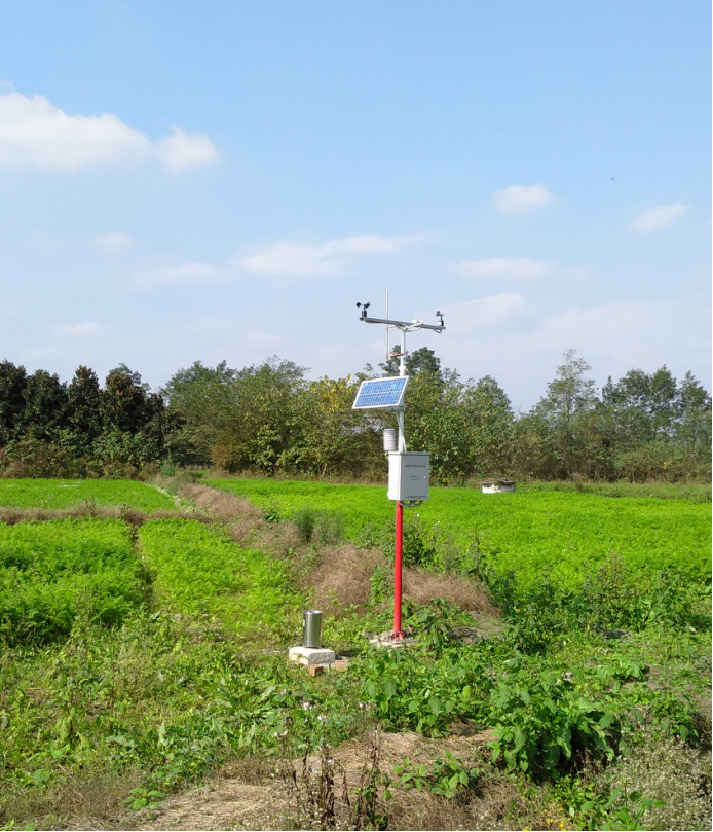
A: An agricultural weather station should provide local weather and field data that supports farm decisions, not only display values. Core functions usually include temperature, humidity, rainfall, wind speed, wind direction, pressure and light. Soil moisture and soil temperature should be added when irrigation, drought risk or root-zone management matters.
A: Local farm data is more useful because crop conditions can differ from regional forecasts due to terrain, irrigation, soil, greenhouse cover, wind exposure and nearby water or buildings. Regional data may explain the general weather, but a station at the field explains the actual conditions affecting that crop block.
A: One station may not be enough when the farm has separated plots, different elevations, different irrigation zones, orchard and field crops together, or clear microclimate differences. In those cases, one station can create misleading averages. Buyers should plan station quantity according to management zones, not only total farm area.
A: For drought and irrigation risk, rainfall and soil moisture are priorities. For frost or cold events, temperature and humidity are critical. For spraying safety, wind speed and wind direction matter. For flood or waterlogging risk, rainfall history and drainage observations should be reviewed together.
A: RS485 / Modbus RTU helps integrators connect multiple field sensors to a collector or gateway with predictable addressing and data registers. It is useful when the project needs stable wired communication, platform integration and future sensor expansion. Buyers should request register maps and communication settings before commissioning.
A: Unreliable data usually comes from poor exposure, wrong sensor height, blocked rain gauges, unstable solar power, weak cellular signal, loose cables or no maintenance owner. The station should be installed where it represents the crop area, and maintenance should be assigned before the first season begins.
A: A basic configuration is suitable for simple visibility and small farms. A project-level configuration should add platform access, alarms, data export, stronger power planning, installation documentation and maintenance records. Buyers should compare the decision value of the configuration, not only the number of sensors.
A: The request should include crop type, field area, monitoring purpose, required parameters, power condition, network condition, installation photos, station quantity and whether platform access or data export is needed. This helps the supplier recommend a configuration that fits the farm workflow.
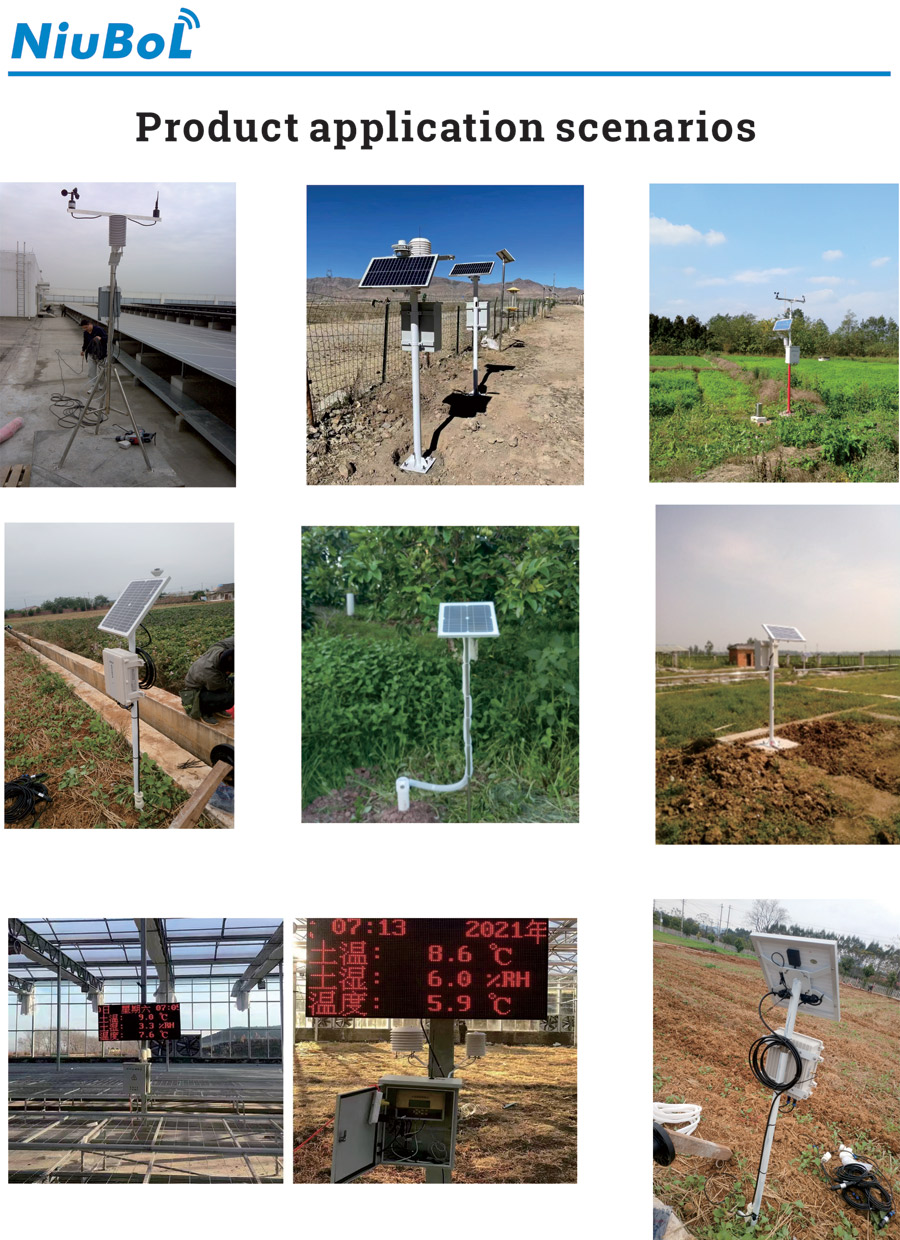
Agricultural weather station functions should be evaluated by how they support crop decisions. A useful station connects weather, soil and platform data with irrigation, spraying, disaster prevention and production review. Buyers should select parameters according to the farm decision process and request clear integration and maintenance documentation before purchase.
Prev:Smart Greenhouse Control System Guide for Crop Climate and Irrigation Projects
Next:Agricultural Weather Station Monitoring Services for Grain Production and Farm Risk Control
Related recommendations
Sensors & Weather Stations Catalog
 Agriculture Sensors and Weather Stations Catalog-NiuBoL.pdf
Weather Stations Catalog-NiuBoL.pdf
Agriculture Sensors Catalog-NiuBoL.pdf
Water Quality Sensor Catalog-NiuBoL.pdf
Related products
 Combined air temperature and relative humidity sensor
 Soil Moisture Temperature sensor for irrigation|NBL-S-THR
 Soil pH sensor RS485 soil Testing instrument soil ph meter for agriculture |NBL-S-PH
 Wind Speed sensor Output Modbus/RS485/Analog/0-5V/4-20mA
 Tipping bucket rain gauge for weather monitoring auto rainfall sensor RS485/Outdoor/stainless steel
 Pyranometer Solar Radiation Sensor 4-20mA/RS485

Screenshot, WhatsApp to identify the QR code
WhatsApp number:+8615367865107
(Click on WhatsApp to copy and add friends)

