





— Blogs —
—Products—
 Consumer hotline +8618073152920
WhatsApp:+8615367865107
Address:Room 102, District D, Houhu Industrial Park, Yuelu District, Changsha City, Hunan Province, China
Product knowledge
Time:2026-09-07 16:27:32 Popularity:277
Neither rainfall sensor is universally superior; the two designs address different measurement needs. A tipping bucket measures discrete collected-water volumes, whereas a piezoelectric sensor estimates rainfall from raindrop impact energy.
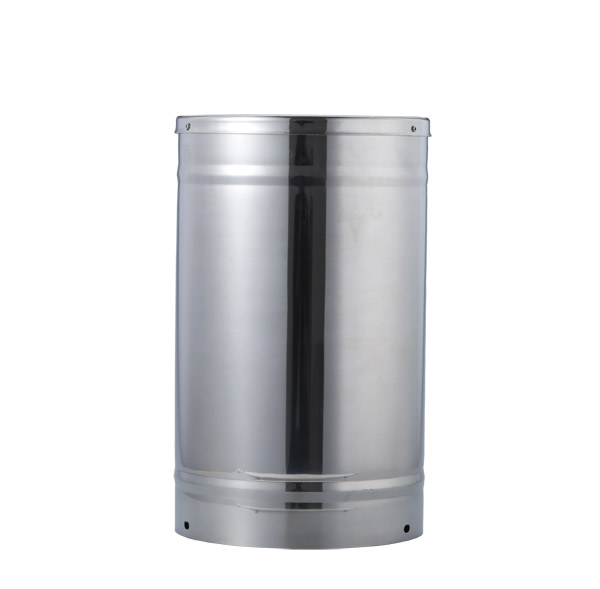
The tipping bucket rain gauge corresponds to a fixed water volume for each tip, the physical relationship is intuitive, and the long-term cumulative rainfall and project acceptance are straightforward to verify. The disadvantage is that there is a mechanical mechanism that needs to be kept level, the funnel cleaned and attention paid to freezing at low temperatures.
The piezoelectric sensor has no tipping mechanism and is compact and suitable for all-in-one equipment. It estimates rainfall through the force/vibration generated by the impact of rain drops, so wind, vibration, dust or other mechanical shocks can cause interference; drizzle and different raindrop profiles can also affect quantitative accuracy.
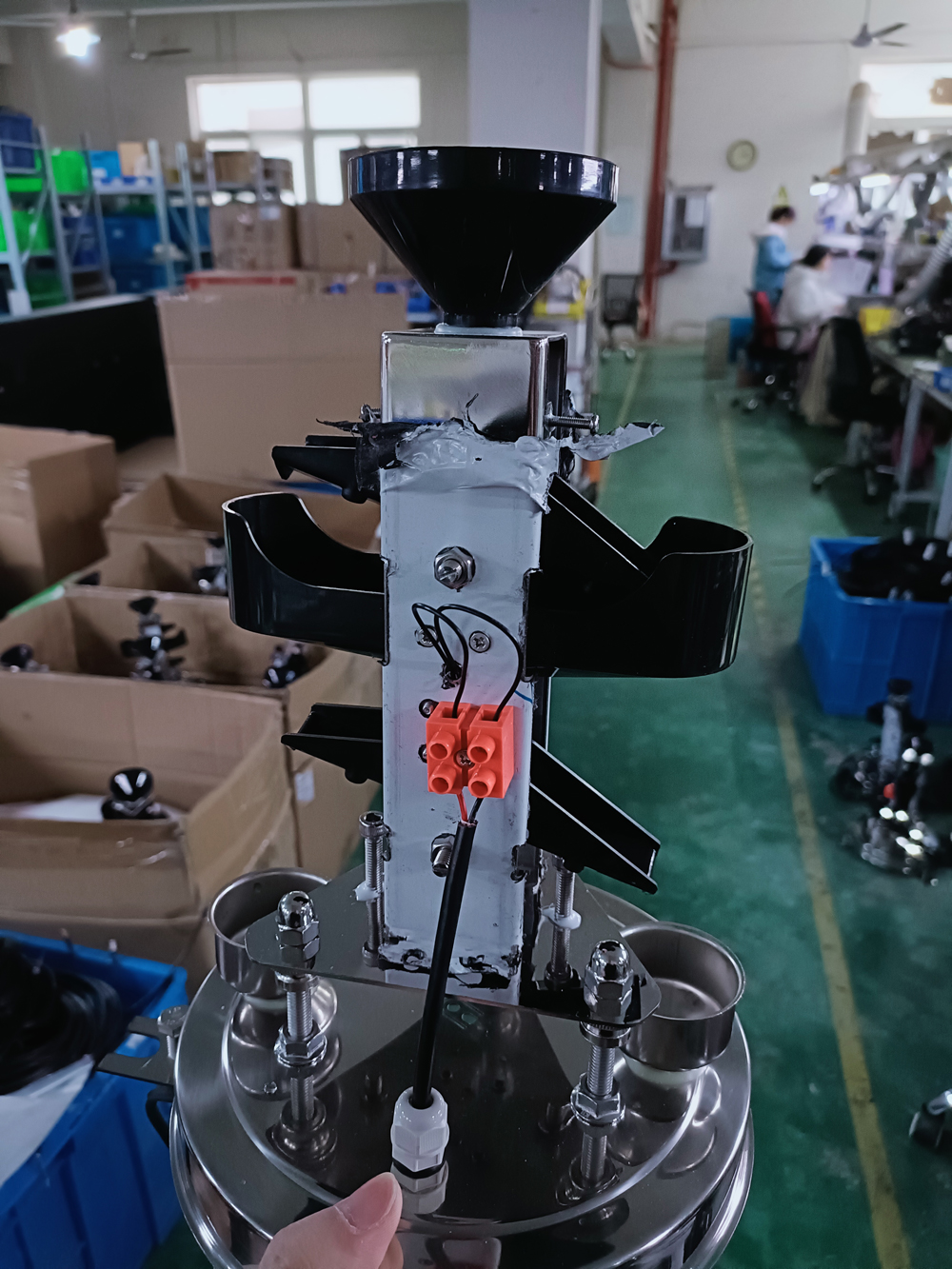
For piezoelectric and tipping bucket rain gauges, a tipping bucket rain gauge is an automatic rainfall measuring instrument. Rainwater enters the internal tipping bucket through the rain inlet and funnel. When the accumulated water on one side reaches the set volume, it flips and triggers an electrical signal. The collector or internal electronic module calculates the rainfall according to the number of tipping buckets. It is widely used in automatic weather stations, hydrological stations, agricultural irrigation, flash flood warning and urban drainage monitoring.
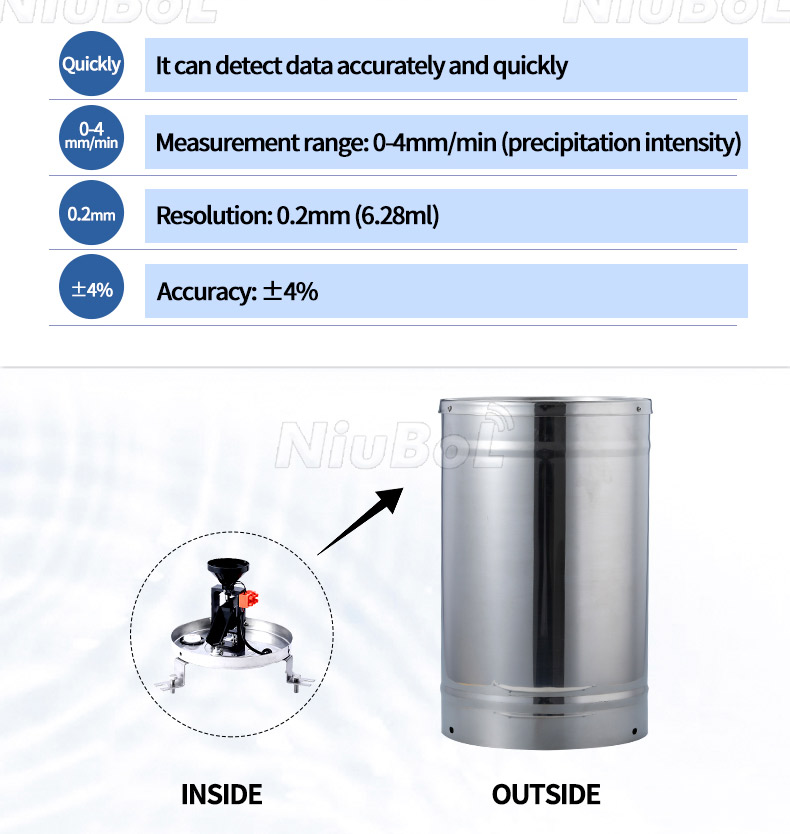
For rainfall measurement - Advantages of a tipping bucket, the resolution of the tipping bucket rain gauge indicates the rainfall depth corresponding to each valid tip. Common specifications include 0.1mm, 0.2mm, 0.5mm, etc. Taking the 0.2mm per tip as an example, each effective tip represents 0.2mm rainfall, and 100 effective pulses correspond to 20mm cumulative rainfall. The actual calculation shall be based on the resolution of the selected model.
For rainfall measurement - Advantages of a tipping bucket, the pulse type essentially provides primary and secondary switching events, and the collector is responsible for counting and converting rainfall. In an RS485 version, counting and data organization are handled inside the sensor, and the host reads the values through Modbus RTU. The mechanical tipping buckets of the two can be similar, but the “cumulative logic” depends on the electronic module and protocol design.
For rainfall measurement - Advantages of a tipping bucket, some individual RS485 tipping bucket rain gauges are output in “increments between two readings” and even reset after reading; integrated weather sensors may provide cumulative rainfall registers and minute rainfall registers that are powered off and not reset. Therefore, it must be interpreted according to the specific model communication protocol, and do not set the cumulative logic of one product to another.
For rainfall measurement - Advantages of a tipping bucket, on-site daily use generally does not require frequent calibration, but project acceptance can check whether the number of tipping buckets is consistent with theoretical rainfall through known volume, constant flow or standard calibration devices. If a traceability calibration certificate is required, a metrology/testing facility with appropriate capabilities should be used.
For rainfall measurement - Advantages of a tipping bucket, the NiuBoL tipping bucket rain gauge product center offers structures such as stainless steel and ABS with different resolutions, pulses or RS485 output options. Agricultural meteorological stations, hydrological telemetry and engineering acceptance shall select specific models according to the rain inlet diameter, resolution, output mode, material and installation environment.
Product reference: NiuBoL tipping bucket rain gauge.
Selection of Piezoelectric vs Tipping Bucket Rain Gauges should begin with the measurement duty, site condition and receiving-system interface. Maintenance should verify the catch, funnel, tipping mechanism, reed switch or pulse path, level and logger count as one chain.
| Decision field | Engineering requirement | Evidence for acceptance |
|---|---|---|
| Measurement purpose for piezoelectric and tipping bucket rain gauges | State what action tipping bucket rain gauge maintenance should support | Approved monitoring objective |
| Location for piezoelectric and tipping bucket rain gauges | Coordinates, depth or height, orientation and exposure | Drawing and installation photos |
| Data path for piezoelectric and tipping bucket rain gauges | Sensor to logger, controller, gateway and platform | Live measurement with correct unit and timestamp |
| Maintenance for piezoelectric and tipping bucket rain gauges | Safe access and responsible person | Inspection and service record |
The required class of Piezoelectric vs Tipping Bucket Rain Gauges depends on whether the project needs continuous data, remote alarms or documented handover records. A key limitation is that check leveling, splash, wind, funnel blockage, debris, snow and accumulation interval when rainfall records look unreliable. The piezoelectric and tipping bucket rain gauges acceptance plan should assess instrument verification separately from site representativeness. The piezoelectric and tipping bucket rain gauges commissioning record should capture mounting geometry, initial readings, comparison method, configuration and environmental conditions. If a piezoelectric and tipping bucket rain gauges result changes later, the handover file should help distinguish a real event from movement, fouling, configuration drift or communication loss.
| Parameter | Reference requirement | Why it matters |
|---|---|---|
| Measurement range for piezoelectric and tipping bucket rain gauges | Model-dependent; state normal, peak and required resolution | Do not select by parameter name alone |
| Measurement accuracy for piezoelectric and tipping bucket rain gauges | Use the quoted instrument datasheet and define field acceptance separately | Catalogue accuracy is not the whole system uncertainty |
| Supply voltage for piezoelectric and tipping bucket rain gauges | Confirm sensor, logger and remote power configuration | Check cable voltage drop and battery autonomy |
| Output signal for piezoelectric and tipping bucket rain gauges | tipping mechanisms commonly provide pulse counting, while configured transmitters or station loggers can expose rainfall through RS485 Modbus RTU | Request wiring and protocol documents before panel work |
| Power consumption for piezoelectric and tipping bucket rain gauges | Use maximum current for power budgeting, not only typical draw | Include modem and heater duty where applicable |
| Protection and temperature for piezoelectric and tipping bucket rain gauges | Match enclosure, probe and connector ratings to the site | The lowest-rated exposed part controls field suitability |
| Cable and wetted material for piezoelectric and tipping bucket rain gauges | Specify length, sheath, connector and exposed material by medium | Confirm chemical, UV and mechanical compatibility |
Installation quality is part of measurement quality for Piezoelectric vs Tipping Bucket Rain Gauges, so exposure and service access must be checked together. In the system, the rain gauge is the precipitation input of a logger or hydrometeorological station and must be treated as a level, exposed measuring instrument instead of merely a general outdoor box. The controls integrator needs to draw this path before the order is placed: measurement point, cable, surge protection or junction, logger channel, communication network, database field and alarm destination. For tipping bucket rain gauge maintenance, a live number on a display remains only the first check. The piezoelectric and tipping bucket rain gauges data path must preserve engineering unit, timestamp, Modbus address and status from sensor to host.
The quotation for Piezoelectric vs Tipping Bucket Rain Gauges should distinguish the field device, accessories, controller interface and site-service scope. During technical approval, describe tipping bucket rain gauge maintenance as a measuring point with an operating purpose. NiuBoL can confirm the piezoelectric and tipping bucket rain gauges interface and documents after receiving the site conditions, expected range, cable distance and data destination. A defined piezoelectric and tipping bucket rain gauges supply boundary is more useful than a general claim that the equipment is easy to install.
Acceptance documents for Piezoelectric vs Tipping Bucket Rain Gauges should follow the delivered hardware and configured data path. For tipping bucket rain gauge maintenance, communication compatibility must be checked at model level. For piezoelectric and tipping bucket rain gauges, the tipping mechanism normally supplies pulses, while a configured transmitter or station logger may expose accumulated rainfall through RS485 Modbus RTU. RS485 remains only the physical layer; the engineering file also needs to state Modbus RTU address, baud rate, parity, stop bits, function code, register address, data type, scaling and engineering unit.
| RFQ item | Information to provide | Cost or risk controlled |
|---|---|---|
| Application for piezoelectric and tipping bucket rain gauges | Purpose and site for tipping bucket rain gauge maintenance | Prevents wrong product family |
| Measurement for piezoelectric and tipping bucket rain gauges | Normal, alarm and peak range; required interval | Avoids under-range or needless overspecification |
| Integration for piezoelectric and tipping bucket rain gauges | PLC/RTU/logger model, signal and protocol | Reduces panel rework |
| Mechanical for piezoelectric and tipping bucket rain gauges | Mounting, depth or height, cable route and material exposure | Defines accessories and serviceability |
| Supply scope for piezoelectric and tipping bucket rain gauges | Sensor only or complete station; documents and spares | Makes prices comparable |
| Commercial for piezoelectric and tipping bucket rain gauges | Quantity, destination, delivery target and packing | Supports a realistic quotation |
A complete Piezoelectric vs Tipping Bucket Rain Gauges package is appropriate when power, logging, communication and mounting responsibilities must remain coordinated. Do not specify tipping bucket rain gauge maintenance solely because a similar device appeared in a tender or an earlier project. A piezoelectric and tipping bucket rain gauges configuration is unsuitable when the point is unrepresentative, service access is unsafe or the owner has no defined response to the result. For piezoelectric and tipping bucket rain gauges, check leveling, splash, wind, funnel blockage, debris, snow and accumulation interval when rainfall records look unreliable.
The maintenance plan for Piezoelectric vs Tipping Bucket Rain Gauges should follow the exposure, fouling or drift observed at the site. The tipping bucket rain gauge maintenance model, power demand and output must be frozen early enough for the integrator to allocate terminals, protection, addresses and data fields. Where the piezoelectric and tipping bucket rain gauges host has only analog inputs, confirm the exact 4-20 mA scaling for the selected model. Where Piezoelectric vs Tipping Bucket Rain Gauges uses RS485 Modbus RTU, obtain the register addresses, data types, scaling and engineering units before controller programming. For piezoelectric and tipping bucket rain gauges, a protocol label alone does not establish plug-and-play interoperability.
For rainfall measurement, the project file should connect the measurement objective, field location, interface, maintenance access and acceptance method.
A1: As long as the sensing element feels sufficient mechanical shock, it may produce a response, so installation on strong vibration structures should be avoided.
A2: It depends on the specific model and the calibration evidence. For projects that require traceable quantitative precipitation, tipping, weighing or standard metering rainfall equipment is often easier to verify.
A3: Some algorithms need to identify raindrops and count the impact characteristics within a certain time window. The read frequency and output update logic should be set according to the model protocol.
For rainfall measurement - Advantages of a tipping bucket, a4: There is usually still a legitimate response during normal communication, but the rainfall value is 0. No return at all is more like a communication, power, or address issue.
For rainfall measurement - Advantages of a tipping bucket, a5: If the data comes directly from the tip count and is stepped by 0.2mm, the cumulative value should be an integer multiple of 0.2mm. Data that does not conform to the step should be checked for resolution and magnification.
For rainfall measurement - Advantages of a tipping bucket, a6: At a minimum, it shows that the tipping and counting links are generally operational. If the natural rainfall is low for a long time, the funnel blockage, installation level, tipping bucket transport fixture and data accumulation logic should also be checked.
For rainfall measurement - Advantages of a tipping bucket, a7: Some projects can use rainfall equipment with heating structure, but the heating power consumption is much higher than that of ordinary sensors, and separate accounting power supply and low-temperature snowfall measurement methods are required.
A8: An actionable Piezoelectric vs Tipping Bucket Rain Gauges RFQ gives the supplier enough site and interface detail to price the complete configuration. Before specifying tipping bucket rain gauge maintenance, establish the operating decision, normal and peak conditions, installation point, data interval, required output, cable distance and acceptance method. For Piezoelectric vs Tipping Bucket Rain Gauges, the completed RFQ fields distinguish a field sensor, a portable verification instrument and a complete monitoring station.
Related recommendations
Sensors & Weather Stations Catalog
 Agriculture Sensors and Weather Stations Catalog-NiuBoL.pdf
Weather Stations Catalog-NiuBoL.pdf
Agriculture Sensors Catalog-NiuBoL.pdf
Water Quality Sensor Catalog-NiuBoL.pdf
Related products
 Combined air temperature and relative humidity sensor
 TDR Soil Moisture & Temperature Sensor for irrigation| RS485 |4-20mA| NBL-S-THR
 Soil pH sensor RS485 soil Testing instrument soil ph meter for agriculture |NBL-S-PH
 Wind Speed sensor Output Modbus/RS485/Analog/0-5V/4-20mA
 Tipping bucket rain gauge for weather monitoring auto rainfall sensor RS485/Outdoor/stainless steel
 Pyranometer Solar Radiation Sensor 4-20mA/RS485


Screenshot, WhatsApp to identify the QR code
WhatsApp number:+8615367865107
(Click on WhatsApp to copy and add friends)

