





— Blogs —
—Products—
 Consumer hotline +8618073152920
 WhatsApp:+8615367865107
Address:Room 102, District D, Houhu Industrial Park, Yuelu District, Changsha City, Hunan Province, China
Product knowledge
Time:2026-05-27 15:42:44 Popularity:323
In secondary water supply projects, turbidity is not a decorative water-quality indicator. It directly reflects suspended matter, colloids, fine organic substances, inorganic particles, plankton and sediment disturbance inside water tanks and pipelines. For a system integrator, excessive turbidity means the water body may appear yellow, cloudy or odorous, and it may provide an environment in which microorganisms and bacteria can multiply in storage tanks and pipe networks.
The supplied material states that turbidity is a required item in secondary water supply sanitation management. GB 5749 generally requires drinking-water turbidity not to exceed 1 NTU, and permits 3 NTU only when source water and treatment conditions are restricted. This limit should guide sensor range, alarm value, cleaning schedule and acceptance documentation.
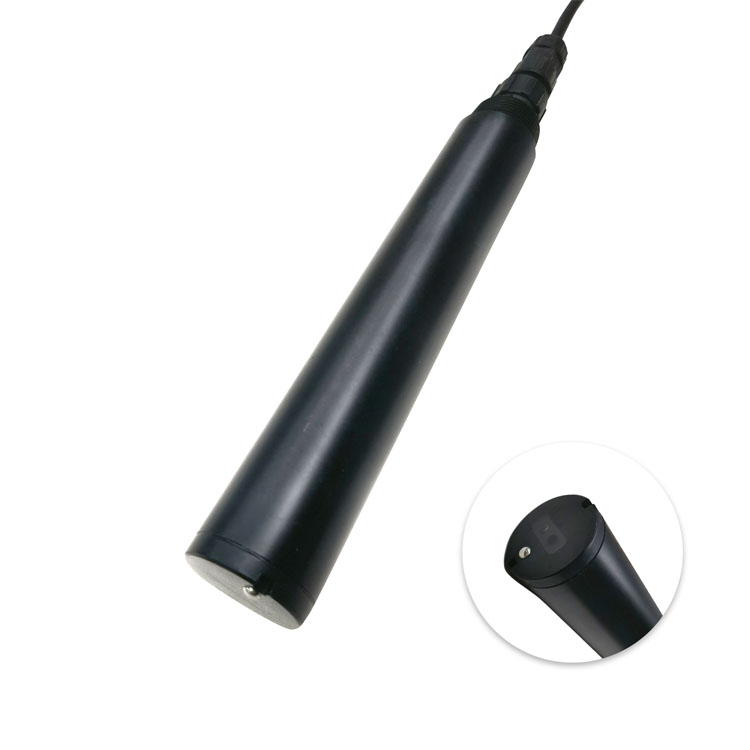
NiuBoL NBL-WQ-TS is installed at the field measurement layer. It converts the optical turbidity condition of water into RS485 Modbus RTU or 4-20 mA signals for PLC, RTU, pump-room controller or IoT gateway acquisition. In a complete smart pump-room system, turbidity data should be analyzed together with residual chlorine, pH, conductivity, pressure, flow and tank-level data.
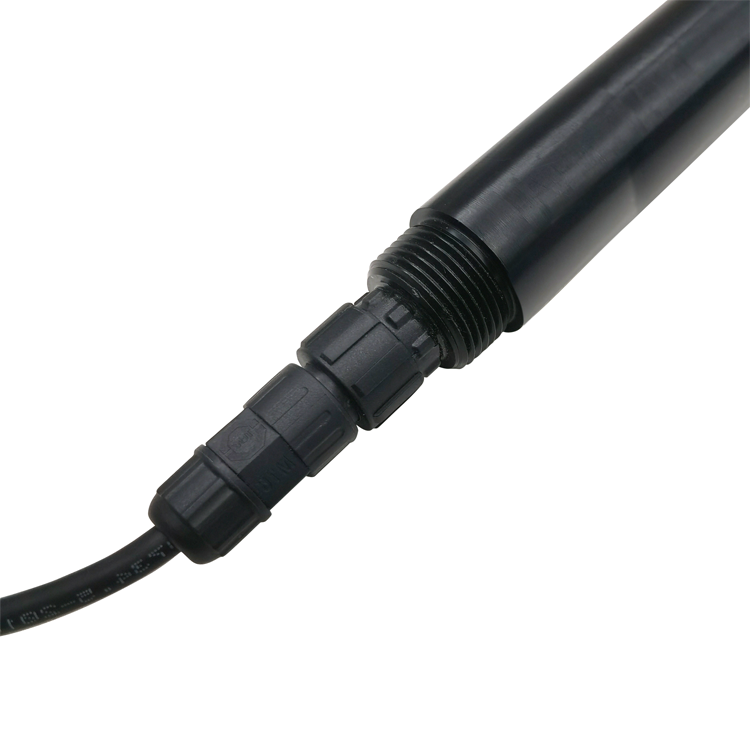
RS485 Modbus RTU is the preferred digital output for engineering projects because it supports long-distance wiring, multidrop networking and register-based acquisition. The 4-20 mA output is useful when an existing controller only accepts analog input. Before commissioning, the integrator should define address, baud rate, parity, register map and alarm logic.
| Parameter | Specification |
|---|---|
| Model | NBL-WQ-TS online turbidity water quality sensor |
| Measurement principle | 90 degree scattered light method with built-in temperature measurement |
| Measurement range | 0-20.00 NTU, 0-100.0 NTU, or 0-1000.0 NTU |
| Accuracy | ±3% or ±1.5 NTU for 0-20.00 NTU; ±3% or ±2 NTU for 0-100.0 NTU; ±5% or ±3 NTU for 0-1000.0 NTU; temperature ±0.3 C |
| Resolution | 0.01 NTU for 0-20.00 NTU; 0.1 NTU for 0-100.0 and 0-1000.0 NTU; temperature 0.1 C |
| Supply voltage | 12-24 VDC |
| Output signal | RS485 Modbus RTU and 4-20 mA |
| Power consumption | 0.2 W at 12 V |
| Protection rating | IP68 |
| Working condition | 0-50 C, pressure<0.2 MPa |
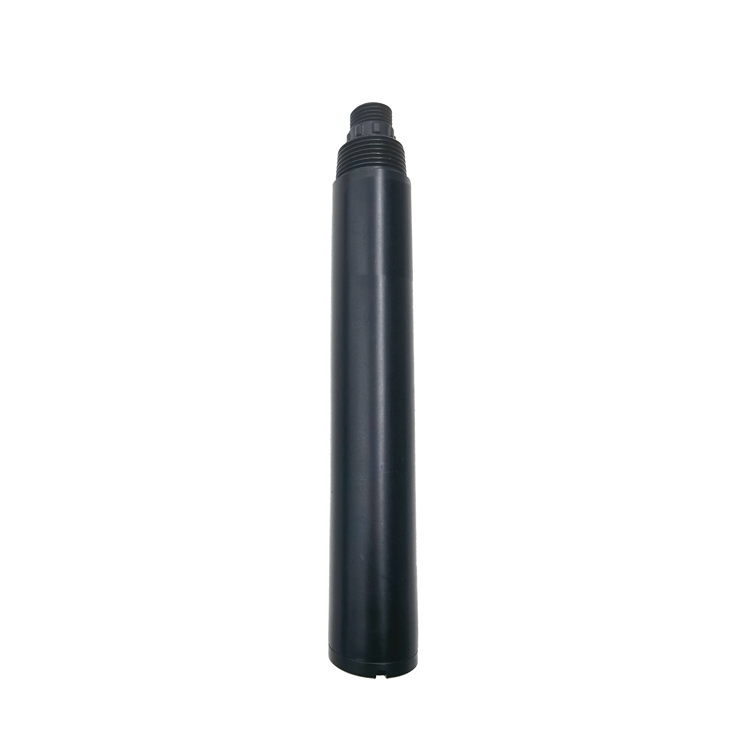
| Installation | Immersion installation, 3/4 NPT thread |
| Cable | Standard 5 m water-immersion cable, custom length available |
| Shell material | POM and ABS |
The source material mentions visual formazin comparison and scattered-light measurement. Visual comparison is low cost but depends on the operator. Online scattered-light measurement is more suitable for continuous projects because it outputs digital or analog data and can trigger remote alarms.
NBL-WQ-TS uses scattered-light measurement. When light enters the water sample, suspended substances scatter the light. The sensor measures scattered-light intensity perpendicular to the incident light, compares it with internal calibration values, and outputs a linearized turbidity value.
Site environment challenge: sediment disturbance, biofilm and tank-cleaning intervals affect water appearance and safety.
System integration scheme: install NBL-WQ-TS at the outlet or circulation point and send NTU data through RS485 Modbus RTU to the pump-room controller.
User value delivered: operators can verify tank cleaning, identify abnormal turbidity rise and support drinking-water compliance records.
Site environment challenge: finished-water turbidity must stay within strict NTU limits after filtration.
System integration scheme: use low-range turbidity monitoring with alarm thresholds below project limits.
User value delivered: the plant can respond before filtered water quality affects the distribution network.
Site environment challenge: source water and treatment conditions may be unstable after rainfall.
System integration scheme: use a wider range sensor connected to a remote telemetry unit.
User value delivered: project owners obtain trend evidence for sediment events and treatment adjustment.
Site environment challenge: storage tanks and internal networks may create secondary contamination risk.
System integration scheme: combine turbidity with residual chlorine and conductivity monitoring.
User value delivered: facility managers can build preventive maintenance workflows.
Accuracy selection: For finished drinking water, select 0-20 NTU to improve low-value resolution. For raw water or unstable source water, choose 0-100 NTU or 0-1000 NTU.
Communication selection: Use RS485 Modbus RTU for PLC, SCADA and IoT platforms. Use 4-20 mA where original cabinets require analog input.
Installation environment selection: Avoid bubbles, tank corners, sediment zones and direct mechanical impact.
Power supply selection: Use regulated 12-24 VDC and protect cables from moisture, surge and pulling force.
The cable should not be stretched during operation. Waterproof treatment is required at all wiring points because the probe cable may be exposed to water or humid pump-room conditions.
Routine maintenance includes rinsing the sensor surface with tap water, wiping stubborn dirt with a soft wet cloth, and checking whether the measurement window is dirty. The optical components are sensitive, so the probe should not be hit or disassembled on site.
Zero calibration should be performed in zero-turbidity solution after the value stabilizes for 3-5 minutes. Slope calibration should be performed in standard solution with the measurement face at least 10 cm from the beaker bottom.
Q1: Why is turbidity important in secondary water supply?
High turbidity indicates suspended and colloidal substances that can make water cloudy, create odor risk and support microbial growth.
Q2: Which drinking-water turbidity limit is commonly used?
GB 5749 generally uses 1 NTU, with 3 NTU allowed only under restricted source water and treatment conditions.
Q3: Why use online monitoring?
Manual testing gives isolated values, while online RS485 monitoring gives continuous trend data for control and alarms.
Q4: Which range should be selected?
Use 0-20 NTU for finished water and wider ranges for raw or unstable water.
Q5: Can it connect to PLC or SCADA?
Yes. NBL-WQ-TS supports RS485 Modbus RTU and 4-20 mA.
Q6: Where should it be installed?
At a representative outlet or sampling point, away from bubbles, sediment and wall reflection.
Q7: What should procurement confirm?
Range, output, cable length, installation depth, power supply and Modbus documentation.
Q8: How is calibration handled?
Use zero-turbidity solution for zero calibration and standard solution for slope calibration.
For secondary water supply projects, turbidity monitoring should be purchased as part of a complete acquisition system. NBL-WQ-TS is suitable where RS485 Modbus RTU compatibility, IP68 immersion and maintainable optical measurement are required.
 NBL-WQ-CL Water Quality Sensor Online Residual Chlorine Sensor.pdf
NBL-WQ-DO Online Fluorescence Dissolved Oxygen Sensor.pdf
NBL-WQ-NHN Ammonia Nitrogen Water Quality Sensor.pdf
NBL-WQ-COD Online Water Quality COD Sensor.pdf
NBL-WQ-PH Online pH Water Quality Sensor.pdf
NBL-WQ-EC water quality conductivity sensor.pdf
Related recommendations
Sensors & Weather Stations Catalog
Agriculture Sensors and Weather Stations Catalog-NiuBoL.pdf
Weather Stations Catalog-NiuBoL.pdf
Agriculture Sensors Catalog-NiuBoL.pdf
Water Quality Sensor Catalog-NiuBoL.pdf
Related products
 Combined air temperature and relative humidity sensor
 TDR Soil Moisture & Temperature Sensor for irrigation| RS485 |4-20mA| NBL-S-THR
 Soil pH sensor RS485 soil Testing instrument soil ph meter for agriculture |NBL-S-PH
 Wind Speed sensor Output Modbus/RS485/Analog/0-5V/4-20mA
 Tipping bucket rain gauge for weather monitoring auto rainfall sensor RS485/Outdoor/stainless steel
 Pyranometer Solar Radiation Sensor 4-20mA/RS485

Screenshot, WhatsApp to identify the QR code
WhatsApp number:+8615367865107
(Click on WhatsApp to copy and add friends)

