





— Blogs —
—Products—
 Consumer hotline +8618073152920
WhatsApp:+8615367865107
Address:Room 102, District D, Houhu Industrial Park, Yuelu District, Changsha City, Hunan Province, China
Product knowledge
Time:2026-08-25 09:08:00 Popularity:352
Quick Answer: A home weather station upgrade for project use should begin with the existing data interface, not a longer-range wireless accessory. Retain equipment when its measurements and accessible output meet the task. Add a compatible logger or gateway where needed; replace components only when their interface, exposure or data behaviour prevents the required result. Test the complete path from sensor to receiving application before accepting the upgrade.
A station may already show convincing weather readings on its console while offering no documented way to retrieve them for another system. The console display, a downloadable historical file and a live machine-readable connection are three different outputs. Record which one is available before requesting an industrial gateway.
Ask for the installed model, firmware, connector definition, electrical signal and data protocol. A proprietary radio link between a sensor and its console is not an RS485 interface. Two wireless devices using the same frequency are not necessarily able to communicate; their signalling, message format and pairing can differ.
If the existing system provides a usable local output, read a sample record and trace it back to an actual observation. Check the timestamp, units, missing-value flags and rainfall accumulation period. This inexpensive check can reveal that the main problem is software interpretation rather than a need to replace the outdoor sensors.
| Existing arrangement | Practical upgrade route | Reason to stop and reassess |
|---|---|---|
| Console with documented local export | Test the export against the project's record requirements | No usable timestamp, inadequate interval or inaccessible required channel |
| Documented serial sensor output | Select matching acquisition hardware and implement the parser | Unknown electrical levels or unavailable message definition |
| RS485 Modbus RTU instruments | Use a compatible logger, RTU or gateway with the correct register map | Power, address, scaling or polling requirements remain unresolved |
| Closed sensor-to-console radio only | Investigate a supported receiver interface or replace the inaccessible part | A proposed gateway is assumed to decode the radio without documented support |
Retaining a station is reasonable for non-critical observations when the data can be acquired and its limitations are acceptable. A different measurement objective can justify replacement. For example, moving from a household display to a site alarm introduces freshness and failure-handling requirements that the original installation may never have been intended to satisfy.
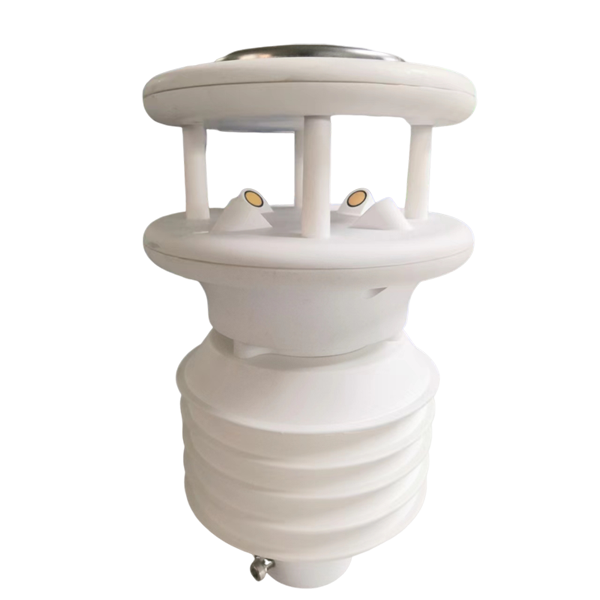
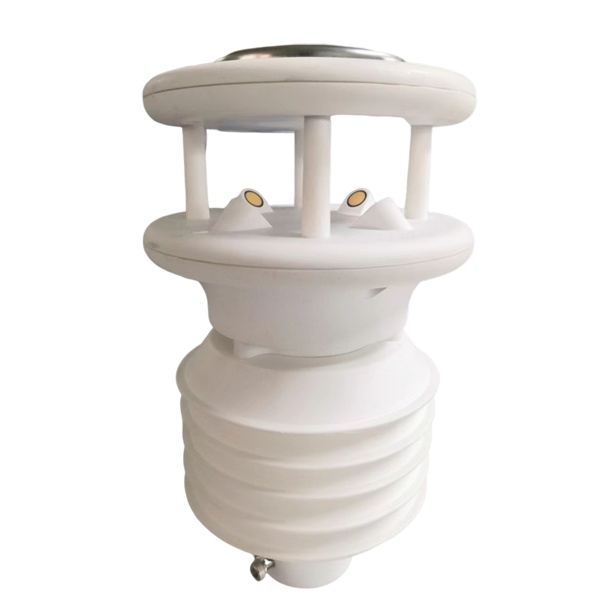
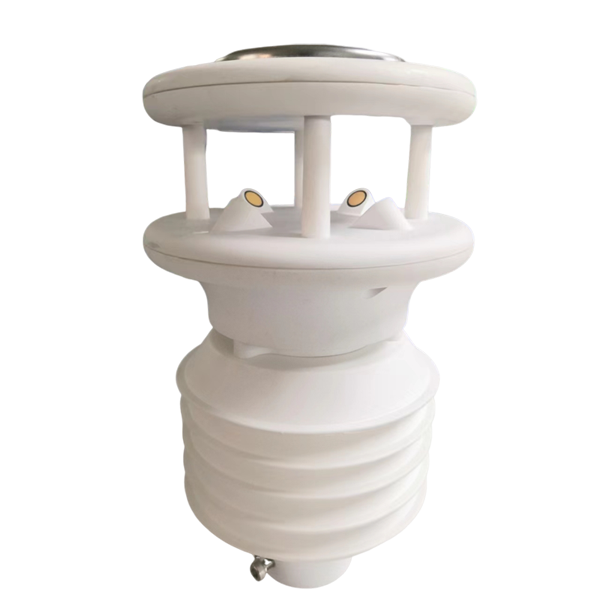
The compact NiuBoL weather assemblies illustrated in this article are sensor options, not wireless repeaters for an existing home station. A compatible sensor can feed a local acquisition device, which then sends data through a selected network. Replacing the sensing head does not resolve an unavailable internet connection or an incompatible server format.
Map the proposed path explicitly: weather sensor, local connection, logger or gateway, uplink and destination application. Mark the point at which each protocol changes. RS485 Modbus RTU on the sensor side does not imply that the remote application receives Modbus TCP; the gateway must be configured for the intended network service.
Evaluate the actual distance, antenna position, terrain, buildings, power availability and expected network interruptions. A catalogue range is not a field guarantee. Test from the final enclosure and antenna location, not from a phone or an unpacked device temporarily held above the cabinet.
Wi-Fi can use an existing local network where coverage and access permissions are suitable. Cellular communication can avoid dependence on that local network, but requires the correct regional modem, operator coverage and service arrangement. Ethernet may be preferable when a suitable cable route already exists. None of these choices changes the quality of the underlying weather exposure.
For a cabinet installation, account for how the enclosure affects radio reception and where the antenna lead enters. Provide strain relief and weatherproof cable entry as part of the installation. A good signal test with the cabinet open is not enough if reception falls when the finished enclosure is closed.
Obtain the site's networking requirements before ordering. A network that permits ordinary web browsing may not permit the required connection to a private server. Agree the destination, ports, authentication and connection direction with the network administrator, then demonstrate that actual configuration rather than an unrelated upload.
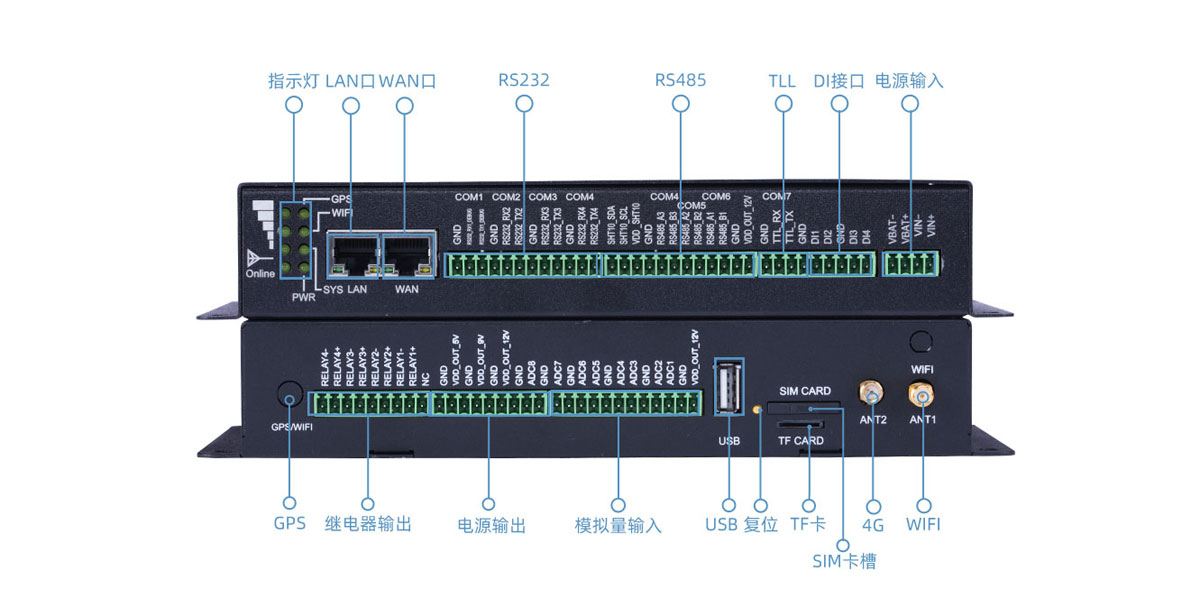
The NiuBoL TG462 / TG462S data logger provides a concrete route for acquiring compatible industrial sensors. It is not a universal decoder for proprietary home-station radio. Wi-Fi is optional, and the cellular configuration must suit the installation country and network operator.
| TG462 / TG462S item | Available specification | Upgrade implication |
|---|---|---|
| RS485 | 3 ports | Connect compatible serial instruments with appropriate configuration |
| RS232 | 4 ports, including 1 debug port | Do not count the debug connection as an unrestricted sensor port |
| Ethernet | 2 RJ45 interfaces, 10/100 Mbps | Useful for local networking and the specified WAN/LAN arrangement |
| Network functions | MQTT, transparent TCP/UDP and Modbus gateway functions | The destination's payload and authentication still need configuration |
| Wireless | Cellular by regional configuration; optional Wi-Fi | Order the required modules rather than assuming every function is fitted |
| Input supply | DC 5-35 V; standard adapter DC 12 V / 1.5 A | Include sensors and communication demand in the power design |
| Protection and operating temperature | IP30; -35 to +75 degrees C | Use a suitable protective cabinet outdoors; IP30 is not outdoor weather sealing |
| External storage and display | Micro SD up to 32 GB; 7-inch screen on TG462S | Specify storage behaviour and whether a local screen is needed |
Storage capacity alone does not establish automatic retransmission after an outage. Define which records are written, when they are committed, what happens when storage fills and how the destination handles recovered data. Required behaviour must be implemented and tested in the supplied software, not inferred from the presence of a card slot.
If the project only requires a documented export from an existing console, this gateway may be unnecessary. Conversely, multiple compatible field sensors, a private server and local acquisition requirements may justify an industrial logger. Choose according to the data path, not the appearance of the outdoor unit.
Connect one instrument first. For an RS485 sensor, verify the supplied wiring label, DC supply, serial settings, address and register interpretation. Keep a known observation beside the decoded value so an incorrect scale factor is not accepted as a working channel merely because communication succeeds.
When using multiple sensors on one bus, give them distinct supported addresses and check their serial requirements. A network gateway cannot correct two devices replying simultaneously at the same address. Use suitable cabling and a bus arrangement appropriate to the installation; do not assume that any collection of spare telephone cable and branches is equivalent.
Review accumulated measurements separately from instantaneous ones. A cumulative rainfall counter, a rate and an interval total need different processing. Restarting a device or changing the station can introduce a counter discontinuity. The receiving system should recognise that event rather than report a large negative or positive rainfall amount.
The existing station and a proposed replacement can run alongside one another during evaluation. Keep their positions and methods visible in the comparison. A difference between a roof-mounted old sensor and a field-mounted new one does not isolate sensor accuracy; exposure and aggregation may explain part of the discrepancy.
Prepare an acceptance test around the actual record interval. As a hypothetical example, one record every five minutes produces 288 expected records in a complete 24-hour day. If 12 unique records are absent, completeness is 276 / 288 = 95.8%. This arithmetic describes that test period, not annual availability or a product performance claim.
A delayed record recovered after an interruption can improve historical completeness without restoring a missed real-time warning. Store or compare measurement time and receipt time to distinguish those outcomes. Repeated uploads of the same record should not inflate the completeness count.
| Test | Observe at the receiver | Acceptance decision |
|---|---|---|
| Normal operation | Values, units, identifiers and expected timestamps | Records are decoded correctly at the agreed interval |
| Sensor disconnected | Invalid or stale status rather than a plausible old value | The application distinguishes missing measurement from normal weather |
| Uplink interrupted, logger powered | Current-data status and any locally retained records | The agreed recording and recovery behaviour is demonstrated |
| Power restart | Clock, configuration, counters and record continuity | Restart behaviour matches the application requirements |
For alarms, define what happens when data becomes too old for the task. A cloud notification cannot be relied on during loss of the path used to send it. Local action, operator notification and historical recovery are separate requirements; implement only those the project needs, but do not leave their absence ambiguous.

Q1. Can an industrial gateway receive my existing wireless sensor directly?
Only if that exact sensor radio and message format are supported. Matching a frequency or seeing a wireless antenna on the gateway is insufficient. Provide the existing model and interface documentation before proposing a receiver or replacement.
Q2. Must a home weather station upgrade replace every component?
No. Retain sensors, supports or data outputs that meet the new task. Replace inaccessible or unsuitable parts where necessary. Check whether reused sensors remain representative at their existing locations and whether the project can obtain records without a manual console reading.
Q3. Does Modbus RTU mean the server can read the sensor over the internet?
No. Modbus RTU describes the field communication in this arrangement. A logger or gateway must acquire the values and provide the chosen network interface. Server mapping, access control and record format require their own configuration.
Q4. Will a Micro SD card automatically recover missed uploads?
Not necessarily. Local writing, outage buffering, retransmission and duplicate handling are software behaviours. Specify and test the complete recovery sequence, including whether original observation times survive an outage and a restart.
Q5. What affects the upgrade price most?
The retained interface, number of new sensors, wireless modules, power changes and required software integration determine the work. There is no useful fixed upgrade price without those details. Ask for hardware and configuration costs separately, including any server-side changes.
Q6. What should accompany an enquiry to NiuBoL?
Send the existing equipment list, accessible output details, destination country, proposed antenna location, available power and a sample of the required receiving record. Include the test interval and acceptable interruption behaviour so the offer covers acquisition as well as wireless transport.
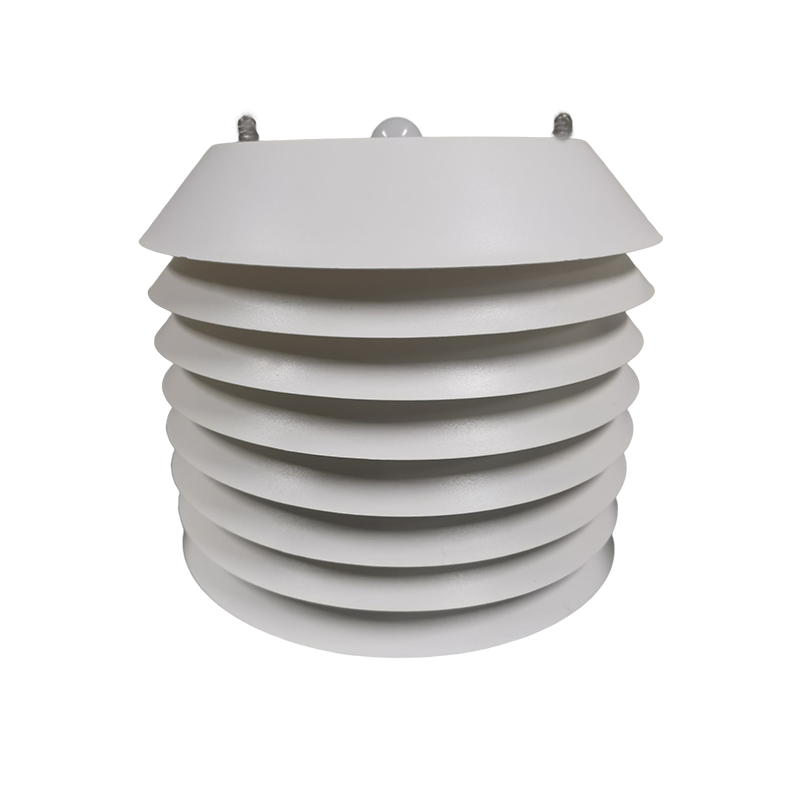
A home weather station upgrade succeeds when the required observations reach the intended application with interpretable units, timestamps and failure status. Verify the existing interface, choose the uplink from site conditions and test interruption recovery end to end. NiuBoL weather sensors and loggers can form a replacement or extension where their documented interfaces fit; a wireless label alone is not compatibility.
Prev:Wireless Dissolved Oxygen Monitoring: Inline Flow Cell and Gateway
Next:Water Monitoring Sensors: Can the Existing Cleaner Be Reused?
Related recommendations
Sensors & Weather Stations Catalog
 Agriculture Sensors and Weather Stations Catalog-NiuBoL.pdf
Weather Stations Catalog-NiuBoL.pdf
Agriculture Sensors Catalog-NiuBoL.pdf
Water Quality Sensor Catalog-NiuBoL.pdf
Related products
 Combined air temperature and relative humidity sensor
 TDR Soil Moisture & Temperature Sensor for irrigation| RS485 |4-20mA| NBL-S-THR
 Soil pH sensor RS485 soil Testing instrument soil ph meter for agriculture |NBL-S-PH Wind Speed sensor Output Modbus/RS485/Analog/0-5V/4-20mA
 0.2mm Tipping Bucket Rain Gauge for Weather & Hydrology | NiuBoL
 Pyranometer Solar Radiation Sensor 4-20mA/RS485


Screenshot, WhatsApp to identify the QR code
WhatsApp number:+8615367865107
(Click on WhatsApp to copy and add friends)

