





— Blogs —
—Products—
 Consumer hotline +8618073152920
WhatsApp:+8615367865107
Address:Room 102, District D, Houhu Industrial Park, Yuelu District, Changsha City, Hunan Province, China
Product knowledge
Time:2026-08-25 09:09:00 Popularity:297
Replacing water monitoring sensors does not automatically make an existing cleaning system reusable. A bracket may hold the new probe while an old brush, air nozzle or chemical cycle damages its sensing surface or fails to clean it. Evaluate mechanical contact, cleaning media and control commands before connecting NiuBoL replacement probes to an installed cleaning assembly.

Record the old probe's sensing-face position, exposed materials and cleaning method. Photograph the brush sweep, nozzle direction, mount and cable route with equipment safely isolated. Measure the clearance that determines contact, not just the diameter that determines whether the probe fits a clamp.
A replacement optical window may sit farther forward, an oxygen cap may protrude differently, or an electrode membrane may occupy the area previously swept by a brush. Similar dimensions do not establish equivalent contact pressure. Do not energize an old cleaning mechanism against a replacement probe merely to see whether it clears the surface.
| Existing arrangement | Reuse question | Required decision |
|---|---|---|
| External rotating brush | Does its path contact only surfaces approved for brushing? | Approve geometry and brush material for the new probe |
| Air or water jet | Are pressure, direction and exposure acceptable? | Establish a permitted cleaning cycle rather than assuming compatibility |
| Chemical rinse or soak | Are all wetted materials and sensing elements compatible? | Approve medium, concentration, contact time and rinsing |
| Probe with an internal cleaner | Does it require its own power and command sequence? | Integrate the delivered cleaner instead of duplicating an old sequence |
An optical BOD estimate, turbidity, ammonium and dissolved oxygen are different measurements. They also expose different sensing surfaces to the water. A cleaning action acceptable for one instrument is not approval for every probe in the station.
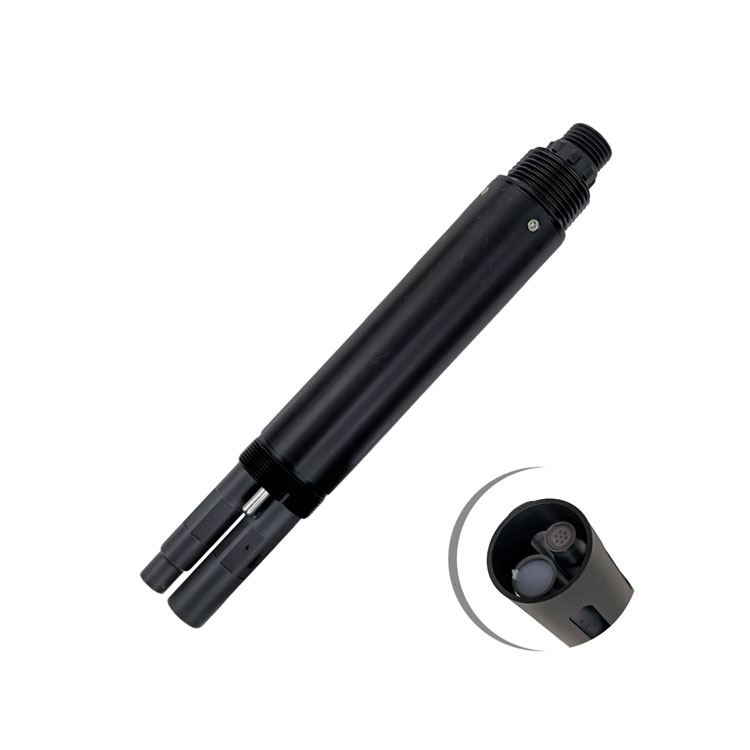
The NBL-WQ-TS turbidity probe needs a clean optical measurement window and adequate clearance from surrounding structures. The NBL-WQ-DO uses a replaceable fluorescent cap. The NBL-WQ-NHN uses an ammonium ion-selective sensing membrane. Do not scrape a membrane, abrade an optical cap or apply a shared chemical bath without a model-specific approved procedure.
A cleaning brush is optional on the NBL-WQ-BOD-4S; not every delivered unit includes it. Confirm the ordered assembly and its operating instructions before allocating a controller output or assuming the station can run unattended between service visits.
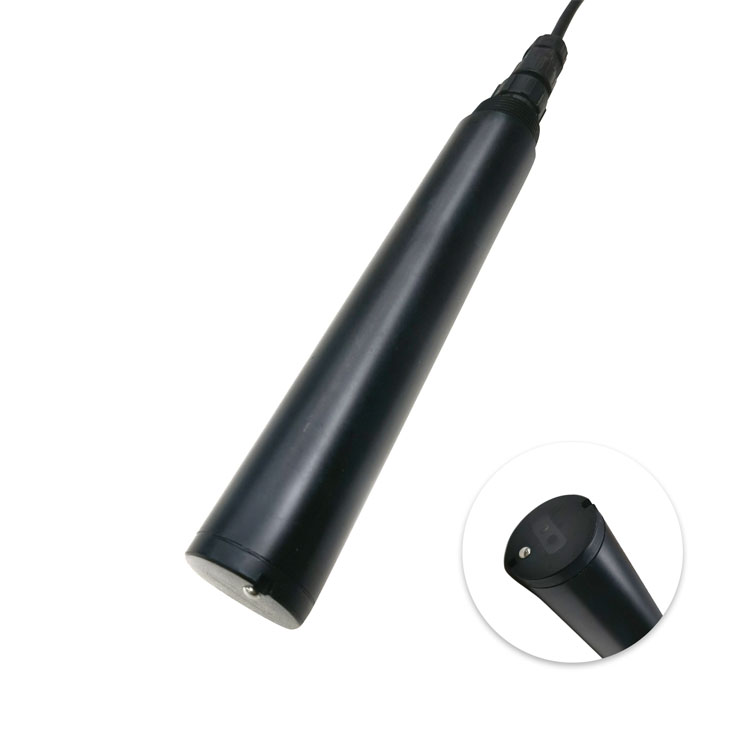
| Instrument | Selected product limits | What remains to qualify |
|---|---|---|
| NBL-WQ-TS | Range options 0-20, 0-100 or 0-1000 NTU; DC 12-24 V; 0.2 W at 12 V; IP68 | Window contact, optical clearance and external cleaning exposure |
| NBL-WQ-DO | 0-20.00 mg/L; +/-2% FS; DC 12-24 V; below 0.3 W at 12 V; IP68 | Compatibility with the fluorescent cap and its replacement access |
| NBL-WQ-NHN | Ammonium ion-selective measurement; DC 12-24 V; 0.2 W at 12 V; IP68 | Membrane compatibility, conditioning and chemical exposure |
| NBL-WQ-BOD-4S | Optical fluorescence estimate; DC 12-24 V; 0.2 W at 12 V; optional brush | Delivered brush configuration, mechanism load and commands |
These instrument power figures are not cleaning-actuator ratings. A brush motor, solenoid, compressor or rinse pump adds a separate load. Likewise, IP68 does not establish tolerance to a high-pressure cleaning jet, aggressive chemicals or every connector arrangement.
The quoted probe limits should be matched to the installed water, temperature and pressure independently of cleaning. A successful cleaning demonstration cannot qualify a probe for an unsuitable process. Optical COD or BOD estimates still need their own site correlation and verification where the project requires them.
RS485 Modbus RTU provides a communication framework, not a common cleaning command for all probes. Confirm whether the new instrument exposes a cleaner control, whether it reports a cleaning state, and which functions and registers apply. Do not send an old device's write sequence to a replacement sensor without reviewing its register map.
Where an external PLC or RTU operates cleaning, define the sequence explicitly: inhibit affected measurement use, run the approved action, allow the required recovery and then test for a fresh acceptable reading. The cleaning duration and recovery interval need the delivered equipment and field observations; they cannot be borrowed from an unrelated probe.
Keep raw records while marking the cleaning interval as out of service or otherwise invalid for the relevant operating calculation. Do not let a rinse-water reading, a brush passing the window or a disturbed oxygen cap produce a false process alarm. A data logger should distinguish unavailable process data from a genuine water-quality change.
When requesting a NiuBoL retrofit quotation, identify the existing cleaner, provide photographs and dimensions, and state its cleaning medium and control method. Ask for separate costs for the probe, cleaner modifications, control integration and field verification. Reusing hardware saves work only when it remains suitable for the replacement.
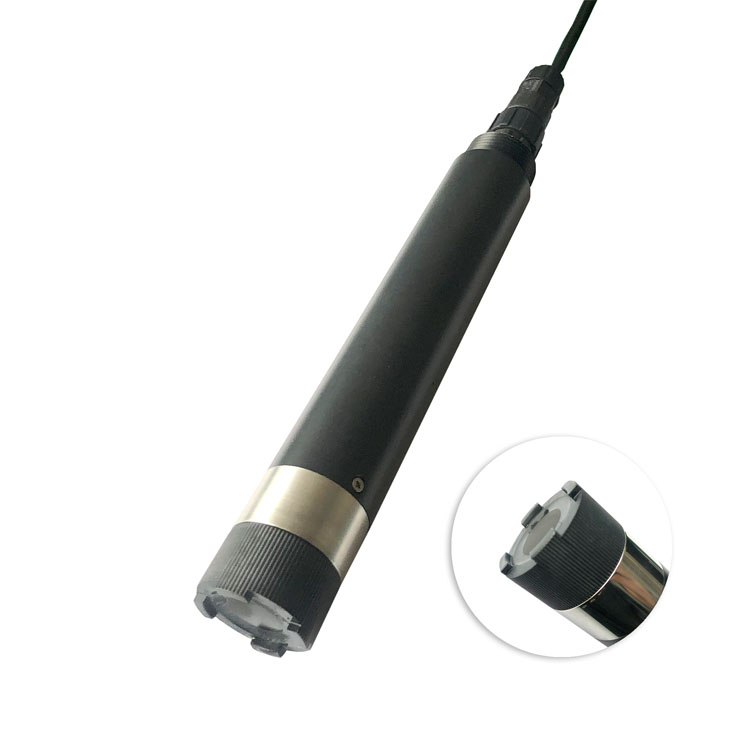
No. Diameter establishes only part of the mounting fit. The sensing-face position, sweep path, brush material and contact force also matter. Obtain approval for the actual probe and cleaner combination before operation.
Only if every affected instrument is qualified for that action. Membrane electrodes and optical surfaces may need different procedures. A shared cycle must also prevent disturbed or rinse-water readings from entering normal process decisions.
No such conclusion follows from IP68 alone. Use the cleaning method and exposure limits approved for the instrument, cap, seals and connector. Immersion protection is not blanket approval for a concentrated cleaning jet.
Only after matching its function, register and meaning to the new device. An unsupported write can change another setting rather than operate a cleaner. Test the reviewed sequence outside normal process control.
Confirm fresh readings in representative water after recovery and compare them with the appropriate reference check. Retain the as-found and after-cleaning records. Appearance alone cannot establish calibration or process suitability.
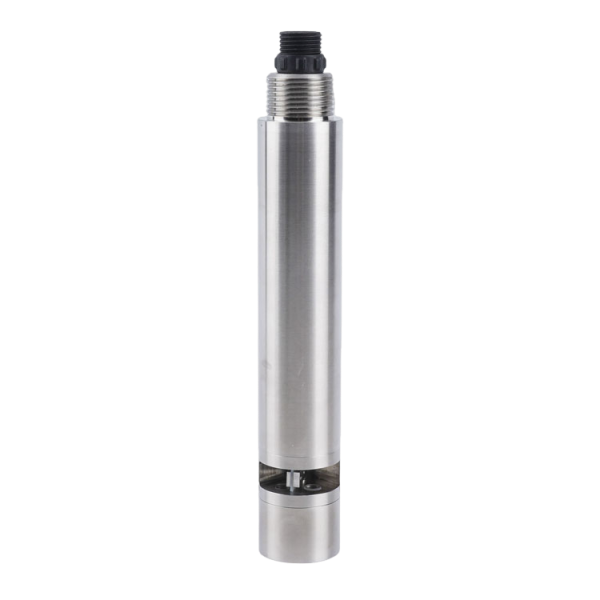
Assess water monitoring sensors and their cleaning equipment as a matched installation. Reuse depends on approved surface contact, cleaning exposure, actuator supply and control behavior. Qualifying one replacement before a wider rollout helps avoid damage, false alarms and an incomplete retrofit quotation.
Related recommendations
Sensors & Weather Stations Catalog
 Agriculture Sensors and Weather Stations Catalog-NiuBoL.pdf
Weather Stations Catalog-NiuBoL.pdf
Agriculture Sensors Catalog-NiuBoL.pdf
Water Quality Sensor Catalog-NiuBoL.pdf
Related products
 Combined air temperature and relative humidity sensor
 TDR Soil Moisture & Temperature Sensor for irrigation| RS485 |4-20mA| NBL-S-THR
 Soil pH sensor RS485 soil Testing instrument soil ph meter for agriculture |NBL-S-PH
 Wind Speed sensor Output Modbus/RS485/Analog/0-5V/4-20mA
 0.2mm Tipping Bucket Rain Gauge for Weather & Hydrology | NiuBoL
 Pyranometer Solar Radiation Sensor 4-20mA/RS485


Screenshot, WhatsApp to identify the QR code
WhatsApp number:+8615367865107
(Click on WhatsApp to copy and add friends)

