





— Blogs —
—Products—
 Consumer hotline +8618073152920
WhatsApp:+8615367865107
Address:Room 102, District D, Houhu Industrial Park, Yuelu District, Changsha City, Hunan Province, China
Product knowledge
Time:2026-05-27 16:35:45 Popularity:524
Quick Answer: Industrial water quality requirements depend on the water's next use. Cooling water, boiler feed, cleaning water, product-contact water and reclaimed water have different failure risks. Begin with that use and the applicable process specification, then select online measurements and separate analyses that can demonstrate the required condition.
Industrial water may act as a raw material, processing medium, cleaning fluid, heat-transfer medium or utility supply. A treatment step that makes water useful for one circuit may not make it suitable for another. Discharge acceptance also does not establish suitability for reuse in a manufacturing process.
Keep the water-use classification when planning monitoring. It prevents a generic multi-parameter package from becoming the default for every point. The useful question is which property can cause the relevant product, equipment or treatment failure, and which measurement can detect that property reliably.
| Water use | Properties requiring attention | What online measurements do not establish alone |
|---|---|---|
| Cooling water | Ionic concentration, temperature, suspended material and treatment chemistry | Conductivity alone does not quantify hardness, corrosion rate or microbial activity |
| Boiler feed and condensate | Process-specific ionic, oxygen, hardness, silica and other chemistry requirements | A general mg/L oxygen probe or broad conductivity range may not meet a trace-level duty |
| Cleaning and surface treatment | Carryover, dissolved salts, particles and substances that leave residues or interfere with treatment | A clear appearance or low turbidity does not prove low dissolved contamination |
| Water incorporated into a product | Quality requirements of the product and manufacturing process | A few online channels do not replace all required microbiological or chemical tests |
| Textile and other appearance-sensitive processes | Hardness, color, iron, manganese or other process-sensitive constituents | Conductivity does not identify the metal or hardness concentration causing the problem |
| Treated water for reuse | Properties required by the receiving circuit, including relevant dissolved and suspended contaminants | Passing a wastewater outlet limit does not automatically qualify the intended reuse |
Evaporation can concentrate dissolved substances in an open recirculating cooling system. Conductivity is useful for observing that behavior and supporting an appropriate blowdown-control strategy. It is not a complete scaling or corrosion analysis.
The U.S. Department of Energy discussion of cooling-tower controls describes conductivity-based concentration control. The actual operating target still depends on source-water chemistry, treatment, equipment and operating conditions. A conductivity threshold copied from another plant can be inappropriate.
For an illustrative comparison, recirculating water at 2400 uS/cm and make-up water at 600 uS/cm give a conductivity ratio of four when measured on a comparable temperature basis. That ratio can support a concentration estimate under appropriate conditions. Dosing chemicals, a changing source, precipitation or other process changes can affect the relationship; it is not a direct measurement of every dissolved constituent.
Use pH, temperature, suitable particle monitoring and the treatment program's separate chemistry checks where needed. Set the relevant dosing and blowdown logic in the controller; an RS485 sensor supplies a measurement, not the entire cooling-water treatment strategy.
Boiler-water requirements depend on the equipment, pressure regime and treatment program. Feed water, boiler water and condensate are also different sampling duties. Select the required analytical quantity and level before assigning an ordinary water probe to a steam-cycle point.
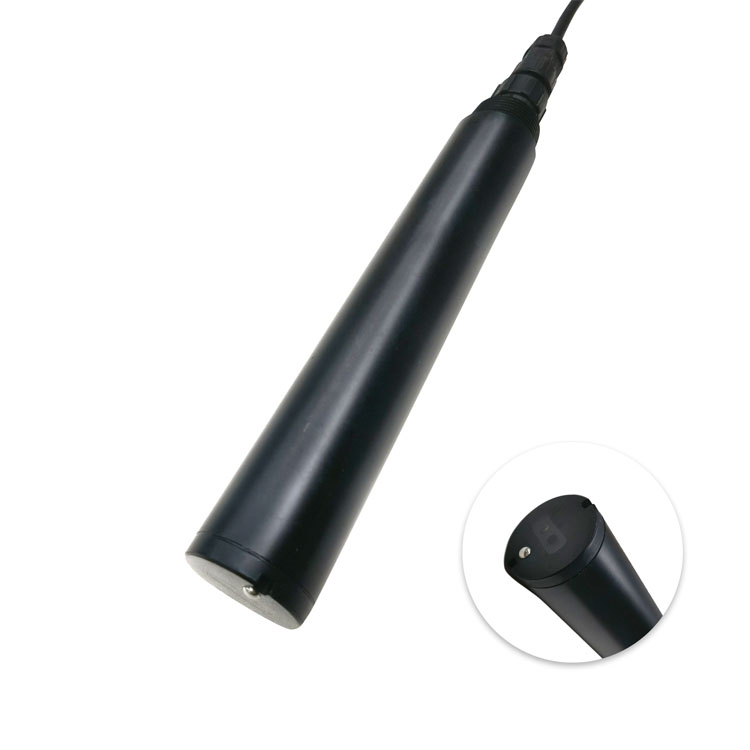
A general-purpose dissolved oxygen sensor with a 0-20 mg/L range is not automatically a trace-oxygen instrument. For example, the separate NBL-WQ-DO configuration specifies +/-2% full scale, equivalent to +/-0.4 mg/L. That specification cannot demonstrate a much smaller microgram-per-liter requirement simply because the display shows two decimal places.
Likewise, a low conductivity range does not by itself establish high-purity measurement capability. Review temperature reporting, sample conditioning and the required measurement accuracy. Hot or pressurized samples need an engineered sampling arrangement appropriate to both the instrument and the process.
For a final rinse, conductivity can help observe ionic carryover, while turbidity can reveal a different particle-related change. Neither identifies every chemical left by cleaning. Establish which residues matter to the manufacturing operation and retain the necessary specific tests.
Food, beverage and pharmaceutical operations may have product-contact, utility and other water categories with different requirements. The site's applicable specification and quality system determine the required analyses and qualification. An online sensor portfolio should not be described as automatically establishing those water grades.
For reuse, start at the receiving circuit. Treated water suitable for one cooling or washing duty may be unsuitable for another process. Where COD, ammonia nitrogen or another treatment indicator is relevant, define the method and compare representative samples. A UV-based organic-load estimate is not automatically equivalent to every formal COD method.
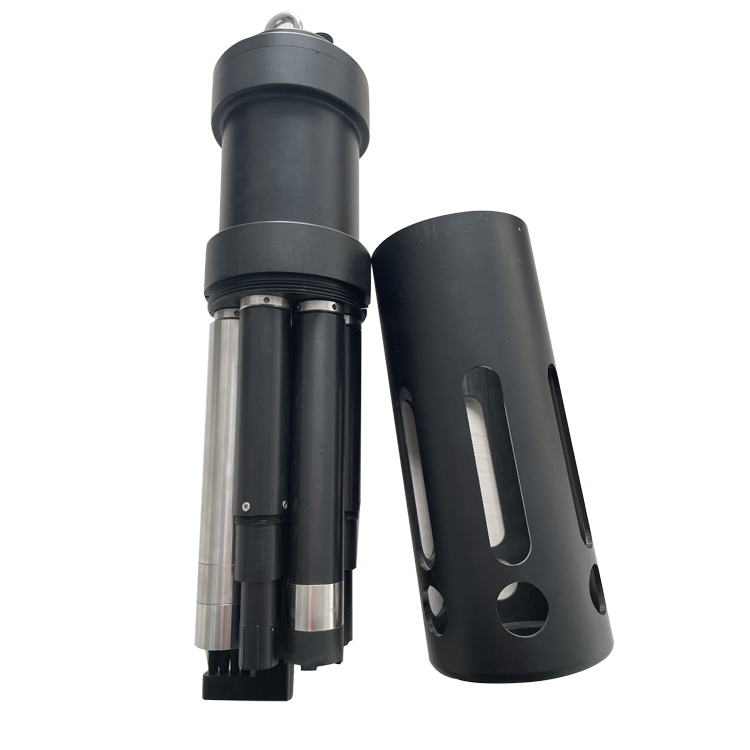
The NiuBoL NBL-WQ-MPS-5A combines selected digital sensing channels at one immersed location. It can support process observation when those channels belong at the same point. Separate probes or dedicated analyzers remain appropriate where locations, methods or required measurement levels differ.
| Configuration item | NBL-WQ-MPS-5A basis | Selection consequence |
|---|---|---|
| Optional channels | DO, COD, pH, ORP, conductivity/salinity, ammonia nitrogen and turbidity; up to eight parameters including temperature | Specify the installed combination, not the entire list as a standard delivery |
| pH and ORP options | pH 0-14, accuracy +/-0.1; ORP -1500 to +1500 mV, accuracy +/-6 mV | Match the operating range and chemistry to the actual process |
| Conductivity options | 0-5000 uS/cm or 0-200 mS/cm; stated accuracy +/-1.5% FS | These module specifications are not the separate low-range NBL-WQ-EC specifications |
| Power | 12 V DC +/-5%; stated consumption 5 W at 12 V | Verify the supply at the instrument and include cleaning duty and other equipment loads |
| Data interface | RS485 Modbus RTU | A compatible PLC, RTU or data logger must interpret the delivered channel map |
| Cleaning and cable | Configurable automatic cleaning; standard 5 m cable and waterproof quick connections | Retain inspection, individual-channel verification and practical removal access |
Confirm the complete assembly's operating limits and the selected modules' wetted construction for the proposed water. A parameter option does not establish compatibility with every solvent, concentrated chemical, process pressure or temperature. Do not import the limits of a similarly named standalone sensor into the integrated unit.
For each point, record the water use, required quantity, normal and upset conditions, and the action that follows an abnormal result. Some points need only a trend for investigation; others need a tighter measurement and reference check before water is accepted. The instrument should be evaluated against that decision, not only against its maximum range.
During commissioning, confirm the actual sample location and compare results using the appropriate method and timing. Check conductivity temperature mode, units and decimal scaling. A 1000-fold uS/cm versus mS/cm error can otherwise appear to be a sudden process event.
Test the data path through the controller and final display, including invalid or stale measurements. Parameter alarms and communication failures need distinct status handling. Keep chemical dosing or water-routing decisions under the designed process controls rather than assuming the sensor performs those functions.
For a NiuBoL configuration review, provide the water's intended use, required acceptance criteria, sample conditions and the existing control interface. Identify any specific hardness, silica, trace oxygen, microbial or other analyses that the project requires. This allows the online scope to be defined without promising that one probe replaces the remaining tests.
No. Water incorporated into a product, cooling water, boiler feed and reclaimed wash water can have different requirements. Define the receiving use and the relevant process specification before choosing limits and instruments.
No. Conductivity reflects ionic conduction and can help follow concentration changes. Hardness and scaling behavior depend on particular constituents and operating chemistry. Retain the required chemistry measurements rather than substituting a conductivity number.
Only if its demonstrated performance meets that specific duty. A 0-20 mg/L probe with +/-0.4 mg/L accuracy cannot establish a much smaller trace-level requirement. Range and display decimals alone do not provide the necessary performance.
No. The installed modules and ranges must be specified. The maximum parameter count describes configuration capacity, not a promise that every optional measurement is included or suitable for every process.
No. Reuse has to meet the receiving circuit's requirements. Evaluate the contaminants and operational risks relevant to that destination, including tests not performed by the online station.
Compare the same water-use duty, measurement methods, installed ranges and required performance. Include any necessary sampling and signal-conversion equipment. A lower price for a different method or an omitted trace-level analyzer is not an equivalent offer.
Industrial water quality requirements follow the next use of the water. Keep the useful distinction between cooling, steam-cycle, cleaning, product and reuse duties, then match each measurement to the actual risk. NiuBoL online sensors can provide selected process channels while dedicated analyses cover requirements beyond those channels' capabilities.
 NBL-WQ-CL Water Quality Sensor Online Residual Chlorine Sensor.pdf
NBL-WQ-DO Online Fluorescence Dissolved Oxygen Sensor.pdf
NBL-WQ-NHN Ammonia Nitrogen Water Quality Sensor.pdf
NBL-WQ-COD Online Water Quality COD Sensor.pdf
NBL-WQ-PH Online pH Water Quality Sensor.pdf
NBL-WQ-EC water quality conductivity sensor.pdf
Prev:Secondary Water Supply Turbidity Monitoring and NiuBoL Online Turbidity Sensor Selection
Next:Multi-Parameter Water Quality Analyzer: Modules, Cleaning and Data Checks
Related recommendations
Sensors & Weather Stations Catalog
Agriculture Sensors and Weather Stations Catalog-NiuBoL.pdf
Weather Stations Catalog-NiuBoL.pdf
Agriculture Sensors Catalog-NiuBoL.pdf
Water Quality Sensor Catalog-NiuBoL.pdf
Related products
 Combined air temperature and relative humidity sensor
 TDR Soil Moisture & Temperature Sensor for irrigation| RS485 |4-20mA| NBL-S-THR
 Soil pH sensor RS485 soil Testing instrument soil ph meter for agriculture |NBL-S-PH
 Wind Speed sensor Output Modbus/RS485/Analog/0-5V/4-20mA
 0.2mm Tipping Bucket Rain Gauge for Weather & Hydrology | NiuBoL
 Pyranometer Solar Radiation Sensor 4-20mA/RS485


Screenshot, WhatsApp to identify the QR code
WhatsApp number:+8615367865107
(Click on WhatsApp to copy and add friends)

