





— Blogs —
—Products—
 Consumer hotline +8618073152920
 WhatsApp:+8615367865107
Address:Room 102, District D, Houhu Industrial Park, Yuelu District, Changsha City, Hunan Province, China
Product knowledge
Time:2026-05-27 16:35:50 Popularity:326
The supplied material explains that a multi-parameter water quality analyzer is mainly used for water treatment process monitoring and water-use process monitoring. Its data participates in process control so the treatment process can be optimized, efficiency improved and energy consumption reduced while water quality remains within the required range.
Traditional monitoring instruments often produce isolated data. Modern water treatment projects need correlated parameters, fast response, stable online operation and automatic data transmission, especially for dissolved oxygen, turbidity, pH, conductivity, COD, ammonia nitrogen and temperature.
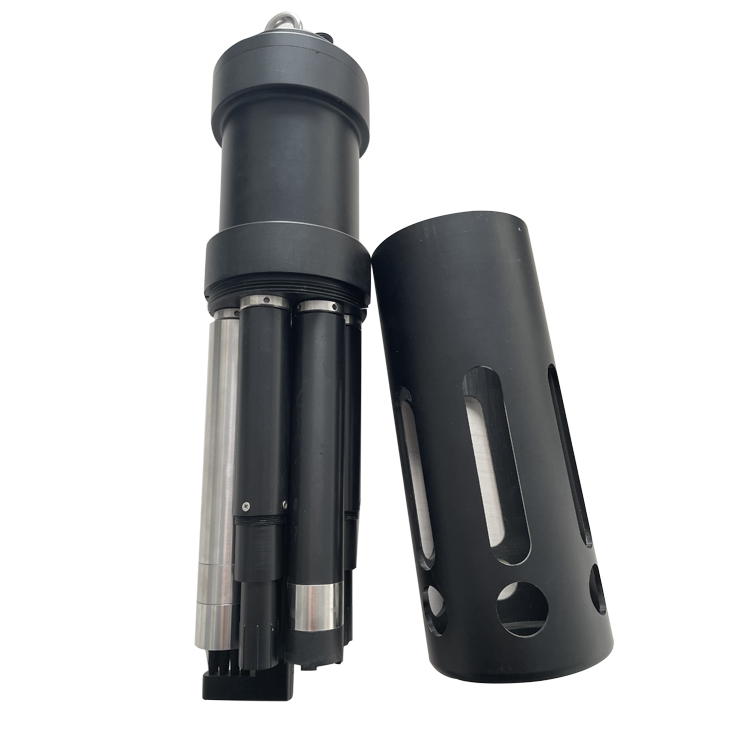
NiuBoL NBL-WQ-MPS-5A is an integrated field monitoring node with optional digital sensors and automatic cleaning. The protective cover prevents large suspended particles and organisms from damaging the internal probes while allowing normal water contact.
The self-cleaning device can be configured by cleaning interval and cleaning cycles. In long-term online applications, it reduces biofilm attachment, manual maintenance and data drift.
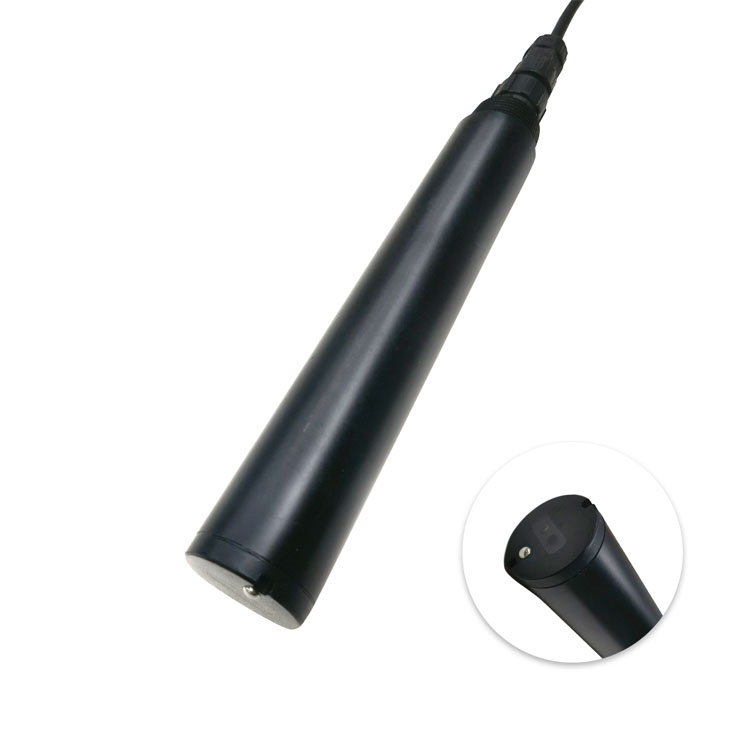
The analyzer uses RS485 Modbus RTU. Each parameter should be mapped with unit, decimal point and alarm threshold. Data can then be uploaded through 4G, Ethernet or telemetry devices according to the project architecture.
| Parameter | Specification |
|---|---|
| Model | NBL-WQ-MPS-5A online multi-parameter self-cleaning water quality sensor |
| Measurable parameters | Dissolved oxygen, COD, pH, ORP, conductivity/salinity, ammonia nitrogen, turbidity and temperature; up to 8 parameters including temperature |
| Dissolved oxygen | 0-20 mg/L, accuracy 卤0.4 mg/L, resolution 0.01 mg/L |
| Turbidity | 0-100 NTU with 卤3% or 卤2 NTU; 0-1000 NTU with 卤5% or 卤3 NTU; resolution 0.1 NTU |
| Conductivity / salinity | 0-5000 uS/cm, 0-200 mS/cm, 0-70 PSU; conductivity accuracy 卤1.5% F.S. |
| pH / ORP | pH 0-14, 卤0.1 pH, 0.01 pH; ORP -1500 mV to +1500 mV, 卤6 mV, 1 mV |
| Ammonia nitrogen | 0-100 mg/L or 0-1000 mg/L; 卤10% or 卤2 mg/L; resolution 0.1 mg/L |
| Output signal | RS485 Modbus RTU |
| Cleaning method | Automatic cleaning, configurable interval and cleaning cycles |
| Supply voltage | 12 VDC 卤5% |
| Power consumption | 5 W at 12 V |
| Cable and connector | Waterproof quick connector, standard 5 m cable, custom length available |
| Protection structure | Integrated immersion body with protective guard |
Dissolved oxygen is linked to aeration and biological activity. Turbidity reflects suspended solids and filtration condition. pH affects chemical dosing and reaction efficiency. Conductivity reflects dissolved ions and salinity. COD and ammonia nitrogen reflect organic and nutrient pollution load. Temperature affects biological and chemical reactions.
A multi-parameter analyzer becomes valuable when these values are read together. COD increase with falling dissolved oxygen may indicate increased organic load. Turbidity rise after filtration may indicate filter breakthrough. Conductivity change in reuse water may indicate process contamination.
Site environment challenge: influent load, aeration condition and sludge activity change continuously.
System integration scheme: monitor DO, ORP, pH, COD, ammonia nitrogen and temperature through Modbus RTU.
User value delivered: operators can adjust aeration and process control based on real-time trends.
Site environment challenge: raw-water turbidity, pH and conductivity change after rainfall or seasonal variation.
System integration scheme: install multi-parameter monitoring at raw water, sedimentation, filtration and outlet points.
User value delivered: the plant tracks treatment-stage performance before outlet quality is affected.
Site environment challenge: algae, dissolved oxygen and turbidity change with temperature, runoff and eutrophication.
System integration scheme: use multi-parameter sensors connected to remote data loggers.
User value delivered: teams obtain continuous trend data for water-resource management.
Site environment challenge: dissolved oxygen, ammonia nitrogen, pH and temperature affect production stability.
System integration scheme: connect the analyzer to a controller with alarms and historical storage.
User value delivered: operators reduce manual testing and respond faster to risk.
Accuracy selection: Choose modules according to control target. DO and pH often require higher process accuracy; COD and turbidity ranges should match the treatment stage.
Communication selection: RS485 Modbus RTU should be selected for PLC, SCADA or remote platforms.
Installation environment selection: Select representative flow locations with limited bubbles and accessible maintenance space.
Power supply selection: Reserve stable 12 VDC cabinet capacity for the cleaning mechanism.
The analyzer should not be treated as one fixed product for every project. The parameter combination must be selected by process purpose.
Calibration should be handled by individual parameter. pH, dissolved oxygen, conductivity and turbidity have different standard solutions, calibration cycles and maintenance methods.
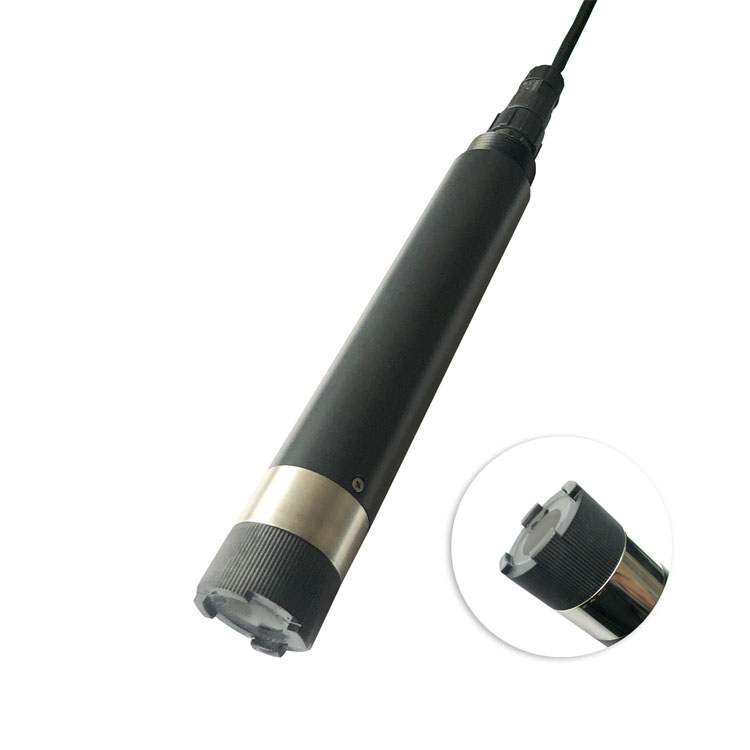
Q1: Why use a multi-parameter analyzer?
It reduces installation points, unifies communication and provides correlated data at the same location.
Q2: Which parameters can be configured?
DO, COD, pH, ORP, conductivity, salinity, ammonia nitrogen, turbidity and temperature.
Q3: What is automatic cleaning for?
It reduces microbial attachment and surface fouling for better long-term stability.
Q4: Can data be uploaded remotely?
Yes. RS485 Modbus RTU data can be collected by a gateway and uploaded through 4G or other networks.
Q5: How should wastewater projects select parameters?
Common parameters include DO, ORP, pH, temperature, COD and ammonia nitrogen.
Q6: How should drinking-water projects select parameters?
Common parameters include turbidity, pH, conductivity, residual disinfectant and temperature.
Q7: What should procurement define first?
Parameter set, range, cable length, cleaning requirement, installation structure and Modbus documentation.
Q8: What is the biggest integration risk?
Wrong parameter combination or non-representative installation location.
A multi-parameter analyzer is valuable when a project needs correlated, continuous and integrated process data. NBL-WQ-MPS-5A should be selected by modules, cleaning requirement, RS485 compatibility and maintenance conditions.
 NBL-WQ-CL Water Quality Sensor Online Residual Chlorine Sensor.pdf
NBL-WQ-DO Online Fluorescence Dissolved Oxygen Sensor.pdf
NBL-WQ-NHN Ammonia Nitrogen Water Quality Sensor.pdf
NBL-WQ-COD Online Water Quality COD Sensor.pdf
NBL-WQ-PH Online pH Water Quality Sensor.pdf
NBL-WQ-EC water quality conductivity sensor.pdf
Prev:Industrial Water Quality Requirements and Online Sensor Integration for Process Water Systems
Next:Online Turbidity Transmitter Installation Steps for RS485 Modbus Water Quality Projects
Related recommendations
Sensors & Weather Stations Catalog
Agriculture Sensors and Weather Stations Catalog-NiuBoL.pdf
Weather Stations Catalog-NiuBoL.pdf
Agriculture Sensors Catalog-NiuBoL.pdf
Water Quality Sensor Catalog-NiuBoL.pdf
Related products
 Combined air temperature and relative humidity sensor
 TDR Soil Moisture & Temperature Sensor for irrigation| RS485 |4-20mA| NBL-S-THR
 Soil pH sensor RS485 soil Testing instrument soil ph meter for agriculture |NBL-S-PH
 Wind Speed sensor Output Modbus/RS485/Analog/0-5V/4-20mA
 Tipping bucket rain gauge for weather monitoring auto rainfall sensor RS485/Outdoor/stainless steel
 Pyranometer Solar Radiation Sensor 4-20mA/RS485

Screenshot, WhatsApp to identify the QR code
WhatsApp number:+8615367865107
(Click on WhatsApp to copy and add friends)

