





— Blogs —
—Products—
 Consumer hotline +8618073152920
 WhatsApp:+8615367865107
Address:Room 102, District D, Houhu Industrial Park, Yuelu District, Changsha City, Hunan Province, China
Product knowledge
Time:2026-06-14 18:56:31 Popularity:278
A six-element weather sensor is a compact field data source for projects that require temperature, relative humidity, wind speed, wind direction, atmospheric pressure, and rainfall from one integrated device. For project procurement teams, its value lies in reducing installation complexity while maintaining a clear interface for industrial data acquisition.
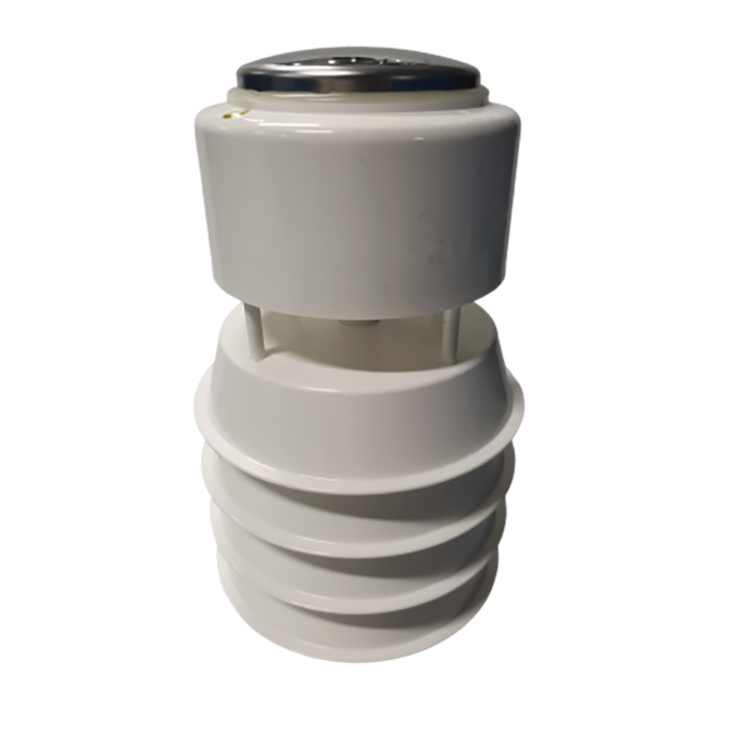
Agricultural production, infrastructure safety, environmental monitoring, and disaster warning all rely on timely meteorological data. A six-element sensor gives integrators a compact package that covers the basic atmospheric variables needed for irrigation analysis, wind risk evaluation, climate records, rainfall response, and project operation dashboards.
For system integrators, the main advantage is not only the number of parameters. The integrated structure simplifies pole design, cable routing, address configuration, and maintenance planning. This helps contractors deploy more monitoring points without multiplying sensor brackets, junction boxes, or independent power channels.
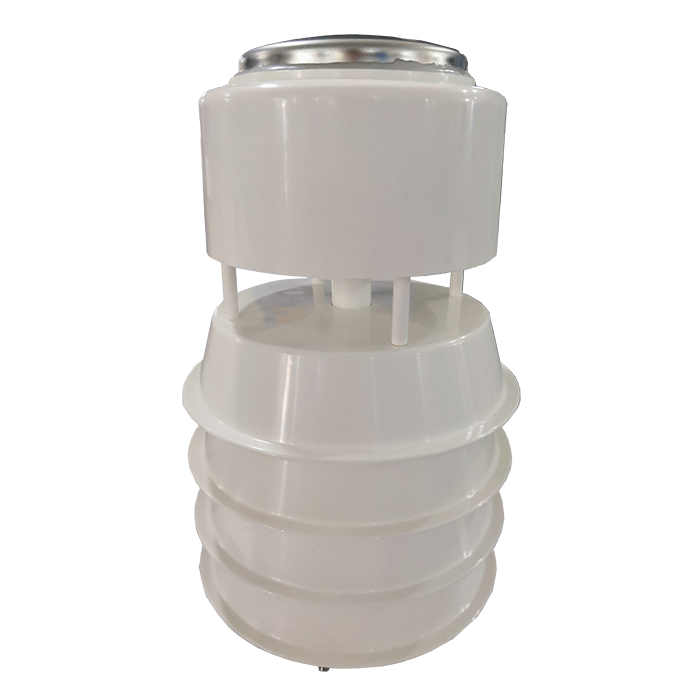
The NiuBoL six-element ultrasonic sensor uses ultrasonic wind measurement and piezoelectric rainfall detection with digital temperature, humidity, and pressure sensing. With no mechanical wind cups or vane shafts, the system avoids startup wind speed limitations and reduces wear in long-term outdoor service.
The standard RS485 output and MODBUS protocol make the sensor suitable for industrial gateways, PLCs, RTUs, and cloud-connected acquisition terminals. Optional interface adaptation can support project architectures that require serial, Ethernet, or wireless transmission through external communication modules.
| Item | Specification | Project Relevance |
|---|---|---|
| Model | NBL-W-61MUWS six-element weather sensor | Model reference for integrated wind, rainfall, temperature, humidity, and pressure monitoring |
| Power Supply | DC 12V-24V | Flexible for solar controller or industrial cabinet power |
| Signal Output | RS485 | Supports field bus communication |
| Communication Protocol | Standard MODBUS | Gateway and PLC compatible |
| Baud Rate | 9600 | Common default for data acquisition systems |
| Average Power Consumption | 0.3W | Suitable for low-power remote stations |
| Material | ABS | Outdoor integrated housing |
| Protection Class | IP65 | Supports outdoor monitoring deployment |
| Parameter | Range | Accuracy / Resolution |
|---|---|---|
| Wind Speed | 0-40m/s | ±0.5 + 3%FS / 0.01m/s |
| Wind Direction | 0-359° | ±3° / 1° |
| Temperature | -50 to 100℃ | ±0.5℃ / 0.1℃ |
| Humidity | 0-100%RH | ±5%RH / 0.1%RH |
| Atmospheric Pressure | 500-1100hPa | ±1.5hPa / 0.1hPa |
| Rainfall | 0-8mm/min | ±10% / 0.01mm |
In smart agriculture, six-element data can be connected with irrigation controllers, greenhouse ventilation systems, farm management platforms, and disease-risk models. In environmental monitoring, it can provide rainfall and wind data for air-quality stations, ecological restoration sites, reservoirs, or industrial boundary monitoring.
Transport and energy projects can use wind and rainfall data for operational safety. Ports, airports, photovoltaic sites, and road weather stations often require compact, stable, and low-maintenance sensors that can be integrated into existing data platforms without redesigning the whole control system.
Choose a six-element sensor when rainfall is a core variable and the project needs a compact device with wind, temperature, humidity, pressure, and precipitation data. If the project requires illuminance, solar radiation, PM2.5, PM10, or noise, consider higher-parameter ultrasonic weather station configurations.
Before procurement, confirm installation height, power supply, transmission distance, cable length, MODBUS addressing, data collection interval, enclosure requirements, and whether the system needs a data logger, solar power unit, 4G gateway, or cloud platform.
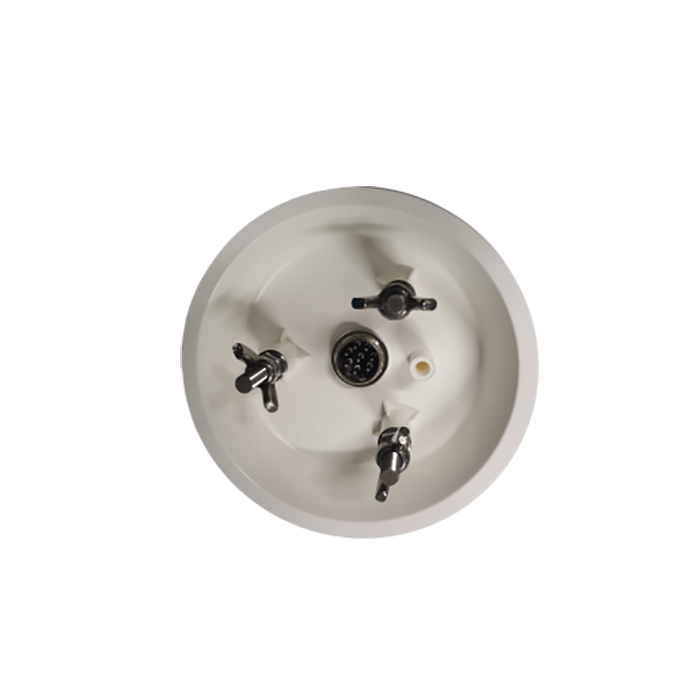
For RS485 networks, define cable topology carefully. Avoid star wiring over long distances unless repeaters or proper bus design are used. Confirm shield grounding strategy, termination resistance, surge protection, and power budget, especially for outdoor farms, ports, and construction sites.
During acceptance, compare live data with site conditions, check rainfall response, verify north alignment for wind direction, and confirm that all six parameters are displayed correctly on the platform. Data labels should use consistent engineering units such as m/s, °, ℃, %RH, hPa, and mm.
A six-element weather sensor is best evaluated as a compact data node. The project team should check how the wind, rainfall, temperature, humidity, and pressure data will be used by the platform, not only whether the device can measure all six variables. This avoids installing a sensor that works electrically but does not fit the data model of the monitoring system.
The NBL-W-61MUWS six-element weather sensor can be assigned as a standard node in distributed weather networks. Integrators can define one device profile with register mapping, alarm fields, polling interval, and unit conversion, then reuse it across farms, industrial parks, transport sites, or environmental stations.
For rainfall-related projects, the piezoelectric rainfall signal should be tested during commissioning and mapped clearly in the platform. Rainfall intensity, accumulated rainfall, and alarm thresholds should be defined according to the owner’s operational workflow.
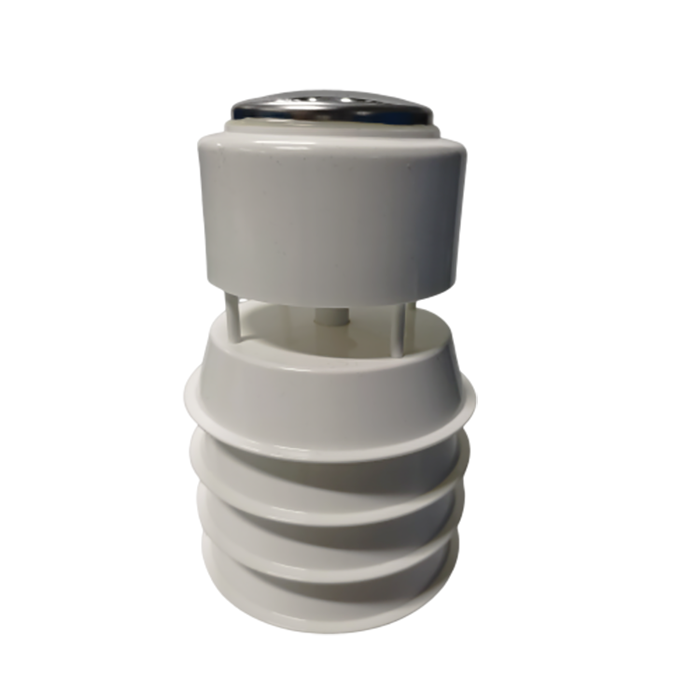
Procurement should focus on outdoor housing, wind measurement method, rainfall detection method, RS485 communication stability, protection class, cable length, and supplier documentation. If multiple nodes are deployed, the buyer should also confirm addressing range, gateway capacity, and spare sensor strategy.
For engineering delivery, the six-element sensor should arrive with wiring labels, installation guidance, protocol documentation, and a practical method for verifying live data. These details reduce commissioning time and help avoid repeated site visits.
In a typical monitoring cabinet, the NBL-W-61MUWS six-element weather sensor connects to an RS485 terminal block, data logger, RTU, or industrial gateway. The cabinet may also include a power module, surge protection device, antenna, circuit breaker, and communication module. Clear terminal labeling is important because field technicians often troubleshoot the system under time pressure.
The platform should treat the six-element sensor as one logical node with six data fields. This helps the system keep wind, rainfall, temperature, humidity, and pressure records synchronized. When each parameter has a consistent timestamp and device ID, later analysis becomes easier for agriculture, environmental, and transport projects.
For multi-node deployments, assign sensor addresses before shipping. A simple address plan prevents conflicts when several sensors are connected to the same bus or when a gateway polls multiple stations in sequence.
Rainfall is often the parameter that turns weather data into an operational decision. In farmland projects, rainfall records can support irrigation delay and drainage inspection. In road or construction projects, rainfall intensity can trigger site safety checks. In environmental monitoring, rainfall helps interpret pollutant dilution, runoff, and sampling conditions.
The rainfall field should be defined carefully in the platform. The owner needs to know whether the displayed value represents instant rainfall intensity, accumulated rainfall, or a calculated period total. Without that definition, alarms and reports can be misunderstood during operation.
The integrated sensor structure reduces the number of separate brackets and cable paths, but it still requires careful installation. The sensor should be mounted in an open position, with stable power, correct orientation, and enough clearance from structures that disturb wind flow.
Maintenance planning can be simple but should not be absent. A periodic inspection should check cable sealing, housing condition, mounting tightness, and data continuity. If rainfall values remain zero during wet weather or wind direction stays fixed for long periods, the operator should check installation and platform mapping.
A farm service provider may deploy several NBL-W-61MUWS six-element weather sensor nodes across production areas. Each node reports wind, rainfall, temperature, humidity, and pressure to the same platform. The service team can then compare rainfall differences between blocks, identify unsuitable spraying windows, and build field-level weather records.
This type of deployment benefits from a repeatable node design. The same cabinet layout, sensor address rule, platform field naming, and maintenance checklist can be reused across each site. This makes expansion easier when the owner adds new plots or service regions.
For contractors, the commercial advantage is reduced installation variability. A standardized six-element node is easier to quote, deliver, troubleshoot, and maintain than a custom sensor combination at every location.
Six-element data should be named in a way that operators can understand immediately. Wind speed, wind direction, air temperature, relative humidity, atmospheric pressure, rainfall intensity, and accumulated rainfall should use consistent labels and units across the platform.
Alarm logic should be conservative during the first operation period. After the owner observes several rainfall events and wind events, thresholds can be adjusted to match local operating rules. This prevents unnecessary alarms while still keeping the station useful for field decisions.
If the sensor is part of a larger environmental system, the platform should keep raw values and calculated values separate. This helps engineers diagnose whether an abnormal alarm came from the sensor, the calculation rule, or the site condition.
For projects that include both weather data and other environmental sensors, the six-element node can provide the meteorological context for interpreting external data. Wind and rainfall records often explain why air quality, noise, or field operation conditions changed during a specific period.
NBL-W-61MUWS six-element weather sensor integrates wind speed, wind direction, temperature, humidity, pressure, and rainfall in one device. This reduces mounting complexity, cable quantity, and cabinet wiring compared with separate sensors. For integrators building distributed monitoring nodes, the compact structure makes it easier to standardize installation, gateway configuration, and platform data fields.
Rainfall changes the operational meaning of weather data. In agriculture, it can delay irrigation or trigger drainage inspection. In construction and transport projects, rainfall can affect safety decisions. In environmental monitoring, rainfall helps explain changes in runoff, air quality, or sampling conditions. Including rainfall in the same node gives the platform a more complete site condition record.
The sensor should be connected through RS485 with correct A/B wiring, stable DC power, assigned device address, matching baud rate, and documented MODBUS register mapping. If multiple sensors share one bus, the integrator should plan address order, cable length, termination, grounding, and polling interval before installation.
Commissioning should verify live values for all six parameters, wind direction alignment, rainfall response, communication stability, platform field mapping, and historical storage. The team should also check whether units are displayed correctly, such as m/s, degrees, ℃, %RH, hPa, and rainfall units defined by the project.
Select a six-element sensor when the project needs core meteorological and rainfall data but does not require particulate matter, noise, illuminance, or solar radiation. Select a 10-in-1 station when environmental interpretation, energy applications, or multi-parameter site reporting requires additional data channels.
Use a repeatable cabinet layout, consistent terminal labels, documented addresses, waterproof cable routing, and a platform health check. Maintenance becomes easier when every node follows the same wiring logic and data field structure. Periodic inspection should focus on mounting stability, connector sealing, cable condition, and data continuity.
The request should include required parameters, output interface, protocol, power supply, mounting environment, cable length, platform connection method, protection requirements, documentation needs, and expected quantity. If the project includes many sites, the buyer should also specify addressing strategy and gateway requirements.
Yes. It can be used in environmental stations, road weather systems, industrial parks, ports, reservoirs, construction projects, and research monitoring sites. The important point is whether the six measured variables match the operational decision that the project needs to support.
The NiuBoL six-element weather sensor is a strong fit for projects that need compact, low-maintenance, multi-parameter meteorological data. With ultrasonic wind sensing, piezoelectric rainfall detection, RS485 MODBUS output, and a rugged integrated structure, it helps integrators deliver scalable agricultural, environmental, transport, and industrial monitoring systems.
Related recommendations
Sensors & Weather Stations Catalog
 Agriculture Sensors and Weather Stations Catalog-NiuBoL.pdf
Weather Stations Catalog-NiuBoL.pdf
Agriculture Sensors Catalog-NiuBoL.pdf
Water Quality Sensor Catalog-NiuBoL.pdf
Related products
 Combined air temperature and relative humidity sensor
 Soil Moisture Temperature sensor for irrigation|NBL-S-THR
 Soil pH sensor RS485 soil Testing instrument soil ph meter for agriculture |NBL-S-PH
 Wind Speed sensor Output Modbus/RS485/Analog/0-5V/4-20mA
 Tipping bucket rain gauge for weather monitoring auto rainfall sensor RS485/Outdoor/stainless steel
 Pyranometer Solar Radiation Sensor 4-20mA/RS485

Screenshot, WhatsApp to identify the QR code
WhatsApp number:+8615367865107
(Click on WhatsApp to copy and add friends)

