







A soil pH sensor reading cannot be compared with another result until the preparation method is known. Changing the soil-to-water ratio or replacing water with a salt solution changes the measurement conditions. There is no universal constant that converts all soils from 1:2.5 to 1:5, from water to calcium chloride, or from a field probe to a laboratory result. Standardize the method first; keep unlike results as separate series.
Write down what the ratio actually means
Use the order soil:solution, then state its basis. A ratio written as 1:5 might refer to mass-to-volume or volume-to-volume preparation. Those are not interchangeable: a measured scoop of soil is not a fixed soil mass across textures and packing conditions.
For a hypothetical mass-to-volume preparation, 10 g of prepared soil plus 25 mL of solution is 1:2.5; 10 g plus 50 mL is 1:5. This arithmetic specifies preparation only. It does not predict a pH difference. A 1:1 mixture is also not automatically a saturated paste, which is prepared to a defined consistency rather than a universal fixed water addition.
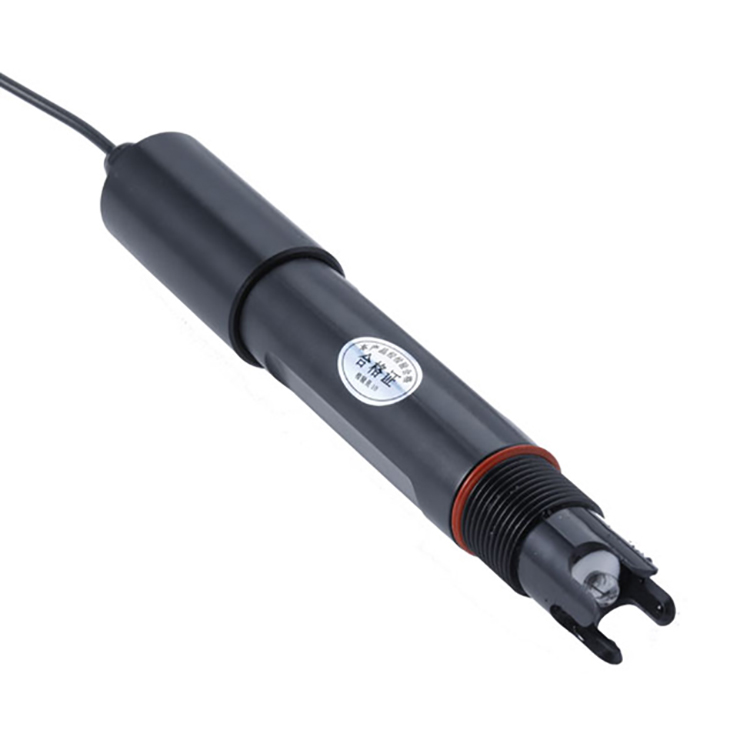
Figure 1. NBL-S-PH soil pH probe with its protective cap; a product photograph, not a laboratory extraction method.
For every result, retain:
| Record field | What it needs to identify |
|---|---|
| Sample | Location, depth, date and whether it is a composite or a point sample |
| Preparation | Air-dried or field-moist basis, sieving and any other pretreatment |
| Ratio | Soil:solution, exact quantities, and mass/volume basis |
| Extractant | Water or named salt solution, including concentration |
| Measurement | Mixing/equilibration procedure, suspension or supernatant, temperature and endpoint |
| Quality checks | Electrode calibration, duplicate results and the laboratory method identifier |
These details explain differences that extra decimal places cannot resolve.
Why dilution does not produce a fixed pH offset
pH reflects hydrogen-ion activity, not simply the amount of water added. Dilution changes ionic conditions and soil-solution equilibria; soil surfaces and buffering influence the response. Electrode junction behavior and the measurement position within a suspension can contribute as well. Adding twice as much water therefore does not imply a predictable pH increase.
Water, calcium chloride and potassium chloride methods must retain their own labels. The NSW Department of Primary Industries guide to soil pH explains that water and calcium chloride results differ and that a simple offset is not consistently accurate. Do not use an average difference from a guide as a correction for an individual sample.
Nor should an agronomic label conceal the method. At approximately 25 °C, both 6.2 and 6.8 are below neutral pH 7; agricultural classification bands may group them differently. Apply the crop recommendation or soil-classification system that matches the reported analytical method, not a generic acidic/neutral table copied from another test.
Fix sample preparation before changing instruments
Adopt the laboratory's documented procedure rather than combining pieces from several methods. For example, the University of Illinois soil pH SOP describes a 1:1 mass-to-volume water method using air-dried soil passing a 2 mm sieve. That is one defined method, not a rule that every soil sample must be dried or tested at 1:1.
Air-drying can alter the sample, especially where oxidation-sensitive materials are involved. A field-moist or specialist procedure should remain field-moist when the analytical method requires it. Likewise, do not substitute wet sample mass for an air-dry basis or finely mill a sample when the method specifies sieving.
For a monitoring series, keep preparation, extractant, mixing and endpoint consistent. If a laboratory changes its method, request the old and new method identifiers and paired results on representative retained samples. Replacing the instrument does not correct a preparation mismatch.
A paired result is evidence of a difference, not a conversion equation
Suppose aliquots of one prepared soil give hypothetical results of pH 6.2 at 1:2.5 in water and pH 6.6 at 1:5 in water. Their difference is 6.6 − 6.2 = 0.4 pH unit. That describes only this comparison. Subtracting 0.4 from the second number merely reproduces a value already measured; it does not validate a correction for other soils or future sampling dates.
For an essential historical-data comparison, ask a soil laboratory to design a paired-method study across the relevant soils and pH range, assess repeatability and validate any predictive relationship on separate samples. Preserve original values and method labels even if a conversion model is justified. ISRIC's report on harmonising soil data distinguishes method definitions and the limits of retrospective harmonisation.
The NBL-S-PH's published ±0.1 pH accuracy is an instrument specification, not the uncertainty of a composite soil sample or proof that two readings establish chemical stability. A rule such as "twice the accuracy is the minimum detectable change" needs an uncertainty model; it is not a universal statistical test.
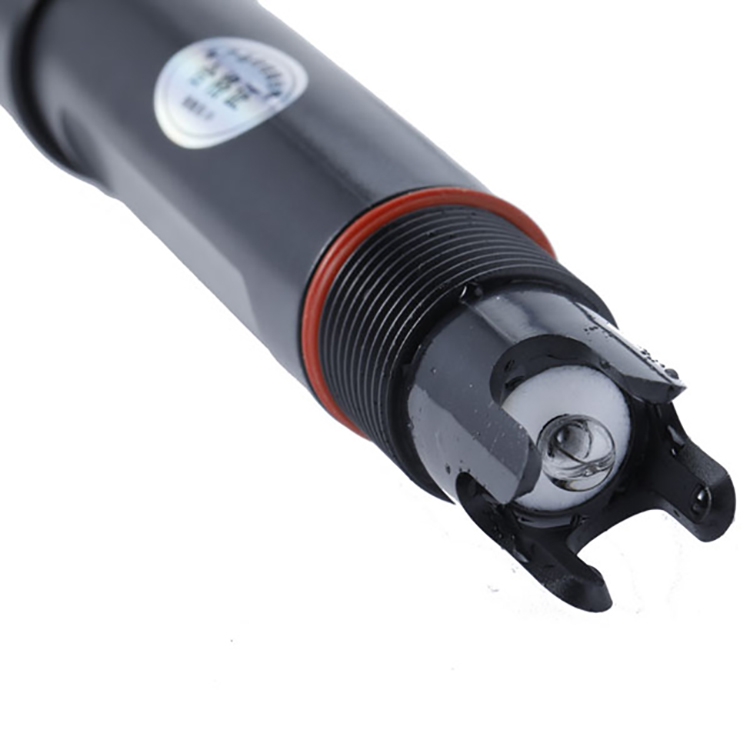
Figure 2. NBL-S-PH electrode tip and protective structure; field contact and laboratory preparation remain different measurement conditions.
Keep field monitoring distinct from amendment assessment
The NBL-S-PH product page documents a 0–14 pH range, 0.01 pH resolution and ±0.1 pH specified accuracy. It offers RS485 Modbus RTU, 4–20 mA or 0–5 V versions. These are alternative output configurations; none makes a direct soil reading equivalent to a specified laboratory suspension.
For installation and routine field comparisons, see the separate soil pH sensor comparison and use guide. This article addresses sample comparability, not a new installation procedure.
After liming, two similar readings a few days apart do not prove the full soil reaction has finished. NC Agriculture explains that lime response develops over months, depending on moisture and application conditions. Arrange the retest with the laboratory or agronomist, using the same sampling depths and analytical method. Do not calculate a lime dose from a cross-method pH correction.
Questions about comparable soil pH data
Q1. Which ratio is the best one?
Use the defined method behind the agronomic recommendation or research protocol. Consistency and a clear ratio basis matter more than choosing a ratio in isolation.
Q2. Can I repair old records that contain pH but no method?
First ask the laboratory for its method at the time of testing. If preparation and extractant cannot be recovered, mark the result as method-unknown rather than inventing a corrected value.
Q3. Does a buffer calibration resolve a soil-method mismatch?
No. Buffer calibration checks electrode response under known conditions. It cannot remove the effects of different sample preparation, extractants or sampling locations.
Make the comparison reproducible
A useful soil pH dataset contains both the value and the method that produced it. Keep unlike methods separate, investigate differences with paired testing, and use crop guidance matched to the laboratory method. Do not collapse field and laboratory results using a single additive constant.
When discussing a pH monitoring application, prepare:
- Crop or substrate, sampling depths and soil types;
- Laboratory method, ratio basis, extractant and preparation details;
- Paired field/laboratory results with dates and moisture conditions;
- Required measurement purpose and output interface.
Contact NiuBoL with that information to discuss suitable field pH monitoring equipment alongside your laboratory testing program.









