





— Blogs —
—Products—
 Consumer hotline +8618073152920
 WhatsApp:+8615367865107
Address:Room 102, District D, Houhu Industrial Park, Yuelu District, Changsha City, Hunan Province, China
Product knowledge
Time:2026-09-07 16:27:32 Popularity:320
Solar power for weather stations should be sized from daily energy demand and the required time without useful solar charging. A list of sensors is insufficient: a continuously connected modem, heated instrument or local display can dominate the load. Start with measured or documented power for the complete station, then select the battery, panel and controller for the site's difficult season and recovery requirement.
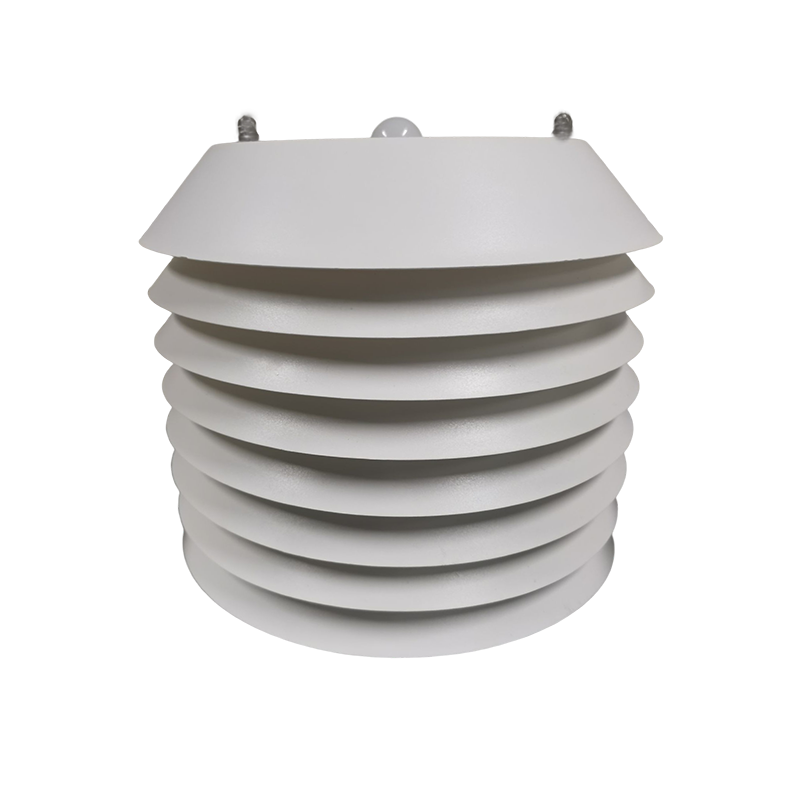
List the sensors, logger, communications equipment, display, relays and optional heaters. Separate continuous loads from scheduled loads. For each item, multiply power by operating hours per day, then add the energy demands. Include startup and standby periods where the instrument cannot simply be switched off between readings. A sensor that needs stabilization may save less energy through duty cycling than a short sample interval suggests.
A hypothetical station averaging 2.5 W uses 60 Wh per day. A 10 W heater operating for six hours adds another 60 Wh, doubling that demand. Peak current must also be checked: a battery and regulator can have enough daily energy but still allow voltage to collapse during a modem transmission or heater start. Measure at the affected device under the actual load.
| Quantity | Calculation or definition | Use in the design |
|---|---|---|
| Daily load energy | Sum of power × operating hours, in Wh/day | Size energy storage and daily generation. |
| Nominal battery energy | Nominal voltage × rated capacity, in Wh | Starting point before usable-capacity limits. |
| Usable stored energy | Nominal energy adjusted for allowed discharge, temperature, aging and conversion losses | Estimate operation without solar input. |
| Panel rating | Peak watts under specified test conditions | Convert to seasonal daily energy using site solar resource and losses. |
| Controller capability | Permitted input voltage/current, battery profile and load-output limits | Check both PV compatibility and the connected station. |
For the 60 Wh/day example, five days without useful charging requires 300 Wh delivered to the station. Nominal capacity must be greater because not all nameplate energy is usable. If the design assumptions are a 12 V system, 80% allowable discharge fraction, 90% delivery efficiency and a combined 80% temperature/aging capacity factor, the estimated requirement is 300 / (12 × 0.8 × 0.9 × 0.8), or about 43.4 Ah.
Those factors are illustrative, not specifications for a NiuBoL battery. Obtain the actual battery curves, permitted discharge and temperature limits, end-of-life criterion and regulator efficiency. A nominal 12 V, 30 Ah battery holds 360 Wh before derating. Under the same illustrative factors it delivers about 207 Wh, or roughly 3.5 days at 60 Wh/day. A claim of five or ten days cannot follow from the 30 Ah label alone.
Compare lead-acid, lithium iron phosphate and other rechargeable packs using the delivered battery's data. Weight, usable discharge, low-temperature capacity, permitted charging temperature, cycle life, protection electronics and replacement availability all matter. The controller's charge profile and the battery-management system must suit the pack. Do not apply a lead-acid float voltage to a lithium battery merely because both systems are called 12 V.
Equivalent peak-sun hours describe solar energy over a day, not the hours between sunrise and sunset. Use resource data appropriate to the installation plane and difficult design season. Include dirt, shade, temperature, cable and conversion effects. Panel area also adds wind loading to the pole and bracket, which must be checked structurally.
With 60 Wh/day, three equivalent peak-sun hours and a hypothetical overall yield factor of 0.75, daily energy balance alone gives 60 / (3 × 0.75), or about 27 W of panel rating. That is a calculation boundary, not a finished panel selection. It does not repay an earlier energy deficit while supporting the current load.
If the same station must replenish 300 Wh over three suitable days, it needs an additional 100 Wh/day. Supplying the current 60 Wh plus that recovery energy gives 160 / (3 × 0.75), or about 71 W before any further reserve. The battery's permitted charge rate, controller rating and real weather sequence may impose another limit. A large panel cannot charge a battery faster than the permitted system allows.
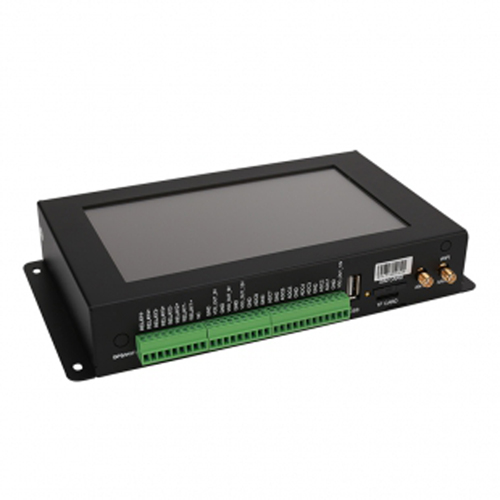
A PWM controller generally operates the panel near the battery charging voltage during conduction. It can suit a small, suitably matched panel and battery arrangement. MPPT uses a conversion stage to operate the panel closer to its maximum-power point while supplying the required battery charge. Its benefit depends on voltage matching, solar conditions, load and controller efficiency; it is not a fixed percentage gain for every station.
Check the panel's worst-case open-circuit voltage against the controller input limit, including cold-weather voltage rise. Also check input current, battery chemistry and charge profile, load-output current and low-voltage disconnect behavior. A controller that accepts the panel's nominal wattage may still be unsuitable for its voltage or for the battery. For an unattended station, establish what happens after low-voltage shutdown and how acquisition restarts when charging returns.
An 18 V panel label commonly refers to a rated operating condition rather than a regulated 18.00 V output. A meter reading depends on irradiance, shading, temperature, controller state and whether the measurement is open-circuit or under load. A 6-7 V observation without those conditions cannot establish that the panel is defective.
During a fault investigation, record sunlight and shade, panel terminals, controller input and output, battery terminals and voltage at the load. Follow the approved isolation procedure before changing connections. Inspect polarity, connectors, cable damage and controller status. Do not connect a multimeter in current mode across the battery or improvise short-circuit testing.
A battery's nominal voltage is also not its constant terminal voltage. Record chemistry, charge/discharge state, current and temperature with the reading. Values such as 11.7 V or 12.4 V have different meanings for different packs and load conditions. Compare them with the battery's limits and protection history instead of diagnosing health from one generic voltage chart.
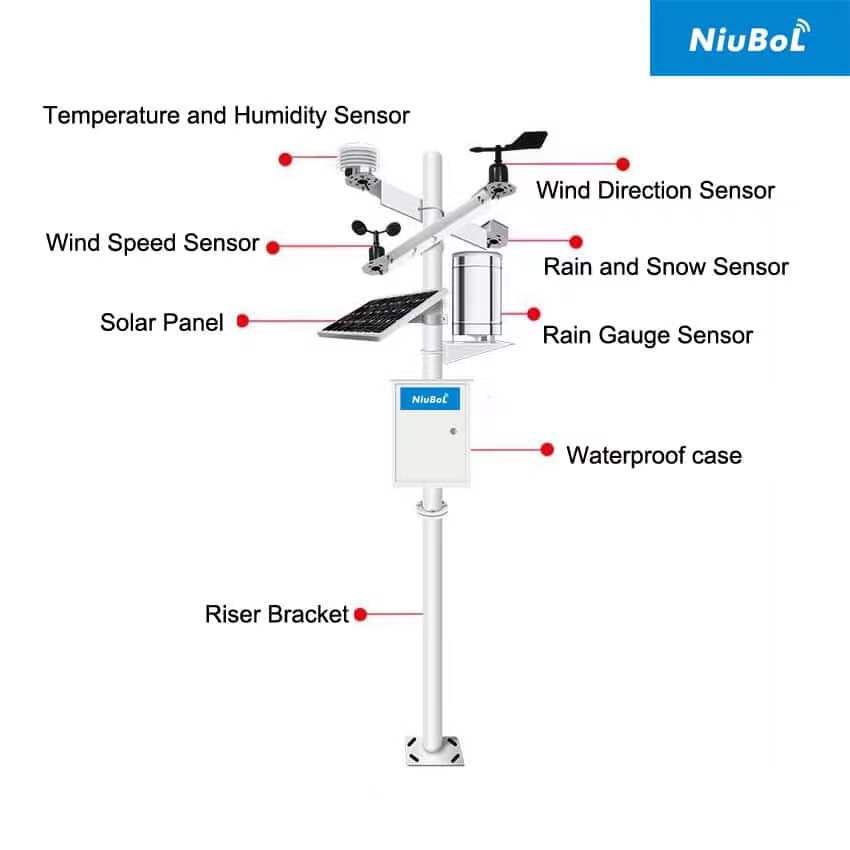
A NiuBoL automatic weather station can combine sensors, a data logger and remote communication with an off-grid supply. The required panel and battery depend on the delivered configuration. A 60 W/30 Ah package, a 100 W panel with a larger battery and a higher-load system are not interchangeable autonomy promises.
For an RFQ, provide site coordinates, shade and mounting constraints, the complete sensor list, communication schedule, optional heating, required days without useful charging and the recovery period. Ask for a load schedule, battery data, panel/controller ratings and the calculation assumptions. Include cabinet temperature, cable route and replacement access. Evaluate these items before selecting a price or a familiar wattage combination.
Q1. How many days will a 60 W panel and 30 Ah battery support?
A1. No fixed duration follows from those labels. Calculate usable battery energy and divide by the station's daily demand; then assess any charging during the period separately.
Q2. Does increasing panel size extend nighttime autonomy?
A2. It can improve charging and recovery when sunlight is available. Autonomy without useful charging depends mainly on stored usable energy and load, so the battery may also need to change.
Q3. Can the station sleep between uploads?
A3. Only when the sensors, acquisition and communications support the required duty cycle. Preserve continuous pulse counting where needed and include sensor stabilization, retained history and restart behavior in the test.
Q4. Is MPPT required for every low-power station?
A4. No. Compare the panel voltage, battery profile, expected solar conditions and controller losses. A compatible PWM arrangement can be appropriate; MPPT can help where its conversion function benefits the design.
Q5. Can a heated rain gauge use the existing supply?
A5. Recalculate daily energy, peak current, cable drop and winter charging. Heating can exceed the demand of the ordinary measurement electronics and may require a larger system or another power source.
Q6. What should an autonomy acceptance test demonstrate?
A6. Operation at the agreed duty and load, correct low-voltage behavior, retained timestamps and orderly recovery. Use the specified battery condition and temperature assumptions; a short indoor test cannot establish winter field autonomy.
Solar power for weather stations is an energy and recovery calculation. Document the load, usable battery energy, seasonal solar input and controller limits, then test the station's behavior through interruption and restart. Those details make a quoted panel-and-battery package meaningful for the actual monitoring duty.
Prev:Solar Radiation Sensor Units: W/m2, PAR and PPFD
Next:IoT Monitoring System Architecture: Sensors, Loggers and Gateways
Related recommendations
Sensors & Weather Stations Catalog
 Agriculture Sensors and Weather Stations Catalog-NiuBoL.pdf
Weather Stations Catalog-NiuBoL.pdf
Agriculture Sensors Catalog-NiuBoL.pdf
Water Quality Sensor Catalog-NiuBoL.pdf
Related products
 Combined air temperature and relative humidity sensor
 TDR Soil Moisture & Temperature Sensor for irrigation| RS485 |4-20mA| NBL-S-THR
 Soil pH sensor RS485 soil Testing instrument soil ph meter for agriculture |NBL-S-PH
 Wind Speed sensor Output Modbus/RS485/Analog/0-5V/4-20mA
 Tipping bucket rain gauge for weather monitoring auto rainfall sensor RS485/Outdoor/stainless steel
 Pyranometer Solar Radiation Sensor 4-20mA/RS485

Screenshot, WhatsApp to identify the QR code
WhatsApp number:+8615367865107
(Click on WhatsApp to copy and add friends)

