





— Products —
 Consumer hotline +8618073152920
WhatsApp:+8615367865107
Address:Room 102, District D, Houhu Industrial Park, Yuelu District, Changsha City, Hunan Province, China
Water Quality Sensors

NiuBoL NBL-WQ-NON-4A online nitrate nitrogen sensor adopts PVC membrane nitrate ion selective electrode method, with automatic temperature compensation (Pt1000). It supports RS485 Modbus RTU protocol and optional 4-20mA output, features a replaceable membrane head design, IP68 protection, and 3/4 NPT installation interface. It is suitable for long-term stable online measurement of nitrate nitrogen in scenarios such as wastewater treatment, river and lake monitoring, and indus···
Tel/WhatsApp:+8615367865107
Email:Arvin@niubol.com +Nearly 100 partner companies in more than 75 countries. We are committed to providing high-quality, practical products to meet your needs and help you solve problems. Our products comply with international standards and are certified with ISO, CE and RoHS.Product Details
Product Overview: The NiuBoL NBL-WQ-NON-4A is an online nitrate ion-selective electrode sensor for continuous nitrate-related water quality monitoring. It uses a PVC-membrane nitrate ISE with automatic Pt1000 temperature compensation. Available measurement ranges are 0–100.00 mg/L and 0–1000.0 mg/L. The sensor supports RS485 Modbus RTU communication, optional 4–20 mA output, two-point calibration and IP68 protection.
The NBL-WQ-NON-4A can be used in suitable wastewater treatment, industrial water, agricultural drainage and environmental monitoring applications. Measurement performance depends on the water composition, electrode condition, calibration and the nitrate concentration reporting basis required by the project.
Nitrate is an important dissolved nitrogen species in water. Monitoring nitrate concentration can provide useful information about nitrogen-related water quality, wastewater treatment conditions and nutrient movement in the environment.
The NBL-WQ-NON-4A uses a nitrate-sensitive PVC membrane to detect changes in nitrate ion activity.
Its electrochemical measurement system includes a nitrate ion-selective electrode, reference electrode and integrated temperature compensation.
The measured electrode potential is processed using calibration information to obtain a nitrate-related concentration value.
Unlike reagent-based nitrate analyzers, an ion-selective electrode does not consume chemical reagents during routine measurement. However, electrode activation, calibration solutions, cleaning and maintenance remain necessary.
The RS485 Modbus RTU interface allows the sensor to connect to compatible PLCs, RTUs, data loggers and industrial water monitoring equipment.

Nitrate ion-selective electrode: PVC-membrane potentiometric measurement.
Two measurement ranges: 0–100.00 mg/L and 0–1000.0 mg/L.
RS485 Modbus RTU: Digital communication for compatible monitoring systems.
Optional 4–20 mA: Analog output configuration available when specified.
Pt1000 compensation: Automatic temperature compensation for the electrode measurement.
Replaceable membrane head: Supports maintenance of the sensing element.
Two-point calibration: Calibration using suitable nitrate reference solutions.
IP68 protection: Suitable for immersion within the specified operating conditions.
3/4-inch NPT mounting: Connection for compatible installation hardware.
12–24 VDC supply: Suitable for compatible low-voltage monitoring equipment.
Standard 5-meter cable: Other lengths available according to order requirements.
The NBL-WQ-NON-4A provides two available concentration ranges. The correct range should be selected according to the expected concentration and measurement requirements.
| Measurement Range | Resolution |
|---|---|
| 0–100.00 mg/L | 0.01 mg/L |
| 0–1000.0 mg/L | 0.1 mg/L |
The specified measurement accuracy is ±10% or ±2 mg/L.
For projects requiring formal measurement acceptance, define the applicable accuracy criterion and reference method for the selected measurement range.
Important: Measurement resolution is not the same as measurement accuracy or detection limit. The 0.01 mg/L resolution does not establish that the sensor is suitable for every low-concentration monitoring requirement.
| Parameter | Specification |
|---|---|
| Brand | NiuBoL |
| Model | NBL-WQ-NON-4A |
| Product Type | Online Nitrate Ion-Selective Electrode Sensor |
| Measurement Principle | PVC-Membrane Ion-Selective Electrode |
| Measurement Ranges | 0–100.00 / 0–1000.0 mg/L |
| Resolution | 0.01 / 0.1 mg/L |
| Measurement Accuracy | ±10% or ±2 mg/L |
| Temperature Accuracy | ±0.5°C |
| Temperature Compensation | Automatic, Pt1000 |
| Operating Temperature | 0–40°C |
| Operating Pressure | <0.1 MPa |
| Medium pH Range | 2.5–11 |
| Digital Output | RS485 Modbus RTU |
| Optional Analog Output | 4–20 mA |
| Power Supply | 12–24 VDC |
| Power Consumption | 0.2 W @ 12 V |
| Wetted Materials | PVC and POM |
| Installation Method | Immersion Installation |
| Mounting Connection | 3/4-inch NPT |
| Installation Orientation | Inclined; No Horizontal or Inverted Mounting |
| Minimum Installation Inclination | 15° |
| Probe Diameter | Approximately 30 mm |
| Probe Length | Approximately 185 mm |
| Calibration | Two-Point Calibration |
| Standard Cable Length | 5 m; Customizable |
| Protection Rating | IP68 |
The selected signal output, range and cable length should be specified when ordering.
For projects involving chemically aggressive water, evaluate the compatibility of the PVC and POM wetted materials with the actual sample composition.
The NBL-WQ-NON-4A uses a potentiometric measurement principle.
The sensor incorporates a nitrate-selective PVC membrane and an electrochemical reference system.
When the sensing membrane contacts water, nitrate ions contribute to an electrical potential across the membrane.
The potential difference is measured relative to the reference electrode.
Calibration information is used to convert the electrode response into a nitrate-related concentration value.
The electrode responds to nitrate ion activity rather than directly determining every nitrogen compound in the sample.
Temperature compensation helps account for changes in electrode response with temperature. It does not eliminate interference from other dissolved ions.
Nitrate concentration and nitrate nitrogen concentration describe the same nitrate species using different mass bases.
Nitrate ion concentration refers to the mass of the complete nitrate ion in water.
Nitrate nitrogen concentration refers only to the nitrogen mass contained in nitrate.
The numerical values differ because the nitrate ion contains both nitrogen and oxygen.
| Reporting Unit | Meaning |
|---|---|
| mg/L NO3- | Mass concentration of nitrate ions. |
| mg/L NO3--N | Mass concentration of nitrogen present as nitrate. |
The approximate mass conversion is:
1 mg/L NO3--N ≈ 4.43 mg/L NO3-
1 mg/L NO3- ≈ 0.226 mg/L NO3--N
For example, 10 mg/L of nitrate nitrogen corresponds to approximately 44.3 mg/L of nitrate ion.
Data integration: The sensor uses a nitrate ion-selective electrode. When the receiving system requires results as NO3--N, ensure that the sensor's actual reporting basis and any conversion are correctly configured.
Do not compare a value reported as mg/L NO3- directly with a limit or reference result expressed in mg/L NO3--N without conversion.
Nitrate, nitrite and total nitrogen represent different water quality parameters.
| Parameter | Description |
|---|---|
| Nitrate (NO3-) | An oxidized inorganic nitrogen species. |
| Nitrite (NO2-) | A different inorganic nitrogen species involved in nitrogen transformations. |
| Ammonium (NH4+) | A reduced inorganic nitrogen species. |
| Total Nitrogen (TN) | The sum of nitrogen in inorganic and organic forms, determined using an appropriate method. |
The NBL-WQ-NON-4A is a nitrate ion-selective electrode sensor. It does not independently measure nitrite, ammonium or total nitrogen.
Wastewater treatment systems requiring a broader nitrogen balance may need additional measurement instruments.
Ion-selective electrode measurement can be affected by other dissolved ions.
The extent of interference depends on the membrane characteristics, concentrations of interfering ions and the nitrate concentration in the sample.
Applications involving high salinity, complex industrial chemicals or unusual ionic composition should be evaluated using representative water samples.
The NBL-WQ-NON-4A is specified for sample pH between 2.5 and 11.
Operating outside the specified pH range may affect electrode behavior or material compatibility.
The integrated Pt1000 element provides automatic temperature compensation.
The specified operating temperature range is 0–40°C.
Temperature compensation does not correct all measurement interference or changes in sample composition.
Deposits, physical damage, aging and unsuitable storage may affect the nitrate-selective membrane.
The electrode should be inspected and maintained as required by the monitoring environment.
Calibration should use suitable nitrate reference solutions and the correct procedure for the selected measurement range.
For applications requiring comparison with laboratory measurements, reference results and online measurements should use the same concentration reporting basis.
Nitrate monitoring can provide useful information about nitrogen transformations in biological wastewater treatment systems.
The NBL-WQ-NON-4A may be used at suitable monitoring points where nitrate concentration and water conditions are within the sensor's operating limits.
When evaluating denitrification, nitrate readings may be considered together with dissolved oxygen, ammonium, flow rate and other process data.
Measurement of nitrate alone does not establish total nitrogen concentration or demonstrate compliance with every effluent standard.
Some industrial wastewater processes contain elevated nitrate concentrations.
The 0–1000 mg/L configuration may be considered for applications requiring a wider nitrate measurement range.
Complex wastewater chemistry may influence ion-selective electrode performance. Reference comparison is particularly important when the water composition changes.
Nitrate-related measurements can support observation of nutrient conditions in surface water.
The sensor may be incorporated into a suitable monitoring station with an external data logger or communication gateway.
For relatively low nitrate concentrations, verify that the selected range and accuracy meet the required monitoring threshold.
Nitrate monitoring may help characterize nitrogen-related conditions in agricultural drainage and runoff.
The sensor may be suitable for selected nutrient-rich water applications where the measurement range and water chemistry are compatible with nitrate ISE measurement.
Electrical conductivity, other dissolved ions and possible interference should be considered during instrument selection.
Nitrate is a relevant parameter in groundwater and source-water quality assessment.
The NBL-WQ-NON-4A may provide online monitoring information when installation conditions and measurement requirements are suitable.
For regulatory drinking water analysis, verify the required concentration reporting unit, reference method, measurement uncertainty and applicable approval requirements.
The required measurement range should be based on the normal and maximum expected nitrate concentration.
| Selection Factor | What to Confirm |
|---|---|
| Measurement Range | 0–100 or 0–1000 mg/L. |
| Reporting Basis | NO3- or NO3--N. |
| Minimum Required Concentration | Lowest concentration or change that must be measured reliably. |
| Water Chemistry | Salinity, dissolved ions and possible interfering substances. |
| Water Temperature | Within 0–40°C. |
| Water pH | Within 2.5–11. |
| Signal Output | RS485 Modbus RTU or optional 4–20 mA. |
| Installation Conditions | Immersion arrangement, pressure, mounting orientation and service access. |
| Reference Measurement | Laboratory method, required unit and acceptance criteria. |
A higher measurement range is not automatically the better choice when the application requires small concentration differences near the lower end of the range.
The NBL-WQ-NON-4A supports immersion installation using a 3/4-inch NPT connection.
Its installation orientation is important for correct electrode operation.
The sensor must not be installed horizontally or upside down. Maintain an inclination of at least 15 degrees.
Choose a representative water monitoring position.
Maintain an installation inclination of at least 15 degrees.
Do not install the sensor horizontally or upside down.
Keep the sensing section exposed to water during normal operation.
Maintain operating pressure below 0.1 MPa.
Keep water temperature within 0–40°C.
Keep sample pH within 2.5–11.
Protect the sensor from mechanical impact and unnecessary cable tension.
Use suitable waterproof protection for all electrical connections.
Provide access for electrode activation, calibration and maintenance.
The IP68 protection rating does not override the specified operating pressure or wetted-material limitations.
For pressurized process lines, a separate compatible sampling arrangement may be necessary.
The NBL-WQ-NON-4A operates from a 12–24 VDC power supply.
The standard digital configuration supports RS485 Modbus RTU communication.
| Wire Color | Function |
|---|---|
| Red | 12–24 VDC Positive |
| Black | Power Ground (GND) |
| Blue | RS485 A |
| White | RS485 B |
| Yellow | Optional Current Output |
The yellow wire is used for the optional analog output configuration. If not used, leave it disconnected and properly insulated.
Verify the connections before applying power. All outdoor or immersed cable joints should be suitably waterproofed.
The sensor provides digital nitrate-related measurement data using Modbus RTU over RS485.
| Communication Parameter | Default Setting |
|---|---|
| Interface | RS485 |
| Protocol | Modbus RTU |
| Baud Rate | 9600 bps |
| Data Bits | 8 |
| Parity | None |
| Stop Bits | 1 |
| Default Device Address | 66 (0x42) |
| Address Range | 1–255 |
| Read Function Code | 03 |
| Write Function Code | 06 |
Default address: The NBL-WQ-NON-4A uses Modbus address 66 (0x42). This address differs from other nitrate and ammonium sensor models.
| Register | Function |
|---|---|
| 0x0000 | Nitrate-Related Measurement and Temperature Data, 4 Registers |
| 0x1000 | Lower-Point Calibration |
| 0x1004 | Slope Calibration |
| 0x1010 | Temperature Correction |
| 0x2002 | Device Address Configuration |
| 0x2020 | Restore Factory Calibration Values |
The main measurement block contains four consecutive 16-bit registers representing the concentration value, concentration decimal scaling, temperature and temperature decimal scaling.
The following request reads four registers from the sensor at its default device address.
Request Frame: 42 03 00 00 00 04 4A FA
Example Response: 42 03 08 00 55 00 01 01 18 00 01 B7 AC
The concentration raw value is 0x0055, equivalent to 85 decimal.
With one decimal place, the displayed concentration is 8.5 mg/L.
The temperature raw value is 0x0118, equivalent to 280 decimal. With one decimal place, the displayed temperature is 28.0°C.
The receiving controller must use the correct register order, scaling and nitrate concentration reporting unit.
The NBL-WQ-NON-4A can be connected to compatible industrial monitoring equipment through RS485 Modbus RTU.
Nitrate Sensor → RS485 Modbus RTU → PLC / RTU / Data Logger → Monitoring Software
For remote data collection, a suitable external communication gateway can be added.
The sensor provides measurement data. Cellular transmission, cloud services, dosing control and other automated functions require separate compatible equipment.
The nitrate ion-selective electrode requires suitable preparation before normal measurement.
Before first use, condition the electrode using the appropriate activation solution for approximately 24 hours.
After activation, rinse the electrode with deionized water before measurement.
Rinse the sensing electrode gently with distilled or deionized water when deposits are present.
Blot away excess water carefully. Do not rub or damage the nitrate-sensitive membrane.
Avoid abrasive tools and harsh cleaning methods that may damage the sensing element.
Use the protective container supplied for the sensing electrode during storage.
Avoid long-term immersion in distilled water or protein solutions, and prevent contact with silicone grease.
After extended storage, condition the electrode before returning it to normal monitoring service.
The nitrate-sensitive membrane head is replaceable.
Replacement may be necessary when suitable cleaning, conditioning and calibration no longer restore acceptable measurement performance.
Maintenance frequency depends on the monitored water, electrode condition and required measurement quality.
The NBL-WQ-NON-4A supports lower-point and slope calibration using appropriate nitrate reference solutions.
The calibration concentrations depend on the selected measurement range.
| Measurement Range | Lower Calibration Point | Slope Calibration Point |
|---|---|---|
| 0–100 mg/L | 10 mg/L | 100 mg/L |
| 0–1000 mg/L | 100 mg/L | 1000 mg/L |
Place the electrode in the appropriate lower-concentration nitrate standard.
Allow approximately five minutes for stabilization and verify the displayed measurement.
If adjustment is necessary, use the corresponding lower-point calibration command.
Place the electrode in the appropriate higher-concentration nitrate standard.
Allow the reading to stabilize before applying the slope calibration command.
Use the correct concentration scaling and reference solution for the selected measurement range.
Calibration caution: The electrode is calibrated before delivery. Recalibration should be carried out when reference verification indicates that adjustment is necessary.
After restoring factory calibration settings, recalibrate the sensor before returning it to normal use.
| Problem | Recommended Check |
|---|---|
| No RS485 Communication | Check 12–24 VDC power, white RS485 B wire, blue RS485 A wire, baud rate and default address 66. |
| Unstable Concentration | Inspect electrode conditioning, membrane condition, calibration and sample stability. |
| Unexpected Concentration | Check sample composition, possible ionic interference, calibration and measurement range. |
| Difference from Laboratory Results | Confirm whether both results use NO3- or NO3--N and the same reference conditions. |
| Poor Calibration Response | Inspect membrane condition, reference solutions and electrode activation. |
A1. It uses a nitrate ion-selective electrode to measure a nitrate-related electrochemical response in water.
A2. The available configurations are 0–100.00 mg/L and 0–1000.0 mg/L.
A3. No. Nitrate concentration and nitrate nitrogen concentration use different mass bases. Results expressed as NO3- and NO3--N require appropriate conversion before comparison.
A4. No. The sensor uses a nitrate-selective electrode. Total nitrogen includes additional nitrogen species and requires an appropriate measurement method.
A5. No separate nitrite measurement function is specified for this model.
A6. The specified accuracy is ±10% or ±2 mg/L. Actual measurement performance depends on calibration and water conditions.
A7. The NBL-WQ-NON-4A has a default address of 66 (0x42), with communication settings of 9600 baud, 8 data bits, no parity and one stop bit.
A8. The standard cable identifies the white wire as RS485 B and the blue wire as RS485 A.
A9. A 4–20 mA output configuration is available as an option. Specify the required output when ordering.
A10. It does not consume chemical reagents during routine potentiometric measurement. Activation and calibration solutions are still required for electrode preparation and maintenance.
A11. Yes. Ion-selective electrode response can be affected by the composition of the water. Complex industrial or high-salinity samples may require reference comparison.
A12. The specified medium pH range is 2.5–11.
A13. No. Horizontal and inverted installation are not permitted. Maintain a minimum installation inclination of 15 degrees.
A14. Yes. The sensor has a replaceable nitrate-sensitive membrane head.
A15. Suitability depends on the required reference method, concentration unit, accuracy and applicable regulatory requirements. An online ISE measurement should not automatically be considered a substitute for a required laboratory method.
A16. Yes. The RS485 Modbus RTU interface supports integration with compatible PLCs, RTUs and data loggers.
A17. The sensor provides measurement data. Automatic process control requires separate compatible control equipment and appropriate logic.
A18. Provide the required measurement range, nitrate reporting unit, water type, pH, temperature, possible interfering ions, output interface, installation requirements, cable length and quantity.
Download the complete NBL-WQ-NON-4A user manual for sensor installation, electrical wiring, Modbus RTU communication, electrode activation and calibration procedures.
 NBL-WQ-NON-4A online nitrate nitrogen sensor.pdf
For a quotation or technical recommendation, please provide:
Measurement requirement: Nitrate ion (NO3-) or nitrate nitrogen (NO3--N).
Expected concentration: Normal and maximum concentrations in mg/L.
Water application: Municipal wastewater, industrial wastewater, river monitoring, groundwater or agricultural drainage.
Water chemistry: pH, temperature, salinity and relevant dissolved ions.
Required accuracy: Reference method and acceptance criteria, if applicable.
Output: RS485 Modbus RTU or optional 4–20 mA.
Installation: Mounting arrangement, cable length and monitoring conditions.
Quantity: Required number of sensors and destination country.
For system integration projects, please also provide the receiving PLC, RTU or data logger model.
Contact NiuBoL for technical documentation, configuration information and a quotation.
Explore additional NiuBoL Online Water Quality Sensors for ammonium, nitrite, pH, conductivity, dissolved oxygen and related water monitoring applications.
Prev:NBL-WQ-NON-4S Online Nitrate Nitrogen Sensor: For Drinking Water Monitoring, Groundwater
Next:Online Ammonia Nitrogen Sensor (NH4+ ISE) For Wastewater Treatment, River Monitoring| NBL-WQ-NHN-4S
Sensors & Weather Stations Catalog
 Agriculture Sensors and Weather Stations Catalog-NiuBoL.pdf
Weather Stations Catalog-NiuBoL.pdf
Agriculture Sensors Catalog-NiuBoL.pdf
Water Quality Sensor Catalog-NiuBoL.pdf
Related recommendations
 Online Turbidity Sensor RS485 Modbus | NBL-WQ-TS
 Online Ammonia Nitrogen Sensor (Ammonium ISE) | NBL-WQ-NHN
 Online Residual Chlorine Sensor (HOCl) RS485 | Water Quality Sensor| NBL-WQ-CL
 NBL-WQ-DO Online Fluorescence Dissolved Oxygen Sensor
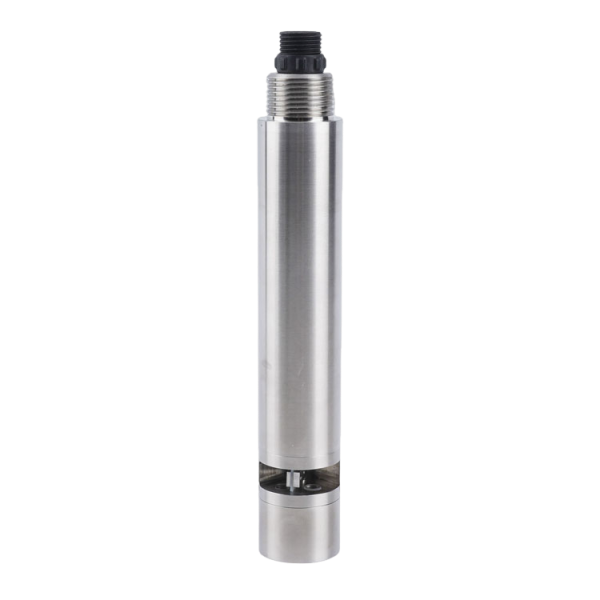 NBL-WQ-COD Online COD Water Quality Sensor
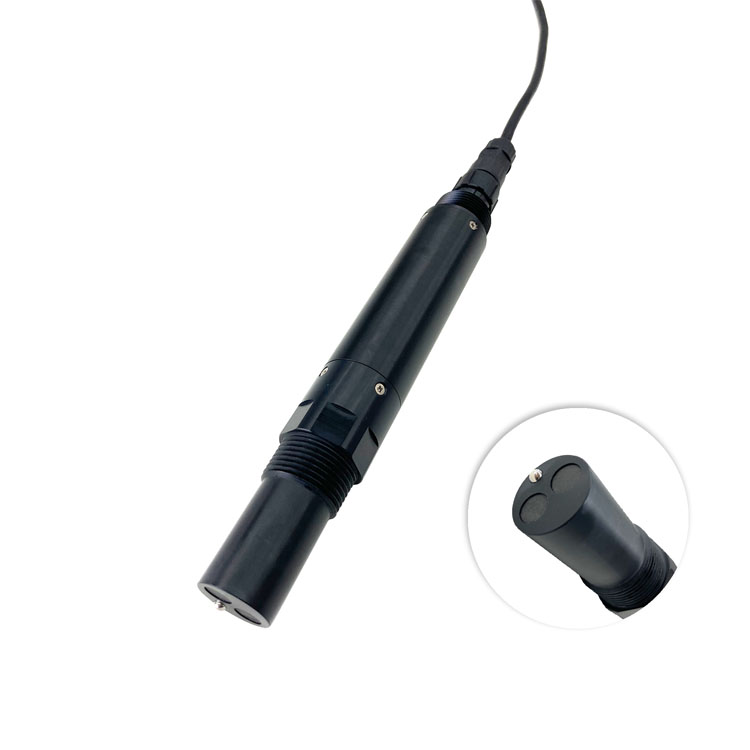 Water Conductivity EC Sensor RS485 Modbus IP68 | NBL-WQ-EC


Screenshot, WhatsApp to identify the QR code
WhatsApp number:+8615367865107
(Click on WhatsApp to copy and add friends)

