





— Case —
—Products—
 Consumer hotline +8618073152920
 WhatsApp:+8615367865107
Address:Room 102, District D, Houhu Industrial Park, Yuelu District, Changsha City, Hunan Province, China
Time:2026-08-29 15:29:52 Popularity:363
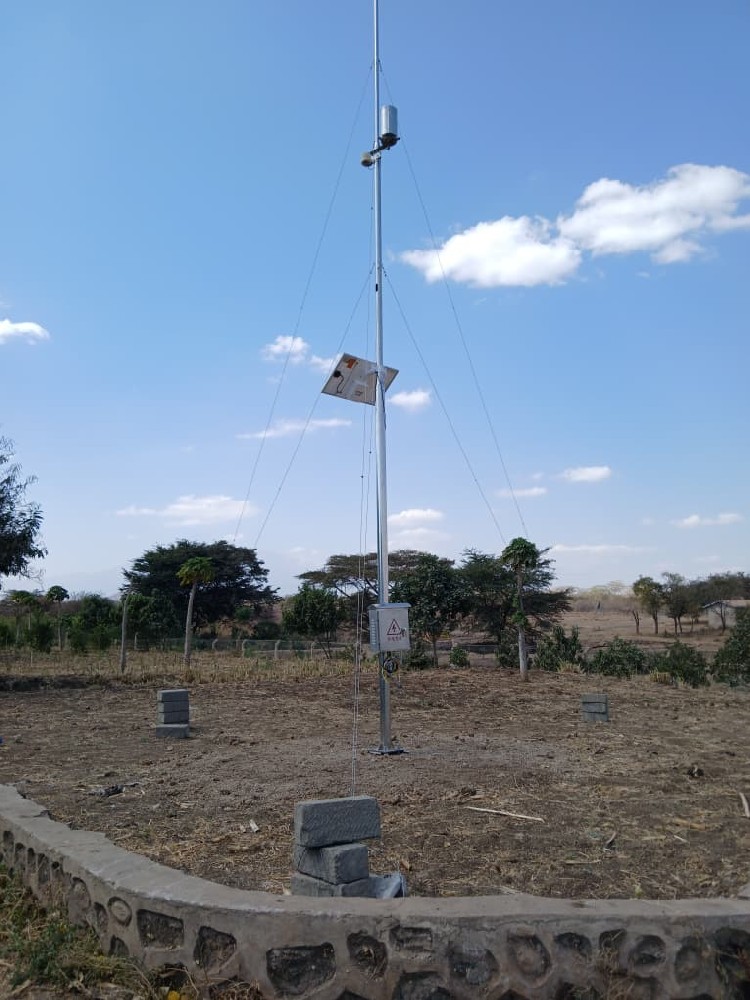
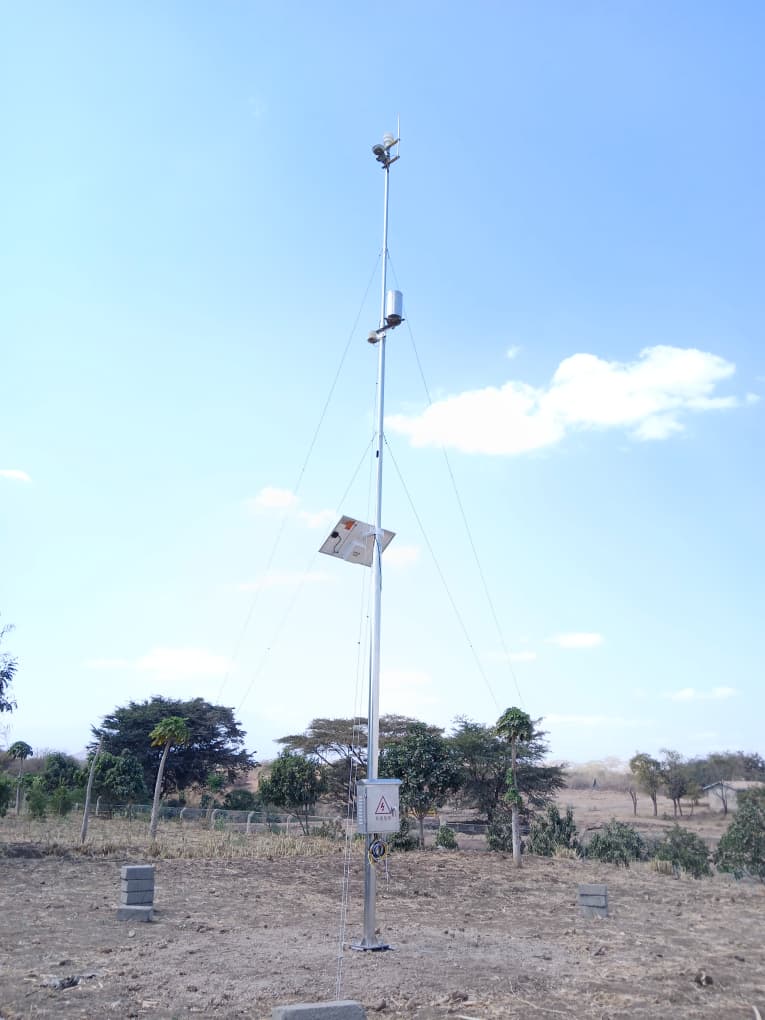
NiuBoL supplied a 10-meter research weather station for an outdoor meteorological research site in Tanzania, Africa. The system integrates wind, atmospheric, rainfall, evaporation, sunshine duration and solar radiation monitoring with a data logger or IoT gateway, solar power supply, mounting structure, lightning protection and a stainless steel protective box.
Tanzania has coastal, plateau, semi-arid and mountainous environments, so local weather data can vary significantly by region and elevation. A research station must record more than the current weather display. It should provide continuous, traceable measurements that can be compared over seasons and used by researchers, project owners or field engineers.
Wind measurement is highly sensitive to height and obstruction. A 10-meter mast helps reduce the influence of low vegetation, walls and nearby structures, giving the wind speed and wind direction channels a more representative exposure. The site photos show a tall mast supported by guy wires, with sensors and a solar-power assembly positioned for outdoor operation.
For a research installation, the mast, guy wires, foundation, cable routing and enclosure are part of the measurement system. If the mechanical structure moves, shadows the radiation sensor or allows water into the wiring path, the data record can be affected even when the sensor electronics remain functional.
| Component | Measured or supplied function | Value for meteorological research |
|---|---|---|
| NBL-W-21GUWS 2-in-1 ultrasonic wind sensor | Measures wind speed and wind direction without external rotating parts. | Reduces mechanical wear for long-term wind observation and supports RS485 / Modbus RTU integration. |
| NBL-W-LBTH atmospheric sensor | Measures air temperature, relative humidity and atmospheric pressure. | Provides the base weather record for climate, agriculture and environmental analysis. |
| NBL-W-RS stainless steel tipping bucket rain gauge | Measures rainfall amount and rainfall process. | Supports rainy-season records, hydrological context and event-based weather analysis. |
| NBL-W-ES evaporation sensor | Measures evaporation amount. | Adds water-loss evidence for agricultural meteorology, water-resource study and dry-season analysis. |
| NBL-W-SDS sunshine duration sensor | Records sunshine duration. | Helps compare solar exposure time with radiation, temperature and evaporation trends. |
| NBL-W-HPRS pyranometer | Measures global solar radiation in W/m². | Supports surface energy, solar resource and environmental research. |
| IoT gateway / data logger | Collects, stores and transfers station data. | Makes remote monitoring, historical records and data export possible. |
| Solar power system | Supplies off-grid power for the station. | Supports installation where mains power is unavailable or costly to route. |
| 10-meter mast, brackets, lightning protection and stainless steel box | Provides physical support, cable protection and system safety. | Improves maintainability and reduces field risks in long-term outdoor use. |
The system can be understood as five layers: sensing, acquisition, power, communication and data use. Sensors measure field variables; the data logger or IoT gateway collects the channels; the solar supply keeps the system powered; the communication path transfers readings; and the software interface allows users to view current values and historical changes.
For RS485 networks, commissioning should define each device address, baud rate, polling interval and register table. The platform should also standardize units: wind speed in m/s, wind direction in degrees, air pressure in hPa, rainfall in mm, evaporation in mm, sunshine duration in hours and solar radiation in W/m². Clear units reduce later errors when researchers export and compare data.
Commissioning should start with structure and power before data validation. The mast should be vertical, bolts tightened, guy wires tensioned and brackets locked. The solar panel should be oriented according to the site requirement, and battery voltage should be measured under load. The enclosure should be checked for sealing, grounding and service access.
Sensor checks should be performed one channel at a time. Wind readings should respond to local air movement. The rain gauge should be level. The radiation sensor should be horizontal and clean. Evaporation and sunshine values should be interpreted with time of day and weather condition. After the station is online, the data logger should be restarted once to confirm recovery after power interruption.
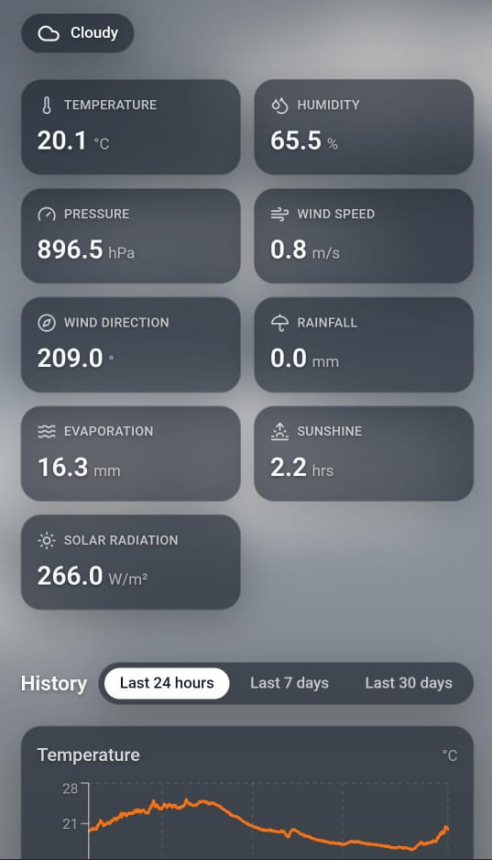
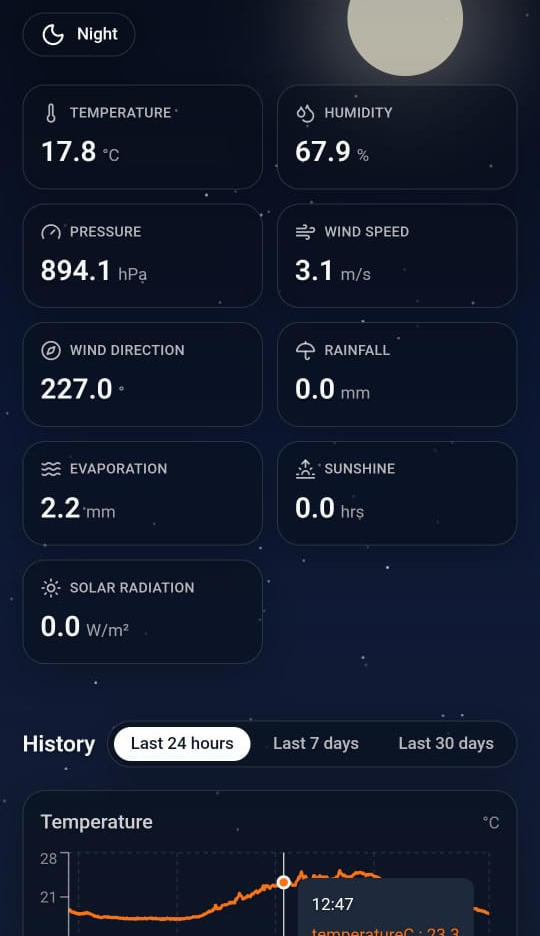
The provided screen images show channels for temperature, humidity, pressure, wind speed, wind direction, rainfall, evaporation, sunshine duration and solar radiation. This is useful for research because it connects related variables in one record. For example, evaporation can be reviewed together with wind, humidity, air temperature and radiation instead of being treated as an isolated value.
The Tanzania 10-meter research weather station is a multi-parameter outdoor observation system, not a single weather display device. It combines ultrasonic wind measurement, atmospheric sensing, rainfall, evaporation, sunshine duration, solar radiation, data acquisition, solar power and structural protection. For research projects in Africa or other remote sites, the engineering value comes from stable measurement, documented installation and a data path that can support long-term analysis.
Related recommendations
Sensors & Weather Stations Catalog
 Agriculture Sensors and Weather Stations Catalog-NiuBoL.pdf
Weather Stations Catalog-NiuBoL.pdf
Agriculture Sensors Catalog-NiuBoL.pdf
Water Quality Sensor Catalog-NiuBoL.pdf
Related products
 Combined air temperature and relative humidity sensor
 TDR Soil Moisture & Temperature Sensor for irrigation| RS485 |4-20mA| NBL-S-THR
 Soil pH sensor RS485 soil Testing instrument soil ph meter for agriculture |NBL-S-PH
 Wind Speed sensor Output Modbus/RS485/Analog/0-5V/4-20mA
 Tipping bucket rain gauge for weather monitoring auto rainfall sensor RS485/Outdoor/stainless steel
 Pyranometer Solar Radiation Sensor 4-20mA/RS485

Screenshot, WhatsApp to identify the QR code
WhatsApp number:+8615367865107
(Click on WhatsApp to copy and add friends)

