





— Blogs —
—Products—
 Consumer hotline +8618073152920
WhatsApp:+8615367865107
Address:Room 102, District D, Houhu Industrial Park, Yuelu District, Changsha City, Hunan Province, China
Time:2026-09-07 16:27:34 Popularity:315
Quick Answer: IP65, IP66, IP67 and IP68 describe enclosure protection against dust and water ingress under defined test conditions. They do not establish salt-spray resistance, chemical compatibility, allowable pipeline pressure or freedom from condensation. Select the water-protection rating for the actual exposure, then assess materials, connectors and environmental limits separately. An IP68 probe does not make its data logger or cable joint submersible.
The IP code in IEC 60529 classifies protection provided by an enclosure. The first characteristic numeral concerns access to hazardous parts and entry of solid foreign objects; the second concerns harmful water ingress. In the four ratings discussed here, the first numeral is 6, meaning dust-tight protection. The distinction is therefore the water test, not a different level of dust protection.
| Rating | Water exposure covered | Limit to keep in mind |
|---|---|---|
| IP65 | Water jets under specified test conditions | Not an immersion rating; not permission for unrestricted pressure washing |
| IP66 | Powerful water jets under specified test conditions | Does not establish continuous submersion or resistance to hot cleaning chemicals |
| IP67 | Temporary immersion under specified conditions | Not a general continuous-underwater operating specification |
| IP68 | Continuous immersion under conditions specified for the product | Permitted depth, pressure and operating conditions must still be identified |
Do not read the final numeral as one uninterrupted ladder covering every water exposure. Immersion protection does not, by itself, establish water-jet protection. Where a product must withstand both, request the relevant combined ratings or test evidence. Likewise, an IP68 marking without a defined immersion condition is insufficient for choosing a probe for a particular depth.
The rating also applies to a particular assembly condition. A connector may achieve its stated protection only when mated and tightened, or when an approved cap is fitted. A disconnected plug, an open enclosure door and a completed assembly are different conditions.
Salt spray can attack fasteners, brackets, connector contacts and exposed metal while the electronics enclosure remains sealed. Deposits can retain moisture and promote corrosion at joints. A coastal instrument can therefore lose mechanical integrity or develop an unreliable connection without first failing a water-ingress test.
Evaluate the entire exposed assembly: housing material, fastener grade, coatings, dissimilar-metal interfaces, seals, cable jacket and connector finish. Stainless steel is a material family, not an unconditional seawater guarantee. Chloride concentration, temperature, crevices and cleaning practices affect suitability. Avoid specifying an unspecified stainless housing as the complete corrosion solution.
For a corrosive site, ask for relevant corrosion-test conditions and acceptance criteria. A statement that a test lasted a certain number of hours does not automatically predict years of service at a particular coast. IEC environmental water tests and corrosion tests address different stresses; the scope of IEC 60068-2-18 explicitly separates water testing from corrosion testing.
Immersion protection tests and pressure-system operating conditions are not interchangeable. When a water-quality probe enters a pressurized pipe, check its operating pressure, temperature, connection and seal compatibility. Include pressure transients and the rating of the holder or flow cell. A probe with a suitable thread is not necessarily suitable for the line pressure.
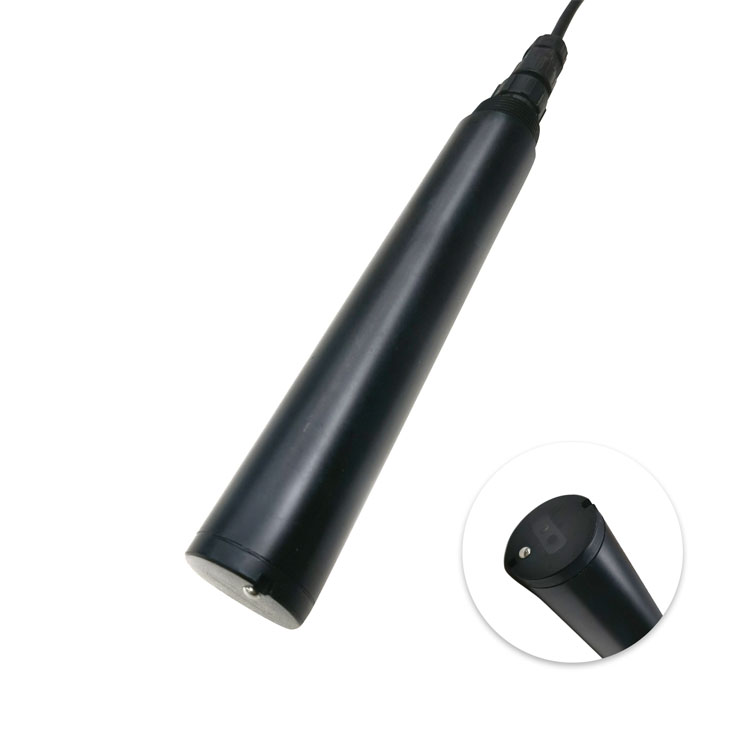
NiuBoL water-quality probes illustrate why the distinction matters. NBL-WQ-PH has IP68 protection and an operating-pressure limit below 0.2 MPa. NBL-WQ-ORP also has IP68 protection, but its operating-pressure limit is below 0.1 MPa. The same ingress marking does not give these two instruments the same process-pressure limit.
A submerged installation creates hydrostatic pressure even without a pump. Check the allowed immersion depth for the complete probe and cable connection rather than calculating a depth from an IP label alone. In a pipeline, select a properly rated fitting and provide safe isolation before removal. Do not loosen a probe to investigate a leak while the assembly is pressurized.
High humidity and condensation are related but different conditions. Condensation forms when a surface is below the dew point of the surrounding air. Moist air trapped during assembly or maintenance can condense on a cold internal surface after a temperature change. Water droplets inside a cabinet do not necessarily identify a failed external seal.
Read the humidity specification literally. A range such as 0-95% RH does not automatically mean either condensing or non-condensing operation; that condition must be stated. If the rating excludes condensation, exposure near saturation during day-night temperature changes needs additional assessment.
Possible measures include assembling in dry conditions, using suitable desiccant with a replacement plan, or specifying an appropriate pressure-equalizing vent or controlled heater. These are design choices, not accessories that can be added indiscriminately. A vent must retain the required protection, and a heater changes the power budget and internal temperature. Do not drill an unapproved drain hole into a rated enclosure.
| Installation detail | Failure mechanism | Practical check |
|---|---|---|
| Cable gland | A cable outside the gland's clamping range leaves a leak path | Match the actual cable diameter, seal and tightening requirements |
| Unused port | An open hole or unsuitable plug bypasses enclosure protection | Fit the specified blanking plug and inspect its seal |
| Connector | Incomplete mating, dirt or a damaged O-ring defeats sealing | Check mating condition, cleanliness and strain relief |
| Enclosure lid | Trapped wire, warped cover or uneven compression damages the seal | Inspect the gasket and close in the prescribed sequence |
| Cable route | Water follows the cable into an entry or damaged jacket | Provide appropriate routing, drip management and abrasion protection |
A protective cabinet does not make every enclosed component outdoor-rated. It creates an internal environment that still has temperature, humidity and ventilation limits. Conversely, putting an air-temperature sensor inside a sealed cabinet can protect it from rain while making its measurement useless. The sensing element must retain the exposure needed for its job.
RS485, Modbus RTU and 4-20 mA specify aspects of signal transmission, not environmental sealing. An electrically compatible replacement connector may still have the wrong gasket, cable seal or mating arrangement. Replacement parts need both electrical and mechanical compatibility.
For an agricultural weather station, NiuBoL wind-speed and wind-direction sensors are specified as IP65. Mount and connect them for rain exposure, keeping cable joints protected and avoiding direct immersion or aggressive washing. Check ice, UV exposure and bracket corrosion separately; those are not resolved by the IP65 label.
For a water-monitoring buoy, distinguish the immersed probe from the junction above it and the logger enclosure on the platform. Wave splash, periodic flooding and continuous submersion are different duties. A buoy drawing should show which parts can become submerged at the maximum expected water level.
For a coastal PV installation, salt deposits affect brackets, cable connections and sensor optics as well as housings. Cleaning must suit the actual surface and seals. A water-jet rating does not authorize a close-range pressure washer on a pyranometer dome, bearing or electrical connector.
When comparing quotations, describe these exposures directly. Request the proposed enclosure rating, material selection and connector arrangement for each installed part. A single phrase such as marine waterproof conceals the details that determine whether the assembly is suitable.

It may be suitable for outdoor rain exposure when the product's installation and environmental requirements are met. Check connector mating, cable entries and mounting orientation. IP65 does not authorize leaving the sensor in standing water or installing it below a flood level.
No. They address different water exposures. Choose immersion capability where immersion is expected and water-jet protection where that exposure matters. A product with both duties needs appropriate evidence for both, along with suitable materials and operating limits.
No. Burial adds soil chemicals, mechanical loading, cable strain and installation constraints. Select a probe designed for soil installation with an appropriate cable and joint arrangement. An IP68 enclosure rating alone does not establish measurement suitability or resistance to burial loads.
No. UV aging is a separate material and environmental issue. A cable jacket or plastic housing can become brittle without an initial ingress problem. Specify outdoor exposure suitability and inspect parts that receive direct sunlight.
No fixed service-life conversion follows from the test duration. Review the tested material or assembly, exposure method and pass criteria, then compare them with site conditions. Maintenance access and the condition of joints remain important after installation.
Verify the connector model, cable diameter, pin assignment, seal condition and mating torque where specified. Confirm that the protection applies to the assembled connection. Follow the approved verification procedure; an improvised immersion test can damage equipment and does not establish a certified rating.
Describe rain, washdown, immersion depth and duration, salt or chemical exposure, temperature cycling and where the cable joints will sit. Include the sensor model and installation drawing. These conditions allow the probe, connector and cabinet to be assessed separately.
Use IP65, IP66, IP67 and IP68 to describe defined ingress protection, not overall environmental durability. Confirm pressure and immersion limits for wet installations, corrosion resistance for coastal sites, and condensation control for cabinets. The installed protection depends on the assembled seals and connections as well as the number printed on the product.
Prev:Why Water Quality pH and EC Sensors Need Calibration
Next:Calibration Certificates and Test Reports for Project Acceptance
Related recommendations
Sensors & Weather Stations Catalog
 Agriculture Sensors and Weather Stations Catalog-NiuBoL.pdf
Weather Stations Catalog-NiuBoL.pdf
Agriculture Sensors Catalog-NiuBoL.pdf
Water Quality Sensor Catalog-NiuBoL.pdf
Related products
 Combined air temperature and relative humidity sensor
 TDR Soil Moisture & Temperature Sensor for irrigation| RS485 |4-20mA| NBL-S-THR
 Soil pH sensor RS485 soil Testing instrument soil ph meter for agriculture |NBL-S-PH
 Wind Speed sensor Output Modbus/RS485/Analog/0-5V/4-20mA
 Tipping bucket rain gauge for weather monitoring auto rainfall sensor RS485/Outdoor/stainless steel
 Pyranometer Solar Radiation Sensor 4-20mA/RS485


Screenshot, WhatsApp to identify the QR code
WhatsApp number:+8615367865107
(Click on WhatsApp to copy and add friends)

