





— Blogs —
—Products—
 Consumer hotline +8618073152920
 WhatsApp:+8615367865107
Address:Room 102, District D, Houhu Industrial Park, Yuelu District, Changsha City, Hunan Province, China
Time:2026-09-07 16:27:33 Popularity:289
Water quality pH and EC sensors need calibration or verification because electrode condition, deposits and temperature handling can change the relationship between the water and the reported value. Check the sensor in a suitable standard before adjusting it. A failed check is a reason to investigate the complete measurement, not an instruction to overwrite calibration coefficients immediately.
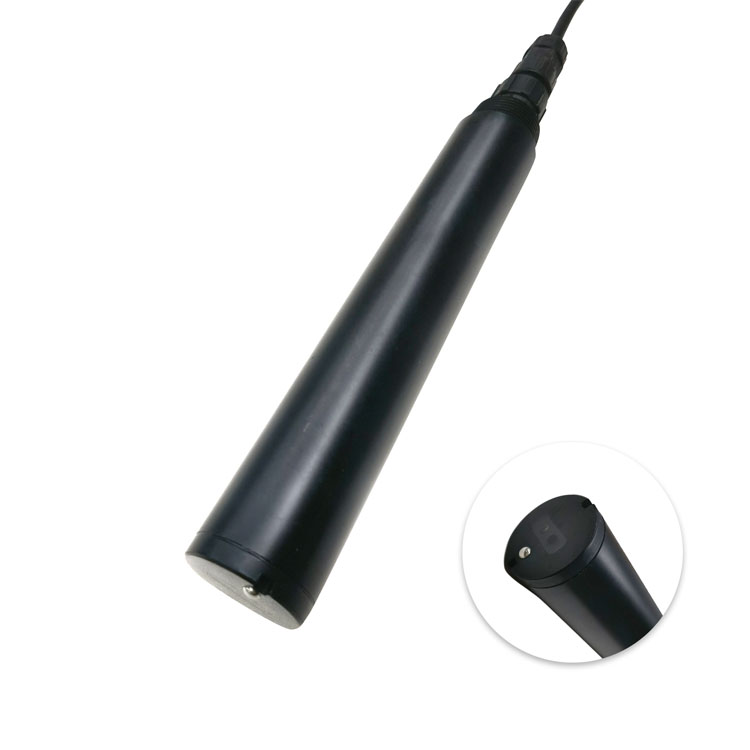
| Item | pH measurement | Electrical conductivity measurement |
|---|---|---|
| Reference | Buffer solutions with known pH at the actual temperature | A conductivity standard with a known value and temperature basis |
| Typical adjustment | Offset and slope for the applicable electrode and electronics | Cell constant or instrument response, according to the sensor design |
| Common interference | Dirty glass, reference-junction problems, unsuitable buffer or electrode aging | Deposits, air bubbles, vessel proximity, wrong standard or temperature treatment |
| Unit check | pH, with the separate temperature channel correctly identified | Conductivity unit and whether the value is temperature-compensated; do not substitute a salinity unit |
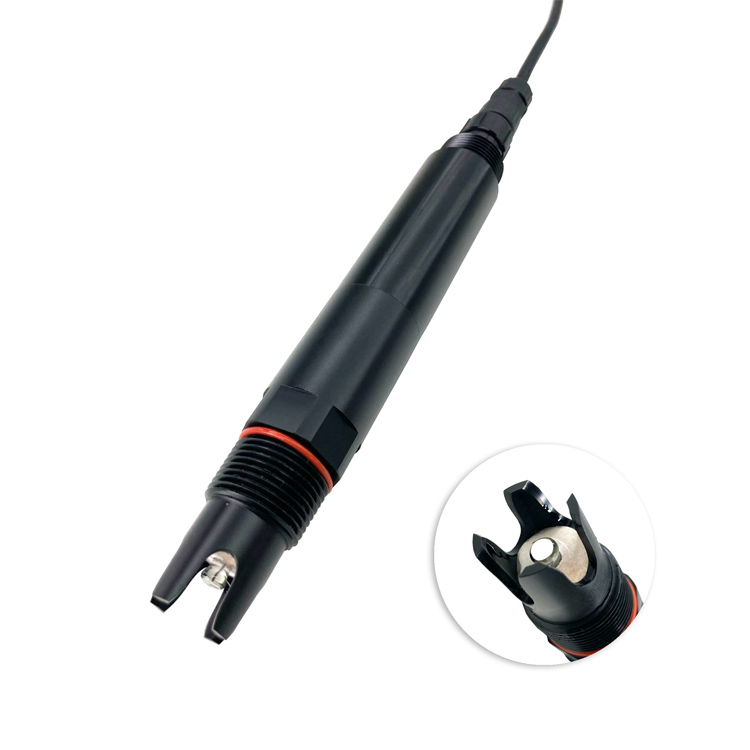
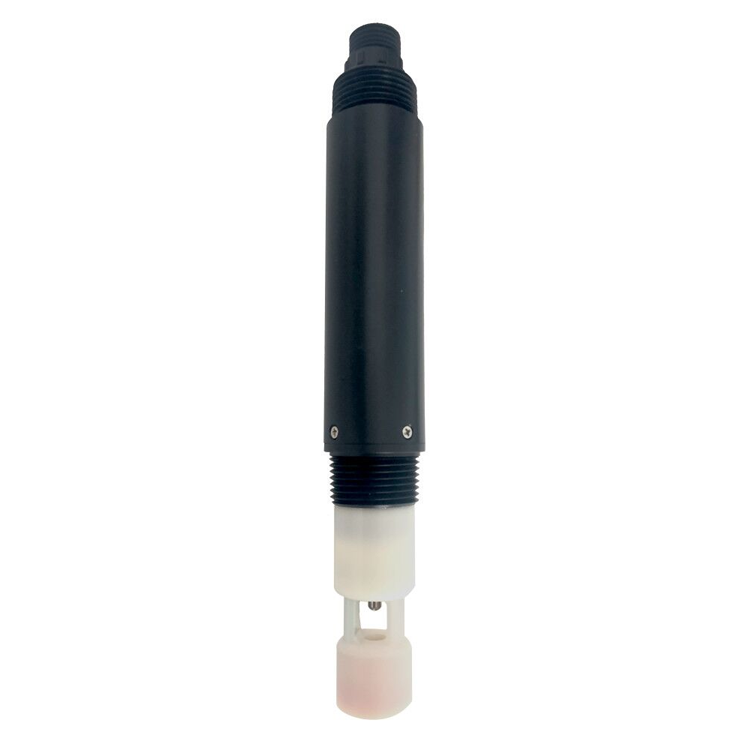
Before choosing a standard, identify the actual probe and its calibration interface. The NiuBoL online pH sensor and conductivity and salinity sensor families have different sensing and output arrangements. Model identification tells the maintenance team which buffer values, reference units and calibration commands apply. A common RS485 connection does not make the adjustment procedure interchangeable, and a software label does not establish which quantity is being calibrated.
Do not interchange buffer sets solely because their labels look close. For the NiuBoL NBL-WQ-PH version using a 6.86 pH zero point, the corresponding slope procedure uses 4.00 pH for acidic measurements or 9.18 pH for alkaline measurements. These are the nominal buffer values at 25 degrees C. They are not a universal instruction for every NiuBoL pH model or every calibration interface.
For that version, allow approximately 3-5 minutes for a stable indication at each calibration stage. Stability matters more than treating the waiting time as an automatic pass. Use the reference value appropriate to the buffer temperature, rinse between solutions and avoid carrying contaminated liquid into the next container. Prepare any powder buffer to the volume stated on its package and do not return used solution to the stock bottle.
Temperature compensation does not remove the need for this process. It does not repair an aged electrode or correct a contaminated buffer. Different buffer products also have their own temperature-dependent reference values; selecting automatic temperature compensation is not permission to ignore those values.
Select a standard appropriate to the sensor range and the intended measurement. A conductivity result in microsiemens per centimeter or millisiemens per centimeter is different from salinity in PSU and from a calculated TDS value. Confirm the actual reported quantity before deciding that the instrument disagrees with the standard.
Keep the sensing region fully exposed to the standard without trapped bubbles. Use the immersion depth and clearance required by the particular cell design. A small container or contact with its wall can influence some conductivity cells. Inductive and contacting-electrode sensors also need different handling; a cleaning or zeroing method for one should not be transferred automatically to the other.
Distinguish raw conductivity at the measured temperature from conductivity normalized to a reference temperature. Comparing one against the other can create an apparent error even when the instruments are functioning normally. Use the standard's temperature information and the selected compensation method rather than applying an assumed correction coefficient to every water sample.
Inspect the sensing surface and reference junction before recalibrating a pH probe. For conductivity, inspect the cell or opening for deposits and obstructions. Use cleaning agents and mechanical treatment compatible with the specific probe; an abrasive method suitable for one housing can damage another sensing surface.
The NBL-WQ-PH glass-electrode version needs appropriate storage solution when not in use. A brief deionized-water rinse is not the same as long-term storage in deionized water. If cleaning and conditioning do not restore stable checks, assess the electrode and reference system before repeatedly adjusting the output to match one standard.
For RS485 Modbus RTU instruments, confirm that the controller reads the intended parameter and applies its scale correctly. Save the original coefficients or configuration before making a supported adjustment. After calibration, verify the value at the sensor interface and at the PLC, RTU or data logger. A correct local result and an incorrect dashboard result usually require an integration check, not another electrode adjustment.
Retain the model, instrument identification, standard lot, reference value, temperature, readings before and after adjustment, date and person performing the work. Use the observed drift and operating conditions to decide the next check. Clean-water service, fouling wastewater and intermittent laboratory use should not automatically share one calendar interval.
No. If the instrument passes the agreed check, unnecessary adjustment can replace a satisfactory calibration with a poorer one. Investigate an out-of-tolerance result by checking the standard, temperature, cleanliness and settings before changing coefficients.
Not without confirming how that model accepts the reference value. A command that assumes 6.86 must not be given a different buffer as though it were identical. Use the supported buffer set or an adjustment function that explicitly accepts the actual reference value.
No. It addresses defined temperature-related behavior of the measurement or reported quantity. It does not remove contamination, repair the reference junction or establish the correct conductivity compensation behavior for every sample.
No. Identify the measured quantity and the conversion used by the instrument first. PSU, microsiemens per centimeter and a calculated TDS value are not interchangeable labels. Use the reference and calibration procedure appropriate to the output being checked.
Check the standard's condition, temperature stabilization, immersion, bubbles, cable connections and sensing surface. For pH, also review electrode hydration and reference-junction condition. Replace or service the sensing element when the appropriate checks and conditioning do not restore acceptable behavior.
No universal transfer should be assumed. Soil probes, sample preparation and reference methods can differ from immersed water-quality electrodes. Use the procedure for the actual model and measurement method rather than applying a water-sensor command to a soil instrument.
Send the exact model and output version, standard identity and temperature, readings before and after cleaning, the configuration used and the value shown by the receiving controller. This helps distinguish a sensing problem from a standard, unit or integration problem without assuming that the probe has failed.
Reliable pH and EC calibration starts with the correct reference, a clean sensing element and the right temperature basis. Adjust only through the supported model-specific procedure, then verify the complete signal path. The NiuBoL water-quality sensor range includes different electrode and output designs, so identify the instrument before choosing buffers, standards or calibration commands.
Prev:Rain Gauge Troubleshooting: No Data, Zero Rainfall or Low Readings
Next:IP65, IP66, IP67 and IP68 Explained: Waterproof Does Not Mean Salt-Spray Resistant
Related recommendations
Sensors & Weather Stations Catalog
 Agriculture Sensors and Weather Stations Catalog-NiuBoL.pdf
Weather Stations Catalog-NiuBoL.pdf
Agriculture Sensors Catalog-NiuBoL.pdf
Water Quality Sensor Catalog-NiuBoL.pdf
Related products
 Combined air temperature and relative humidity sensor
 TDR Soil Moisture & Temperature Sensor for irrigation| RS485 |4-20mA| NBL-S-THR
 Soil pH sensor RS485 soil Testing instrument soil ph meter for agriculture |NBL-S-PH
 Wind Speed sensor Output Modbus/RS485/Analog/0-5V/4-20mA
 Tipping bucket rain gauge for weather monitoring auto rainfall sensor RS485/Outdoor/stainless steel
 Pyranometer Solar Radiation Sensor 4-20mA/RS485

Screenshot, WhatsApp to identify the QR code
WhatsApp number:+8615367865107
(Click on WhatsApp to copy and add friends)

