





— Download —
—Products—
 Consumer hotline +8618073152920
 WhatsApp:+8615367865107
Address:Room 102, District D, Houhu Industrial Park, Yuelu District, Changsha City, Hunan Province, China
Product catalog
Time:2026-02-03 11:40:58 Popularity:7
p>In the context of the continuous advancement of the “dual carbon” goals and the Blue Sky Defense War, scenarios with high dust generation such as construction, road transportation, material storage yards, and demolition operations have become key and difficult points in urban ambient air quality management. When system integrators undertake smart construction site, dust online supervision platform, and environmental supervision IoT projects, they urgently need a set of particle monitoring front-end equipment with high stability, second-level response, easy integration, and low maintenance.
The NiuBoL NBL-W-PM Dust Online Monitor takes imported laser + photosensitive element as the core, combined with built-in sampling fan, to achieve continuous and real-time online monitoring of PM2.5 and PM10, and seamlessly accesses various construction site environmental comprehensive management platforms through RS485 interface.
From the perspective of system integrators, this device is not only a single particle sensor, but also a key node in building a “monitoring-warning-governance-traceability” closed loop. Its low power consumption (350 mW), wide temperature operating range (-20℃~+60℃) and industrial-grade output characteristics make it particularly suitable for deployment in open-air, uncovered, power-limited construction sites.
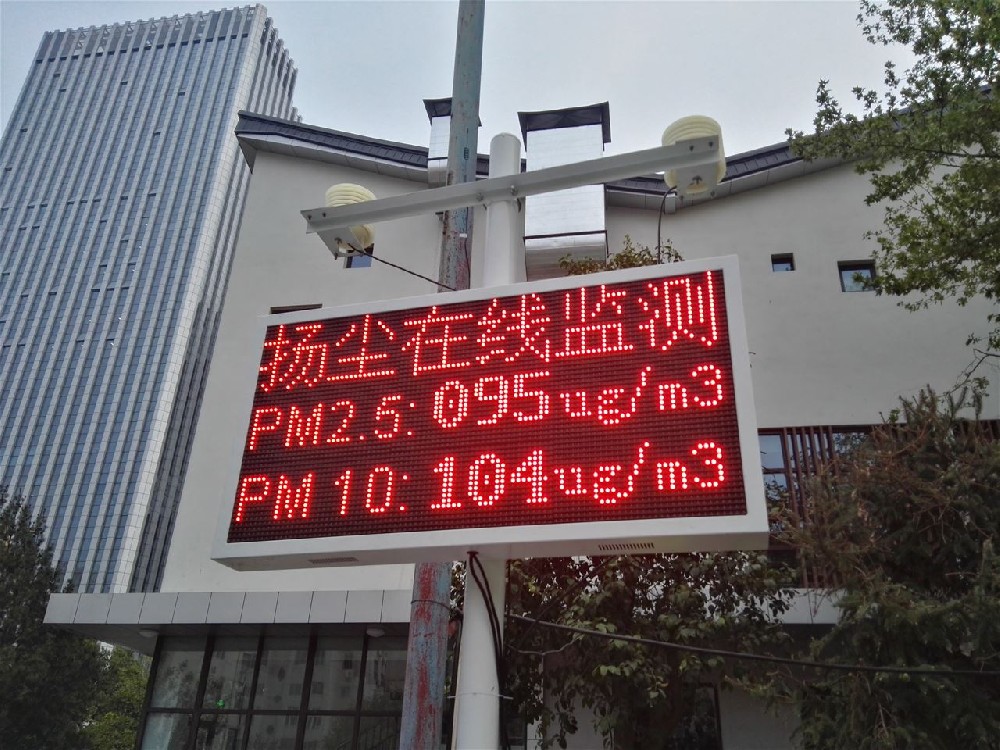
NBL-W-PM adopts laser scattering principle (lateral scattering + forward scattering composite optimization), irradiates the sampling airflow with a highly stable imported laser light source, and calculates the mass concentration after photoelectric conversion of the scattering intensity of particles on light. The built-in constant flow sampling fan ensures stable gas path and avoids sampling deviation of traditional diffusion sensors in high humidity or low wind speed environments.
Compared with β-ray method or electrochemical method, this solution shows obvious advantages in the following engineering characteristics:
Fast response time (second-level update), suitable for capturing instantaneous dust peaks such as loading and unloading operations, vehicle entry and exit, blasting demolition, etc.
Minimum detectable particle size 0.3μm, covering the main respirable particle components at construction sites.
Relative error controlled within ±15% or ±10μg/m³ (whichever is greater), reliable performance under 25℃, 50%RH standard conditions.
Power consumption only 350 mW, convenient for long-term power supply with solar + battery.
Wide temperature and humidity adaptability (-20~+60℃, 0~99%RH), high data availability can be maintained without additional temperature and humidity compensation modules.
| Parameter Category | Parameter Item | Specification Value |
|---|---|---|
| Measurement Object | PM2.5、PM10 | |
| Measurement Range | PM2.5 | 0~1000 μg/m³ |
| PM10 | 0~2000 μg/m³ | |
| Relative Error | ±15% or ±10 μg/m³ (whichever is greater, 25℃, 50%RH) | |
| Minimum Detectable Particle Size | 0.3 μm | |
| Power Supply Mode | DC 12-24V (wide voltage input) | |
| Output Form | RS485 (standard, supports MODBUS RTU) | |
| Instrument Cable Length | Standard | 2.5 meters (customizable) |
| Operating Environment Temperature | -20℃~+60℃ | |
| Operating Environment Humidity | 0~99% RH (non-condensing) | |
| Average Power Consumption | 350 mW |
1. Construction Site Dust Online Supervision
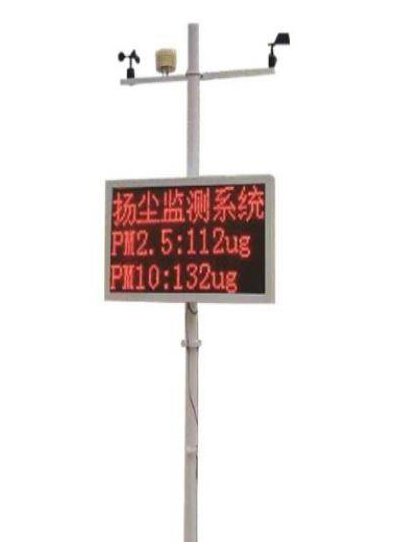
Typical deployment locations: near construction site enclosures, main entrances and exits, high points of tower cranes, material storage yards. Integrators can connect multiple NBL-W-PM units to the construction site environmental monitoring host via RS485 bus or LoRa networking. When PM10 at any point exceeds 150 μg/m³ (or local standard) for 5 consecutive minutes, it triggers automatic start/stop of fog cannons/sprinklers, enclosure spraying linkage, sound and light alarms, and SMS notifications, forming a closed loop of “exceedance → automatic dust suppression → re-measurement compliance”.
2. Spoil Transportation and Road Dust Control
Installed at spoil disposal site entrances/exits, fixed poles or mobile monitoring vehicles along main transportation routes. Combined with vehicle identification systems, when monitored PM peaks highly correlate with the passage time of heavy vehicles, traceability to specific vehicles can be achieved for precise enforcement and enterprise interviews.
3. Industrial Enterprise Material Storage Yards and Open-Air Loading/Unloading
For fugitive emission sources such as coal yards, sand and gravel yards, steel storage yards, deploy grid-based monitoring points. Data is connected to enterprise environmental control platforms and linked with production scheduling systems to pre-spray water for dust suppression before high-dust processes (such as grab unloading).
4. Urban Dust Grid Supervision Platform
In projects of environmental departments or third-party operation and maintenance units, NBL-W-PM can serve as the terminal perception layer for district/county-level grid monitoring, with data uploaded to cloud platforms via MQTT/HTTP, supporting heatmap analysis, pollution traceability, and cross-department joint enforcement.
1. Point Density and Coverage
For large construction sites (>50,000㎡), it is recommended to deploy 1 unit per 5,000-10,000㎡; for key sensitive areas (around schools, hospitals), increase density to 1 unit per 2,000-5,000㎡.
2. Output and Communication Selection
RS485 MODBUS is the first choice, convenient for docking with construction site hosts, PLCs, and edge gateways; if wireless transmission is required, pair with LoRa/NB-IoT modules.
3. Power Supply Solution
DC 12-24V wide voltage input is compatible with solar + lithium iron phosphate battery packs, recommended to configure capacity for ≥5 days of continuous operation during insufficient sunlight.
4. Expansion Capability
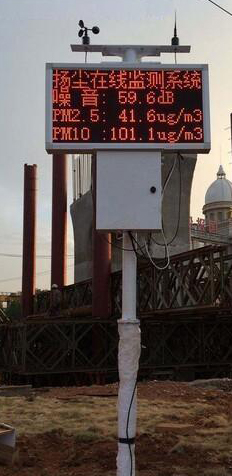
Prefer versions with reserved interfaces for temperature, humidity, noise, wind speed and direction to facilitate upgrade to multi-element environmental monitoring stations.
5. Protection and Installation
IP65 or above protection level, recommended installation height of 1.5-3 meters to avoid direct impact from ground dust and pedestrian interference.
1. Installation Location Representativeness
Avoid local high-dust sources (within 5 meters downwind of mixers) and strong wind channels, preferably 10-30 meters downwind of the prevailing wind direction.
2. Sampling Port Orientation and Height
Sampling port faces the prevailing wind direction, height 1.5-3 meters, to avoid over-sampling of near-ground dust and interference from vehicle exhaust.
3. Rain and Dust Prevention Design
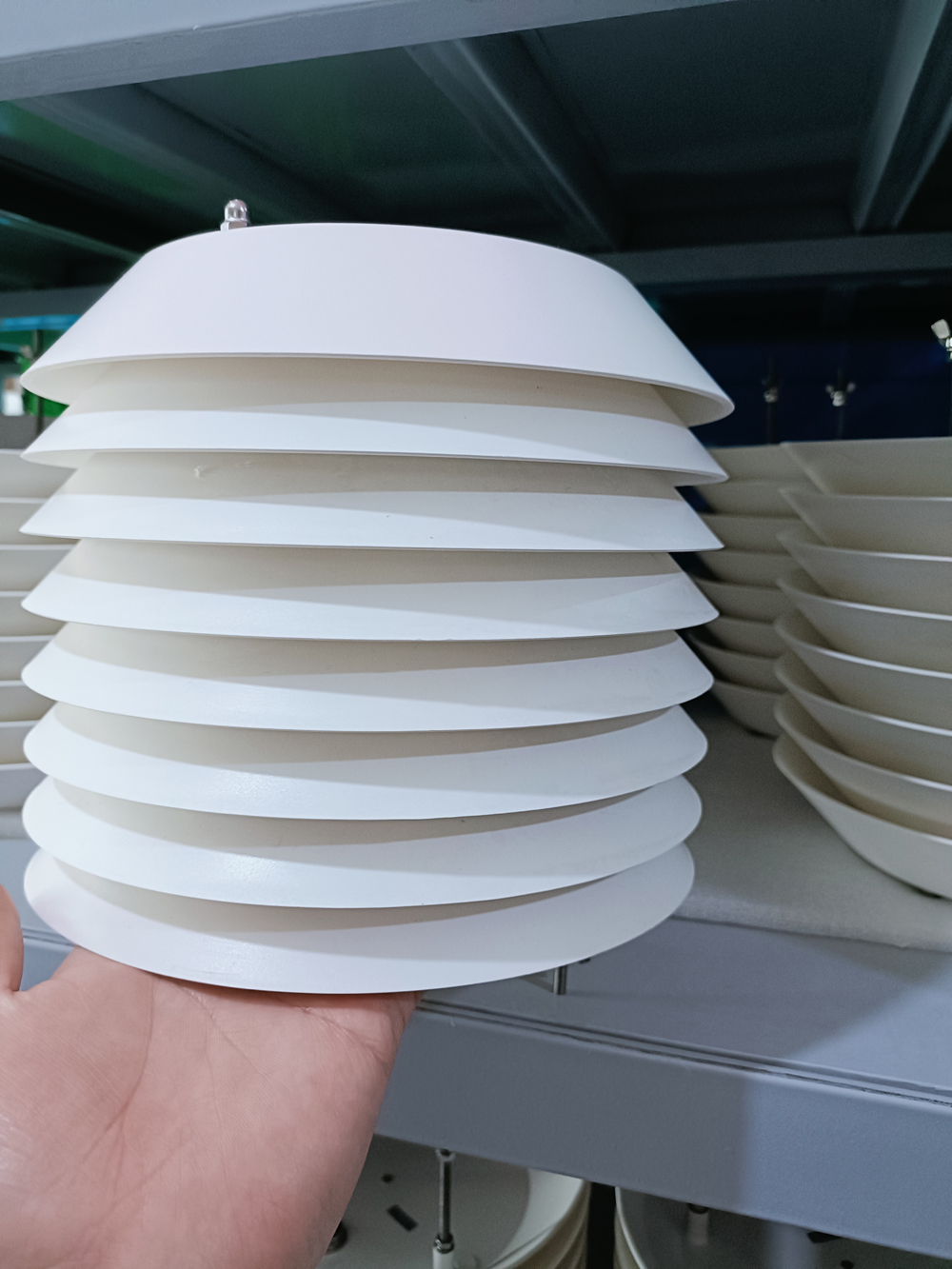
Install rain cover and insect screen, regularly (recommended monthly) clean the sampling air duct and laser window.
4. Electrical and Communication Protection
RS485 bus uses shielded twisted pair, add 120Ω terminating resistor at the end; separate power and signal lines, install surge protection.
5. Zero and Span Calibration
Factory calibrated; recommend on-site verification every 6-12 months using standard particle generator or comparative instrument.
6. Threshold and Linkage Logic
Set multi-level thresholds on the platform side (warning 150μg/m³, alarm 300μg/m³), support delay confirmation (3-10 minutes) to avoid false triggers.
Q1. What is the difference between the measurement principle of NBL-W-PM and the traditional β-ray method?
Adopts laser scattering method, faster response, lower power consumption, no radioactive source management requirements, suitable for long-term online monitoring at construction sites; β-ray method has stronger stability in high humidity environments, but higher maintenance costs.
Q2. Will the device be affected in high humidity or rainy days?
Operating humidity 0~99%RH (non-condensing), built-in fan sampling + laser scattering has certain tolerance to wet particles; it is recommended to install rain cover and avoid direct rain exposure.
Q3. What protocols does the RS485 output support for easy integration?
Standard MODBUS RTU protocol, default baud rate 9600bps, configurable; compatible with most construction site environmental hosts and IoT gateways.
Q4. How to achieve automatic linkage with fog cannons and sprinkler equipment?
The monitoring host collects PM data, sets thresholds and then outputs dry contacts or Modbus write registers to control relays, triggering dust suppression equipment.
Q5. Can solar power supply configuration operate normally during continuous rainy weather?
Ultra-low power consumption of 350mW, with reasonable battery capacity (recommended ≥30Ah) and high-efficiency solar panels, can support 5-7 days of continuous rainy weather.
Q6. Does the minimum detectable particle size of 0.3μm cover the main particles at construction sites?
Yes, PM2.5 and PM10 account for the highest proportion in construction dust, and 0.3μm already covers most inhalable particles.
Q7. Does the device require regular replacement of consumables?
No filter membrane, no pump and other wearing parts, main maintenance is cleaning the sampling air duct and laser window, recommended every 1-3 months.
Q8. How is the data used for environmental enforcement and enterprise self-inspection?
Provides timestamped raw concentration records and hourly/daily averages, supports export reports and electronic signatures, meeting traceability requirements of the “Technical Specification for Dust Online Monitoring”.
The NiuBoL NBL-W-PM Dust Online Monitor takes laser scattering technology as the core, combined with low power consumption, industrial-grade interfaces and wide environmental adaptability, providing system integrators with reliable and economical perception solutions for dust control scenarios such as construction sites, spoil yards, and material storage yards. Through real-time monitoring, precise warning and equipment linkage, it helps projects transition from manual extensive management to data-driven intelligent governance, and has been stably applied in smart construction sites and dust supervision platform projects in multiple provinces and cities.
If you are a system integrator, IoT solution provider or environmental engineering contractor, planning or upgrading construction site dust online monitoring, smart construction site environmental subsystems or urban dust grid projects, welcome to contact the NiuBoL team to obtain complete technical specification books, interface protocol documents, typical configuration schemes or on-site test support. We provide full-process technical cooperation from sensor selection to platform access, jointly promoting continuous improvement of urban air quality and the implementation of green construction.
Related recommendations
Sensors & Weather Stations Catalog
 Agriculture Sensors and Weather Stations Catalog-NiuBoL.pdf
Weather Stations Catalog-NiuBoL.pdf
Agriculture Sensors Catalog-NiuBoL.pdf
Related products
 Combined air temperature and relative humidity sensor
 Soil Moisture Temperature sensor for irrigation
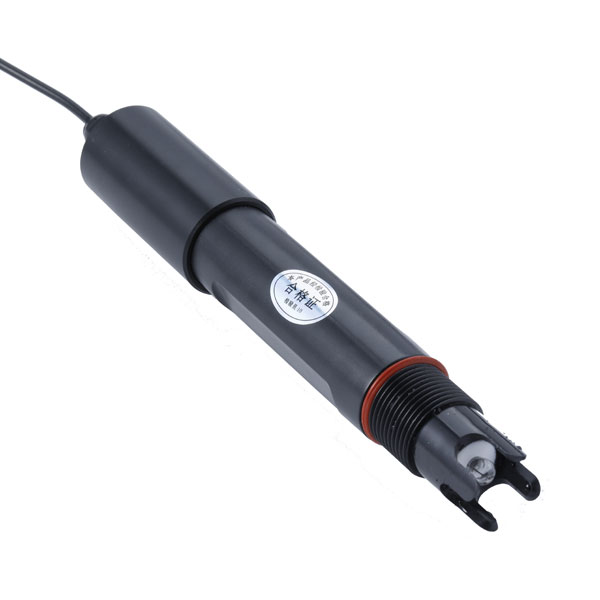 Soil pH sensor RS485 soil Testing instrument soil ph meter for agriculture
 Wind Speed sensor Output Modbus/RS485/Analog/0-5V/4-20mA
 Tipping bucket rain gauge for weather monitoring auto rainfall sensor RS485/Outdoor/stainless steel
 Pyranometer Solar Radiation Sensor 4-20mA/RS485

Screenshot, WhatsApp to identify the QR code
WhatsApp number:+8615367865107
(Click on WhatsApp to copy and add friends)


