





— Download —
—Products—
 Consumer hotline +8618073152920
 WhatsApp:+8615367865107
Address:Room 102, District D, Houhu Industrial Park, Yuelu District, Changsha City, Hunan Province, China
Product catalog
Time:2026-02-03 14:39:05 Popularity:7
In the operation systems of high-speed railways and heavy-haul railways, environmental meteorological parameters are the most direct indicators determining train speed restrictions, suspensions, and track maintenance. The Railway Automatic Weather Station (RAWS) is not merely a data collection terminal but the perception foundation of the railway disaster monitoring system (Disaster Monitoring System).
As a professional manufacturer of rail transit environmental monitoring equipment, NiuBoL is committed to providing hardware solutions with high reliability and high real-time performance for system integrators and railway engineering contractors. This article deeply explores the technical architecture of railway weather stations and their core value in B2B projects from the perspectives of engineering applications and system integration.
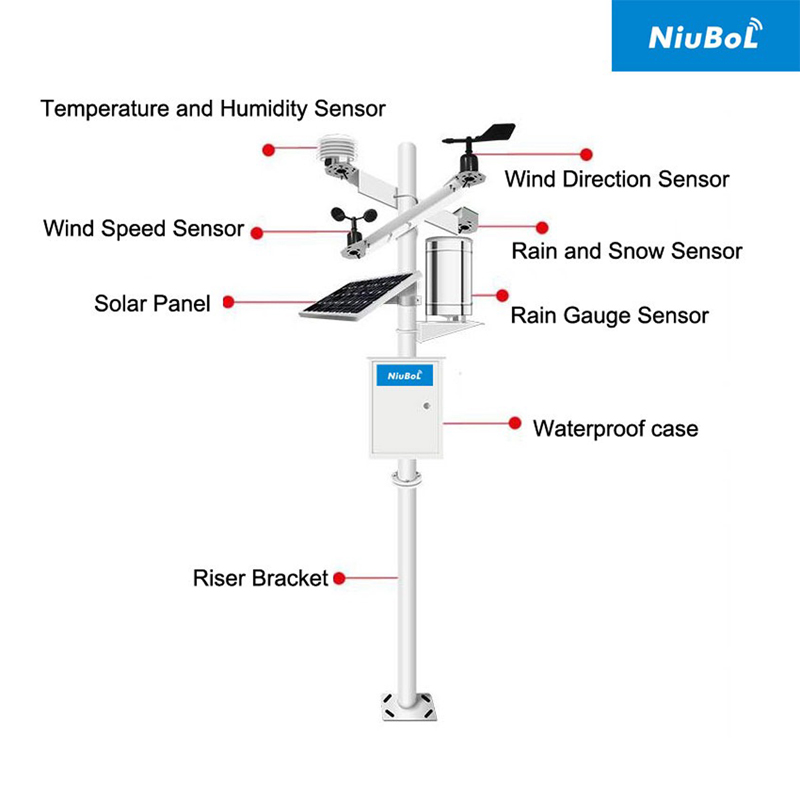
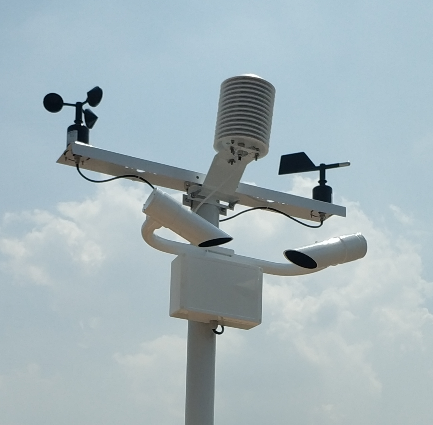
The microclimate environment along railway lines is extremely complex. NiuBoL railway automatic weather stations integrate multi-dimensional industrial-grade sensors to ensure precise capture of safety hazards.
1. Strong Wind Monitoring: Wind Speed and Direction Sensors
Strong winds are the primary threat to train operation stability. The system uses high-response-frequency ultrasonic wind speed and direction sensors to monitor crosswind intensity along railway lines in real time. Data is accessed to the dispatching system via fieldbus, serving as the sole physical basis for executing train speed restriction instructions (e.g., speed restriction when wind speed exceeds 20m/s, suspension when exceeding 30m/s).
2. Visibility Monitoring: Forward Scattering Visibility Meter
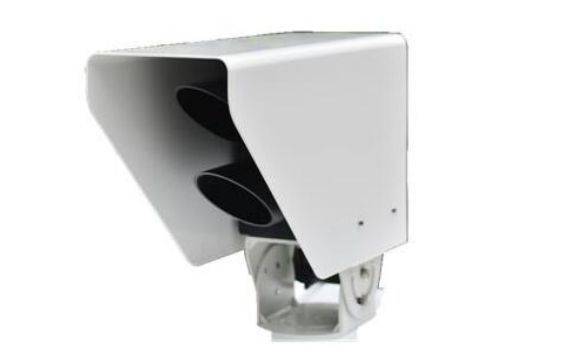
In adverse weather such as fog, haze, or sandstorms, visibility directly affects the driver's lookout distance. NiuBoL's visibility sensor measures the atmospheric extinction coefficient through the forward scattering principle and converts it into Meteorological Optical Range (MOR), with a range of 10m - 50,000m, providing refined data support for railway section speed restrictions.
3. Rain and Snow Disaster Monitoring: Precipitation and Snow Depth Sensors
Precipitation: Uses tipping bucket or piezoelectric rain gauges to monitor heavy rainfall intensity, providing early warning for risks such as landslides or subgrade collapse.
Snow depth: Utilizes ultrasonic or laser ranging technology for non-contact measurement of snow depth on track surfaces, providing a decision-making closed loop for railway switch snow removal and plowing operations.
4. Track Environment Monitoring: Rail Surface Temperature and Ballast State
Monitors surface temperature of rails and subgrade to prevent track buckling due to high temperatures or rail brittle fracture due to low temperatures. NiuBoL uses high-precision platinum resistance sensors (Pt100/Pt1000) with thermally conductive protective sleeves to ensure thermal response time (T90) meets real-time monitoring requirements.
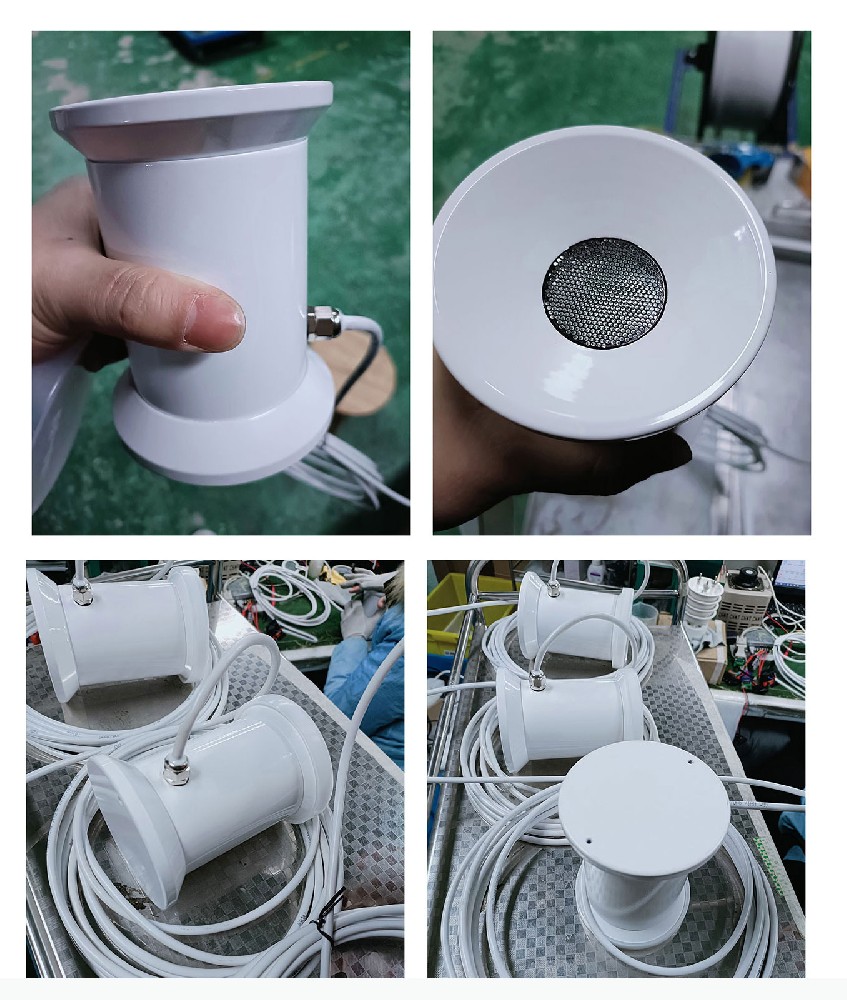
For integrators, railway weather stations need to seamlessly integrate into existing railway communication and signaling systems.
1. Disaster Monitoring System (Disaster Warning System)
In the railway disaster monitoring subsystem, weather stations serve as the foremost physical layer, aggregating data to on-site monitoring stations via RS485 or CAN bus. NiuBoL hardware supports standard Modbus RTU protocol, simplifying logical protocol development with various industrial gateways and controllers.
2. Automated Dispatching and Operation Plan Optimization
Real-time meteorological data streams can be accessed to the dispatching center (CTC) database. Through trend analysis of along-line wind speed and rainfall, dispatchers can anticipate the impact range of meteorological disasters in advance, optimize the train working diagram, and minimize train delays caused by weather to the greatest extent.
3. Overhead Contact Line and Infrastructure Protection
Strong winds may cause overhead contact line swaying or breakage, while heavy rain may threaten bridge and tunnel structures. The real-time warning function of weather stations can link with maintenance departments for proactive reinforcement inspections, transforming “passive maintenance” into “predictive maintenance”.
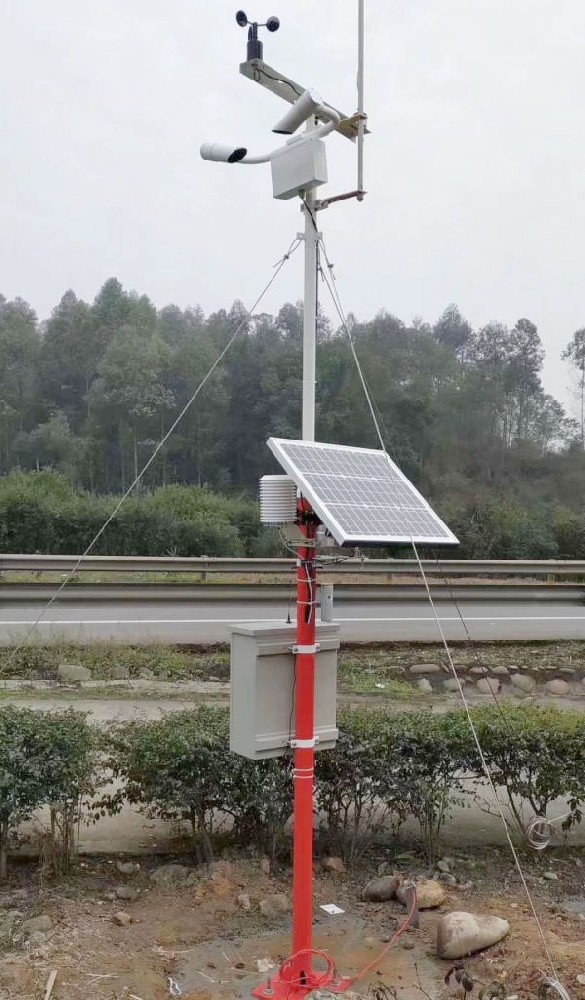
During B2B procurement and engineering implementation, focus on the following core technical indicators:
Electromagnetic Interference Resistance (EMC): Railway lines have high-voltage strong magnetic environments; sensors must have excellent resistance to lightning electromagnetic pulse (LEMP) and surge protection, complying with GB/T 17626 related standards.
Communication Reliability: For remote sections, equipment should support fiber optic transmission or 4G/5G redundant dual-backup communication to ensure uninterrupted data flow under extreme conditions.
High and Low Temperature Stability: Equipment must operate stably for long periods in extreme environments from -40°C to +70°C, with self-heating functions (e.g., heated ultrasonic anemometers) to prevent failure due to ice and snow coverage.
Low-Maintenance Design: Prioritize sensors without mechanical moving parts (such as ultrasonic wind speed sensors, piezoelectric rain gauges) to reduce manual maintenance costs during railway blockades.
Q1: What is the data refresh frequency of the NiuBoL railway automatic weather station?
A1: The system supports second-level data acquisition, with standard configuration reporting key instantaneous data such as wind speed and visibility every 1-10 seconds to meet the real-time warning needs of high-speed railway operations.
Q2: How do sensors address strong magnetic interference from high-voltage overhead contact lines?
A2: Our hardware adopts multi-level photoelectric isolation protection and shielded twisted-pair transmission, with enclosures made of special non-metallic or high-shielding metallic materials to ensure measurement accuracy in strong magnetic field environments such as traction substations.
Q3: How does the system output data for different levels of train speed restriction requirements?
A3: The system provides a standard Modbus register address table, allowing integrators to flexibly set statistical values for different time windows such as average wind speed and maximum instantaneous wind speed (gust) according to software requirements.
Q4: What are the measurement accuracy and installation requirements for snow depth sensors?
A4: Accuracy up to ±1mm. During installation, ensure the sensor faces vertically downward toward the track surface, avoiding obstruction by switches; recommended installation height is typically between 1.5-2 meters.
Q5: Does the system support docking with existing railway fiber optic backbone networks?
A5: Yes. NiuBoL data loggers support Ethernet (RJ45) interfaces and opto-electronic conversion modules, allowing direct access to railway OTN transmission networks.
Q6: How to handle sensor condensation issues in heavy fog weather?
A6: Our visibility meters and temperature-humidity sensors feature automated heating and dehumidification designs on the enclosures, effectively preventing condensation on optical lenses or water accumulation on sensor windows from affecting measurements.
Q7: Does NiuBoL provide on-site installation guidance and calibration services for weather stations?
A7: We provide detailed installation manuals, remote video guidance, and on-site commissioning support for engineering companies. All sensors come with traceable industrial calibration certificates.
Railway automatic weather stations are key technical support for ensuring rail transit operation safety. For system integrators and EPC contractors, selecting monitoring hardware with industrial-grade quality, standardized protocols, and high interference resistance is the guarantee for smooth project delivery and long-term stable system operation.
With profound manufacturing experience, NiuBoL is committed to building every railway monitoring station into a precise and reliable “meteorological guardian”. We provide not just equipment, but customized data perception solutions tailored for the rail transit industry.
Planning railway disaster monitoring or smart railway projects? NiuBoL now offers system integrators specialized technical solution white papers and Modbus RTU register documentation. Contact our engineering consultants to obtain the most competitive quotes for industrial-grade meteorological sensors. Contact NiuBoL to build the first digital defense line for rail transit safety!
Related recommendations
Sensors & Weather Stations Catalog
 Agriculture Sensors and Weather Stations Catalog-NiuBoL.pdf
Weather Stations Catalog-NiuBoL.pdf
Agriculture Sensors Catalog-NiuBoL.pdf
Related products
 Combined air temperature and relative humidity sensor
 Soil Moisture Temperature sensor for irrigation
 Soil pH sensor RS485 soil Testing instrument soil ph meter for agriculture
 Wind Speed sensor Output Modbus/RS485/Analog/0-5V/4-20mA
 Tipping bucket rain gauge for weather monitoring auto rainfall sensor RS485/Outdoor/stainless steel
 Pyranometer Solar Radiation Sensor 4-20mA/RS485

Screenshot, WhatsApp to identify the QR code
WhatsApp number:+8615367865107
(Click on WhatsApp to copy and add friends)

