





— Download —
—Products—
 Consumer hotline +8618073152920
 WhatsApp:+8615367865107
Address:Room 102, District D, Houhu Industrial Park, Yuelu District, Changsha City, Hunan Province, China
Product catalog
Time:2026-02-03 14:39:33 Popularity:8
In the fields of drinking water safety assurance, secondary water supply hygiene management, swimming pool water quality control, and industrial circulating cooling water treatment, residual chlorine (mainly free residual chlorine) serves as a direct indicator of disinfection residue and microbial safety. Its continuous and accurate monitoring is directly related to disinfection effect evaluation, pipe network water quality stability, disinfection by-product control, and system compliance. When system integrators build water quality online monitoring platforms, automatic chlorination control systems, or smart water affairs projects, they need an electrochemical residual chlorine sensor with fast response, long-term stability, and strong environmental adaptability.
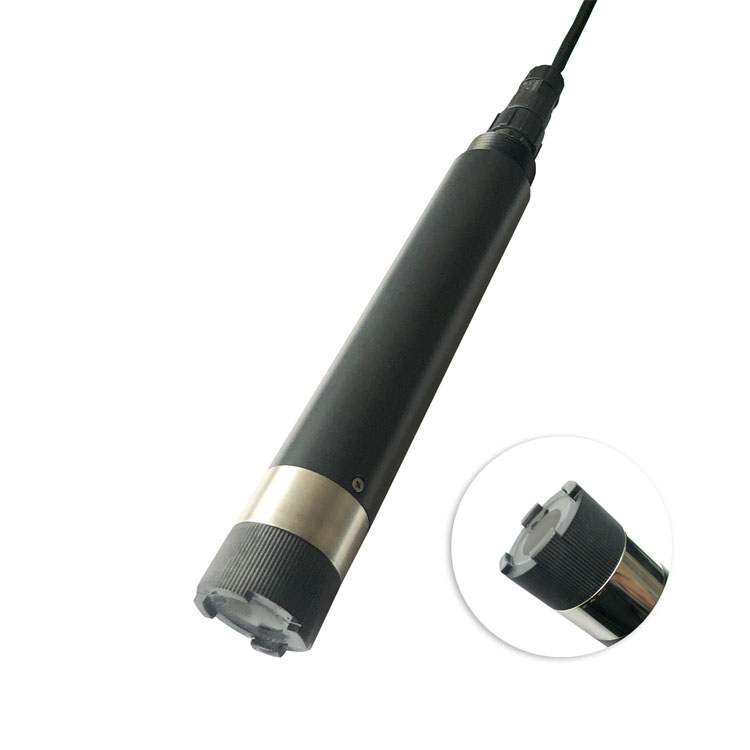
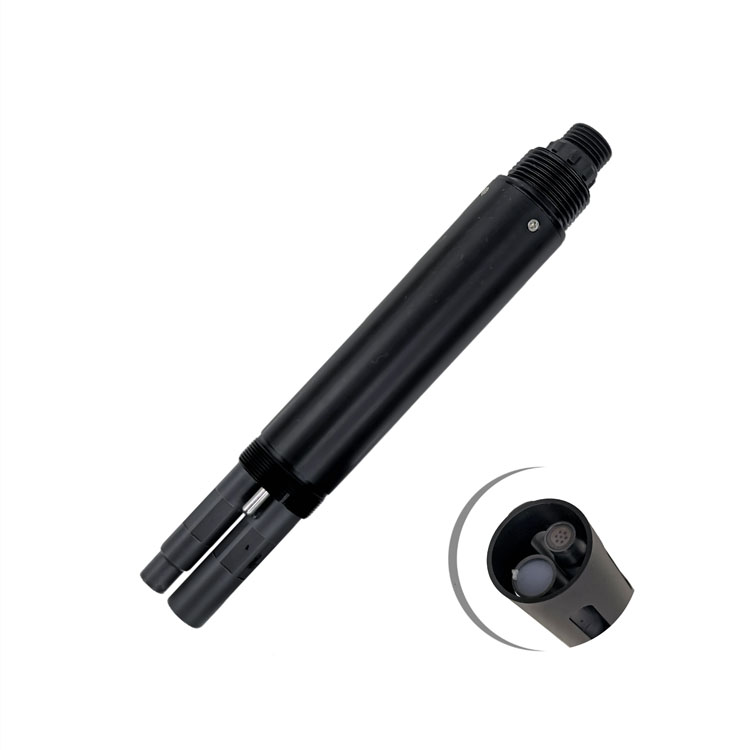
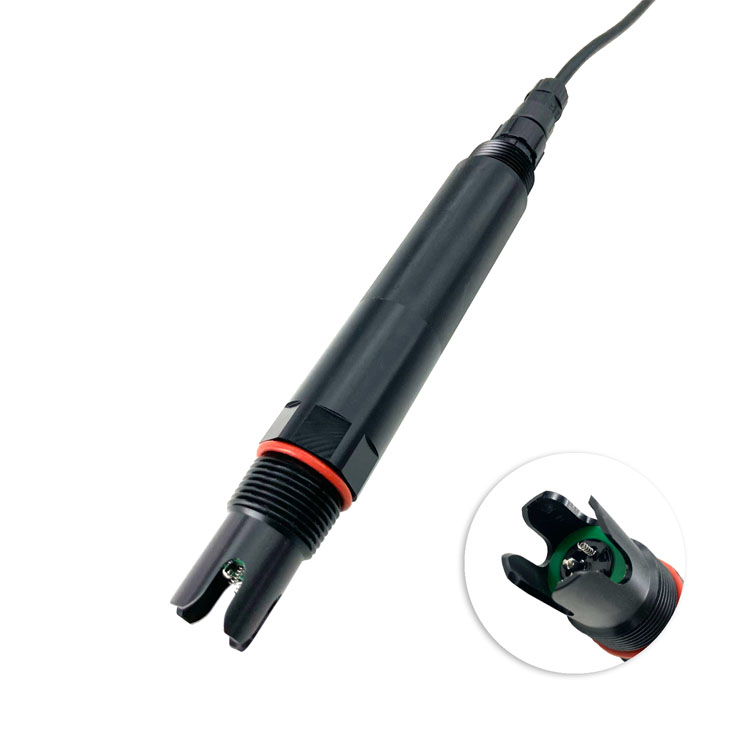
The NiuBoL NBL-CL-206 residual chlorine sensor is based on the constant voltage three-electrode membrane method to achieve high-selectivity measurement of free residual chlorine. It integrates Pt1000 automatic temperature compensation and RS-485 Modbus RTU protocol, with IP68 protection level, especially suitable for flow-through cell or long-term immersion installation.
This sensor is not only a single electrochemical probe but also a key perception layer for the disinfection process closed-loop control. It effectively reduces interference from pH, temperature, chloramines, etc., through a selective permeable membrane, and supports seamless integration with chlorine dosing pumps, valve actuators, PLCs, and cloud platforms to achieve real-time residual chlorine concentration feedback and dynamic adjustment of dosing amount.
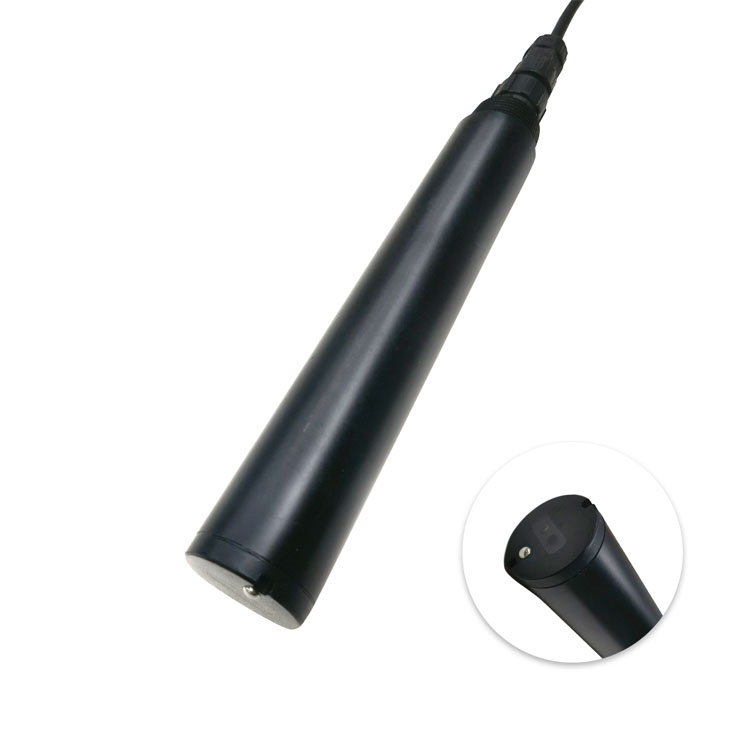
NBL-CL-206 adopts the classic three-electrode constant voltage system: working electrode (gold), counter electrode, and reference electrode form the measurement circuit. The controller applies a constant polarization voltage (usually 0.6-0.8 V), allowing free residual chlorine in water (mainly in HOCl/OCl⁻ form) to pass through the selective permeable membrane to the working electrode surface, where a reduction reaction occurs to generate a weak diffusion current. The current intensity is linearly proportional to the residual chlorine concentration, and after signal amplification and linearization processing, the concentration value is output.
Compared with membrane polarography or colorimetric methods, this solution demonstrates the following key advantages in engineering applications:
The selective permeable membrane significantly reduces cross-interference from chloramines, pH fluctuations, and conductivity changes, suitable for chloramine disinfection and combined disinfection processes.
Response time T90 < 90 s, supports high-frequency sampling, meeting real-time control requirements for disinfection contact tanks and pipe network nodes.
Minimum detection limit 0.05 mg/L, accuracy ±5% or ±0.05 mg/L, covering typical control ranges of 0.3~0.5 mg/L at drinking water pipe network endpoints and 0.5~1.0 mg/L in swimming pools.
Automatic temperature compensation (Pt1000) eliminates the influence of temperature on diffusion coefficient and reaction rate.
IP68 protection + 316L/ABS material, suitable for long-term immersion and flow-through cell installation, with long maintenance cycles.
Low power consumption (0.2 W @ 12 V), convenient for solar power supply in remote sites.
| Parameter Category | Parameter Item | Specification Value |
|---|---|---|
| Measurement Principle | Constant voltage three-electrode membrane method | |
| Measurement Object | Free residual chlorine (as HClO) | |
| Range & Resolution | 0~2.000 mg/L, 0.001 mg/L | |
| Accuracy | ±5% or ±0.05 mg/L, temperature ±0.3℃ | |
| Response Time | T90 | <90 s |
| Minimum Detection Limit | 0.05 mg/L | |
| Temperature Compensation | Automatic (Pt1000) | |
| Output Method | RS-485 (Modbus RTU protocol) | |
| Power Supply Voltage | 12~24 VDC | |
| Power Consumption | 0.2 W @ 12 V | |
| Operating Conditions | 5~50℃, ≤0.2 MPa, pH 4~9 | |
| Protection Rating | IP68 | |
| Installation Method | Flow-through cell installation, 3/4" NPT interface | |
| Shell Material | ABS/PC alloy | |
| Cable Length | Standard | 5 m (customizable) |

1. Municipal Water Supply Plants and Pipe Network Residual Chlorine Stability Control
Deploy NBL-CL-206 at key nodes such as clear water tank effluent, post-chlorination contact tank, and pipe network endpoints. Integrators can build distributed residual chlorine monitoring and dosing closed-loop systems. Data is accessed to RTUs or edge controllers via RS-485; when endpoint residual chlorine falls below 0.3 mg/L, automatically increase sodium hypochlorite dosing; when above 1.0 mg/L, reduce dosing or trigger flushing. This solution has effectively reduced the risk of secondary microbial pollution at pipe network endpoints in multiple urban secondary water supply renovation projects.
2. Swimming Pools and Water Parks Circulating Water Disinfection Management
Install flow-through cell sensors in swimming pool return pipes or balance tanks, combined with pH and ORP sensors to form a multi-parameter water quality control station. Integrators use Modbus protocol to achieve automatic PID adjustment of residual chlorine target values (typically 0.5~1.0 mg/L), linking with sodium hypochlorite metering pumps and circulation pumps to ensure pool water hygiene standards (GB 37489-2019) and reduce complaints about irritating odors.
3. Industrial Circulating Cooling Water and Boiler Feed Water Residual Chlorine Control
Cooling tower makeup water and circulating water systems are prone to microbial growth and biofilm; residual chlorine needs to be maintained at 0.2~0.5 mg/L. NBL-CL-206's anti-interference capability suits high-conductivity and variable-temperature conditions. Integrators can connect it to DCS or PLC systems, supporting linkage with corrosion/scale inhibitors and biocide dosing logic to reduce heat exchanger scaling and corrosion rates.
4. Hospital Wastewater and Bottled Drinking Water Production Disinfection Verification
Deploy in hospital sewage disinfection contact tanks or pre-filling water treatment sections in bottling plants; the sensor provides continuous residual chlorine data to ensure disinfection effectiveness and prevent excessive chlorine residue from affecting product sensory and safety.
1. Range and Object Selection
Municipal water supply/pipe network: 0~2 mg/L range covers typical control ranges; swimming pools can be customized to 0~5 mg/L; industrial cooling water prioritizes low-range high-precision configurations.
2. Installation Form
Mainly flow-through cell installation, recommended flow rate 30-60 L/h; open water bodies or large pools support immersion type but require protective covers against floating debris.
3. Communication Interface
RS-485 Modbus RTU is standard, supporting 0x03 read, 0x06/0x10 write, convenient for remote parameter configuration and control; select 4-20 mA when analog output is required.
4. Power Supply and Environmental Adaptation
12-24 VDC wide voltage, IP68 supports long-term immersion; no additional compensation needed within pH 4~9, temperature 5~50℃.
5. Calibration and Maintenance Strategy
Factory calibrated; recommend field two-point calibration every 3-6 months (zero point + 1-2 mg/L HClO standard solution); avoid staying in chlorine-free environment for more than 24 hours.
1. Installation Location and Flow Regime
Near the flow-through cell inlet, avoid direct alignment with outlet and dead water zones; ensure continuous sample water flow to prevent microbial attachment and membrane cap damage.
2. Electrical Connection Specifications
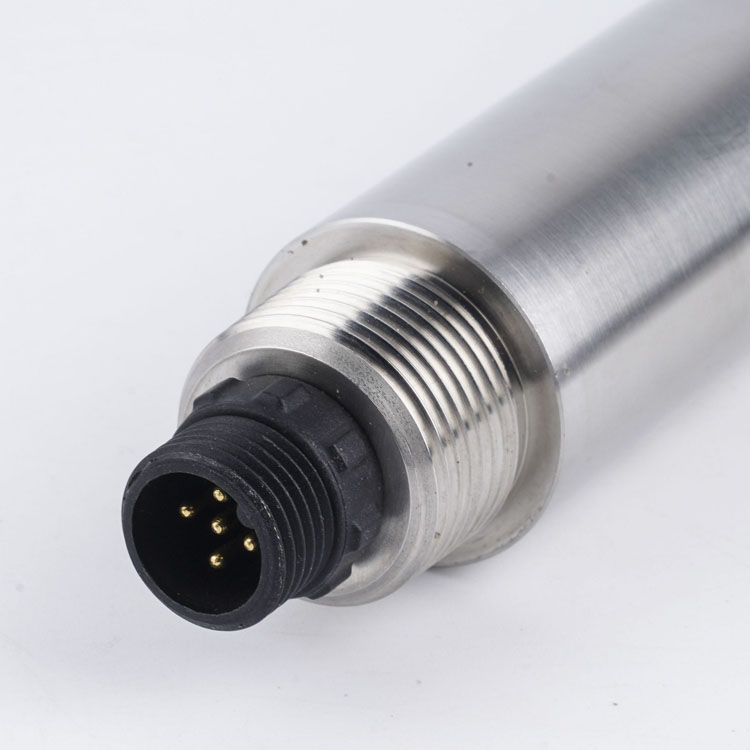
4-core shielded cable (red: 12-24V, black: GND, blue: 485A, white: 485B); all connections waterproof sealed, add anti-corrosion sheath for long-term immersion environments.
3. Initial Activation and Protection
For new electrodes or after long-term inactivity, soak statically in tap water for 24 hours to activate; during shutdown, keep immersed in water containing residual chlorine.
4. Calibration Operation Key Points
Zero point calibration in chlorine-free water; slope calibration using flowing standard solution; non-professionals recommended to return to factory for calibration to ensure standard solution accuracy.
5. Interference Source Prevention
Pre-filter to remove large particulate impurities; avoid pressure pulses and mechanical vibration; high chloramine samples need to verify selective membrane effectiveness.
6. Data Validation and Anomaly Handling
Monthly comparison with portable residual chlorine meter or DPD method; set platform anomaly thresholds (e.g., reading sudden change >20% or continuous zero value) to trigger alarms.
1. What does NBL-CL-206 measure: free residual chlorine or total residual chlorine?
Standard configuration is free residual chlorine (HClO/OCl⁻), achieving high selectivity through selective permeable membrane; total residual chlorine requires customized composite electrode version.
2. What is the core difference between constant voltage method and membrane polarography?
Constant voltage method uses three-electrode system with better current linearity and stronger anti-interference; membrane polarography relies on diffusion current and is easily affected by membrane pollution.
3. What is the sensor's tolerance range to pH changes?
Operating pH 4~9; membrane and constant voltage design significantly reduce pH interference; extreme pH requires field verification.
4. How long can the sensor stay in a chlorine-free environment?
Continuous chlorine-free environment should not exceed 24 hours, otherwise the membrane cap may suffer irreversible damage; when not in use, immerse in water containing residual chlorine.
5. What key function codes does RS-485 Modbus RTU support?
Supports 0x03 read holding registers, 0x06 single write, 0x10 multiple write, 0x0F write multiple coils, convenient for remote calibration and parameter setting.
6. What is the flow rate requirement for flow-through cell installation?
Recommended 30-60 L/h to ensure sufficient sample renewal and stable flow regime, avoiding bubble or dead zone interference.
7. How to perform field two-point calibration?
Zero point in chlorine-free water, slope using 1~2 mg/L HClO standard solution; factory calibrated, re-operate only when deviation is obvious.
8. Is the sensor stable in high-conductivity circulating water?
Yes, constant voltage three-electrode system is insensitive to conductivity changes; recommend verifying chloramine interference and adjusting polarization voltage if necessary.
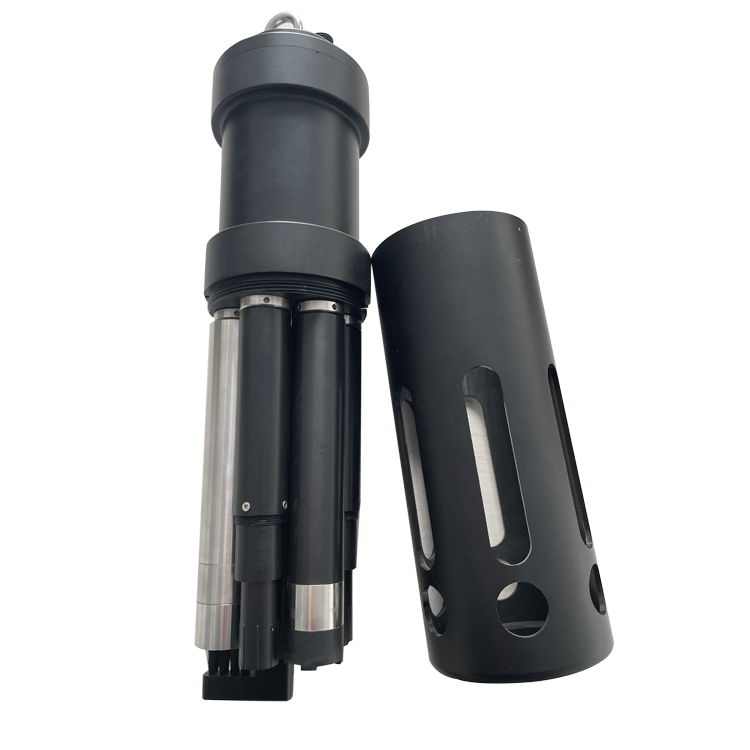
The NiuBoL NBL-CL-206 residual chlorine sensor, with constant voltage three-electrode membrane-covered technology as the core, provides high-selectivity, fast-response, and strong environmental adaptability for online measurement. In disinfection control scenarios such as drinking water plants, secondary water supply, swimming pools, and cooling circulating water, it provides key support for system integrators to build reliable residual chlorine feedback and dosing closed-loop systems. Through RS-485 Modbus RTU interface, IP68 protection, and low-maintenance characteristics, this sensor significantly improves monitoring continuity and disinfection process controllability, and has verified its engineering reliability in multiple water treatment projects.
If you are a system integrator, IoT solution provider, or water treatment engineering contractor planning or upgrading drinking water disinfection monitoring, swimming pool water quality automatic control, or industrial circulating water residual chlorine management systems, welcome to contact the NiuBoL team to obtain complete technical manuals, Modbus register mapping, typical wiring schemes, or prototype test support. We provide full-chain professional assistance from selection to commissioning, jointly ensuring water quality safety and efficient system operation.
 NBL-RDO-206 Online Fluorescence Dissolved Oxygen Sensor.pdf
NBL-COD-208 Online COD Water Quality Sensor.pdf
NBL-CL-206 Water Quality Sensor Online Residual Chlorine Sensor.pdf
Prev:Railway Automatic Weather Station: Digital Perception Core for Rail Transit Safety Dispatching
Next:Hydropower Station Ecological Discharge Flow Monitoring System Solution
Related recommendations
Sensors & Weather Stations Catalog
 Agriculture Sensors and Weather Stations Catalog-NiuBoL.pdf
Weather Stations Catalog-NiuBoL.pdf
Agriculture Sensors Catalog-NiuBoL.pdf
Related products
 Combined air temperature and relative humidity sensor
 Soil Moisture Temperature sensor for irrigation
 Soil pH sensor RS485 soil Testing instrument soil ph meter for agriculture
 Wind Speed sensor Output Modbus/RS485/Analog/0-5V/4-20mA
 Tipping bucket rain gauge for weather monitoring auto rainfall sensor RS485/Outdoor/stainless steel
 Pyranometer Solar Radiation Sensor 4-20mA/RS485

Screenshot, WhatsApp to identify the QR code
WhatsApp number:+8615367865107
(Click on WhatsApp to copy and add friends)

