





— Blogs —
—Products—
 Consumer hotline +8618073152920
WhatsApp:+8615367865107
Address:Room 102, District D, Houhu Industrial Park, Yuelu District, Changsha City, Hunan Province, China
Product knowledge
Time:2026-09-19 08:00:00 Popularity:193
DO monitoring in parallel aeration tanks should distinguish total blower supply from air distribution between basins. One tank can have low dissolved oxygen while another receives more air than it needs. A shared-header pressure or an average DO value cannot independently establish that each active tank receives suitable air for its load and mixing duty.
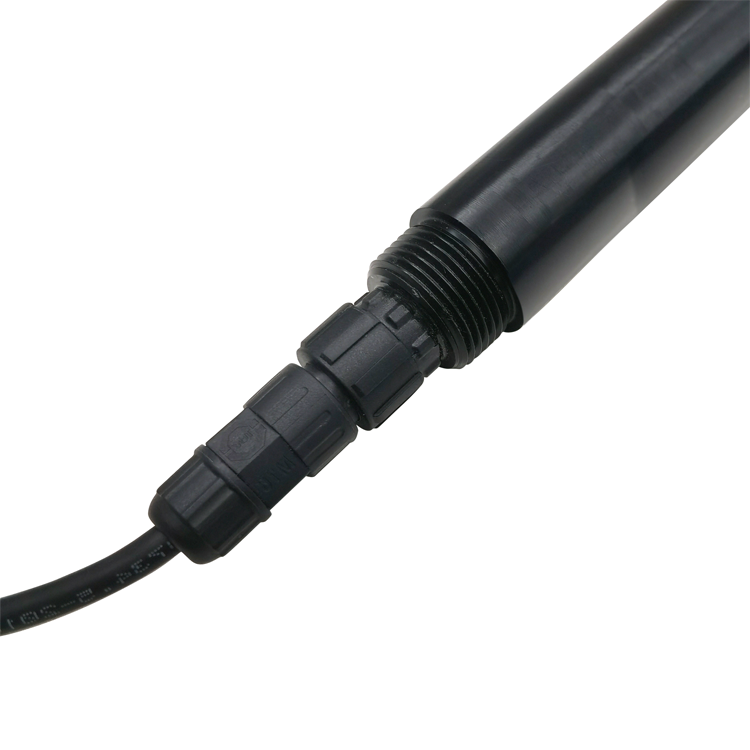
Start with the air-system drawing. Mark the common blowers, header, branch valves, diffuser zones and active basins. Then identify whether the project can adjust only total air production or can also change allocation to individual tanks. Adding several probes does not create independent control authority if all branches remain fixed.
The EPA evaluation of wastewater energy-conservation measures distinguishes simple shared DO control from arrangements with individual basin probes and air-control valves. It explains why basin demand and branch air allocation belong in the same design review. That does not prescribe one controller architecture for every plant.
| Observation | What it can indicate | What to check next |
|---|---|---|
| DO is low in all active basins | A shared supply constraint, common load change or common measurement issue is possible. | Total delivered air, blower operating limits and the validity of each observation |
| One basin is low while another is high | Demand or air distribution differs between branches. | Influent allocation, branch delivery, valve condition and probe representativeness |
| Header pressure is stable but basin DO differs | A stable header does not establish equal useful oxygen delivery. | Actual branch flow and tank conditions, not pressure alone |
| A valve command changes without the expected response | Command, valve movement and delivered air may differ. | Actuator feedback, flow indication and permitted operating checks |
An average of two DO readings may look acceptable while one tank is outside its required operating condition. A controller using that average needs a defined reason and appropriate limits; it should not conceal the individual observations from operators. Keep each basin's value, validity and equipment assignment visible.
For illustration, readings of 0.8 and 3.2 mg/L have an arithmetic mean of 2.0 mg/L. That arithmetic does not demonstrate that either basin is correctly controlled. These are hypothetical values, not proposed setpoints or a NiuBoL plant result. Tank load, treatment objectives and sensor uncertainty determine their actual significance.
Likewise, the lowest reading is not automatically the correct master signal. A dirty cap, an exposed probe or a communication fault must not drive a shared air system as though it were a valid low-oxygen condition. Define how measurement quality affects control participation.
Keep the location associated with the basin and diffuser zone it represents. A point near a strong bubble plume may not describe the mixed liquor used for the process decision. A probe at the outlet of one tank must not silently become the control point for another after piping or software changes.
During a basin shutdown, remove its observation from the approved active-control arrangement without deleting its identity or service history. Check the effect when the basin returns: the new load, water level and branch valve condition may differ from those before shutdown. Restoring power to a probe is not the same as restoring a valid process observation.
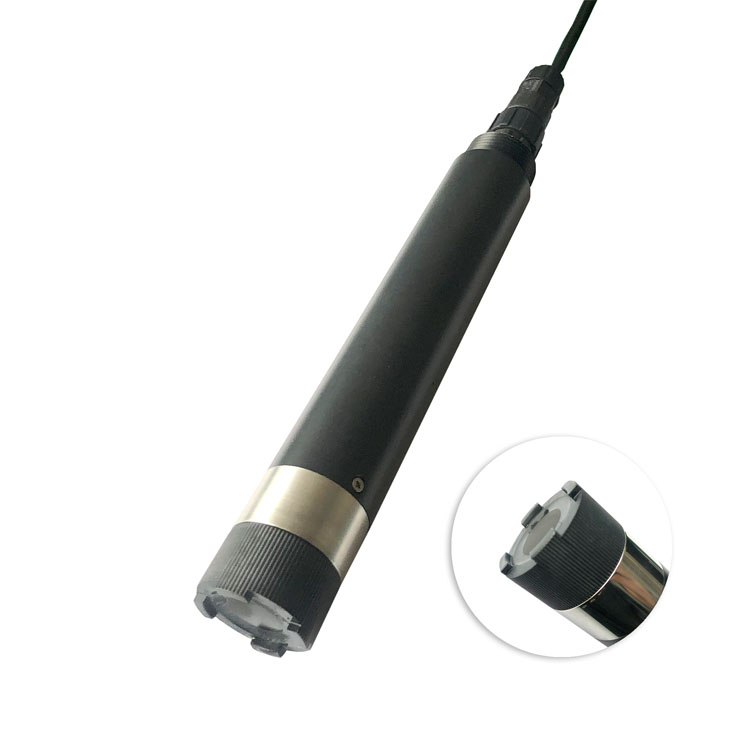
| Base DO item | Specification | Shared-air-system implication |
|---|---|---|
| Method and range | Fluorescence quenching; 0–20 mg/L | The probe measures local oxygen concentration, not air flow or oxygen-transfer efficiency. |
| Accuracy and resolution | ±2% FS; 0.01 mg/L | Check the useful distinction between basin readings before defining close control bands. |
| Compensation | Automatic temperature compensation; configurable salinity correction | Keep channel settings appropriate to the actual mixed liquor. |
| Supply and consumption | 12–24 VDC; below 0.3 W at 12 V | Budget each instrument and the receiving controller separately. |
| Interface | RS485 Modbus RTU | Retain basin identity, engineering value and measurement availability at the host. |
| Exposure and construction | 0–45 °C; pressure <0.2 MPa; POM/316L; IP68 | Approve the wet point and retrieval arrangement for each basin. |
| Mounting and cable | 3/4 NPT immersion mounting; standard 5 m cable | Specify jacket, extensions and strain protection for the installed route. |
The NiuBoL NBL-WQ-DO supplies the measurement channel. Header-pressure control, valve actuation and blower coordination require their own suitable equipment and logic. A successful Modbus read does not verify the air-distribution system.
Within the plant's approved operating procedure, observe a permitted branch adjustment while recording the affected basin and the remaining active basins. Record actual available air-flow and valve-feedback values as well as DO. Check whether a change intended for one branch disturbs another branch or pushes the blower towards an operating limit.
Keep equipment-protection and minimum mixing requirements under the process and blower designers' rules. A high DO reading alone does not authorize reducing air below a required mixing condition. Conversely, more total air is not a substitute for investigating a poorly supplied branch.
Use the activated-sludge DO commissioning guide for the broader point and loop checks. For a shared-air inquiry, add the number of active basins, branch-control arrangement, available air instrumentation and intended response when a basin or probe is unavailable.
Only if the project can justify that one observation for its intended task. Different loads, branches or operating states can require separately identified basin observations.
No. Pressure is not a direct measurement of each branch's air flow or each basin's oxygen demand. Inspect the branch and tank conditions.
Not by default. An average can hide an individual basin outside its operating condition. The process designer must define the control calculation and quality handling.
No. Independent observation and independent actuation are different capabilities. Review the valves, air delivery and shared blower constraints as well as the probe count.
Identify that channel as unavailable and use the approved alternate operating arrangement. Do not leave a removed or stale value participating as a valid basin measurement.
Parallel-tank DO control needs visible basin conditions and a realistic air-allocation design. Specify each probe's role alongside branch actuation and shared blower limits, then test the effect of changes across all active basins rather than judging one trend in isolation.
Prev:Fluorescence DO Sensor vs Electrochemical DO Sensor: Engineering Selection Guide
Next:Conductivity Sensor Selection for Industrial Water, RO and Process Water
Related recommendations
Sensors & Weather Stations Catalog
 Agriculture Sensors and Weather Stations Catalog-NiuBoL.pdf
Weather Stations Catalog-NiuBoL.pdf
Agriculture Sensors Catalog-NiuBoL.pdf
Water Quality Sensor Catalog-NiuBoL.pdf
Related products
 Combined air temperature and relative humidity sensor
 TDR Soil Moisture & Temperature Sensor for irrigation| RS485 |4-20mA| NBL-S-THR
 Soil pH sensor RS485 soil Testing instrument soil ph meter for agriculture |NBL-S-PH
 Wind Speed sensor Output Modbus/RS485/Analog/0-5V/4-20mA
 Tipping bucket rain gauge for weather monitoring auto rainfall sensor RS485/Outdoor/stainless steel
 Pyranometer Solar Radiation Sensor 4-20mA/RS485


Screenshot, WhatsApp to identify the QR code
WhatsApp number:+8615367865107
(Click on WhatsApp to copy and add friends)

