





— Blogs —
—Products—
 Consumer hotline +8618073152920
WhatsApp:+8615367865107
Address:Room 102, District D, Houhu Industrial Park, Yuelu District, Changsha City, Hunan Province, China
Product knowledge
Time:2023-02-25 21:37:38 Popularity:1657
Quick Answer: Agricultural IoT applications connect field sensors, data loggers, networks and farm software so measurements can support irrigation, greenhouse control, crop scouting and maintenance. The system should be designed around a farm decision, not around the largest possible list of sensors. Start by naming the action, the person responsible and the information needed before that action is due.

A farm can have a functioning dashboard yet still irrigate by habit. The missing element may be a representative soil measurement, but it may also be the lack of authority to change a valve schedule. Buying more sensors solves only the first problem. For each proposed use, ask what staff do today, why that decision is uncertain and what would change after a reliable measurement arrives.
Agricultural IoT applications fall into three practical groups. Advisory systems help a person decide. Alarm systems identify an exception that needs attention. Automatic control systems operate equipment under defined conditions. The same temperature reading can serve all three, but response time, failure handling and commissioning effort are different.
| Use | Measurements and action | Limitations |
|---|---|---|
| Soil moisture monitoring | Use root-zone water content at representative depths to inspect or adjust an irrigation interval. | One point cannot represent every soil or emitter position. |
| Greenhouse climate monitoring | Use crop-zone air temperature, RH and suitable light measurement to review ventilation, shading or heating behavior. | A reading near a door may not represent the crop. |
| Pest observation | Use dated trap images, reviewed catches and field scouting to prioritize inspection for a target insect. | Adult capture is not a direct crop-damage measurement. |
| Water delivery supervision | Use flow, pressure, pump state and valve feedback to identify failed delivery or unusual operation. | A command to start a pump does not prove water reached the block. |
| Weather-based operations | Use rainfall, wind and temperature near the operation to review work timing and weather exposure. | An on-site sensor is not a complete forecast. |
Soil moisture monitoring can reveal whether water is reaching the active root zone and how the profile dries between events. Place sensors according to soil differences, rooting depth and irrigation pattern. A probe beside an emitter and another at the edge of its wetted zone can disagree without either instrument being faulty.
Before changing the schedule, compare the moisture response with valve operation and delivered flow. If a valve opens but the soil does not respond, the issue could be insufficient runtime, a blocked emitter, an unrepresentative probe position or poor probe contact. A second moisture value at the same unsuitable location will not resolve that diagnosis.
A useful alarm separates these cases: no communication, valve-command failure, unexpected flow and lack of expected soil response. The last requires a locally established response window, not an arbitrary universal delay. Drainage, infiltration and sensor depth affect when a change should become visible.
NiuBoL NBL-S-TMCS combines soil temperature, volumetric moisture, conductivity and a salinity output. It can support water-and-salt observation, but the EC channel is not a direct nitrogen, phosphorus or potassium assay. Conductivity also changes with moisture and temperature, so a falling dry-soil EC value should not be interpreted as proof that fertilizer has disappeared.
| NBL-S-TMCS characteristic | Measurement or interface | Meaning for the farm system |
|---|---|---|
| Soil temperature | -40 to 80 degrees C; 0.1-degree-C resolution; +/-0.5-degree-C stated accuracy | Keep buried soil temperature distinct from air temperature. |
| Volumetric moisture | 0-100%; 0.1% resolution | Establish operating thresholds for the actual soil and installation. |
| Conductivity | 0-10000 uS/cm; 1 uS/cm resolution; +/-5% stated accuracy | Compare readings with moisture and temperature context. |
| Serial output | RS485, Modbus; 9600 baud, 8 data bits, no parity | The collector still needs the correct address, scaling and register mapping. |
| Power versions | 5-24 VDC / 12-24 VDC | Confirm the delivered version before choosing a shared supply. |
| Installation | IP68 probe; default 5 m cable | Protect the cable route and connections from cultivation and water entry. |
Resolution is not field accuracy. Take repeat observations after installation, check the soil-to-probe contact and compare like conditions. Where an acceptance tolerance depends on the percentage reference or soil calibration, settle that definition before ordering rather than treating a display increment as the allowable error.
Greenhouse climate monitoring should reveal conditions around the plants and the effect of equipment operation. Put an air sensor where airflow is representative and shield it from direct radiation. Keep it away from a heater outlet, mist nozzle or sun-warmed wall unless that location is deliberately being investigated.
Use outside weather and inside conditions for different purposes. Outdoor wind can inform an approved ventilation strategy, while indoor temperature shows its result. Outdoor rainfall is not water delivered through greenhouse irrigation. Light in lux and photosynthetically active radiation answer different questions and must not be merged into a single interchangeable channel.
Before enabling control, trend several normal ventilation or shading cycles. Check whether the sensor responds as expected and whether the actuator actually moves. A failed position switch, jammed vent or incorrectly scaled light channel can make a logically correct program behave badly. Maintain local interlocks and a usable manual mode when the remote platform is unavailable.

| Layer | Typical equipment | Question to settle |
|---|---|---|
| Measurement | Soil probes, weather instruments, water sensors and switches | Does this location represent the decision area? |
| Acquisition | Data logger, PLC or RTU | How are values read, scaled, checked and stored? |
| Communication | RS485 field wiring, cellular or another suitable link | What remains available when this link fails? |
| Application | Local software, dashboard, alarms or controller | Who receives the result, and what action follows? |
RS485 sensors often use Modbus RTU, but the data logger still needs the correct address and register map. Wireless nodes need coverage testing and a power budget. Every record should include a timestamp and unit, and the platform should distinguish a valid zero from missing or failed data.
Agricultural IoT integration also requires stable identities. Record the block, depth and sensor serial number separately from its network address. Replacing a probe must not silently merge readings from two depths under one label. Preserve the installation date so seasonal comparisons do not treat a relocated channel as an unchanged long-term measurement.
Choose sampling and reporting intervals separately. A logger may sample frequently enough to recognize a short delivery failure while sending summarized information less often. Specify which events must be sent promptly and what is retained locally. A battery-saving reporting interval is unsuitable if it arrives after the operator's opportunity to act.
Remote insect images can reduce repeated travel and direct scouting to a field needing attention. Useful records include the collection interval, trap location, operating condition and review result. They must remain distinguishable from weather-derived pest-risk estimates and actual crop injury observations.
In an orchard or mixed-crop operation, target insects and susceptible crop stages differ between blocks. Ask whether the intended classification service covers those insects and whether staff can inspect uncertain images. A high total that includes non-target insects is not a valid automatic spray instruction.
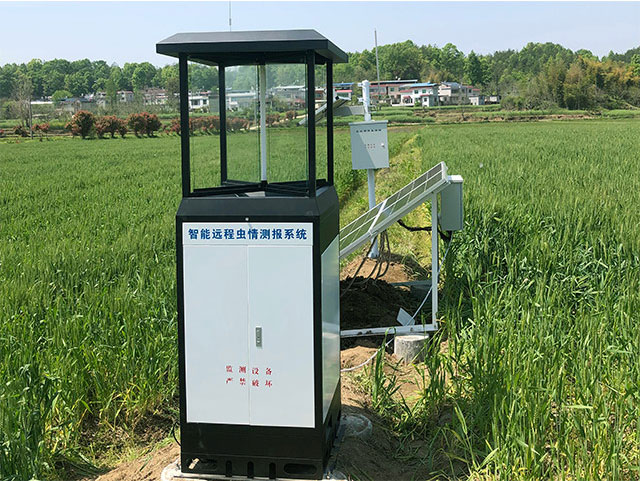
The NiuBoL remote insect monitoring system is relevant where images and observation records are needed. A solar capture lamp may instead serve a physical trapping task. Select according to that difference; do not add a monitoring cabinet to a simple irrigation project merely to enlarge the equipment list.
Choose one decision and a management zone with known operating history. Include a difficult but relevant condition, such as weak reception near the far block or contrasting soil within the irrigation area. A demonstration next to the office proves little about the actual field installation.
Evaluate whether the system changed a decision correctly, whether an important event was missed and how much service effort was required. Keep these outcomes separate from yield claims, which need a longer and controlled comparison. A pilot may reasonably conclude that fewer sensors, a different location or a local alarm is more useful than another dashboard view.
For a quotation, give NiuBoL the crop, block map, irrigation method, intended measurements, power availability and existing controller details. Separate sensor purchases from cable installation, mounting, SIM service, hosting and commissioning. A field with established power and a compatible logger has a different cost structure from an isolated site requiring solar power and new communications.
Expand after the pilot resolves placement and response questions. Repeat the successful measurement method in comparable zones, but reassess different soils, crops or greenhouse layouts. Check spare input capacity, address allocation and platform device limits before buying the next group of sensors.
Start with a recurring decision whose uncertainty can be reduced by measurement, such as irrigation timing or failed water delivery. Name the operator and response first; otherwise reliable measurements may still go unused.
No. A probe supplies a measurement. Automatic control also needs representative placement, locally appropriate thresholds, valve or pump interfaces, interlocks and a defined response to invalid data.
It may describe a reasonably uniform area, but terrain, shelter and crop structures can create important differences. Identify which operations depend on local conditions before deciding whether another measurement location is necessary.
Yes, if the selected logger and software support local collection and access. Verify export, alarm delivery, remote maintenance and ownership requirements rather than assuming that all packages include the same services.
Often, provided supply requirements, electrical interfaces and implemented protocols match. Give the integrator the model, register map and a sample response; connector compatibility alone is insufficient.
Check channel identity, plausible readings, response to a real operating event, alarm delivery and recovery after interruption. Add an operator task, such as distinguishing a failed valve from a lost sensor, to test practical usefulness.
Compare the same blocks, channels, communication service and control responsibilities. Include recurring software and field service costs. A sensor-only quote cannot be compared directly with a commissioned multi-site system.
Agricultural IoT applications create value when farm sensor data arrive in time to support a specific operation. Choose measurements around irrigation, greenhouse conditions, pest observation or equipment supervision, prove the method in a representative pilot and expand only after staff can use and maintain it.
Related recommendations
Sensors & Weather Stations Catalog
 Agriculture Sensors and Weather Stations Catalog-NiuBoL.pdf
Weather Stations Catalog-NiuBoL.pdf
Agriculture Sensors Catalog-NiuBoL.pdf
Water Quality Sensor Catalog-NiuBoL.pdf
Related products
 Combined air temperature and relative humidity sensor
 TDR Soil Moisture & Temperature Sensor for irrigation| RS485 |4-20mA| NBL-S-THR
 Soil pH sensor RS485 soil Testing instrument soil ph meter for agriculture |NBL-S-PH
 Wind Speed sensor Output Modbus/RS485/Analog/0-5V/4-20mA
 Tipping bucket rain gauge for weather monitoring auto rainfall sensor RS485/Outdoor/stainless steel
 Pyranometer Solar Radiation Sensor 4-20mA/RS485


Screenshot, WhatsApp to identify the QR code
WhatsApp number:+8615367865107
(Click on WhatsApp to copy and add friends)

