

— Blogs —
—Products—
 Consumer hotline +8618073152920
WhatsApp:+8615367865107
Address:Room 102, District D, Houhu Industrial Park, Yuelu District, Changsha City, Hunan Province, China
Product knowledge
Time:2021-12-29 21:36:42 Popularity:2260
Quick Answer: NB-IoT for remote sensors can suit small, intermittent messages from fixed monitoring points where an operator provides compatible service. Evaluate the entire node: sensor, acquisition electronics, modem, antenna, battery and receiving application. Low modem sleep current does not establish long system autonomy, and cellular registration does not prove that usable measurements reached the database. Confirm coverage and service behavior at the destination before selecting the connection.
An NB-IoT device contains a cellular modem and normally uses a SIM or operator-managed profile. It sends data through the mobile network to an application endpoint. This differs from a private LoRaWAN project, where the owner may deploy gateways and manage the local radio network.
| Decision factor | NB-IoT project question |
|---|---|
| Coverage | Does the selected operator support NB-IoT at the exact site and inside the final enclosure? |
| Power | How often will the modem attach, transmit, retry and receive network messages? |
| Data | What payload, reporting interval and acknowledgement policy are required? |
| Service | Who supplies, activates and renews SIM service in the destination country? |
| Application | Which protocol and endpoint receive the data, and who owns the decoder? |
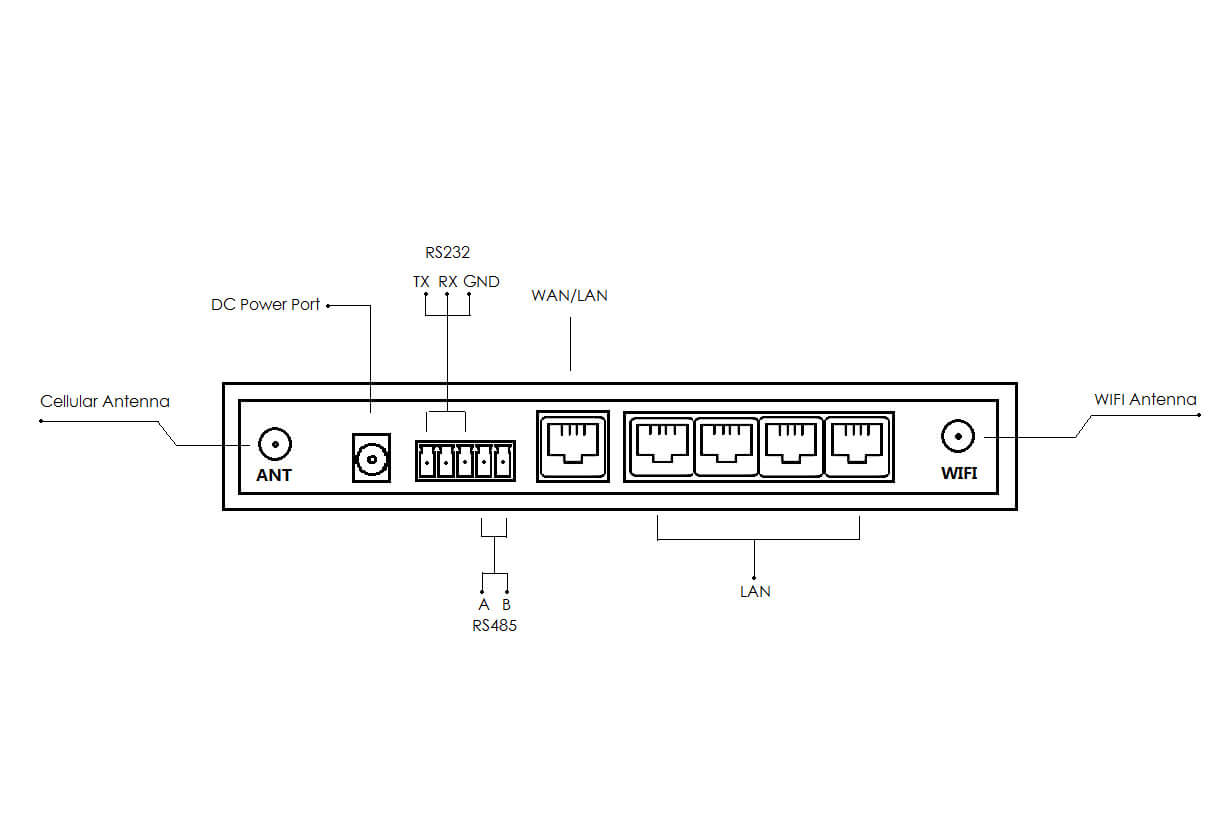
Separate the local measurement interface from the radio connection. A probe with RS485 Modbus RTU does not transmit directly over NB-IoT. A compatible collector must power and poll the probe, interpret its values and pass the records to an NB-IoT modem or integrated terminal. A device sold as an NB-IoT sensor gateway therefore needs both the acquisition functions and a verified cellular configuration.
For remote environmental monitoring, start with the information needed at the receiving end. Periodic soil moisture or rainfall records may fit a small-message service. Frequent images, large diagnostic files or immediate remote interaction are different requirements. A requirement for one of those functions can change the communication choice even when the measurement itself is simple.
Operator maps are a screening tool, not a site acceptance test. Measure signal in the installed position with the enclosure closed. Underground chambers, metal cabinets and equipment rooms may require a remote antenna or another communication method. Confirm local band support and certification before export.
Use the modem, SIM or profile, antenna and enclosure intended for production. Test more than a single successful upload: record attachment behavior, message delivery and power under representative conditions. A phone showing mobile service is not a test of NB-IoT availability. The selected network must support the required service on bands implemented by the device.
For exported equipment, obtain written confirmation of destination service, activation procedure and roaming arrangements where applicable. A modem's supported-band list alone does not establish a working subscription. Decide who will renew service, receive operator notices and manage a replacement SIM or profile after commissioning.
Low average power is possible when the device sleeps for long periods and sends a small message. Poor coverage can increase attach time and retries. Frequent reporting, downlink listening and firmware traffic also change energy use. Size the battery from a measured duty cycle and include a margin for temperature, aging and weak-signal operation.
Measure the supply at the complete terminal while it samples, transmits and returns to its intended idle state. Include the sensor's required warm-up or stabilization time. Some sensors may be switched between observations; others need continuous operation for the selected measurement. Switching power solely to reduce consumption can invalidate data if the acquisition starts too early.
As a sizing example, a continuously powered 0.3 W sensor consumes 7.2 Wh per day before the collector and cellular link are counted. This assumed load is not an NB-IoT modem specification. Even a very low-power modem cannot remove that sensor demand. Compare usable battery energy with the complete daily load, temperature limits and the intended service interval.
Power Saving Mode, or PSM, and extended discontinuous reception, or eDRX, affect when a terminal listens for network traffic. Requested settings are subject to network support and negotiation. An application must not assume that a sleeping terminal will receive an arbitrary downlink command immediately. The GSMA Mobile IoT Deployment Guide describes these network-dependent power and reachability mechanisms.
Test how a configuration change is delivered, acknowledged and retained across a restart. Keep any protective or time-critical action local with a suitable controller. NB-IoT telemetry can carry observations or supervisory requests, but should not be treated as a deterministic control connection simply because messages usually arrive promptly during a bench test.
A valid record needs a device identity, observation time, measurement identifier, value, unit and quality state. If the terminal reports a scaled integer, identify where scaling occurs. Applying the scale in both the collector and server can corrupt a correctly transmitted value. If no fresh observation exists, report that condition instead of sending a previous value without its age.
Define acknowledgments at the appropriate layer. Radio or network success, delivery to an endpoint and acceptance into the application database are not the same event. Determine how the terminal handles a lost acknowledgment and how the application handles a repeated record. A record identifier or equivalent duplicate-handling method prevents repeated transmissions from becoming additional rainfall or repeated control events.
| Requirement | What to specify | What to verify |
|---|---|---|
| Local sensor input | RS485, pulse or analog input as needed | Power, addressing, units, scale and invalid-value handling |
| Cellular service | Destination operator, bands, SIM/profile and activation | Registration and record delivery at the installed location |
| Reporting schedule | Sampling, storage and upload intervals separately | Observation timestamps remain correct when messages are delayed |
| Energy and supply | Whole-node duty cycle and permitted supply range | Transmission peaks, recovery cycles and voltage at the sensor |
| Remote configuration | Command window, acknowledgment and authorization | Behavior while sleeping, after restart and during loss of service |
| Field protection | Enclosure, antenna, cable jacket and entry seals | The installed assembly, not an assumed rating for the radio technology |
NB-IoT does not define a universal sensor accuracy, supply voltage, consumption or IP rating. Those are properties of the selected equipment. Request the terminal specification and the sensor specification separately. Do not replace missing hardware data with generic figures taken from a radio-technology description.
NB-IoT can be practical for scattered low-data devices where cellular service is available. A private radio network may be preferable when the owner controls many devices in one area. Wired RS485 remains useful for sensors concentrated around one logger. The choice should include service life, subscription management and data ownership, not only radio range.
A field system that needs regular photographs or substantial remote servicing may justify a different cellular arrangement. For example, a NiuBoL 4G router can be considered as a separate network component where its supported functions and coverage fit. It is not an NB-IoT modem and does not automatically provide sensor polling, local records or application decoding.
Compare complete costs: terminal hardware, antenna, sensor acquisition, connectivity subscription, endpoint operation and field visits. A low data allowance may be adequate for periodic values but insufficient for retries or maintenance traffic. Ask how usage is measured and what happens when service expires. There is no universal installed price or battery lifetime for NB-IoT for remote sensors.
Before requesting a NiuBoL acquisition configuration, provide the sensor outputs, destination country and operator, record size, reporting interval and field power conditions. State whether you require NB-IoT specifically or are comparing communication methods. Confirm modem availability for the ordered configuration rather than inferring it from a gateway's product family.
No. The operator must provide the compatible NB-IoT service and support the device's bands and subscription. Test the production modem and SIM or profile at the installed position; a phone's connection is not sufficient evidence.
Only if its complete supplied assembly includes the necessary cellular and acquisition functions. A bare RS485 probe needs a compatible master to read and interpret its registers before records are transmitted.
No, but downlink reachability depends on its active windows and network behavior. Test the actual command path and schedule. Do not require an immediate supervisory response without demonstrating that the configured service supports it.
Use measured whole-node demand, including sensing, acquisition, radio activity and retries, then account for usable battery capacity and environmental conditions. A modem's sleep current alone cannot establish the service interval.
It is generally chosen for small telemetry messages. Assess image size, frequency and transfer requirements separately; another connection may be more appropriate. A sensor value and a camera stream are not equivalent workloads.
Include destination service, sensor interfaces, reporting and maintenance traffic, local storage, power and enclosure requirements. Separate connectivity charges and endpoint services from hardware so that competing offers cover the same task.
NB-IoT for remote sensors is an operator-dependent telemetry choice. Verify coverage, complete-node energy, record delivery and service administration before deployment. NiuBoL sensors and acquisition equipment should be matched to the selected terminal and receiving application, with the radio configuration explicitly identified rather than assumed.
Related recommendations
Sensors & Weather Stations Catalog
 Agriculture Sensors and Weather Stations Catalog-NiuBoL.pdf
Weather Stations Catalog-NiuBoL.pdf
Agriculture Sensors Catalog-NiuBoL.pdf
Water Quality Sensor Catalog-NiuBoL.pdf
Related products
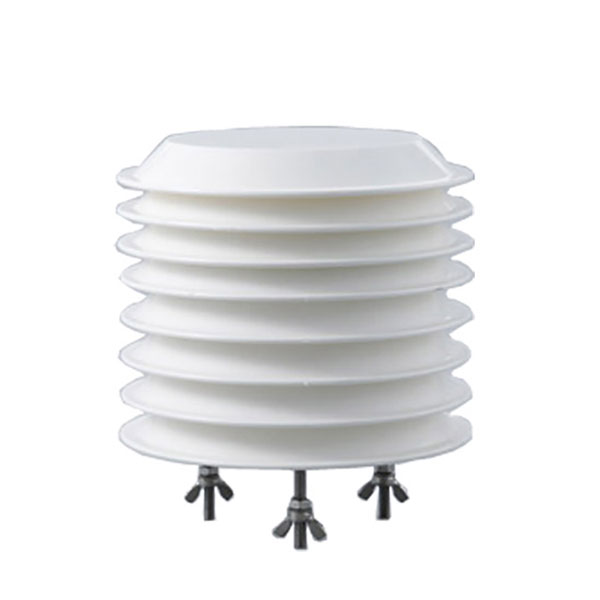 Combined air temperature and relative humidity sensor
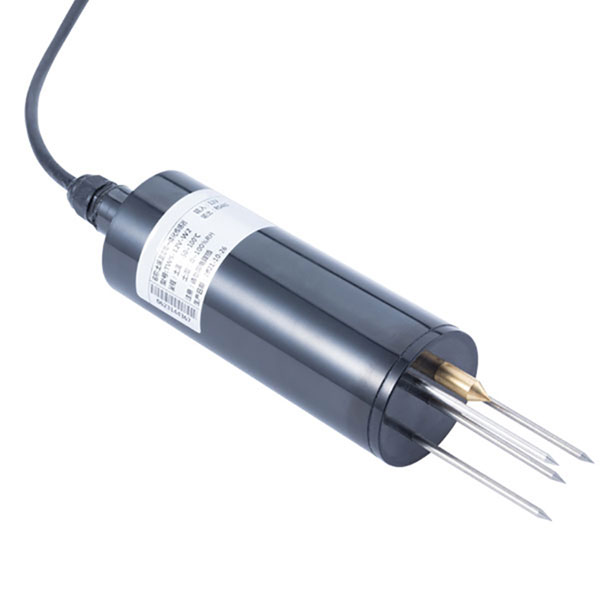 TDR Soil Moisture & Temperature Sensor for irrigation| RS485 |4-20mA| NBL-S-THR
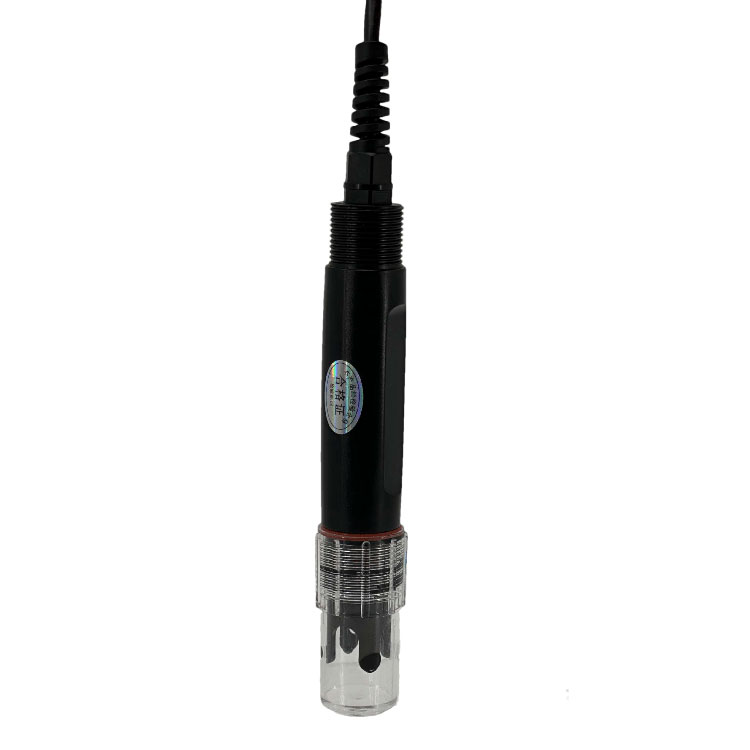 Soil pH sensor RS485 soil Testing instrument soil ph meter for agriculture |NBL-S-PH
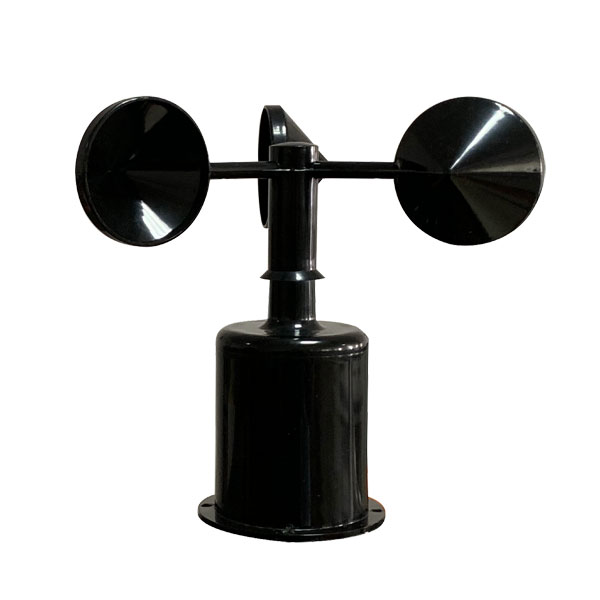 Wind Speed sensor Output Modbus/RS485/Analog/0-5V/4-20mA
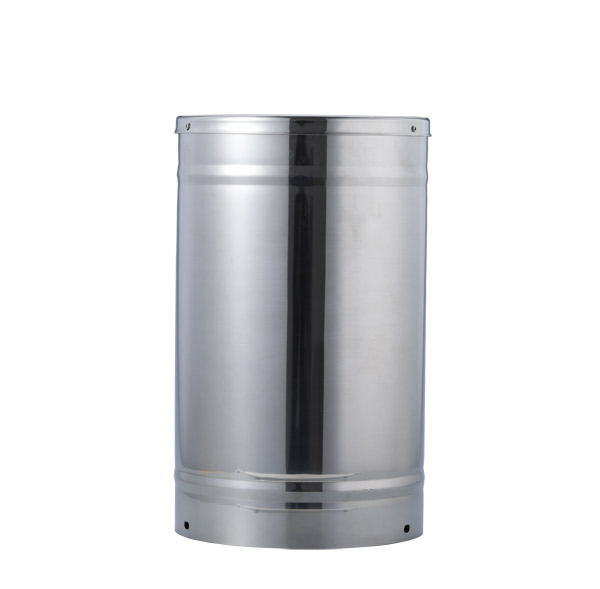 Tipping bucket rain gauge for weather monitoring auto rainfall sensor RS485/Outdoor/stainless steel
 Pyranometer Solar Radiation Sensor 4-20mA/RS485


Screenshot, WhatsApp to identify the QR code
WhatsApp number:+8615367865107
(Click on WhatsApp to copy and add friends)