





— Blogs —
—Products—
 Consumer hotline +8618073152920
 WhatsApp:+8615367865107
Address:Room 102, District D, Houhu Industrial Park, Yuelu District, Changsha City, Hunan Province, China
Product knowledge
Time:2023-12-10 20:31:59 Popularity:13824
Soil moisture sensors are devices that measure the water content in the soil. They provide valuable information regarding the moisture levels in the soil, helping farmers, researchers, and other users make informed decisions about irrigation, crop management, and environmental monitoring. There are several types of soil moisture sensors available on the market, each utilizing different principles to measure soil moisture. Here are some commonly used soil moisture sensor types:
1. Tensiometers: Tensiometers measure soil moisture by monitoring the tension or suction required to extract water from the soil. They consist of a porous ceramic cup connected to a water-filled tube and a vacuum gauge. As soil moisture decreases, the tension increases, which can be measured using the vacuum gauge.
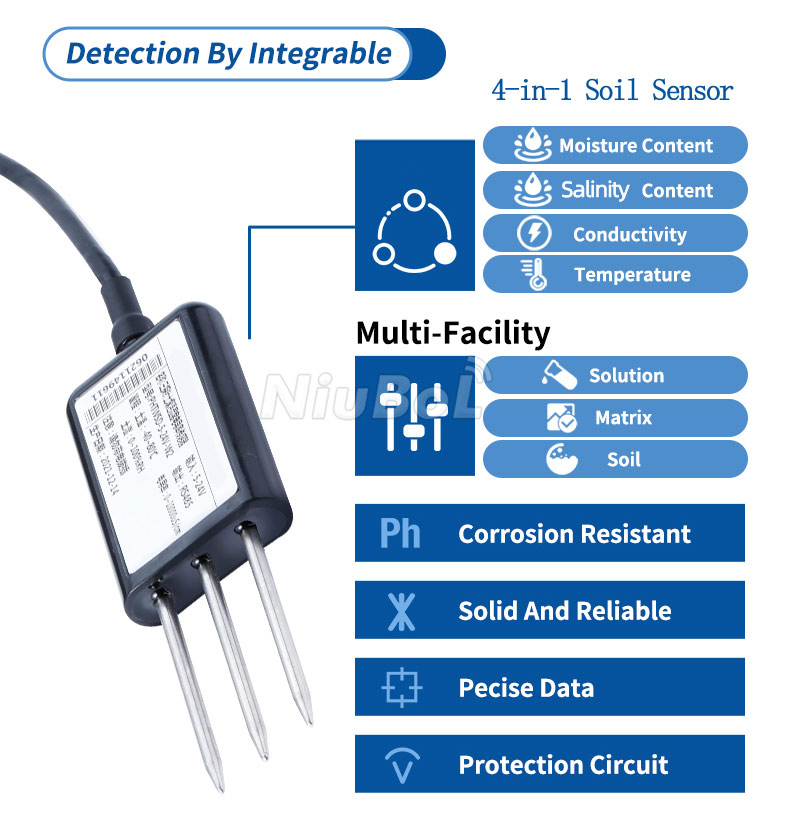
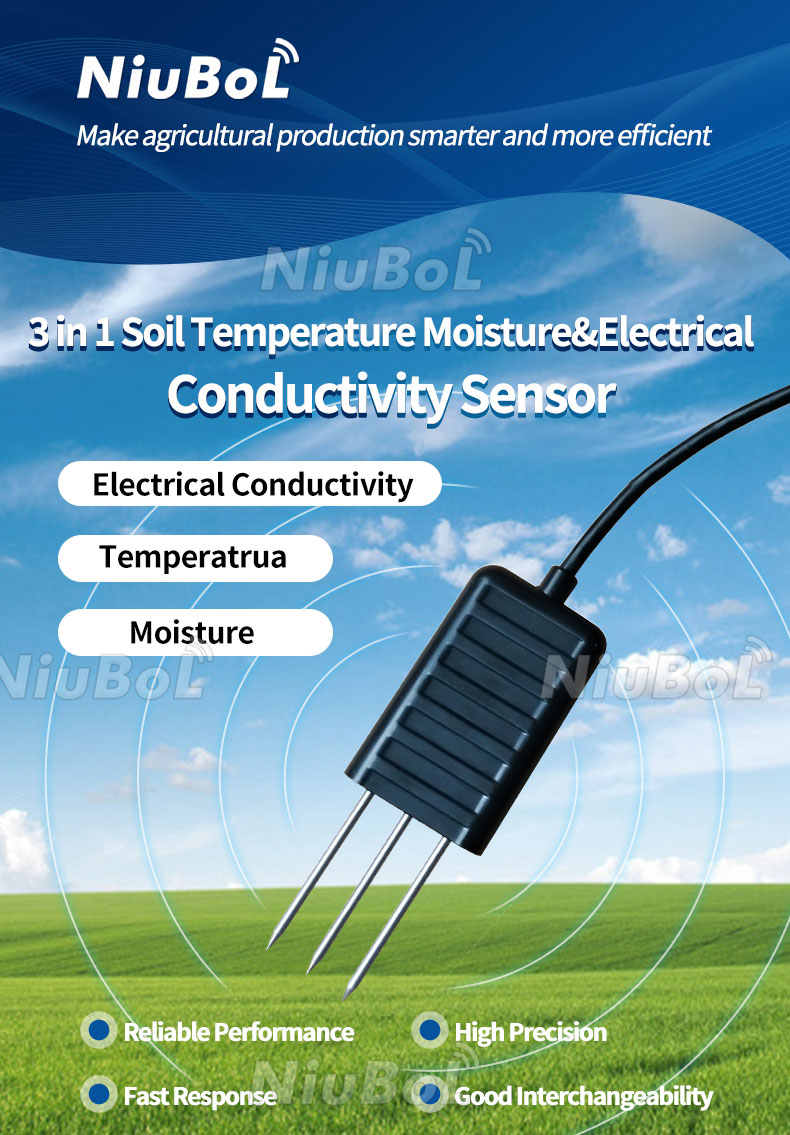
2. Capacitance Sensors: Capacitance sensors measure soil moisture by assessing the dielectric constant or electrical conductivity of the soil. These sensors typically consist of two metal electrodes inserted into the soil. The moisture content affects the electrical properties between the electrodes, allowing for the estimation of soil moisture levels.
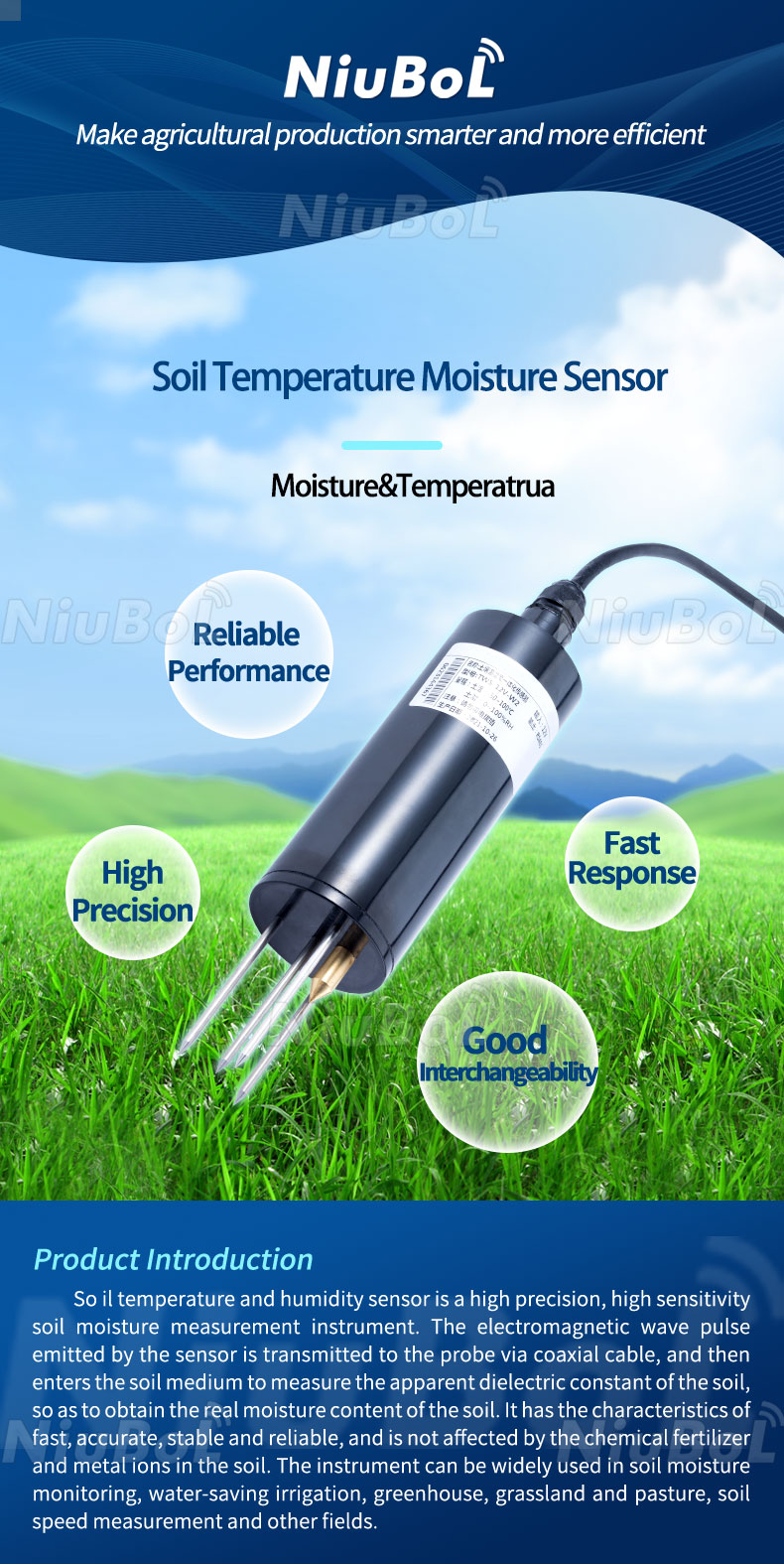
3. Time Domain Reflectometry (TDR) Sensors: TDR sensors determine soil moisture by measuring the time it takes for an electromagnetic pulse to travel along a probe inserted into the soil. Moisture affects the dielectric properties of the soil, altering the travel time of the pulse. This information is then used to estimate soil moisture content.
4. Frequency Domain Reflectometry (FDR) Sensors: FDR sensors operate similarly to TDR sensors but use different frequencies to measure the soil moisture. They measure the reflected electrical signals at specific frequencies to determine the moisture content in the soil.
These are just a few examples of soil moisture sensor types available. Each type has its own advantages, limitations, and suitability for specific applications and soil conditions. It's important to consider factors such as accuracy, cost, installation requirements, calibration needs, and maintenance when selecting a soil moisture sensor for a particular use case.
Soil moisture sensors offer several advantages and disadvantages, which are important to consider when choosing and utilizing them. Here are some of the key advantages and disadvantages of soil moisture sensors:
1. Water Conservation: Soil moisture sensors help optimize irrigation practices by providing real-time data on soil moisture levels. This enables farmers to water their crops only when necessary, reducing water waste and promoting water conservation.
2. Improved Crop Health and Yield: By accurately monitoring soil moisture, farmers can ensure that crops receive the right amount of water at the right time. This promotes optimal plant growth, minimizes stress, and improves crop health and yield potential.
3. Resource Efficiency: Using soil moisture sensors allows for precise irrigation scheduling, preventing overwatering or underwatering. This not only conserves water but also optimizes the use of other resources like energy and fertilizers.
4. Cost Savings: By avoiding excessive water usage and optimizing resource inputs, soil moisture sensors can lead to cost savings for farmers in terms of water bills, energy costs, and fertilizer expenses.
5. Time Efficiency: Soil moisture sensors provide real-time data on soil moisture levels, reducing the need for manual soil sampling and laboratory analysis. This saves time and enables farmers to make informed decisions more quickly.
1. Initial Investment: Soil moisture sensors typically require an initial investment, including the cost of purchasing the sensors and any necessary data loggers or monitoring systems. This cost may be a barrier for some farmers, especially those with limited budgets.
2. Calibration and Maintenance: Soil moisture sensors require regular calibration and maintenance to ensure accurate readings. This may involve periodic sensor calibration, cleaning, and checking for any damage or malfunction.
3. Sensor Variability: Different soil moisture sensors may have variations in accuracy and reliability. It's essential to select a sensor suitable for your specific soil type and conditions to obtain reliable and consistent measurements.
4. Soil Variability: Soil moisture measurements can be influenced by soil type, texture, and compaction. Sensors may provide varying results in different soil types, making it important to understand the limitations of the sensor in specific soil conditions.
5. Installation Challenges: Proper installation of soil moisture sensors is crucial for accurate readings. Installation can be challenging, requiring expertise to ensure optimal sensor placement, adequate soil contact, and minimal interference from roots or other factors.
Overall, despite a few challenges and considerations, soil moisture sensors offer significant advantages in terms of water conservation, resource efficiency, improved crop health, and cost savings. Careful selection, calibration, and maintenance can help maximize their effectiveness in agricultural applications.
 NBL-S-THR-Soil-temperature-and-moisture-sensors-Instruction-Manual-V4.0.pdf
NBL-S-TMC-Soil-temperature-and-moisture-conductivity-sensor.pdf
NBL-S-TMCS-Soil-temperature-humidity-salty-EC-sensor.pdf
Related recommendations
Sensors & Weather Stations Catalog
 Agriculture Sensors and Weather Stations Catalog-NiuBoL.pdf
Weather Stations Catalog-NiuBoL.pdf
Agriculture Sensors Catalog-NiuBoL.pdf
Water Quality Sensor Catalog-NiuBoL.pdf
Related products
 Combined air temperature and relative humidity sensor
 TDR Soil Moisture & Temperature Sensor for irrigation| RS485 |4-20mA| NBL-S-THR
 Soil pH sensor RS485 soil Testing instrument soil ph meter for agriculture |NBL-S-PH
 Wind Speed sensor Output Modbus/RS485/Analog/0-5V/4-20mA
 Tipping bucket rain gauge for weather monitoring auto rainfall sensor RS485/Outdoor/stainless steel
 Pyranometer Solar Radiation Sensor 4-20mA/RS485

Screenshot, WhatsApp to identify the QR code
WhatsApp number:+8615367865107
(Click on WhatsApp to copy and add friends)

