





— Blogs —
—Products—
 Consumer hotline +8618073152920
 WhatsApp:+8615367865107
Address:Room 102, District D, Houhu Industrial Park, Yuelu District, Changsha City, Hunan Province, China
Product knowledge
Time:2026-03-29 15:33:46 Popularity:481
The agricultural weather station provides data support for pest and disease occurrence trend prediction and precise prevention and control by collecting real-time field meteorological elements such as air temperature, relative humidity, wind speed and direction, rainfall, soil temperature and humidity, and light. NiuBoL agricultural weather station adopts high-precision sensors and low-power IoT design, which can effectively improve the pest and disease control ability in agricultural production. It also supports wheat Fusarium head blight early warning and sowing period soil moisture management, helping system integrators, IoT solution providers, project contractors and engineering companies build smart agricultural meteorological service systems.
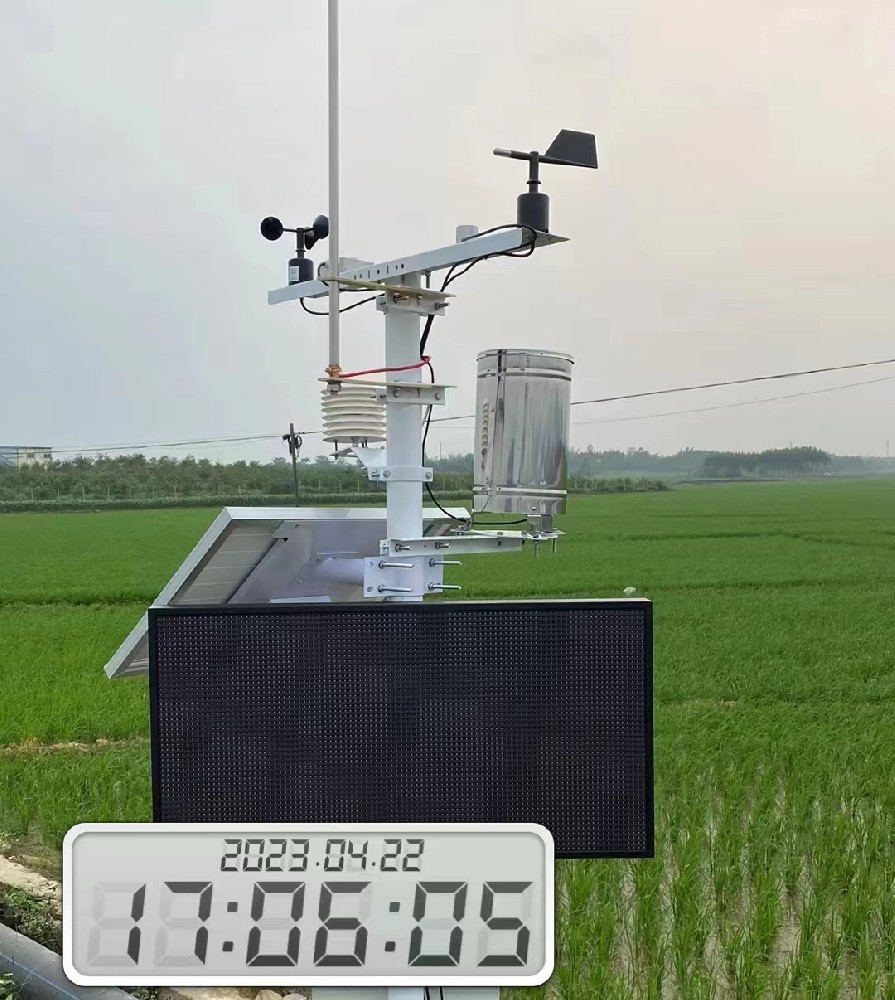
Pests and diseases are the main biological stress factors restricting crop yield and quality. Their occurrence, development and prevalence are closely related to meteorological conditions. Temperature affects pest development period and reproduction rate, humidity determines pathogen spore germination and infection efficiency, wind speed and direction accelerate pest migration and pathogen transmission, and rainfall directly changes the field microclimate environment. The empirical rule of “drought breeds insects, humidity breeds diseases” is a vivid embodiment of the relationship between meteorology and pests and diseases.
NiuBoL agricultural weather station provides real-time input parameters for pest and disease prediction models through uninterrupted, multi-element field meteorological monitoring. Managers can judge high-risk windows in advance based on monitoring data, optimize the timing and method of pesticide application, and realize the transformation from passive control to active and precise prevention and control, thereby reducing the use of chemical pesticides, reducing environmental pressure, and ensuring stable crop yield and quality.
Compared with traditional empirical judgment, agricultural weather stations provide quantifiable and traceable meteorological data, support linkage with pest and disease monitoring equipment (such as spore traps and sex pheromone monitoring lights), form a “meteorological + biological” integrated prevention and control system, and improve the scientificity and timeliness of prevention and control decisions.
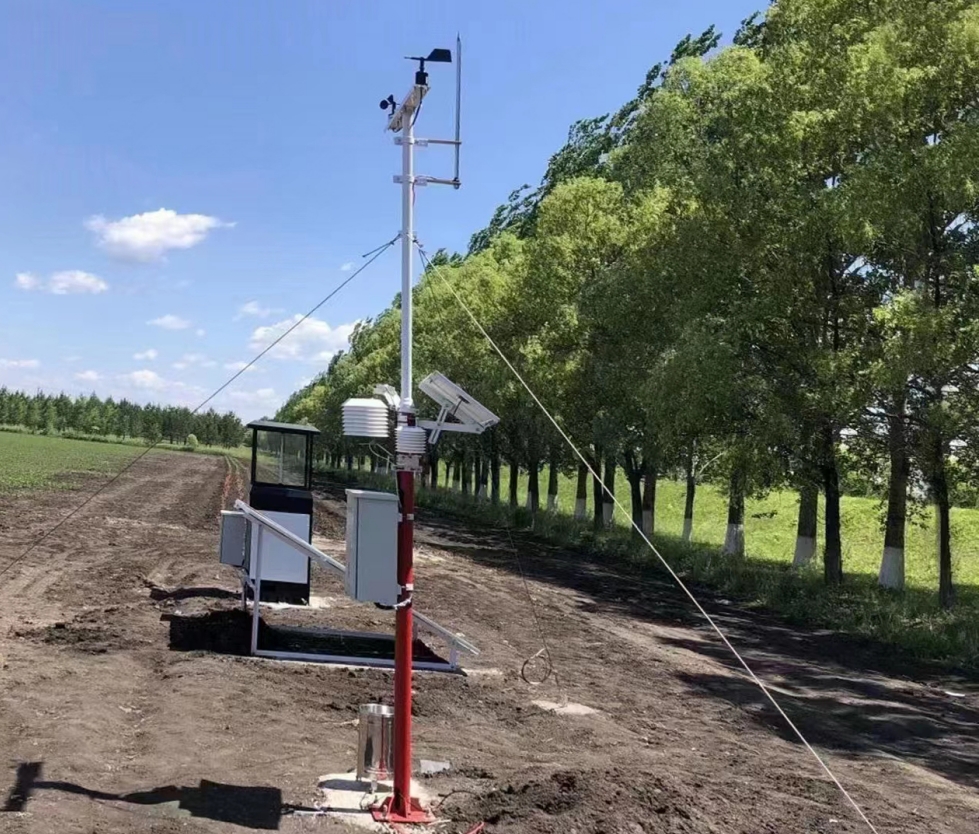
Different meteorological elements have significant differences in their effects on pests and diseases:
Temperature and Humidity
Most pests have shortened development periods and increased reproduction generations within the suitable temperature range (15-30℃). High temperature and dry environments favor the spread of aphids, while high temperature and high humidity provide favorable conditions for pests such as corn borers. When relative humidity is higher than 80%-95%, the formation of fungal pathogen perithecia and spore release speed accelerate (such as wheat Fusarium head blight).
Wind Speed and Wind Direction
Wind can carry pests for long-distance migration and promote the spread of fungal spores, expanding the infection area. In windy weather, the spraying range needs to be appropriately expanded to cover pest migration paths.
Rainfall and Light
Moderate rainfall can inhibit the activity of some pests, but continuous rainy weather leads to excessively high field humidity and insufficient light, which easily induces the prevalence of leaf diseases. Too high or too low soil moisture affects crop stress resistance and indirectly aggravates the harm of pests and diseases.
NiuBoL agricultural weather station can simultaneously monitor the above elements, form multi-dimensional meteorological datasets, provide high time-resolution input for pest and disease occurrence probability models, and support hourly or daily risk assessment.
Wheat Fusarium head blight is one of the main diseases in wheat production in China. After infection, it causes seedling rot, stem base rot, stalk rot and spike rot. The vomitoxin contained in diseased grains poses a threat to human and animal health. The key meteorological conditions for its prevalence are: when the temperature is higher than 7℃ and relative humidity is greater than 95%, the pathogen spores begin to spread; when the temperature is higher than 25℃ and relative humidity is above 80%, the perithecia formation speed is the fastest. Continuous rainy weather is the main cause of large-scale outbreaks of Fusarium head blight.
After NiuBoL agricultural weather station is deployed in wheat fields, it can monitor canopy temperature, relative humidity and leaf wetness duration in real time. When continuous high-humidity environments are detected, the system automatically generates high-risk warnings for Fusarium head blight, prompting agricultural technicians to carry out field drainage, reduce humidity or apply protective fungicides in a timely manner. At the same time, historical meteorological data can be used to analyze regional Fusarium head blight occurrence patterns and support planting structure adjustment and resistant variety layout.
Through data sharing with meteorological departments, agricultural weather stations can further improve early warning accuracy and provide technical support for green prevention and control of pests and diseases in high-standard farmland.
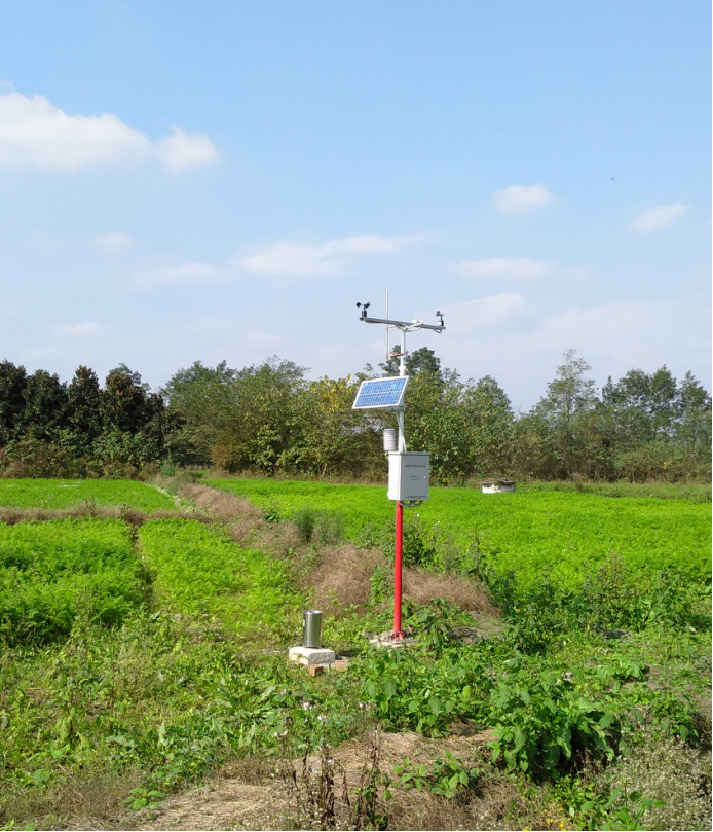
Wheat sowing period management directly affects emergence rate and later yield. The suitable temperature for seed germination is 15-20℃, and the suitable soil relative water content is 10%-80%. Too high soil moisture causes waterlogging and oxygen deficiency, while too low causes insufficient nutrient supply to radicle and plumule, both of which will prolong germination time or reduce germination rate.
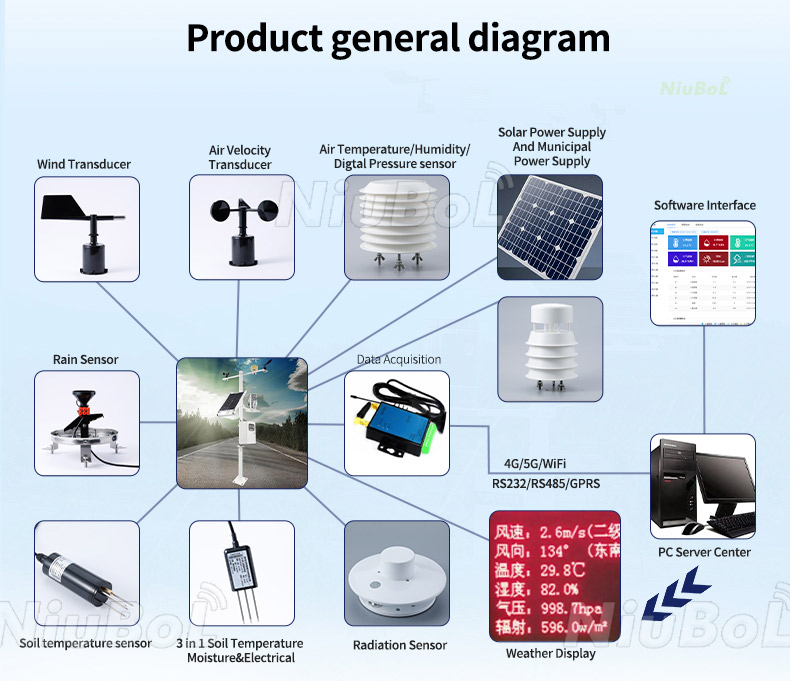
NiuBoL agricultural weather station integrates air temperature, soil temperature, soil moisture, rainfall and light sensors to accurately grasp field soil moisture and meteorological changes:
Monitor soil moisture thresholds before sowing to guide suitable sowing windows.
Prompt drainage measures or adjust sowing dates during continuous rainy weather, select early-maturing varieties and increase sowing rate and base fertilizer amount.
Provide timely warnings under drought conditions and cooperate with irrigation scheduling to maintain suitable soil moisture.
System data can also support later grain-filling period management to ensure that temperature, light and water conditions match the physiological needs of crops, achieving stable yield and efficiency improvement.
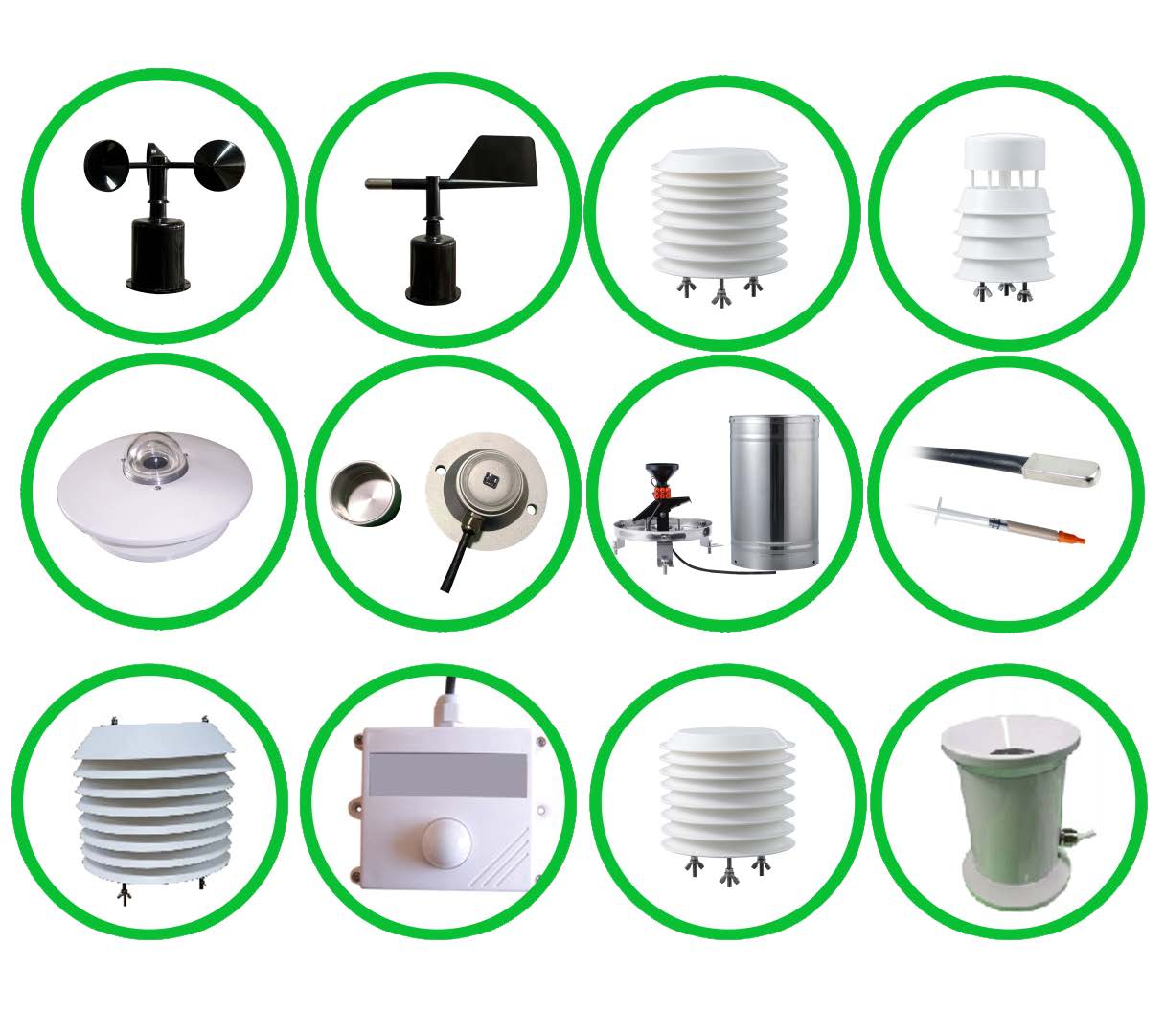
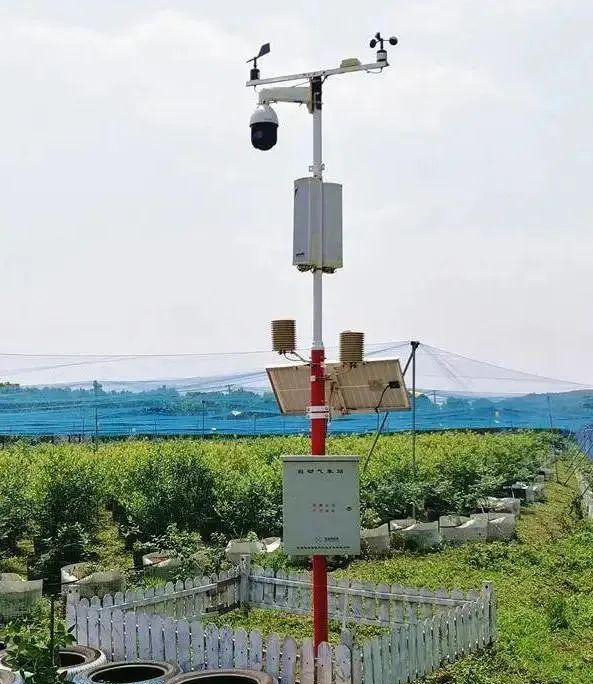
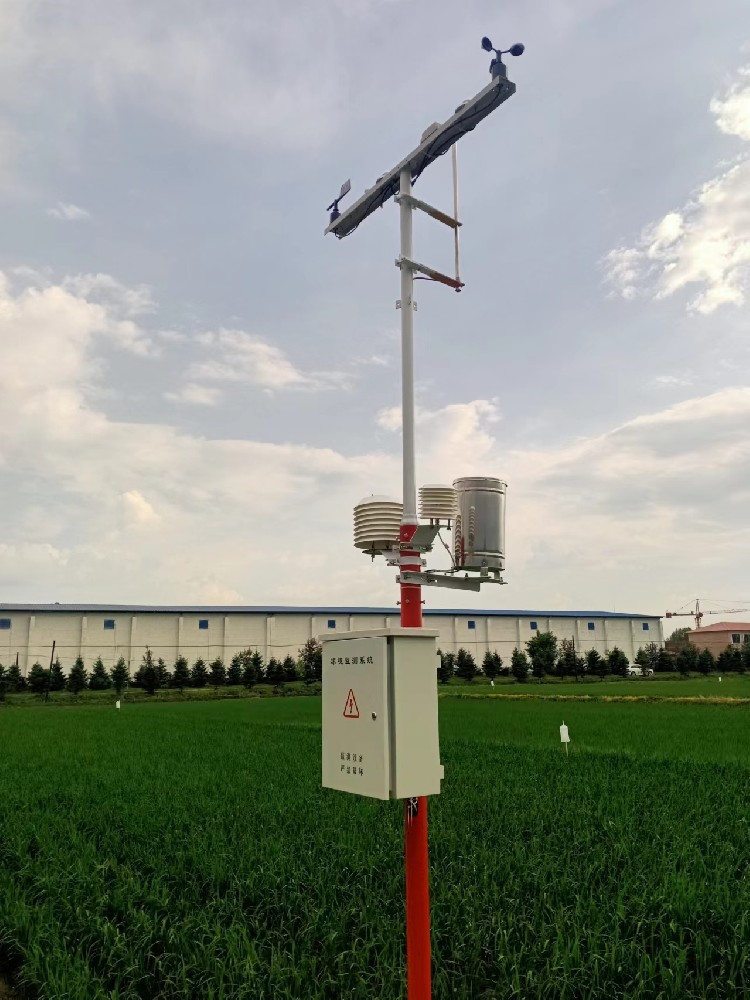
NiuBoL agricultural weather station adopts a modular design, supports plug-and-play sensor expansion, integrates data collectors and wireless communication modules, and is compatible with Modbus RTU, MQTT and other protocols, making it easy to access agricultural IoT platforms. Solar power supply + battery backup solution enables low-power long-term operation, and IP65 and above protection level adapts to complex field environments.
| Sensor Type | Measurement Range | Resolution | Main Function |
|---|---|---|---|
| Air Temperature | -40~60℃ | 0.1℃ | Affects crop growth and pest development period |
| Relative Humidity | 0~100% RH | 0.1% | Key factor for pathogen spore germination and leaf condensation |
| Wind Speed | 0~60 m/s | 0.1 m/s | Power for pest migration and spore diffusion |
| Wind Direction | 0~360° | 1° | Guide spraying direction and range |
| Soil Temperature | -40~80℃ | 0.1℃ | Root zone environment and underground pest activity monitoring |
| Soil Moisture | 0~100% (m³/m³) | 0.1% | Soil moisture management and sowing decision basis |
| Rainfall | 0~9999 mm | 0.1 mm | Precipitation process and humidity change monitoring |
| Light / Radiation | 0~2000 W/m² | 1 W/m² | Photosynthesis and disease occurrence environment assessment |
Data is uploaded to the cloud platform via 4G or LoRa, supporting real-time viewing of historical curves, trend analysis and custom alarm thresholds on Web and mobile APP. The platform provides open API interfaces, facilitating system integrators to secondary develop pest and disease prediction models or link intelligent spraying equipment.
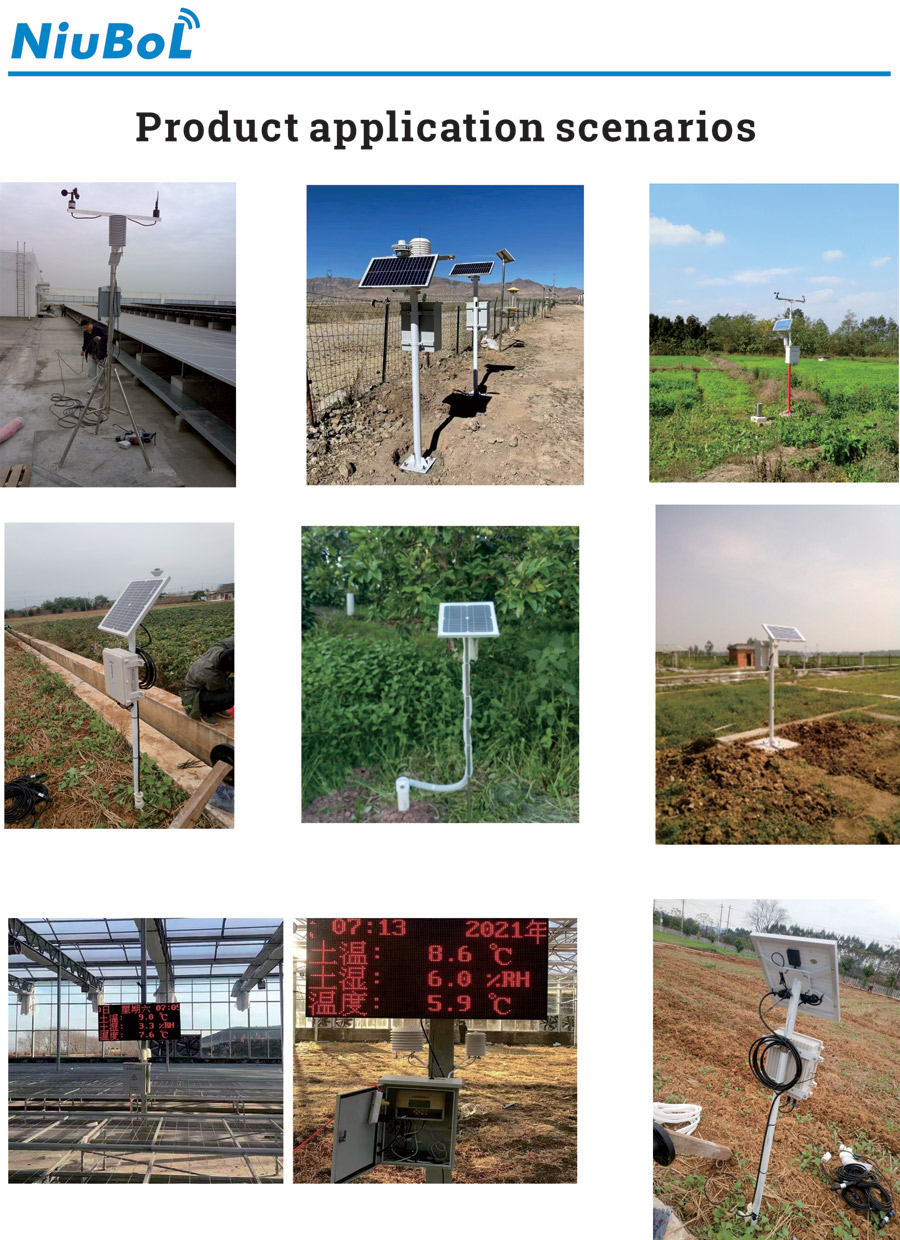
Field Crop Full-cycle Management: Covers major grain crops such as wheat, rice and corn, providing meteorological monitoring and pest and disease risk assessment throughout the entire growth period from sowing to harvest.
Facility Agriculture and High-value Economic Crops: Monitors temperature and humidity and ventilation conditions in greenhouses to prevent and control high-humidity diseases such as gray mold and powdery mildew.
Regional Agricultural Meteorological Service Network: Multiple stations form county-level or watershed-level monitoring grids to support agricultural insurance claims, disaster assessment and precision agricultural decision-making.
Green Prevention and Control Demonstration Bases: Combined with biological control and meteorological data to achieve the goal of reducing pesticide use and controlling pests, meeting ecological agriculture and food safety requirements.
1. How does the agricultural weather station help predict the occurrence of pests and diseases?
By monitoring key meteorological elements such as temperature, humidity and wind field in real time, and calculating risk indices in combination with pest and disease occurrence models, high-incidence windows can be identified in advance.
2. Does NiuBoL agricultural weather station support linkage with pest and disease monitoring equipment?
Yes, it can be integrated with spore traps, sex pheromone lights and other equipment through Modbus or MQTT protocols to form a comprehensive monitoring system.
3. What is the specific role of agricultural weather stations in wheat Fusarium head blight control?
Real-time monitoring of relative humidity and temperature. When the pathogen diffusion threshold is reached, an early warning is issued to guide early drainage or pesticide application to reduce the risk of prevalence.
4. How does the agricultural weather station help wheat sowing management?
Accurately monitor soil temperature and moisture to determine suitable sowing windows and avoid the impact of too high or too low humidity on germination rate.
5. Does the system support solar power supply and long-term outdoor operation?
Yes. The low-power design combined with solar power supply is suitable for unattended field scenarios with long maintenance cycles.
6. How is data accessed and analyzed remotely?
After data is uploaded to the cloud platform, it supports real-time data viewing, historical curves and alarm push on Web and APP for remote decision-making.
7. What engineering points should be noted when installing agricultural weather stations?
Choose representative field plots, ensure sensor height complies with observation specifications, avoid obstruction and interference, and implement good grounding and lightning protection measures.
8. What agricultural engineering projects is this system suitable for?
Widely applicable to high-standard farmland construction, smart agriculture demonstration zones, green pest and disease prevention and control bases, and regional agricultural meteorological service network projects.
Agricultural weather stations provide scientific decision-making basis for pest and disease control through multi-element field meteorological monitoring and play an important role in wheat Fusarium head blight early warning, sowing period management and full-cycle crop protection. NiuBoL agricultural weather station provides complete field meteorological solutions for system integrators, IoT solution providers, project contractors and engineering companies with high-precision sensors, stable communication protocols and flexible integration capabilities.
In the context of promoting high-standard farmland construction and green agricultural development, strengthening agricultural meteorological monitoring capacity building helps improve pest and disease prevention and control levels and ensures food security and sustainable agricultural development. Choosing a professional and reliable agricultural weather station system can significantly reduce disaster risks and improve production management efficiency.
As a professional agricultural meteorological equipment manufacturer, NiuBoL focuses on providing industry partners with technically mature and performance-stable monitoring products and integration support. If you need detailed technical solutions, sensor configuration recommendations or project implementation support, please feel free to contact the professional team for further cooperation to jointly promote the upgrading of agricultural meteorological services toward intelligence and precision.
Related recommendations
Sensors & Weather Stations Catalog
 Agriculture Sensors and Weather Stations Catalog-NiuBoL.pdf
Weather Stations Catalog-NiuBoL.pdf
Agriculture Sensors Catalog-NiuBoL.pdf
Water Quality Sensor Catalog-NiuBoL.pdf
Related products
 Combined air temperature and relative humidity sensor
 TDR Soil Moisture & Temperature Sensor for irrigation| RS485 |4-20mA| NBL-S-THR
 Soil pH sensor RS485 soil Testing instrument soil ph meter for agriculture |NBL-S-PH
 Wind Speed sensor Output Modbus/RS485/Analog/0-5V/4-20mA
 Tipping bucket rain gauge for weather monitoring auto rainfall sensor RS485/Outdoor/stainless steel
 Pyranometer Solar Radiation Sensor 4-20mA/RS485

Screenshot, WhatsApp to identify the QR code
WhatsApp number:+8615367865107
(Click on WhatsApp to copy and add friends)

