





— Blogs —
—Products—
 Consumer hotline +8618073152920
 WhatsApp:+8615367865107
Address:Room 102, District D, Houhu Industrial Park, Yuelu District, Changsha City, Hunan Province, China
Product knowledge
Time:2026-03-29 15:24:38 Popularity:536
As a core component of modern agricultural intelligent infrastructure, the agricultural weather station provides precise decision-making basis for system integrators, IoT solution providers, project contractors and engineering companies by collecting multi-element meteorological data in the field in real time. Under complex international situations, grain production faces multiple risks such as drought, flood, strong wind, hail and high temperature heat damage. NiuBoL agricultural weather station can effectively improve the ability of agricultural production to cope with extreme weather and plays a key role in crop pest and disease control and rice high temperature heat damage prevention.
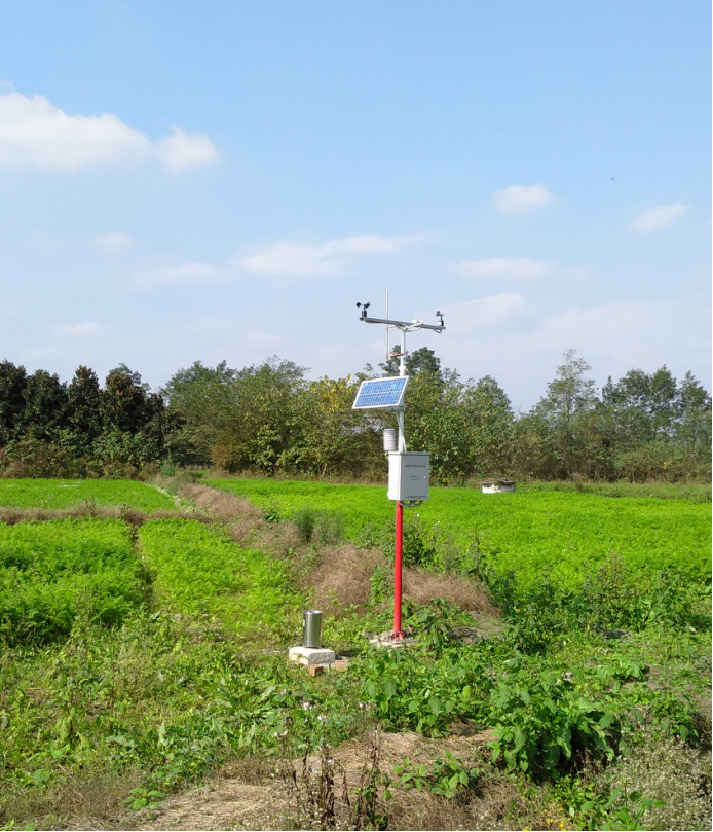
The agricultural weather station is an automated field meteorological monitoring system specially designed for agricultural production. It can continuously and accurately collect key meteorological elements such as air temperature, humidity, wind speed and direction, rainfall, solar radiation, soil temperature and humidity, and upload the data to cloud platforms or local servers in real time through wireless communication protocols for managers to analyze and issue early warnings.
Different from conventional weather stations, agricultural weather stations focus on the micro-environment of crop growth, with monitoring covering field microclimates. The data directly serves agricultural decision-making. In China's grain production system, meteorological factors are one of the main variables affecting yield and quality. During the full cycle from sowing to harvest, extreme weather events occur frequently. Drought causes soil moisture deficit, flooding causes waterlogging damage, and strong winds accompanied by hail cause mechanical damage, all of which may reduce single-season grain yield by more than 10%-30%. NiuBoL agricultural weather station helps engineering companies quickly build regional agricultural meteorological service networks through modular deployment and IoT integration, providing data support for grain reserves and emergency support systems.
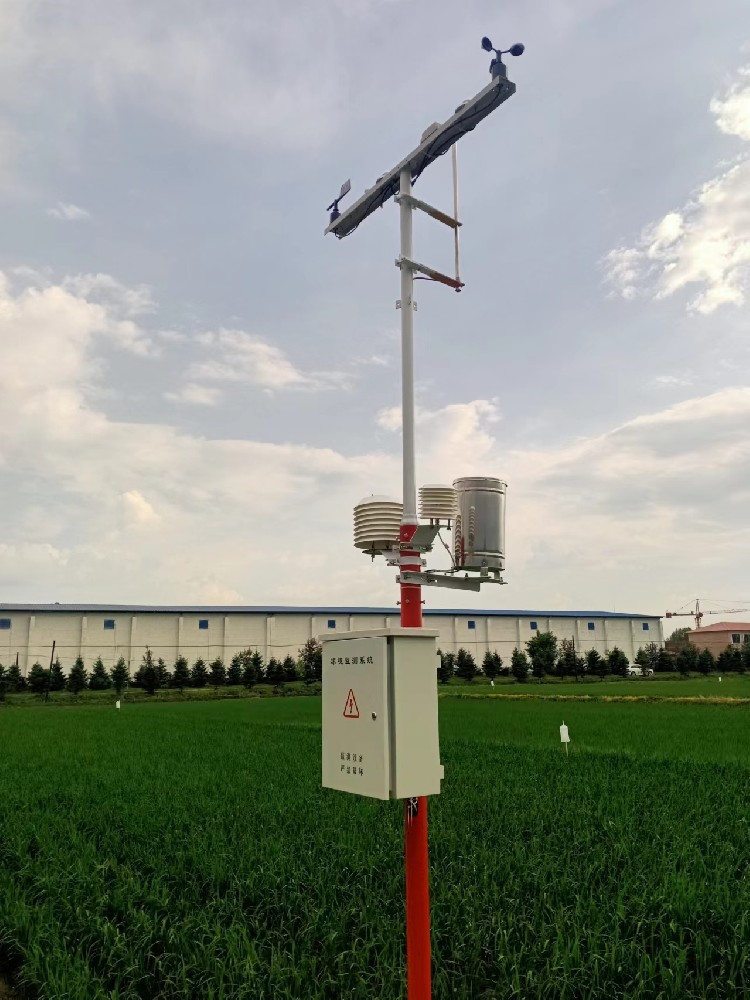
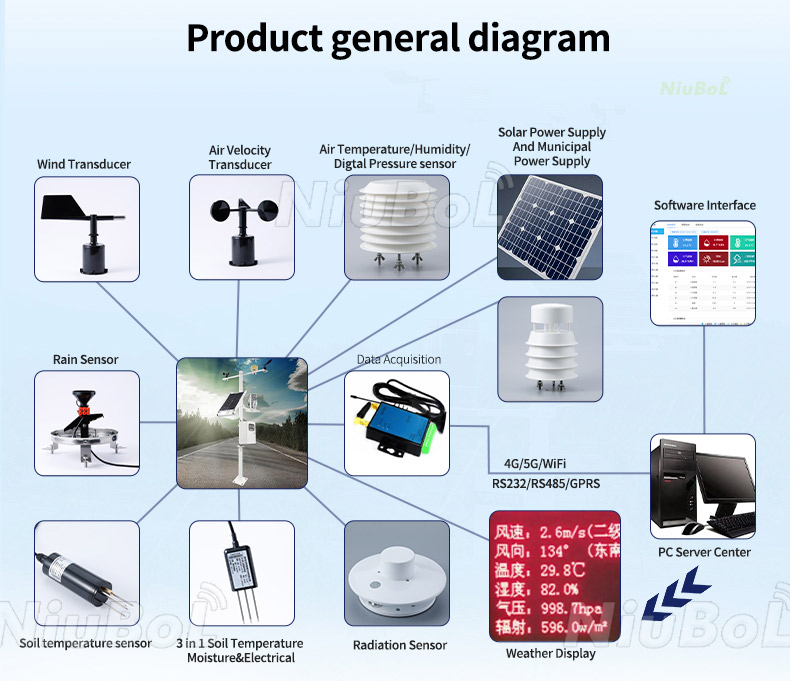
The core of the agricultural weather station lies in the sensor array. NiuBoL agricultural weather station adopts high-stability industrial-grade sensors, supports plug-and-play expansion, and meets customized needs of different crops and regions. The following are typical sensor configurations, their engineering functions and values:
Air Temperature Sensor
Measurement principle: Platinum resistance or thermistor, unit °C.
Function: Real-time reflection of crop canopy environment temperature, directly affecting photosynthesis rate, respiration consumption and growth period process.
Value: Guide accumulated temperature calculation during sowing period, warn of low temperature frost damage or high temperature stress during growth period, provide quantitative basis for irrigation and fertilization, which can reduce yield loss caused by temperature abnormalities by more than 15%.
Relative Humidity Sensor
Measurement principle: Capacitive or resistive, unit %RH.
Function: Monitor air water vapor content, affecting crop transpiration and pathogen spore germination.
Value: Combined with temperature data to calculate dew point temperature, predict leaf surface condensation time, and provide input parameters for disease epidemic models.
Wind Speed and Wind Direction Sensor
Measurement principle: Three-cup anemometer + wind vane, unit m/s and °.
Function: Quantify mechanical damage risk and pest and disease transmission paths.
Value: Strong wind warning can reinforce sheds in advance, wind direction data assists optimization of pesticide spraying paths and reduces ineffective spraying area.
Rainfall Sensor
Measurement principle: Tipping bucket or piezoelectric, photoelectric type, unit mm.
Function: Accurately record precipitation intensity and cumulative amount, distinguish effective rainfall from heavy rain.
Value: Provide real-time data for drainage system scheduling and drought assessment to avoid combined losses from waterlogging or drought.
Solar Radiation Sensor
Measurement principle: Thermopile or photoelectric type, unit W/m².
Function: Monitor photosynthetically active radiation and total radiation.
Value: Combined with temperature and humidity to calculate reference evapotranspiration (ET0), guide precise irrigation and save water resources by 20%-30%.
Soil Temperature and Soil Moisture Sensor
Measurement principle: Thermistor + Frequency Domain Reflectometry (FDR) or Time Domain Reflectometry (TDR), unit °C and %.
Function: Reflect root zone environment and directly determine nutrient absorption efficiency.
Value: Soil moisture threshold triggers automatic irrigation commands, soil temperature data is used to predict underground pest activity.
Leaf Surface Humidity Sensor
Measurement principle: Simulate leaf impedance changes, unit %RH (leaf wetness duration).
Function: Record the duration of leaf surface wetness.
Value: Key triggering factor for disease occurrence, used for model early warning of wheat rust, rice sheath blight, etc.
The above sensor data is aggregated by the NiuBoL weather station's built-in data collector, supporting Modbus RTU protocol local output or MQTT/4G wireless upload, achieving second-level response and low-power operation (solar + battery power supply).
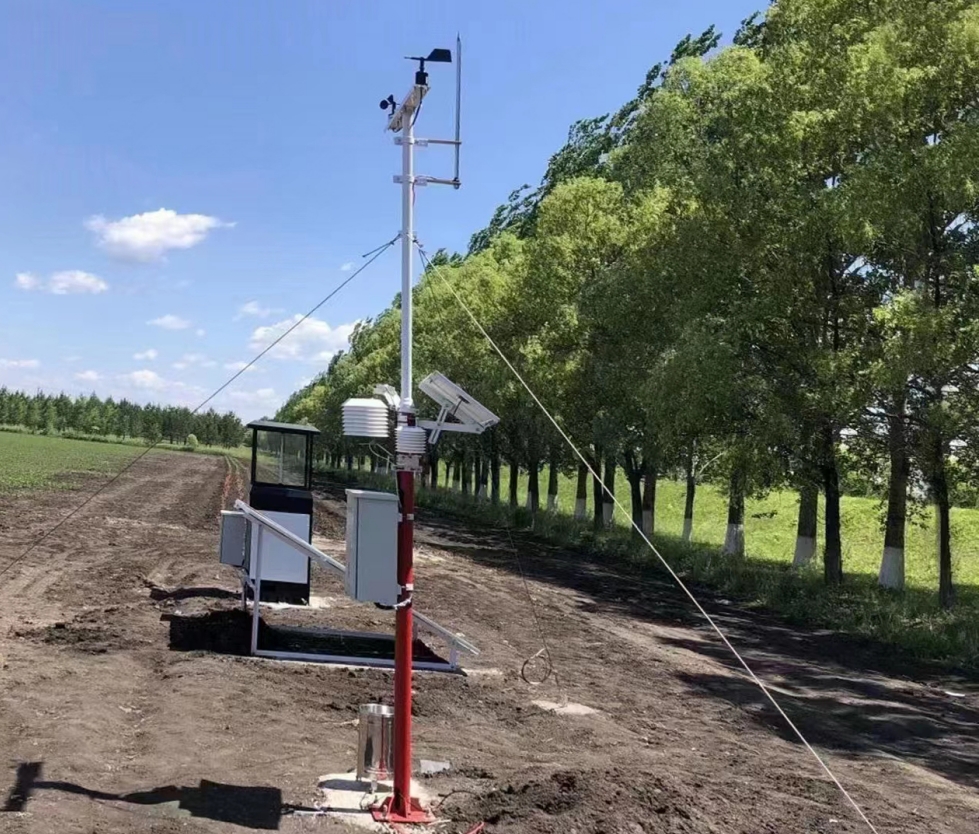
Extreme weather is the biggest uncertainty factor in grain production. NiuBoL agricultural weather station establishes field microclimate models through multi-element coupled monitoring, providing engineering companies with full-chain emergency response capabilities.
When continuous rainfall exceeds the threshold, the system automatically generates flood risk levels and reminds project contractors to start drainage pump stations in advance; when soil moisture continues to be below 15% during drought periods, irrigation suggestions are pushed to avoid yield reduction caused by water stress. When wind speed exceeds 8m/s, strong wind warning is linked, and combined with hail probability model (combined with atmospheric pressure and temperature gradient) to cover hail protection nets in advance. After data is uploaded to the cloud platform, it can be fused with satellite remote sensing data to form regional meteorological disaster forecast services, significantly shortening decision-making time and shifting from passive disaster relief to active defense.
In the long term, the accumulation of historical data can also support climate change trend analysis, helping system integrators design adaptive planting plans for large farms or cooperatives to ensure stable grain supply.
The occurrence of pests and diseases is highly related to meteorological conditions. Temperature rise shortens the development period of pests, high humidity promotes the prevalence of fungal diseases, and wind direction and speed accelerate the spread of spores and insects. NiuBoL agricultural weather station provides real-time temperature, humidity, wind field, and leaf wetness data, becoming the core input of pest and disease prediction models.
For example, when the temperature is stable at 15-25°C and relative humidity >80%, the system can mark high-risk windows for sheath blight; in low precipitation and drought environments, underground pest activity increases, and soil temperature and humidity data can trigger root insecticide application reminders. When wind speed >3m/s, the platform automatically suggests expanding the spraying range to reduce drift losses.
In engineering practice, weather station data can be linked with pathogen spore traps and sex pheromone monitoring equipment to form a “meteorological + biological” integrated monitoring system. Managers formulate precise prevention and control plans based on data, reducing chemical pesticide usage by 15%-25%, while lowering the risk of quality decline caused by disastrous weather.
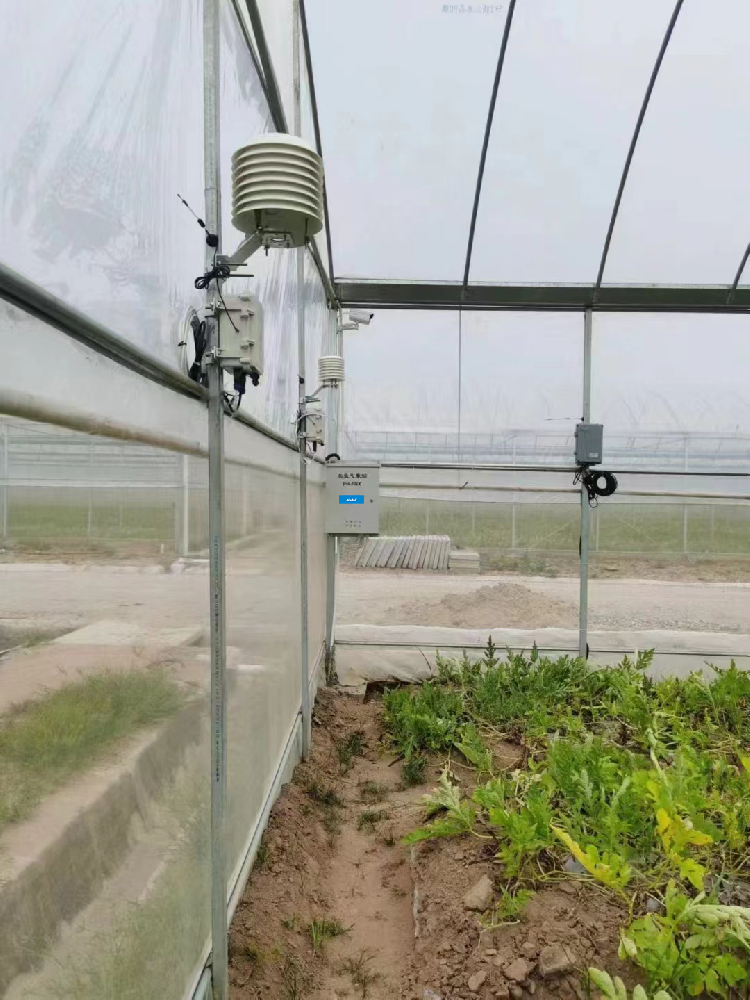
Rice is China's main grain crop, and high temperature heat damage is a major threat during the heading-flowering and grain-filling stages. NiuBoL agricultural weather station provides special monitoring and early warning for key growth periods of rice:
From young panicle differentiation to 10-15 days before heading: When the daily maximum temperature reaches 33-35°C for 5 consecutive days, the system issues floret degeneration warning.
Heading and flowering stage: When the daily maximum temperature >35°C for 3 consecutive days, especially high temperature stress on the flowering day, the platform pushes pollen inactivation risk and suggests immediate deep irrigation or day irrigation and night drainage to cool and increase humidity.
Grain-filling and maturity stage: When the maximum temperature >35°C for 5 consecutive days, high temperature forced ripening warning is triggered, guiding the application of grain fertilizer to improve seed setting rate and 1000-grain weight.
Combining weather station data with rice growth models can issue prevention and control instructions 7-10 days in advance. Engineering companies can integrate automatic irrigation controllers or spray cooling equipment accordingly. The measured yield reduction can be controlled within 5%, far lower than the 15%-40% loss without monitoring.
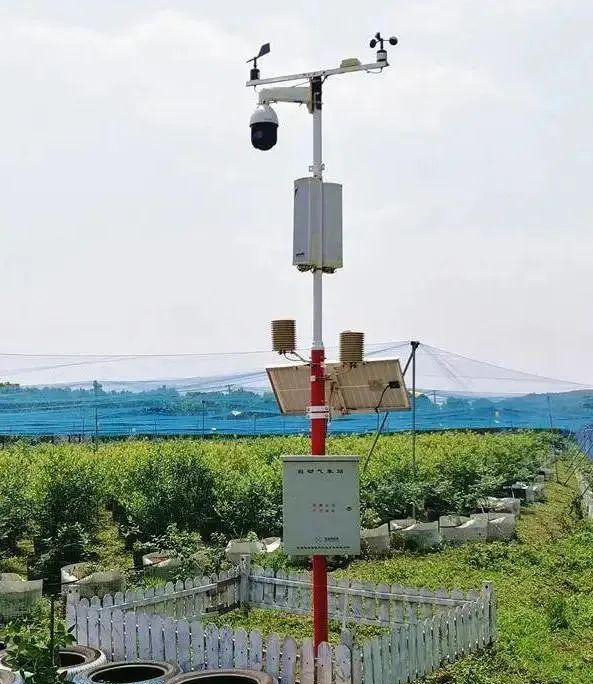
As a professional agricultural meteorological equipment manufacturer, NiuBoL products adopt industrial-grade protection design (IP65 and above), with strong weather resistance and maintenance cycles of more than 3 years. They support multiple communication protocols and are compatible with mainstream IoT platforms, facilitating rapid docking by system integrators.
| Parameter Name | Measurement Range | Resolution | Remarks |
|---|---|---|---|
| Air Temperature | -40℃~60℃ | 0.1℃ | Platinum resistance PT1000 |
| Relative Humidity | 0~100%RH | 0.1% | Capacitive type |
| Wind Speed | 0~60m/s | 0.1m/s | Three-cup type |
| Wind Direction | 0~360° | 1° | Wind vane |
| Rainfall | 0~9999mm | 0.1mm | Tipping bucket type |
| Solar Radiation | 0~2000W/m² | 1W/m² | Thermopile |
| Soil Temperature | -40℃~80℃ | 0.1℃ | Buried type |
| Soil Moisture | 0~100% (m³/m³) | 0.1% | FDR/TDR optional |
| Data Upload | - | - | Modbus RTU, MQTT, 4G |
The product supports solar power supply + battery backup, with local data storage of no less than 30 days. The cloud platform provides API interfaces and WebGIS visualization services, facilitating secondary development of early warning rules and linkage control logic by project contractors. Installation is simple, and a single station can cover a radius of 5-10 hectares. Multiple stations can be networked to achieve regional coverage.
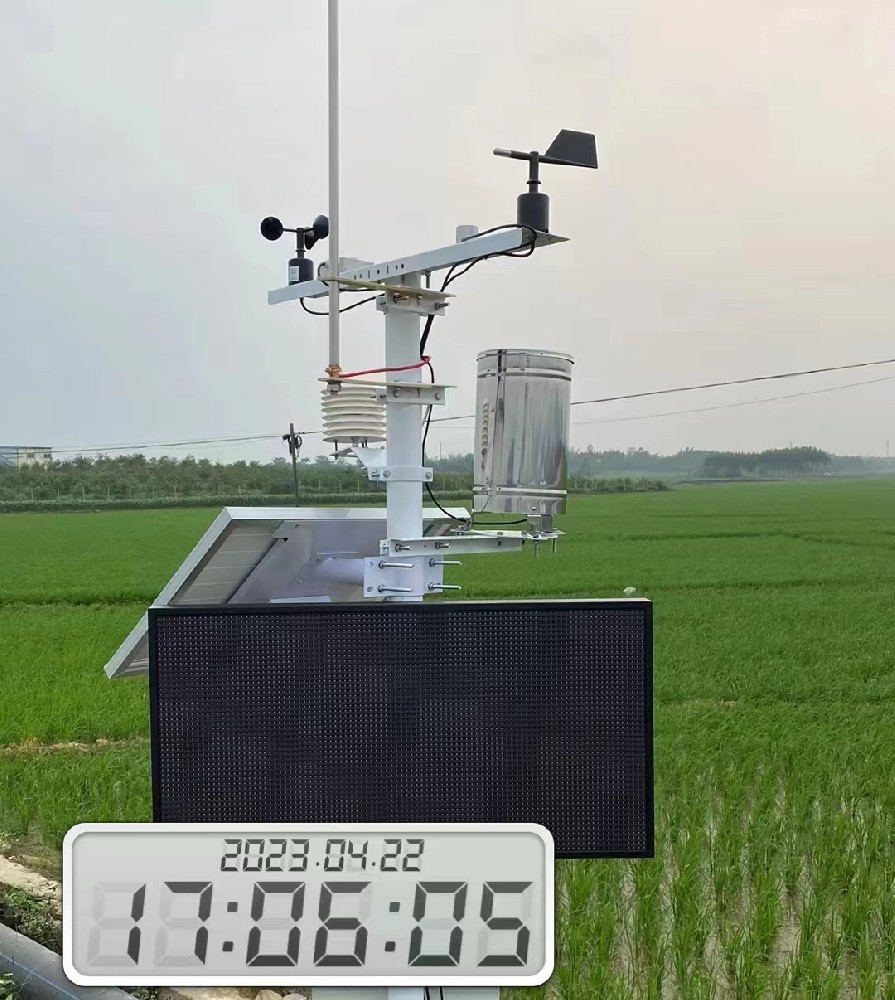
1. What is the main difference between agricultural weather stations and ordinary weather stations?
Agricultural weather stations focus on crop micro-environments. Sensor layout is closer to the field canopy and root zone. Data directly serves agricultural decision-making rather than macro weather forecasting.
2. What communication protocols does NiuBoL agricultural weather station support?
Supports Modbus RTU, MQTT, 4G LTE and LoRa, which can flexibly connect to different IoT platforms.
3. How to use weather station data for pest and disease control?
Combine temperature, humidity, leaf wetness, and wind field data into pest and disease prediction models to generate risk levels and pesticide application window suggestions for precise prevention and control.
4. How does the agricultural weather station cope with high temperature heat damage in rice planting?
Through real-time temperature threshold monitoring (above 33-35℃), push irrigation cooling and grain fertilizer application suggestions 7-10 days in advance to reduce unfilled grain rate and empty grain rate.
5. What engineering points should be noted when installing agricultural weather stations?
Choose open areas without obstruction, sensor height complies with WMO standards, lightning protection grounding, regular calibration; NiuBoL provides installation guidance and maintenance manuals.
6. How is data realized for remote analysis and early warning?
Data is uploaded to the cloud platform via 4G/wired, supporting real-time viewing, historical curves and automatic alarm push on mobile APP and Web.
7. What is the maintenance cost of NiuBoL agricultural weather station?
Low power consumption design + high protection level, conventional maintenance cycle is 1 year, standardized accessories, suitable for large-scale engineering deployment.
8. What types of agricultural projects is it suitable for?
Suitable for grain bases, smart farms, facility agriculture, ecological agriculture demonstration zones, especially regional meteorological service network projects undertaken by system integrators.
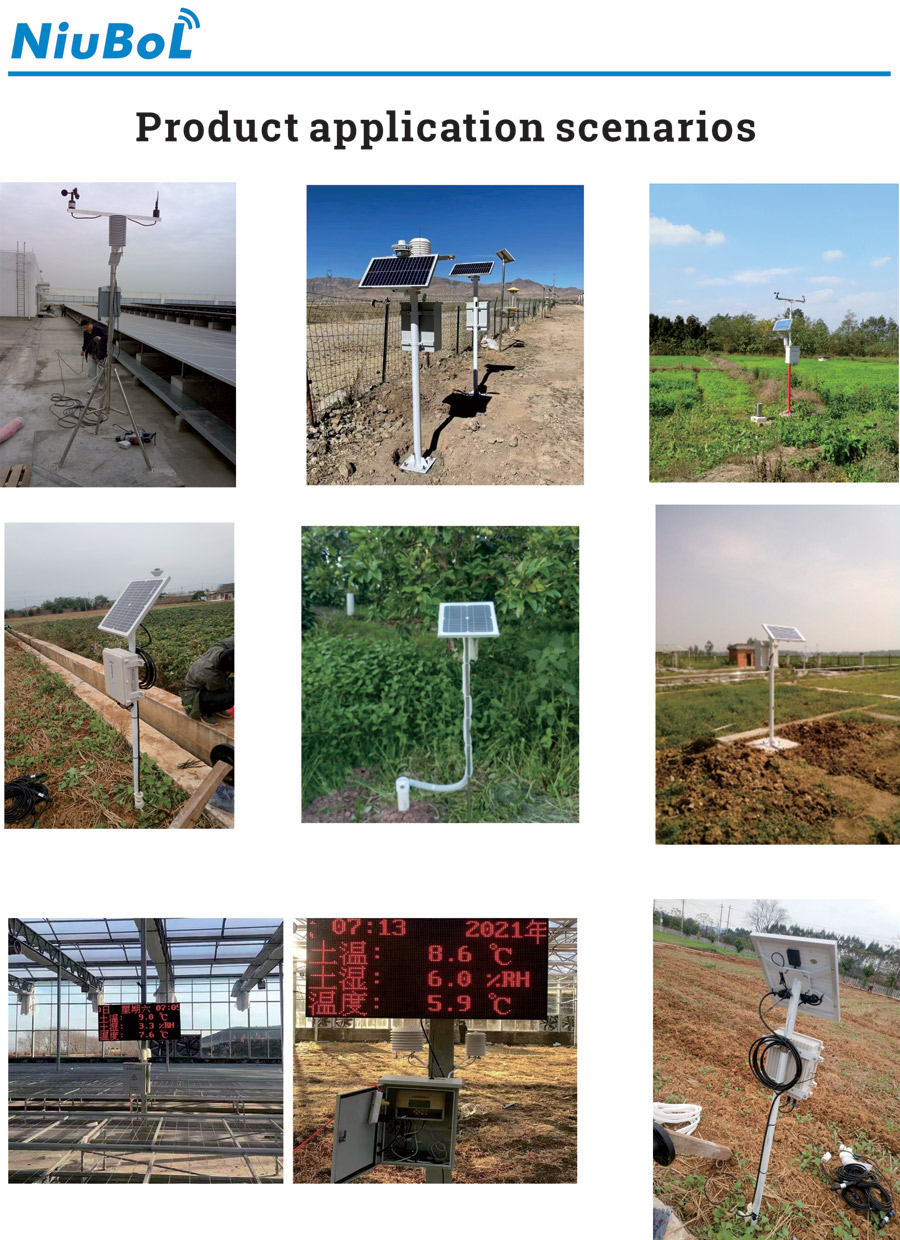
Agricultural weather stations have become key infrastructure for ensuring food security and improving agricultural risk resistance. NiuBoL agricultural weather station provides complete solutions for system integrators, IoT solution providers, project contractors and engineering companies with high-precision sensors, stable communication protocols and open integration capabilities. Through real-time field meteorological monitoring and data-driven decision-making, it can significantly reduce losses caused by extreme weather and pests and diseases, and help major grain crops such as rice achieve stable and high yields.
In the context of food security strategy, choosing a professional and reliable agricultural weather station solution is not only a technological upgrade but also a responsibility. NiuBoL is willing to work hand in hand with industry partners to jointly build a more resilient modern agricultural production system. If you need technical parameters, integration solutions or project implementation support, please feel free to contact the professional team for in-depth cooperation.
Related recommendations
Sensors & Weather Stations Catalog
 Agriculture Sensors and Weather Stations Catalog-NiuBoL.pdf
Weather Stations Catalog-NiuBoL.pdf
Agriculture Sensors Catalog-NiuBoL.pdf
Water Quality Sensor Catalog-NiuBoL.pdf
Related products
 Combined air temperature and relative humidity sensor
 TDR Soil Moisture & Temperature Sensor for irrigation| RS485 |4-20mA| NBL-S-THR
 Soil pH sensor RS485 soil Testing instrument soil ph meter for agriculture |NBL-S-PH
 Wind Speed sensor Output Modbus/RS485/Analog/0-5V/4-20mA
 Tipping bucket rain gauge for weather monitoring auto rainfall sensor RS485/Outdoor/stainless steel
 Pyranometer Solar Radiation Sensor 4-20mA/RS485

Screenshot, WhatsApp to identify the QR code
WhatsApp number:+8615367865107
(Click on WhatsApp to copy and add friends)

