





— Blogs —
—Products—
 Consumer hotline +8618073152920
 WhatsApp:+8615367865107
Address:Room 102, District D, Houhu Industrial Park, Yuelu District, Changsha City, Hunan Province, China
Product knowledge
Time:2026-01-05 09:50:01 Popularity:920
In modern agriculture, forestry, and environmental scientific research, soil moisture is a core variable that regulates crop growth, water migration, and energy exchange. Whether for precise irrigation decisions or global climate change modeling, accurate acquisition of soil moisture is indispensable.
However, soil is an extremely complex heterogeneous multiphase system. How to select the most suitable measurement method based on different application scenarios? As a leading brand in smart agriculture sensing technology, NiuBoL will provide a detailed analysis of the current mainstream soil moisture measurement methods, helping you read scientific data from the “soil.”
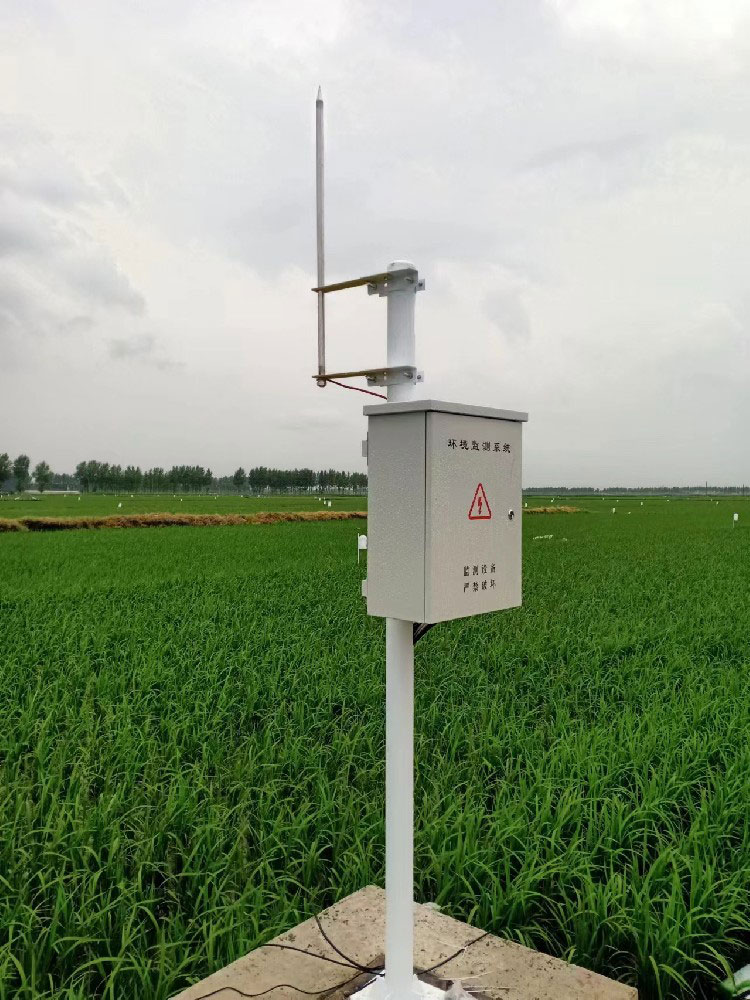
To help you quickly understand the differences among various technologies, we have systematically organized the mainstream measurement methods:
| Measurement Method | Measurement Object | Real-Time Capability | Destructiveness | Core Advantages | Applicable Scenarios |
|---|---|---|---|---|---|
| Drying Method | Gravimetric Water Content | Extremely Low | Yes | Absolutely Accurate, as Benchmark | Laboratory Calibration, Standard Formulation |
| Resistance Method | Water Tension | Medium | No | Extremely Low Cost | Rough Monitoring, Small-Scale Gardening |
| Neutron Method | Volumetric Water Content | High | No | Large Measurement Range | Deep Soil Research, Large-Area Surveys |
| TDR Method | Water-Salt Integration | Extremely High | No | Extremely High Precision, Strong Anti-Interference | High-End Research, Extreme Environment Monitoring |
| FDR Method | Volumetric Water Content | Extremely High | No | King of Cost-Effectiveness, Strong Stability | Smart Agriculture, Large-Area Soil Moisture Stations |
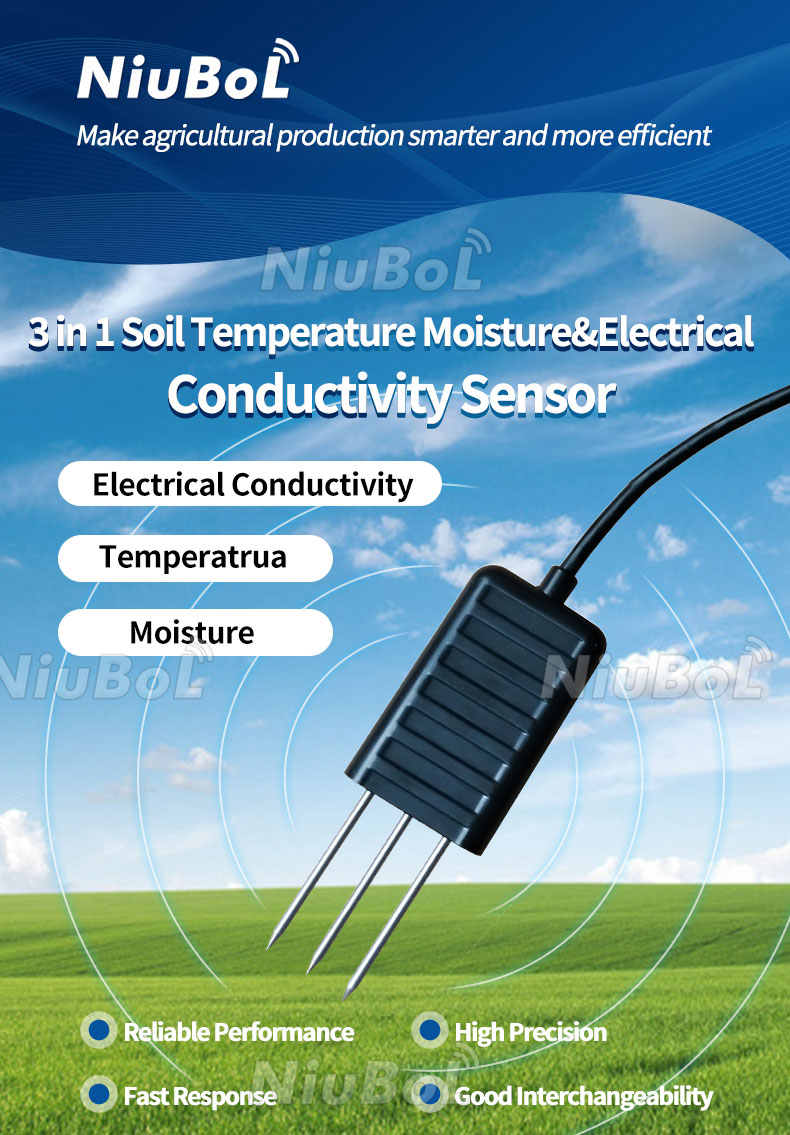
1.Drying Method (Gravimetric Method): Recognized Standard Scale
The drying method is the most authoritative standard method for measuring soil moisture, mainly used to determine soil gravimetric water content.
Operating Principle: Collect undisturbed soil columns, weigh the original weight, place in a 105℃ oven to dry to constant weight, and weigh again.
Limitations: It is destructive sampling and cannot achieve in-situ, real-time monitoring. It is the original basis for calibrating NiuBoL sensors before leaving the factory.
2.Resistance Method: Equilibrium Monitoring of Porous Media
Operating Principle: Utilizes the characteristic that the resistance of gypsum blocks or glass fibers changes with water content.
Advantages and Disadvantages: Extremely low cost, but in saline-alkali lands or frequently fertilized plots, resistance values are greatly interfered by ions, data jumps significantly, and response has obvious lag.
Technical Core: Based on the ability of hydrogen atoms to slow down fast neutrons.
Application Features: Large measurement volume (strong representativeness), but equipment is expensive and involves radioactive source safety management. Due to interference from non-water hydrogen in organic matter, its performance is limited in forest soils or peat soils, and it cannot accurately monitor surface moisture from 0-15cm.
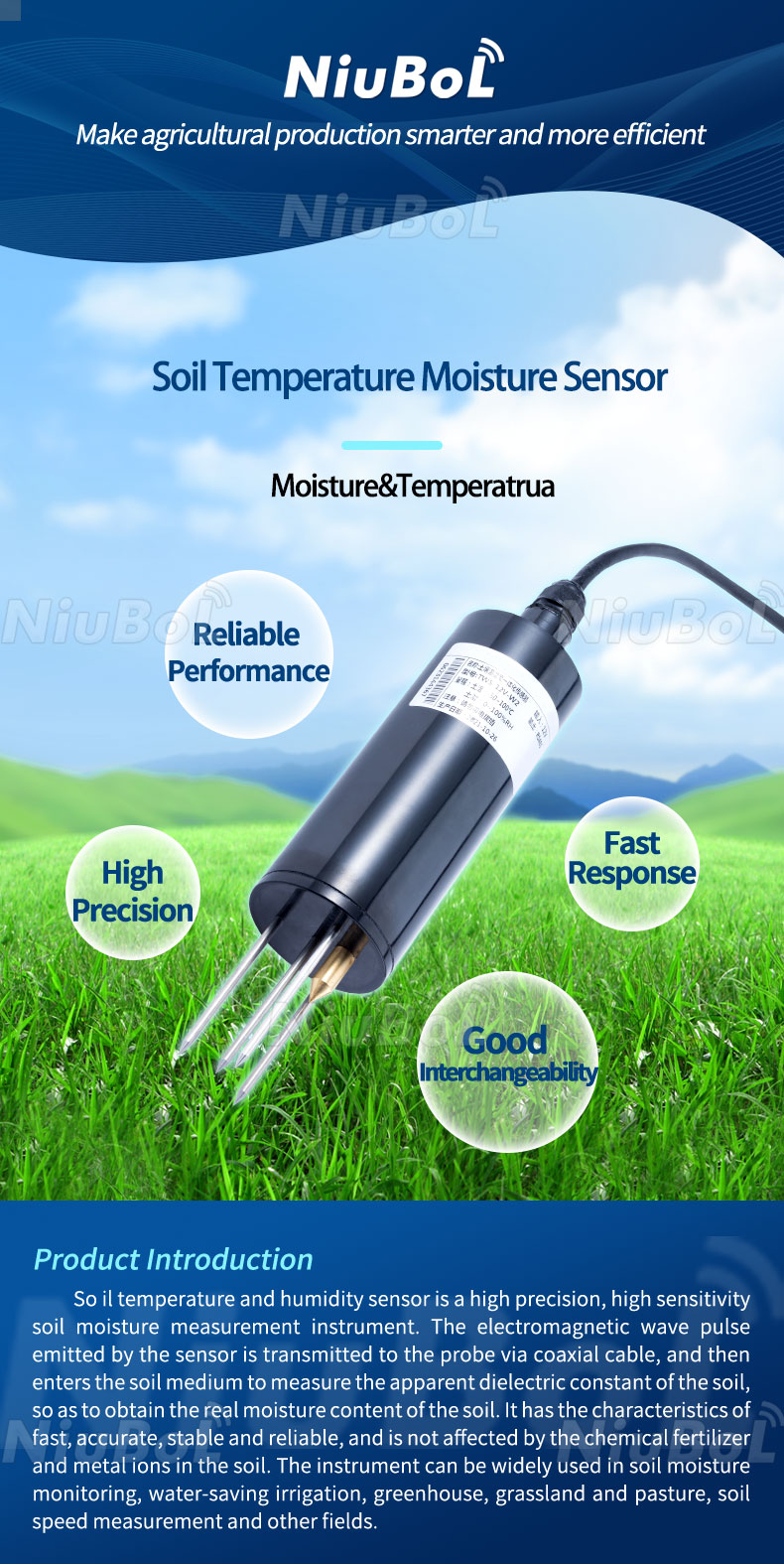
TDR (Time-Domain Reflectometry) technology emerged in the 1980s and quickly became the preferred choice for high-end research due to its “short-wave radar” detection principle.
TDR Technology's Outstanding Advantages:
Water-Salt Co-Measurement: NiuBoL's TDR technology can simultaneously and independently monitor soil moisture and electrical conductivity (EC) at the same location, without mutual interference.
Adaptation to Extreme Environments: It can accurately measure unfrozen water content under freezing conditions, which is difficult for other methods to achieve.
Extremely Strong Independence: Measurement results are almost unaffected by soil type, density, and temperature fluctuations.
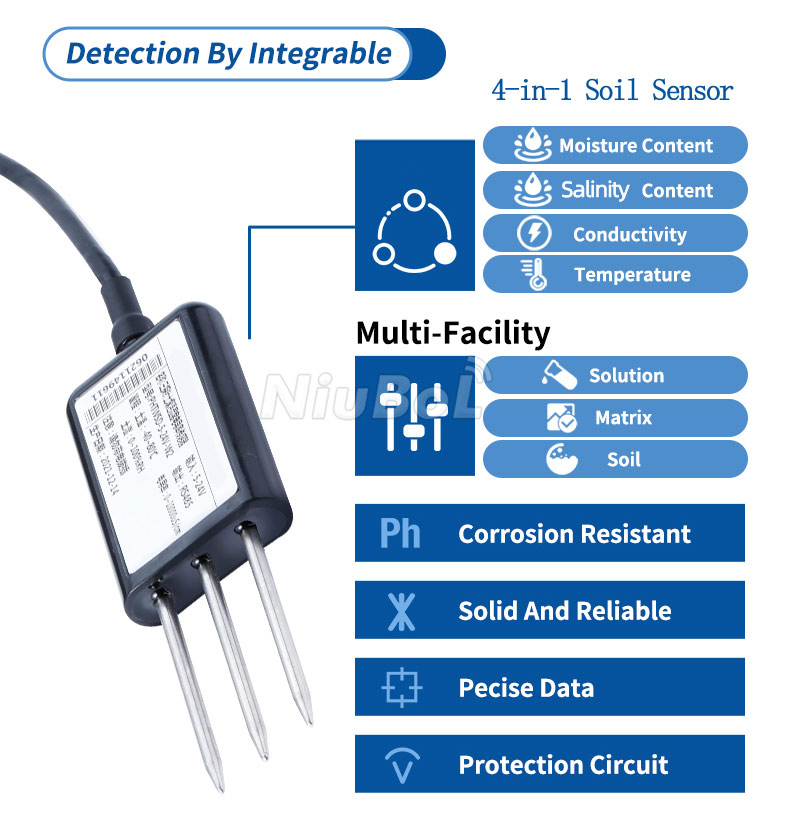
Although TDR has extremely high precision, in large-scale commercial applications, FDR (Frequency Domain Reflectometry) has become the core of NiuBoL's smart solutions due to its outstanding cost-effectiveness and anti-interference capabilities.
Why Choose NiuBoL FDR Sensors?
High-Frequency Locking Technology: NiuBoL sensors fix the operating frequency around 100MHz. High-frequency signals can effectively bypass the polarization effects of soil salt ions, ensuring stable readings even in saline-alkali lands or after fertilization.
Spherical Sensing Domain Design: The electromagnetic field formed around the probe can cover a more representative soil area.
Ultra-Fast Response and Corrosion Resistance: Sampling time<1s, probe made of special stainless steel material, protection level up to IP68, supporting long-term burial.
No matter how high the sensor precision is, improper installation will ruin all data. NiuBoL experts have summarized the following installation essentials for you:
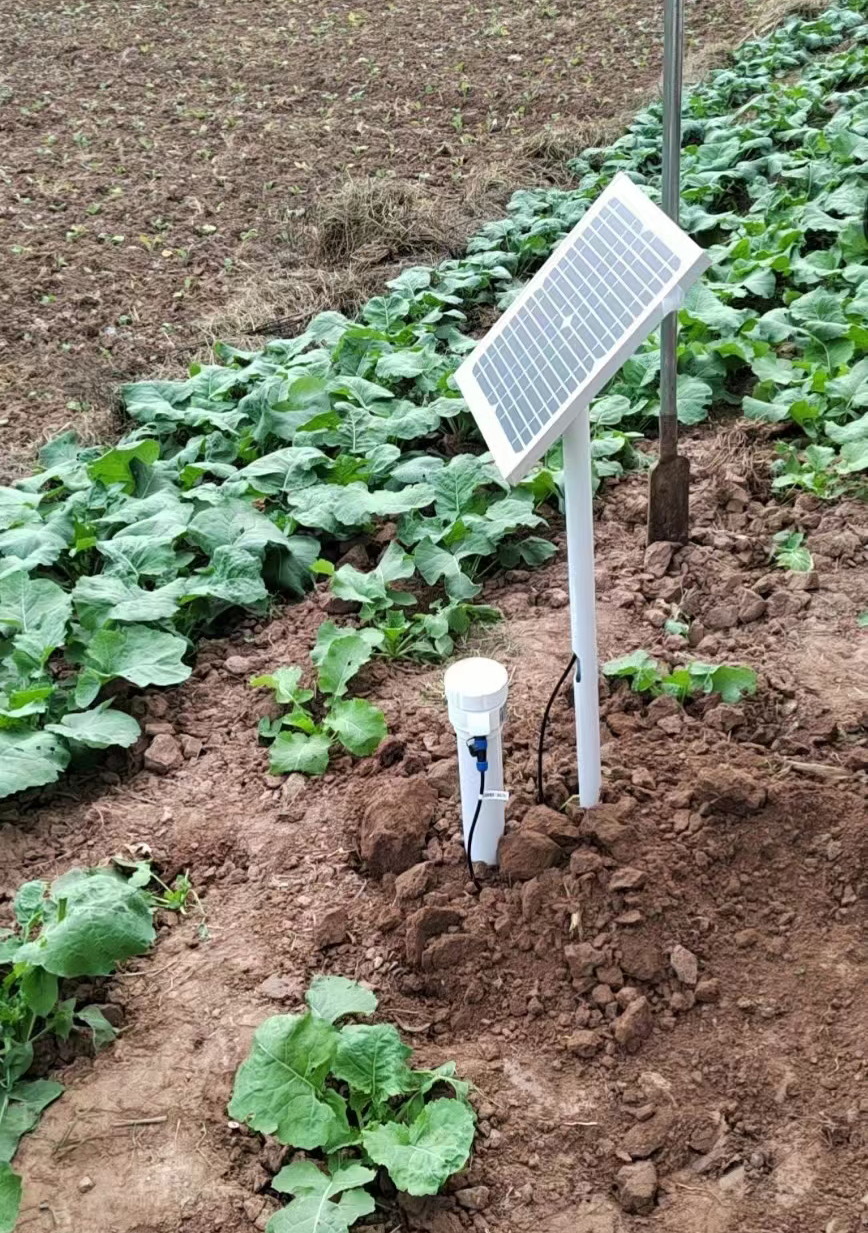
Avoid “Channeling Effect”: When burying the sensor, strictly prohibit leaving vertical gaps directly above the probe. Otherwise, rainwater will seep down along the gaps, causing falsely high measurement values.
Eliminate “Air Pockets”: Ensure the probe fits tightly with the soil. It is recommended to use a matching soil drill to make holes, and avoid shaking left and right when inserting the probe.
Layered Monitoring Strategy: For deep-rooted crops like fruit trees, bury at layers of 20cm, 40cm, 60cm. NiuBoL's tubular multi-parameter sensors can achieve single-hole multi-layer monitoring, significantly reducing construction costs.
| Question | Answer |
|---|---|
| Q1: Why is TDR method considered more reliable than resistance method? | A: Resistance method is highly susceptible to salt and temperature interference. TDR measures dielectric constant. Water's dielectric constant (about 80) is much larger than soil solids (about 3-5) and air (about 1), so it can extremely sensitively and independently identify moisture changes. |
| Q2: What suggestions for choosing between FDR and TDR sensors? | A: TDR equipment has extremely high precision, suitable for cutting-edge research; FDR sensors (such as NiuBoL series) have stable performance and high cost-effectiveness, more suitable for large-scale, multi-node distributed smart agriculture projects. |
| Q3: Why doesn't my sensor read 0% in dry sandy soil? | A: There is no absolute 0% moisture in nature. Additionally, the sensor senses the comprehensive dielectric constant of the medium around the probe. If the probe is not fully inserted into the soil or there are large gaps around, the influence of air (dielectric constant 1) will cause baseline deviation. |
| Q4: What is the most scientific data collection frequency? | A: For agricultural irrigation, it is recommended to collect every 30-60 minutes to capture the complete moisture fluctuation curve; for scientific infiltration experiments, enable minute-level sampling. |
| Q5: Can NiuBoL sensors connect to my existing control large screen? | A: Yes. We provide standard RS485 (Modbus-RTU) interfaces and 4-20mA signals, supporting API access, which can be easily integrated into smart park command centers. |
Soil moisture measurement has evolved from single “weighing and drying” to a coexistence of multiple technologies in “physical sensing.” Measuring moisture itself is not the goal; achieving precise scheduling of water resources is the core.
Through NiuBoL's long-term monitoring, farm owners and researchers can obtain plot-specific “soil water retention characteristic curves.” This is not just dull numbers but the most valuable core asset in farm digital management.
Are you looking for the most suitable monitoring solution for your project?
NiuBoL's technical team provides full-chain support from sensor selection to installation guidance.
Contact us to get the latest generation TDR/FDR sensor detailed data sheets and quotes!
1.NBL-S-THR Soil Temperature Moisture Sensor datasheet
 NBL-S-THR-Soil-temperature-and-moisture-sensors-Instruction-Manual-V4.0.pdf
2. NBL-S-TMC Soil Temperature Moisture EC Sensor datasheet
NBL-S-TMC-Soil-temperature-and-moisture-conductivity-sensor.pdf
3. NBL-S-TM Soil Temperature Moisture Sensor datasheet
NBL-S-TM-Soil-temperature-and-moisture-sensor-Instruction-Manual-4.0.pdf
4. NBL-S-TMCS Soil Temperature, Moisture, Conductivity and Salinity Integrated Sensor
NBL-S-TMCS-Soil-Temperature-Humidity-Conductivity-and-Salinity-Sensor.pdf
Prev:How NiuBoL Soil Moisture Tester Reshapes Modern Planting Management Technology
Next:Application of Automatic Weather Stations in Greenhouse Cultivation Management
Related recommendations
Sensors & Weather Stations Catalog
Agriculture Sensors and Weather Stations Catalog-NiuBoL.pdf
Weather Stations Catalog-NiuBoL.pdf
Agriculture Sensors Catalog-NiuBoL.pdf
Water Quality Sensor Catalog-NiuBoL.pdf
Related products
 Combined air temperature and relative humidity sensor
 TDR Soil Moisture & Temperature Sensor for irrigation| RS485 |4-20mA| NBL-S-THR
 Soil pH sensor RS485 soil Testing instrument soil ph meter for agriculture |NBL-S-PH
 Wind Speed sensor Output Modbus/RS485/Analog/0-5V/4-20mA
 Tipping bucket rain gauge for weather monitoring auto rainfall sensor RS485/Outdoor/stainless steel
 Pyranometer Solar Radiation Sensor 4-20mA/RS485

Screenshot, WhatsApp to identify the QR code
WhatsApp number:+8615367865107
(Click on WhatsApp to copy and add friends)

