





— Blogs —
—Products—
 Consumer hotline +8618073152920
 WhatsApp:+8615367865107
Address:Room 102, District D, Houhu Industrial Park, Yuelu District, Changsha City, Hunan Province, China
Product knowledge
Time:2026-01-06 13:29:51 Popularity:756
As modern agricultural technology advances rapidly, greenhouses have become the core cornerstone for ensuring winter vegetable supply in northern regions and off-season vegetable supply nationwide. To keep tender cucumbers, tomatoes, and peppers fruiting abundantly even in harsh cold seasons, large-scale greenhouses are undergoing a profound transformation from “experience-based planting” to “data-driven” management.
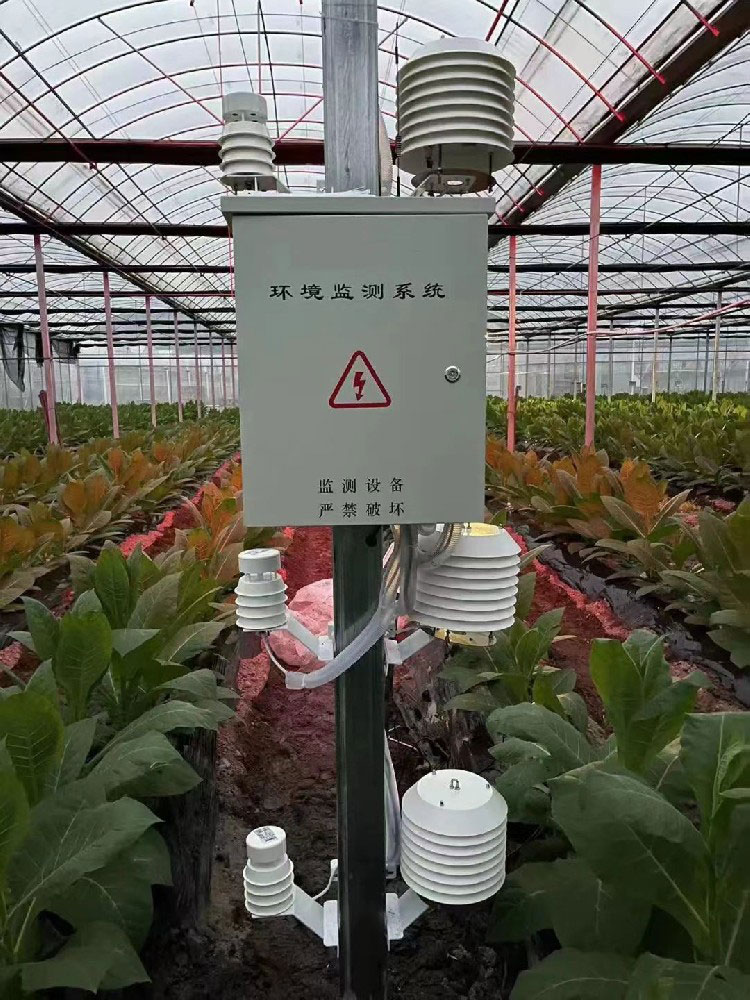
Traditional planting models are severely constrained by natural climate, and farmers often fail to timely detect subtle changes in the greenhouse micro-environment, missing the optimal timing for ventilation, heating, or irrigation, ultimately leading to reduced yields or even losses. As a leading global provider of smart agriculture monitoring solutions, the compact automatic weather station launched by NiuBoL is becoming the “digital steward” for large greenhouses, providing scientific planting decision-making basis through 24-hour real-time monitoring.
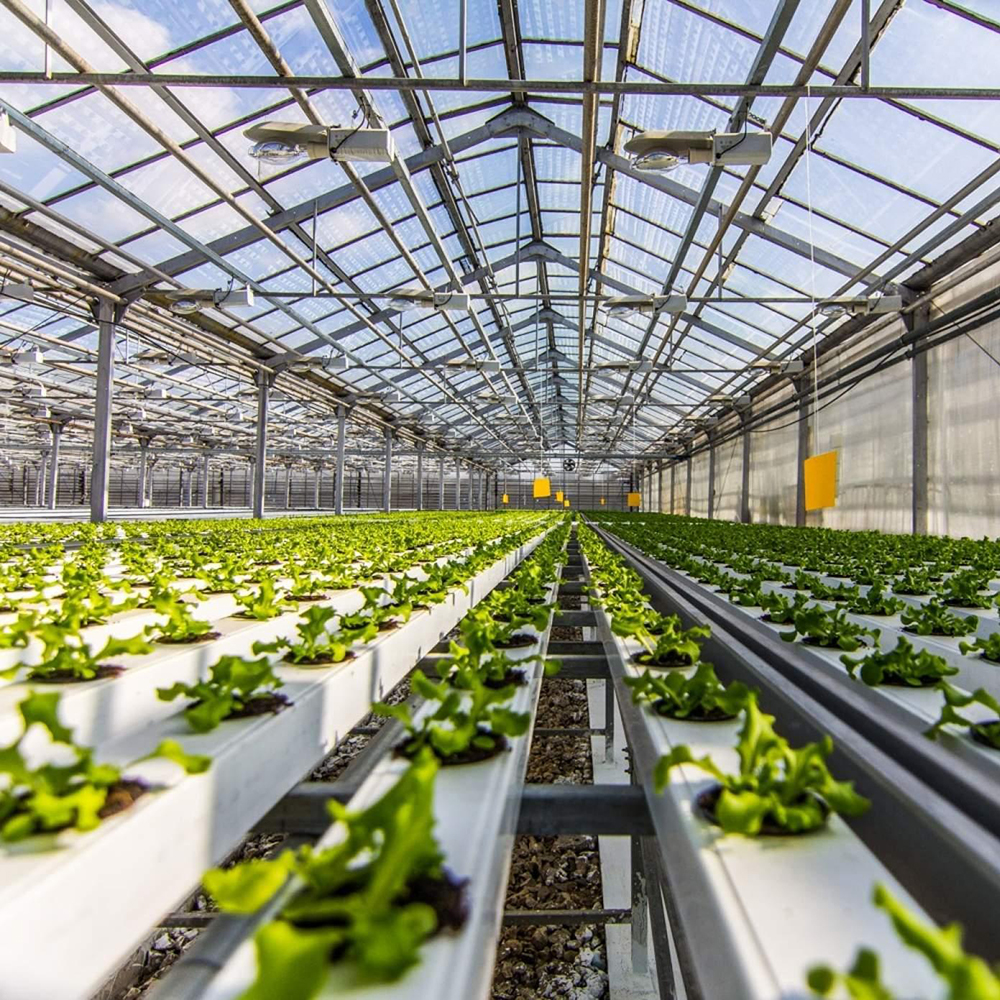
Greenhouses are essentially semi-enclosed artificial ecosystems constructed with transparent covering materials (such as plastic film or glass). Their core principle is to capture and retain solar radiation energy through the “greenhouse effect,” creating a growth environment with temperatures higher than outdoors.
However, in this enclosed space, sudden temperature rises, excessive humidity accumulation, and carbon dioxide depletion can all become “shackles” limiting growth. NiuBoL automatic weather stations, through integrated cutting-edge sensing technology, convert previously invisible physical quantities into visualizable data, helping growers understand the quantitative relationships inside and outside the greenhouse under different seasons and weather conditions.
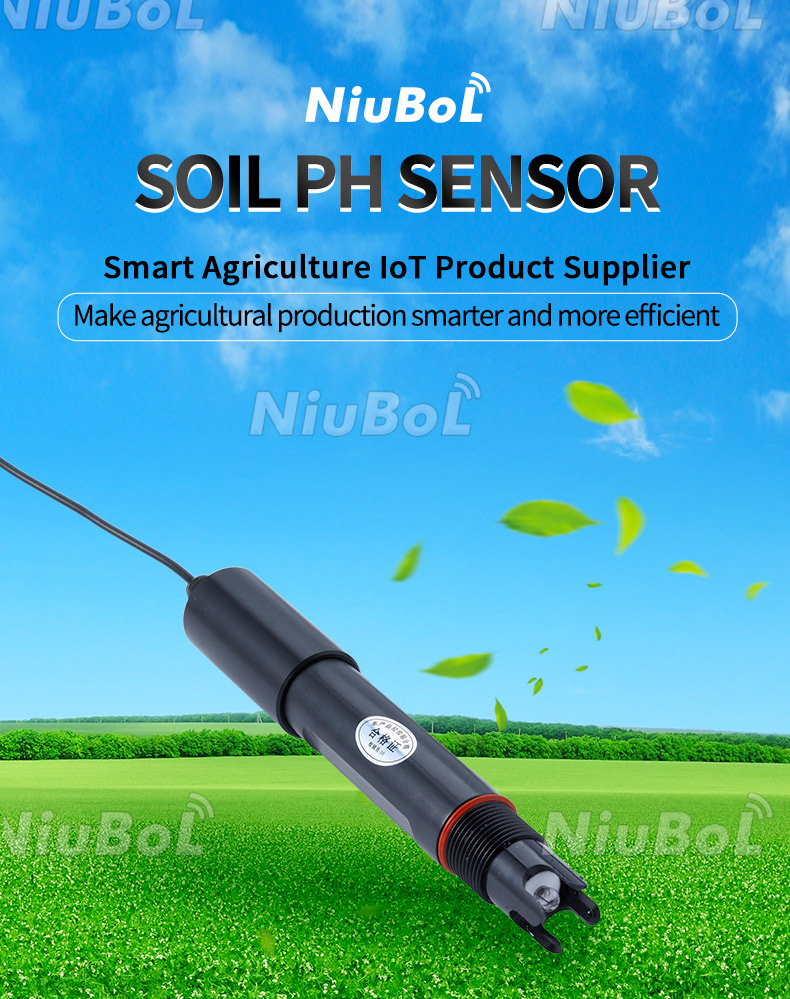
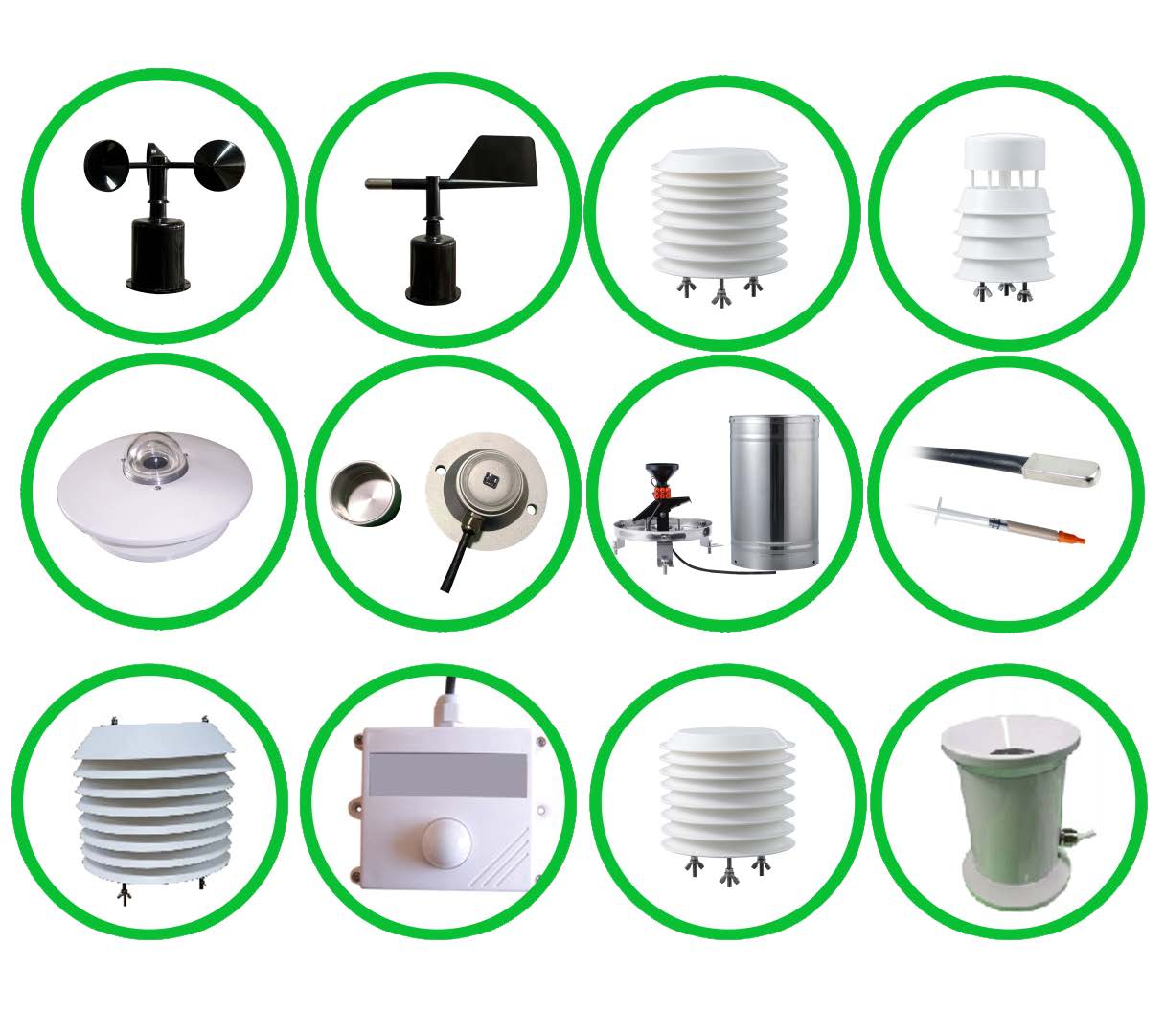
The effectiveness of an automatic weather station depends on its array of sensors. In greenhouse environment management, monitoring the following six core elements is crucial:
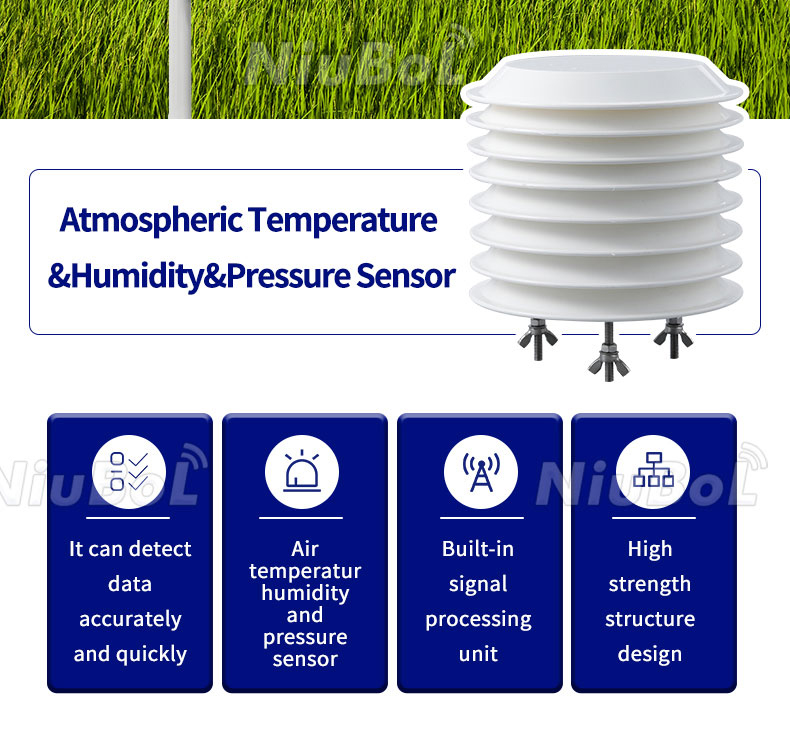
2.1.Air Temperature and Humidity Sensor
Role and Function: This is the “primary benchmark” for greenhouse management. Temperature determines crop growth rate, while humidity directly relates to pest and disease occurrence probability.
Monitoring Value: Through monitoring, growers can precisely know when to open side windows for ventilation and dehumidification or when to activate heating equipment. NiuBoL sensors have high sensitivity, capturing 0.1℃ subtle changes, effectively preventing flower and fruit drop due to excessive temperature differences.
2.2.Photosynthetically Active Radiation (PAR) Sensor
Role and Function: Not all light can be utilized by plants. PAR specifically measures energy in the 400-700nm band used for photosynthesis.
Monitoring Value: In low-light winter conditions, PAR data is the sole standard for deciding whether to turn on artificial supplementary lighting, ensuring crops remain in the optimal photosynthetic efficiency range.
2.3.Carbon Dioxide (CO₂) Concentration Sensor
Role and Function: Carbon dioxide is the “food” for plant photosynthesis. In enclosed greenhouses, CO₂ concentration often becomes severely insufficient in the afternoon due to photosynthetic consumption.
Monitoring Value: Real-time CO₂ monitoring scientifically guides growers on when to apply artificial CO₂ fertilization, the “secret” to increasing off-season vegetable yields.
2.4.Soil Temperature Sensor
Role and Function: Root activity is greatly affected by ground temperature.
Monitoring Value: For warm-loving vegetables (such as peppers and eggplants), low ground temperature can cause root water absorption obstacles. Ground temperature data from automatic weather stations is the core indicator for evaluating ground film coverage effectiveness and ground heating system operation.
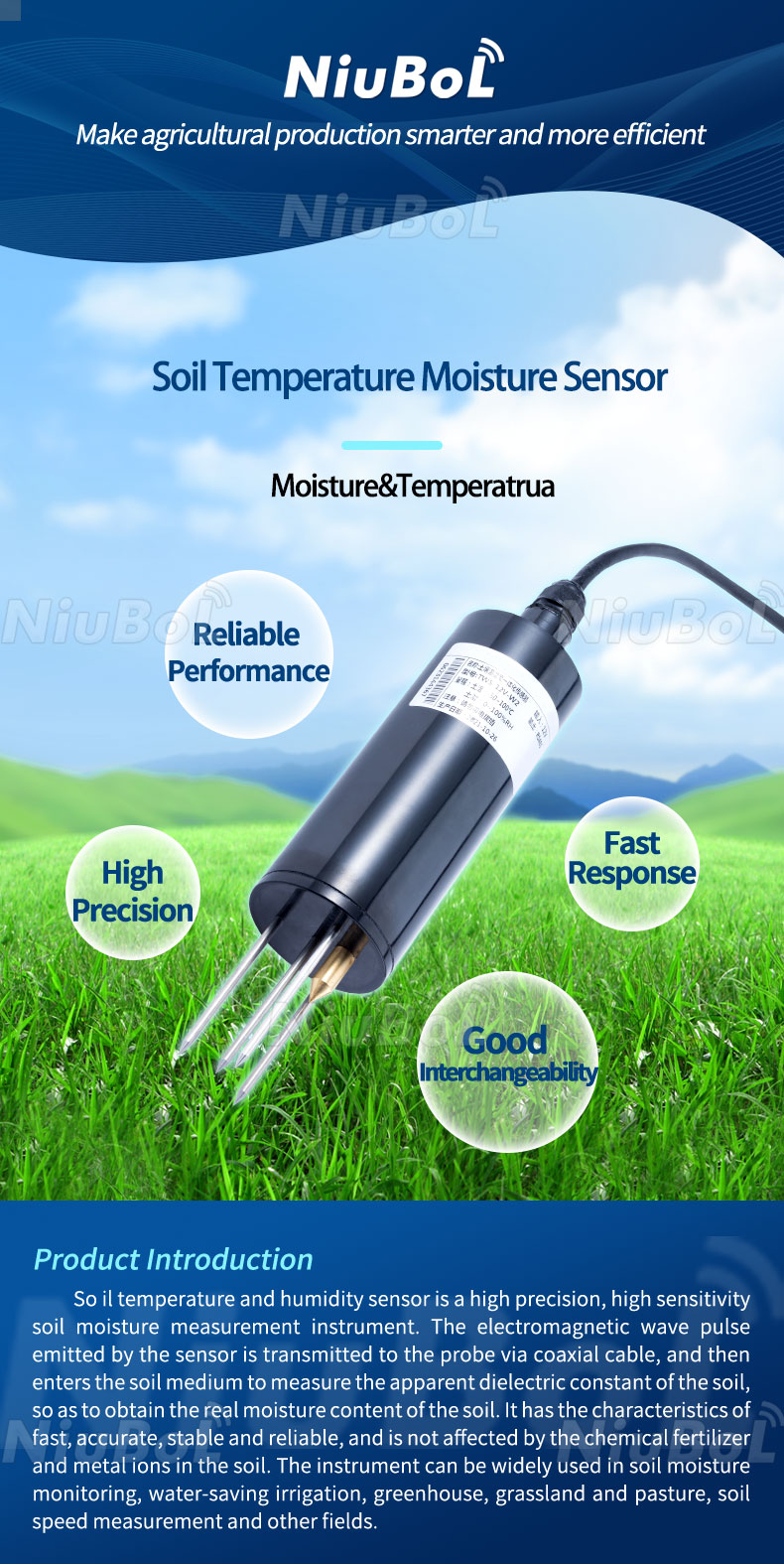
2.5.Soil Moisture Sensor
Role and Function: Monitors soil water content, reflecting the true water shortage status in the root zone.
Monitoring Value: Avoids the drawbacks of manual “gut-feel” watering, achieving on-demand irrigation, saving water resources while preventing root rot due to hypoxia.
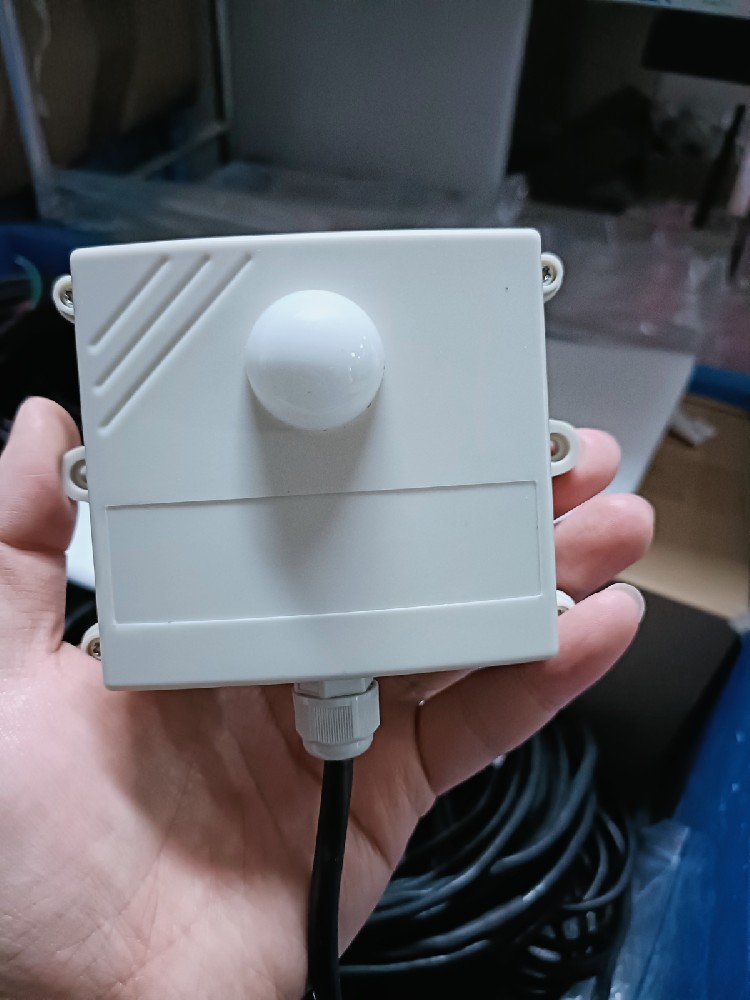
2.6.Solar Radiation Sensor
Role and Function: Measures total solar radiation energy per unit area across all bands.
Monitoring Value: Combined with indoor/outdoor data, it calculates greenhouse insulation ratio and shading coefficient, assisting managers in optimizing greenhouse structure or adjusting shading curtain opening ratios.
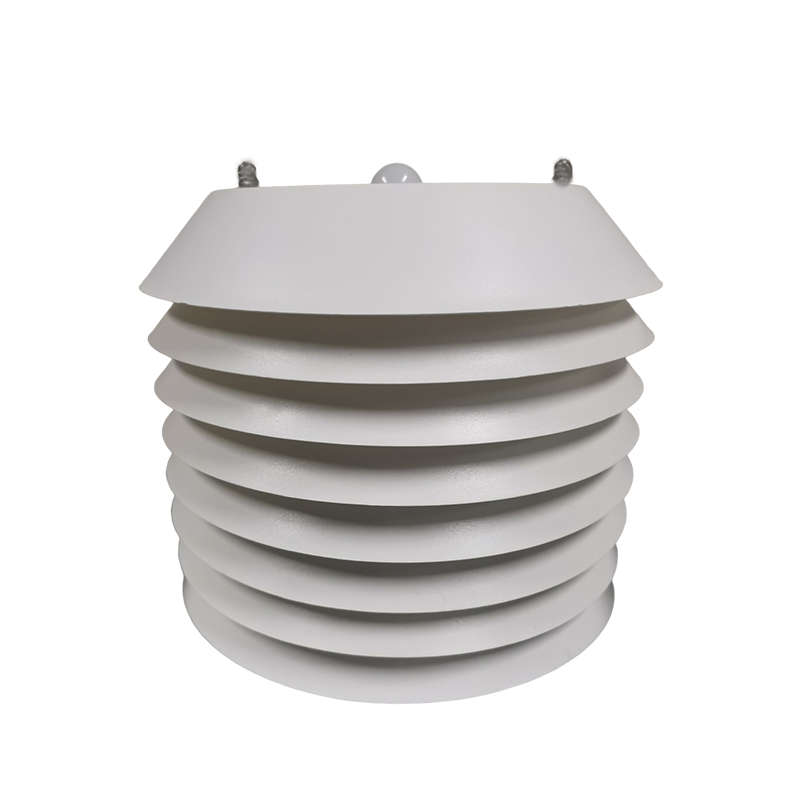
NiuBoL automatic weather stations are not isolated monitoring points but complete closed-loop service systems:
Sensor Monitoring: Sensors distributed throughout the greenhouse for wind speed, direction, temperature, humidity, etc., sense physical changes in real time.
Data Collection: All element information is synchronously collected and pre-processed by NiuBoL high-precision collectors.
Wireless Transmission: Data is instantly transmitted to cloud servers or backend computers via 4G, WIFI, or LoRaWAN modules.
Intelligent Analysis and Warning: Backend staff or intelligent algorithms analyze data; once values exceed preset risk thresholds (e.g., low-temperature freeze warning, high-humidity disease warning), the system immediately issues alerts.
Planting Tips Service: Combined with professional forecasts from local meteorological bureaus, growers receive practical and authoritative “vegetable planting tips” including cold protection, warming, and supplementary lighting.
4.1.Understand Internal-External Correlations for Precise Control
Using NiuBoL monitoring systems and correlation analysis, growers can establish temperature relationship models inside and outside the greenhouse. For example, when outdoor temperature drops to -10℃, how long until indoor temperature reaches growth limits without heating? Such quantitative analysis allows preventive measures to precede disasters.
4.2.Reduce Energy Costs and Improve Economic Returns
Precise monitoring of light and humidity significantly reduces unnecessary supplementary lighting duration and fertilizer/pesticide use. Data shows that greenhouses managed with automatic weather stations can reduce overall energy consumption by about 15%-20%, while crop output value increases by over 10%.
4.3.Build All-Weather “Authoritative Data Warehouse”
Data recorded by automatic weather stations not only guides current production but also serves as long-term scientific research basis, providing authoritative indoor environment historical records for future introduction of superior varieties or improved planting plans.
| Question | Answer |
|---|---|
| Q1: The greenhouse internal environment is complex; how do NiuBoL sensors resist corrosion and moisture? | A: Greenhouse humidity often exceeds 90%, accompanied by fertilizer and pesticide corrosion. NiuBoL meteorological sensors adopt industrial-grade protection design, with temperature and humidity louver boxes made of UV-resistant, corrosion-resistant materials, and sensor probes specially coated to maintain high sensitivity without condensation in high-humidity environments. |
| Q2: How many monitoring points are needed for a large greenhouse? | A: It depends on greenhouse length and structure. Typically, a main observation station is placed in the middle of the long axis; for greenhouses over 100 meters, sensor nodes are recommended at vents and center to capture potential “temperature difference blind spots.” |
| Q3: Can I view collected data on my phone anytime? | A: Absolutely. NiuBoL system includes mobile App and Web backend. Wherever you are with network access, you can view real-time greenhouse curve charts and receive anomaly alert pushes. |
| Q4: What is the difference between meteorological bureau forecasts and greenhouse measured data? | A: Meteorological bureau forecasts regional macro-environment, while greenhouse measured data reflects “micro-climate.” NiuBoL combines both—using macro forecasts for “risk gaming” and micro measurements for “precise control”—providing double protection for growers. |
| Q5: Where should the greenhouse CO₂ sensor be installed for most accurate results? | A: CO₂ sensor placement is critical. Since CO₂ is heavier than air and photosynthesis mainly occurs at leaf level, install at crop canopy height (densest leaf area). Avoid direct vent blowing and frequent entry doors to accurately reflect actual crop-absorbed concentration, better guiding linked CO₂ supplementation. |
| Q6: What is the difference between monitored “photosynthetically active radiation (PAR)” and ordinary light intensity (Lux)? | A: These are completely different concepts. Ordinary light intensity (Lux) is based on human eye brightness perception, while PAR measures photon flux in 400-700nm band absorbable for photosynthesis. In greenhouse management, relying solely on Lux may mislead supplementary lighting decisions, while PAR directly shows if crops are “full.” NiuBoL stations with integrated PAR sensors professionally help determine shading net or lighting timing. |
The application of automatic weather stations in greenhouse planting is an important symbol of modern agriculture shifting from “depending on weather” to “controlling weather with technology.” Through NiuBoL's full-element sensing system integrating light, CO₂, soil moisture, etc., growers can for the first time examine crop growth environments from a digital perspective.
In future agricultural competition, mastering environmental data means mastering initiative in yield and quality. NiuBoL is willing to work with growers to use weather stations, gain insights into plant growth, and jointly usher in the high-yield era of smart greenhouses.
If you are planning automation upgrades for large greenhouses or need a detailed sensor configuration list, please contact NiuBoL for professional one-stop solutions.
Technical Specifications and Communication Reference:
Collection Elements: Air temperature and humidity, ground temperature, soil moisture, CO₂ concentration, PAR, total radiation
Communication Protocol: Modbus RTU
Interface: RS485
Wireless Link: 4G / LoRaWAN / 5G/GPRS
Power Supply: DC 12-24V or AC 220V compatible
Average Power Consumption: Less than 1W (low-power collection mode)
Prev:In-depth Analysis and Selection Guide for Soil Moisture Measurement Methods
Next:Applications of Small Automatic Weather Stations in Agriculture, Power, Forestry, and Hydrology
Related recommendations
Sensors & Weather Stations Catalog
 Agriculture Sensors and Weather Stations Catalog-NiuBoL.pdf
Weather Stations Catalog-NiuBoL.pdf
Agriculture Sensors Catalog-NiuBoL.pdf
Water Quality Sensor Catalog-NiuBoL.pdf
Related products
 Combined air temperature and relative humidity sensor
 TDR Soil Moisture & Temperature Sensor for irrigation| RS485 |4-20mA| NBL-S-THR
 Soil pH sensor RS485 soil Testing instrument soil ph meter for agriculture |NBL-S-PH
 Wind Speed sensor Output Modbus/RS485/Analog/0-5V/4-20mA
 Tipping bucket rain gauge for weather monitoring auto rainfall sensor RS485/Outdoor/stainless steel
 Pyranometer Solar Radiation Sensor 4-20mA/RS485

Screenshot, WhatsApp to identify the QR code
WhatsApp number:+8615367865107
(Click on WhatsApp to copy and add friends)

