





— Blogs —
—Products—
 Consumer hotline +8618073152920
 WhatsApp:+8615367865107
Address:Room 102, District D, Houhu Industrial Park, Yuelu District, Changsha City, Hunan Province, China
Product knowledge
Time:2025-12-04 11:09:13 Popularity:794
A small automatic weather station is a compact, easy-to-install and portable intelligent meteorological monitoring device. It completely overturns the traditional impression of large and complex meteorological stations, becoming an indispensable key equipment in modern precision agriculture, environmental research, disaster warning, and other fields with its integrated design, flexible configuration, and advanced data transmission capabilities.
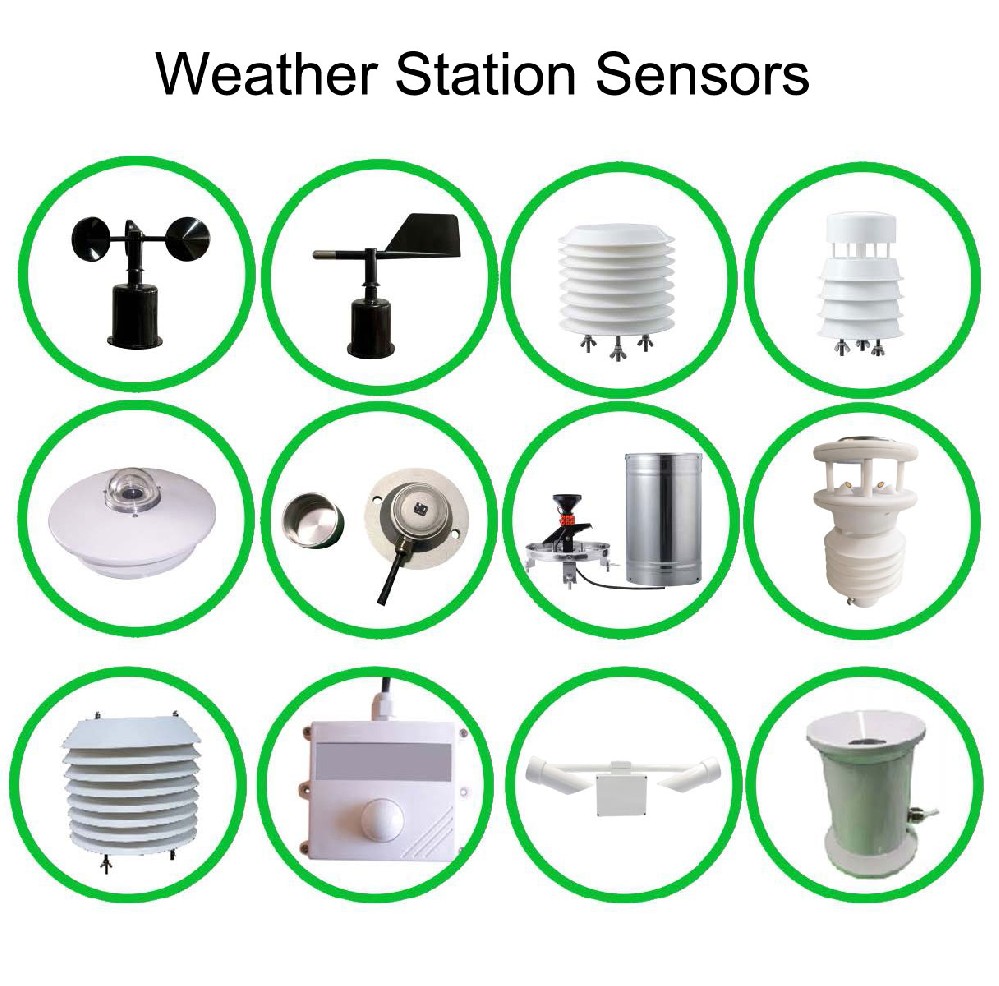
The working principle of a small automatic weather station is an efficient automated process, centered on "Perception—Transmission—Processing—Application":
1. Data Collection (Perception): The station integrates multiple high-precision sensors to collect environmental meteorological parameters in real-time, such as air temperature, relative humidity, wind speed, wind direction, air pressure, rainfall, illumination, PM2.5, PM10, and soil moisture.
2. Data Transmission (Transmission): Advanced data collectors digitize and store the collected analog signals. Then, through built-in various communication modules (such as RS485, Ethernet, WIFI, LORA, or 4G), data is uploaded to the cloud platform in real-time and stably.
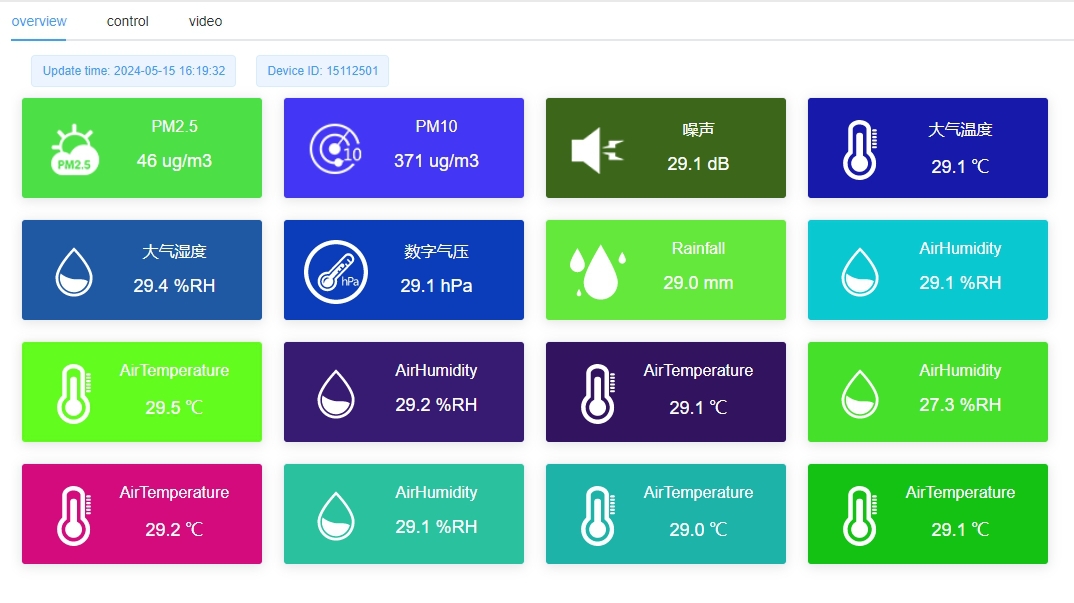
3. Cloud Processing and Analysis (Processing): After receiving data, the cloud platform stores, cleans, validates, and performs professional trend analysis. Users can view current and historical meteorological data anytime, anywhere via App, web, and other platforms.
4. Intelligent Application (Application): Based on analysis results, the system enables remote intelligent management, automatic warnings, visual displays (such as LED large screens), and comprehensive environmental information combined with video monitoring.
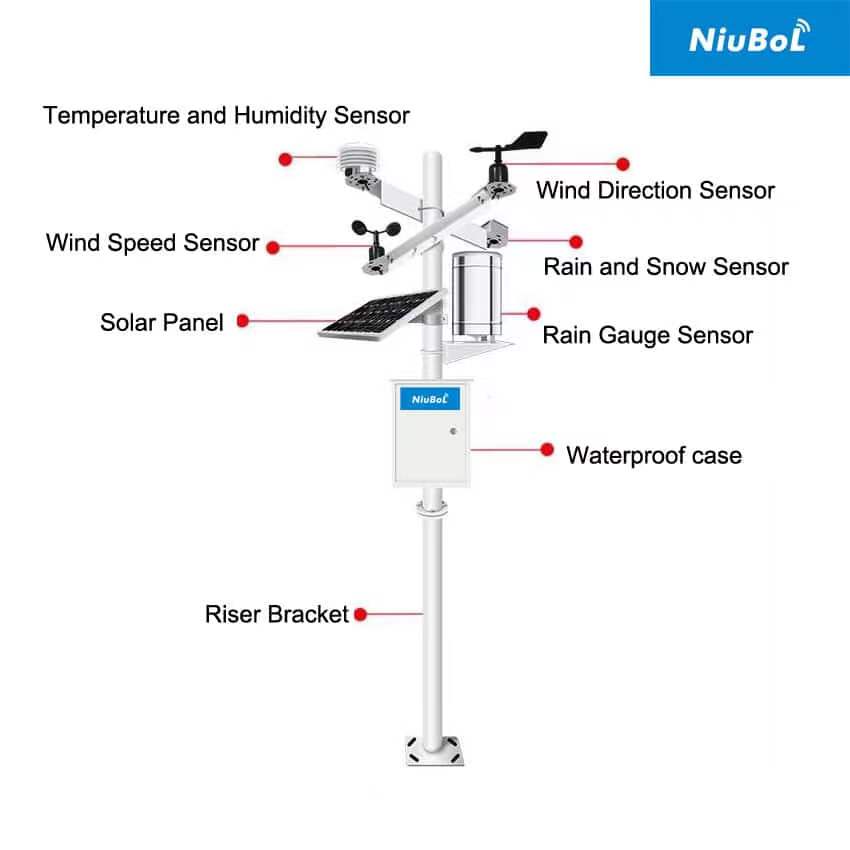
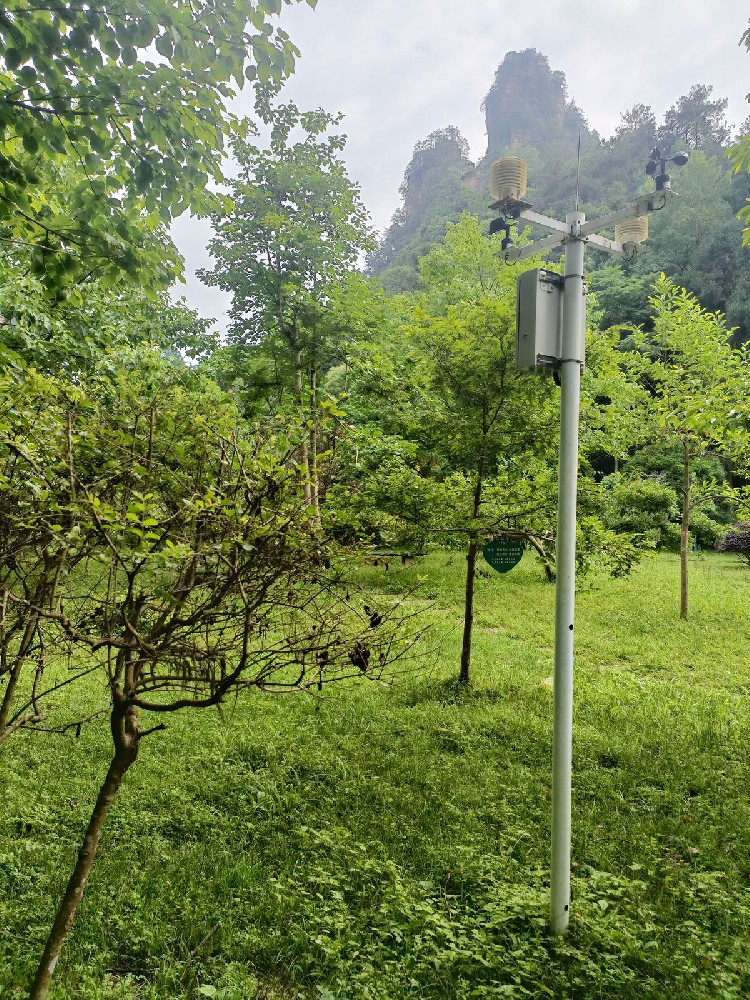
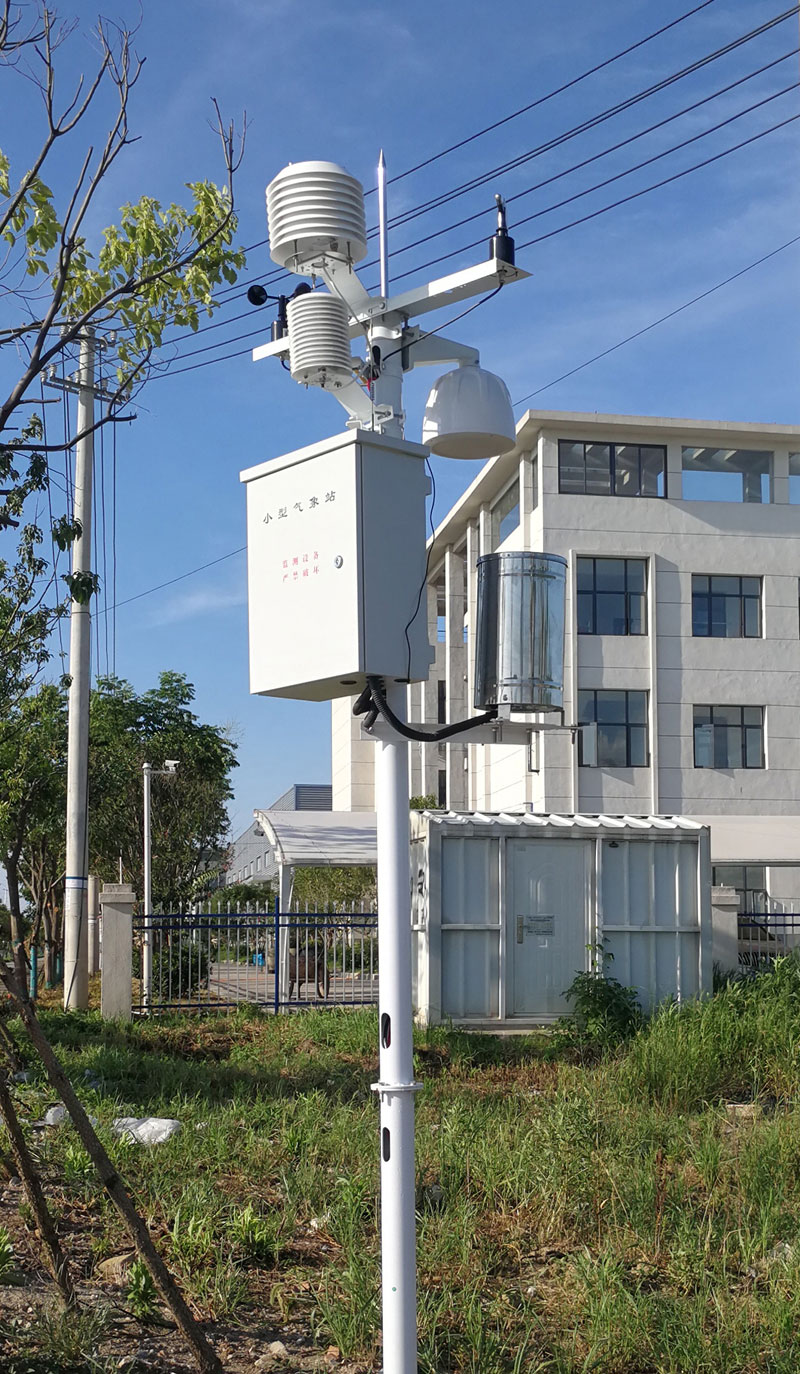
The outstanding performance of the NiuBoL small automatic weather station stems from its highly integrated and modular structural design, mainly consisting of the following key components:
The weather station can monitor but is not limited to the following key parameters, with flexible configuration options to meet specific industry needs:
| Monitoring Parameters | Description |
| Basic Meteorology | Air temperature, relative humidity, wind speed, wind direction, air pressure, rainfall, precipitation status, evaporatio |
| Environmental Quality | PM2.5, PM10, illumination intensity, negative oxygen ions (expandable) |
| Agricultural Ecology | Soil moisture, soil temperature, CO2 concentration (expandable) |
Sensors use corrosion-resistant materials with high precision and low power consumption, ensuring long-term stable operation in various harsh environments.
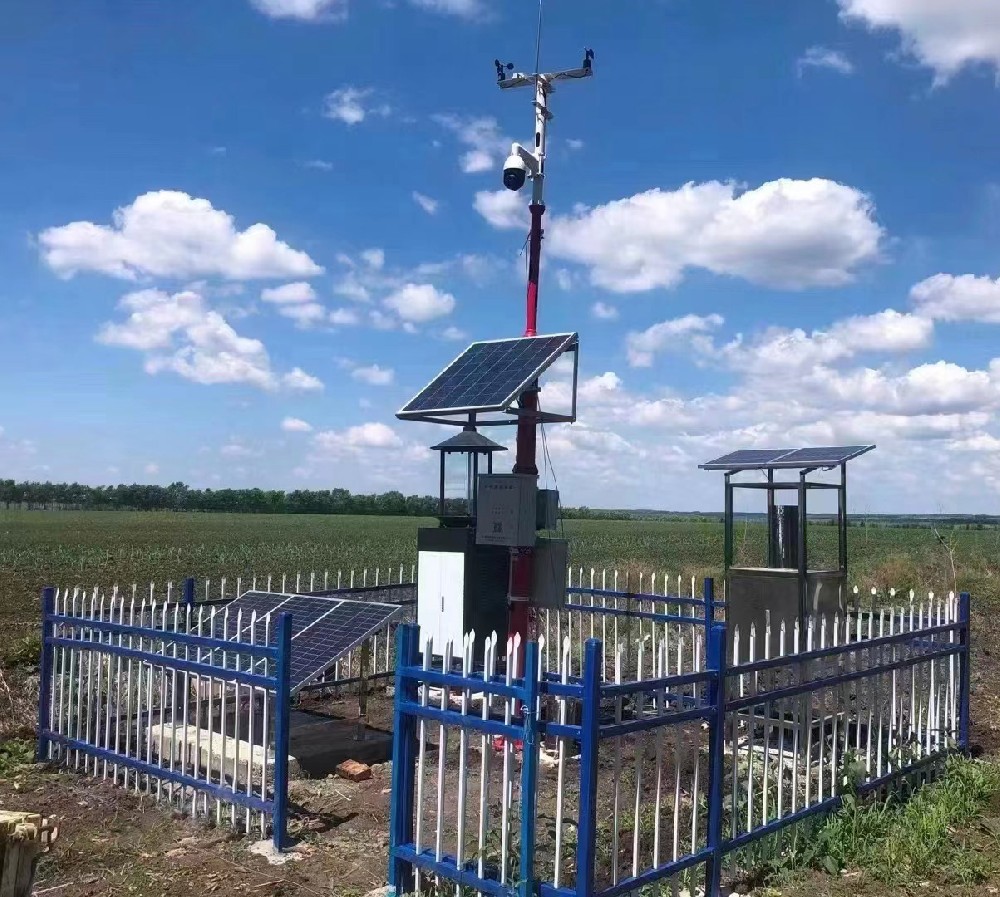
For different deployment environments, NiuBoL provides two reliable power solutions:
1. Solar Power System: Suitable for remote areas where wiring is difficult or costly. The system includes solar panels, efficient batteries, and intelligent management for continuous, stable power.
2. Mains Power Supply: Suitable for scenarios with easy power access and additional needs (e.g., driving LED screens or HD cameras), offering economy and high power.
Data Transmission Technology for Small Automatic Weather Stations: Multi-Channel for Flexible Communication
The station integrates diverse data transmission technologies, allowing users to choose flexibly based on site conditions and costs:
| Communication Technology | Description and Advantages | Notes |
| RS485 | Industrial standard, stable transmission, low cost. | Requires additional gateway for cloud upload. |
| Ethernet | Stable and high-speed, direct connection via cable. | Needs on-site wired network access. |
| WIFI | Widely available, no wiring, easy setup. | May require basic network configuration. |
| LORA | Low power, no wiring, long transmission distance. | Consider distance and environment; lower rate. |
| 4G/5G/GPRS | Plug-and-play, simple installation, no site restrictions. | Incurs some data fees. |
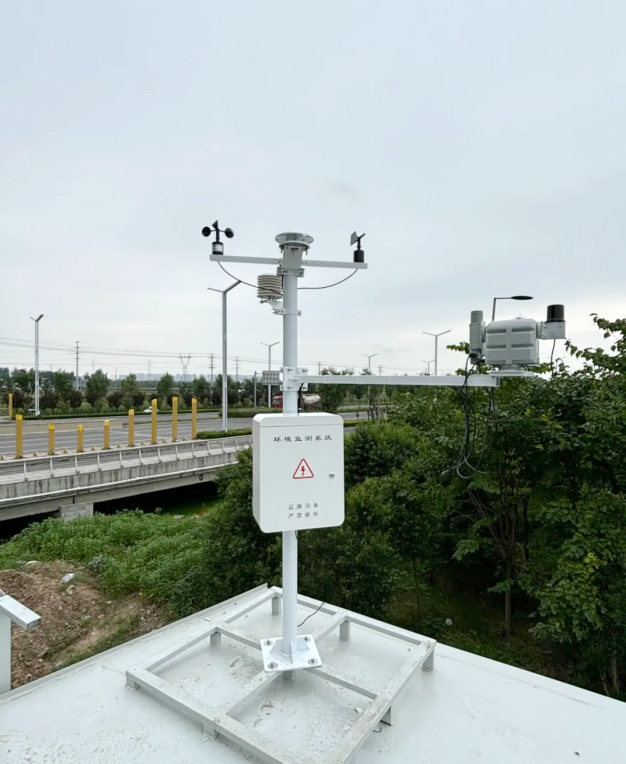
The accuracy and integrity of automatic weather station data are crucial for disaster prevention and forecasting. Strict installation standards and regular maintenance are the foundation for reliable operation.
1. Site Selection Standards: Choose open, interference-free areas, away from tall buildings, metal structures, or strong electromagnetic sources to avoid affecting wind, illumination, etc.
2. Base Selection and Installation: NiuBoL offers diverse bases:
Sturdy tripod brackets: For uneven or temporary ground, ensuring stability and mobility.
Secure ground nail flanges: For cement or preset ground, providing permanent high-strength fixation.
3. Sensor Installation: Install according to instructions, ensuring no obstructions, vertical/horizontal alignment, especially for wind vanes and rain gauges.
4. Lightning Protection and Anti-Interference: Built-in protection; ensure good grounding during installation for enhanced safety.
| Fault Phenomenon | Possible Causes | Troubleshooting and Solutions |
| Abnormal/Missing Data | 1. Communication failure; 2. Sensor failure; 3. Lightning or interference. | Check communication indicators and 4G/WIFI signals; inspect sensors for looseness or obstructions; check lightning grounding. |
| Inaccurate Rainfall Data | 1. Rain gauge blocked by debris; 2. Tipping bucket calibration deviation. | Clean rain gauge and funnel of dirt/leaves; perform periodic calibration. |
| Large Soil Temperature Deviation | Soil temperature sensor covered in mud/dust. | After heavy rain/wind, regularly clean sensor surface for sensitivity. |
| Solar System Power Outage | Battery aging or solar panel obstructed. | Check panel angle and cleanliness; Repair/replace battery system. |
To ensure data integrity, focus on equipment, human, and environmental factors:
- Regular Calibration: Long-term operation degrades performance; test and calibrate periodically. Replace aging sensors.
- Cleaning Maintenance: Regularly maintain equipment. After heavy rain, clear mud/dust from sensors to prevent affecting rainfall/soil temperature.
- Environmental Assessment: Periodically evaluate site to avoid impacts from urban development on data integrity and continuity.
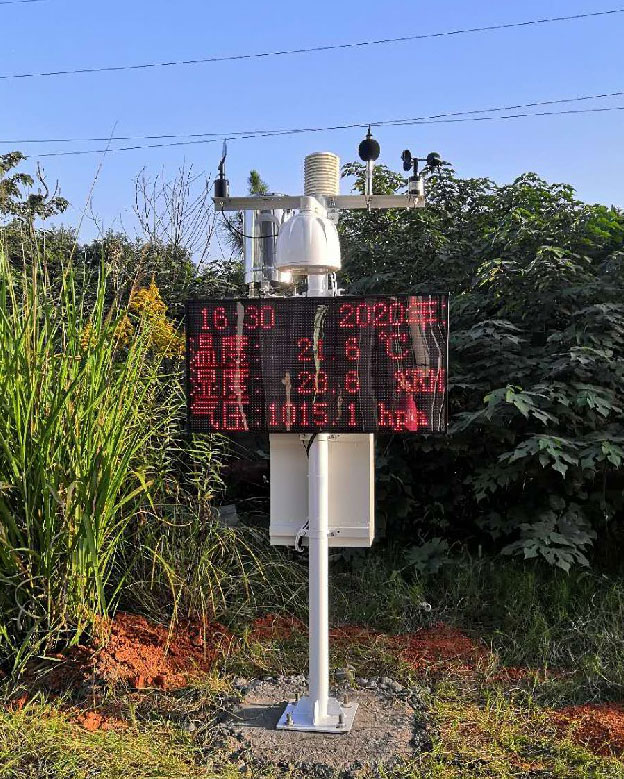
With precision and flexibility, NiuBoL small automatic weather stations play important roles in monitoring and management across fields:
1. Smart Agriculture and Livestock: Deployed in fields, orchards, breeding facilities, greenhouses; monitor soil moisture, temperature, illumination for precise irrigation/fertilization, boosting yields.
2. Environmental Research and Education: Widely used in educational/research sites for real-time, traceable data in experiments and teaching.
3. Forestry and Forest Fire Prevention: Real-time monitoring of wind, temperature, humidity in forests/protected areas for fire warnings.
4. Industrial and Environmental Monitoring: In cities/industrial parks, monitor PM2.5/PM10 with video for automated regulation.
5. Hydrology and Water Resources: Monitor precipitation, rainfall, evaporation for reservoir management and flood/drought control.
More importantly, NiuBoL can provide customized solutions based on specific needs, including expanded parameters, LED screen integration, HD video monitoring, etc.
A: Differences in size, integration, and deployment flexibility. Small stations are compact, easy to install/portable, with flexible sensors and richer wireless options.
A: Basic: air temperature, humidity, wind speed/direction, pressure, rainfall. Expandable: illumination, PM2.5/PM10, soil moisture, negative oxygen ions, etc.
A: Meteorological data is small packets; monthly fees are relatively low, depending on upload frequency and operator rates.
A: Use solar power and 4G/LORA wireless for fully off-grid independent monitoring.
A: High-precision sensors, good lightning/anti-interference protection, strict regular calibration and maintenance.
A: Sturdy tripod (for uneven/movable) and secure ground nail flange (for permanent).
A: It's a field bus; requires additional gateway for protocol conversion and cloud upload.
A: Yes, via cloud platform App/web for real-time viewing, trends, and storage.
A: Yes, check/clean rain and soil temperature sensors to ensure continuity and accuracy.
A: Yes, including expanded parameters, LED displays, and video integration.
A: CE, ISO9001, RoHS, and nationally recognized meteorological calibration certificates.
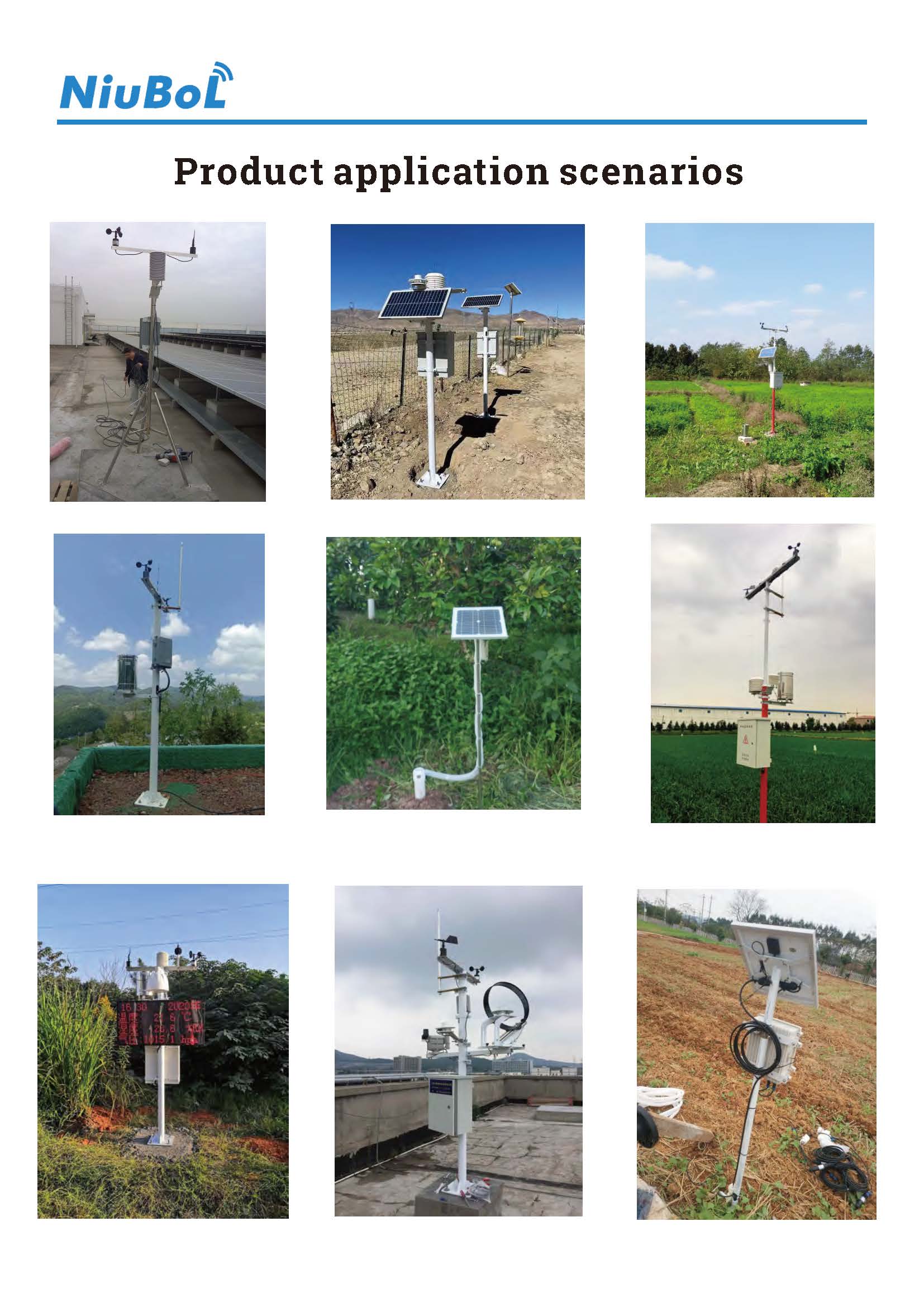
The NiuBoL small automatic weather station perfectly meets modern society's needs for precise, automated, and intelligent environmental monitoring with its high integration, precision, flexible configuration, and multi-channel communication advantages. It is not only a powerful tool for all-weather, multi-parameter, real-time monitoring but also a core driver for advancements in smart agriculture, environmental research, and disaster prevention.
Choosing NiuBoL means selecting a stable, reliable, easy-to-maintain, data-complete professional meteorological monitoring solution.
Are you interested in a customized solution for the NiuBoL small automatic weather station in a specific application scenario (such as smart agriculture or forest fire prevention)? I can provide further detailed product configuration recommendations.
Prev:Automatic Weather Station vs. Manual Weather Station: Core Advantages Comparison
Next:Ultrasonic Weather Station for Transmission Line Monitoring
Related recommendations
Sensors & Weather Stations Catalog
 Agriculture Sensors and Weather Stations Catalog-NiuBoL.pdf
Weather Stations Catalog-NiuBoL.pdf
Agriculture Sensors Catalog-NiuBoL.pdf
Water Quality Sensor Catalog-NiuBoL.pdf
Related products
 Combined air temperature and relative humidity sensor
 TDR Soil Moisture & Temperature Sensor for irrigation| RS485 |4-20mA| NBL-S-THR
 Soil pH sensor RS485 soil Testing instrument soil ph meter for agriculture |NBL-S-PH
 Wind Speed sensor Output Modbus/RS485/Analog/0-5V/4-20mA
 Tipping bucket rain gauge for weather monitoring auto rainfall sensor RS485/Outdoor/stainless steel
 Pyranometer Solar Radiation Sensor 4-20mA/RS485

Screenshot, WhatsApp to identify the QR code
WhatsApp number:+8615367865107
(Click on WhatsApp to copy and add friends)

