





— Blogs —
—Products—
 Consumer hotline +8618073152920
WhatsApp:+8615367865107
Address:Room 102, District D, Houhu Industrial Park, Yuelu District, Changsha City, Hunan Province, China
Product knowledge
Time:2026-02-06 17:17:01 Popularity:681
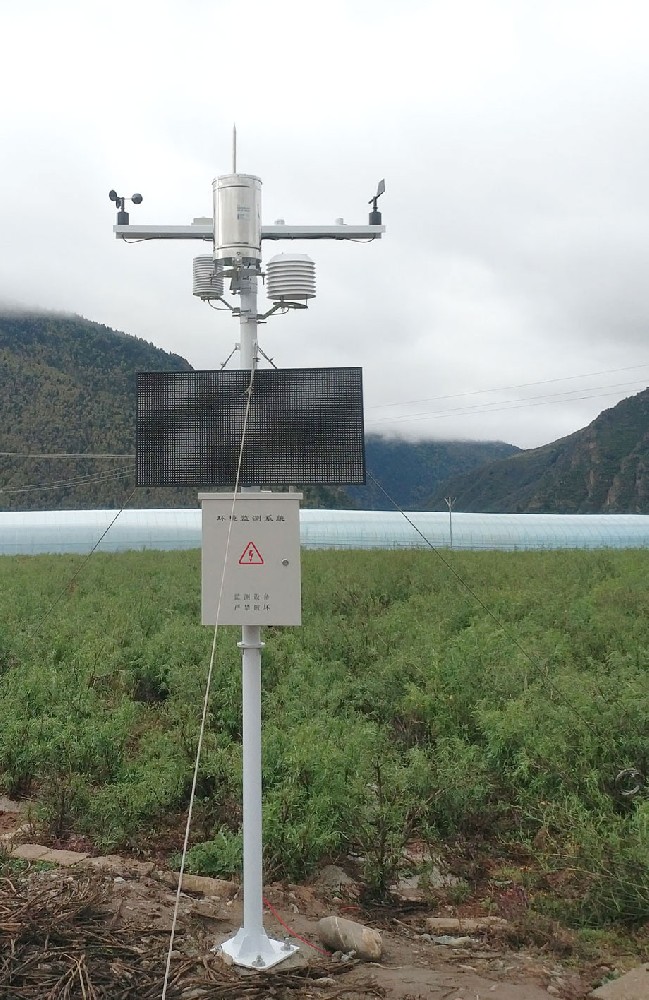
Farm weather station irrigation integration connects weather observations to an irrigation calculation and then to a defined delivery system. The station measures environmental conditions; it does not know every crop's root depth, soil storage or valve capacity. A useful design makes those additional inputs explicit, so an engineer can trace a proposed irrigation volume back to the measurements and assumptions that produced it.
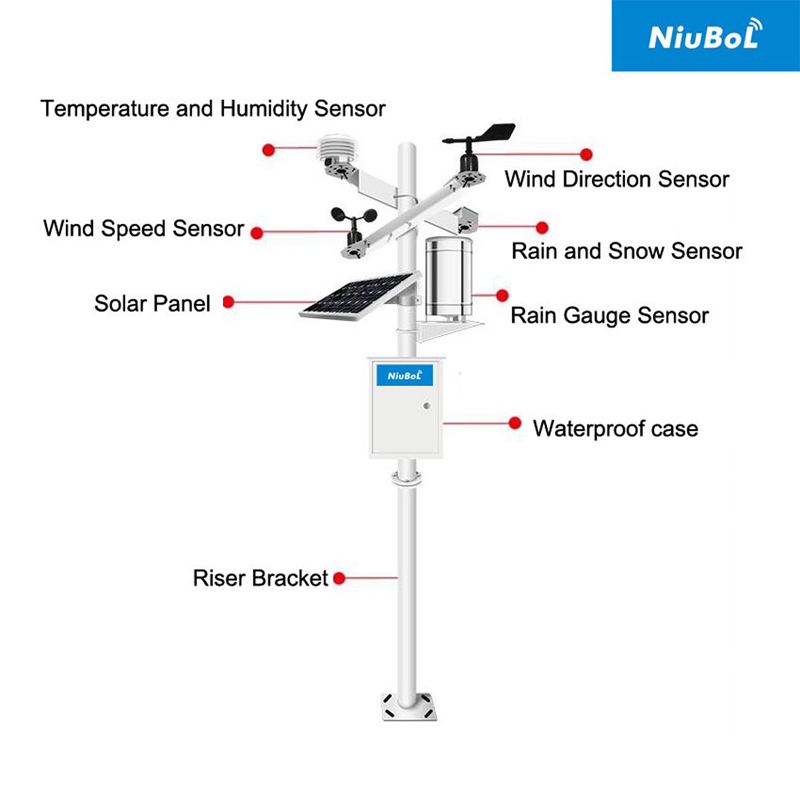
A farm project often combines equipment from different suppliers. NiuBoL weather and soil sensors provide measurements to a data logger or RTU. Scheduling software uses those measurements with crop and field information. An irrigation controller then operates pumps and valves within its own limits. Treat these as three connected functions, not as automatic capabilities of the weather sensor.
The distinction matters during procurement. A quotation for sensors and a logger may not include an evapotranspiration calculation, irrigation scheduling software or valve control. An RS485 port on both devices does not establish that they use matching registers or that the controller accepts a water-volume request. Confirm the actual command or data interface before selecting the station configuration.
| Function | Required information | Responsible equipment |
|---|---|---|
| Observe conditions | Valid weather and selected soil measurements | Sensors and acquisition equipment |
| Estimate demand | Weather, crop stage, soil water balance and management limits | Configured scheduling application |
| Deliver water | Permitted volume or duration, available flow and interlocks | Irrigation controller, pump and valves |
| Check delivery | Flow, pressure, valve status and relevant soil response | Separate feedback instruments and operator review |
A weather-based schedule and a soil-moisture threshold schedule do not require identical inputs. A project using FAO Penman-Monteith reference evapotranspiration needs suitable temperature, humidity, wind and radiation data with the required exposure and time basis. A local soil threshold requires representative probes and an agronomic interpretation of their readings. Neither method is established simply by displaying several sensor values together.
The FAO crop-coefficient method relates crop evapotranspiration to reference evapotranspiration through ETc = Kc multiplied by ETo under its stated conditions. Crop stage and growing conditions affect Kc. It is not a factory constant inside a temperature or rainfall sensor, and a coefficient for one method should not be transferred to another without checking compatibility.
| NiuBoL option | Relevant specification | Irrigation interpretation |
|---|---|---|
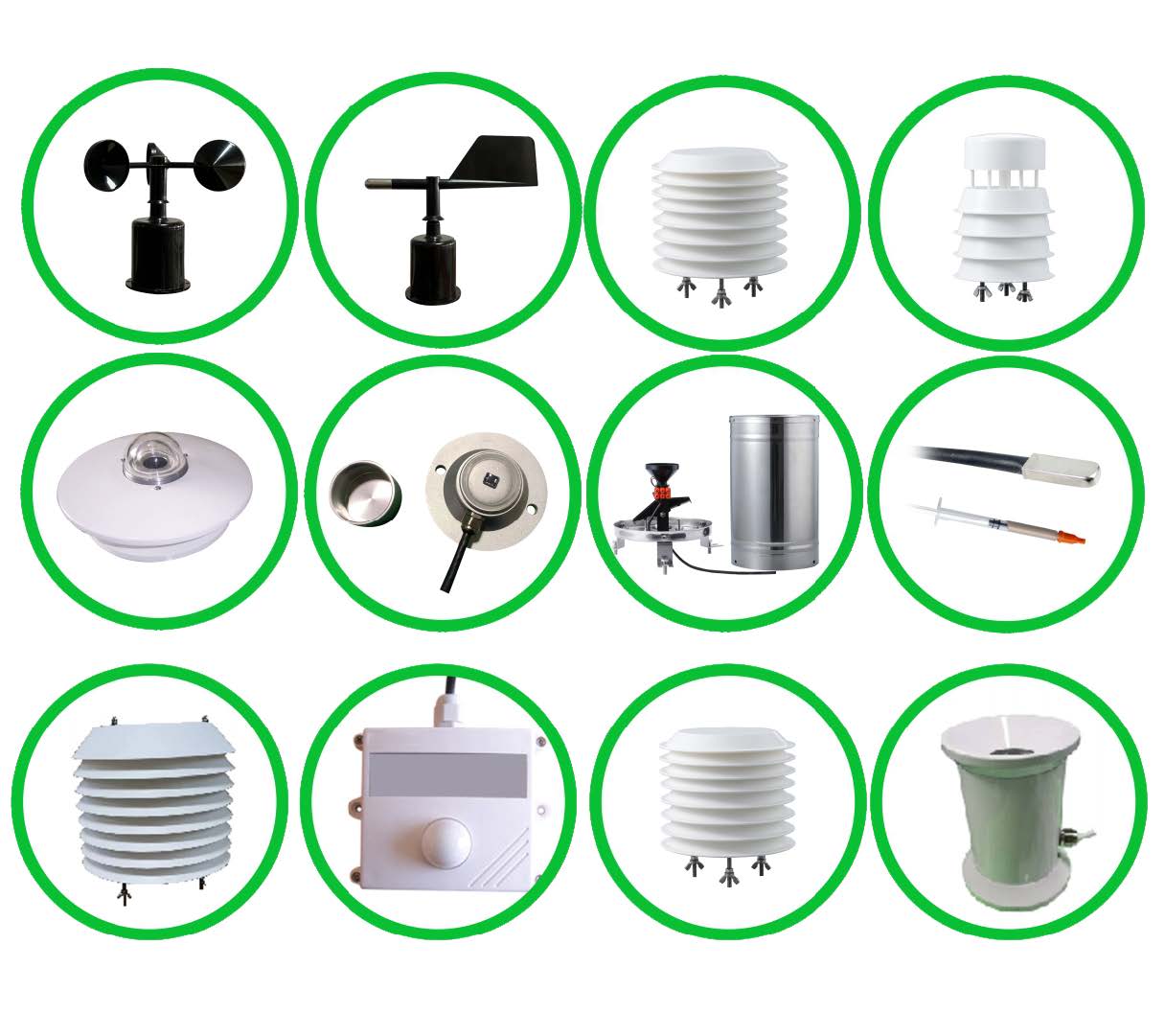
| NBL-W-LBTH | Air temperature -40 to +80 C, +/-0.5 C; RH 0-100%, +/-5% RH | Weather inputs with suitable shielding and exposure |
| NBL-W-HPRS | Solar irradiance 0-2,000 W/m2; 0.3-3 micrometre spectral range | Radiation input; not interchangeable with illumination in lux |
| NBL-W-SS and NBL-W-DS | Separate wind-speed and direction instruments; IP65 | Wind input and local operating context; record measurement height |
| NBL-W-RS | Selected tipping-bucket configuration; 0.2 mm per tip | Point rainfall accumulation, not automatically effective root-zone rainfall |
| NBL-S-THR | Soil water content 0-100%, 0.1% resolution; soil temperature -50 to +100 C, +/-0.5 C | Local soil observations; not direct water potential or a universal irrigation threshold |
Select signal and supply versions together with the logger inputs. These product families include different output arrangements; a pulse rain gauge needs a suitable counter, while a selected RS485 instrument needs a matching serial driver. Soil water-content accuracy also needs a defined basis for the supplied probe and relevant soil checks. Display resolution alone is not evidence that the scheduler can detect a consequential change reliably.
Use an explicit calculation before connecting automatic requests to valves. The following example demonstrates units and interfaces, not a crop recommendation. Suppose the selected method gives ETo of 5 mm/day and the agronomist has assigned Kc of 0.8 for the example conditions. ETc is then 4 mm/day. If effective rainfall is 1 mm and other water-balance changes are assumed zero, the simplified net requirement is 3 mm.
For a 2 ha zone, 3 mm corresponds to 60 m3 of net water: depth in millimetres multiplied by area in square metres and divided by 1,000. With an assumed application efficiency of 0.85, gross delivery is about 70.6 m3. At an actually available zone flow of 20 m3/h, that volume corresponds to about 3.53 hours of operation.
That calculated duration is not permission to run continuously for 3.53 hours. Infiltration capacity, distribution uniformity, allowable depletion, pump duty and other active zones may require a different sequence. If the controller accepts minutes rather than cubic metres, the integration must use the correct zone flow, not the pump nameplate capacity or yesterday's unrelated flow reading.
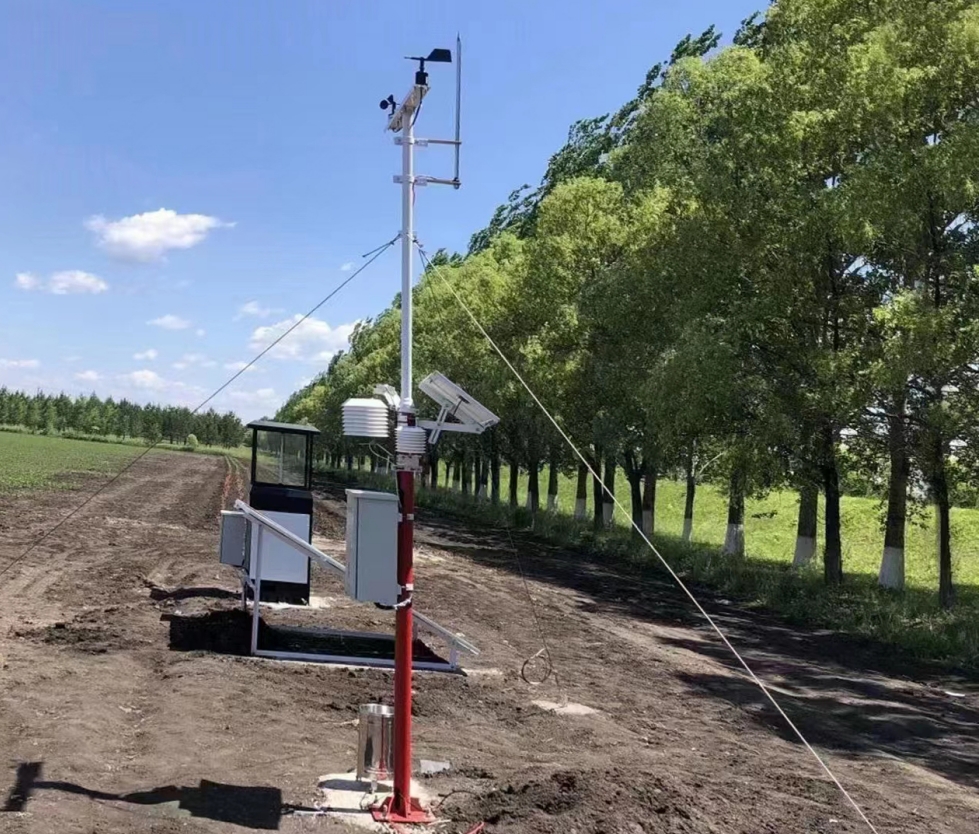
The rain gauge reports water at its own location. Canopy interception, runoff, drainage and uneven showers affect how much enters and remains in a particular root zone. Do not subtract the gauge total from irrigation demand twice: once inside the scheduling model and again in a separate controller rain-adjustment function.
Map soil probes to the zone, depth and installation position they represent. A probe beside an emitter can become wet before much of the root zone is replenished. A probe outside the wetted volume may show little response despite normal drip operation. Use the selected positions to answer a defined question rather than treating a single reading as the average condition of an entire field.
When weather demand and soil observations disagree, inspect the explanation before changing thresholds. Possible causes include a blocked emitter, an unrepresentative probe, a rain event away from the station or an incorrect root-depth assumption. The system should let an operator see the measurements and calculation period behind the proposed action, instead of presenting an unexplained percentage adjustment.
For farm weather station irrigation integration, identify whether the scheduler sends a demand estimate, an advisory schedule or an executable command. Name the zone identifier, quantity, units, time period and approval state. A 70.6 m3 request for one zone must not arrive as 70.6 minutes or be applied to every zone sharing the weather station.
Define how an earlier request is replaced. A revised daily requirement should not be added to the previous request unless that is the intended calculation. Record already delivered water, and prevent a delayed message from replaying a completed irrigation event. These are controller and software responsibilities, not functions implied by Modbus RTU.
Keep pump protection, dry-running protection and emergency stops within the appropriate control system. A cloud connection can provide access to records, but its failure must not be confused with a sensor reporting dry soil. Specify what happens when demand cannot be calculated: an operator-approved fallback may differ between crops and delivery systems.
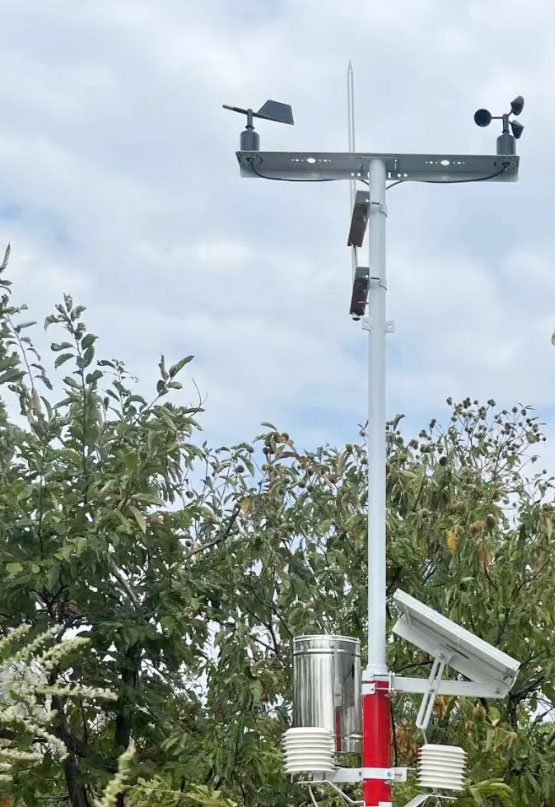
Begin with a supervised test that cannot unexpectedly start the pump. Trace a known weather dataset through the scheduling calculation and verify the output quantity and zone. Then, where authorized, run a controlled delivery test and compare requested volume with the flow meter's accumulated volume and the controller's event record.
Check more than message receipt. A controller can acknowledge a command while a valve remains closed or a filter blocks flow. Pressure and flow feedback help distinguish those conditions. Soil response is useful additional evidence but may be delayed and depends on probe location; it should not replace delivery measurement without a justified method.
Also test a day boundary, an amended rainfall record and a missing input. Confirm that each irrigation event is counted once and that manual irrigation is included where the water-balance application requires it. Keep forecasts separate from observed rainfall so a forecast shower is not silently treated as water already received.
For a configuration enquiry, provide crop and zone details, the intended scheduling method, existing controller interface, supply voltage and available weather inputs. Identify whether NiuBoL is supplying measurement hardware only or a defined acquisition package. Request separate pricing for the instruments, communications, software functions and hydraulic feedback needed by the project.
Only if the supplied system includes the required calculation software and field configuration. Weather sensors alone do not supply crop coefficients, soil storage, zone flow or valve logic. List these functions explicitly in the purchase scope.
Shared weather data can be useful where exposure is representative, but crop stage, soil, root depth and delivery characteristics remain zone-specific. A shared ETo input should not result in an identical runtime for every zone.
No. A gauge measures point precipitation. Effective rainfall depends on the water retained for the crop after relevant losses and storage effects. Use the selected water-balance method and avoid double-counting rain adjustments.
Matching electrical and serial settings, the correct device registers, units, scaling and data interpretation. Controller commands require their own documented interface; reading a sensor successfully does not prove that an irrigation request will be executed correctly.
A supervised chain from valid inputs to the correct zone request, measured water delivery and a completed event record. Include stale messages, unavailable inputs and manual overrides in the test so the operator understands the exceptions.
Farm weather station irrigation integration works when weather measurements, demand estimation and hydraulic delivery have clear interfaces. Select NiuBoL sensors for the chosen method, keep the crop and soil assumptions visible, and verify water volume rather than command receipt alone. The resulting system should help the operator explain both the proposed irrigation and the water actually delivered.
Prev:Transmission Line Weather Monitoring: Span Exposure and Sensor Scope
Next:Farmland Weather Station for Precision Agriculture Projects
Related recommendations
Sensors & Weather Stations Catalog
 Agriculture Sensors and Weather Stations Catalog-NiuBoL.pdf
Weather Stations Catalog-NiuBoL.pdf
Agriculture Sensors Catalog-NiuBoL.pdf
Water Quality Sensor Catalog-NiuBoL.pdf
Related products
 Combined air temperature and relative humidity sensor
 TDR Soil Moisture & Temperature Sensor for irrigation| RS485 |4-20mA| NBL-S-THR
 Soil pH sensor RS485 soil Testing instrument soil ph meter for agriculture |NBL-S-PH
 Wind Speed sensor Output Modbus/RS485/Analog/0-5V/4-20mA
 Tipping bucket rain gauge for weather monitoring auto rainfall sensor RS485/Outdoor/stainless steel
 Pyranometer Solar Radiation Sensor 4-20mA/RS485


Screenshot, WhatsApp to identify the QR code
WhatsApp number:+8615367865107
(Click on WhatsApp to copy and add friends)

