





— Blogs —
—Products—
 Consumer hotline +8618073152920
 WhatsApp:+8615367865107
Address:Room 102, District D, Houhu Industrial Park, Yuelu District, Changsha City, Hunan Province, China
Product knowledge
Time:2026-02-05 11:52:45 Popularity:677
Transmission line weather monitoring starts with the span and operating question, not the number of parameters on a sensor head. A station can measure local wind, temperature, humidity and solar conditions. It cannot by itself establish conductor temperature, ice load or permissible current. For a useful corridor installation, select measurement locations and data interfaces around the assessment that the utility actually intends to perform.
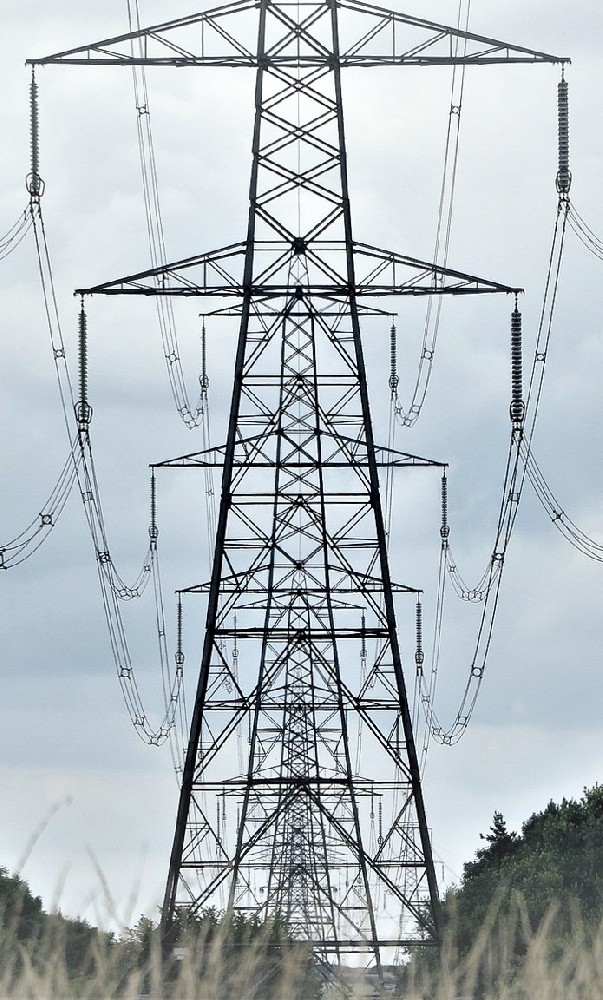
Two nearby spans can experience different wind exposure because of a ridge, valley, forest edge or building. A sheltered weather station may underestimate wind at an exposed span, while a station on a ridge may overstate the cooling available in a sheltered valley. Equal distances between stations do not necessarily provide equal information about the line.
Review terrain, span orientation and the reason for monitoring before selecting mounting points. A route used for general weather awareness may need a different arrangement from one supporting a conductor thermal model. Record which spans each point is intended to represent and where that assumption becomes uncertain. Add measurement points where a consequential exposure change cannot be represented credibly by an existing location.
| Project task | Weather inputs | Additional requirement |
|---|---|---|
| Local weather awareness | Wind, air temperature, humidity and selected precipitation observations | Utility operating procedures and communication to responsible staff |
| Conductor thermal assessment | Relevant wind, air temperature and solar irradiance | Conductor properties, loading, thermal model and accepted limits |
| Icing investigation | Temperature, humidity and suitable precipitation information | Appropriate ice, tension, sag or other physical observations and interpretation |
| Structural wind assessment | Wind measured with defined height and averaging | Structural properties, loading method and design review |
The US Department of Energy's hourly line-rating dataset distinguishes temperature-adjusted ratings from ratings using additional measured wind and irradiance inputs. The inputs and calculation method therefore matter. Do not describe a standard weather station as a complete dynamic line rating system unless the model, conductor information, limits and utility acceptance are included.
Similarly, low air temperature and high humidity can indicate conditions worth investigating, but do not directly report ice thickness. A wind sensor does not detect conductor galloping, and a humidity reading does not locate lightning. Those tasks require additional instruments or methods rather than a change of dashboard label.
Store wind direction with its reference convention. Meteorological wind direction normally identifies where the wind comes from; a corridor model may also need the angle relative to the conductor axis. The station identifier should link to the local span orientation, installation height and any orientation correction.
For an illustrative north-south span, wind from the east is approximately perpendicular, while wind from the north is approximately parallel. The same reported speed therefore does not necessarily provide the same convective cooling. Do not replace the selected thermal model with a simple crosswind calculation, but do ensure that its direction input uses the expected convention.
Direction also needs appropriate averaging. Two equal-weight observations of 359 and 1 degrees point approximately north; their arithmetic mean of 180 degrees points south and is incorrect for this purpose. Use circular or vector processing as required by the application, and preserve the method in the channel definition. At very low wind speeds, direction interpretation needs particular care.
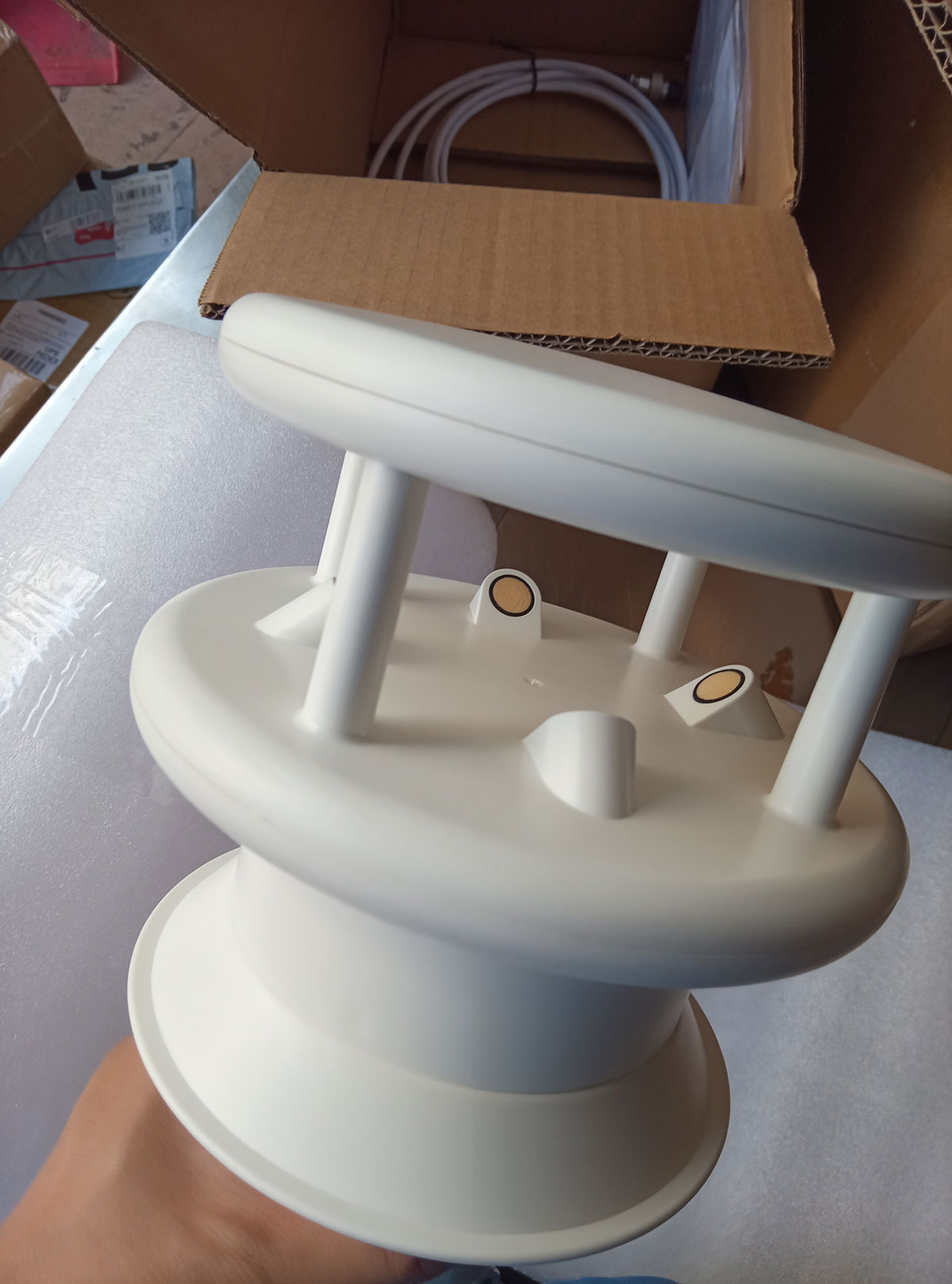
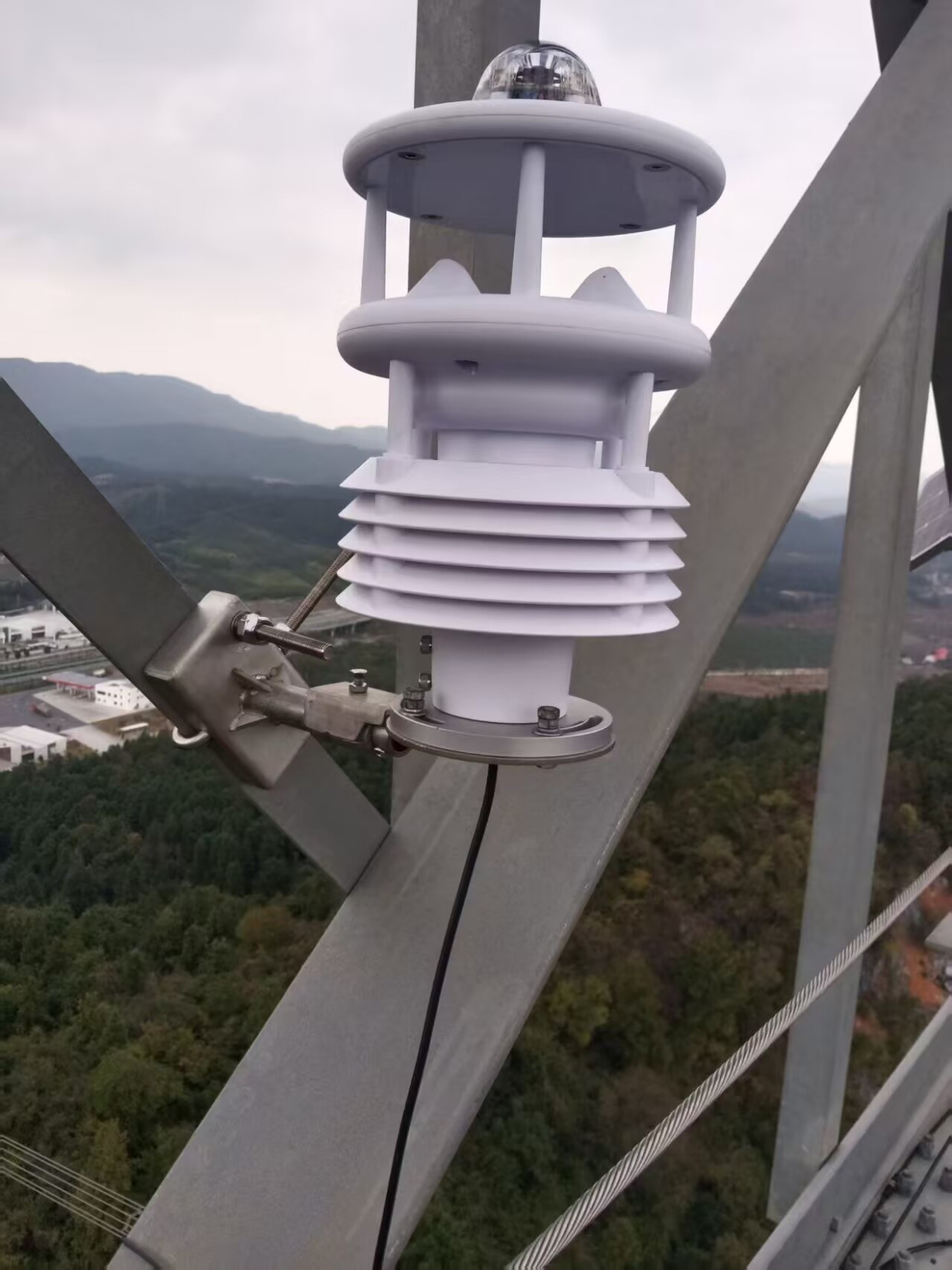
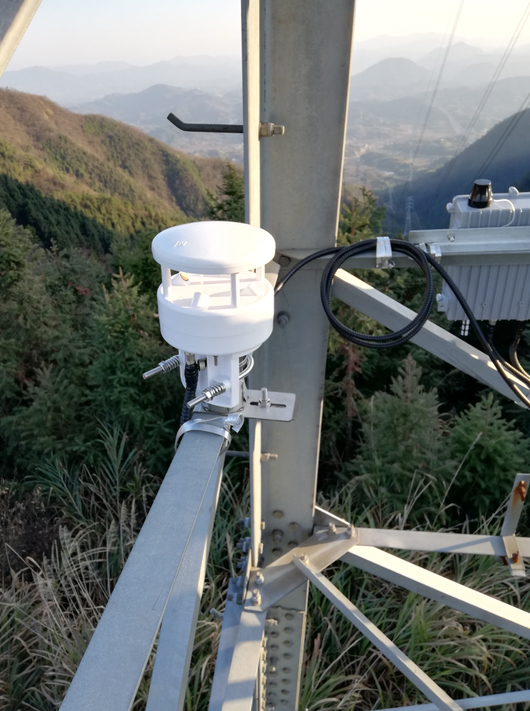
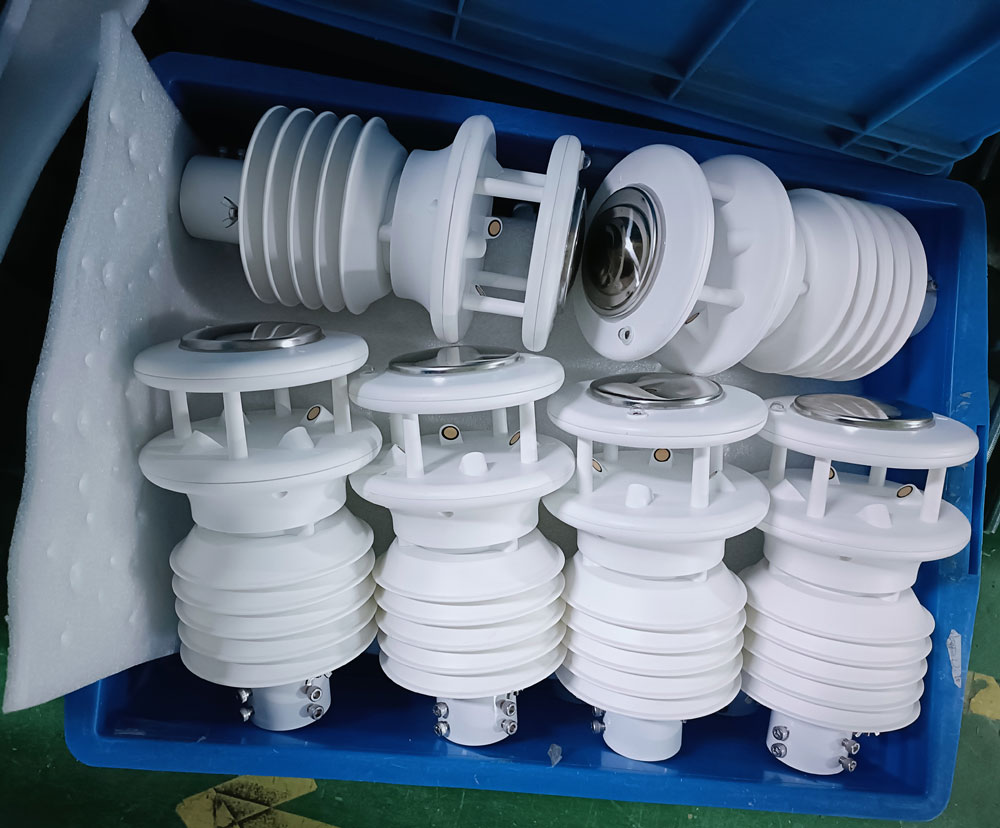
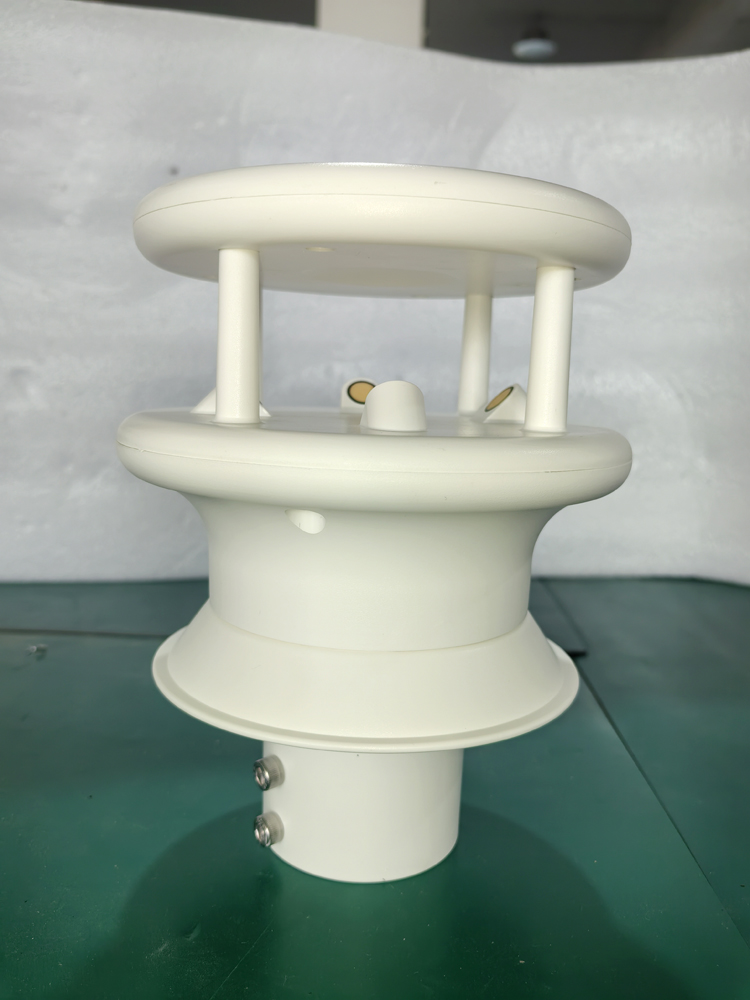
The NiuBoL NBL-W-21GUWS provides ultrasonic wind-speed and wind-direction measurement with no rotating cups or vane. That reduces mechanical wear points, but does not eliminate inspection for contamination, obstruction, icing or loose mounting. Its core two-channel configuration should not be mistaken for every optional weather channel in the product family.
| Item | Configuration to evaluate |
|---|---|
| NBL-W-21GUWS wind range | 0-60 m/s; wind direction 0-359 degrees |
| Resolution | Wind speed 0.01 m/s; direction 1 degree |
| Direction accuracy | +/-3 degrees |
| Electrical interface | 12-24 V DC; RS485 Modbus; 9600 bps |
| Housing protection | IP65; assess connectors and complete installation separately |
| Optional heating | 3 W option; include only when specified for the supplied instrument |
| NBL-W-LBTH air measurement | Temperature -40 to +80 C, +/-0.5 C; humidity 0-100% RH, +/-5% RH |
| NBL-W-HPRS solar input | 0-2,000 W/m2; 0.3-3 micrometre spectral range; response up to 35 s to 99% |
Request the offered wind-speed accuracy expression, operating-temperature limits and power schedule for the exact instrument revision. Resolution is not accuracy, and a family-level optional measurement is not an included sensor. If low-wind thermal rating is the purpose, ask how the offered accuracy and starting behavior affect the model near its consequential low-speed conditions, rather than evaluating only the 60 m/s upper limit.
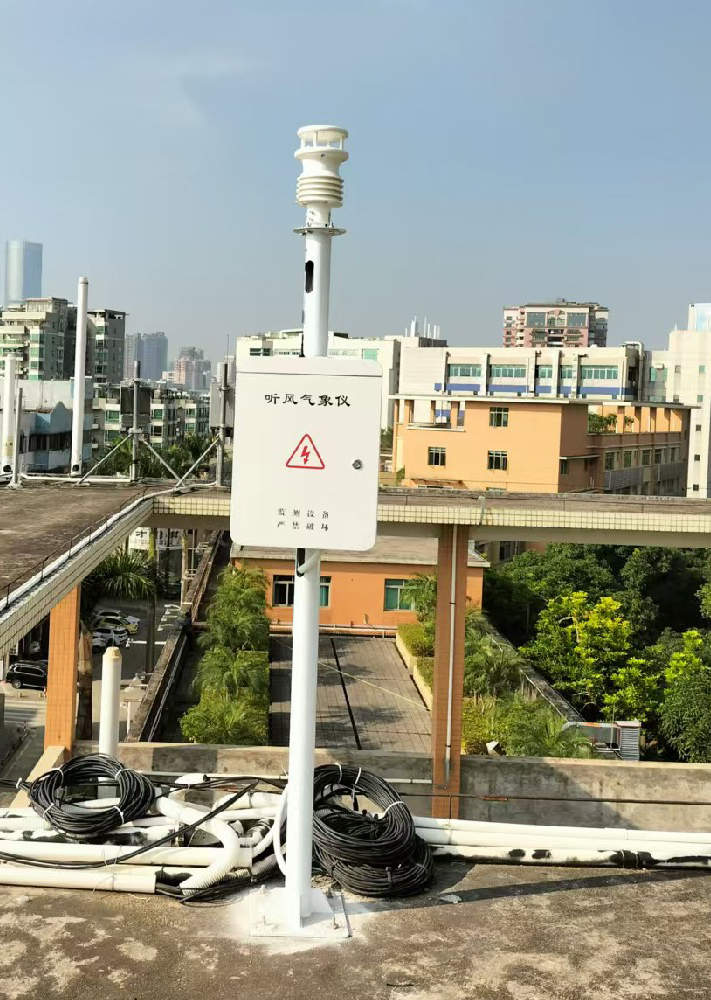
Mounting height must represent the intended measurement and comply with the utility's electrical and structural requirements. A conventional open-site weather-observation height is not permission to place an instrument at that height on an energized tower. Obtain the approved arrangement, safe clearances and maintenance access from the asset owner.
A tower member, cross-arm or nearby attachment can disturb airflow. Review the wind sensor's distance and orientation relative to these obstructions, and record any exposure limitation. Keep temperature measurements away from hot enclosure surfaces and use a suitable radiation shield. Solar instruments need the defined measurement plane and an assessment of tower and conductor shadows.
Do not use a handheld compass beside steelwork as the sole orientation reference. Establish the required geographic reference through an appropriate survey or orientation method and account for magnetic influences where relevant. Mark and record the final installed direction so that a later replacement can restore it.

For transmission line weather monitoring, separate the sensor bus from the utility network. RS485 Modbus RTU connects suitable sensors to a logger or gateway. IEC 61850, Modbus TCP, MQTT or another upstream interface belongs to the particular acquisition and integration scope. A serial Modbus sensor does not natively implement all of them.
Agree on channel names, units, scaling, timestamps and quality states before commissioning. A value carried forward during a radio outage must be distinguishable from a new measurement. If the thermal assessment expects an interval mean, an instantaneous reading should not silently occupy that field. Store the averaging period with the measurement definition.
Demonstrate the complete route from a sensor response to the consuming application. Change a safe test input or use an isolated test dataset to verify unit mapping and invalid-data handling. Test a disconnected sensor separately from a lost backhaul connection; they require different diagnoses. Do not exercise live protection or switching functions merely to prove a weather channel.
A location with good exposure can still be impractical if it cannot support power, communication or safe maintenance. Size solar supply using the full equipment load and local seasonal resource. For perspective, a 3 W heater operating continuously would use 72 Wh per day, before the logger, modem and sensor electronics. Actual heater control and duty cycle must be established rather than assumed.
Do not budget energy by multiplying only the radio's idle current by 24 hours. Transmission bursts, repeated connection attempts and voltage-conversion losses matter. Confirm how the station behaves at low battery voltage and how missing observations reach the utility system. Energy autonomy is a system calculation, not a property implied by the IP rating.
Service planning should reflect actual access constraints. A remote route may require permits, an outage window or specialized access. Include bracket inspection, cable restraint, optical-sensor cleaning where present and checks after severe weather. Avoid promising a fixed maintenance interval for every corridor merely because the wind sensor has no moving parts.
A quotation request is more useful when it includes a route map, candidate locations, span orientations, target measurements, available power and the required handoff interface. Identify whether the task is observation only or support for an accepted line model. That lets NiuBoL propose sensor configurations without implying supply of an unrequested protection or rating application.
Only if its representativeness is justified for the intended use. Terrain and span exposure can vary significantly. Assign stations to the conditions they can credibly represent rather than using a universal distance between monitoring points.
No. Weather observations can support a thermal assessment, but current rating also depends on conductor properties, loading, constraints and the accepted calculation. Define that application separately from the weather hardware.
It can contribute to a risk assessment but does not measure ice thickness or mechanical load. Select appropriate additional observations and an accepted interpretation method when icing is the actual monitoring task.
No. Specify the gateway, data mapping and utility-side interface explicitly. Verify the required upstream behavior in a witnessed integration test rather than inferring it from the sensor's serial port.
Electrical clearances, structural attachment, airflow obstruction, geographic orientation, cable routing and safe access. Approval belongs to the utility and responsible engineering team; a weather-sensor mounting drawing alone is insufficient.
No. Evaluate the expected icing conditions, the offered heater function and the power available. Where heating is included, budget its load and verify the intended cold-weather operation rather than relying on an ambient-temperature rating alone.
A useful transmission line weather monitoring system relates each observation point to the spans and decisions it supports. Select the actual NiuBoL sensor channels, document exposure and direction conventions, and verify the data handoff. Keep conductor rating, icing assessment and operational authority within their separately defined engineering scope.
 NBL-W-21GUWS-Ultrasonic-Wind-speed-and-direction-Sensor.pdf
NBL-W-61MUWS-Ultrasonic-Weather-Station-Instruction-Manual.pdf
NBL-W-71MUWS-Micrometeorological-Sensor-Operating-Instructions.pdf
Prev:Distributed PV Environmental Monitoring: Diagnose Low Output
Next:Farm Weather Station Irrigation Integration: Check Water Delivery
Related recommendations
Sensors & Weather Stations Catalog
Agriculture Sensors and Weather Stations Catalog-NiuBoL.pdf
Weather Stations Catalog-NiuBoL.pdf
Agriculture Sensors Catalog-NiuBoL.pdf
Water Quality Sensor Catalog-NiuBoL.pdf
Related products
 Combined air temperature and relative humidity sensor
 TDR Soil Moisture & Temperature Sensor for irrigation| RS485 |4-20mA| NBL-S-THR
 Soil pH sensor RS485 soil Testing instrument soil ph meter for agriculture |NBL-S-PH
 Wind Speed sensor Output Modbus/RS485/Analog/0-5V/4-20mA
 Tipping bucket rain gauge for weather monitoring auto rainfall sensor RS485/Outdoor/stainless steel
 Pyranometer Solar Radiation Sensor 4-20mA/RS485

Screenshot, WhatsApp to identify the QR code
WhatsApp number:+8615367865107
(Click on WhatsApp to copy and add friends)

