





— Blogs —
—Products—
 Consumer hotline +8618073152920
 WhatsApp:+8615367865107
Address:Room 102, District D, Houhu Industrial Park, Yuelu District, Changsha City, Hunan Province, China
Product knowledge
Time:2026-02-05 11:45:36 Popularity:739
Distributed PV environmental monitoring is most useful when it helps an operator separate weather-related output changes from faults that need investigation. Irradiance, module temperature and inverter energy must describe the same array and time period. A lower-than-expected production figure alone cannot identify soiling, shading, equipment failure or curtailment. The station should provide the measurements needed to distinguish those possibilities.
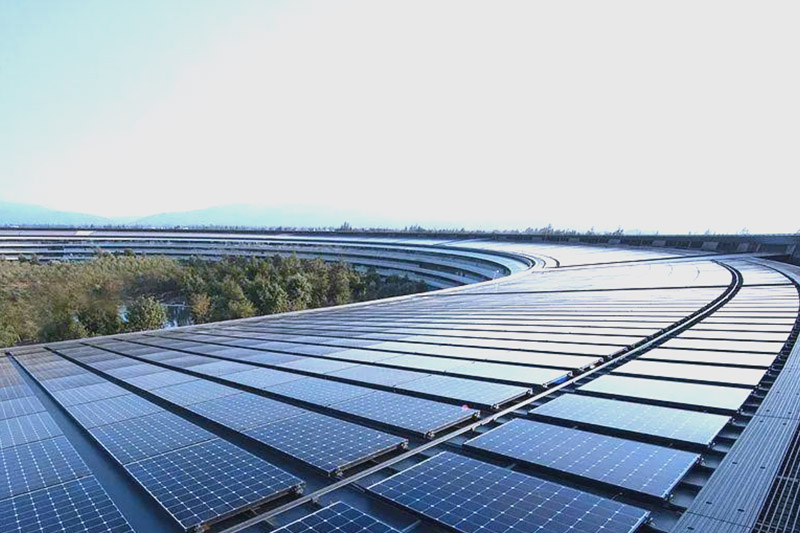
On a commercial rooftop, several mechanisms can reduce production at once. Passing cloud changes the solar input. A parapet shades part of an array. Hot modules produce differently from cool modules. An inverter may be unavailable or power-limited. A monitoring design that records only ambient temperature and a site-wide daily energy total cannot reliably separate these effects.
Build the investigation around available evidence. Identify the affected inverter or array, compare its energy with the relevant irradiance and review operating status before assigning a cause. A weather station provides environmental context; it does not inspect connectors, identify individual hot spots or determine an insurance settlement.
| Observed pattern | Useful comparison | Do not conclude yet |
|---|---|---|
| Several arrays fall together | Matched irradiance and inverter availability | That all inverters have failed |
| One roof section falls at a repeatable time | Its plane, nearby obstructions and string records | That site-wide irradiance explains it |
| Energy improves after cleaning | Comparable irradiance, temperature and availability | That the whole difference is a measured soiling loss |
| Power falls during a grid event | Limit commands, inverter status and valid weather data | That declining sunlight caused the loss |
A horizontal pyranometer measures global horizontal irradiance. A sensor aligned with a fixed array measures plane-of-array irradiance. Both are valid quantities, but they are not interchangeable inputs. Name each channel by plane and location so that an analyst cannot accidentally compare a west-facing array with an east-facing reference.
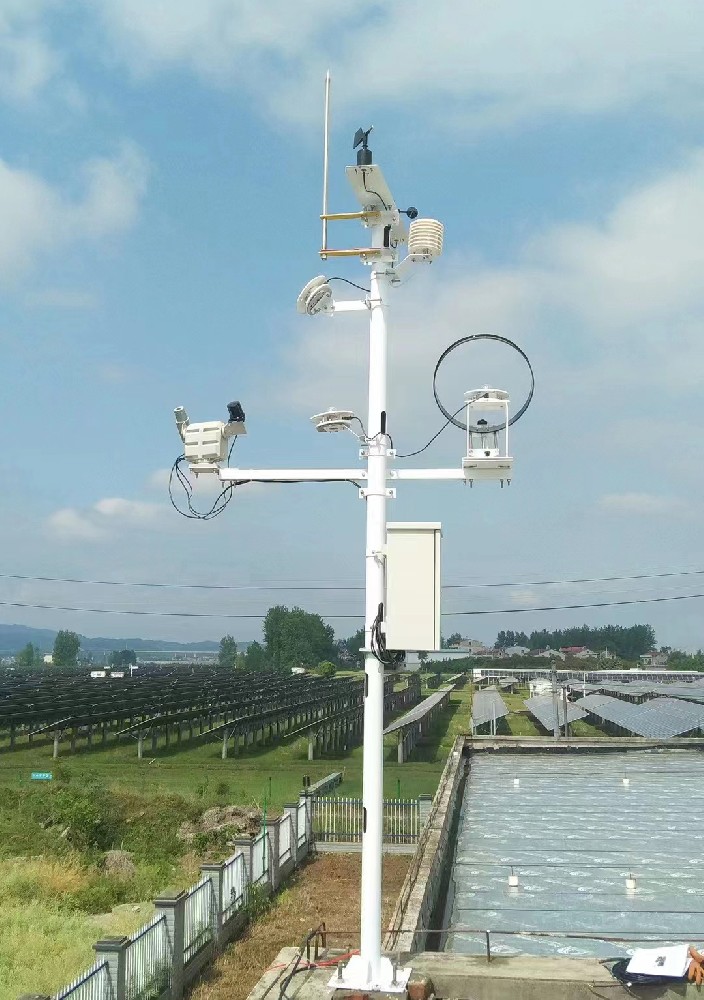
The illustrated tracking radiation instrument addresses a different measurement scope: separating solar-radiation components. It is not a mandatory addition to every distributed PV installation. Choose it when the project needs those components and can support its mounting, power and maintenance requirements; do not add it merely because the dashboard has extra radiation fields.
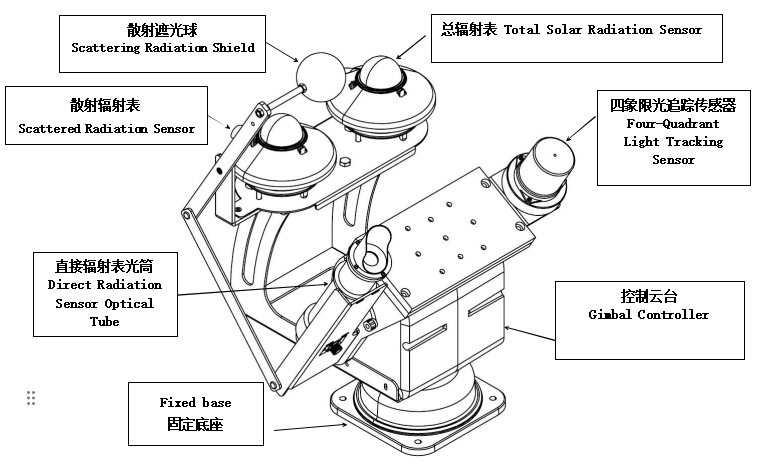
Multiple roof orientations require an explicit monitoring decision. Dedicated POA references can describe each distinct orientation; alternatively, a documented transposition model can estimate an orientation from other radiation measurements. In the latter case, label the result as modeled. Changing sensor count changes the uncertainty and diagnostic capability, not just the equipment price.
For an illustrative two-roof site, the east array may receive strong morning sunlight while the west array remains less illuminated. A west-array production reduction relative to the east reference is not sufficient evidence of a fault. First align the comparison by plane, capacity and operating period. Also inspect transient shade from roof structures before assuming a regional weather difference.
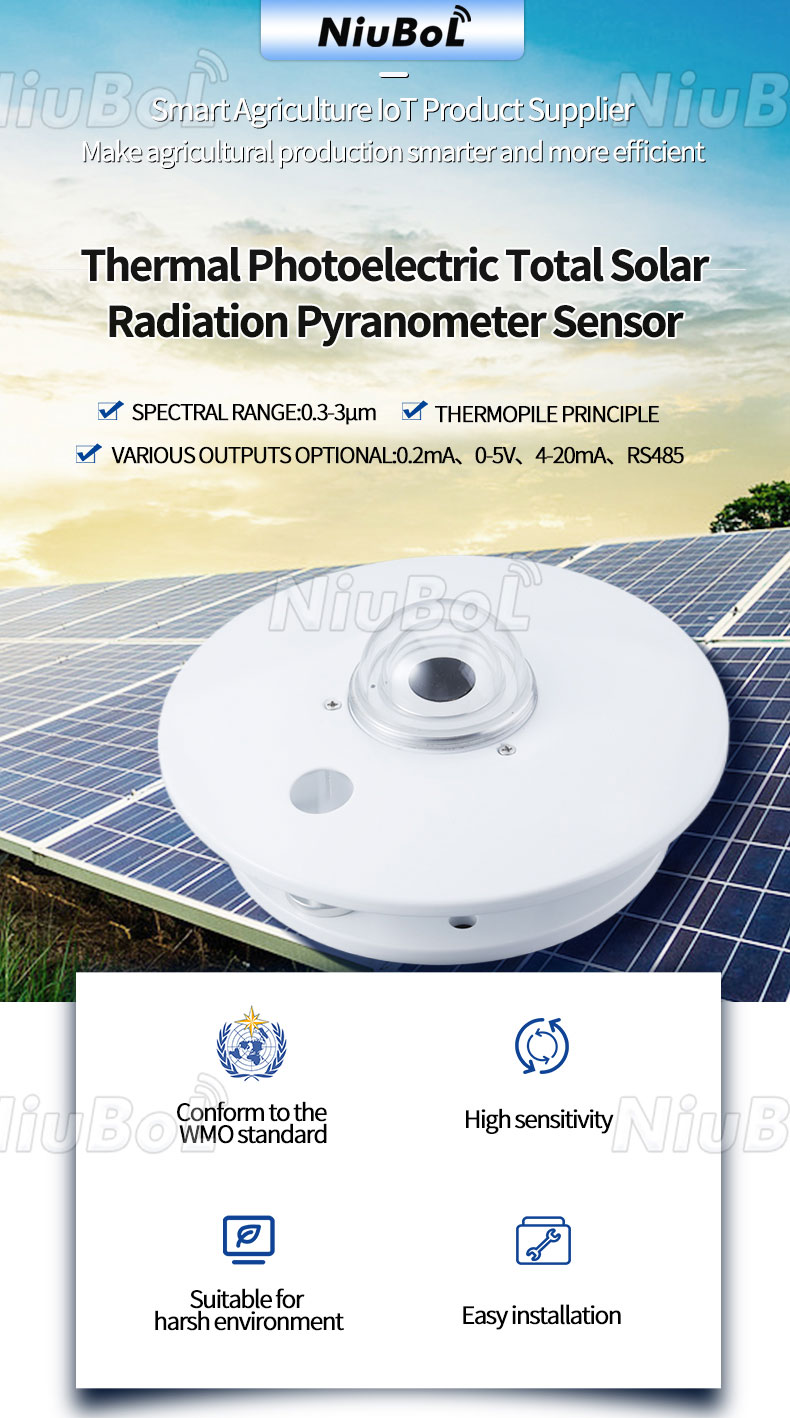
The NiuBoL NBL-W-HPRS thermopile pyranometer measures broadband solar irradiance over 0-2,000 W/m2. Its specified response to 99% is up to 35 seconds. Reading its register every second does not turn that physical response into a one-second cloud-edge measurement. Select sensor response, logger sampling and reporting interval together.
| Device | Relevant parameters | Use in investigation |
|---|---|---|
| NBL-W-HPRS | 0-2,000 W/m2; 0.3-3 micrometre spectral range; response up to 35 s at 99%; annual stability within +/-2% | Measure irradiance in the chosen plane; stability is not a complete accuracy budget |
| NBL-W-PPT surface temperature transmitter | Selected -50 to +100 C or -20 to +50 C range; +/-0.5 C accuracy; standard 5 m cable | Observe backsheet temperature at a documented attachment point |
| NBL-W-LBTH | Air temperature -40 to +80 C, +/-0.5 C; humidity 0-100% RH, +/-5% RH | Provide ambient context using suitable radiation shielding and exposure |
| NBL-W-SS and NBL-W-DS | Separate wind-speed and wind-direction sensors; IP65 | Describe local wind context, not a complete structural protection system |
Order the actual interface version. HPRS offers selected current, voltage or RS485 outputs with a suitable 12 V or 24 V supply configuration. PPT also has output and supply choices. Do not buy a voltage transmitter while allocating only a serial input, or assume that every supplied sensor has every interface available simultaneously.
For roof-level studies, document the temperature-probe attachment method and module position. Avoid junction boxes, loose contact and an exposed probe that primarily follows air temperature. A backsheet reading represents its contact location; it is not a thermal image of every cell or proof that a module is free of hot spots.
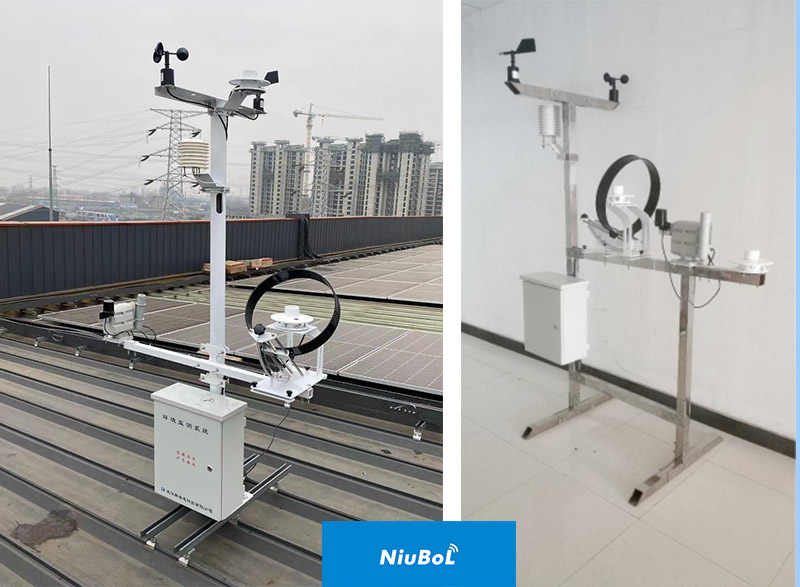
Use a common time basis for the weather logger and inverter or revenue-meter records. Establish whether each timestamp denotes the start or end of an interval. Check time zones and clock adjustments, especially when a cloud portal exports data in a different convention from the local logger.
Pair irradiance averages with energy accumulated over the same valid period. An irradiance snapshot at noon cannot normalize an hour of energy during broken cloud. Likewise, a daily weather total with a missing afternoon cannot support a full-day performance conclusion. Preserve the valid duration and identify gaps before making ratios or cross-site comparisons.
Suppose an illustrative five-minute interval has a mean irradiance of 600 W/m2. Its irradiation is 600 multiplied by 5/60, or 50 Wh/m2. If the inverter energy is available for only two of those minutes, the two records do not describe the same period. Filling the remaining minutes with zero energy would create an apparent plant loss; carrying forward the last irradiance would create a different unmeasured assumption.
RS485 Modbus RTU can carry environmental measurements to a compatible data logger. The connection to SCADA or a remote server is a separate gateway function. Confirm the supported upstream protocol, data tags, time handling and loss-of-communication behavior in the offered configuration. A shared serial interface alone does not establish compatibility with an inverter's proprietary monitoring port.
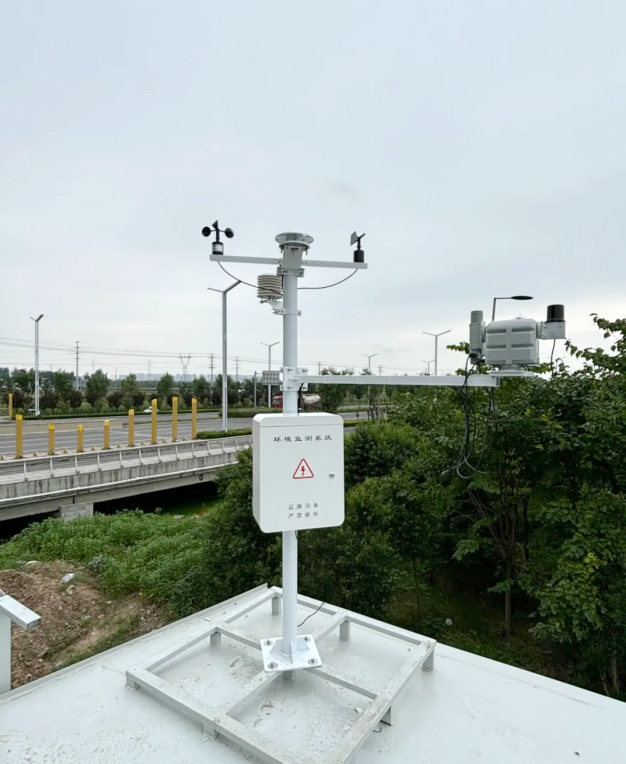
A dirty irradiance sensor can read low and make normalized PV performance appear better than it is. A recently cleaned sensor beside dirty modules can show a different relationship. Keep sensor-cleaning records independent of module-cleaning records, including times and any observations of bird deposits or localized shade.
Where cleaning decisions are a central project requirement, consider a dedicated NiuBoL NBL-W-PSS soiling-monitoring instrument in the evaluation. Check its measurement method, reference condition and suitability for the module technology and installation plane. A soiling indication supports a cleaning assessment; it does not independently quantify every plant-level energy loss.
Compare cleaning cost against an energy benefit calculated using a stated method and period. Do not quote a fixed payback from a sensor reading alone. Cleaning accessibility, water availability, electricity value and the persistence of the loss all affect the decision. An on-site weather record strengthens the comparison but does not remove those commercial inputs.
Before handover, select one representative operating day and trace a low-output interval through the records. Check the radiation plane, probe location, weather validity, inverter availability and any power limit. The acceptance question is whether the operator can reach a defensible diagnosis, or identify which additional record is missing.
Test a disconnected environmental sensor and a network outage separately. Confirm that the display marks old or missing values and that an uploaded historical record keeps its original timestamp. If the project includes automated cleaning, drone scheduling or tracker actions, verify those functions as separate controller and equipment tests. Environmental monitoring alone does not authorize a safe flight or a structural stow position.
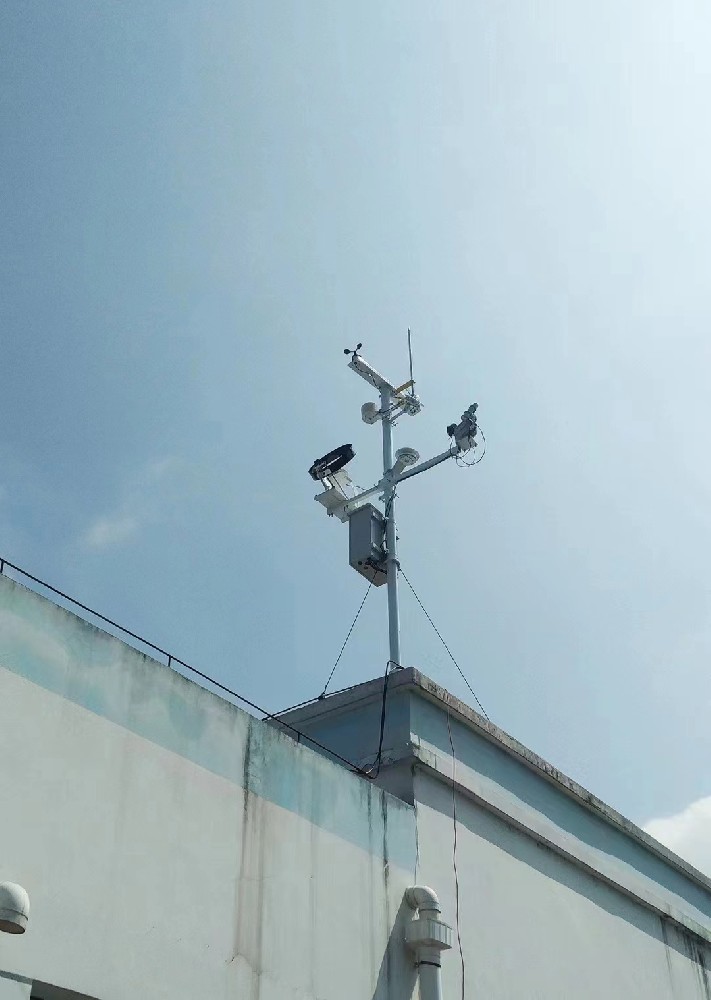
For a distributed PV environmental monitoring quotation, provide the roof layout, array orientations, inverter groups, analysis interval and existing monitoring interfaces. State whether the requirement is routine operations, contractual performance reporting or component-level radiation research. These needs can require different sensor numbers and calibration documentation even at the same installed PV capacity.
Include access to the roof and safe cleaning locations in the design. Cable protection, attachment permissions and the shading introduced by the monitoring pole deserve attention before ordering. A compact instrument reduces occupied space but cannot correct poor exposure or make an inaccessible service point economical to maintain.
Only with a defined interpretation. One POA reference directly describes its own plane. Other planes need their own representative observations or a documented model, with modeled outputs identified as such.
Not uniquely. Temperature, shading, inverter availability, curtailment and measurement contamination can change the relationship. Use matched valid records and a suitable soiling method before attributing an energy difference to deposits.
A contact probe measures temperature near its attachment point. It does not survey every cell. Use a suitable inspection method where the task is locating localized hot spots or damaged electrical connections.
No. Instrument response and communication frequency are different. HPRS has a response specification of up to 35 seconds to 99%; the acquisition design must reflect that behavior.
List monitored planes, sensor versions, attachment hardware, acquisition inputs, gateway protocol, calibration documents and service access. Compare that scope rather than assuming a station price includes every reporting or control function.
Useful distributed PV environmental monitoring connects each production comparison to the correct irradiance plane, temperature location and valid time period. NiuBoL sensors can supply those measurements within a defined acquisition system. Keep soiling, electrical diagnosis and operational controls distinct so the resulting information helps the operator choose the next investigation or maintenance action.
 NBL-W-SRS-Solar-radiation-sensor-instruction-manual-V4.0.pdf
NBL-W-HPRS-Solar-Radiation-Sensor-Instruction-Manual-V3.0.pdf
NBL-W-PSS Soiling Sensor Photovoltaic Dust Monitoring Instrument Data Sheet.pdf
Prev:Forward Scattering Visibility Sensor: Compare Measurement Methods
Next:Transmission Line Weather Monitoring: Span Exposure and Sensor Scope
Related recommendations
Sensors & Weather Stations Catalog
Agriculture Sensors and Weather Stations Catalog-NiuBoL.pdf
Weather Stations Catalog-NiuBoL.pdf
Agriculture Sensors Catalog-NiuBoL.pdf
Water Quality Sensor Catalog-NiuBoL.pdf
Related products
 Combined air temperature and relative humidity sensor
 TDR Soil Moisture & Temperature Sensor for irrigation| RS485 |4-20mA| NBL-S-THR
 Soil pH sensor RS485 soil Testing instrument soil ph meter for agriculture |NBL-S-PH
 Wind Speed sensor Output Modbus/RS485/Analog/0-5V/4-20mA
 Tipping bucket rain gauge for weather monitoring auto rainfall sensor RS485/Outdoor/stainless steel
 Pyranometer Solar Radiation Sensor 4-20mA/RS485

Screenshot, WhatsApp to identify the QR code
WhatsApp number:+8615367865107
(Click on WhatsApp to copy and add friends)

