





— Blogs —
—Products—
 Consumer hotline +8618073152920
WhatsApp:+8615367865107
Address:Room 102, District D, Houhu Industrial Park, Yuelu District, Changsha City, Hunan Province, China
Product knowledge
Time:2025-12-01 14:53:58 Popularity:977
Forest weather station sensor selection should start with the observation task and service conditions, not a blanket preference for ultrasonic instruments. NiuBoL cup-and-vane and ultrasonic arrangements have different maintenance and integration requirements. An ultrasonic sensor removes rotating cups and a vane, but it does not remove exposure errors, icing, contamination or the need to check low-wind performance.

A clearing, an exposed ridge and the understory are different wind environments. A station intended to provide an open-site reference should not be selected or judged as if it measures the sheltered airflow around surface vegetation. Describe the intended exposure before comparing instruments. A low reading inside dense trees can be a real local condition rather than a faulty sensor.
Fire-weather calculations also need specified input statistics and observation periods. A displayed wind speed does not establish that the logger supplies the mean or gust definition required by a particular method. Identify that requirement separately from the sensor's measurement range and serial interface.
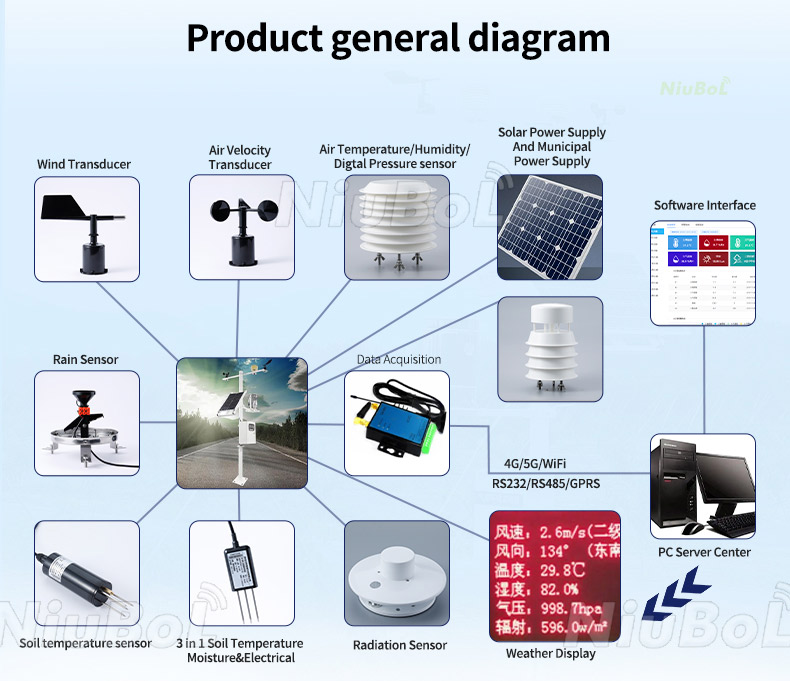
The NBL-W-SS cup anemometer measures wind speed through rotation. A separate direction instrument such as the NBL-W-DS is required when direction is needed. Inspection must include free movement, damage and any deposits affecting the rotating assembly. Select the electrical output to match the receiving logger rather than assuming all versions use the same connection.
The NBL-W-21GUWS measures horizontal speed and direction using ultrasonic transit times. With no rotating cups or vane, there are no corresponding bearings to inspect. The acoustic paths still need to remain unobstructed. Leaves, deposits or ice are reasons to inspect the head, not reasons to classify the installation as maintenance-free.
| Selection question | Cup and separate vane | Ultrasonic speed and direction |
|---|---|---|
| What needs inspection? | Rotation, vane movement, physical damage and cable connections | Acoustic paths, head condition, orientation and cable connections |
| How is it connected? | Outputs depend on the selected instruments | RS485 Modbus connection for NBL-W-21GUWS |
| What about weak airflow? | Check starting behavior and uncertainty for the selected model | Check uncertainty and valid-direction behavior near calm |
| Does it require service access? | Yes | Yes; no moving parts does not mean no inspections |
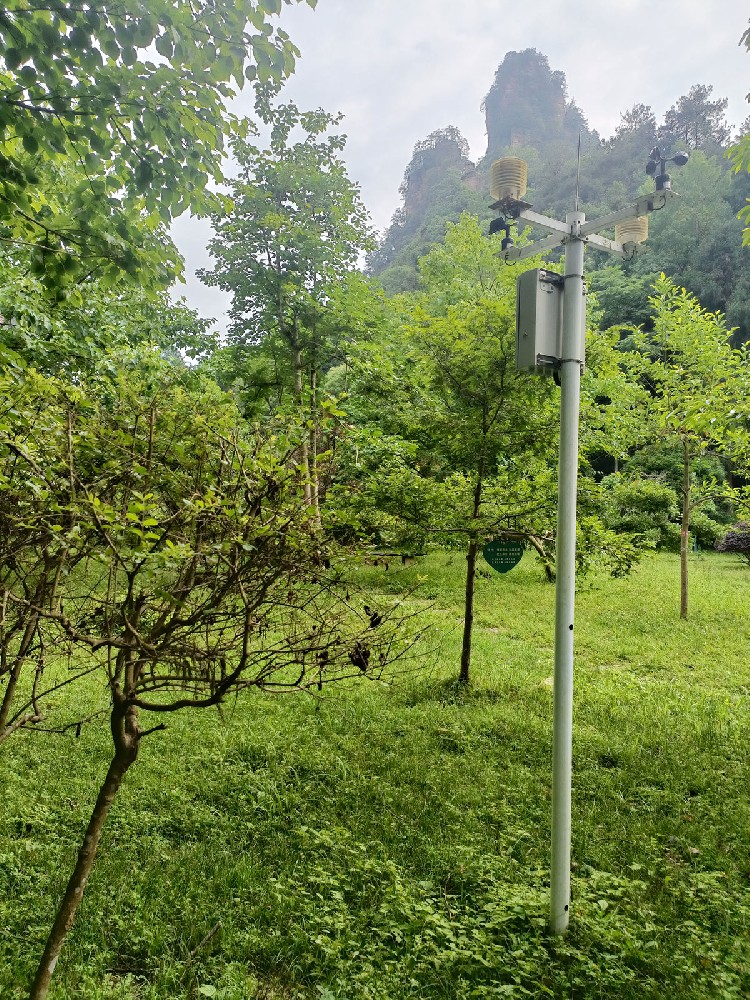
The NBL-W-21GUWS reports wind speed with 0.01 m/s resolution. This is the reporting increment, not a promise of measurement accuracy at that speed. A range beginning at zero also does not establish accurate direction in calm air. Ask for the accuracy expression, its full-scale basis and the handling of invalid or indeterminate direction before specifying an understory application.
If weak-airflow differences are central to the study, agree a suitable comparison procedure using an appropriate reference instrument. A side-by-side field check can reveal disagreement, but it is not automatically a traceable calibration. Check sensor alignment and exposure before applying a software offset to force agreement between two different measurement positions.
| NBL-W-21GUWS item | Specification | Selection implication |
|---|---|---|
| Wind measurement | 0-60 m/s speed; 0-359 degrees direction | Confirm the required statistic as well as the range |
| Supply and connection | DC 12-24 V; RS485; default 9600 bps | Check voltage at the head and logger configuration |
| Optional heating | 3 W heating power | Add heater operation to the site energy calculation |
| Operating temperature | -20 to 80 C | Assess any colder requirement separately |
| Protection | IP65 | Protect installed connections; do not treat the head as submersible |
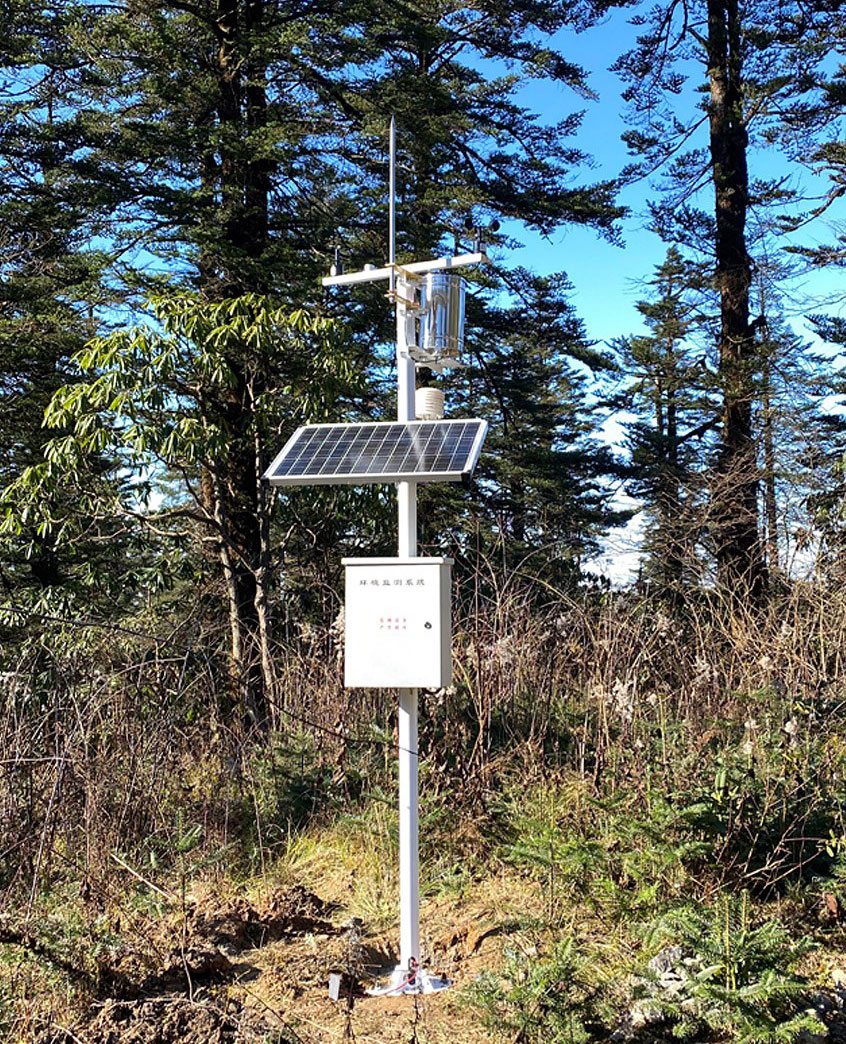
A heater option is not a guarantee of usable readings under every icing condition. Establish when heating operates and whether the supply can support it alongside the logger and modem. The 3 W figure is heater power, not the consumption of the complete station. NBL-W-SS and NBL-W-DS protection is also IP65; the complete installed assembly needs its own assessment.
The NBL-W-LBTH provides air temperature, relative humidity and pressure. Air RH is not fuel moisture. A fuel-moisture value requires a suitable measurement or a defined calculation with the necessary inputs. Likewise, soil moisture does not directly measure the moisture of litter, branches or other combustible material.
A liquid-precipitation gauge supports rainfall records; frozen precipitation requires a suitable arrangement for the intended measurement. Add radiation or PAR only where the study requires the corresponding quantity. Do not describe every extra channel as improving a fire-danger calculation if that calculation does not use it.
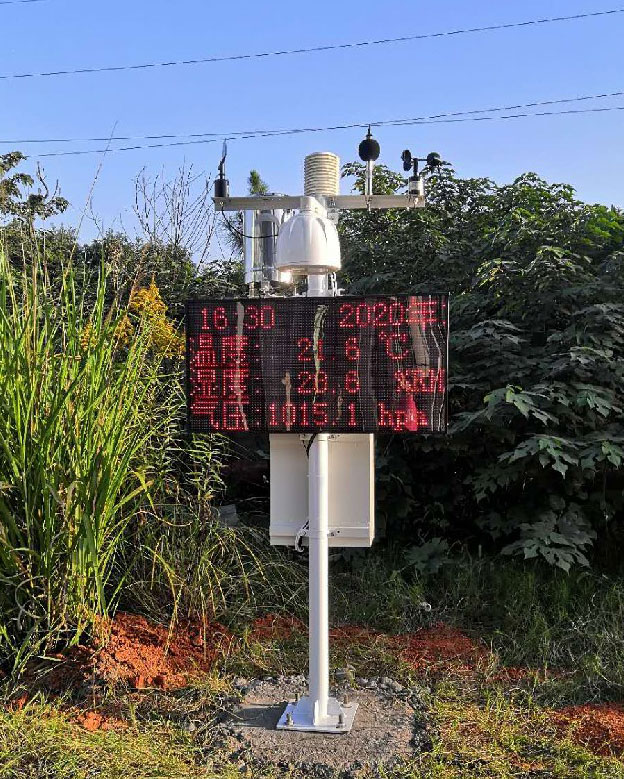
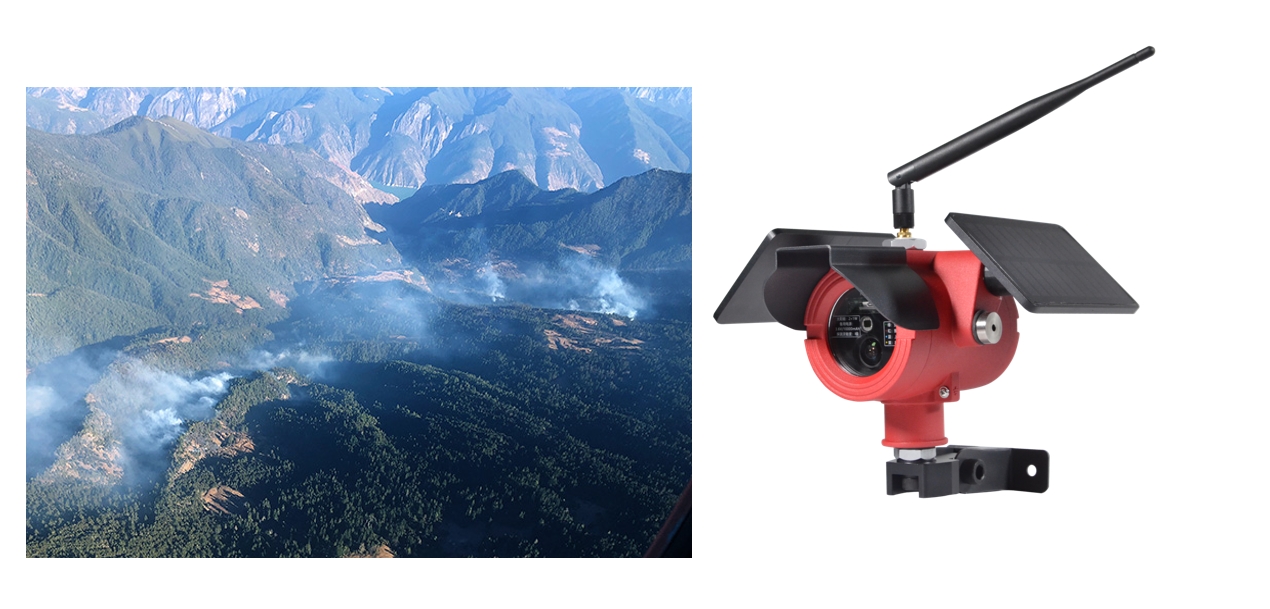
A local display can help visiting personnel inspect observations, but it does not change their meaning. A displayed fire-danger category requires an identified calculation and suitable inputs. A camera or flame-detection unit is separate equipment with its own viewing conditions and test requirements; neither its appearance in a system illustration nor a wind sensor establishes fire-detection coverage.
For a quotation, provide the observation purpose, expected minimum temperature, access constraints, existing logger inputs and proposed power source. Ask NiuBoL to identify the selected wind instruments and heater configuration explicitly. This allows maintenance access and power demand to be compared alongside the purchase price, without assuming every forest site needs the same package.
No. Compare exposure, required low-wind performance, icing conditions, output compatibility and service access. Removing rotating parts is useful, but it does not settle those other requirements.
No. Resolution and accuracy are separate specifications. Review uncertainty at the required speeds and define what the logger should do when direction is not meaningful near calm.
Do not infer an extended rating from the heater alone. The NBL-W-21GUWS operating temperature is -20 to 80 C. A colder project needs a separately approved configuration and its power requirements.
Only after checking supply, output type, protocol, registers and processing. An old pulse or analog channel cannot be assumed to accept an RS485 instrument without a compatible interface and decoding configuration.
Verify orientation, engineering units, required wind statistic and identification of unavailable data. Inspect the actual wiring and show the selected heater's behavior where fitted. Judge the result against the project's observation task rather than an unqualified claim of zero maintenance.
Use forest weather station sensor selection to match a measurement task with an instrument and a maintainable installation. Compare cup-and-vane and ultrasonic options using actual interfaces, low-wind requirements and cold-weather power needs. Keep air humidity, fuel moisture and fire-detection functions separate.
Prev:In-Depth Comparison and Selection Guide: Mechanical Weather Stations vs. Ultrasonic Weather Stations
Next:Field Automatic Weather Stations: Power and Data Continuity
Related recommendations
Sensors & Weather Stations Catalog
 Agriculture Sensors and Weather Stations Catalog-NiuBoL.pdf
Weather Stations Catalog-NiuBoL.pdf
Agriculture Sensors Catalog-NiuBoL.pdf
Water Quality Sensor Catalog-NiuBoL.pdf
Related products
 Combined air temperature and relative humidity sensor
 TDR Soil Moisture & Temperature Sensor for irrigation| RS485 |4-20mA| NBL-S-THR
 Soil pH sensor RS485 soil Testing instrument soil ph meter for agriculture |NBL-S-PH
 Wind Speed sensor Output Modbus/RS485/Analog/0-5V/4-20mA
 Tipping bucket rain gauge for weather monitoring auto rainfall sensor RS485/Outdoor/stainless steel
 Pyranometer Solar Radiation Sensor 4-20mA/RS485


Screenshot, WhatsApp to identify the QR code
WhatsApp number:+8615367865107
(Click on WhatsApp to copy and add friends)

