





— Blogs —
—Products—
 Consumer hotline +8618073152920
 WhatsApp:+8615367865107
Address:Room 102, District D, Houhu Industrial Park, Yuelu District, Changsha City, Hunan Province, China
Product knowledge
Time:2026-03-05 21:56:16 Popularity:599
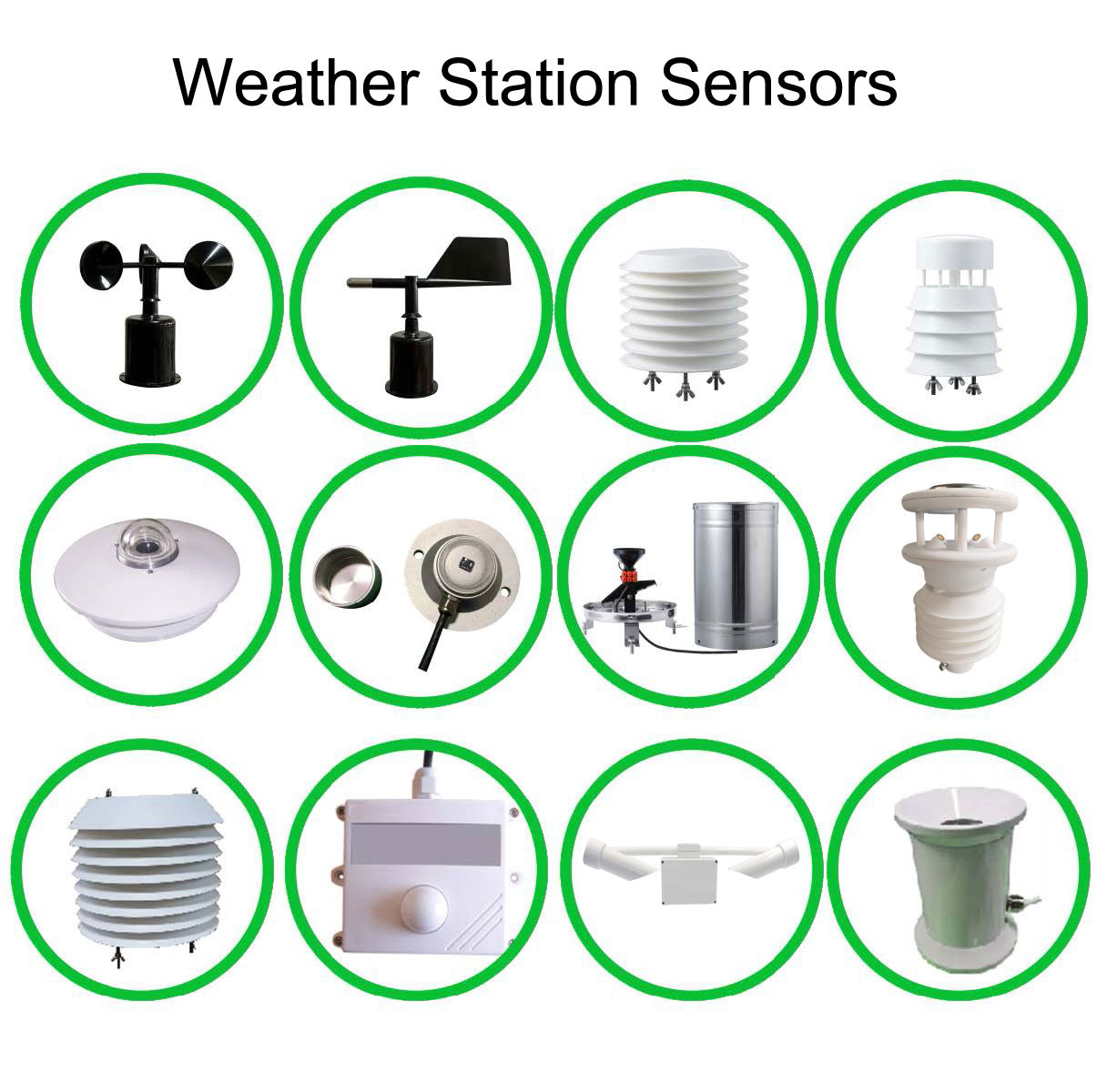
An ultrasonic meteorological station can use one integrated sensing head or a set of separate instruments. The first arrangement reduces field connections; the second allows wind, rainfall and air temperature to be placed and serviced independently. Choose between them by checking measurement exposure and replacement requirements, not simply by comparing the number of parameters in the product name.
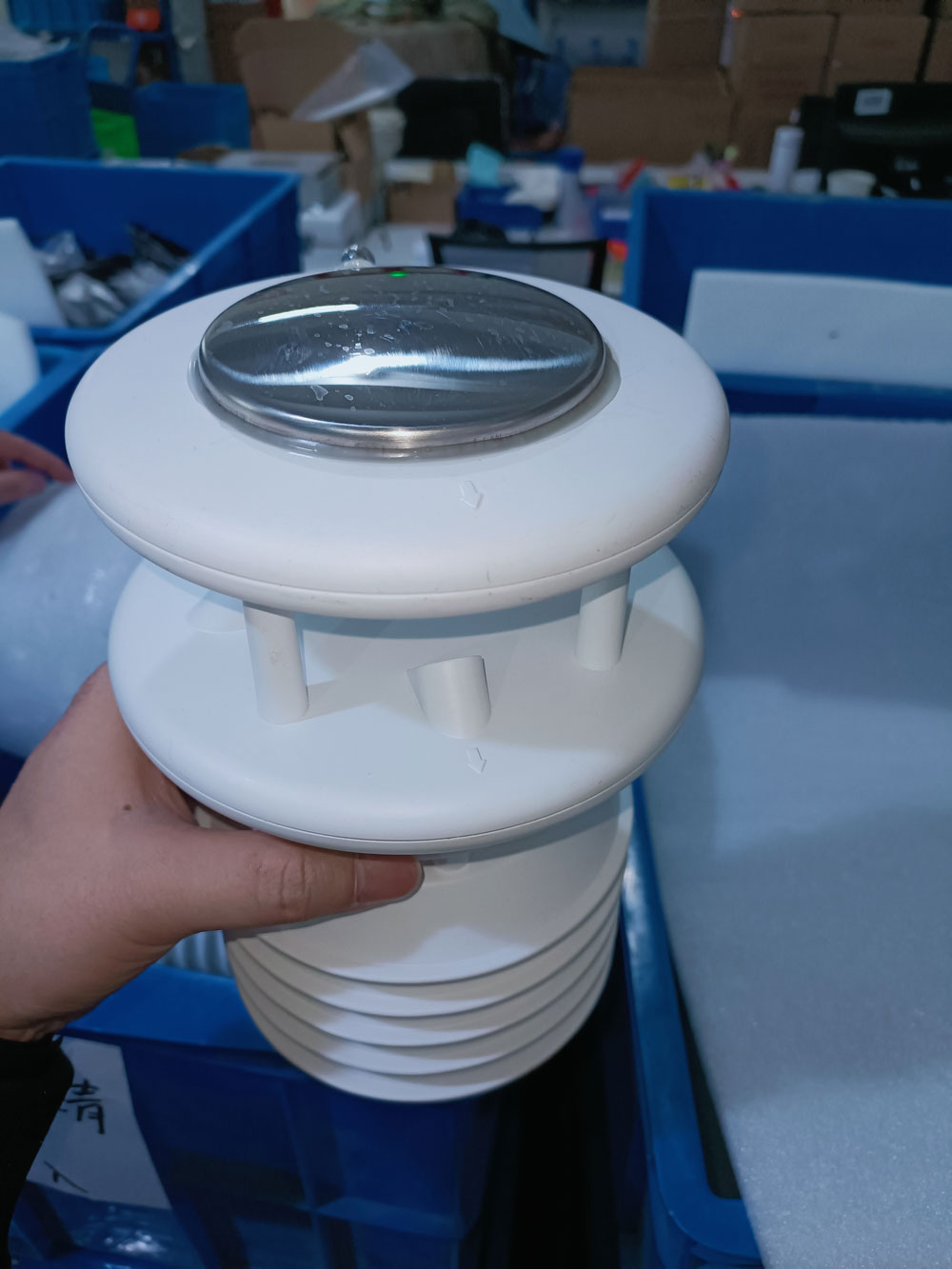
Ultrasonic describes the wind-measurement principle. It does not mean that every other channel uses ultrasound. In the NiuBoL NBL-W-71GUWS, wind is measured by acoustic transit time, while the integrated rainfall measurement uses raindrop impacts on a piezoelectric sensing surface. The housing also contains atmospheric measurements and a selected light channel.
The NBL-W-71GUWS seven-parameter configuration contains wind speed, wind direction, air temperature, relative humidity, pressure and rainfall, plus either solar irradiance or illuminance. These last two are alternatives, not two simultaneous standard channels. A project requiring both needs a configuration review or an additional instrument.
PM2.5, PM10, leaf wetness and soil moisture are not established by that seven-parameter list. A logger can combine extra sensors with an integrated head, but the extra inputs, addresses, power and mounting positions remain part of the installation. Count measured quantities separately from physical devices and software-derived results.
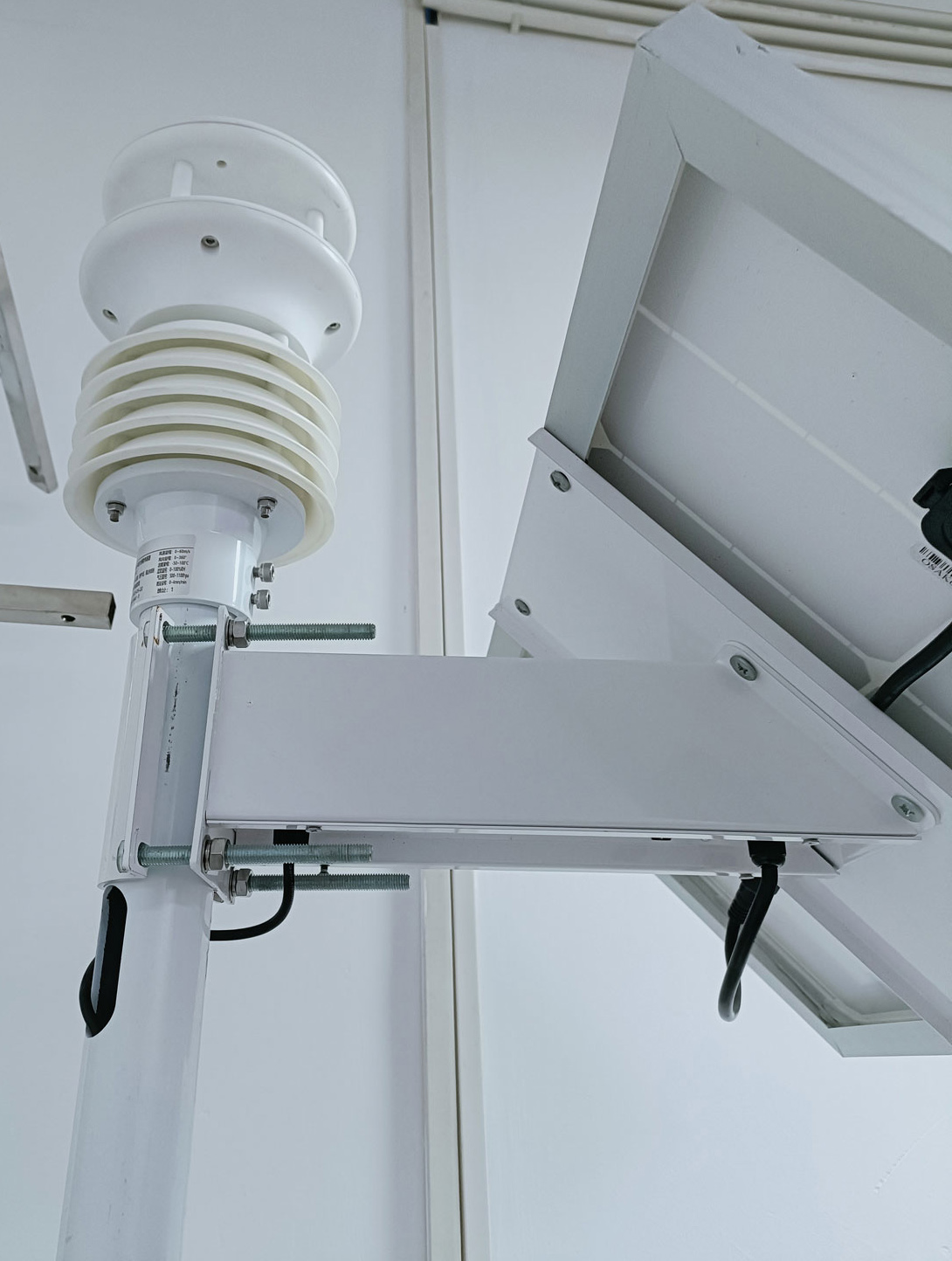
An integrated head places its channels at the same location and broadly the same mounting height. That is convenient for a compact environmental node, but it can conflict with a research plan requiring wind above nearby obstructions, air temperature at another height and an independently accessible rain gauge. One convenient mast position cannot automatically satisfy all exposure requirements.
| Project consideration | Integrated ultrasonic head | Separate instruments |
|---|---|---|
| Field connections | Fewer sensor leads for the included quantities | More cables, input channels or bus devices to commission |
| Measurement height | Channels share the head location | Heights and exposure can be selected independently |
| Rain measurement | The head's installed measurement method | A separate method and collection geometry can be specified |
| Service access | Work on the head can interrupt several quantities | Individual instruments may be isolated separately |
| Replacement planning | A compatible head or approved repair arrangement is needed | A single channel can be replaced after interface and measurement review |
| Future channels | Requires spare logger capacity or an additional interface | Can be added where the logger and power design allow |
For a campus or industrial environmental display, compact mounting may be an acceptable trade-off. For a comparison experiment or a contract with specified sensor heights, separate instruments may avoid compromises that cannot be corrected later in software. Ask the project owner to resolve those exposure requirements before approving a mast drawing.
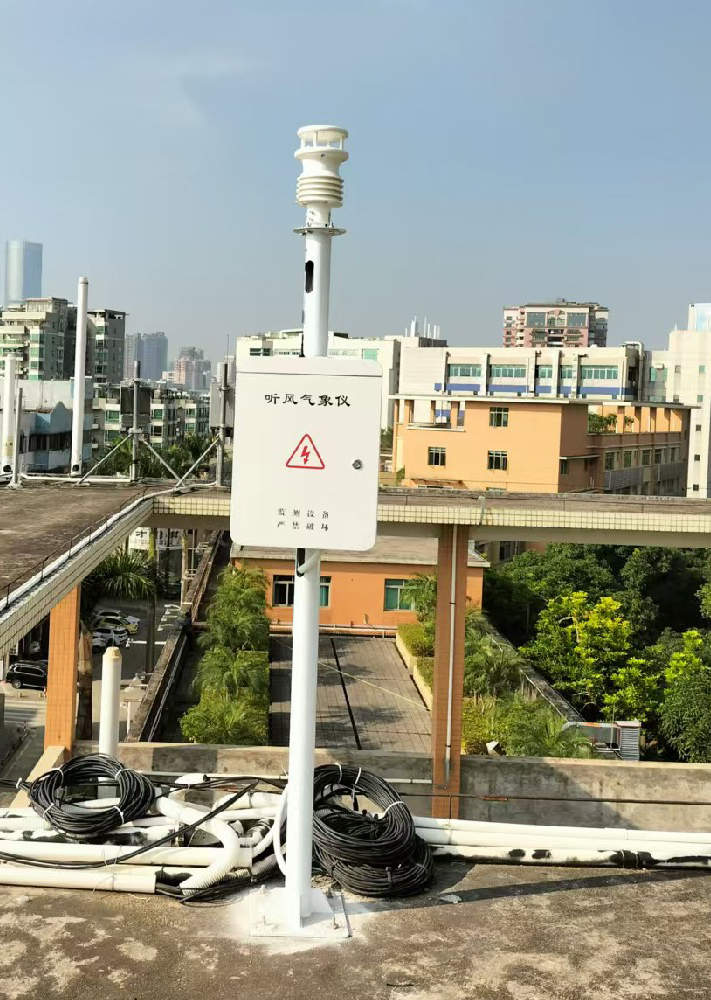
The following values apply to the NBL-W-71GUWS sensing head. They do not specify a complete station cabinet, gateway, battery or every possible ultrasonic weather sensor. Cable length and material, connectors and the voltage variant should be included in the order details rather than inferred from a photograph.
| NBL-W-71GUWS item | Specification | Important distinction |
|---|---|---|
| Wind speed and direction ranges | 0-60 m/s; 0-359 degrees | A range is not a gust-processing definition |
| Air temperature and humidity | -40 to 80 C, +/-0.5 C; 0-100% RH, +/-5% RH | RH measurement range differs from operating humidity |
| Pressure | 10-1100 hPa; +/-1.5 hPa | Use this model's range, not another atmospheric module's |
| Rainfall | 0-8 mm/min; +/-10%; 0.01 mm resolution | Piezoelectric measurement, not a 0.2 mm tipping bucket |
| Selectable seventh quantity | Solar irradiance 0-1500 W/m2 or illuminance 0-200,000 Lux | These quantities are not interchangeable |
| Output | RS485 Modbus RTU; 9600 bps; minimum communication interval 1000 ms | The logger must decode the ordered configuration |
| Supply and average power | 9-24 VDC or 12-24 VDC version; 0.4 W average | Establish the supplied voltage version before wiring |
| Outdoor rating and operation | IP65; -40 to 80 C; 0-95% RH operating humidity | Do not transfer these limits to the entire station |
Integrated rainfall is attractive when low connection count and compact installation matter. A separate tipping bucket may be preferable when the operating team needs access to its funnel and mechanism, a specified collection arrangement or direct pulse counting. Do not treat their output resolutions as proof of equivalent field performance. Compare the methods under the site's precipitation and exposure conditions.
Solar irradiance in W/m2 supports a different calculation from illuminance in Lux. A lighting project may need illuminance, whereas a solar-energy project needs a suitable radiation measurement. Crop photosynthesis work may instead require a dedicated PAR or PPFD sensor. No universal multiplication factor converts one of these channels into the others for every sky and spectrum.
For photovoltaic monitoring, also decide whether the required radiation is horizontal or in the module plane. A level integrated head does not independently provide every plane-of-array measurement. If the monitoring specification requires a particular pyranometer class, calibration arrangement or tilted mounting, select the appropriate separate instrument rather than relying on the presence of a radiation register.
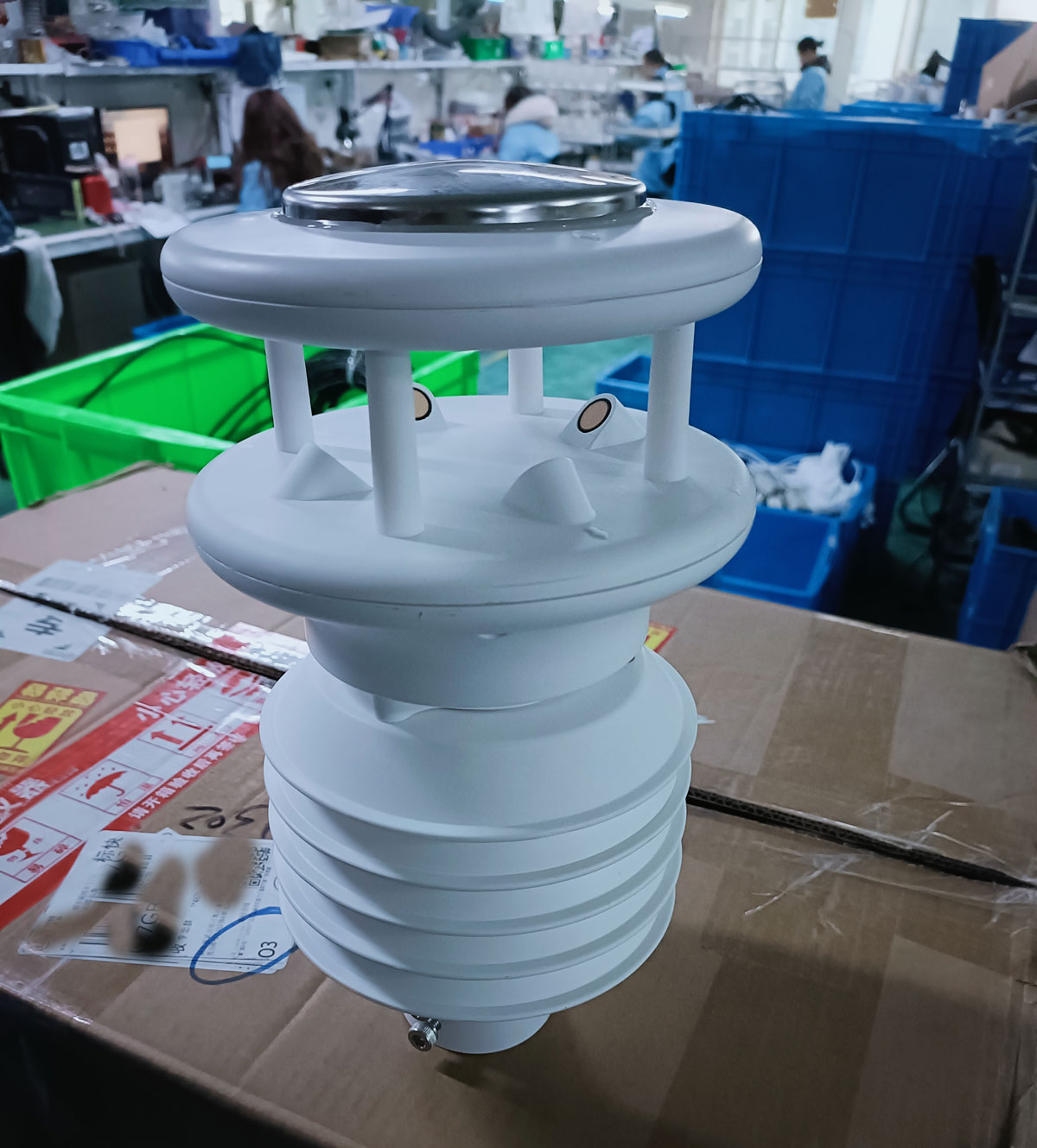
The RS485 Modbus RTU head connects to a compatible PLC, RTU or weather data logger. The receiving system must match the serial settings and identify the registers, units, scale factors and selected optional channel. A vacant or unused register must not be displayed as a genuine zero reading from an instrument that was not ordered.
Commission each quantity individually. Check a positive temperature and the handling of a negative test value, pressure scaling, the north reference, rainfall totals and the configured light unit. Establish how the logger treats no response and sensor faults. Holding the last value without an age indication can make a disconnected head appear healthy.
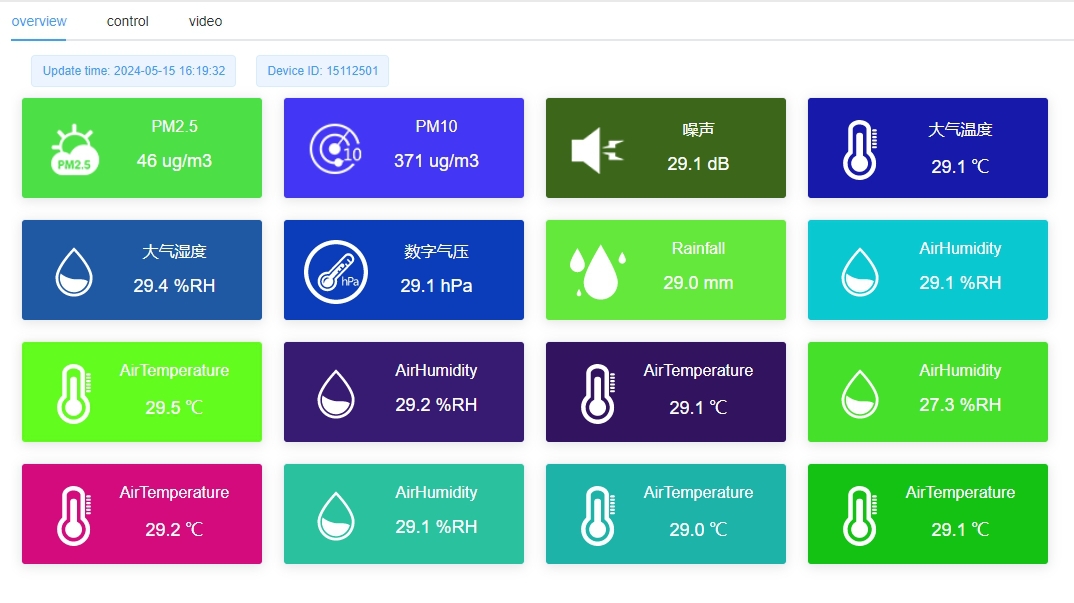
Ethernet, cellular reporting, MQTT, remote configuration and historical storage belong to the selected logger or gateway architecture. They do not follow automatically from the sensing head's RS485 port. Where a purchaser has an existing platform, exchange a sample decoded record before shipment and identify which organisation implements the receiving interface.
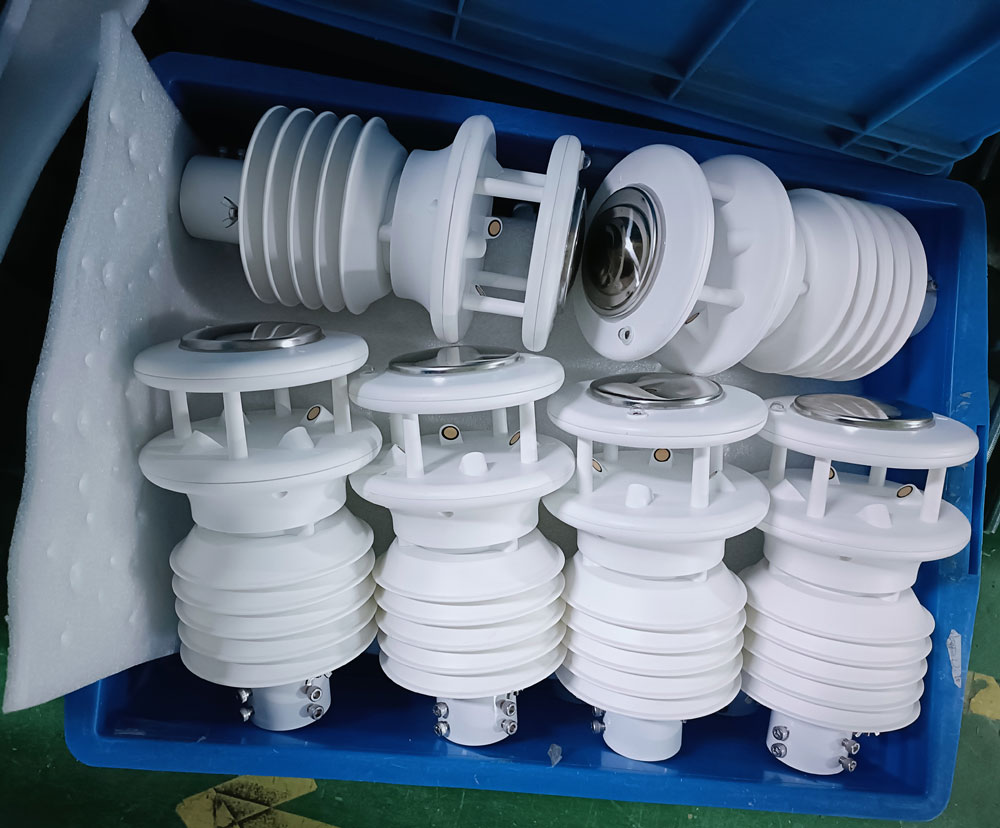
Ultrasonic wind measurement eliminates rotating cups and a mechanical vane, but it does not make the station maintenance-free. Deposits, insects, damage or ice can obstruct acoustic paths or affect exposed surfaces. Inspect according to local conditions, and obtain a suitable cold-weather configuration if ice is a credible operating condition; do not assume heating from the word ultrasonic.
Replacing an integrated head can interrupt all its included quantities at once. Ask whether the service arrangement uses a spare complete head, field-replaceable parts or return-to-service work. Record orientation and mounting details before removal, then verify configuration and scaling after replacement. A plug-compatible connector is not proof that a different head has the same register map.
Separate instruments introduce more field connections but can limit the scope of a sensor replacement. The economic comparison should therefore include access labour, spare strategy and measurement downtime as well as purchase price. A tall shared mast with difficult access may change that balance more than a small difference in sensor cost.
Not in the standard NBL-W-71GUWS configuration described here. The seventh quantity is selected as radiation or illuminance. Specify an additional requirement explicitly if both are needed.
Choose them when the project requires independent heights, different exposure, a particular measurement method or separate service access. Confirm logger capacity and field wiring as part of that choice.
No. Removing rotating parts does not remove the effects of ice or blocked acoustic paths. Assess the site's icing conditions and the supplied instrument's applicable environmental provisions.
Only when its measurement method, installation and performance satisfy the actual project specification. A radiation channel alone does not establish a required instrument classification or plane-of-array arrangement.
State the selected seventh channel, voltage version, mounting arrangement, cable, logger, transmission destination and spare strategy. Identify any software access or commissioning services separately.
Verify model and configuration, orientation, register decoding and each available quantity. Check that old settings do not turn an unused channel into a believable value, and record the resulting interruption in the dataset.
An ultrasonic meteorological station should be selected as a measurement arrangement, not a parameter count. The NBL-W-71GUWS suits projects that accept a shared sensing location and want a compact RS485 head. Separate instruments remain appropriate where exposure, radiation requirements or maintenance independence govern the design. Send NiuBoL the required quantities and mounting constraints to compare those two arrangements on the same basis.
The documents below cover different sensor families. Match the full model and revision to the equipment being ordered before using a wiring or register diagram; a similar housing does not establish electrical or measurement equivalence.
 NBL-W-21GUWS-Ultrasonic-Wind-speed-and-direction-Sensor.pdf
NBL-W-61MUWS-Ultrasonic-Weather-Station-Instruction-Manual.pdf
NBL-W-71MUWS-Micrometeorological-Sensor-Operating-Instructions.pdf
Related recommendations
Sensors & Weather Stations Catalog
Agriculture Sensors and Weather Stations Catalog-NiuBoL.pdf
Weather Stations Catalog-NiuBoL.pdf
Agriculture Sensors Catalog-NiuBoL.pdf
Water Quality Sensor Catalog-NiuBoL.pdf
Related products
 Combined air temperature and relative humidity sensor
 TDR Soil Moisture & Temperature Sensor for irrigation| RS485 |4-20mA| NBL-S-THR
 Soil pH sensor RS485 soil Testing instrument soil ph meter for agriculture |NBL-S-PH
 Wind Speed sensor Output Modbus/RS485/Analog/0-5V/4-20mA
 Tipping bucket rain gauge for weather monitoring auto rainfall sensor RS485/Outdoor/stainless steel
 Pyranometer Solar Radiation Sensor 4-20mA/RS485

Screenshot, WhatsApp to identify the QR code
WhatsApp number:+8615367865107
(Click on WhatsApp to copy and add friends)

